the mass to charge ratio of the electron was first measured by JJ Thompson in 1897 when he discovered that the electron was a particle he did so by measuring the electron's angular momentum and deflection as it traveled through a perpendicular magnetic field in his cathode ray experiments other innovators contributed to more accurate M to charge ratios as time went on such as villam V and Walter calman but the master to charge ratio was just that a r ratio physicists wanted to take this a step further and separate this ratio into both the mass and charge
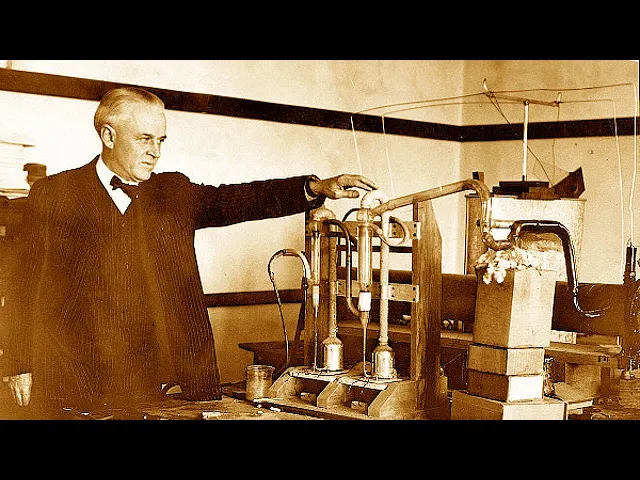
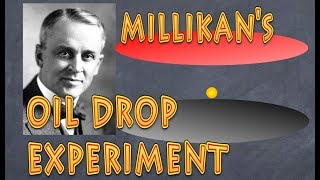
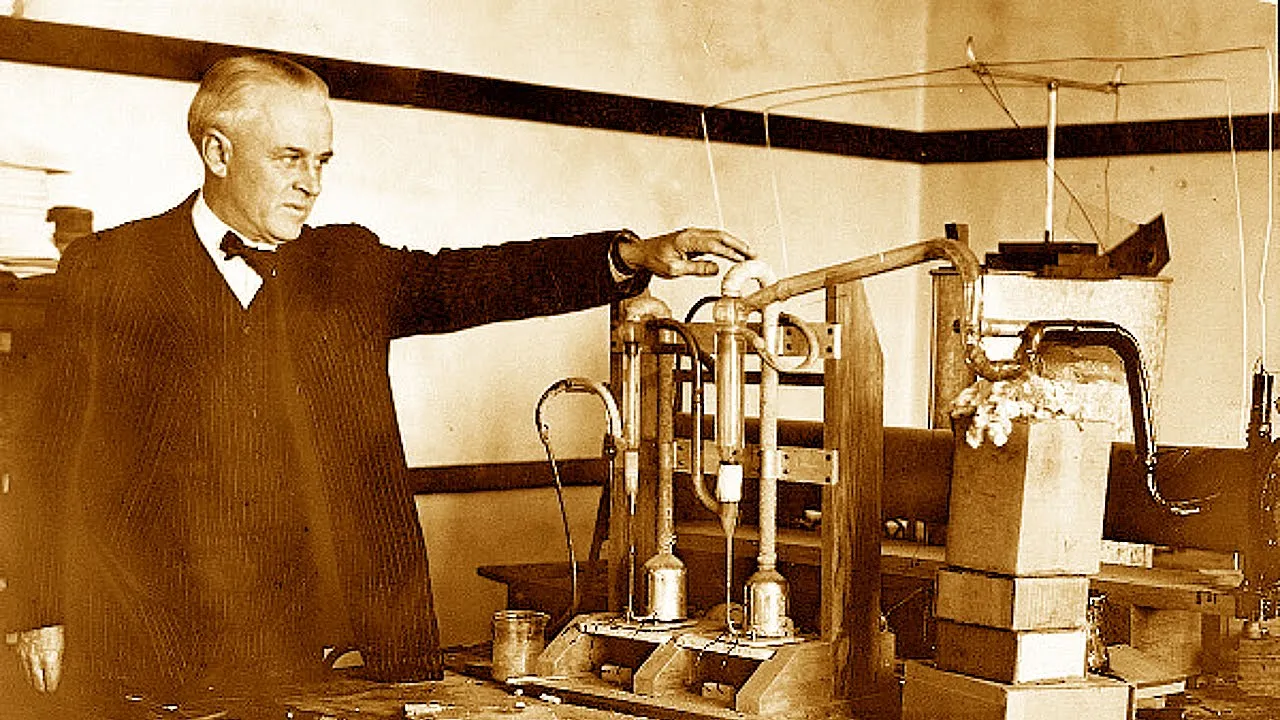
of the electron experiments were set up shortly after to try and isolate the charge from the ratio but estimates weren't nearly as accurate as scientists would have liked it wasn't until 1909 when a physicist by the name of Robert milikin and his PhD student Harvey Fletcher put their names into the experiment that a precise measurement of the charge of the electron was made Robert milikin had spent the early part of his physics career teaching having received his PhD from Columbia University he had made a decent career as a professor and textbook writer at the University
of Chicago this wasn't enough for milikin however as he wanted to subit his name in the history books and go down as an innovator in the field of physics he saw his opportunity when he came across the experiments that were being done by Thompson and others in the early 1900s to try and measure the elementary charge these experiments involve sending clouds of water vapor into a chamber and letting them slowly fall through an electric field milikin took this idea and modified it hypothesizing that a more accurate measurement would be made if the experiment was done
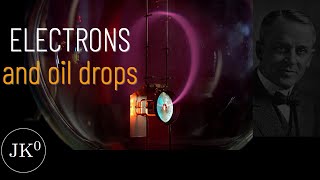
on individual droplets of water rather than clouds so he tried this starting his experiments in 1909 but found that the droplets of water evaporated much too quickly for any precise measurement to be made upon discovering this he called upon his PhD student Harvey Fletcher to assist him and find a substance that wouldn't evaporate as quickly Fletcher eventually found the perfect substance oil once they had their substance they set their experiment up as follows an enclosed chamber was used with a positively charged electric plate placed above a negatively charged electric plate leaving space in the middle
for the drops to fall a perfume atomizer filled with oil was placed above the chamber and would spray oil droplets into the chamber when it was pressed upon entering the chamber these oil droplets would gain electrons that would come from now ionized gas molecules that would be hit with x-rays from a light source the oil droplets would become negatively charged and at this point the electric field in the chamber pulls the ionized oil droplets upward against the downward gravitational Pole at the point where these forces are equal the oil droplets hover going neither upwards nor
downwards this hovering point was found for droplets of varying sizes with larger droplets requiring more voltage to balance the forces after the data was collected they used the equations for the force of gravity and the force of electricity along with their known values of mass and voltage to isolate the charge of each droplet what they found was that for different sizes of droplets the charges went up in identical intervals leaving milikin and Fletcher to conclude that the charge of the electron was The Identical interval that the charges of these droplets went up by the first
oil drop experiment had been completed by 1910 but at that time there was some competition that milikin and Fletcher would soon come to face that same year vianes physicist Felix arof published findings from a similar experiment that claimed the elementary charge to be much lower than what milikin and Fletcher's results had shown this drove milikin to go back to the lab refining his experiment even more and collecting much more data and by 1913 milikin had published his findings once again showing the elementary charge to be 1.59 2 * 1019 KS with an uncertainty factor of
only 0.2% this 193 paper ruled out any other doubts and claims made about the charge of the electron and this value was the one that was accepted by scientists Milan's paper was praised by the scientific community and migan ended up winning the Nobel Prize in 1923 for both this accomplishment and also for determining the value of plunk constant later in 1916 over time the charge of the electron has been refined and milant underestimation seemed to be attributed to using inaccurate value for the viscosity of air in the chamber in his calculations Milan's Discovery although important
did not however come without its share of controversy melin's lab notebooks from the experiment suggest that he left out some data from his 1913 paper which could be seen as problematic considering that in his paper he stated specifically that the data reported is not a select group of droplets but of all droplets measured in his experiments there is some speculation as to why he did this perhaps he wanted to rush his results to Trump his competition perhaps the drops he didn't report were compromised in some way and he wasn't confident that the measurements he made
were the most accurate regardless the scientists who did later include these initially excluded droplets noted that their inclusion hardly changed the calculated value at all so the controversy does seem mildly insignificant but never thess curious another controversy from this experiment comes from investigations of Fletcher's papers after his death which suggests that milikin convinced Fletcher to relinquish his name from the 1913 paper in order for him to receive his PhD in order to repay the favor Fletcher's career later at Bell Labs would be helped Along by Milan's influence at Bell Labs Fletcher oversaw many research projects
which included the first stereophonic recordings and the production of the first vinyl recording although Fletcher didn't have his name included in the 19113 paper his career was rather successful and Milan's influence definitely had a say in that matter despite its controversies the oil drop experiment was a crucial one in physics history and the discovery of the charge of the electron led to the subsequent discovery of its mass and scientists got yet one step closer to uncovering the fundamental nature of our world if you enjoyed this video please consider liking and subscribing click here if you
want to see more scientific progress made during this time period thank you for watching and I will see you in the next video