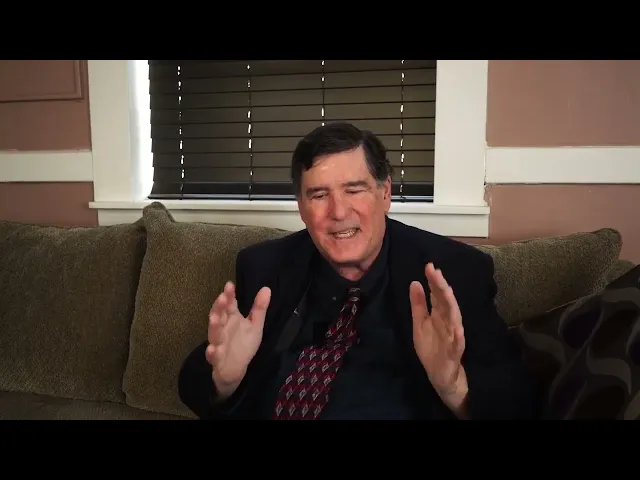
Hello, my name is Phil Core. I'm your adjunct professor for church history 1. I'm really excited about this course and I hope you will be too.
For this lecture, I would like to actually start with the syllabus. The purpose of the course is to examine the work of the Holy Spirit during the church age from its beginnings through AD 1500. Students will interact with God's movements as we consider the growth of the church often in the midst of persecution.
We will come to understand that orthodoxy which means right belief involves boundaries. Inside are Orthodox Christians while outside are heterodox people. We will witness the fall of Rome as well as the period of the Middle Ages and the Renaissance leading up to the morning stars of the Reformation prior to 1500.
It is hoped that each student will apply Kor's golden rule of history which states judge those in the past with the same understanding you hope people in the future will judge you. While learning key dates is important, understanding the broad themes of church history is even more important. Students will identify with some aspects of this period and learn from others.
They will thrillingly realize that they are living in Acts 29 and are making history themselves. except for the first lecture. Students are expected to read the assigned pages prior to the lecture involved.
Now, when I say required, these are guidelines because I understand that you have busy schedules. The more you read, the more you'll get out of the course. And there's supplemental optional reading that is listed.
And there are reference books as well. As far as lectures go, students are expected to watch each lecture and attend the December gathering or any gathering in Seattle. The lectures are divided into three periods.
The first is beginnings through the fall of Rome. The second is the Middle Ages. And then the last one is the Renaissance and morning stars of the Reformation.
You can look over each of the lecture titles and then you can see the deadlines for viewing of each lecture. And the assignments are in addition to attending all the lectures and reading as many pages as you can and attending the Seattle gathering, you will have five reflection papers to write, three to five pages in length, and these will be based on the lectures. Students may write the papers in Portuguese or English.
You are asked to discuss the major sections of each lecture and interact with the subject matter. You may use up to one page to apply the lecture material to your situation and the current church situation. If you give your opinions, please be sure to answer the question why and use the word because.
And you can see when the papers are due. I in then and you've got the uh guidelines for grading and the general guidelines as well. I hope that you enjoy the class.
You are my heroes because everyone engaged in Christian ministry of every of any sort is a hero to me. I'm going to turn now to lecture one. Hello heroes.
Today we're beginning series one, which is the beginnings through the fall of Rome almost to the end of the fifth century. This first lecture is an overview and beginnings from 5 BC through AD 100. We're going to look at Jesus and the early church and realize that we are living in Acts chapter 29.
For the devotional, I would encourage you to take a look sometime at the chosen scene where Jesus is outside Cesaria Philippi in front of the gates of hell. You see, there was a literal gates gate of hell or gates of hell plural where horrible pagan sacrifices were done and pagan practices occurred. In addition, there was a temple to Caesar.
So you can understand how intense it would have been for Jesus to ask his close followers, who do people say that I am? And then to ask, who do you say that I am? And Peter says, you are the Christ, the son of the living God.
And Jesus basically says, you've answered correctly. And because of that, Simon, I'm giving you a new name, Peter, which means rock. And so sometimes he's called Simon Peter.
And then Jesus says, upon this rock, I will build my church. Now, Roman Catholics believe that is Peter upon whom Jesus is bare uh setting the rock, the foundation. But Protestants or as they're called in some places Christians.
Many Catholics are Christians I believe. But the confession of faith itself is the foundation. So take a look at that sometime.
Now a little bit about myself. Why do I call you heroes? Well, I've already talked about it a little bit, but I have a pastor friend who graduated the same year as I did from the same school.
and with pastors and pastors wives, missionaries and missionary wives. He calls all of us heroes. And I consider each of you the same.
If you're planning on going into pastoral work or you already are or mission work or a lay minister in a church, you are my heroes. Okay. Now, a little bit about myself.
I am a pastor with a keen interest or passion for missions. That's probably what I'm going to share when I am up in Seattle, Lord willing. I've traveled around the world, though not regrettably Brazil.
I've gone east to west, but not north to south, at least that far. I did take one trip all the way around the world that I might talk about at the December gathering and I might add some things during the lectures as I go along. I did stop to study for a seminar or semester in Vienna, Austria.
I've taken separate trips to the Orient and I have gone back to the Philippines and Pakistan. We've already looked at the pages at the o syllabus and you can look at the assigned pages for today. So now I'm going to jump into the lecture itself.
Jesus, this is church history. And in English we say it is his story. It's Jesus's story.
His story. In first Peter, we read about Christ being the firm foundation, the head and the cornerstone. You can find that in Isaiah as well.
The word of God and the son of God existed from before eternity began. You read about that in John 1 1-4. In the beginning was the word and the word was with God and the word was God.
Not anything was made without the word. And John 1 continues to talk about the Son. The Word and the Son preexisted eternity with God the Father and God the Holy Spirit.
And then the gospels, Matthew, Mark, and Luke were written before the historical destruction of the temple in AD. 70. Because Jesus predicted that no stone would be left upon another.
The western wall or the wailing wall where people go to pray now was a supportive structure to the temple itself. And therefore the letter or book to the Hebrews which I believe was written by Apollos for a number of reasons was written before AD was written before 70 because the entire letter is premised on the existence of the temple and the ceremonies that took place there. So he wouldn't write it after the destruction of the temple.
8070 Hebrews and the first three gospels were written before that year. Jesus was fully God and then when he started in Mary's womb, he was fully man. And we will cover that more during the orthodoxy lecture.
He pitched his tent among us. We read that in John 1:14. That is one translation of John 1:14.
Jesus came and pitched his tent among us. He was God the Father with skin on. And here's what church history is based upon.
The virginal conception in Mary's womb, his life, his atoning death, his bodily resurrection, his ascension, and the hope for his return in glory. Now, when I say hope, that is a certain hope. His birth.
The man who tried to figure out when Jesus was born was off a little bit. I believe that Jesus was born 5 years before Christ. When you re read Luke 2 verse one, you have the emperor and you have the governor.
And historians are able to look back and see where they over overlapped. And I've started reading a book about Herod and Mary and they say that Jesus was born in 5 BC. So I'm going to do a little math with you.
Now if Jesus began at the age of 30, which is the age of rabbis starting their ministry, then Jesus started his public ministry at the age of 30. And you realize that there was no year between 1 BC and AD1. No zero year.
So let's do the math. His beginning his public ministry anodominy. That's what a D means in the year of our Lord.
That's Latin. So Jesus has changed the world right there because most people around the world live based on the Christian calendar. But what I want to share with you real quick is the math.
30 at the age of 30 minus 5 5 BC minus one no year zero would be 24 AD 24. That would be the year Jesus began his ministry. You add 2,000 to that and what do you get?
2024. So we could be living in the first year of Jesus's public ministry, the 2000th anniversary. And Jesus has changed the world in song as well.
Look at his hymns, the hymns about him. And there is a hymn called Christ is made the firm foundation, Christ the head and cornerstone. There were hymns sung in the early church.
Matthew 26:30 and then there's Philippians 2:5-11 which was believed to be an early hymn and Paul says for us to have songs hymns and spiritual hymns in Ephesians 5:19. So moving on from hymns, Jesus engages in friendship evangelism. Have you thought about that?
He does handson disciplehip as well. He does lots of walking and talking. In Matthew 28, it could be translated as you go instead of go.
It is a command, but it could also be present ongoing tense. As you go. There are lots of questions in the gospels.
Do you know where the only dumb question is? What the only one is? It's the one that is not asked.
Someone has counted that Jesus asked 339 questions. This is called the Socratic method named after Socrates who asked questions and there were many questions that Jesus has asked and some of them are the best teachings that we have of Jesus such as where Thomas says how can we know where you're going? Jesus th this then says in John 16:4, I am the way, the truth, and the life.
No one comes to the father except through me. Jesus came to earth for his atoning work to accomplish that. There's another hymn, When I Survey the Wondrous Cross.
And there is his bodily resurrection. Christ the Lord is risen today. Allelujah.
Which is the Latin for the Hebrew which has an H. Hallelujah. Praise the Lord.
And the great commission I already said the resurrected Jesus. Go into all the world can also be as you go. It's a disciplehip mandate with global and eternal ramifications.
Paul says, "We are to entrust the gospel to faithful men and women. " Have you ever stopped to think that you are hearing this lecture because people have been faithful to the great commission, discipling, renewing the church, which brings us to the book of Acts. And this has to do with what Jesus continued to do and teach.
Dr Luke is the only known Jewish writer in the New Testament who makes both his gospel and the book of acts even more significant in the life of the church. In acts one one he writes in my former book Theophilos who was might have been a Greek convert to Christianity. We don't know if that was his real name or a given name.
Someone who loves God wrote about all that Jesus began to do and teach until the day of his ascension. So you could say the book of Acts could be called the continued works of Jesus done in the power of the Holy Spirit through his church. Because this is not a New Testament introduction, I will not look at everything in Acts through all though all of it has to do with early church history.
Luke does have some overlap between the end of his gospel and the first chapter of Acts. In Acts 18, Jesus tells those who gather around him that they will be his witnesses. Witnesses to his life, death, and resurrection.
He says in chapter 1 verse8, "You will receive power when the Holy Spirit comes on you, and you will be my witnesses in Jerusalem and in all Judea and in Samaria and to the ends of the earth. " Just as we need Jesus's presence to go forth, so we need the power of the Holy Spirit to be his witnesses to the ends of the earth. Jerusalem is where they receive these instructions.
Judea is where many Jews live. Samaria was a place the Samaritans and the traditional Jews were in conflict over the centuries and they were like two waring families in the United States. We talk about the conflict between the Hatfields and the McCoys.
You see Jesus ministered to a Samaritan woman who had three strikes against her. She was an outcast, a woman, and with Jesus, a Samaritan. There is the delightful portrayal of her going from skeptical to listening to realizing that Jesus cares about her.
And then she just so happily goes into the town where she's an outcast and she brings the good news. He told me everything I ever did. Could this man be the Messiah?
and her entire town comes out and they believe in Jesus on their own. So in the book of Acts, the gospel is taken to Samaria and to the ends of the earth. Again, pause to reflect that you are halfway around the world 2,000 years later.
As you hear this in the book of Acts, the gospel begins to go to the ends of the earth, at least the known earth at that time. Think about it. Three continents are represented in the book of Acts.
All of the major religions begin in Asia. Judaism and Christianity are on the western edge of Asia. Both African connections as well.
Out of Egypt, the Bible says, I have called my sons. Africa. There is the Ethiopian treasure who believed in the true God but could not worship in the temple.
Europe. Cornelius the Roman centurion who is viewed as part of the oppressive ruling class. Cornelius and his household in Acts 10 where the Holy Spirit takes over when Peter speaks.
Lydia is the first recorded believer in Europe. A businesswoman and a very persuasive one at that. I was recently at a business where the lady's name was Lydia and I shared about the story.
So I was able to use that to share the gospel a little bit. But Lydia was one of the first members of what would become the church in Philippi in Macedonia north of Greece. And you can read about that in Acts 16 11-15.
There's many more locations in the known world are listed in Acts 2 which takes place on the Jewish feast of Pentecost and it is also called the birthday of the church. Do you remember in Acts 1:8 Jesus says you will receive power when the Holy Spirit comes on you. Well, Jesus had commanded his followers, including Mary, the mother of Jesus, to remain in Jerusalem until that power arrived.
And does the Holy Spirit ever arrive? He comes upon and within the believers and makes it possible for them to speak about the glory of God in every language represented there. Again, there are three continents and the people who receive the gospel and believe on the name of the Lord Jesus Christ, they then take and share the good news to where they live and share it with friends and family.
They live out Acts 29 because there are 28 chapters in Acts. So, we all are living out Acts 29. And I'm going to repeat that until you internalize it.
In Acts chapter 2, not only does the Holy Spirit come upon the followers of Jesus, but Peter in the power of the Holy Spirit gives a message that concludes with this Jesus whom you killed. The thousands who are listening are cut to the quick or convicted as they ask Peter, "What must we do to be saved? " And Paul responds,"Repent or turn from sin and toward God.
Make a Uturn and be baptized every one of you in the name of Jesus Christ for the forgiveness of your sins and you will receive the gift of the Holy Spirit. " At this point, I need to share about a professor at Gordon Conwell where I was a student. Gordon Fee said, "I preach when I teach and I teach when I preach.
" And um that's what you're going to be getting in these lectures. And you let me double check the next verse. Peter says, "The promise is for you and your children and for all who are far off, for all whom the Lord our God will call.
" Did you notice that phrase? For all who are far off, there you are. When we take communion, the Lord's supper, we are in communion with Christians around the world and in some way Christians throughout time.
Because the birthday of the church is so important, I'm going to spend a little more time in Acts chapter 2. Look in particular at verses 42- 47. There we find the five purposes of the church that Rick Warren talks about in his book the purpose-driven life.
They are the same in every culture in every age. In those verses we see fellowship, disciplehip, service and ministry, missions and evangelism and at the center at the heart the worship of the living God. You might have noticed that I combined two of the purposes.
Service and ministry and missions and evangelism. Christians minister to one another. They serve the community at the world.
At first, in most cases, except for miraculous intervention, mission work brings evangelism to a community. Then it is hoped that the church sends out missionaries to other areas to evangelize there. and so on.
I know a man who has baptized thirdgeneration Christians of church plants in Peru. And a little earlier I talked about except for miraculous intervention. Here I briefly jump ahead to the present day.
My wife and I have dear friends who have been missionaries to a people group in South Asia. When they first arrived, there were only two known Christians in this group. One had memorized the Quran, and for his master's project, he was assigned to compare and contrast Jesus and Muhammad in the New Testament and the Quran.
As we know, Muhammad is not in the New Testament while Jesus is in the Quran. The Holy Spirit moved upon this man and he became a Christian through his studies. The other known Christian had a dream of Jesus.
He went to one imam after another to find out the significance of the dream. Finally, one wise imam suggested, "Why don't you ask someone who knows Jesus? " So he found a missionary, learned about Jesus, and was baptized and became a leader in the church.
Today, I do not know how many people there are in this people group, but they number in at least the hundreds, covering three countries in the northern areas. Returning to the book of Acts, God uses many ways to draw people to himself. One stunning example is the murder of Stephen.
When some of the religious leaders could not handle the truth, they stone him. And I'll expand on persecution during the early church in the next lecture. But please know that in many times and places, persecution has been the norm, not the exception.
Maybe you are experiencing persecution of some kind. But Paul tells us that all who would live a godly life in Christ Jesus will suffer. So returning to Stephen, you might know that the word martyr also means witness.
So Steven is stoned to death. A learned man who knows what we call the Old Testament very well named Saul approves of the death because he views that Stephen what he has said is blasphemy. You probably know about Saul Paul's conversion story as it is found in Acts 9.
Jesus tells him that when he persecutes Christians, Saul is persecuting Jesus himself. By the way, here is another historical fact that Luke tells us in Acts. Believers are called people of the way and they're also called Christ ones or Christians, which means little Christ.
Continuing with the early early church history, you probably also know that much of the book of Acts talks about Paul's various missionary journeys. Did you know that at one point the narrative turns into the word we, the third person plural we? In other words, Dr Luke came to be directly in the picture.
Using his contemporaneous journal or vivid memories, he uses the word we. The change comes after God gives Paul a vision of a man from Macedonia. There is a theory that I tend to agree with that Luke was that man.
There was a medical school near Philippi in Macedonia. I have already mentioned Lydia as the first recorded convert in Europe. It is possible, however, that she was Asian because her name was based on the legendary King Lydios of what is today Turkey.
Whether she was Jewish or a non-Jew Gentile who believed in Jehovah, she was by the river outside of Philippi where a worship service took place and where Paul found her. Why a river? Because if there were not a certain number of men in a community, a synagogue was not established and believers met by the nearest body of water.
So instead of there being a synagogue, there came to be a church. And by the way, the word church in the New Testament is ecclesia, which is the Greek plural for a meeting. In the book of Acts, it has to do with people gathering in homes or wherever they can meet to worship the true God.
And speaking of Philippi, let's dig a little deeper. Did you know that it is named Philippi? It's not named for me.
It's named for the father of Alexander the Great who was from Macedonia. And here is another key historical fact. We have the New Testament in amazing language called coin or marketplace Greek.
The New Testament in the everyday Greek because of a historical fact. Alexander the Great conquered much of the eastern known world and influenced the future republic and eventual empire of Rome. In 313 BC, Alexander annexed what we call the Holy Land.
he conquered militarily and he also greatly influenced the culture of the lands he took over. In addition to the language of Aramaic which is a version of Hebrew, many people in Israel came to speak coin a Greek and that would especially be the case in the northern area of Galilee. I believe Jesus's mother tongue was Aramaic, but I believe he grew up speaking and learning coin Greek as well.
In the Gospel of John, the Jewish writer translate some words such as rabbi, which means teacher for his non-Jewish audience. The point is that coin Greek was understood by people throughout the Roman Empire and further to the east. Moving from Alexander the Great, we come to the Roman Empire.
As we read in Luke, the census by Emperor Augustus, the Roman Empire already existed before the birth of Christ. You have the historical figure of Pilate who with various stresses and strains upon him has Jesus crucified. though he puts on Jesus's cross in three languages, Hebrew, Greek, and Latin.
This man is the king of the Jews. The opponents of Jesus wanted it, this man said. But Pilate says, "What I have written, I have written.
" And those three languages were a sort of Rosetta Stone for that part of the world in that time. Rome was an empire at the time of Paul. by their conquering many areas there comes to be called the pox romana which means the Roman peace.
In other words, in most places where Rome had control, it was also safe on land roads and in the Mediterranean Sea. that made it possible for Paul to somewhat safely and for the time of its time to swiftly to spread the gospel and send the letters we have in the New Testament. And again, because this is not a Bible study, I will not be looking at the letters themselves, but each one is a historical document.
The book of Revelation written in the early AD90s by John while he was in exile for his faith on the island of Potmouse contains at least two kinds of writings primarily apocalyptic but chapters 2 and three contain letters. Revelation says blessed is the one who reads and the ears of those who hear. That means the one who read John's scroll first sent to Ephesus in front of the congregation.
That's the ears. And those who heard the scroll read. And if you trace the cities listed on the map, it is a historical fact that it was the postal route of the time.
The scroll first went north, then east, then south. Be sure to understand the genre or kind of writing understanding that there is a separate form can be found within the main genre. The gospels are a unique genre.
Half of the book, it's not a typical biography, is the last week of Jesus's like life. The book of Acts is history with some prophetic words within it. Most of the New Testament are letters.
Returning to Philippi, the Roman battle of Philippi took place in AD42. It was the final battle of the war and after that had you had the consolidation of power by the emperor Caesar Octavius. Just eight years later, Paul arrived in Philippi.
Some Roman veterans had started to retire there. They liked it. And one of them was the uh keeper of the jail.
You remember the earthquake? And he was going to take his own life out of honor, the honor code, because he had not performed his job well because of escape prisoners. But Paul says, "Save yourself.
We're all here. " And the prison guard is so overcome that he bows before Paul and he says the same thing people say in chapter 2 of the book of Acts. What must I do to be saved?
And Paul says,"Repent, you and your entire household. " And that's what happened. What could have been a tragic end instead became one of joy as the jailer and his household believed on the name of the Lord Jesus Christ and so were saved.
Paul was able to relate to the jailer because he was a Roman citizen himself. Paul's father was a Roman citizen. So Paul was also one by birth.
His Jewish or Hebrew name was Saul. His Roman or Latin name is Paul. So he had dual citizenship which is added to his citizenship in heaven.
Paul's citizenship plays a central role in the last part of the book of Acts. After being falsely accused in Jerusalem, he eventually appeals to Caesar. In the United States, it is like saying, "I appeal to the Supreme Court.
" The real reason Paul appealed to Caesar, which was a title like Pharaoh by then, was to get free transportation to the heart of the Roman Empire to preach the gospel. Have you heard the expression, all roads lead to Rome? Well, that was the case in the time of Paul and they led out of Rome.
Rome was the financial and governmental center of the empire. It was the center of everything. It was like a combination of Sao Paulo, Rio de Janeiro, and Brazilia.
Do you know who the emperor was when Paul appealed to Caesar? Nero. This is the first time Paul would be in Rome.
He wrote his letter to the Romans in AD57. He arrived in Rome the first time in 60. Church historians agree that he was martyed after the great fire of 64 and by the end of Nero's last year 68.
But returning to Acts, it concludes with Paul's first visit in Rome. He is under house arrest. Dr Luke, whom Paul calls his dear and glorious physician, writes the following.
For two whole years, Paul stayed there in his own rented house and welcomed all who came to see him boldly and without hindrance. He preached the kingdom of God and taught about the Lord Jesus Christ. That is how the book of Acts ends.
That is chapter 28. My heroes, please know that you are living in Acts chapter 29. As you go, be sure to boldly and without let or hindrance preach and otherwise share the kingdom of God and teach about the Lord Jesus Christ.