How did I turn into a zombie? With these little crack cocaine rocks. -This is the crack cocaine rock.
-I lit it. There's no turning back, it's an illusion. Give me a lighter.
Gimme the fucking lighter! CRACK COCAINE - THINK AGAIN CIGARETTES, PIPES, CIGARS, LIGHTERS The first time was with a friend, he had just got out of detention, he arrived at the place and said, "I've learned to do a cool thing. " We then nicknamed him "the alchemist".
"What is it? " "You'll see. " He took cocaine, put it on the spoon, a little bit of baking soda and water.
And we were very stoked to see him heating the spoon with the lighter. He said, "hold the toilet paper", and then he let a drop fall. There was an oil and he dropped a droplet.
And at once there was something on the bottom. "Wow, what is that? " "Skin.
" "And how do you do that? " "We make a hole in the can. .
. " It was unreal. The first time was unreal, I'll never forget it.
Impressive. Crack is just cocaine. Nothing but a different presentation of cocaine.
It's in a crystal state, so it's the only form of cocaine that can be smoked. It's presented as purer, stronger, and harder cocaine. So people feel a strong effect in just one or two minutes.
But it's over fast too, in 10 or 15 minutes. I've worked here for 5 years, not in this place, the other one, I've been 1. 5 years in this store, always in the food business.
Ever since I started using it, I always worked. After work I would always think of it, I'd leave here just thinking of going to the slums, get a rock and smoke it. For every 4 people that smoke it, just 1 becomes addicted.
The great majority doesn't. I'd say it's a very risky business, I wouldn't recommend a recreational use, but some people can do it. I've always managed to use it and have the responsibility to work the day after.
A person with a good quality of life, a place to live, a job, education, is in a way more protected, there's a smaller risk of becoming addicted than someone deprived of everything. With such vulnerability, the chances are higher. And the chances of getting away from it are smaller in the vulnerable population.
Is crack an addictive drug? Yes. Is cocaine an addictive drug?
Yes. Is alcohol an addictive drug? Yes.
Can anyone be an addict? No. I wake up in the morning, get my children ready to go to school, I serve them breakfast, I take them to school, come back and go to work.
I have lunch, go home, take a shower, take care of the house. . .
My childhood was not very good. I'd go from one shelter to the other, my mother dumped me in a family home. When I went to the shelter, I've got to know these 3 drugs, crack, cocaine and pot.
When I was 18, I left the shelter, went to a hostel. So my daily routine, away from home, looking for a different way is basically this, a home, a protection, a deeper care from society, where I can accomplish and take care of my needs. I can take a shower, be clean.
. . This is my bed.
- The one on top? - On the bottom. Even if there are people from different situations, different goals, here we are in the same situation.
Well, I was not a drug dealer, I was arrested for it, but my partner was the drug dealer. If someone is denounced, and you're with this person, you get arrested as accomplice. The police papers said "drug trafficking".
As if I were the drug dealer. . .
I smoked, when they've arrested me I had 5 rocks on me. We have to be very careful to distinguish between the so called "flux", a gathering of people doing crack. .
. It's hard to say: that's the drug dealer, that's the user. Some countries like Portugal, Mexico.
. . they have a quantity limit, they have a quantity limit, so until 10 daily doses he's considered a drug user, more than that he can be considered a drug dealer.
We don't have that in Brazil, so there is room to much subjectivity. . .
This a social construction, a boy with a job that pays the minimum salary, 740 reals. . .
At the weekend, he has just got paid, he decides to go to the crack spot near where he lives to buy 5 or 10 sacks of marijuana for personal consumption on the weekend. A police operation at this time identifies him on the spot with R$ 700,00, 5 or 10 bags of marijuana, is he a trafficker or a user? I'm sure he'll be charged as a trafficker.
And many times a person with 200 grams of pot in the car, proving that he is a student, he works, that it is for personal consumption, many were charged as users, so it depends on the social environment, it's cruel, user is the one who can prove having the means to buy the drug. And the one that can't prove it is identified as a dealer. Like in the "flux", if I pass by with.
. . -What's your name?
-Rubens. With Rubens more than 5 times, I'm a target to them. If I go back and forth, back and forth.
. . He'll see that I'm always there, passing by.
. . he'll think I'm a drug dealer, the big chief.
. . They're young, male, age 18 to 29, African Brazilians, not well educated, no prior crimes, arrested with small quantities of drugs, usually arrested in the act, in the streets, unarmed, alone, without a previous intelligence work from police.
This phenomenon has already happened in the US, a social exclusion mechanism that served to differentiate. . .
in the US and also here, a definite racial profiling, usually unemployed people living in misery. Nowadays, the war on drugs kills more than the consumption of drugs. It's a big paradox, but it can be deconstructed regarding the fact that we don't have war on substances.
We have war on people. The war on drugs was not based in a scientific argument of which were the most evil, dangerous drugs. If that was the criteria, alcohol and tobacco would be the first to be subject of intervention or restriction.
Because they are the most problematic ones. Prohibition doesn't prohibit, it doesn't stop the access, it just guarantees a market monopoly to criminal organizations, and since it has no regulations, no supervision, no standard. .
. Profit is the only goal for the sellers. The most vulnerable, children and teenagers are the main targets.
And the one who suffers with that is the chemical addict, not only he doesn't get the deserved treatment but he is marginalized, stigmatized. . .
CRACK - THE ROCK OF DEATH The discourse in the prevention campaigns, on the news and on the horrible TV shows. . .
to what extent isn't it making it ok to produce mass deaths? To produce radical exclusion? To violate fundamental rights?
How did I turn into a zombie? With these little crack cocaine rocks. To say people are zombies means they're not humans, they're not people, so I can throw water on them, call the police, I can do a TV program that won't care about them.
. . The drug user is looked at as an object, as nothing.
. . People see them as a thieves, lunatics.
. . Society doesn't see me as a citizen, but as a bum.
People see me everyday doing nothing. . .
for them I'm a bum, and so for me I'm a bum. In the psychiatric reform law, the compulsory confinement, which was something for rare cases, the absolute exception to the rule, only when the person is a danger to himself and to others, it becomes the regular policy, what was meant to be an exception turns into a generalized exception policy. From all chemical addicts, less than 5% would be recommended to confinement.
Voluntary confinement. And less than 1% to an involuntary one. If we think this is something that should be done, we should confine people who eat compulsively, against their will, compulsorily, all the people at the bars, consuming too much alcohol.
Do you want to stop drinking alcohol? Do you want to learn how to drink it well? And you?
Harm reduction. Why can't I say this about crack cocaine? Why does the guy has to stop it?
If you don't stop drinking. . .
And if your drug is much worse? In the last 20 years, there was a big increase in the harm reduction strategy. It's much more realistic.
For a chemical addict to become completely abstinent is almost an utopia. One different thing in the harm reduction work is the way we talk to the user, in equality way. We recognize the time, the users with their culture, their way of using it, and we try to understand it, we try to help them the best way possible.
Harm reduction is the beginning of awareness that leads to say in the end: take care. You take care! I came to São Paulo and began living on the streets, in an improvised sleeping tent.
And the people I was living with were users. So everyday they would rob people to get their drug. Their goal was not the drug, but to live their lives, but the drug was their partner.
So they would come to my tent and say, "Can we use it here? " I still didn't use it, but I'd let them use there. And then I thought, "If they're coming here and don't let me sleep, I'll use it with them.
What made me do drugs was the family conflict. I lost the affection of my mother, my father wasn't there anymore. .
. The fact that my mother put me in a shelter and stayed with my 3 brothers, to me was a reason to leave my adolescence behind and dive into the world. I dove into the world with no strings attached.
Why did she keep my brothers and not me? What do they have that I don't? It helps me.
. . with my loneliness.
Like. . .
even now, chatting with you, or if we see each other again in the streets or on another occasion. . .
I'll never be this sociable. If you see me in another event, I'll be lonely. What is happening to a person that is compulsively using drugs?
Each one should be analyzed individually. So is it about frustration? Is it the pain?
What is the matter? What is a problematic use? An addiction?
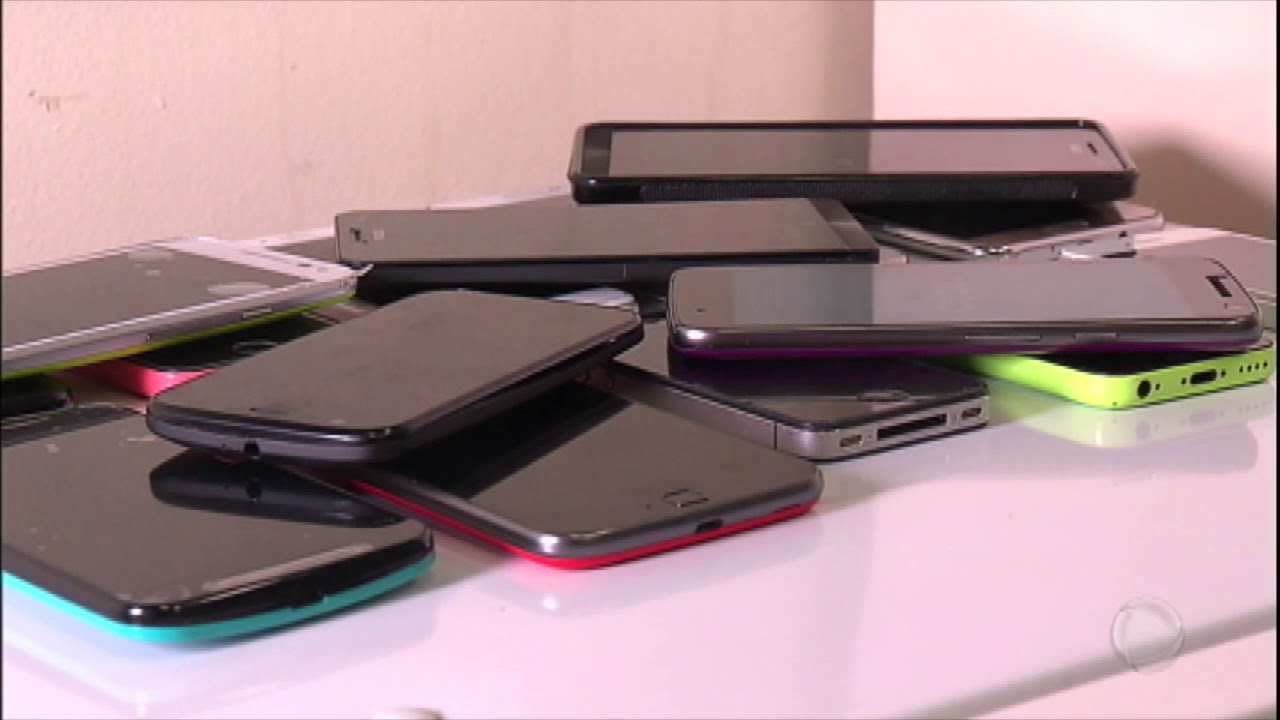
A good definition is: the person stopped using it for the good things it brings. You use it because if you don't you'll have a problem. If you leave home without your smartphone and you have a problem with that, you have a problematic use.
And who now doesn't mind forgeting their smartphone? It's a society of addicts. You just have to see what are you addicted to.
The problematic users are a part of a society dynamic which is the hyperconsumerism. It's not only with drugs, but with food and a series of practices that can be excessive and bring a series of bad consequences. This compulsion is inherent to the market system that through ads aim to addict people in brands, in superfluous consumption, so they can be more profitable to the market system.
As much as society tells you to buy it, buy it. . .
you'll buy one TV a year at most, drugs are potent because they are the most interesting thing in the world. There's no limit to how many rocks you'll smoke in a day. If I want to buy pot or cocaine in a city like São Paulo, I can call a number and in 15 minutes it will be delivered at my house, so drug is not controlled.
It's already allowed, regulation would be to put rules. Contrary to what some believe, that prohibition sets rules, no. This way is the law of the jungle.
If society wants to stop trafficking, we can legalize drugs. And the proof that violence is a product of prohibition, and not of drugs, is that there's no armed securities in a beer pub. If we regulate it, this war ends.
So legalization should be seen as a way to reduce violence. You can't just say that drugs are bad. Drgs can bring pleasure.