Welcome to the video. My name is Ronnie. Today, I'm going to teach you how to remember vocabulary.
One of the biggest and most important things about learning a language or just talking is remembering vocabulary. You might have new vocabulary that you've never heard before, or it might be vocabulary that you've heard a hundred times and you always forget. The very first rule when you're trying to learn a new language, the very basic -- and a lot of people ask me, "Ronnie, how can I learn English?
I'm a beginner in English. I want to learn English. " The best way to begin learning English is to learn vocabulary, basic vocabulary, and then go on to grammar.
Verbs would be a good way to start. I remember learning French when I was a child. I learned the colors first, and then we went on to verbs, and I was lost.
I can't speak French. I can teach you English, though. Today's lesson is on how to remember vocabulary.
The number one rule is repeat, repeat, and repeat. The only way that I can remember new vocabulary because I am a visual learner, which means I must see things to remember them, I have to write new words down. As soon as I write the new words down, for some reason, my brain remembers.
Everyone has a different way of learning. Maybe you are an audio learner. That means you learn from hearing.
If you are an audio learner, you're lucky because you'll be very good at languages. And because I'm more of a visual learner, if someone tells me a new word, I'll remember it, and I'll learn a new word. I don't remember the new word.
What I have to do, like I said, is write the word down and visualize the word. Repeat, repeat, repeat. A really, really good technique that I used -- some of you may know I lived in Japan for four beautiful years.
I actually tried to learn Japanese. Yes, yes. It was exciting and fun.
One way that I learned kanji, which is a Chinese script, is I had a poster in my toilet of the different Chinese or Japanese characters. So every time I went to the toilet, I would look at the poster. I am not physically, consciously trying to learn it.
We call it "subconscious". I'm subconsciously learning the symbols because I'm seeing it every day. Sometimes three times a day, I would see that new vocabulary.
It would help me to remember because I could repeat. Eventually, I would understand it. I would get it.
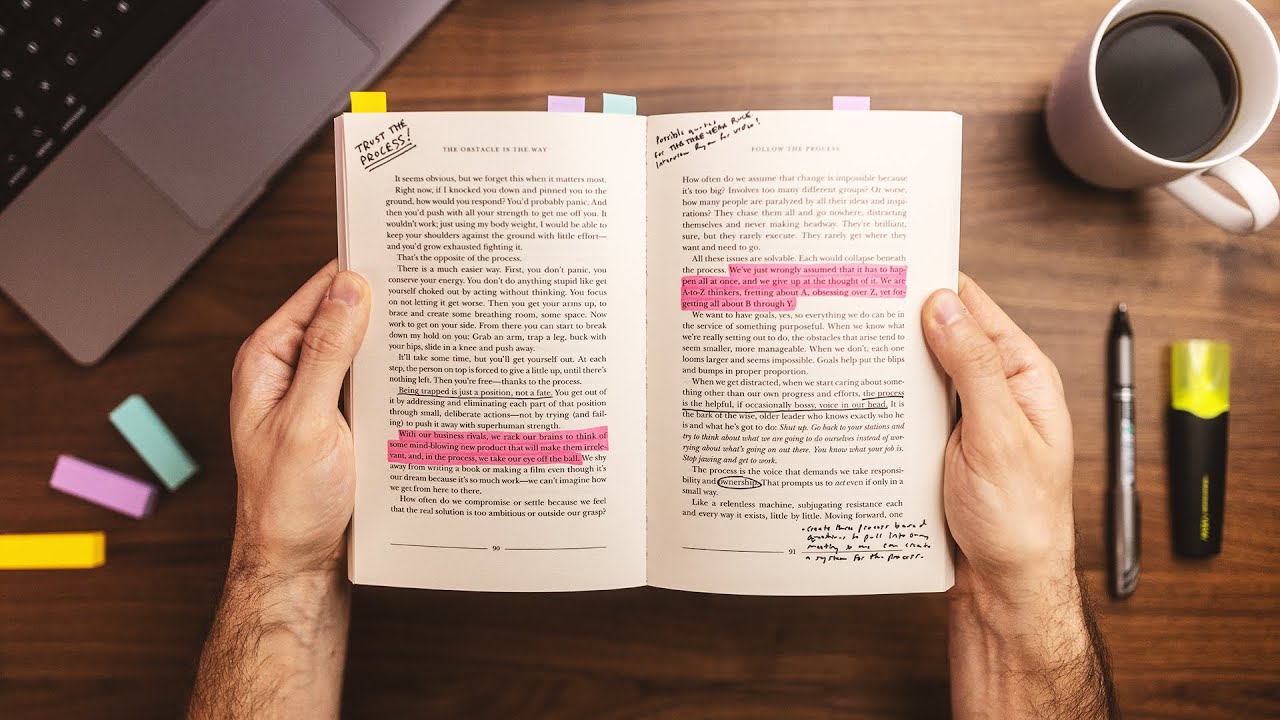
Another really good technique is to use a poster, as I said, which is a big paper, and write down new vocabulary words, or get small sticky notes. I think everyone understands sticky notes. They're about yay big, and you stick them on something.
When I started to learn Spanish -- I'm still doing that -- I would take little sticky notes, and I would stick them on the things that corresponded to the word. For example, if I was going to learn about a chair, I would take a sticker that said "Cecilia", and I would put it on the chair. I'd take my sticky note and put it on the chair.
So every time I looked at the chair, I would remember the Spanish word. But I forget now. I think it's my pronunciation that's bad, isn't it?
Isn't it? Yeah. So if you see the words or a group of words every day, it will help you remember.
One very important thing to also remember is that you cannot learn 100 words a day. I would limit myself to no more than 10 new words a day. That's a lot.
I would go for 3 or 4, 5. If you're a more advanced English learner, and you're trying to learn a lot of new vocabulary, I would do 10. But it's important to repeat, repeat, repeat.
So in one week -- 10 times 7 -- you're going to have 70 new words in your brain. But if you don't repeat them, you will lose those words. Because I'm a visual learner, I also like to draw pictures.
I'm a very good artist. So one way that I learn things is by drawing pictures and putting the words inside the pictures. If you like art or if you're good at computer graphics, you can make little pictures or posters with English words exactly into the picture.
So if I was going to draw a picture of a donkey, I would write the word "donkey" and make the shape of a donkey. So I remember from doing art. The next one, which is more of an academic way to remember vocabulary, is to take a word that you've learned, make a sentence with the new word.
If I have the word "donkey", I can say, "I want a donkey. " So what I'm doing is I am making a sentence, so I'm improving my grammar, and I'm also repeating, repeating, repeating the new vocabulary words. I can also say, "Hey, maybe I don't want a donkey.
" As long as you make a sentence and repeat the sentence, it's going to help you. The last trick, which is fun. This is my favorite.
Your own native language can help you remember English vocabulary. A very good example of this is in Japan, there's a word called "bimbo". In Japanese, "bimbo" means "broke".
It means you have no money. When I went to Japan, I heard the word "bimbo", "bimbo", "bimbo". Why are people talking about stupid girls?
In English, "bimbo" means a girl who is stupid or not very intelligent. I couldn't understand why so many Japanese people were saying, "Stupid girl, stupid girl, stupid girl, stupid girl. " Then, I asked someone, "What does 'bimbo' mean?
" They said, "This means no money. " If you can use your own language -- and maybe there's a word that even sounds similar in your language, like "bimbo" -- I'm trying to learn Spanish. I'm not doing a very good job at it, but if I hear a word that sounds like an English word, it helps me remember the word more.
I want you to try and think of your language and English. Even if the word sounds a little bit the same, your language can help you learn another language. The word might even be the same in your language if you're lucky.
If you need help in remembering vocabulary, number one rule -- repeat, repeat, repeat. Look at it every day. Visualize it.
Write it down. Talk about it. It'll help you.
It'll stick in your brain. For more brain exercises, go to www. engvid.
com. Do a quiz. Bye.