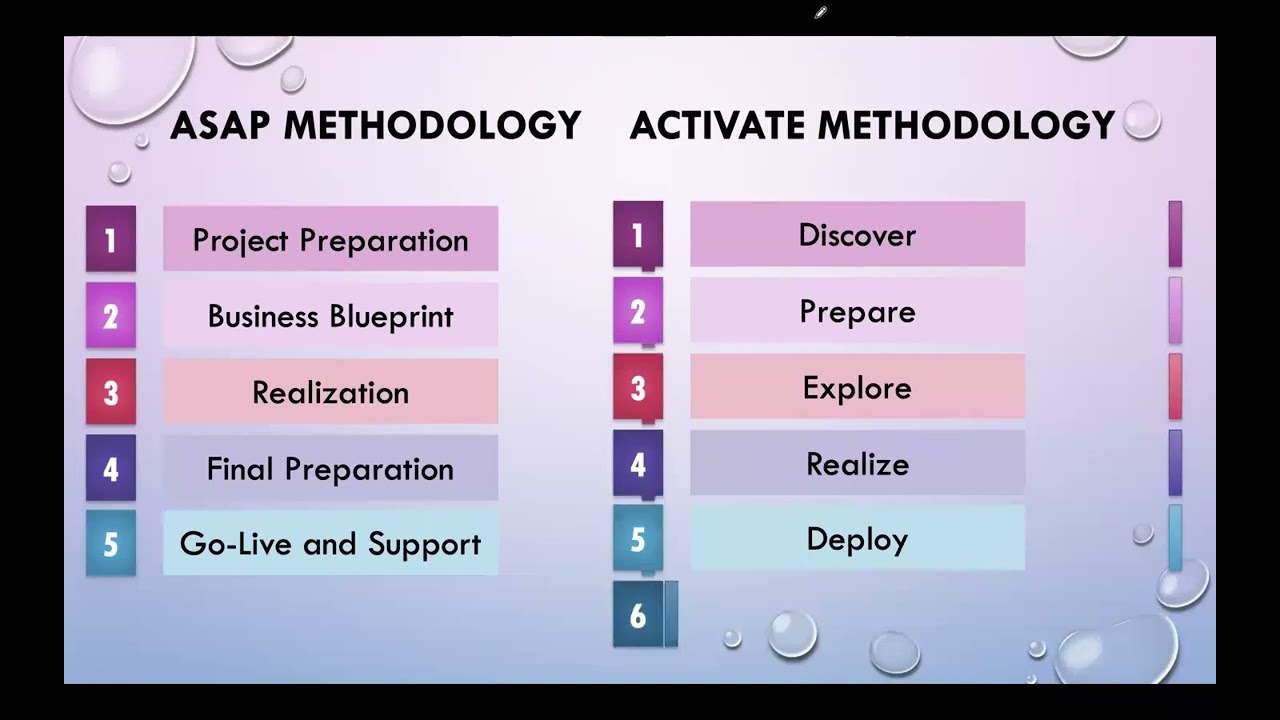
hi my name is Eric Kimberly I'm the CEO and found our third stage Consulting Group or an independent enterprise software and digital transformation firm wanted to chat today about sa ps4 Hana activated methodology along with some of the missing pieces of what you need to augment that methodology and just to give some backdrop if you're about to implement as for Hana activate is the the newest iteration of sa Pease implementation methodology they used to have the ASAP methodology they had traditionally been used for ECC and other legacy sa P deployments and with the release of
s for Hana they are now using the activating methodology and what we see oftentimes happen with a lot of companies is they think that the activate methodologies and all be all approach to implementing sa P and so we want to do today is talk about some of the blind spots missing components of that methodology before we get started my name's Erik enrolling as I mentioned I'm the CEO and founder of third stage consulting I've been in the ERP and sa P space now for about 20 years started my career one of the big system integrators
as an SI P consultant primarily focused on organizational change but over the years expanded my skill set within the SI p ecosystem to include a project management process reengineering I started to do things outside of si P as well a software selection and digital strategy and have worked with a number of different other types of technologies over the years as well and being technology agnostic we have a lot of good lessons learned from from sa P deployments over the years as well as s4 HANA deployments in more recent years and the problem we often see
with clients is once the technology has been selected and we've decided we're moving forward with s4 on a maybe we've got part of the company that's already using s4 perhaps you've decided to consolidate all the entities onto one instance or one platform whatever the case may be we've decided we're moving forward with s4 Hana a lot of the challenges that we see though is that companies don't know what to do next they assume that the right thing to do is just to adopt the s4 Hana activating methodology bring in the system integrator who's going to
adopt that for them and start implementing stuff and what ends up happening is you end up rushing into the implementation without a clear vision or plan you end up delegating too much of the sponsibility two-year system integrator and you end up setting unrealistic expectations for the deployment so what we want to talk about today is what are the things we need to do and be aware of as we head into the s4 HANA deployment particularly as it relates to the activate methodology and things that we need to do to augment that so this is a
phenomenon that we often refer to as cliff diving when companies select si P they decide it's time just to go and start doing stuff they don't have a clear vision they don't have a clear direction system integrator takes control the project the meter starts running on the consultants while you're trying to figure out what you want to be when you grow up the technology ends up driving the business rather than the business driving the technology and yet I'm spending too much time and money on the project causes a lot of frustration it's a lot to
absorb and it dismisses or defers a lot of the ownership of the project to your system integrator so there's a lot of different risks they come along with this phenomenon known as cliff diving from the time we select the software and just jumping straight into implementation what will suggest here is one of the things that we need to do in addition to that activating methodology that you might your tendencies your instincts might be telling you just to jump straight in wait here we're gonna talk about what are those things we need to augment that activating
methodology that your system integrator or your implementer might be bringing to the table so to set some further context when we look at what causes it as for Hana transformation to be complex there's a number of different layers things that contribute to the complexity of the time the cost the effort that it's going to take to make your s400 project successful and the three things that have the biggest impact on that or process change the degree of process change that your organization will experience as a result of the s400 transformation the amount of people change
so how much people's jobs will change and how open to change they are or not that hole where you fall in the spectrum is going to determine how much time and effort it's going to take and then how big of a technology shift this is for you if you're going from an as/400 legacy green screen system over access for Hana that's a pretty big jump if you're using a you know y2k or post y2k semi-modern ERP system maybe a Tier two system and now you want to jump over to sa P that's that's a little
less complex and certainly if we use ECCE or r3r or the legacy s a few products that's less of a jump still a jump but not as much of a jump some of the other scenarios so really just understanding where you are on the journey how big of a jump it's going to be what are the things that are gonna contribute to the complexity of the transformation is a key step here and one thing that the activate methodology assumes is that we're all starting from the same place but we're not we're starting from very different
places and we've got to adjust that activating methodology and automate augment that activating methodology for who we are where we are where we're headed what we've been through what we're trying to accomplish with this project there's a lot of customization even though that's a bad word in this industry customization of the methodology not the software customization or the methodology that we need to do to make this relevant to us and make our s4 on a project more successful so we have to think about are we ready for the activating methodology there's there's a lot of
things we should be doing before we even start unpacking this activating methodology and on the right side of the screen you see the the general structure the general framework for the S AP's activating methodology and this is the similar approach than a lot of the system integrators will follow this is sa piece prescribed approach to deploying as for Hana some really good stuff in here are some definite improvements over ASAP and some of the other older methodologies that sa P and others have used to deploy the old products but there's still a lot missing it's
still very centric on technology it's helping us figure out how to configure and build and test and move the data into s4 Hana but it's not giving us a clear roadmap for how to transform our entire organization and that piece that last part is arguably the most important part and that's the stuff we need to start on and get a clear direction on before we start moving over to the activate methodology so on the left side of the screen you see some key things that are missing from the implementation readiness perspective some of the things
that should be done before you start deploying the activate methodology before you start designing building testing software we need to figure out where we're gonna be when we grow up we need to figure out what our business blueprint is what this overall transformation means to us what it needs to look like and then we figure out how now activate will help enable that so the left side of this include some things that are missing from activate things around organizational design to finding what people's roles and responsibilities are how are we gonna standardize those business processes
it tough it is activate methodology assumes we've figured some of that out and we've defined our general processes now we just need to translate that into s4 HANA well most companies haven't figured that out yet they're trying to figure that out on the meter while the meter is running with the system integrator and the consultants and they end up rushing into a decision or they end up taking their time making the right decision but they end up spending way too much time and money on the implementation because they were letting the meter run while they're
making those decisions so the more that upfront work we can do the more time and money we'll save as we get in to activate the change impact analysis is a very important organizational change component we want to figure out how we want to build skills and competencies there's non technical skills and competencies to support the s4 honest transformation and then also how we want to build the s4 on that competencies itself so that we're not overly dependent on our system integrator or outside consultants we actually have people internally they can start to stand toe-to-toe with
the system integrator and be a true partner rather than having to defer to the partner defer to the system integrator to a fault because they just don't know any better they don't know the technology so so the more we can do to get a leg up on the stuff the better that implementation is going to go and the more effectively we're gonna be able to leverage that activating methodology when we get to that point in the journey but the key is when do we get to that point in the journey like I said you don't
want to jump straight in to activate you want to make sure you're ready you've got a clear blueprint roadmap then start to deploy the activate methodology along with your system integrator consultants or your technical and functional consultants so this is a roadmap for the implementation readiness that we typically advise our clients through we have a we have probably six or seven clients right now as a recording this video that we're helping them through their implementation readiness for their essay s4 Hana transformation so these are the five major buckets or work streams a lot of detail
behind this that I won't get into we have other videos on my youtube channel that you can check out that unpacks to this one slide and breaks it up into multiple slides and more detail and templates and stuff like that but this will at least give you a vision or a high-low since what should be included so first is your strategic and executive alignment that's a very important part of making sure we've got that figured out because activates not going to help us figure that out activate will not solve that problem for us so we've
got to make sure we've got strategic and executive alignment and direction for this project so that we can better use that activate methodology the operational readiness that's more than consider that the business blueprint not the SI ps4 Hana blueprint and using sa P's nomenclature but more than business blueprint that overarching map of who we are much like a the general contractor is gonna have a blueprint for how to build a house before we start building in the before we start bringing in the drywall people the plumbers the electricians the roofers all that stuff we need
to first have that blueprint understand what it is we're trying to accomplish and what the general roadmap is then we start bringing in the system integrator or the plumbers in this case using that analogy to figure out how as for Hana and the activate methodology can enable some of those business processes defined in that operational readiness work stream now we also have people readiness so there's a people readiness components that's thinking that as an organizational change management not training and communications but the organizational design the more strategic organizational change components that activate methodology does not
address but yet it's critical to your overall transformation you do that part right activate methodology becomes that much more effective so we start to figure out how what is our organizational change team once the order design what's our communication plan how we're gonna start to implement some of those organizational design changes even before we start building and deploying the software and then there's the technical readiness making sure we've got a clear vision and roadmap for what the architecture is going to be how we're going to move data over how we can start to build that
internal center of excellence or internal competency around s for Hana so then our IT staff can be on equal footing or at least an equal partner with our system integrator and provide some of that functional and technical knowledge in-house rather than outsourcing the entire thing and it makes knowledge transfer that much easier later on if we can do that upfront and then finally the project governments and planning that's that's one thing that I don't believe in my experience activate the activate methodology nor the system integrators in the SI P ecosystem are generally very good at
some are but most or not and so we need to figure out how what is our overall project governments what is how are we going to identify mitigate risks and what's our overall transformation plan or overall roadmap what what is in and out of scope for sa p4s for hana where are we gonna plug in for party systems all that stuff we need to have a clear vision and governance around so when we're working with our clients generally we end up acting as an extension of our clients PMO we end up providing the project management
capabilities the the risk management mitigation arm of the project and we also end up being the ones that will help plug some of these gaps that we're talking about plug the gaps that your system integrators don't provide the activate methodology doesn't provide and those are typically things that we just talked about on the previous slide things around organizational change at a strategic level process reengineering the overall program management risk management that sort of stuff so you'll notice though that we're you see us off on the bottom left you'll see your system integrator off on the
bottom right notice who's at the top it's you it's the implementing organization that ultimately owns this and it's important that you and of course squarely in the driver seat of this project and we're always there to help our clients do that we want to enable them to be empowered to drive the project the way that they feel is best and leveraged outside experience in a very target in a deliberate way rather than doing the the traditional let's just outsource this to system integrator X and spend X amount of money and let them handle it that
that is a recipe for disaster so let's figure out a way to own this so we can control this project take accountability and ultimately have some sustainability for this longer term for ourselves and this is a high level project QA framework we use with our clients throughout ns4 HANA transformation beginning in that early stage of implementation readiness and certainly throughout the activate methodology as well we're applying these different lenses that we analyze and assess a project and identify risk and mitigate risk in ways that the activate methodology typically does not address so I won't go
into this in detail again there's another out on my youtube-channel that covers just this framework and dives into this framework of more detail if you just search my youtube channel for SI p QA you should you should be able to find it there but this hopefully gives you a high-level sense of what is some that QA Quality Assurance type of stuff that I need to do to ensure that the project is successful so I hope this is helpful I hope this gives you a sense of where to use activate methodology and just as importantly where
to augment what the activating methodologies does not provide because that is arguably just as important as the methodology itself it's figuring out what doesn't include and what do we need to do to make sure we've addressed that so if you have questions you'd like to chat more about this bounce around ideas you've got specific issues you're dealing with on your project feel free to reach out send me an email feel free to call me connect with me on LinkedIn and let's talk about your project be happy to informally bounce around ideas via be a sounding
board for you and help as you as you continue your journey so hope you have a great day hope you found this video helpful and we'll talk soon Thanks
![Biggest SAP S/4HANA Implementation Risks [and Effective Mitigation Strategies]](https://img.youtube.com/vi/WfkSFpi0MYk/maxresdefault.jpg)


![Top 10 SAP Terms and Definitions [Activate Methodology, HANA, Fiori, Leonardo, etc.]](https://img.youtube.com/vi/YH0Sf-6Mz4c/maxresdefault.jpg)