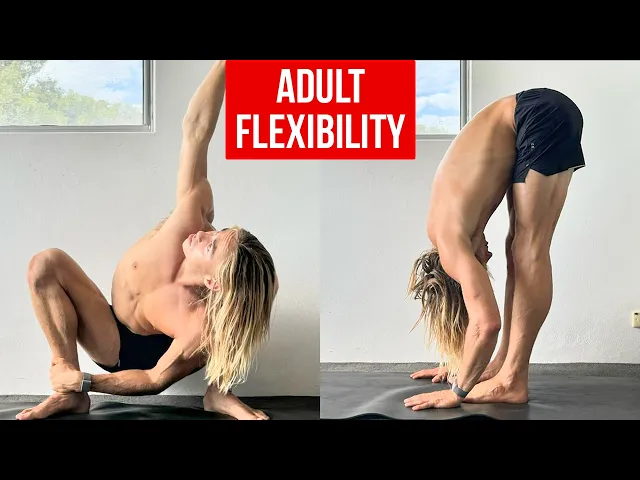
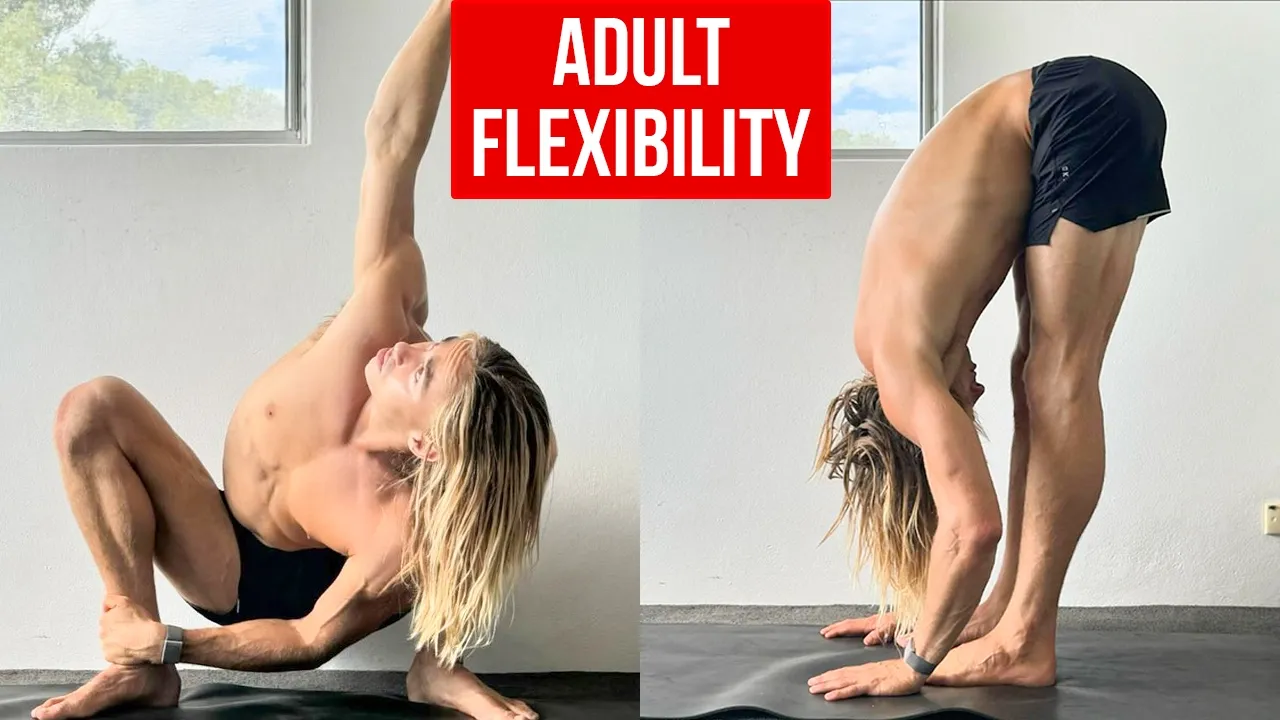
I can't get flexible I've always been stiff and tight what advice do you have for people that have this mindset towards flexibility so what I would say is I mean if I put myself in that person's shoes I would be looking out at other people like potentially myself or whoever and thinking they must spend hours and hours and hours like in the in the gym stretching um to reach that level of flexibility and I'm just like I'm trying to push out this message where it's like no you don't have to spend hours all you have
to do is be consistent spend a little time each day um and you can get incredible results like it only takes 10 15 minutes a day and if you do it consistently like over a month like a month period you're going to notice an insane change from day one to day 30 so it's just like break it down spend 10 minutes a day like have a routine and stick to it and just like see for yourself like the results that you can actually achieve like it's possible for anyone is what I would say having a
flexibility routine is a key thing that you just said There because for the average person that wants to get flexible it's just oh this area is tight I'm going to stretch it how many exercises how many sets how long do I hold it for I'll just go based on feel and they just do it randomly in a workout and randomly throughout a week how do you look at flexibility programming to make progress yeah so yeah interesting point um I would say the more ways you can measure the more ways you're going to win so if
you can at least have like a structured routine like you can create one yourself you can reach out to people like myself or like you who can create one for you and what I like to do anyway is is take photos or videos of particular stretches or exercises um we at like basically a starting point like an anchor point and then you know a Midway Point 15 days later and then like another 15 days later by the 30-day Mark um I I can retake those photos and see like actual visual progress um and then along
the way as well you count your reps you count your sits and you count your the weight that you're using for the exercises which is just another meas measurement to back up your progress as well so having that Measurable kind of data along that however long it may be Journey um typically I work in 30-day um like kind of time periods just because that's how I run my challenges um but yeah having that measurable data that you can visually see in through a photo or a video and that you can write down and record in
terms of Weights reps and sets um is going to be extremely beneficial and keep you accountable at the same time um along your Mobility journey I love that because with flexibility we don't commonly think to measure for whatever reason it is because usually flexibility is seen as like an afterthought I just want to increase my range of motion and move better some arbitrary thing whereas if someone wanted to have a body transformation lose fat they would take photos they would weigh themselves regularly when we go into the gym to out we never just go and
just say we're lifting weights you know exactly how much weight you're lifting your sets reps Etc doing that for flexibility gives you the motivation because you can tangibly see the progress it's not just some concept I'm trying to get flexible and it's I think I'm improving bro or I don't know I feel pretty similar exactly no I could not agree more yeah approach it like you do with your weight training which is pretty much what you just said uh record as much as you can and you're going to see way better results you're not just
going to be kind of floating around stretching here and there you have a a regimented routine that you stick to you record your we to rep your sets um you take photos on day one and day 30 or whatever it may be um and you're going to see insane results and that's going to help keep you as well um but yeah yeah coming up with a flexibility routine takes work which is why most people follow those YouTube follow along along routines what what's your opinion on those can they be effective I think they can be
effective in the short term mostly um if you're looking for say I don't know You' you've had a long day at the office and your HS are feeling tight like you can look up a little follow along routine and it's probably going to be like what uh uh Mobility routine for desk workers which is focusing on the hips because my hips feel tight And that can provide some short-term relief which is you know that that's great that's going to make you feel better in the moment but if you want to see those those long-term compounding
effects and results um you I would suggest sticking to a a routine you know weekly routine over months and hopefully years into the future um and that's where you're going to see like a real long-term benefit because those follow along routines are usually just done for time as opposed to what you just mentioned earlier is important having that Progressive overload built in to a flexibility routine so by creating your own routine you'd have your sets reps weight lifted you'd have an objective measure of your range of motion by photo and video that's the key difference
isn't it 100% yeah exactly um having that that program that you can stick to that you can do every day seeing the like yeah it's going to help dramatically by the end of the result and the most important thing for any Fitness goal whether it's flexibility strength muscle mass is seeing progress how long does flexibility take to see a meaningful change yeah that's a really good point um so I Run 30-day challenges like a lot of them and like I was actually just scrolling through one of my challenge groups um today and there was an
awesome message um so I get everyone to take photos on day one which is like a deep squat a forward fold and a downward dog so three basic basic movements and just photos just CU it's easier um then looking through like 500 videos but um yeah so the guy took the photo and then even a week later he uploaded the photos into the group chat and he's like wow like look at the difference between day one and day seven um um and there's like a pretty insane change and these routines are 20 minutes long and
they're full body focused um and yeah like the Deep squat the forward fold the downward dog you can see visual changes um and improvements and flexibility and Mobility like in seven days so it doesn't take that long to see results and the fact that he had those photos from day one that he could compare himself to on day seven um um is so important because if he didn't take those photos he might not have even realized you know what I mean so having that data and like seeing it such a positive reinforcement And it makes
you want to stick to the program and keep going forward I wonder what the primary change and adaptation is in acute flexibility gains like is it just your ability to tolerate a stretch like surely there's there's some basic science happening do do you know anything about that I mean I'm not a scientist so human over here no stress no no I mean I do consume a lot of his content which is great but um yeah not quite as scientifically you know alert as he is but um yeah I just think with anything if you stick
to if you stick to it for long enough and you stay consistent you're going to see results like it doesn't matter what it is flexibility whether it's lifting weights in the gym whether you're just drinking more water consistently day to day you're probably going to notice a change um within like a couple weeks at the very least yeah and it's having that optimism to our earlier point about I can't get flexible I've always been stiff and tight changing your mindset to uh one of optimism that I can improve this isn't something that I always have
to have as part of my default way of being in my body and the moment that I Change that mindset for myself alongside being consistent with flexibility and actually sticking to a routine I saw tangible change for the first time in my life cuz I came from a calisthenics background where it's just all strength stuff just pull-ups dips push-ups all that stuff but not doing much like end range static holds or weighted mobility and stuff until I thought okay let's give this a red red hot go and adopt the mindset that I can do it
having those two was just a game changer for me and actually seeing progress yeah exactly and a lot of it I mean some of it comes down to just like maturing in the gym that's what I found because I used to just be like I don't know your classic bro split you know like Push Pull legs and then I don't know three three years and years of training you kind of just you mature and you think there's actually more to just looking buff like I actually want to feel good like I'm I'm a little bit
crusty like I wake up stiff all the time my joints are sore I'm like what's going on here like let's take a step back um and yeah just through years of being in the gym and just like learn learning and just Like being inspired by people like yourself um and people like being Patrick was a bit inspiration for me as well um and just yeah seeing different ways and approaches of training and and feeling good and looking good as a byproduct is yeah being an absolute Game Changer and it's not an All or Nothing thing
it's not as if you have the goal of increasing your flexibility you have to go full blown yoga mode and all you do is passive static stretching for hours a day it can literally be as simple as adopting a full range of motion mindset in the exercise that you do which is very humbling as well because if you're used to trying to display your max strength inevitably you cut range of motion to like maximize how much you can do in a deep a pull up whereas if it's like okay I want to be as flexible
strong and muscular as possible just using that full range of motion is probably one one of the most practical things that I can give to people to apply exactly like just take your current routine subtract well like 30 to 50% of the weight of what you're doing and just focus on that full range of emotion and you're going to see like some insane changes you're going To get stronger and you're going to get longer as a result and you're going to be more flexible um and mobile like it's it is that simple like if you
really just want to like the most basic thing to do take your current routine subtract 30% of the weight off and just like really focus on that control range of motion you know slow negatives and just feeling that deep weighted stretch on every single exercise um and yeah you're going to feel a a deeper mind muscle connection at the same time which is you know going to help with the pumps and it's going to make you feel good and be more flexible yeah that's what we want we want the combination where you don't want to
be just binary one thing if you've been training for some time you want this well round physique that looks good and can perform well too short versus tight muscles how do we know whether we should stretch or strengthen an area yeah this is an interesting question um so I usually go with the approach that we need to strengthen through a full range of motion with most things because that's just it's like the the simplest thing to do which is going to help the most people um so Just to keep it simple for most people I
would say strength and strengthen at the same time um so basically that's like strength through length training which is something we just talked about just then so taking those exercises cutting the weight down a little bit and just performing that full range of motion because that is actually going to help with flexibility as well and having strength in that flexibility which is also important um but like in terms of of shortened muscles I would say a short muscle in terms of sensation like if you're trying to stretch your short muscle um it's probably going to
be a lot there's going to be a lot more tension in that muscle and it's going to be you're going to feel it and it's going to be much harder to stretch that muscle whereas if it's just tight you can you can kind of like take your time with it maybe after a few sets you can start to feel it release uh but a shortened muscle can often just come from prolonged sitting having bad posture um for like years on end so I would say probably chronically short and needs to be addressed with consistent training
whereas a tight muscle could be tight From like a previous workout you've had it just needs to a little bit of movement a little bit of lubrication um that's kind of the difference in my head anyway well stad I really like that distinction and a personal example for me where I always thought I had tight glutes and tight carves with the glute example because in my early days of training I didn't do much low body stuff I know shame on me I should be doing doing more of that but the extent was like squats but
there wasn't much glute focused work and I'd always do a lot of like static stretching and it was perpetually tight my glutes are tight no matter what I do I could stretch it for tons of minutes a day every single day and nothing would change then I started to do lunges remaining deadlifts stuff that actually worked the glute and lone behold over time as I strengthen this muscle group I accessed more range of motion and also reduced that perceived tightness the exact same thing for the carves like ankle mobility in the western world is a
struggle that nearly all of us face and same thing I'd never do calf work I'd skip it a lot and when I start introducing strength Training for the calvs with extended range motion pauses at the bottom doing that multiple times per week once again lo and behold ankle Mobility improved without wasting time on just static passive stretching 100% yeah I I always prefer the dynamic approach to the the passive approach um because yeah you're strengthening through an entire range of motion rather than gaining passive flexibility which often can result in lack of strength um in
that range of motion yes you might be getting more flexible which is great and I think has a purpose um but if you want to get strong in that new range of motion um then that kind of dynamic range with with load is going to be like you're going to get the most bang for your buck pretty much out of that can you quickly talk us through those different types of stretching and flexibility yeah so there's a few different types um my favorite is kind of like your weighted stretch or like long muscle length training
um and I know that people like maros Rell and stuff hop on this all the time um and it's also great for hypertrophy like it's probably the best thing for hypertrophy and it's also making creating A longer muscle as well so you're kind of getting the Best of Both Worlds by training full range of motion at long muscle lengths um you're getting full range deep weighted stretch on the muscle which is great for hypertrophy and great for Mobility as well and just maintaining like um you know long strong muscles ligaments and tendons um so that's
one approach which I which is my favorite approach weighted stretching um then you have obviously like static stretching um which I think has a place and can be quite nice sometimes I utilize it as like a wind down routine um even like a mindfulness practice to kind of I don't know because we do social media for a living I'm sure you find the same it can be hard to break away from technology and something like a nice passive Yin Yoga style can be really beneficial for the mind as well as maybe increasing some flexibility parasympathetic
leaning into that exactly yeah and kind of getting into that that relaxed State before bed is nice too so sometimes I'll utilize that um and then you kind of have your PNF stretching which is kind of like passive stretching and isometric Contractions to enhance flexibility even further which is a different approach one I don't use too much but I do see the benefit benefit in it um it is very intense and requires uh a bit of time a lot of focus um yeah it is intense and it can cause a lot of cramps that's for
sure um but yeah those are like the three main types that I like with the w stretching I think we're all on board with that knowing that it's an effective way to increase range of motion plus you get the muscle mass alongside that if you're training pretty hard intensity wise do you have any particular rep ranges or holes that you like to do with uh weighted stretching like prescription I would say you probably don't want to go too too low in reps you probably want to keep them between 10 and 20 just because um we
want to protect our joints like if you're going sub maybe five you're probably going a bit too heavy in the weight which could be you know an injury risk um potential for injury risk so keep the weight moderate to light aim for about 10 to 20 reps um I love doing like holds and pulses if you can manage it otherwise I would say if you're a complete beginner perform The Reps and be done with it rest and then do another set um if you're getting more more of a hang of it like you're getting used
to it you're getting stronger you're getting longer you're feeling good you can add that kind of extra stimulus which is only going to boost that that Mobility by doing like little pulses in that end range um and then yeah like little isometric holds getting feeling that deep weighted stretch those all just going to compound and add to that ility over time how much isometric duration would you be doing personally I wouldn't do more than probably like if you're at the end of us like you're doing a set of 10 and then you're doing like a
little isometric hold or pulse I would say be impressed if you could do more than 20 seconds um so really just like aiming to burn it out and like really feel that deep weighted stretch if you're pulsing or if you're holding isometrically yeah I have a similar approach to weight stretching myself uh the only thing I'd add would be it's muscle group dependent so what you do for the lower body versus the upper body is a little bit different in terms of how you can structure it so with say a horse Stance if you're doing
that weighted through range and then a hold you could probably do that heavier and four lower reps plus a longer hold cuz we've got such big muscle groups there like your adors and whatnot versus say something for your shoulder flexion like it's that the muscle size is so much different and that should change the intensity and Reps and duration somewhat absolutely I mean that makes complete sense yeah um those horse squats man they're tough if you had to outline your favorite weighted stretches could you list those off in terms of like the most potent best
bang for your bu type movements yes off the top of my head oh I've got a few that I really love um one of them has been coined by my audience it's called The Exorcism kill I don't know if you've seen me do that I can visualize it it sounds nasty sounds like it's in the next uh Banger of a horror movie yeah literally like that's what that's what the top comments are it's just like you look like you're from The Exorcist anyway it's me on a incline bench or whoever um and you're kind of
arching your back over the bench and doing a really deep bicep Cur coming all the way down and Then squeezing through the bicep so you're getting like an insane stretch through the PEC through the front D and on the bicep right at the bottom and it's just like constant tension throughout the entire movement which is why I love it so much and it is scalable with all these movements they're all scalable so if you if you find that just like you feel like your Peck's going to rip out of its socket which a lot of
people might feel um you can just reduce that by doing like a normal inclined bicep curl which is still getting a weighted stretch through the Bice BP and the tension is you know continuously on that bicep muscle through the entire range of motion um that's one of my favorites deism kill and then atg split squat for the lower body um great for ankle Mobility head Flex Mobility glute Mobility um I think it's a phenomenal exercise all around for the lower body um and scalable as well you can Elevate the front foot um to make it
easier and then as you get more flexible you slowly reduce the he of that front foot and then eventually you'll be on the ground um let's see another one which I love for shoulders for shoulders are you talking more Like shoulder flexion Mobility or more of like a compound way to stretch what comes to mind what's your what's your go-to bread and butter that's actually a tricky one I mean I love doing single arm weighted dumbbell overhead press and just coming like all the way down that's more of like a compound exercise um for me
I love that unilateral work as well but in terms of like if I wanted to increase um like shoulder flexion I would say the crossbench dumbbell pullover is a phenomenal one for that um and that's going to open up shoulder flection which is basically your ability to reach up and overhead um which is very hard for a lot of people due to like tight lights and poor shoulder mobility and that crossbench dumbar pullover is basically when you're lying cross on a bench and you're reaching and you're arching your back at the same time and then
you're pulling it up all the way overhead and you're going to get a beautiful thoracic stretch you're going to get a nice deep stretch through the lats which is just going to help your overhead shoulder Mobility um in the long term yeah so that's that's one for the shoulders which I really love um what Else have we got I particularly like starting from the lower body attacking it from the couch stretch weighted so you're against the wall you've got a arm overhead on the same side that you're you're stretching the same hip so it lengthens
all through the hip flexor up through the through the lat and it just stretches you out like a rubber band so you can push that into hip extension lunging forward um it's really good for that uh Rec famam the quadricep muscle that crosses the knee and the hip and just upper body good bang for buck movement that I like is the the Butcher Block so where you're either kneeling or in a push-up position you're on your elbows with a weight behind you so it's stretching the tricep it's stretching the lat it's forcing you into thoratic
extension as well especially for the bigger boys that are listening to this having a bit more weight to push you down tends to just coax more flexibility from what I've seen yeah no those are phenomenal I particularly love and as a staple of M the the couch stretch like just feels so good especially because I've been I've been doing a little bit of running so the cou stretch and tight Hip flexes is just like a perfect combination to to release those flexes for sure and this is where we said before doing your flexibility work in
a routine where you've got structure all good stuff but there's certain exercises that are just good for daily Mobility flexibility as you said just a couch stretch awesome sitting in a deep squat hanging on a bar what else do you like doing daily that's not overly intense but helps Grease the groove of your body and your joints and stuff yeah absolutely so I guess we've kind of establish what to do in like a regimented routine which is phenomenal and probably where you're going to see the most results but in terms of micro doing mobility which
I I I've heard um somebody I didn't coin the term but I've heard that term being said um but I think yeah doing little things like you get you're on a phone call jumping into a deep squat like like you're even just going for a brisk walk getting up for regular breaks when you're sitting at the office all day going to get like water you know what I mean stuff like that um and just kind of like moving around greasing the groove like you said um and all that kind of Those micro movements that you
do during the day rather than just staying sedentary and sitting on your desk or the couch or wherever you may be just like moving around greasing the Grove just feeling some some motion in the body twisting and turning whatever it is um that's going to help compound over time and your Mobility is only going to get better and better and it's going to help that end result you know and if you have a structured routine on top of doing that um then like you're you know you're really going to hit the nail on the head
like come the time of your goal for sure and this uh micro doing of flexibility especially for us uh Fitness weedos that love uh doing this all the time listening to podcasts it's such a good way to keep your body moving especially um say for example you're on a flight this is a a classic one uh if you're like us you're probably that weirdo that's uh getting up every 3 hours if you're on a on a long flight and just knowing the different movements that your body can do helps you get less overwhelmed with picking
stretches so you know that you have to twist your spine laterally um rotate as well extend it Flex it If you just go through those movements from head to toe it's incredible how good you feel after just 5 minutes of that versus the extreme example of just sitting on a 8 hour flight getting up and feeling like you've got rig Morse and you're 85 years old oh 100% yeah just like breaking up those long bouts of of being sedentary is is going to have a a huge effect on your Mobility but also like your mental
state and your energy as well like I I can't tell you how many times I've like woken up slos and I'm like oh God feel stiff whatever I'll do five minutes little routine and then just like an instant energy boost and then I'm ready you know what I'm saying that what's funny about what you just said then is that even you get sensations of feeling tight and stiff but people that have come across your Instagram seeing you do these exis curls and uh doing dips where you your elbows are literally touching they would probably think
this guy never feels stiff or tight but it's it's all relative eh exactly like it's all relative like I wake up feeling stiff all the time but you know after a little bit of movement like I'm genuinely pretty good you Know I'm I'm ready to attack the day but yeah uh changing flexibility exercise too often can cause slow progress and and plateauing how do you know when it's time to change when things start feeling stale well exactly exactly that like if if you're if you've had all of a sudden like you've made progress you know
you've been doing this routine for a couple months now um and you're feeling great and then all of a sudden oh I've had a I've heard a kind of wall here and I'm not feeling any more progress happening um then you need to change change something in your routine whether it's I mean you can change multiple things at once or you can you can pick a few you can change your rep range you can change the time of detention um you can change the exercises itself which is probably what I would do um because your
body's probably adapted to that new stimulus and you need something different to kind of you know reog and you know seeing some more results um so these a few things you can do to kind of break that plateau and it's it's not that it's not that hard it's not like you've reached your maximum level and you're not going to get any more flexible no You just need to change a couple things um to keep progressing like it's common with anything even with weightlifting like you plateau like I've plateaued everyone plateus all the time um you
just need to change and change the stimulus on the body to see those results keep flourishing that's fantastic guidance that you don't have to just change the exercise every single time to change the stimulus that's something that could easily be forgotten with flexibility for whatever reason we we have to highlight that yeah just adding a slower Tempo pausing for longer at the end range all these will make the same exercise feel different and cause your body to adapt in a different way but also what's really important is choosing a different flexibility exercise that ticks the
same goal that you're striving for I think that's the real downfall of just doing random flexibility exercises every single session is you're not spending enough time in what you want to improve whether it's your hip flexes or your shoulders or your thoracic spine it's going to be a bit uncomfortable like it's you need to be doing things that address what you want to improve I know it sounds very obvious but sometimes we've got to suck it up and keep doing uh the stuff that's most challenging and will give us the best results yeah no 100%
I couldn't agree more yeah stick to the routine if you hit if you feel a plateau coming just change it change a couple things like tweak a couple things and you're probably going to notice um you know your results are going to keep flourishing after that this episode is sponsored by fness FAQs get stronger build muscle and increase flexibility with C sags workouts use the coupon code podcast 10 at checkout to save 10% off when shopping at Fitness faq.com take advantage of this discount and enjoy the progress most people find flexibility training boring how can
we make it more enjoyable that's an interesting one um I think keeping it short and sharp and sweet is obviously a li that you can pull um cuz people don't want to spend hours in the gym stretching obviously and then finding subtle ways like micro doing it into your day you're on a phone call jump into a deep squat um or like do a lunge or whatever it may be um and then integrating it into your current gym Routine which we also spoke on so dropping the weight 30% and then really just focusing on that
full range of motion um which is also a fun way to reintroduce like a new stimulus and also get the added benefit of increased flexibility and Mobility because of that full range of motion so there's a few things there that you can do uh to kind of keep it fun and interesting and it's also going to help um you know change up your resistance routine without actually dramatically making like this huge lifestyle shipped just a few things that you can tweak into your current routine that are going to have huge benefit down the track a
common trap that I faced personally when I wanted to get more flexible is I looked at my body I'm like okay ankles got improved hip flexes spine uh shoulders and what I was doing too many exercises too many goals and that in and of itself wasn't enjoyable because it took too long I wasn't making progress and then such a simple change just choosing one area to improve at a time gives you the resources the and just like sustainability of continuing to do flexibility so then I'm like okay for this season Of 6 months I'm just
going to do side splits I'll come back to upper body flexibility later and my other goals and sure enough doing that allowed me to see progress I enjoyed it because it wasn't some uh big chore that I had to do this laundry list of stretches every single time so that's what I'd say to someone that's on the fence about flexibility uh finding it enjoyable or not 100% I couldn't agree more especially for beginners um a great way to not see results and quit as quickly as you can is to have too many goals and then
kind of see no progress um so if you're finding that you're progress you're just seeing no progress off the bat you probably have too many things you're trying to work on too quickly all at the same time so just you know if you can't touch your toes maybe just focus on that and then by the end of the program however long it may be you can you can touch your toes down and you can maintain that with you can reduce the load have a new goal and just maintain that toe touching flexibility that you've gain
you've gained um with a few touch points a week or however many um and then start working on a new goal and that's a A great way to kind of you know hit that goal and then continue on with a new goal without getting overwhelmed and having too like working on too many things at once and seeing absolutely no progress with that toe touching example that you just gave what's your overall approach to flexibility are you the one exercise one type of stretch to go for that goal or do you break down the toe touch
into a calf hamstring a neural stretch where do you fit on that spectrum of chasing flexibility 100% um I like to I like to start from like a real Baseline so I would say and yes so I'll start with simple exercises so for example one will be focusing on like dorsy flexion ankle Mobility the other will be focusing on like calf mobility and then hamstrings and then even like some Lumber flexion as well so there's there's always components um like different components that contribute to to the goal um which you need to factor into those
those routines and all the routines that I create U make sure to kind of hit every one of those nails so that you can get the best results and kind of optimize that routine I'm glad you said that Because the naive approach to flexibility is you can just do the position and get better I'm going to touch my toes and I'm just going to improve if I'm diligent enough and just persist whereas the bottleneck is usually somewhere in there a it's like either the the calf the ankle dorsy flexion the hamstring and then how all
those parts fit into the hole as well yeah I mean the body is so connected it's not like it's one thing that's limiting you from your goal it's like it's often a combination of things so you have to take in those different factors um when you're creating routines and when you're practicing flexibility and Mobility I'm curious you've been training for some time now if you could go back to when you first started what would you do differently in terms of flexibility gain far out I would I would definitely to be here I think going through
those formative years and doing the classic bro split and just browing out with your homies is is something you have to do and I cherish those moments with like my friends and like growing out in the gym and just lifting heavy and you know just like figuring it Out I think it's awesome but if I was to implement something I would just say the simplest thing that I would have done was to be focus on that deep weighted stretch um controlling the motion taking the ego out of um the lift whatever it may be um
yeah controlling motion focusing on full range of motion I would say that would be the the main thing um that would have the most positive impact down the track and further to that what do you see other people doing in terms of holding them back from making flexibility progress like the most common things without a doubt you see in public all the time the most common thing I would say is just prong like being being sedentary for too long um like people just get so damn tired because they're sitting at their desk all all day
and they but like their shoulders rounding they got terrible posture their neck's stiff like they don't have any activation in their glutes and their hamstrings and their hips like it's all everything's turned off and inactive and it just it becomes chronically short like we spoke on earlier and it can be a lot harder to release a chronically short muscle um than you may think so I just say for all those people out there that are sitting at their desk I would invest in something like a standing desk for one that's a really good start and
just take regular movement breaks um so you're working at your desk you get a call just get up walk around the office take the call you know just stuff like that it's it's the long bouts of being still and sedentary which are causing most of the issues so if you can just break it up you know every hour get up have a glass of water um that's just a really really simple affordable easy way to kind of reduce that stiffness longterm um which is going to help you know just help you live a better life
you know in the long run it's great that it's these accessible things that uh easy to do and sustainable that make a huge change and just integrating that into your life wherever possible is just the biggest takeaway people can apply to their lives it's when you get off of the train station don't just stand on the escalator get onto the St like stairs go up the stairs like park your car 15 minutes away or take the train so you don't have to just sit the whole time it's these micro do as you said Including it
into your life and it just helps your flexibility practice go further because if you do this awesome flexibility routine 3 to 5 days a week but then all the other time you're just sitting it's just going to be hard to get get the same benefit as the exact same person who's fidgeting around standing up taking phone calls walking changing postures it's I think that's a huge huge thing that you've highlighted there 100% yeah I mean if you compare two people I don't know if the study has been done maybe it has but I'm sure I'm
sure the results will be very clear if you were to compare one person who sits down at their desk Works 9 to5 and doesn't take regular breaks and is is pretty much sedentary for like I don't know eight plus hours of the day five plus hours of the day and one person who's actively conscious going to get up uh getting some water you know taking a lap when they need to on the phone call in a deep squat like if you compare them at the end of like the 5 to 10 year mark there's going
to be a huge discrepancy in in Mobility there and probably quality of life for that matter I would say putting this all together What would a simple flexibility workout look like for the average person that's got average overall goals and can commit a reasonable amount of time I know this is a very difficult question but do your best to if you had to give something to everyone and for them to see a benefit what is a workout split that works quite well I would say keep it body weight so it's extremely accessible to you I
would say for the average person out there most of us work 9 to5 sitting at a desktop which usually means you have a stiff spine your neck's probably stiff your hips are probably tight your glutes are probably tight as well and you probably have poor ankle Mobility so I would take those you know four to five areas and I would just choose search up online wherever it may be five different exercises I would do three rounds that's 15 minutes just choose five exercises that Target the hips the neck the spine the glutes the ankles um
and I would just do one minute of each exercise put a timer on and do three rounds of that and you can do that every day as soon as you wake up and uh you're going to see some insane results if you really stay consistent and you're diligent with That practice um it can be that simple yeah it's just building it as a habit something that you do consistently is better than the perfect plan on paper as a contrast that's done inconsistently or without just attention to detail that's another thing I'd like you to uh
outline further is just how important is actual technique and I guess mindfulness when you're doing stretching I think it's important I would say for beginners not so important just because for any beginner I think getting in and just doing the work is the most important thing getting used to it and then as you do that and as you progress you can start to become more mindful with it and then tune with your body um you can kind of you know you might not be in so much pain down the track so you can actually focus
on the breath a little more be a little bit more in tune with the sensation um and that helps again with just being mindful breaking away from technology kind of resetting coming back down to Baseline and then it's kind of like meditation in a way um and you can kind of have that kind of midday reset or morning reset or whatever it is and then Crack on for the rest of the day you know you can start fresh clear the mind for sure and I notice a big difference in myself when I'm doing stretching and
flex ability if I'm not present and I'm just going through the motions I'm not going to do my reps with quality I'm not going to use a full range of em motion I'll probably be holding my breath I'll find ways to wiggle out of the stretch sensation versus being diligent it's like anything in life if you put in the effort focused effort on what you're doing especially with flexibility you'll extend your range of motion and you'll actually change your body that way yeah consistency discipline it's sticking to the routine you're going to yield the most
benefit and long-term results for people who are motivated by us talking and want to improve their flexibility what are some tangible things that we can work towards on our flexibility journey be it positions and like outcomes of expressing our flexibility yeah there's a few but I would say the most basic ones and and ones that you should be able to do which are really good indicators of having you know like a healthy level of Mobility Um and you're probably going to age quite well is a deep squat hamstrings covering your Cals heels completely flat with
a nice upright posture and straight back um I would say forward fold feet flat on the ground legs locked um chin tucked under nice and compressed Palms flat on the floor so that's a great indicator of hamstring mobility and the Deep squat a great indicator of like hip mobility dorsy flexion ankle Mobility um and I would say if you can do we're kind of leveling up a little bit here but if you can do like a pancake with your legs kind of like you're sitting on the ground and your legs are wide and you can
at least you know kind of walk forward a few inches I would say that's that's a good level like if you can go completely flat then boom like that's phenomenal that's really good um and that's a really good indication of adductor mobility and if you can do a couch stretch with your back flat and your knee touching the wall um and your back flat against the wall that's an insane that's a very good indicator that you have good quad and hip flexible Mobility yeah if you can do a back rdge I was just going to
say really good indication of great Spinal thoracic mobility and shoulder flexion um really impressive move there um scalable again so there are ways to regress that to make it easier and slowly build up because it is a difficult move for a lot um if you can do kind of like I don't know what can't remember what the name is but like a a frog spinal rotation is that lateral uh flexion or rotation of the spine or is both oh yeah yeah but lateral flexion is also a great one as well one of my side Bend
yeah how would you how would you measure progress in that cuz with uh back bridge for spine extension it's pretty uh stock standard but for this side bending motion it's a bit more like arbitrary what's the standard like bending sideways like horizontal relative to the ground or what's the what's the metric there yeah it's a tricky one um one ways I like to meas there's a few ways actually one of them which I recently just implemented and I did this morning was if you have a foam roller you stick it up against a wall and
you place your hip like you step into it so it's between your hip and the wall and grab I was doing like 25 kilos and what that does is keep your hips locked into place and as You bend you you can't move your hips and you can only laterally move that spine and you're going to feel like a a really nice uh contraction through the obliques and a really nice side Bend so one of the ways you can measure that is obviously depth of Bend and and the weight that you're using um so that's a
nice way also pancake lateral bins so you're in your pancake again and you can put your arms over head or wherever it may be oh bro I hate that my lateral flexion from the calisthetics is just not not ideal so that's my homework thanks for that yeah no no worries um so obviously hand straight up doing that pancake side Bend is going to be very tough hands on heads a little easier because your elbows a little bit of feedback from the ground um otherwise you can just kind of like graze your legs and then bend
over to one side and then graze and then bend over to the other side um so those are a few ways that you can get better at lateral flection are there any resources or communities that I guess showcase this stuff because it seems quite Niche it's not just your standard follow along stretches on YouTube this is like some Next Level ROM stuff do you have Any resources or or people that you look up to with this stuff oh yeah uh lots of people I look up to um Ben Patrick he's amazing um Roy gold he's
he's a weapon like wow the stuff that he can do is pretty inspiring um let's see who else um there's quite a lot of flexibility kind of like gurus out there now which is great to see Movement by David he's very good yeah range of strength great like there's a few uh be the best you can be he's great as well um yeah there's a few people out there that are just doing like making phenomenal content easily digestible and making Mobility accessible for everyone which is the goal and what we're all trying to do at
the end of the day I ask you that just because with those resources if people were to look up these people on social media they could Cobble together their own flexibility routine for free quite easily you could just look up okay I want to improve my pancake I'll um gather some resources from a few of these make mine routine it's it's easier than you think it's definitely easier than you think absolutely and it's completely possible for you to to make your own team for free with all the content out there Like 100% you can do
that now lower back pain has a prevalence of around 80% so most people going through life will experience low back pain at some point in their life do you have any strategies or ways of approaching low back pain yes um stop sitting down for so damn long it's they not sitting man if you this should be the name of the podcast don't sit stop sitting stand yeah stand and just have regular breaks uh that's the could be so easy though I thought there was some type of special exercise or some type of morning routine yeah
I know but it's it's it's amazing right like you think I don't know like you look at all these people like oh they must be doing something that I'm not doing that's just like a complete secret and something I've never seen that is you know making them have no no back pain and be so mobile but it's like just comes down to the to the fundamental principles like the at the end of the day yes there are certain exercises that you can do that are going to yield some amazing long-term benefits but for most people
what it comes down to is just like stop sitting down for so long um have regular movement breaks um like move your body Resist against something you know like go work out at least a few times a week um and that's just going to have the most like that's going to yield the most results um for for you so it's just those small levels that you can pull um during your day which are going to the most benefit how about the fear from the public that the stuff that you do bending forward like a Jefferson
curl is bad for your back squatting knees over toes is is bad for your knees what what do you say uh to people that are a bit scared of these type of movements that they're going to hurt themselves get pain Etc it definitely can be bad like if you are not adapted and you're just someone off the street normal guy doesn't have much background of training and you try and do something like that yeah you're probably gonna hurt yourself um but if you establish the base and you work from the ground up and you do
the correct processes and you work your way up slowly it's all about slow progression um to avoid injury and and yield the most benefit long term then it's completely accessible to you and you one day will be able to do those those intense City squats that Ben Patrick does those Atg split squats with a on your back it just requires discipline and slow progression and scaling the movement right back to your level um don't just go straight into it otherwise yeah you will you'll definitely hurt yourself yeah that's that's such a great message you just
gave about it's all relative it has to be scaled in terms of range of motion as well as intensity of contraction load lifted you can make any exercise safe if you scale it back enough further to this low back pain situation it's not like when someone has pain in the low back or anywhere else we're completely offload the movement entirely don't don't squat at all don't bend your spine it's okay let's find your to tolerable range and work within that that applies if you're in pain or discomfort the same applies if you're trying to increase
flexibility you're not just going to go Beyond Your Capacity beyond your end range because you're going to strain a muscle uh get injured in that respect whereas if you just work within your means and it's this snail progress over time where months build up and you're like geez my fingers are now touching the floor on a toe touch whereas Before I could barely get past my knees it's all relative 100% scale of movement back to your level and then slowly progress yeah with flexibility how much of it actually lasts so if you get good progress
on say your back B back bend your side splits um toe touch do you have to do the same amount of volume intensity to maintain these moves no no no no no no like like with anything like you you reach a certain point you hit your goal and then you can kind of scale it back and find that happy medium where where you're kind of like it's all individual um but you can find that happy medium where you can maintain that skill um and kind of yeah just maintain it with with a few touch points
a week like it's it's not super tough like for me I was trying to get the dragon Squat and I was practicing that like five six days a week for like four or five months or whatever and I finally got it and now I practice it like once maybe twice every week um for just a few sets and I'm able to actually maintain that skill so yeah once you hit that skill yeah you can scale it back and just kind of do the core work um and like within like a session or two A week
to maintain that skill so yeah you don't have to to necessarily like uphold the same level of volume that it took to require that skill in the first place once you hit that you can kind of scale it back maybe try for a new skill and then just maintain that with a few touch points here and there that's the beauty of building strength at length doing the weighted stretching is that you're getting changes to your muscle at a local level through some nerdy stuff like adding more saram in series so the actual muscle gets longer
you're improving your stretch tolerance to like pain and discomfort and that stuff sticks with you if we compare that to just doing your standard static passive stretches you're not getting that connection to your brain as much that this is safe and comfortable so that's really uplifting that you don't have to do the same amount of work to celebrate and enjoy your range of motion for life exactly no very well said 100% how about having Aesthetics and Mobility is it possible to have both at the same time no impossible you have to chose damn it I
got to an hour in this conversation I was hoping I could have my C it Too let me down Jack yeah you can either just have like you can be stiff as a board and be like a big aesthetic bodybuilder or you can be peir shaped and have great Mobility that you have to choose one like there's no midal ground no no you can definitely have both and like again it comes down to those those principles that was spoken about like using full range of motion getting that deep weighted stretch really feeling that contraction having
a good mind muscle connection and being disciplined and staying consistent with your routine sticking to it measuring your progress um and you are going to get both like if you incorporate incorporate the the weighted stretching philosophy long muscle length training um you're going to get mobile and you're going to get aesthetic as a byproduct of that like you're going to increase mobility and you're going to get stronger and you're going to um you know gain like get hypertrophic adaptation like it's possible for sure how much would you add flexibility wise to a bodybuilding workout Say
It's Your Standard pushpull legs routine do you add extra stretches after you've done your bodybuilding or What approach I actually prefer to if I was to pick one I would choose to do like uh some sort of flexibility or Mobility as an opener so that I can kind of access that range right from the start and then in my strength session I can actually get more out of it because I've got more access to a wider range of motion or a longer range of motion which is only going to boost my workout and potentially result
in more hypertrophic adaptation um and more Mobility at the end of it okay with um integrating flexibility into the the gym as an example is it more suited to free weights or machines for opening up into different ranges I think both um I've actually been for a long time I didn't use machines really at all but recently I've actually been using some and I've found some really insane benefit um especially because it takes out the stability component which will Aid more in hypertrophy but you also are getting that deep weighted stretch like for example the
the pec deck machine is great um for like a really deep weighted stretch through the chest and front dels um and you're also getting that like hypertrophic benefit of you know the PEC de because you're Getting such a deep weighted stretch but you're also gaining that mobility and that extended range of motion as well so little things like that being able to overcome that stretch reflex as well because if you're using free weights there's probably more of a inherent risk that your body feels or apprehension to to going further whereas if you do that on
a pec deck you could really focus on the breathing because there's no uh like stabilization or control of the the free weights by comparison I mean as you said both are great but I guess if you really wanted to take it to the Limit and Beyond certain machines if they suit your body could be good for bodybuilding plus flexibility yeah absolutely and like great for beginners too like if you're worried about that like extra stabilization component and injuring yourself you can scale it back by using a machine which takes that kind of um stability risk
out of the equation and you can kind of just focus on the stretch awesome Jake that was a absolute pleasure speaking to you mate where can people find out more about what you do thanks so much for having me man um it's great to to meet you Face to face and yeah you can look me up pretty much on any platform um elas boy e s a Bo o y um um yeah that's me lots of Mobility content out there for you and just trying to provide value for the people who seek and need that
Mobility content if you're looking for someone well-rounded who will motivate inspire you to what is possible with flexibility definitely check out Jack stuff