Most species of animals reproduce in very high numbers. Arthropods and fishes, for example, can lay thousands to millions of eggs during their lifetime. In order for a population to remain stable, on average only one offspring per parent can survive to adulthood.
The rest will die. Some eggs don't hatch, some animals are killed by predators, siblings, or even parents shortly after birth, but one of the most common forms of death is by starvation just after being born or hatched. For those who do survive, there are multiple challenges and dangers that can easily lead to malnutrition, starvation and thirst.
Parents are at greater risk of starvation just before and after mating, when their energy levels and fat stores can drop by 50% or more. Babies are also more vulnerable, even in species that have few children and care for their young. Young mammals prematurely separated from their mothers rarely find the food they need to survive.
When food is scarce, a mother may starve herself in an effort to nourish her children. Alternatively, she may reject her children, refusing to feed them or let them suckle. Sometimes, malnourished mammals are unable to produce milk.
In these circumstances, babies either starve in the nest or den or they are abandoned, as is often seen among squirrels. Animals also face intermittent seasonal periods of starvation. For example, some dears species don't hibernate or migrate, and routinely starve in large numbers every winter due to scarcity of shelter and food.
Under food stress, mammals, birds, and fishes first shed accumulated stores of fat and then begin consuming muscle mass as an emergency source of energy, which can be debilitating and eventually become fatal as organs atrophy. Migration and dormancy are common adaptive responses, but they have their own dangers. Migration takes a great deal of energy, and its success often depends on how favorable the weather and food conditions were in the previous spring and summer.
Invertebrates employ similar strategies to cope with starvation periods, and many invertebrates, including insects, have evolved to survive for months or even years without food. Others migrate, but their ability to take off and to fly can be reduced by hunger stress and malnutrition, leading to death. Throughout the animal kingdom, lack of sources of energy is common.
During times of food scarcity, animals who starve first are those with lower fat stores such as juveniles, animals who have lost energy due to breeding, animals too weak to migrate and those with lower social status who have less access to food. Food scarcity is worsened by simultaneous occurrence of hunger and predation. How are these things related?
Because animals avoid being killed, they try to find food in places where the risks that predators pose to them are lower. For example, they will look for food in wooded areas where they can hide instead of in open plains where predators can more easily see them. When malnutrition becomes critical, they start leaving safer areas, increasing their vulnerability.
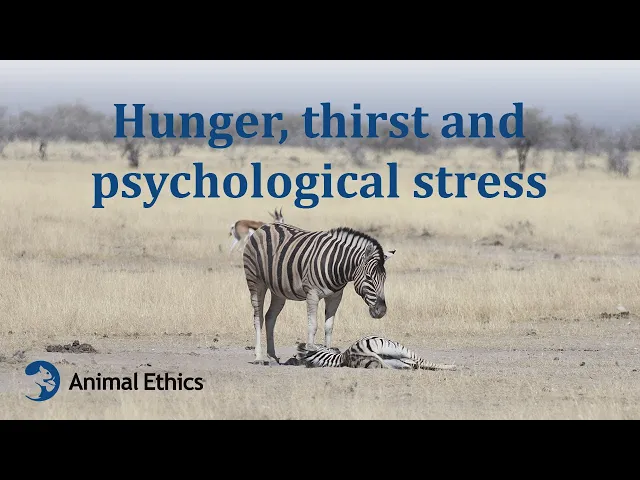
Thirst is another major contributor to high mortality rates in wild animals. There are two fundamental ways the lack of water causes wild animals to suffer and often die painfully. First, during times of drought there are not enough resources available for a large population of animals, so many of them die of thirst.
Second, as with malnutrition, some animals show a reluctance to seek water because of the risk posed by predators. Eventually thirst forces animals to take many risks to satisfy their need for water. When they finally leave their hiding places, they are so debilitated that they become easy prey at watering holes or in open fields.
Others stay in their hiding places until they are so dehydrated that they cannot move. Thus they are unable to reach water and they die of thirst. Extreme thirst is a frightening experience.
It produces a sense of exhaustion caused by reduced blood volume, and the body attempts to compensate for lack of water by raising the respiratory and heart rates. Next comes dizziness and collapse, and ultimately death. Diseases can also lead to dehydration.
For example, frogs can be affected by the chytrid fungus which thickens their skin so much that they can't absorb water and essential nutrients. Since frogs primarily hydrate themselves through their skin, This is usually deadly if untreated. A treatment exists and the infection is simple to cure, but there is not yet a way to treat large populations of frogs in the wild.
The disease can be further complicated by other factors such as heat stress. At times, authorities respond to droughts or lack of food in ways that harm the animals who are suffering. Sometimes measures are approved to deliberately starve animals.
This happens, for example, to urban pigeons. Another instance occurred in 2010 in Kenya, when a drought caused the deaths of 80% of the animals typically preyed upon by lions in the Amboseli National Park. Humans captured 7,000 zebras and wildebeests from other areas and transported them to the park to "serve" as live food for the starving lions.
Humans living there were interested in the presence of lions in the park because of the economic benefit of tourism. While the effects of stress in domesticated animals have been well documented, there have been fewer studies on wild animals, and the severity and number of stressors that afflict wild animals have been underestimated by scientific research, except for the effects of captivity on wild animals. Wild animals have to face adverse circumstances on a daily basis that can be stressful: physical trauma, disease, food shortages, conflicts with others of their own species or group, dislocation due to severe weather conditions or natural disasters.
They can also be frightened by loud or unfamiliar sounds. In mammals, birds, and arthropods, there's evidence of animals showing PTSD-like symptoms in response to stressful events, of mood and anxiety disorders, and of negative moods spreading throughout a social group. Here we will cover stress related to external threats and various aspects of social living.
Stress caused by risk of attacks by other animals seems to arise in two major ways. The first is directly from the conflict itself, in which animals must face the stress of fleeing or fighting. The confrontation may be so intense that the prey animal dies of stress.
Second, stress can arise in prey animals who are forced to balance food and the risk of being killed. They must decide either to decrease foraging or to risk exposure to predators. I spoke a little bit about this earlier and how it can contribute to hunger, malnutrition, and thirst.
Often, animals decrease the likelihood of being caught by choosing to eat less. In those conditions, additional stress responses are likely to be triggered by starvation and dehydration. This can be made worse by certain human interventions that are carried out for ecological purposes, such as the reintroduction of predators into an area to preserve a threatened plant.
For example, wolves are reintroduced in an attempt to prevent large herbivores, for example an elk or other type of deer, from eating certain foods. Not only do the wolves eat these animals, but their presence also changes their grazing behavior. Instead of grazing freely in open areas, the deer hide in places where wolves cannot see them easily, and eat less plentiful, less nutritious plants.
The dynamics that result from this are called the "ecology of fear". Living in social groups involves costs for animals, primarily due to social conflict and competition. Many species of animals that are social and subsocial (such as crickets) have dominance hierarchies.
Although a lot of fighting for position is ritualized, some involves actual violence or ongoing harassment. The social status that each animal has in the hierarchy dramatically influences her level of well-being, particularly when it comes to stress-related diseases. It has been well documented that social subordination, for example, constitutes a stressor in different social species, such as primates, rodents, and some types of fishes.
In low-ranking animals of these social species, depressive responses and a decrease in reproductive opportunities are often observed. Other subordinate animals may face frequent threats and intimidation in order to remain in their group. Common causes of intimidation are over food access and sexual competition, often together because of the extra energy demands of reproduction.
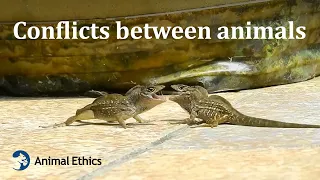
Dominant males might attack or threaten other males who try to mate, and kill the children who have other fathers, causing grief to the mothers, who are then coerced into mating with them. We speak about this in our video about conflicts between animals. Subordinate females in matrilineal groups can face constant threats and deprivation, in which dominant females use aggression and intimidation to limit the access of subordinates to mating opportunities and food.
The children of subordinate females might also be killed by the dominant female. She may force the subordinates to serve her, especially to further her reproductive success. This is common in meerkat gangs.
Stress due to the adverse effects of maternal separation has been studied in numerous social species. Maternal separation can have a long-lasting effect on the physiology and behavior of mother and child. After separation, common responses of the mother are reduced activity, moving with a bent-over body, and exhibiting other sickness behaviors induced by the stressful event.
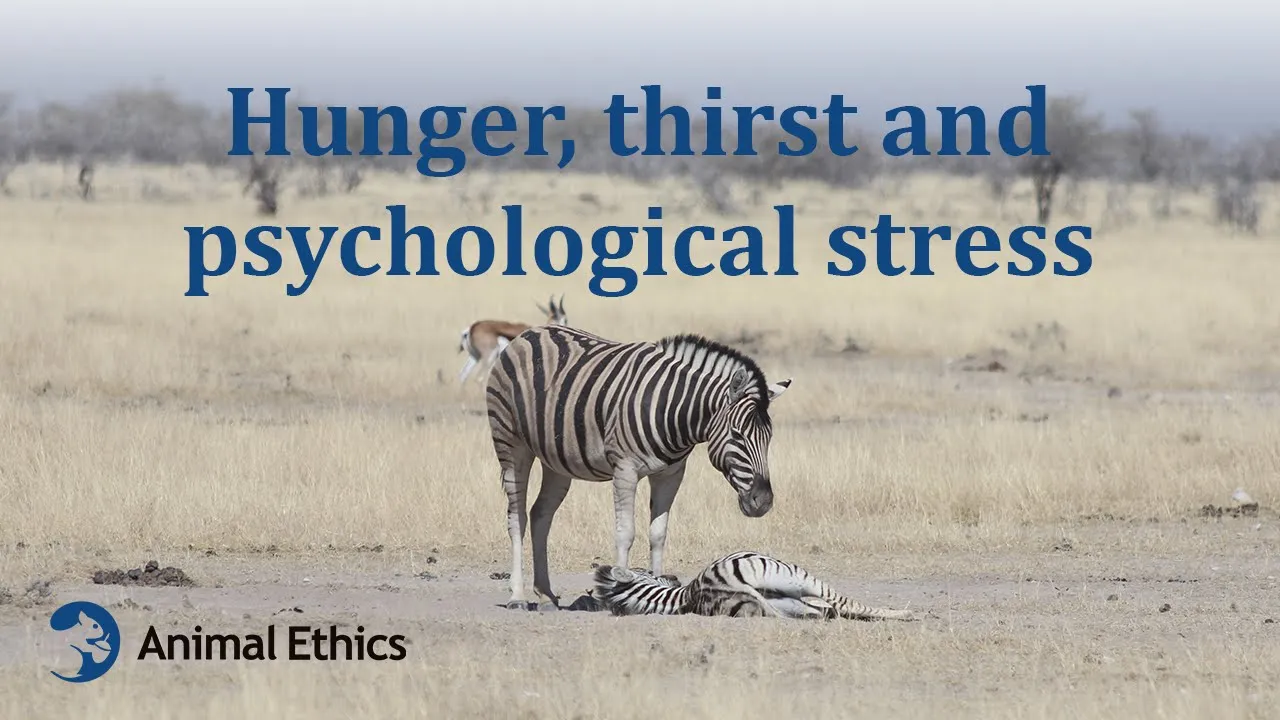
A mother who loses a child may carry the dead child around or refuse to leave the body for days. This has been observed in primates, birds, elephants, cetaceans, and many other animals. Orphaned animals face fear and loneliness.
Infants who are separated from their mothers show increased reactivity to stress throughout their lives and increase risk of disease. In wild animals, this has been observed in cetaceans, elephants, rodents, and primates, though other social species are also likely to experience the same effects. In addition to the effects of maternal separation, there are many documented cases of elephants, cetaceans, dogs, birds, and other animals exhibiting grieving behaviors at the loss of family members or friends.
Animals like geese and ducks mate for life and grieve the loss of a partner. A mourning goose will lose weight, separate from their flock, and exhibit submissive behavior. If they partner again, it will typically be with another goose who has also lost a partner.
So, to conclude, if we consider the various ways animals can suffer in the wild that we've talked about in this video and In the previous one, we can see that they are very diverse. In the next two videos, we will see other causes of physical harms or violent deaths.