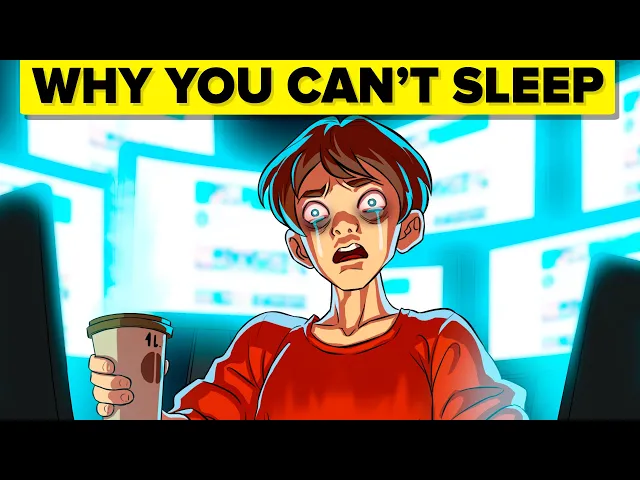
We’ve all been there. You’re lying in bed at night, staring straight up at your dark ceiling. No matter how much you toss and turn, nothing seems to work.
You try laying on one side of your body, only to flip yourself over a few minutes later. Every sound, no matter how quiet or short, seems to be deafeningly loud; a car slowly passing outside your window might as well be tearing down the street. Any little creak coming from your house or apartment somehow sounds earth-shattering.
And as you lay there, feeling grumpy and exhausted but unable to rest, you can’t help but wonder one seemingly simple question: why is it so hard to fall asleep? As frustrating as it can be – and believe us, we meant it when we said we’ve all been there – difficulty sleeping is not an uncommon problem. And we get the frustration it can cause, too.
After all, sleep quality is an important and essential human need. Just like eating, drinking, and even breathing, we need to sleep in order to survive. Sleeping well allows our bodies the necessary time to rest, allowing us to re-energize for the next day.
From a younger age, sleep even supports our bodily growth and development, which is why babies, children, and teenagers need more sleep than fully grown adults. That’s not to say you’re going to need less sleep as you get older, as people of all ages still need to sleep in order to keep their bodies and immune systems healthy, so we can fight off illnesses, recover from injuries, and overall contribute to our physical and mental wellbeing. Having a poor quality of sleep can even lead to potentially life-threatening danger too, particularly when it comes to sleep deprivation.
As the name suggests, that’s a lack of sleep, that can have a direct effect on your ability to function normally. For example, someone suffering from sleep deprivation while driving could unintentionally fall asleep at the wheel, putting themselves, other drivers, and pedestrians at risk of injury or even death. Sleep deprivation can also have severe physiological effects, like an increased risk of suffering a stroke, an increased likelihood of developing heart disease, and even high blood pressure.
Beyond that, it can leave a person feeling anxious, irritable, or even depressed. Although we might think of sleep as an inherently simple function of the human body, in actuality, it’s a more delicate process than you may realize and one that can be affected by a whole myriad of internal and external factors. Getting too much sleep can be as bad as not getting enough.
Hearing sounds while you’re trying to doze off doesn’t always stop you from sleeping, and sometimes, even the things that we eat and drink can all have an impact on our sleep. But not to worry, we’re here to go through some of the most common causes of difficulty with getting to sleep and even some at-home solutions that you can try if you’ve been finding yourself unable to get the rest you’re desperate for. First and foremost, a quick and very important thing to note: if you’re having consistent trouble sleeping over a considerable period of time, the most advisable thing to do is to speak with your local general practitioner as quickly as possible.
As we’ll be covering later in this video, there are certain medical conditions that directly affect your sleep, but it’s imperative you don’t rush to diagnose yourself – and definitely don’t attempt to treat yourself for a condition you might not have. In the worst-case scenario, you may end up exacerbating your existing sleep problems, so do not turn to over-the-counter solutions unless advised to by a medical professional. If your sleep has been bad for a while, you should always seek out the professional opinion of a doctor first.
We’re just here to highlight some of the everyday causes of difficulty sleeping, and if any of these apply to you, then hopefully, some of the methods we’ll be presenting in this video will be of use to you. With all that in mind, let’s give you a few potential answers to that overarching question. And we’ll start with one of the biggest and most common reasons people have trouble with sleeping: stress.
Think about it: how many of us have had sleepless nights leading up to a big test or the deadline for an important work assignment? How about when you’re busy and find yourself juggling a lot of different personal and professional commitments? What about knowing you’ve got a plane to catch first thing in the morning?
Stress can affect sleep in a lot of different ways, one of the most common of which is triggering a sleeping disorder known as insomnia. However, it’s worth remembering that not everyone who can’t sleep is an insomniac, and not every case of insomnia is linked to stress. When we’re stressed, our brains can often be thinking of a lot of different things at once, even if we don’t necessarily realize that we’re doing it.
You might be working away typing at your computer, watching TV, or playing video games, and even though your focus is on the task at hand, your brain might be slowly, subconsciously recalling all the other things you have to do during the week, in the back of your mind rather than the forefront. However, when we attempt to sleep, that’s when those stressful thoughts about our other responsibilities can slip to the forefront, given that our focus is no longer being predominated by what we’re currently doing. It’s the inherent inactivity of sleep that can allow stressful thoughts to catch up with us, and when that happens, it can result in major disruptions to our sleep patterns.
Having high levels of stress doesn’t only prolong the time it takes for you to fall asleep, but a loss of sleep itself can also trigger the body’s stress response system, meaning once stress starts affecting your sleep, that in turn creates more stress in a vicious cycle. When this loss of sleep occurs, our bodies produce a hormone known as cortisol, a steroid that enters the bloodstream and is designed to, among other things, regulate the body’s stress response system and help control the sleep cycle. Normally, we had lower levels of cortisol in the evenings, counterbalancing the other hormones in the body, such as insulin, which regulates blood sugar levels.
Higher levels of cortisol and a mind that’s still over-actively thinking of your responsibilities aren’t exactly conducive to getting a decent night’s sleep. But it’s definitely not the only reason that a lot of us have trouble with getting to sleep. You might be wondering, how long should I be aiming to be asleep for?
Well, most doctors tend to agree that the recommended period you should spend sleeping at night is between seven and nine hours, with the general consensus being that we get an average of eight hours of deep sleep per night. However, sleeping too much, especially during the day, can be one of the direct causes of finding it hard to fall asleep late at night. Sometimes, if we find ourselves with a spare moment during a particularly hectic day, some of us might like to take a moment to recuperate and rest.
You might even, if you’ve got the time to, take a nap in order to recoup some of your energy. But in doing so, you might be setting yourself up for a restless night. Taking a nap isn’t necessarily a bad thing.
In fact, it’d be remiss of us not to mention some of the potential health benefits of a decent nap. A nap that lasts between ten minutes and half an hour can increase your performance and productivity, as well as improve your reaction time and make you more alert. It can even lower your blood pressure and generally put you in a good mood thanks to a boost in positive hormones!
But nap enthusiasts, be warned: sleeping during the day can have a number of negative side effects, too. If you don’t time them properly, or if there are other underlying conditions present, then naps that go on longer than twenty minutes can increase sleep inertia. Sleep inertia is that sense of disorientation that you often feel first thing after waking up.
Say if you fell asleep at your desk at work for a few hours instead of a few short minutes, you might wake up momentarily uncertain of what time it is, how long you were asleep for, or even wondering what day it is. Triggered when you exit a deep sleep, symptoms of sleep inertia can include slower performance and grogginess as soon as you wake up, as well as slow reaction times, slower thinking speed, as well as difficulty with memory. As if that wasn’t enough reason to nap with caution, then taking longer naps during the day could even put your health at risk.
Studies have determined a link between longer daytime napping habits and an increased chance of developing cardiovascular disease. The results of a 2015 meta-analysis stated that taking naps for up to an hour or longer was commonly associated with a greater danger of heart disease. Although, don’t worry; taking one long nap one time won’t be fatal.
There are other factors that can indicate an increased risk of cardiovascular disease, such as your age and overall health, but sleeping habits also play a role. When it comes to napping, it’s alright to do it in small bursts for around twenty minutes, thirty at the absolute maximum. It all comes down to strategy.
If taking a nap helps you feel more awake during the day, then you should try to nap at the same time each day. That way, you’re allowing your body to anticipate that scheduled nap, preventing it from being caught unprepared for a spontaneous snooze. According to research, it’s better to take naps earlier in the day, as the closer they are to the afternoon or evening, the harder it can be to fall asleep fully at night.
Later naps can also cause you to have poorer quality of sleep and might lead to you waking up more frequently during the night, fragmenting your sleep. There are a few instances where a longer nap might be useful, especially for someone who is dealing with sleep deprivation. In instances like that, it’s recommended that – provided someone has the necessary time to do so – a person can nap for ninety minutes, as this allows their body to complete a sleep cycle.
But if you need to sleep during the day, the earlier and shorter your naps, the better! Napping isn’t the only habit that can lead you to have sleeping troubles, though. In fact, there are a whole host of lifestyle factors that can get in the way of a good night’s rest!
One of the biggest is the things we eat and drink, and if you’re a fan of regular coffee, Red Bull, or Monster consumption, then we’ve got bad news for you. It might be time to bid a coffee or your preferred energy drink farewell, as while they might give you the boost you need during the day, they can actually impede you from getting the sleep you need at night. This is due to the large caffeine content of these beverages.
Caffeine is a naturally occurring stimulant that is most commonly found in coffee beans, as well as in certain types of tea and cacao beans, which are used to make chocolates. It just so happens that caffeine is also the most widely taken psychoactive stimulant across the entire world. Usually, the short-term effects only take about five to thirty minutes to kick in: these often being increased mental alertness, a boost to your level of physical energy, and both your breathing and heart rate getting faster.
However, while the potential benefits of caffeine can be more energy to handle what the day throws at you, like any chemical substance, it should be taken with care. This is largely because caffeine hangs around in your system for a long while, even after the immediate effects have worn off. It takes between four and six hours for the amount of caffeine you start with to be reduced by half; so, around six hours after you’ve finished drinking it, half of your morning cup of coffee is still present in your body.
Given this half-life and the often quite intense effects caffeine can have on the human body, doctors recommend avoiding ingesting any more within twelve hours of going to bed. That means avoiding coffee, energy drinks, soda, or other high-caffeine products in the afternoons and evenings; just like with a nap, the earlier, the better! Similarly, keeping the amount of caffeine you’re taking lower is just as much recommended.
Even as little as two hundred milligrams of caffeine – the equivalent of sixteen ounces of coffee – can impact your sleep if consumed within twelve hours of when you’ll be heading to bed. If twelve hours is too long for you to go without a second cup of coffee, then at least remember caffeine’s half-life and avoid it four to six hours before you’re due to go to sleep. Caffeine isn’t the only thing you can drink that could also keep you up late at night.
If you’re old enough to be of the legal drinking age, then having alcohol within four hours of sleeping can cause you to wake up a lot during the night. You might wonder how, since alcohol is a depressant and tends to slow down the central nervous system, which is responsible for a lot of your bodily functions. It can also slow down your brain activity, leading to changes in your mood and behavior.
So, surely that reduced brain activity can make falling asleep easier? After all, why would some people drink a strong nightcap before bed otherwise? While alcohol can lead to you falling asleep a little easier – unless you’ve had enough to make yourself sick – it is also a diuretic, meaning it promotes the body to lose water through urination.
Drnking alcohol can inhibit the production of a hormone called vasopressin, which is partly responsible for helping our bodies regulate water excretion. So, alcohol can interrupt your sleep later in the night, causing more trips to the bathroom and fragmenting your overall rest. On top of what you might be drinking and how close you’re doing so before bed, eating within a few hours of trying to sleep can also cause plenty of trouble.
If you lay yourself down flat with a full stomach of food, it can cause heartburn, which will also make it harder to fall asleep. In a broader sense, there isn’t as clear of a link between our diet and our sleep, however, in some cases, replacing protein with increased amounts of saturated fats or carbohydrates can cause you to be sleepier during the daytime. Fasting or depriving yourself of food can also increase how awake you feel, however, those who fast as part of religious holidays like Ramadan can find their bodies acclimating to this if they begin to fast for short periods leading up to their larger fast.
But if there’s one more big lifestyle factor that can affect your sleep and another thing you might need to lower your intake of, then it’s viewing screens! That’s right, if you’ve ever found yourself staying up late scrolling through TikTok because you’ve just been restlessly lying awake, then doing that is exactly what’s going to make it even harder for you to fall asleep. Screen time, the daily exposure our eyes experience to monitors – like our smartphones, computers, TVs, tablets, and anything else with an LCD display – can be as detrimental to falling asleep as the other things we’ve mentioned so far.
You see, each of these devices emits what’s known as blue light, and since we’ve integrated more and more screen-based technology into our lives in recent years, there’s been a correlating trend with more of us struggling to get to sleep as a result. The artificial lighting produced by a lot of screens emits a certain wavelength of blue light, which can trick your brain into thinking it’s daytime. Blue light exposure can disrupt your natural sleep-wake cycle, otherwise known as your circadian rhythm.
This is the term given to the biological cycle that takes place inside all of us over the course of every twenty four hours, influencing many of our internal functions. The circadian rhythm is also what prepares your body for sleep and requires external signals from your environment to adjust itself. That’s how our bodies know when it’s nighttime, even if we aren’t looking outside, or how we can tell it’s morning before we’ve even woken up.
But here’s the problem: the wavelength of blue light emitted by your phone, laptop, or other electronic devices is designed to stimulate sensors in your eyes, which send signals to your internal body clock. So, given that modern devices produce large amounts of blue light, it can disrupt this circadian rhythm if you’re exposed to too much during the evenings. When it starts to get dark, our bodies’ pineal gland produces a hormone called melatonin, which is what causes us to get tired and feel like we need to sleep.
Blue light can inhibit the production of melatonin, which in turn leads to more difficulty falling asleep, a reduced amount of sleep, as well as a lower quality of sleep overall. The suppression of melatonin in the body has also been linked to various potentially dangerous health conditions too, including metabolic syndrome, obesity, depression, and even cancer. Yikes.
So, it’s recommended to stop using any device that produces blue light around two hours before bed. And then, there’s just possibly the simplest of all explanations for difficulty sleeping: your age. As we get older, we’re more likely to experience disruptions to our sleep and spend less time in the deeper stages of sleep overall.
Part of getting older means more responsibilities that we don’t have as children, meaning there’s more on our minds as we’re trying to sleep. There are obviously the pressures of work. If you’re someone with children of your own, then parenting is added to the mix.
Plus, with age can often come health problems as well as physical changes, both those that are to be expected and those that are completely unexpected. While mental and emotional stresses might be what keeps a lot of us between eighteen and thirty-five awake, as we get older, it’s more likely to be increasingly frequent trips to the bathroom or our bodies producing less melatonin as our internal body clock adapts to our busy schedules. A lot of these are the more common reasons why falling asleep can often be so hard.
There are plenty of other factors, such as the use of drugs – prescription or otherwise – or smoking cigarettes, that can cause us to have less sleep as well. It’s worth also noting that there are a number of medical disorders that can specifically impede our sleep, but as we mentioned earlier, it’s important not to jump to the assumption that these could be the reason you’re struggling to sleep. There’s insomnia, which is a consistent difficulty when it comes to falling asleep and staying asleep for long enough in order for someone to feel adequately rested by the morning.
Obstructive sleep apnea is a condition that causes blockages in a person’s upper airways, resulting in pauses to their regular breathing pattern while they sleep. These disruptions can cause a person to intermittently wake up during the night, and can also commonly lead to snoring – the sound of which can affect a person’s own sleep or that of those around them. Restless leg syndrome, a condition that triggers uncomfortable tingling or aching sensations in the legs, can also get in the way of a good night’s sleep.
The same can be said of delayed sleep phase disorder. This condition can prevent a person from entering the deep sleep stages of their sleep cycle until very late into the night, sometimes even the earlier hours of the morning, thus pushing back the time at which they feel awake and making it harder to get up in the morning, as well as leading to fatigue during the daytime. As we mentioned earlier, if you suspect you may have a sleeping disorder, it’s important to speak with your doctor about it, as well as assess the other possible factors when you’re trying to determine exactly what is impacting your sleep.
When it comes to what else you can do about difficulty falling asleep, there are plenty of things you can try that might aid in making a good night’s rest less illusive. For one, try to stick to a regular sleep schedule as often as you can. Falling asleep and waking up at the same time each day will allow your body and its circadian rhythm to adjust.
If you work from home, keep your sleeping space and working areas separate; nobody wants to subconsciously associate the place they sleep with the place they spend all their time working. Regular exercise can also help with falling asleep, just make sure you’re warming up and cooling down properly and leaving at least an hour between that and going to bed. Try keeping your bedroom dark and cool, between sixty to sixty-seven degrees Fahrenheit, if you have the necessary facilities to regulate temperature.
Maybe leave your phone or other devices in another room or in silent mode if not switched off so they aren’t making sounds that disrupt your sleep. Speaking of, if noise is something that can disturb you easily whilst sleeping, grab yourself a pair of earplugs. A similar course of action goes for if you find yourself particularly sensitive to light while trying to fall asleep: if that happens to you, a sleep mask might just do the trick.
Sticking to more calming, low-energy activities before bed – such as reading, journaling, or meditating – can also help encourage your body and mind to relax ahead of going to sleep. Then, if you’ve tried a few of these and you still find yourself having problems with getting yourself to fall asleep, that’s when it might be time to speak to your doctor and see if they can help with identifying what might be an underlying problem and recommending an appropriate treatment. We hope you’ve found the information in this video helpful!
Here’s to sweet dreams for all of us!