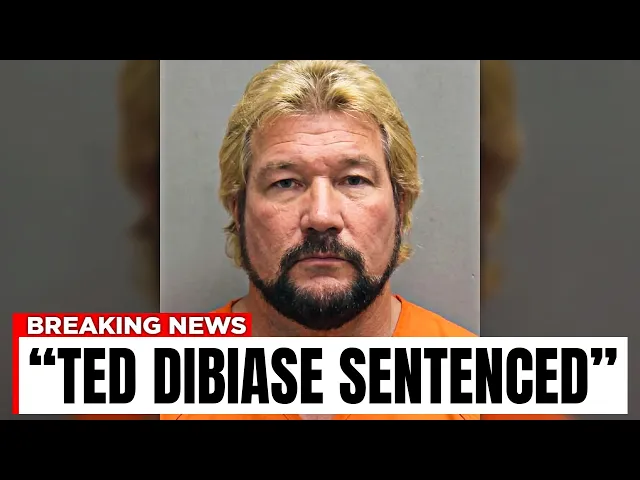
Ted Debiosi was one of wrestling's biggest icons. But behind the million-dollar man was a life filled with heartbreak. His father died in the ring.
An affair nearly destroyed his marriage. His career ended because of injury. And years later, his family became the center of a public scandal.
So, how did Ted Debiosi's life take such a tragic turn? Let me break it down. The boy who watched his father die.
The tragedy of Ted Debiosi's life didn't begin when he became the million-dollar man. It began years earlier, long before the fame, the championships, and the fortune. Before Ted Deiosi became one of wrestling's biggest stars, he was just a young boy who looked up to one man.
Ted's biological parents were entertainer and singer Ted Willis and professional wrestler Glattis Helen Neans, known in the ring as Helen Hild. When Ted was about four years old, his mother married a respected wrestler named Michael Debiosi, born December 24, 1923, and known to the wrestling world as Iron Mike Debbiosi, who legally adopted the boy and raised him as his own son. Ted has been fiercely protective of that relationship his entire life.
Asked point blank about growing up in a wrestling household, he didn't hesitate to draw the line between biology and fatherhood. He was actually my stepfather, but uh you know I don't allow anybody to call him that because he's the only real dad I ever know. Raised me as his own.
Loved me as his own son. That's not a technicality to Ted Debiosi and it never was. Mike Debiosi wasn't just a father figure standing in a gap.
He was by every account an exceptional athlete and a genuinely respected man in the wrestling business. Uh my late father Mike Debbiasi was a professional wrestler for 20 years. Before he ever stepped into a professional ring, Mike Deiosi had been a national collegiate wrestling champion at the University of Nebraska.
And he'd first won the AAOU National Heavyweight Crown while wrestling for the United States Navy. He carried that legitimacy into a solid, welltraveled career across the old territorial system, including a legendary multi-hour Texas death match against Dory Funk Senior that wrestling old-timers still talk about. Ted didn't grow up watching his father from a stadium seat.
He grew up inside the business itself, and the family's life reflected that. Constant relocation, new towns, new schools, an itinerant childhood dictated entirely by where the next territory needed his father's name on a marquee. By his own recollection, he attended school in Amarillo and Portland in the same year, then Houston, then Arizona, then Omaha, then back to Texas.
Over and over, a pattern that would have unsettled almost any child. He's compared it to being an army brat, except the family business meant moving from territory to territory instead of base to base. And it forced him to learn how to make friends fast and never be the introvert in the room since a whole new surrounding could show up every few months.
He didn't frame it as trauma at the time. If anything, there was an unspoken family pride in it, a sense of belonging to something bigger than an ordinary household. But that stability, fragile as it already was, was about to be shattered permanently and without warning.
On July 2, 1969 in Lach, Texas, 45-year-old Iron Mike Dibbyasi stepped into the ring against an opponent named Man Mountain Mike. He suffered a massive heart attack mid-match. Fellow wrestler and future Hall of Famer Harley Race performed CPR on him and rode with him in the ambulance, but by the time they reached the hospital, Mike was gone.
Ted was 15 years old, Texas. And it was that summer that my father had a heart attack during the match and died. The death shattered the wrestling world too, not just the family, because Mike Deiosi was widely regarded as being an exceptional physical condition, the last man anyone expected to drop dead in the middle of a match.
It would take years and advances in cardiology that didn't exist in 1969 before the real explanation surfaced. Ted later revealed that his adoptive father had significant cholesterol buildup in his heart and a genetic predisposition to heart disease, the kind of hidden condition that today might have been caught on a routine screening and treated years in advance. In 1969, there was no warning at all.
One night, his father walked to the ring healthy. He never walked back. What's remarkable is what Ted says that loss did not do to him.
It did not turn him against the business that took his father. It never made me bitter towards a business because it was just one of those things. Uh he's explained that in hindsight, knowing what doctors now understand about hereditary heart disease, his father's death wasn't really the ring's fault at all.
The exertion of the match simply triggered something that was tragically already waiting to happen. That understanding came with age and distance. In the moment at 15, none of that mattered.
What mattered was a boy losing the only father he'd ever known without warning in front of a crowd of strangers. But as far as the way I took it, I mean, it it crushed me. I mean, it was totally unexpected right out of the blue and uh it was pretty devastating on me.
The family Mike Deiosi left behind did not recover cleanly. His widow Helen fell into severe depression and alcoholism in the years that followed. Unable to process the sudden loss of her husband, Ted, still a teenager and now effectively without either parent in any functional sense, was sent to live with his grandparents in the small town of Willox, Arizona.
Starting over yet again in a new place, this time without the man who had anchored every previous move. His mother's decline continued for years afterward. She died on March 4, 1984 with pneumonia listed in connection with her death after a long period of decline.
reportedly somewhere between age 55 and 58. Ted was already an adult by then, but the slow loss of his mother stretched across 15 years, was in some ways its own separate grief layered on top of the sudden one. That grief didn't stay locked away in polite, distant adulthood memory.
Ted has described it in far more visceral terms in later testimony and interviews. In the years right after his father's death, he'd sometimes take his grandmother's old rambler out at night, drive to the cemetery, park with the headlights shining on his father's grave, and pace back and forth in prayer, asking God to help him become the kind of man Mike Dibiosi would be proud of, and asking God to give his mother a reason not to give up on herself. It's worth noting the loss landed on an already unstable foundation since Ted's biological parents had divorced when he was very young, long before Mike Deiosi ever entered the picture.
meaning the family he lost in 1969 was already the second attempt at a stable home he'd known in his short life. By 17, Ted Debiosi had already lost the father who raised him and watched his mother begin a decline that would eventually take her too. He finished high school in Arizona and went on to West Texas State on a football scholarship, carrying all of it with him into an adulthood that on the surface was about to become extraordinarily successful.
But the instability of his childhood and the trauma of watching a parent die in real time would not simply disappear because the cameras started rolling. It would resurface in different forms for the rest of his life. First in the ring he swore he'd never resent and then years later, far from any ring at all, the price of being the milliondollar man.
By the time Ted Debiosi stepped fully into professional wrestling in the mid 1970s, he'd already spent his entire childhood inside the business. So, in one sense, he was simply going home. He trained under the Funk family, Dory Funk Jr.
and Terry Funk, family friends of his late father from the old Texas territory days, and turned pro in the mid 1970s. He built real credibility before anyone in a national audience had heard his name. Working successful runs through Midsouth Wrestling and All Japan Pro Wrestling, where he notably teamed with Stan Hansen, earning a reputation among wrestlers, if not yet the wider public, as one of the most technically sound performers of his generation.
Then came 1987 and the character that would define him forever. Ted Dibiosi debuted in the WWF as the Million-Dollar Man, an arrogant, obscenely wealthy heel who paid strangers to do humiliating things for his own amusement, employed a silent bodyguard named Virgil, and eventually awarded himself a self-made million-dollar championship after failing to win the real WWF championship. Famously buying his way toward the title with Andre the Giant's help in one of the most controversial angles of the era.
The gimmick and the catchphrase that came with it, everybody has a price, made him arguably the most successful villain of his generation. A man the crowd loved to hate with total sincerity. What almost nobody in those arenas knew was that the man selling that hollow, moneyobsessed character on television was off camera living something close to it for real, and it was about to cost him almost everything that actually mattered.
Ted's personal life had already taken one hard turn before he ever became a national star. He married for the first time at just 20 years old. A decision he later called far too young, made without a father figure left to challenge or guide him.
That first marriage produced a son, Mike Deiosi 2, named for the grandfather he'd never meet, and ended in divorce after roughly 6 years, right around the time Ted was dropping out of college short of a degree and settling permanently into the grinding cross-country lifestyle of a full-time territorial wrestler. He since described that first attempt at marriage and family as something he entered without any real father figure left to push back on the decision or offer him guidance. One more quiet consequence of losing Mike Debiosi so early.
He married again in late 1981, this time to Melanie with Junkyard Dog serving as best man and the couple had two more sons together, Ted Debiosi Jr. and Brett Debiosi. By the early 1990s, Ted was at the absolute peak of the million-dollar man run and the trappings that came with it.
The Lear Jets, the limousines, first class everything flash the WWF itself provided to reinforce the character had started to blur the line between performance and reality in a way that would nearly end his marriage. After Wrestlemania V8 in 1992, Ted went out on the town in Indianapolis in a tailor made suit with a woman who was not his wife, hitting the city's hot spots and never going to bed before the limousine took him straight to the airport for a flight to Detroit. from a hotel pay phone he called home only to learn that Melanie already knew exactly what he'd been doing.
When he said he didn't want to discuss it over the phone and would fly home to talk, she told him he no longer lived there and hung up on him. Ted has since described that call as the moment he finally looked at himself honestly. He had the career, the fame, the money, a wife and children he genuinely loved.
But as he's put it himself, he had no character, no integrity. The same man who had once stood at his father's grave praying to become someone Mike Debbiosi would be proud of was now living a double life of adultery and excess all while playing a wrestling villain whose entire catchphrase was a boast about everyone having a price. A mentor named Hal Santos told him bluntly that the truth would set him free.
But it wouldn't be easy or painless and Ted took that warning seriously. By the summer of 1993, he'd made the decision that he needed to leave the WWF environment entirely because it kept pulling him back toward the same destructive patterns. In his own words, looking back on that period, I said, "But, [music] you know, to to save my marriage, I think this is what I need to do because he'd worked it out with Vince himself.
shorter stretches touring Japan than real [music] extended time at home, not the endless grind of 10 days on and three off that had defined his life on the road for years. Well, she Yeah, she was happy that I wasn't going to be constantly on the road at this time. It wasn't the first time Ted's relationship with Faith had gone sideways.
He said in testimony that in the years right after his father's death, he thanked God for getting him through the hardest stretch of his life and then once things were going well again, essentially told God he no longer needed him until further notice. A posture that quietly defined much of his rising star 20s and 30s before the events in Indianapolis forced a reckoning. When he did finally leave the company, Vince McMahon reportedly told him the door would always be open if he ever wanted to return, and there were no hard feelings on either side.
WWF magazine even publicly framed his exit at the time as him leaving to pursue other endeavors. A line wrestling journalist Dave Meltzer later speculated was designed to leave the door open for an [music] eventual onscreen face turn. His last major match as a full-time WWF wrestler came at SummerSlam 1993 against Razor Raone, and by his own account, resolving his marriage was the central reason he walked away from the company at the height of his fame.
The marriage survived. As of recent years, Ted and Melanie have been married well over 40 years, making his the rare wrestling relationship that outlasted the industry that nearly destroyed it, an industry he himself has described in stark terms. So many of my friends that I've seen uh die uh or lose everything that they they ever had uh because of drug and alcohol addiction.
The emotional crisis of 1992 and 1993 wasn't the only thing pulling Ted away from the ring. His body was failing at almost exactly the same moment his marriage was. While on tour with All Japan, he suffered injury to two cervical discs in his neck accompanied by numbness running down his arm.
a serious enough diagnosis that doctors performed fusion surgery involving a bone graft. And afterward, physicians warned him that another impact in exactly the wrong way carried a real risk of paralysis. He felt obligated to finish out certain commitments in Japan despite the injury before he could finally step away for good.
Quietly retiring from full-time in ring competition at around age 40. He didn't disappear from wrestling entirely. [music] He transitioned into managerial and commentary roles, including a run in WCW alongside the NOO, staying connected to a business that had given him a fortune, an identity, and twice now nearly taken everything from him in return.
Two decades later, he'd look back on all of it with a kind of disbelief that any of it had happened to him at all. You know, here I am, uh, Marcus, and I'm about to turn 70, and [music] they're making they're still making new action figures. like [laughter] I've got a new Funko Pop out.
But leaving the ring didn't mean leaving the consequences of everything that had happened inside it. The neck injury that ended his career would haunt him physically for decades. And the near calapes of his marriage pushed him toward a complete reinvention of who he was away from the millionaire villain and towards something that looked on the surface like total redemption.
What actually followed though was a far more complicated final act. One involving a diagnosis he never saw coming. a devastating public scandal involving his own sons and a family legacy that would end up back in courtrooms decades after Ted Debbiosi last set foot in a wrestling ring.
Redemption, Ruin, and The Reckoning. After walking away from full-time wrestling, Ted Debiosi didn't retreat into quiet retirement. He rebuilt his entire identity around something almost opposite to the million-dollar man persona that had made him famous.
He became a born-again Christian and founded the Heart of David Ministry in 1999. Traveling extensively to speak at churches, camps, conferences, including Promisekeepers, and countless other events, turning the same charisma that once sold arenas on hating him into a platform for testimony and faith. He wrote about the journey in his books, including 1997's Every Man Has his Price, part autobiography and part Christian testimony, and later a second book simply titled The Million-Dollar Man.
Both leaning heavily into the narrative of fame's real cost and the recovery that followed his near catastrophic marriage crisis. In 2010, wrestling formally recognized what fans already knew, inducting him into the WWE Hall of Fame, cementing his place as one of the greatest heels and most technically gifted performers of his era. Beyond WWE, he's also been recognized in other wrestling halls of fame over the years.
A rare honor for a performer best known for playing one of the most hated characters of his generation. and he's remained a visible presence in WWE'se's Legends Alumni program throughout this period, showing up at conventions and on camera segments, even as his own personal history grew more complicated behind the scenes. For a while, the redemption arc looked complete.
A stable 40 plus year marriage, three sons, a thriving ministry, a beloved place in WWE'se's legends program. But the price of nearly two decades inside a wrestling ring doesn't simply disappear because a man changes careers. and neither does the complicated math of family, money, and public trust.
Both would come due hard in Ted Debiosi's 70s. The physical bill came first. In June 2023, on his podcast, Everybody's Got a Pod, Diosi publicly revealed a diagnosis of severe brain trauma, a startling admission from a man who had spent decades taking chair shots and hard bumps for a living.
He was careful to clarify that it was not Alzheimer's or dementia, but that it significantly affects his short-term memory, even as his older memories remain relatively sharp and clear, and he attributed the condition directly to the physical toll of nearly 20 years spent wrestling. It was one more entry in a long, grim ledger of wrestlers from his era discovering, often decades too late, exactly what the business had taken from their brains as well as their bodies. Then, in September 2025, came an accident that had nothing to do with wrestling at all.
Diosi tripped over a child playing near a gate at Hartsfield Jackson Atlanta International Airport and fell face first, sustaining a black eye and bruised ribs. He later went public specifically to clarify that no one had been seriously hurt, pushing back against reports that had exaggerated the incident. At 71 years old with a brain already compromised by decades of impact, even an ordinary airport stumble carried weight it wouldn't have carried for most people his age.
Beyond the diagnosed brain trauma and the airport fall, Ted has spoken repeatedly on his podcast and in interviews about the cumulative cost of nearly two decades in the business, the neck and back issues that forced his early retirement and the physical and mental price of a life spent almost entirely on the road. Reflections he consistently ties back to the choices he made during the peak of his fame and the second chance he feels he was given afterward. That same period brought a different kind of loss.
On screen, Ted Debiosi and his bodyguard Virgil, real name Mike Jones, had been inseparable for years before their classic slowburn feud, one of the more memorable programs of the era. Offscreen, the relationship was reportedly far more complicated and not always warm in later years, and comments Ted made about Virgil's personal situation, including that he was not in a good place, circulated through wrestling circles well before Virgil's death. When Virgil passed away in 2024, Ted spoke publicly about their shared history.
But longtime fans and wrestling insiders have generally agreed that the on-screen partnership never quite matched the real one. Wrestling fans and shoot interview material have long noted that gap, pointing out that the bodyguard and boss chemistry that made both men stars never fully translated into the kind of lifelong friendship the storyline implied to audiences. None of it though compared to what came next.
A scandal that pulled Ted Debiosi's own family into one of the largest public corruption cases in Mississippi's history. The state's temporary assistance for needy families program known as TANF became the center of a massive welfare fraud investigation. One of the biggest embezzlement scandals the state has ever seen and the Debiosi family sat directly at the center of it.
His son Brett Deiosi pleaded guilty to related charges. Ted Senior's own ministry, Heart of David, had received more than $2 million in welfare related funds, and a court ultimately ordered him to repay roughly $722,000 in misappropriated money connected to the organization. His other son, Ted Debiosi Jr.
, faced the most severe accusations of all. multiple federal charges, including theft, wire fraud, money laundering, and conspiracy involving millions of dollars allegedly diverted for personal use, including luxury purchases. After a high-profile trial that drew national wrestling media attention, Ted Debiosi Jr.
was found not guilty on all counts in March 2026, closing out a legal saga that had hung over the family's ministry- centered redemption story for years. Through the worst of it, Ted Senior largely stayed out of the spotlight, keeping his public focus on his ministry work and his podcast rather than engaging the scandal directly inside wrestling circles and in local Mississippi coverage. The scandal was often discussed as something more than a simple legal story.
Commentators frequently framed it as a painful, very public extension of the same family dynamics that had shaped Ted's entire life. the long shadow of the million-dollar persona finally colliding with real world financial accountability decades after the character stopped airing on television. Even as Ted himself continued showing up on his podcast and behind various pulpits, rarely addressing it headon.
Step back from all of it. the ring death of his father, his mother's slow collapse, the affair that nearly ended his marriage, the neck injury that ended his career, the brain trauma that's quietly stealing his short-term memory, the airport fall, the complicated ending with Virgil, and the welfare fraud scandal that dragged his own sons into federal courtrooms. And what you find isn't a single tragic event.
It's a life absorbing one hit after another. Decade after decade, in almost every direction, a life can be hit. [music] family, health, marriage, money, and legacy, and somehow still standing at the end of it.
Ted Debiosi is not a man who died tragically, whatever a song title or a misleading headline might suggest. He's a man who has spent 72 years absorbing tragedy after tragedy. From the ring where his father collapsed to the courtroom where his son was finally cleared and somehow found his way to say, "Of all of it, something close to gratitude.
" He's outlived the character that made him famous by more than three decades now. buried two parents, survived a marriage he very nearly destroyed himself, and watched his own sons face down federal courtrooms, all while still showing up on podcasts and pulpits and every so often at a legends event one more time. Just outweighed and I, you know, I would have to consider myself extremely fortunate.
Fortunate is a strange word for a life built on this much loss, but it might be the most honest word Ted Debiosi has ever used to describe himself. And after everything you've just heard, it's hard to argue with him. Thanks for watching.