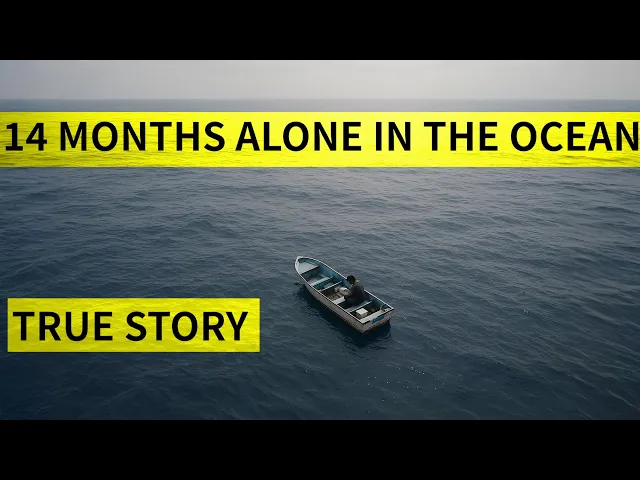
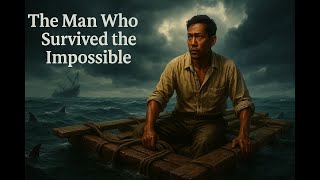
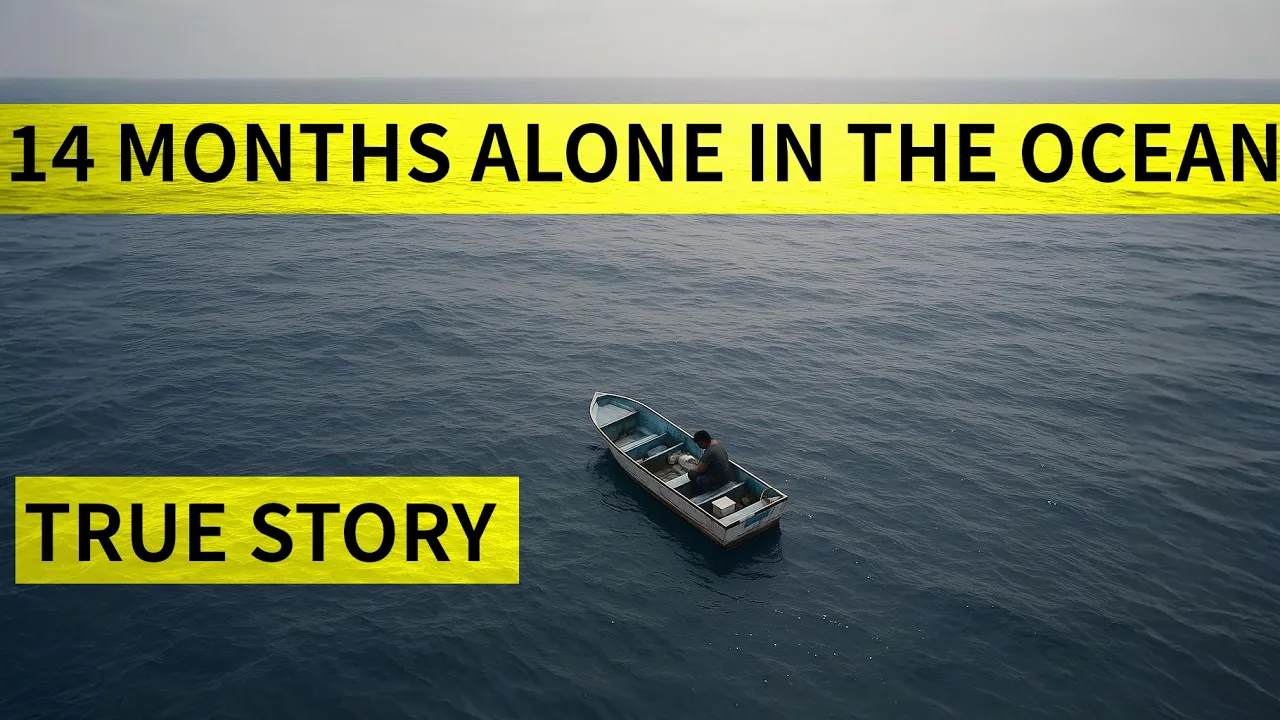
Imagine being lost at sea. Not for days, not for weeks, but for 438 days. A drift in the endless Pacific with nothing but a small fishing boat and your will to survive.
This was the fate of Salvador Alvarena, a 37year-old fisherman living in Mexico. Cut off from the world, battling storms, starvation, and despair. Every sunrise meant another fight to stay alive.
In 2012, what began as a simple fishing trip quickly spiraled into a nightmare. With no motor, no radio, and no land in sight, Alvarena would drift more than 5,000 m across the Pacific. This is the unbelievable true story of the man who refused to let the ocean take him.
In 2012, Salvador Alvarena was 37. A Salvadoran fisherman carving out a restless life along Mexico's Pacific coast. He had no family to anchor him, his 13-year-old daughter lived with her mother back in El Salvador.
Far removed from the unforgiving trade that kept him afloat. What suited him best was the loneliness of the sea, the gamble of each expedition. Alvarena's vessel was a narrow fiberglass ponga, 25 ft long, stripped of comforts like a cabin or roof.
It was little more than a sharpened blade meant to skim across the waves, light and nimble, with a small outboard engine strapped to the stern. He trusted the boat. He trusted his skill.
And he trusted the ocean, though only up to a point. On November 18th, he set out again, this time with a greenhorn partner, Ezekiel Cordoba, 22 years old, inexperienced but eager. They expected a punishing day.
10 in the morning until long after dark, 6 hours offshore. Over 1,000 lbs of gear cluttered the deck, including a cavernous ice box destined, if all went well, to be stuffed with tuna, shark, and mahi mahi. The storm warnings were explicit.
Still, Alvarena shrugged them off. One good hall could bankroll an entire week. By late evening, they had pushed 75 miles into open water.
Alvarena unfurled his gear. A monofilament line nearly 2 mi long vanishing into the depths. The wind freshened.
On shore, the storm was tearing roofs from houses, but out at sea, the first tendrils of its power had only begun to reach them. At 1 in the morning, the boat lurched under the first real hit. The Ponga pitched and slammed, water surging over the gunnels.
Cordoba white- knuckled begged to turn back. Then the swells grew teeth and the sea began to claw at the boat. Alvarena faced a brutal calculation.
To save the vessel, he cut his line, sacrificing thousands of dollars worth of fish and tackle, watching it vanish into the Black Pacific. He spun the bow toward shore, aiming for Choco, the little port he called home. As water sheetated across the deck, he grabbed the radio, reached his boss, and reported the crisis.
Then the connection sputtered, and the night closed in. At first light, Alvarena glimpsed the mountains. Black silhouettes rising from the horizon.
land safety. If he could thread the boat through the murderous surf breaking against the shoreline, he might yet get them home. But just 15 miles out, fate intervened.
The motor coughed, stuttered, and quit. He pulled at the cord again and again until in desperation he yanked so hard that it snapped clean off in his hand. The boat, powerless, began to wallow in the waves, rolling them from side to side like driftwood.
He called Willie on the radio, voice cracking, begging for rescue. Willie answered, promised help. Then the radio sputtered, fizzled, and died as seawater bled into its circuits.
The line went dead. Beyond that, only the shriek of the wind and the hiss of rain remained. The storm drove them farther out past the horizon into the vastness of the Pacific.
By the time the weather relented, five endless days later, they were nearly 300 m offshore. Their boat rode so low in the water that it would have been invisible to any vessel more than a half mile away. They were specks in an indifferent ocean.
Cordoba broke first. "We're going to die," he muttered. His voice was flat, already surrendering.
No, Alvaranga told him. Don't say that. A rescue team will find us.
He didn't believe it. Not entirely, but he couldn't allow despair to take hold. They had no flares, no radio, no way to signal the world.
The sun seared them by day, the nights cut with cold. Their only refuge was the ice box, where they curled together for warmth. Hunger and thirst nodded at them until their bodies felt hollowed out.
On the fourth day, without water, rain came at last. They stripped, lifted their faces to the sky, drinking greedily as fresh water cascaded down. They caught what they could.
Five gallons stored in stray bottles scavenged from the waves. If they rationed it with care, it might last a week. By the 11th day, desperation gave them something else.
Meat. A turtle, disoriented in the dark, thutdded against the hull. Alvarena dragged it aboard, giddy.
Its flesh fed them. Its blood quenched their thirst. Alvarena leaned into the hunt from then on, scanning the waters for more of these armored lifelines.
Cordoba resisted. He gagged at the blood, picked at the raw meat. Alvaringa tried to make it tolerable, slicing the flesh into strips, seasoning with seaater, drying it in the sun on the casing of the dead motor.
He served it on the turtle shell like a crude feast. It kept them alive barely. Hunger clawed at their minds.
Cordoba began to hallucinate an orange orchard blooming in his imagination. He begged Alvarena for fruit. To soothe him, Alvarena invented a trip to a store, pretended to buy the oranges, then returned to say the store was closed.
Somehow, this small fiction comforted Cordoba, and he drifted into sleep. The weeks bled into months. Their survival became less about food and water, more about willpower.
Every dawn was another test. Could they outlast another day in a sea with no end? The days blurred into one another until a routine began to take shape, fragile, but necessary.
Every morning at 5, Alvarena climbed out of the ice box and sat on the deck, staring east. The sunrise was his one fixed point. A burning line of light that promised land still existed somewhere beyond the horizon.
His first task was always the traps. Some mornings they held a scrap of fish. Other mornings, nothing.
Whatever the catch, he waited for Cordoba to wake before dividing it. Fairness mattered even out there. Most of the day they spent buried in the ice box, conserving strength.
In that coffin-like space, a friendship formed, an odd boyish bond. At night, they lay on the open deck, faces turned upward, sketching constellations out of the indifferent stars. It was a game they played to trick themselves into believing they weren't alone.
On a night they guessed was Christmas Eve, the illusion cracked. Cordoba doubled over, clutching his gut. He'd eaten part of a seabird earlier.
When they cut it open, they found a snake curled inside its stomach, still intact. He survived the poisoning, but afterward he could hardly bring himself to eat. The idea of another raw bird revolted him.
He drifted further from their shared meals, withdrawing into himself. Weeks passed. Cordoba's body shrank to a scarecrow's frame.
Arms like sticks, thighs no thicker than his forearms. He decided it was better to die than endure the hunger. One day, he said goodbye, then tried to hurl himself into the sea.
Alvarena tackled him, dragging him across the deck and shoving him into the ice box, slamming the lid shut and sitting on it like a jailer. He begged Cordoba to stop, to hold on long enough for them to tell their story. When Cordoba finally calmed, Alvarena let him out and climbed in beside him, still pleading.
But despair had already done its work. A few days later, Cordoba told him he was going to die. Alvaranga tried to force water on him.
"Don't die," he begged. "Don't leave me alone. " "It didn't matter.
" Moments later, Cordoba was gone. Alvarena propped the body on the bench to keep it from sliding overboard. The next morning, he emerged from the ice box and found his dead companion seated there, sun on his face as if he were just resting.
In his grief, Alviveringa began to speak to him, asking questions, pretending to hear answers. Pretending Cordoba was still alive was easier than facing the truth. 6 days later, he let the body slip into the sea.
Alone now, a drift on the Pacific. He retreated into the ice box and wept. With Cordoba gone, survival became his only distraction.
He hunted constantly, invented a crude shark warning system, toss bird parts overboard, wait to see if anything big surfaced. If the water stayed empty, he'd risk a swim. Short, terrifying plunges that he imagined were visits to a beach with friends.
Increasingly, his thoughts turned inward. He pictured his 14-year-old daughter, Fatima, whom he hadn't seen in years. In dreams, she called out to him, her voice a lifeline.
He began to build a future in his mind. A small house, children running in a field, animals grazing. He prayed for one more chance to make it real.
One afternoon, after months of nothing but horizon, a ship materialized. A container vessel, massive and purposeful, cutting straight toward him. For a moment, Alvarena thought it might run him down.
Three men stood at the stern, fishing lines in their hands. He screamed, waving frantically. They looked up.
They saw him. They even waved back. But no one came.
No lifeboat lowered. No voice shouted across the water. The ship slid past as indifferent as the sea itself.
When it vanished, so did something inside him. His body slowed. His hunger dulled, and the same numb apathy that had swallowed Cordoba began to seep into his own bones.
He drifted through his 11th month at sea. 5,000 miles traveled at less than a mile an hour, reduced to little more than rags and skin. A sweatshirt of cortibas shielded him from the sun.
Below the waist, he wore only torn underwear, and a single stray sneaker pulled from the water. His hair had grown into a copper snarl. His beard, thick and wild, hid his face.
More and more he turned to questions he couldn't answer. Was he alive by accident or design? Some days he wondered if his ordeal was meant as a warning, a testament to endurance.
Other times he suspected it was punishment. Perhaps the only reason he still drew breath was to carry a message that solitude, suffering, and the will to survive could hold back the urge to surrender. On January 30th, 2014, the ocean finally broke its silence.
Alvarena spotted coconuts floating in the swells. Above him, seabirds wheeled in dense, noisy flocks. Then, through sheets of cold rain, a strip of land emerged, low, green, wild.
He waited, wary of sharks, inching closer through half a day of paddling. At 10 yards out, he leapt into the surf, letting the waves carry him in. He collapsed on the sand, clutching it in both hands like a prize, like proof that the earth still existed.
Two islanders found him, barely human. A castaway materialized out of myth. He had landed on Eban atal, the southern edge of the Marshall Islands, one of the most remote specks of land on the planet.
If he had missed it, the next possible refuge was the Philippines, 3,000 mi farther west. Doctors later told him he had anemia, and likely parasites from the raw flesh he had eaten to stay alive. He couldn't sleep.
His body refused rest. Worse than the sickness was the memory of Cordoba, his companion, his foil, his ghost, who never left him, even on solid ground. After 11 days in the hospital, Alvarena was strong enough to fly home to El Salvador.
When he saw his daughter, Fatima, he clutched her as if she might vanish, whispering apologies for the years he had lost. Life on land was no rescue. For months, he lived in shock, haunted by the sea.
He couldn't look at water without panic taking hold. He slept with the lights on. He refused to be alone.
The habits of survival, hypervigilance, fear, the expectation of death stayed with him long after the ocean had released him. It was nearly a year before he could begin to understand what he had endured. Only then, studying the maps of his drift across the Pacific, did the immensity of it come into focus.
438 days, 5,000 m. Hunger, thirst, madness, loss survived by will alone. Alvarena had lived where few could.
He had pressed against the edge of human endurance. and somehow not gone over. His ordeal stood as both a testament and a warning.
That the line between despair and survival is thinner than most people ever dare to imagine. If you found this story as gripping as we did, don't forget to give this video a like, share it with someone who loves true survival stories, and hit that subscribe button so you don't miss more stories like this one.