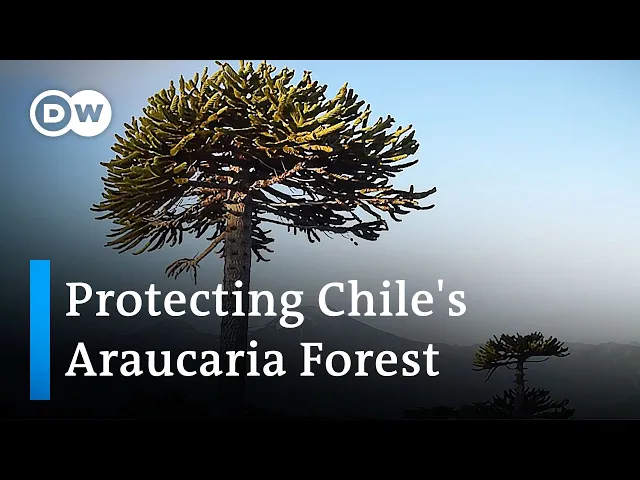
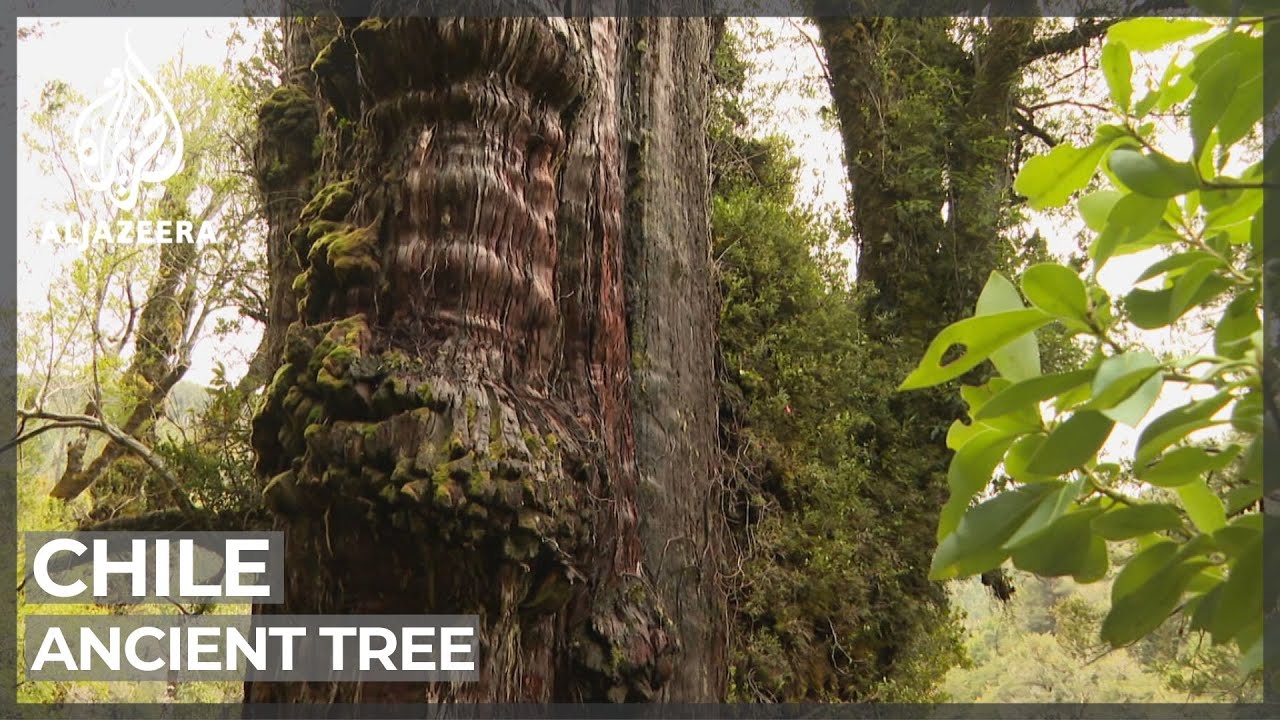
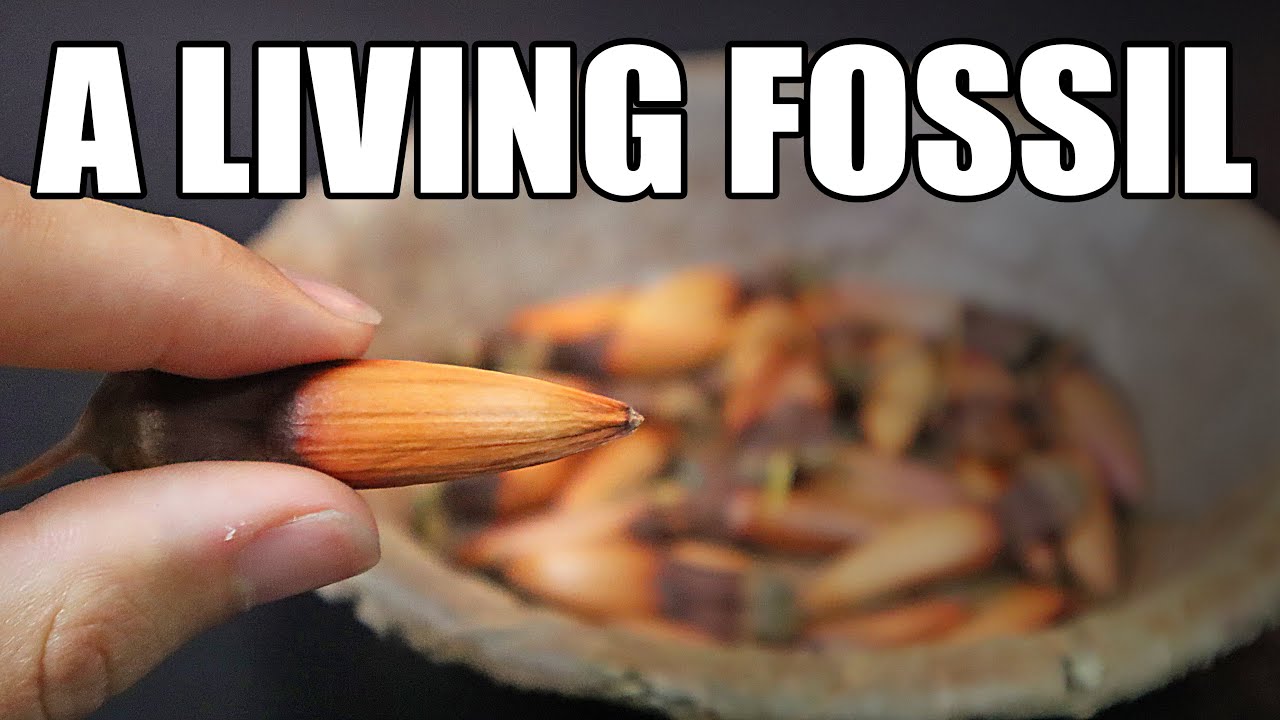
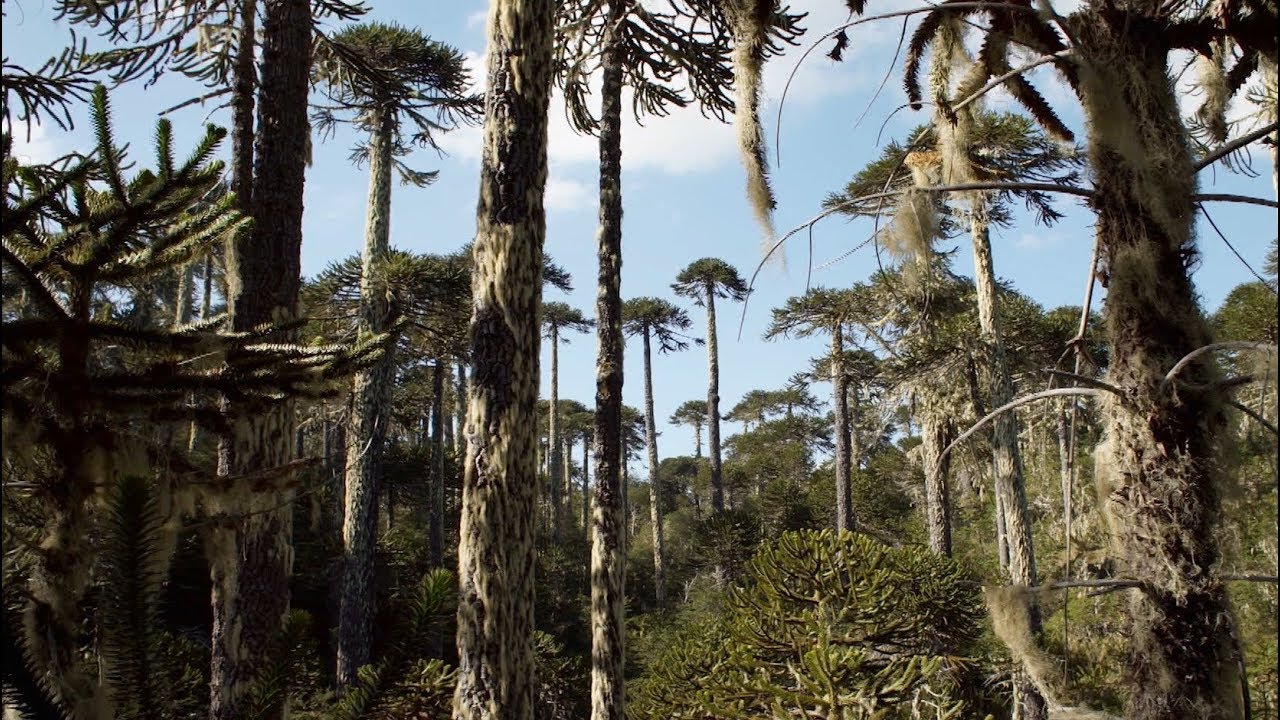
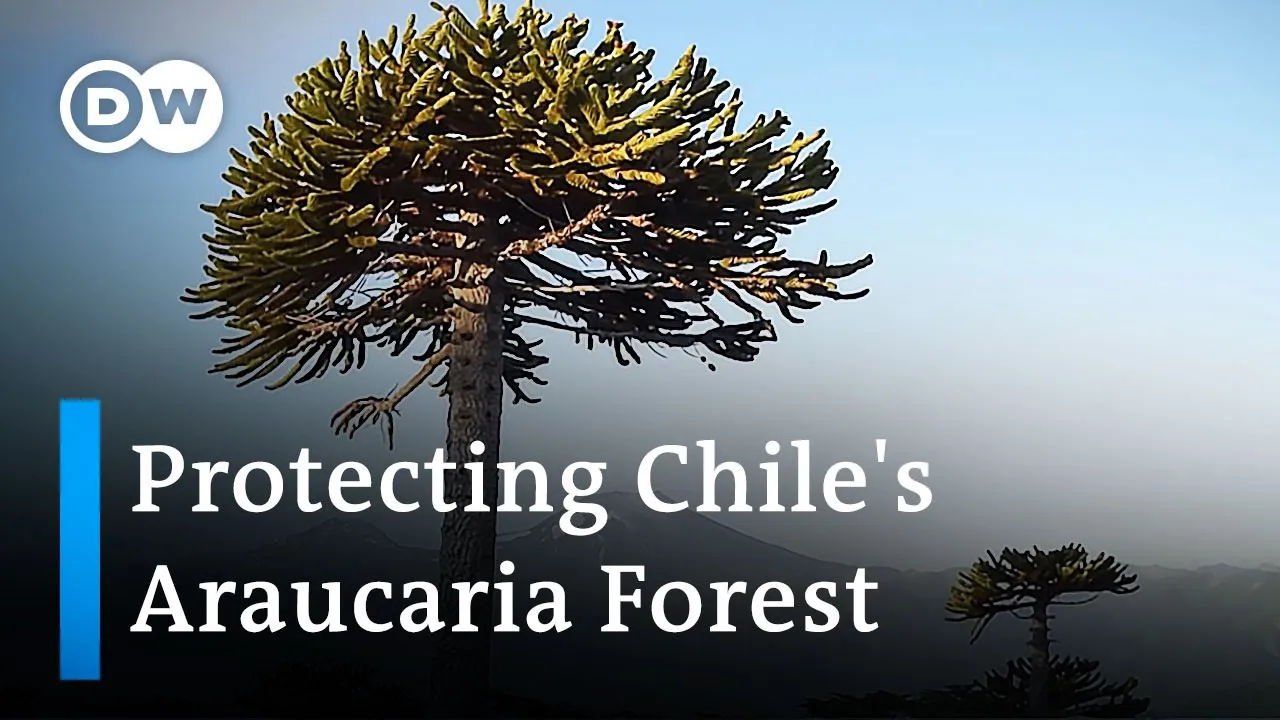
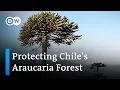
these arikaria in southern chile are among the last of their kind deforestation and climate change have caused numbers to dwindle they're among the oldest tree species on earth around in the time of the dinosaurs they still grow on the land of the indigenous mapuche pewense people izaku and chuna and his family collect the pine nuts to harvest them they spend days roaming the mountain forests his aunt says it's always been this way means people of the arakaria they once lived in seclusion in southern chile's dense mountainous forests but as the great forests disappeared so did
the peounche's traditions the enchunaus are among the few families still living as close to nature as their ancestors during the last harvest season juanita unchu now collected 400 kilos of pine nuts the pine nuts are eaten boiled or roasted or made into flour puree or coffee most of the harvest is sold it can be a very hard way to make a living we don't get enough money for our products the price of pine nuts never goes up this year the price per kilo should be 5 000 pesos but no one wants to pay that no
at the same time the prices of other foods go up and you have to pay the asking price in the market you know look at luke out in in order to tend to their cattle over the summer the uenchunaus built a small hut up in the mountains they own about 500 hectares at sixteen hundred meters above sea level at the foot of mount kutrakutra it's also where the arikaria trees they harvest grow the small livestock farm is a second source of income izak uen chunao also hopes to make money from tourism he recently started offering
hiking and skiing tours so visitors can witness the volcanic landscapes and untouched forests of his homeland i had the idea to strengthen the community through tourism and especially to allow young people to make use of tourism so that no one can come from outside and make rules about how tourism should operate here that goes hand in hand with protecting our culture and our way of life [Music] is a great opportunity to create jobs and new income at a time when many young men and women are still moving away life in the mountains is hard and
there are few educational opportunities of the region's approximately 1.7 million indigenous people more than a third already live in the capital santiago that exodus means that indigenous culture is in danger of dying out izak uenchuna hopes that tourism might help reverse the trend are mistrustful of outsiders one reason is that after chile's independence the military marched into their territory and expelled them they were left with only a tiny sliver of their original land instead it was mainly european settlers who were granted land to this day many forestry and agricultural companies are located on pehuence land
this causes conflicts the indigenous people have long been demanding their original territory back and an end to the environmental degradation who were once massacred and that was not all too many years ago my grandfather still remembered it it's still very much alive that's what makes it so difficult for the mapuche to allow tourism tourism either it should provide the indigenous community an income but not replace their previous way of life it wouldn't be good for conserving the ecosystem or our culture if a community just lives from tourism then its culture becomes folklore anyway there is
other works like collecting pine nuts and working the land and the summer pastures he's already convinced his aunt juanita uh she plans to make extra money by running a small inn but right now it's winter so she and her husband live in their house in the valley it has running water and electricity they also keep their animals here until spring they mostly survive on supplies and savings left over from summer the couple's four children have all moved away to the cities one of their sons lives more than a day's bus ride away his mother hasn't
seen him in over a year as a mother it doesn't make you happy you don't know how they are what they need whether they have enough to eat sometimes it makes me very sad she hopes that tourism may bring some of her children back to the village for good but for that to happen a lot would still have to change here in the pehuenche's mountainous home you