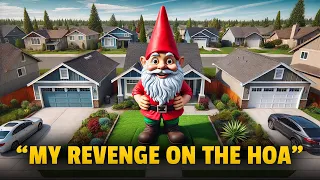
They threatened to take everything my father built, all because of a tractor. When the HOA president stormed onto my property, screaming and pointing like a maniac at my father's pride and joy, I thought she had all the power. But she didn't know that standing up for my father's legacy would teach her the most expensive lesson of her life.
Would you like to know how a simple farmer outsmarted the most entitled HOA president in America? Stay with me, because what happened next is not only shocking; it's the most satisfying story of justice you'll hear this year. Living on this beautiful piece of land wasn't just about owning property; it was about preserving my father's legacy.
Every morning, as I watched the sun rise over our cornfields, I could still hear his voice telling me how he built this farm from nothing. That John Deere tractor, standing proud in our field, was the last gift he gave me before passing away last spring. "Take care of her," he said.
"She'll help you keep our dream alive. " But dreams have a funny way of turning into nightmares. When those fancy suburban homes started popping up around our farm, I knew things would change.
Still, I never imagined how much. The new homeowners association formed quietly at first, just some basic rules about lawn maintenance and fence heights for the new development—nothing that affected us farmers, or so we thought. I remember the exact moment everything changed.
It was a crisp Sunday morning, and I was doing my regular maintenance on Dad's tractor. That's when I noticed them: those pristine white envelopes stuffed in every farmer's mailbox along our road. Inside was a notice that would turn our peaceful community upside down: new HOA bylaws, extension agricultural equipment restrictions.
The letter was filled with fancy words about aesthetic standards and property value preservation, but one thing was crystal clear: they wanted our farming equipment gone or hidden. They called our tractors eyesores and detrimental to the neighborhood's upscale image. My blood boiled as I read those words.
This wasn't just about a tractor anymore; this was about our way of life. That evening, I called an emergency meeting at Old Joe's Diner. The faces around that table were grim—third and fourth generation farmers who'd weathered droughts, floods, and market crashes—now being threatened by people who couldn't tell corn from cotton.
One elderly farmer slammed his fist on the table. "My grandfather survived the Dust Bowl. I'm not letting some HOA take what he built.
" We tried the diplomatic approach first, inviting the HOA board to see our operations firsthand. I'll never forget their president's response: "We're not interested in a farming lesson; we're interested in progress. " That word, "progress," dripped with such contempt it told us everything we needed to know about their real intentions.
As weeks passed, tension grew. More letters arrived, each more threatening than the last. Other farmers started receiving citations for violations that had never existed before; some even talked about selling their land, fearing they couldn't fight the mounting pressure.
But every time I looked at Dad's tractor, I knew I couldn't give in. This land, this way of life—it wasn't just our past; it was our future. And I was about to learn exactly how far some people would go to take that away from us.
I was just finishing up my morning chores when I saw her marching across my front lawn like she owned the place. Her cream-colored suit looked hilariously out of place against the backdrop of my working farm, but there was nothing funny about the look on her face or the stack of paper she was clutching like a weapon. "This has gone on long enough," she announced, her voice sharp enough to spook my chickens.
"That thing needs to go immediately! " She pointed at Dad's tractor like it was some kind of monster, not the reliable machine that had helped feed this community for decades. I took a deep breath, remembering Dad's words about handling difficult people with dignity.
"Ma'am, this is private property, and that tractor is essential for my farm work. " My calm response seemed to infuriate her even more. She thrust a document in my face.
"Do you know who I am? I'm the HOA president, and our new bylaws clearly state that all agricultural equipment must be stored out of sight. Your contraption is decreasing property values by thousands!
" I couldn't help but chuckle, which only made her face turn redder. "With all due respect, my farm predates your HOA by about 50 years. We're not even part of your jurisdiction.
" That's when she dropped the bomb. "Oh, but we are now. Your property has been redistricted into our HOA zone.
" It was all perfectly legal; the vote happened last month while you were too busy playing farmer to attend our meetings. My blood ran cold. "That's impossible!
You can't just absorb private property without owner consent! " She smiled, the kind of smile that reminds you of a shark circling its prey. "Check the county records if you don't believe me, and while you're at it, start shopping for a nice storage shed.
You have 72 hours to comply, or we'll start issuing fines: $500 per day. " I stood my ground, arms crossed. "This tractor isn't moving.
Not today, not ever! " Her face contorted with rage. "You farmers are all the same—stuck in the past, refusing to progress.
Do you have any idea how many luxury homes we could build here? How much value we could add to this community if you people would just cooperate? " That's when it hit me: this wasn't about my tractor at all; this was about something much bigger.
"So that's what this is really about. You want our land! " She composed herself quickly, but I'd seen the.
. . "Truth in her eyes.
Don't be ridiculous; we're simply maintaining community standards. But if you find yourself unable to comply with our reasonable requests, well, perhaps it would be better for everyone if you considered selling. I happen to know several interested buyers.
" I stepped closer, my voice low but firm. "My father spent his life building this farm. He died working this land.
That tractor was his last gift to me, and it's not going anywhere. Neither am I. " She straightened her jacket, that shark smile returning.
"We'll see about that. I don't think you understand who you're dealing with. By the time I'm done, that tractor will be the least of your worries.
" As I watched her storm off, her heels sinking into my soft farmland, I knew this was just the beginning. But what she didn't understand was that she had just declared war on the wrong farmer. Dad always said the toughest seeds grow in the hardest soil, and I was about to prove him right.
What I didn't know then was that her threats weren't just hot air. She had a plan in motion that would affect not just my farm, but the entire community. And that tractor she hated so much?
It was about to become a symbol of resistance that would unite our town in ways none of us could have imagined. The harassment started suddenly: a property assessor here, a code inspector there. But by week's end, it was like living in a fishbowl.
HOA board members parked outside my farm in shifts, photographing everything. Then my bank called; someone was questioning my mortgage documentation. My insurance company received anonymous complaints.
Even my dairy contract suddenly came under routine review. They weren't just trying to move my tractor; they were trying to erase me completely. Then came the parade of anonymous complaints.
Suddenly, county inspectors were showing up daily, checking everything from water runoff to noise levels. Each time, they left disappointed, unable to find a single violation. But the HOA wasn't done—not by a long shot.
The local newspaper ran a full-page ad about modernizing our community standards—there was my farm, circled in red, labeled as an example of outdated land use. They even photoshopped my father's tractor to look rusty and abandoned. My blood wasn't just boiling now; it was scorching.
But the real gut punch came when they started targeting our customers. The HOA sent letters to every household in the county, claiming our produce might be contaminated due to unsafe equipment practices. Our farmers' market sales plummeted overnight.
Old Joe from the diner called me in a panic; they'd threatened to rezone his parking lot unless he stopped hosting our farmer meetings. One by one, our community spaces were being closed off to us. That's when I discovered the truth about those redistricting documents.
Late one night, pouring over county records, I found something that made my heart stop. The signatures on the petition—dozens of them—were from people who'd moved away years ago. Some weren't even alive anymore.
I took my findings to Sarah, our local council member, Dad's old friend from the Farm Bureau. She studied the evidence, then pulled out her phone. "Remember that mysterious buyer who's been snatching up foreclosed farms?
Just got a tip—they're planning to announce a luxury development next week. " She smiled grimly. "But they don't know we just passed a six-month moratorium on agricultural rezoning.
Your evidence arrived at the perfect moment; they've got nothing but worthless purchase contracts now. " Inside were newspaper clippings, court documents, and photographs. But what caught my eye was a familiar face—my own father, photographed secretly at a town meeting six months before his death.
Next to his photo was a handwritten note: "Potential troublemaker knows too much about mineral rights. " The development company behind it all? Run by our HOA president's husband.
But the real shock came from the company's major shareholder: our own county commissioner—the man who eulogized at my father's funeral. They'd been perfecting this scheme for years: buy up a few properties, establish an HOA, gradually expand their territory through legal loopholes and forged documents. By the time anyone realized what was happening, it was too late.
But they'd never faced someone like me before. Dad didn't raise a quitter, and he sure as hell didn't raise a fool. I had evidence of their fraud.
Now the question was: what would they do to keep it quiet? I didn't have to wait long for an answer. The next morning, my tractor's tires were slashed, a warning note tucked under the windshield wiper: "Accidents happen to stubborn farmers.
" They thought they could scare me; instead, they just proved how desperate they were. And desperate people make mistakes—big ones. What happened next would shake our little town to its core.
And that tractor they hated so much? It was about to become the symbol of their downfall. The morning of the big HOA meeting, I arrived early with a simple brown envelope under my arm.
The room was packed—every farmer, every neighbor, even reporters from the local news station. The HOA president stood at the podium, looking as smug as ever. "Before we begin voting on the Emergency Equipment Ordinance," I announced, walking to the front, "there's something everyone needs to see.
" The room fell silent as I pulled out the documents. "Funny thing about public records: they tell quite a story if you know where to look. " I started projecting photos onto the wall: property deeds, bank records, court filings.
Over the past five years, 28 family farms in three counties have been forced into sale, all bought by shell companies leading back to one development corporation: Platinum Estates. The HOA president's face twitched. I continued, "But here's where it gets interesting: Platinum Estates' latest project—a $50 million luxury housing development.
The land they need? Our farms. " Murmurs filled the room.
Room and the CEO of Platinum Estates, I clicked to the next slide: none other than our HOA president's husband, the same man who's been secretly buying up foreclosed farms through dummy corporations. The color drained from her face as I revealed their entire scheme: the falsified petitions, the forged signatures, the illegal redistricting. But I saved the best for last.
Remember that tractor you hated so much? Dad didn't just leave me a piece of equipment; he left me evidence. I played the recording he'd made before his death: a full confession from a former board member about their tactics, their plans, their crimes.
As the recording played, you could hear a pin drop. The former board member detailed everything: the targeted harassment, the artificial property devaluations, the backdated documents. He explained how they’d select their targets: always family farms, always after a death or hardship, always when the owners were most vulnerable.
But my father had suspected something wasn't right in his final months. While they thought he was just a dying man tending to his beloved tractor, he was gathering evidence: every late-night meeting in the diner, every whispered conversation, every backdoor deal—he recorded it all. My father knew he was dying.
I continued, my voice steady despite the emotion. He knew they were circling like vultures, waiting for their chance. So he left me more than just a tractor; he left me the truth, and now everyone gets to hear it.
I played the final recording: the HOA president herself, laughing about how easy it was to steal generations of farming heritage through legal loopholes and fake regulations. “These stupid farmers,” her voice echoed through the speakers. “They don't even realize their precious tractors are just our excuse to take everything.
” The room erupted; phones came out, cameras flashed. The HOA president made a dash for the door, but two state investigators were already waiting. Turns out I wasn't the only one building a case.
The state attorney's office had been watching Platinum Estates for months, just waiting for someone to expose their operation. She turned back, her face twisted with rage. “You have no idea what you've done, do you?
Do you know how much money was riding on this deal? We had investors' contracts! ” I smiled, thinking of Dad.
“Actually, I do, and I know exactly what I've done: I’ve protected our community from people like you. And that tractor you hated so much? It just helped save every farm in this county.
” Every farmer whose land had been stolen through their scheme came forward. Families from three counties arrived in a convoy of tractors, parading down Main Street. The sight of 50 tractors lined up, proud and strong, brought tears to my eyes.
Dad would have loved this. The investigation revealed their entire network: local officials they’d bribed, fake companies they’d created, even the overseas investors who’d funded their land grab scheme. The same pattern repeated in farming communities across the state.
But the biggest shock came when we discovered what made our land so valuable. Those soil samples they’d been taking? They weren't testing for contamination; they were confirming the presence of rare minerals.
Our farms sat on resources worth millions. That's when our community truly united. Local lawyers offered their services pro bono, neighboring counties launched their own investigations, and even the state governor got involved, promising emergency legislation to protect agricultural land from predatory development.
The HOA president and her husband were led away in handcuffs, their perfect plan destroyed by the very thing they’d hated most: a farmer's stubborn refusal to move his tractor. But the real victory wasn’t their arrest; it was watching our community reclaim its soul. One by one, every fraudulent HOA regulation was struck down, and every illegally seized farm was returned to its rightful owners.
The development plans for luxury homes were torn up and replaced by protective covenants ensuring our agricultural heritage would be reserved for generations. That evening, as the sun set over our saved farmland, we held the biggest celebration our county had ever seen right there in my front field, next to Dad’s tractor, now a symbol of resistance and justice. Sometimes, the simplest things become the most powerful weapons against greed and corruption.
These days, things are different in our little farming community. That HOA completely dissolved. Their threats are framed in our local museum, right next to the story of how a humble farming community stood up to corporate greed and won.
Dad’s tractor still stands proud in my field, but now it’s become something of a local landmark. People stop to take pictures, sharing the story of how one old John Deere helped expose a multi-million-dollar conspiracy. Some folks even started calling it the “freedom tractor.
” The former HOA president and her husband? They're facing serious prison time. Turns out our case helped uncover similar schemes in five other states.
As for their luxury development plans, that land is now protected under the new Farmland Heritage Act. You know what's funny? All this happened because someone thought they could bully a farmer into hiding his tractor.
But they learned what Dad always said: sometimes, the biggest victories come from standing your ground, even if you're standing alone.