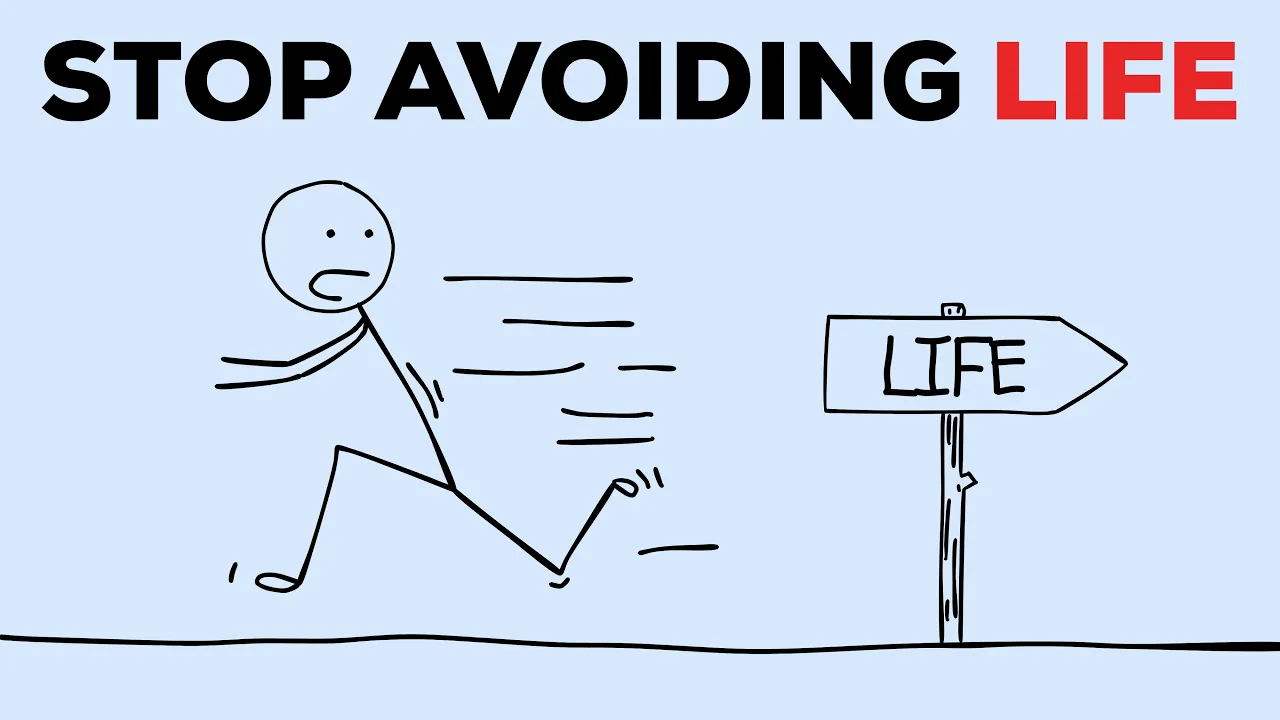
Your comfort zone isn't keeping you safe. It's slowly killing your potential. We've been sold a lie.
The idea that avoiding discomfort leads to happiness is not just wrong. It's dangerous. Think about it.
We'll spend 30 minutes deciding which show to binge watch, but won't spend 30 minutes on something that actually scares us. That's not comfort. That's avoidance.
Here's what nobody tells you about comfort zones. They have an expiration date. The world changes, industries evolve, relationships deepen or break, and staying exactly where you are becomes the riskiest position of all.
The comfort zone creates an illusion of safety while secretly making you more vulnerable. When you avoid challenges, you're not preventing problems. You're just ensuring they'll be bigger when they inevitably arrive.
Every day, you choose ease over growth. Your capacity to handle difficulty actually decreases. Every skill you value required pushing through discomfort first, learning to walk, ride a bike, have difficult conversations, build meaningful relationships.
All of it happened outside your comfort zone. The most successful people aren't those who avoid hard things. They're the ones who learn to make friends with discomfort.
They discovered that difficulty isn't the enemy of growth. It's the catalyst. Your brain is wired to keep you safe, not to help you thrive.
Understanding this ancient programming is the first step to overriding it. The good news, once you understand how the system works, you can start working with it instead of against it. Chapter 1.
Your brain's ancient programming. Your brain has one primary job. Keep you alive.
Unfortunately, it can't tell the difference between a saber-tooth tiger and a difficult conversation. This ancient alarm system worked perfectly when physical danger was everywhere. But now it's keeping you from everything you actually want.
Your amygdala, the brain's fear center, treats public speaking the same way it treats an actual predator. This creates what psychologists call the negativity bias. Your brain is literally programmed to notice threats five times more readily than opportunities.
It's scanning constantly for what could go wrong, not what could go right. Here's the funny part. We'll research the perfect workout routine for 3 hours instead of just doing 20 push-ups.
Your brain would rather plan than execute because planning feels safer. The stress response that once saved your ancestors is now sabotaging your growth. When you approach something challenging, your heart rate increases, your palms sweat, your breathing changes, and your brain screams danger.
But here's the real breakthrough. You can train your brain to recognize the difference between actual danger and growth opportunities. Discomfort is just growth trying to happen.
The same physiological response that signals danger can signal opportunity. It's all about interpretation. When you feel that familiar resistance instead of backing away, you can lean in.
Your nervous system doesn't distinguish between fear and excitement. That's your conscious mind's job. Chapter 2.
the anti-fragile advantage. Your body is literally designed to get stronger from stress. But somehow we've forgotten this applies to more than just muscles.
When you lift weights, you create microscopic tears and muscle fibers. Your body doesn't just repair them, it builds them back stronger. This is called super compensation.
And it's happening throughout your entire system. Your bones get denser under pressure. Your cardiovascular system becomes more efficient under demand.
Your immune system strengthens when appropriately challenged. So why would your mind be any different? This biological principle extends far beyond the physical realm.
Your neural pathways strengthen when challenged. Your emotional resilience builds through manageable stress. Your problem solving abilities sharpen when faced with complex situations.
This is the antifragile principle. Systems that don't just resist stress, but actually gain strength from it. It's like a vaccine for life challenges.
We pay money to go to gyms to voluntarily stress our muscles, then avoid every other form of beneficial discomfort. That's like training one muscle and ignoring the rest. Cold exposure makes you more resilient to temperature changes.
Fasting makes you more metabolically flexible. Difficult conversations make you better at communication. Public speaking makes you more confident.
The pattern is everywhere. Controlled exposure to manageable stress creates adaptation and growth. The key word is controlled.
You're not seeking trauma. You're seeking appropriate challenge. There's a sweet spot where stress becomes strengthening rather than destructive.
Chapter 3. The micro discomfort method. You don't need to climb mountains to build resilience.
You need to take cold showers. Start so small that your brain can't even mount a proper resistance. The micro discomfort method is beautifully simple.
Choose one small uncomfortable thing every day. Take the stairs instead of the elevator. Have that awkward conversation.
Do 10 push-ups when you don't feel like it. Here's why this works. Your brain learns that discomfort isn't dangerous through repeated exposure.
Each small act of courage builds evidence that you can handle more than you think. The beauty of starting small is that failure becomes insignificant. If you fail at taking a cold shower, it's not a life-changing setback, but the neural pathways you're building are life-changing.
You're literally rewiring your brain's response to discomfort. Funny how we'll endure hours of scrolling through content we don't even like, but 10 minutes of meditation feels impossible. Micro discomfort training is like compound interest for your confidence.
Start with things that make you slightly uncomfortable, but won't ruin your day if they go poorly. Call instead of text. Speak up in meetings, try a new food, take a different route home.
The goal isn't to suffer. It's to expand your comfort zone gradually and sustainably. Each micro challenge proves to your brain that discomfort is manageable, not catastrophic.
Within weeks, things that used to feel overwhelming will feel routine. That's your comfort zone expanding in real time. You're not becoming someone different.
You're becoming who you already were underneath the fear. Chapter 4. Reframing resistance.
That feeling of resistance isn't your enemy. It's your GPS pointing toward growth. When you feel that familiar pull to avoid something, you've found your next opportunity.
Most people treat resistance like a stop sign. But what if it's actually a growth sign? Think about every skill you've developed.
The resistance was strongest right before the breakthrough. Discomfort isn't evidence that something is wrong. It's evidence that something is working.
Your system is adapting, growing, evolving. The body sends the same signals for growth and danger because they often feel identical in the moment. The difference is context and choice.
When you voluntarily approach something challenging, you're telling your nervous system, "This is growth, not survival. " We'll wait 30 minutes for food delivery, but won't spend 30 minutes on something that scares us. Yet the thing that scares us is probably the thing that would actually nourish us.
Instead of asking, "How can I avoid this discomfort? " Start asking, "What is this discomfort trying to teach me? " Resistance becomes information, not limitation.
The feeling of I don't want to do this can be translated as this is important for my growth. The stronger the resistance, the more significant the potential breakthrough. This doesn't mean seeking unnecessary suffering.
It means recognizing when discomfort is pointing towards something valuable rather than something harmful. Learning to distinguish between productive discomfort and destructive discomfort is a skill that transforms everything. Chapter 5.
The progressive overload principle. Just like in the gym, life requires progressive overload for continued growth. You can't use the same weight forever and expect to get stronger.
Start with challenges that feel manageable. Maybe 6 out of 10 on the difficulty scale. As these become comfortable, gradually increase the intensity.
Your capacity expands to meet the demands you place on it. Here's what's fascinating. Your brain adapts to whatever level of challenge you consistently present it.
Set the bar low and it adapts to low performance. Set it progressively higher and it rises to meet each new standard. Avoiding hard things is like never lifting weights and wondering why you're not strong.
Your comfort zone doesn't expand by accident. It expands by design. This principle applies everywhere.
Relationships, career challenges, physical fitness, creative projects. Each level of difficulty you master prepares you for the next one. The key is finding your edge.
That point where you're challenged but not overwhelmed. Too easy and there's no growth. Too hard and you risk burnout or failure.
Right at the edge is where transformation happens. Track your progress like an athlete. What felt impossible last month should feel manageable this month.
That's evidence your system is working. Join our YouTube membership and get exclusive perks like early access to scripts, input on future topics about productivity, and connect with a like-minded community that gets it. Click join below and let's build your easier, more intentional life together.
Chapter 6. Emotional resilience toolkit. Your emotions during difficult moments aren't obstacles to overcome.
They're information to process. The goal isn't to eliminate discomfort. It's to dance with it.
When you're in the middle of something challenging, your body will produce intense sensations. Racing heart, tight chest, sweaty palms. These aren't signs of weakness.
They're signs of aliveness. Here's the toolkit. Breathe through it, name it, and stay present.
Anxiety and excitement are physiologically identical. The only difference is your interpretation. The rain technique works powerfully here.
Recognize what you're feeling. Allow it to be present without fighting it. Investigate with kindness what your body is telling you and then act with nonattachment to the outcome.
Funny how we can binge watch an entire series but call a 20-minute difficult conversation too long. The difference isn't time. It's emotional intensity.
Practice the stop technique. Stop what you're doing, take a breath, observe what you're feeling, and proceed with intention rather than reaction. Remember, emotions are temporary visitors, not permanent residents.
That overwhelming feeling of resistance will pass, but the growth from pushing through it will compound. The most emotionally resilient people aren't those who never feel afraid. They're those who feel afraid and act anyway.
They've learned to surf the waves of discomfort instead of being wiped out by them. They understand that courage isn't the absence of fear. It's feeling the fear and choosing growth anyway.
Chapter 7. The compound effect of courage. Courage isn't a single heroic moment.
It's a daily practice that compounds over time. Every small act of bravery makes the next one easier. Here's what nobody tells you.
Courage is like a muscle. The more you use it, the stronger it gets. Each time you choose the harder path, you're literally rewiring your brain to see challenge as opportunity.
Start with microcourages. Speaking up in meetings, trying new foods, taking cold showers, having difficult conversations. These might seem trivial, but they're actually profound.
You're proving to yourself that you can handle discomfort. Each act of courage creates what psychologists call efficacy beliefs. evidence that you can handle challenges.
Your brain keeps a running tally of your successes and failures. When you consistently choose courage over comfort, even in small ways, you're building an unshakable foundation of selfrust. We'll spend more time researching which show to binge than planning our actual growth.
But courage compounds faster than comfort ever could. The compound effect works both ways. Every avoided challenge makes the next one seem harder.
Every embrace challenge makes the next one seem more manageable. You're either building momentum toward growth or momentum towards stagnation. Within months of consistent small, brave acts, you'll find yourself attempting things that would have terrified you before.
It's not that you became fearless. You became fear friendly. The courage to do hard things isn't born from confidence.
Confidence is born from doing hard things. This creates a beautiful upward spiral. Courage leads to confidence which enables greater courage which builds deeper confidence.
Chapter eight. Productive failure framework. Failure isn't the opposite of success.
It's the raw material of success. Every master was once a disaster who kept going. The productive failure framework has three parts.
Attempt boldly, analyze honestly, and adjust intelligently. Most people get stuck on the first part because they're terrified of the outcome. Here's the secret.
You're not trying to avoid failure. You're trying to fail faster and cheaper. Each failure contains information about what doesn't work, bringing you closer to what does.
Think about learning to ride a bike. You didn't succeed by avoiding falls. You succeeded by falling safely and getting back up.
Adult life is the same, but we've forgotten how to fall safely. The most successful people aren't those who never fail. They're those who fail the most efficiently.
They extract maximum learning from minimum damage. Reframe every failure as expensive education. That difficult conversation that went poorly, you learn something about communication.
That project that flopped, you learn something about planning. The goal isn't perfection. It's progression.
Every iteration makes you stronger, smarter, and more resilient. Chapter nine. Building your challenge ritual.
Doing hard things can't be left to motivation. It needs to become a system. Motivation gets you started, but ritual keeps you going.
Your challenge ritual should be as consistent as brushing your teeth. Same time, same mindset, same commitment to growth over comfort. This isn't about willpower.
It's about architecture. Here's the framework. Choose one daily challenge, one weekly challenge, and one monthly challenge.
Keep them specific, measurable, and slightly uncomfortable. Daily might be cold shower, meditation, difficult phone call. Weekly might be try something new, have a hard conversation, tackle an avoided project.
Monthly might be public speaking, solo travel, learning a new skill. We'll research the perfect routine for hours instead of just starting with something simple. Perfect is the enemy of practiced.
The key is consistency over intensity. Better to do something small every day than something big once a month. Your brain learns through repetition, not through occasional heroics.
Track your challenges like data. What worked? What didn't?
How did you feel before, during, and after? This information becomes your personal growth manual. Chapter 10.
The community advantage. Growth happens faster in community than in isolation. Surround yourself with people who make your growth feel normal, not exceptional.
Here's what's powerful about community. When hard things become the group norm, they stop feeling unusual. Peer pressure can work for you instead of against you.
Find people who are also committed to growth through challenge. This doesn't mean finding people who are already where you want to be. It means finding people who are on the same journey.
Share your challenges, celebrate small wins, and support each other through the uncomfortable parts. Vulnerability shared is vulnerability divided. We'll spend hours discussing TV shows, but avoid talking about our real challenges and growth.
What if those conversations became the norm in your community? Accountability partners change everything. When someone else knows about your commitment, backing down becomes harder.
But choose carefully. You want encouragement, not judgment. The right community doesn't just support your growth, it expects it.
They create an environment where choosing the harder path feels natural and necessary. You've moved beyond just surviving hard things. Now you can thrive because of them.
This is what antifragile looks like. Gaining strength from whatever life throws at you. Antifragile systems don't just resist stress.
They use stress as fuel for growth. You've become a system that gets better under pressure, not worse. The advanced practice is learning to love the difficulty itself, not just the results it produces.
When challenge becomes your chosen path rather than your avoided burden, your entire experience transforms. You now recognize resistance as a compass pointing toward growth. Difficulty has become information, not limitation.
Discomfort signals opportunity, not danger. At this level, you start seeking out challenges that will stretch you. You become curious about your limits rather than afraid of them.
You ask questions like, "What would I attempt if I knew I couldn't fail? " And then realize that the attempting itself is the success. Here's the beautiful irony.
By learning to do hard things, your life actually becomes easier. Not because challenges disappear, but because your capacity to handle them expands infinitely. The person you were at the beginning of this journey would be amazed by what you now consider routine.
You've developed what researchers call a growth identity. Your sense of self is tied to learning and developing. Rather than avoiding failure or maintaining comfort, this identity completely reshapes how you face life's inevitable challenges.
Continue this practice for life. Keep seeking appropriate challenges. Keep expanding your comfort zone.
Keep proving to yourself that you're capable of more than you imagine. The goal was never to eliminate difficulty. It was to transform your relationship with it.
You've learned to do hard things. Now go do them. And hey, if you like this video, don't forget to subscribe and hit that like button.
Also, let me know your thoughts on what I just shared. Oh, and there's more. I've just started a Patreon to help support these videos and connect with you more directly.
Check out the link in the description if you'd like to join.