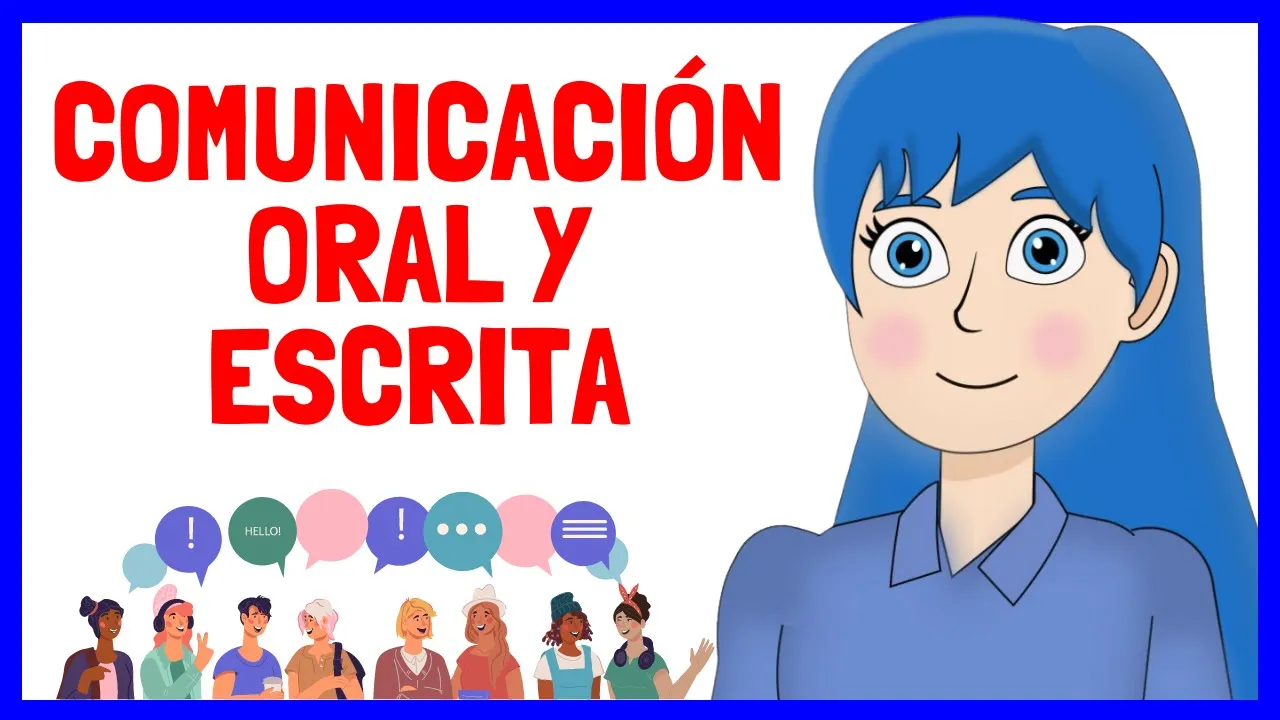
Hello, it's good to see you here. How are you? Today I will explain to you what written communication and oral communication are, their characteristics, differences, elements, and I will give you several examples.
Like eagerly to start learning and subscribe. Written communication is one that is carried out through words and according to a code, always written on media such as paper, mobile screens, computers, etc. In general, we can identify the code with the language in which the communication is verified, although there are other types of codes.
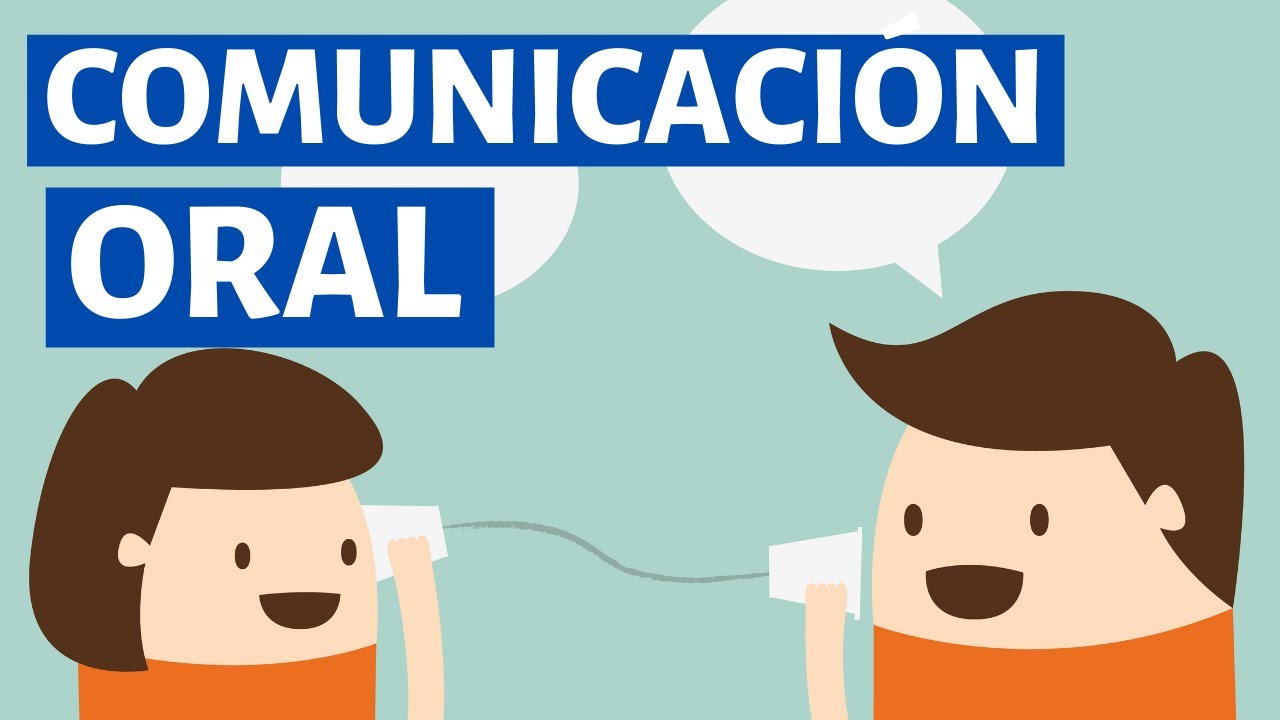
On the contrary, oral communication is one that takes place through voice and words. For two people to communicate in this way, a shared code and a physical medium are needed. The code is the language in which it is spoken.
All people need to know it for communication to be effective. The physical medium can be the telephone, a videoconference or simply the air. In its beginnings, written communication was carried out through pictograms.
It was the Phoenicians who invented alphabetic writing, in which each letter represents a sound. This is the system we still use today. Alphabetic writing has been a fundamental technology for the development of civilization.
It allowed knowledge to be recorded and transmitted from generation to generation. In our digital age, written communication has invaded screens: we find it on social networks, web pages and in the billions of emails that are sent daily. It can also be seen on the walls of cities (such as graffiti), in advertisements of all kinds, in books, notebooks, and on any surface capable of holding a written sign (paper, wood, rocks, screens, etc.
. ). Differences and similarities in written and oral communication Communication persists over time, oral communication does not What is recorded in writing does not depend on individual memory, nor will it be forgotten when the members of a generation die, but rather remains in the weather.
For its part, oral communication does not remain in time, except for the audio or video that is recorded. For example, a conversation between a teacher and a student is not recorded. Both allow communication over distance Whether in the form of books, magazines, emails or instant messages, written communication can reach recipients anywhere in the world.
Also, today it is possible to communicate orally in the distance, with video calls or traditional calls. Written communication is sequential, oral communication is not Contrary to oral communication, which is received by a listener almost at the same time as it is emitted by the speaker, written communication is sequential: first it is emitted and then it is received; that is, first the sender writes and then the receiver reads. Written communication is subject to spelling rules When we communicate orally, it doesn't matter if the word “shoe” starts with z or s.
Instead, written communication is expected to fully comply with spelling rules. Different media Throughout its history, written communication has been transmitted on various media. Among the oldest are papyrus and parchment; later the paper was imported from China.
Today there are digital media. Oral communication is based on conversations where two or more people are present, in audios, in videos, in calls or video calls. Written communication can be corrected Unlike oral language, written communication allows it to be revised as many times as necessary; that also means that you can plan what you are going to write.
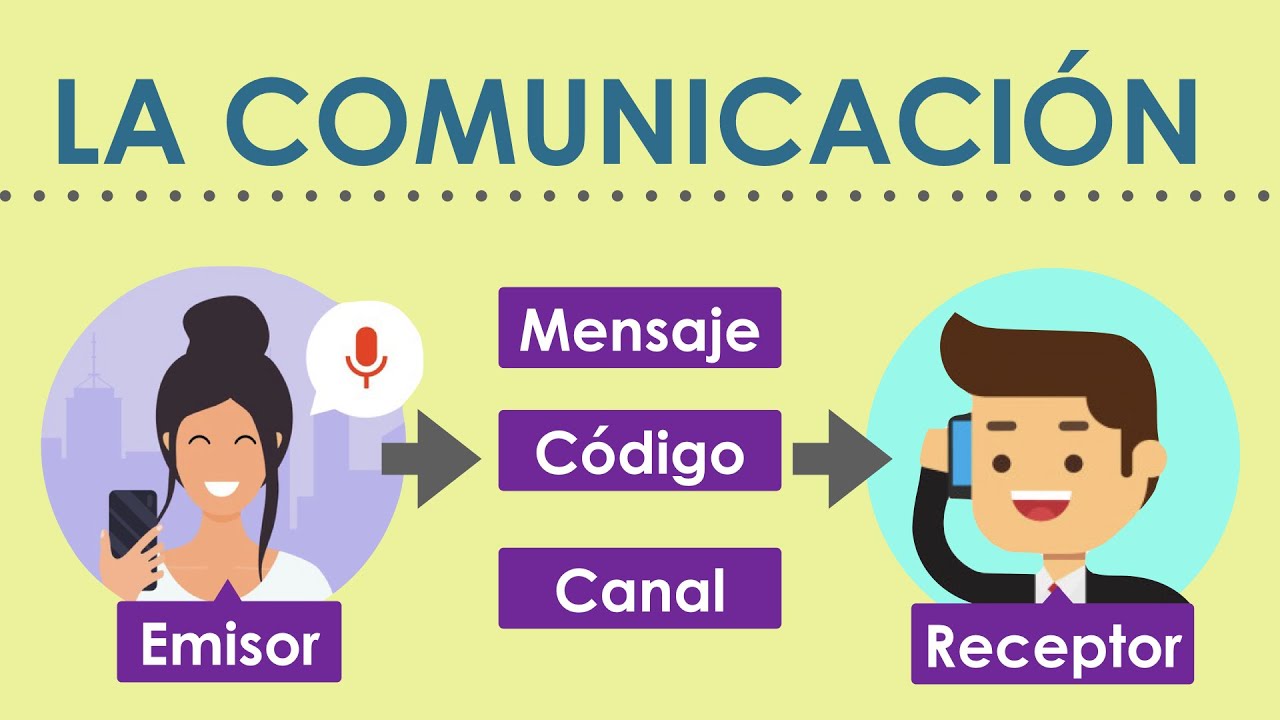
Elements of written and oral communication For the act of written and oral communication to occur, five elements are required, which are: Issuer The person or device that issues the message. It can be a person sending a text message, a writer writing a novel, or someone who starts talking to another person. Receiver Is the person or device that receives and decodes the message, whether oral or written.
Message It is the content or meaning of the communication. It can be an entire novel, a poem, a simple phrase like "I'll be out in 15 minutes" or a single word: "thank you. " Code It is the language in which the communication takes place; Spanish, English, German, Italian, etc.
Medium It is the physical support through which the communication takes place. It can be paper, the computer screen, the air, among others. Examples of written communication There are many types of written communication that are used daily in everyday life or work: Books, magazines, newspapers Traditional written communication consists of printed ink on a paper support.
This is the case of books, magazines, the press, brochures or flyers. Reports Reports are another type of written communication. They may be used for commercial, educational, legal, or scientific purposes.
E-mails E-mail has replaced the letter and the memo as a means of business communication, as they have many advantages. The first of these is immediacy; It's also cheaper, since you don't need ink or paper. Social networks The most widespread written communication today is found on social networks.
We not only find it in tweets or Facebook posts, but also in descriptions and comments on YouTube and Instagram videos. Letters, notebooks, notebooks Beyond the use of new technologies, there are still people who write by hand. The letters are still a good example, as well as the notes we take in class, recorded in notebooks and notebooks.
Examples of oral communication In everyday life we can see many cases of oral communication: A conversation. A phone call. A videocall.
A digital book, or in paper format. A video conference. A physical meeting or by video call.
A shout. A discussion. dictation in a class.
A sermon in church. A journalist reporting a news. We have now reached the end of this topic.
As an exercise to check what you have learned, I suggest you leave an example of written communication and another of verbal communication in the comments. Give a like and subscribe to continue learning topics as interesting as this. Happy day, see you soon.
![🔥 Cómo HABLAR en PÚBLICO de forma CARISMÁTICA [🤫 SECRETO revelado]](https://img.youtube.com/vi/AuJ7fp7_UlI/maxresdefault.jpg)