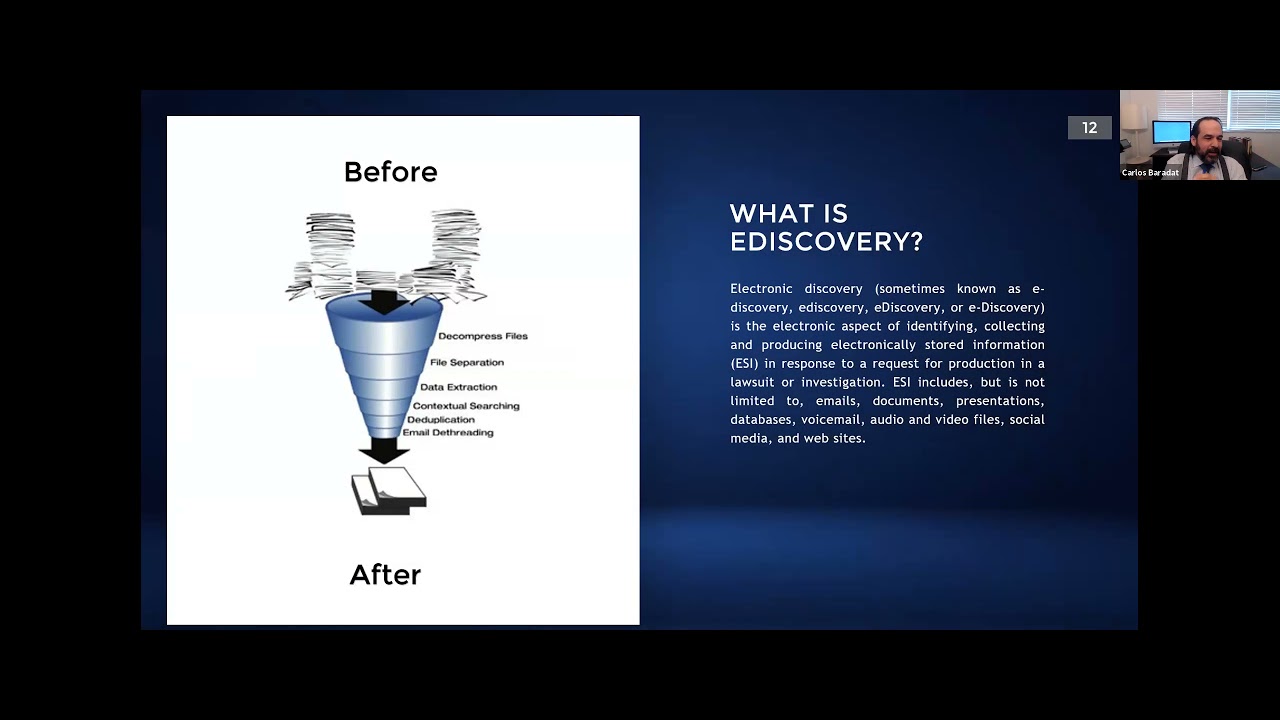
module 1 introduction to ediscovery introduction the nature of ediscovery all discovery and litigation or any other official proceeding in which the object of the discovery is an electronic format is called electronic discovery or a discovery the documents photos videos and other data subject to e-discovery are categorized under the general term electronically stored information or ESI the term ESI is a part of the base language of a discovery that is used everywhere in this field ESI is subject to the same rules of discovery to which any other piece of evidence is subject but there are several
specific rules pertaining to ESI discovery which form the basis of this course the rules of a discovery involved the exchange of electronically stored documents and other potential evidence between parties ediscovery is relatively new but a rapidly expanding field that has driven new technologies and new procedural rules since the 1990s in this opening module we will explore many of the ins and outs of this field because this is an intermediate level course we will assume a general knowledge of discovery under civil criminal and evidentiary rules also because ediscovery straddles the worlds of court procedure rules and
technology will be discussing several technological concepts which you may not be familiar with you would do well to take your time with this course as you familiarize yourself with this fascinating and exciting topic in general we will be discussing ediscovery and ESI within this framework what is it where is it how do you find what you need or keep the other side from it how do you analyze what you need from it after you find it how do you get what you need and only what you need how do you use it in litigation overview
discovery and litigation when we use the term discovery in litigation we refer to the exchange of information between litigants overseen by each court the rules governing discovery and litigation are the federal and state rules of procedure we will focus mainly on the Federal Rules of Civil Procedure and particularly on rules 26 through 37 which are entitled disclosure and discovery we will look briefly at some state rules and some rules of Criminal Procedure and evidence open discovery allowable discovery is very broad in most cases at least theoretically each party is entitled to all the materials that
are in the possession of the other party that could potentially be used at trial and that are not protected by privilege or work product rules this includes not only what might be used as evidence at a potential trial but anything that could lead to evidence that could be data physical evidence witness statements photographs or anything else that may be relevant to the case or that might lead to discovery of evidence in the case the reasons for broad discovery allowance are basic fairness and judicial efficiency due to crowded dockets courts are looking for any way to
settle cases before they go to trial open discovery encourages the parties to settle because the likely outcome of the case should become apparent once all the facts are on the table the scope of discovery while discoverability is very broad discovery in any given case may be limited by several factors the discovery that the other party is entitled to after these limitations are imposed is called the scope of discovery the first limit on discoverability is the relevance of the materials that are requested and it's comparable a discovery limitation called proportionality any discovery request can be met
by an objection as to its relevancy in legal terms relevancy is the ability of a given item to prove or disprove an element of the case or to have value in finding something to lead to such evidence relevance is not the same as admissibility as the rules for admitting evidence are much more stringent than the relevancy rules in discovery the next limit on discoverability is privilege and work product a very common objection in electronic discovery privilege blocks discoverability of evidence that is subject to attorney-client privilege doctor-patient privilege and so on as well as attorney work
product which are materials prepared in anticipation of litigation the scope of discovery produces millions of documents some of which contain correspondence between attorneys and their clients or between attorneys and their co attorneys or staff most of these communications are protected from discovery they also must be treated carefully as there are almost uncountable instances in the records of ediscovery cases for documents that were privileged were inadvertently transmitted to the other party parties can wave these privileges and inadvertent disclosure may be tantamount to a waiver placing an even further emphasis on care and document communications note that
in some cases parties may have to waive a privilege to bring a lawsuit such as in a medical malpractice case where the plaintiffs medical records need to be entered into evidence illegally seized records can also be kept out of court particularly in criminal proceedings overview of electronically stored information ESI includes video audio image and text files in all formats it includes word processing and all data affiliated with word processing it includes websites and social media activity in history and anything posted to those sites it includes voice mail and video mail phone records emails text chats
and instant messages and computer programming information as technology and communications advanced new forms of communication will also fall under ESI ESI includes every piece of data that is stored or transmitted on from to or through any electronic device including laptop and desktop computers cloud storage devices and services phones tablets cameras devices on the Internet of Things removable storage devices mainframe computers smart televisions you name it if it stores any data that could be evidence in litigation it is ESI under the rules of evidence and procedure in other words ESI includes basically every type of product
of the Information Age wherever it may happen to be stored file formats one way the ESI can be broadly categorized is as natively electronic like emails Word documents texts etc or not natively electronic like scanned documents non-native documents also include electronic documents in a different format like an email cut and pasted into word or print out of a text the difference between those two types of documents has to do with search ability search tools called optical character readers or OCR are needed to search scan documents native electronic documents can be searched through their own formats
this means that ediscovery platforms need to include a variety of search mechanisms court rules and proceedings generally prefer the use of native format documents where possible also because of the best Evidence Rule also called the original documents rule ports preferred documents that are as close to native formats as possible native file formats refer to viewing documents in a way that the parties created them in other words a word document being viewed as a Word document is in its native file format if it converted into a PDF it may still be discoverable or admissible but it's
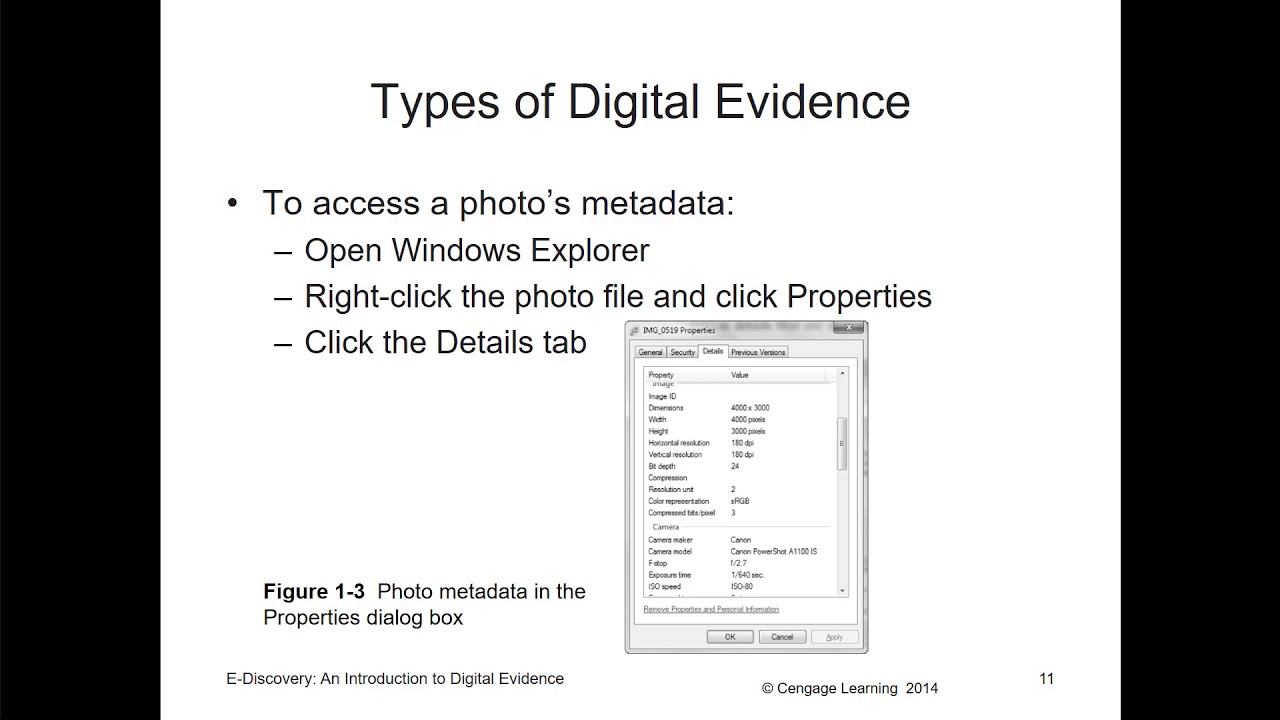
no longer in its native file format admitting documents in native format is preferred since it lets the jury see what the documents really look like and because it preserves the metadata of the documents metadata metadata is data that gives information about other data in e-discovery the term metadata refers to information stored in a file that tells the history of the document this could be geolocation for a photo taken or the entire history of a word document which is updated invisibly by word every time the document is changed or saved metadata is an extremely important concept
in ediscovery numerous cases in the development of ediscovery have hinged on the production of documents in need of file format mostly because of the metadata question today most attorneys IT departments and judges know to produce documents in need a file format when possible defining document the history of ediscovery can be traced through the growing definition of the word document under the rules of procedure over the time of the digital revolution without overstating the obvious documents under the rule started out as physical writing on paper or another media a long time ago a will was once
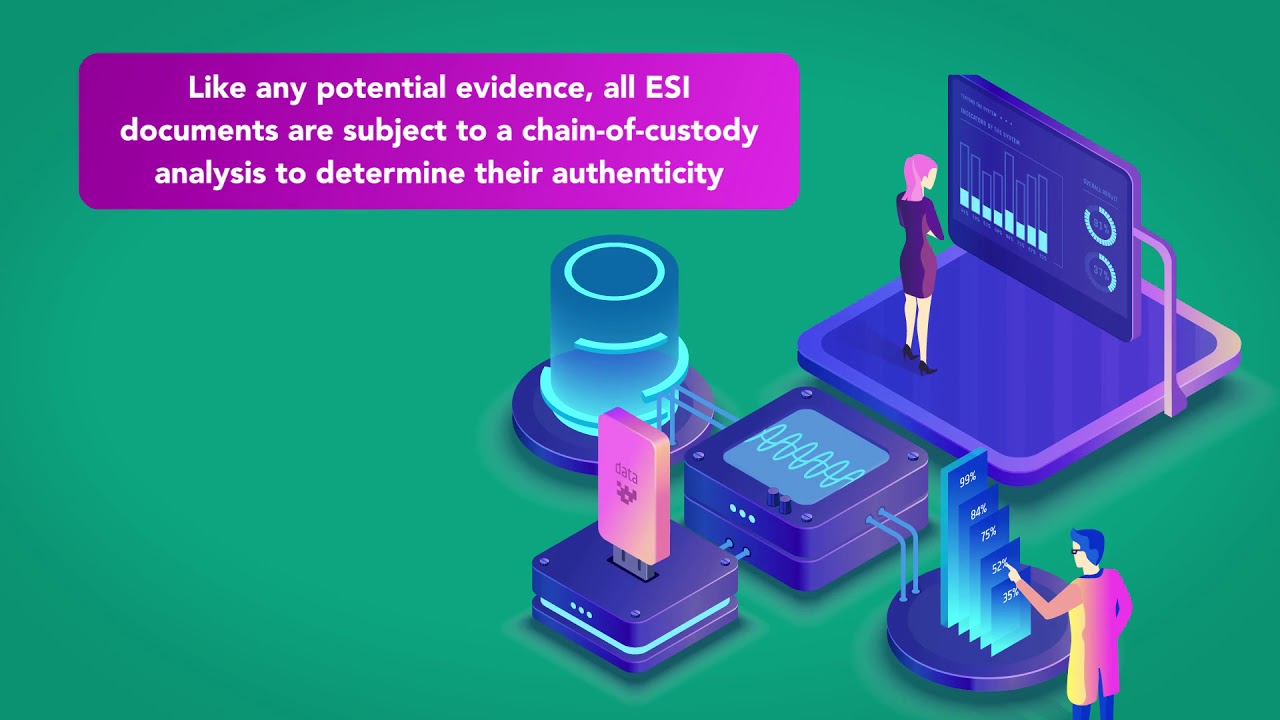
ruled valid that was written on a piece of wood now after several updates to the language in the rules the word document collectively refers to all electronically stored information in any form duty to preserve ESI and spoliation the duty to preserve evidence that is imposed on the party that holds the evidence is as old as litigation itself but because of the special nature of electronic data special procedural rules have been enacted regarding the preservation of ESI the rules are designed to encourage the parties cooperation in setting the scope of discovery as early into the litigation
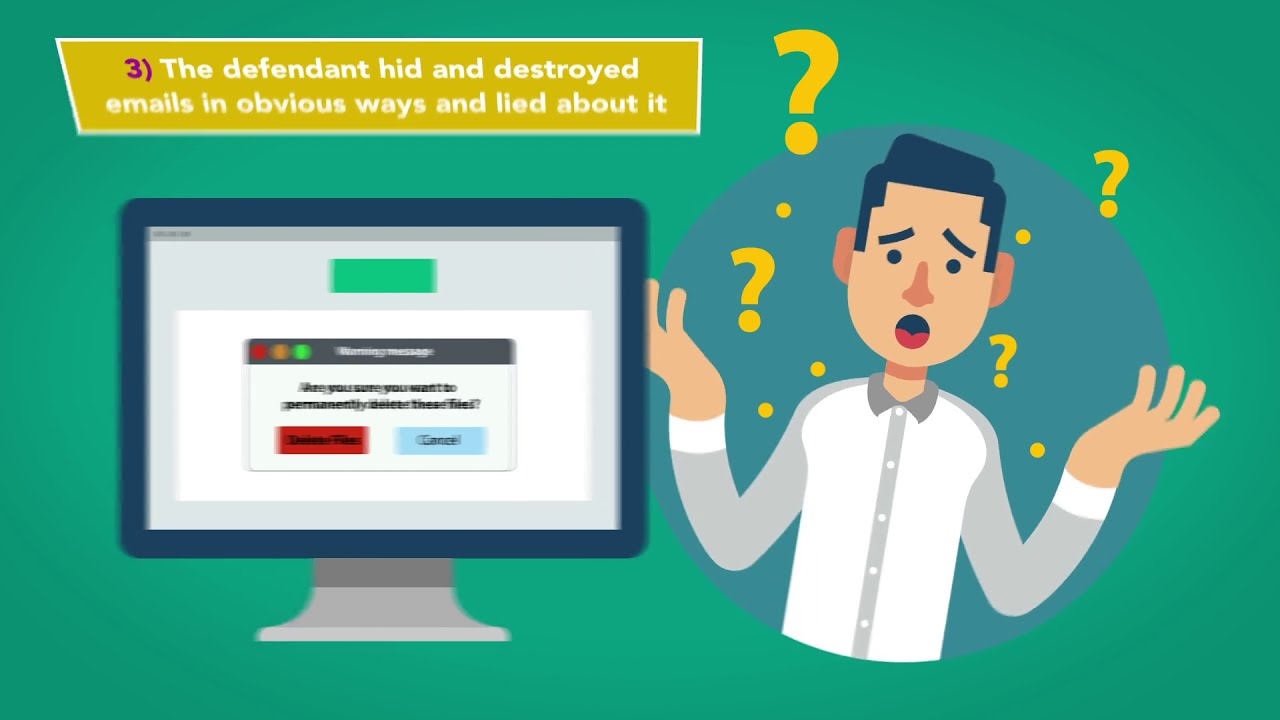
as possible so that everyone knows what data needs to be preserved every entity that stores ESI has a duty to preserve that data when it has been informed that litigation is possible or even when the company can reasonably infer that a lawsuit is coming failure to preserve relevant ESI or any deliberate change in ESI such as erasing it or changing it is called spoliation there are two types of spoliation inadvertent and deliberate deciding whether spoliation is accidental or deliberate is a matter of proof but can also be inferred from the circumstances to impose sanctions for
spoliation a court must find that the relevant ESI that should have been preserved must have been lost the loss must have occurred after the duty to preserve a rose which triggers when the litigation was reasonably foreseeable the loss must have occurred because the party failed to reasonable steps to preserve the ESI and the ESI cannot be replaced or restored through additional discovery so the loss prejudice is the party seeking the ESI this rule does not cover the deliberate destruction of ESI but courts can also impose sanctions in those cases in the past potential defendants would
often receive letters threatening litigation before any case was filed very often now the very first step in litigation is a litigation hold letter which is a letter threatening litigation that includes the admonishment to freeze and hold any possibly relevant data where it is the letter establishes a date when a duty to preserve arises for potential spoliation arguments later the sanctions force foliation can be harsh one recent federal case imposed a three million dollar fine on a company that had one employee delete a few thousand emails sanctions could even theoretically include forfeiture losing the case in
the case of egregious and deliberate spoliation a discovery software platforms all discoverable data must be stored somewhere and in some format it is discovered using different search methods and algorithms which find and collate relevant data in timelines and in other ways that lawyers judges and juries can understand many of these platforms now use machine learning sometimes referred to as artificial intelligence to find what they are looking for through a process called predictive coding which we'll discuss in a later module Howie discovery platforms are developed because ESI is stored electronic data the tools that are needed
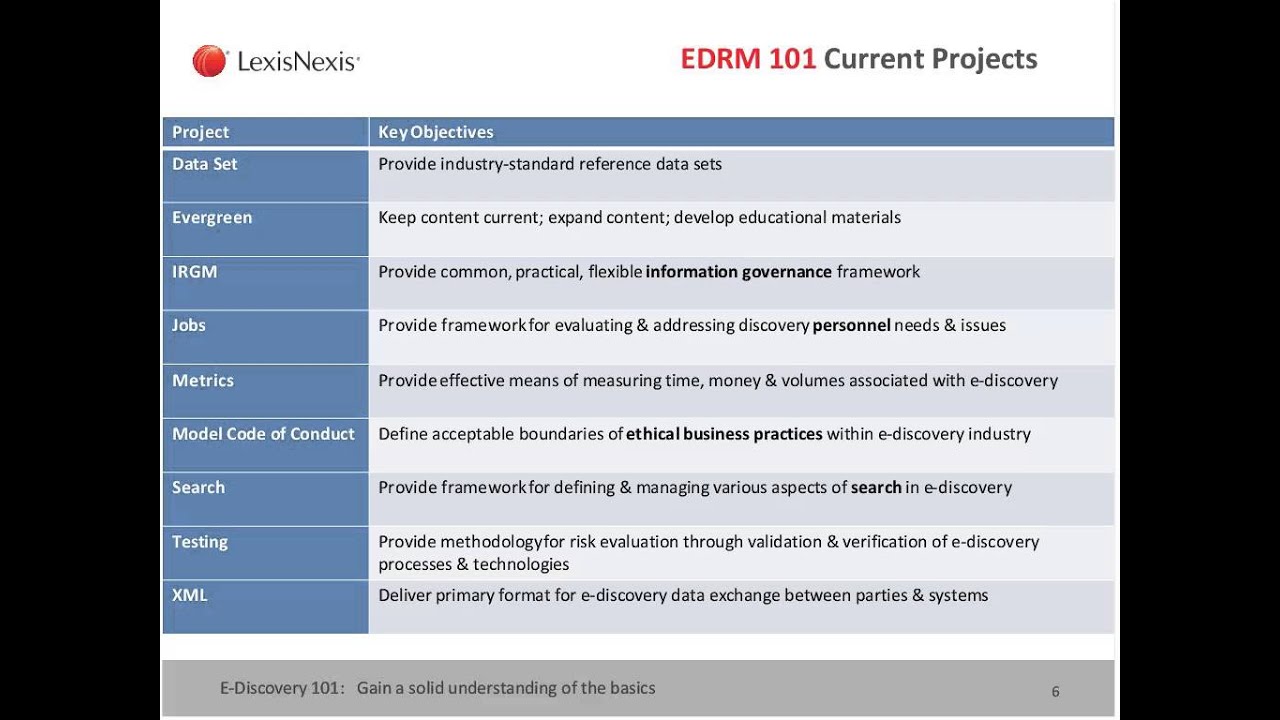
to run discovery on that data are computer tools as such there are numerous competing software platforms that offer electronic discovery for the whole range of discoverable data or for smaller chunks of it in fact many primers on ediscovery double as sales manuals for software companies we won't discuss any company specifically but we will go over some of the things of which these platforms are capable the companies who design and sell these ediscovery platforms use the same model for developing their products the electronic discovery reference model which was developed in 2005 by two Minnesota based ediscovery
consulting firms it provides the industry standard workflow model on which all ediscovery is based it is also the guideline for corporate IT departments and their attorneys for making sure that the company stored data will always be discoverable if necessary the model consists of nine parts information management implementing data governance processes that alleviate risk and expenses in the event of an electronic discovery request this is the basis for the entire current ediscovery process all businesses need to have information systems in place that are responsive to ediscovery requests many books have been written on the technology in
this area identification companies must be able to locate sources of information to determine exactly what the data is in scope depth and breadth and how it needs to be managed both before and during ediscovery preservation companies must ensure potentially relevant ESI is properly stored using measures such as retention and deletion schedules they must make sure that the data is not compromised deleted or changed collection they must gather information for ediscovery use this includes processing and reviewing the ESI processing this reduces the volume of relevant ESI and converts it to the appropriate formats for review and
analysis review this is where one determines the dadoes ediscovery relevance and scans the ESI to determine if any of the data is privileged analysis this step is where you evaluate the ESI for content and context including key patterns and topics this is the deep dive into the data looking for patterns surprises topics people or anything that will tell the analyst what is going on in the case production delivers the ESI to relevant parties in the forms and delivery methods that are required in the individual case presentation this is where one displays data findings at depositions
hearings trials etc to elicit further information validate existing facts or positions or persuade a jury the goal is to present the ESI in native or near native formats so trier-of-fact can see what really happened in the case application to criminal cases although this course concentrates on civil law the issue of ESI storage and criminal prosecutions is of interest to many it is an issue that received national prominence in 2016 when the FBI reportedly paid hackers nearly a million dollars to hack into the San Bernardino terrorists iPhone in civil cases discovery of data like this can
be had through motion or pretrial agreement but in criminal cases this discovery may require a warrant while ESI in criminal cases is treated procedurally just like any other evidence how that information is acquired may run into some unique Fourth Amendment search and seizure problem cases involving this issue have looked at the plain view doctrine and the particularity requirement for search warrants when for example suspects change file names on computers to hide evidence the Department of Justice has a set of guidelines for ESI but in truth criminal ESI cases are all over the map trial lawyer
groups in the Advisory Council on the criminal rules are currently working on amendments to rules for Criminal Procedure that are designed to create pretrial discovery procedures for ESI in our next module we will continue to look at electronically stored information including where it is stored and its various forms we will also look at when ESI must be produced in response to subpoenas and forensic measures used to retrieve ESI