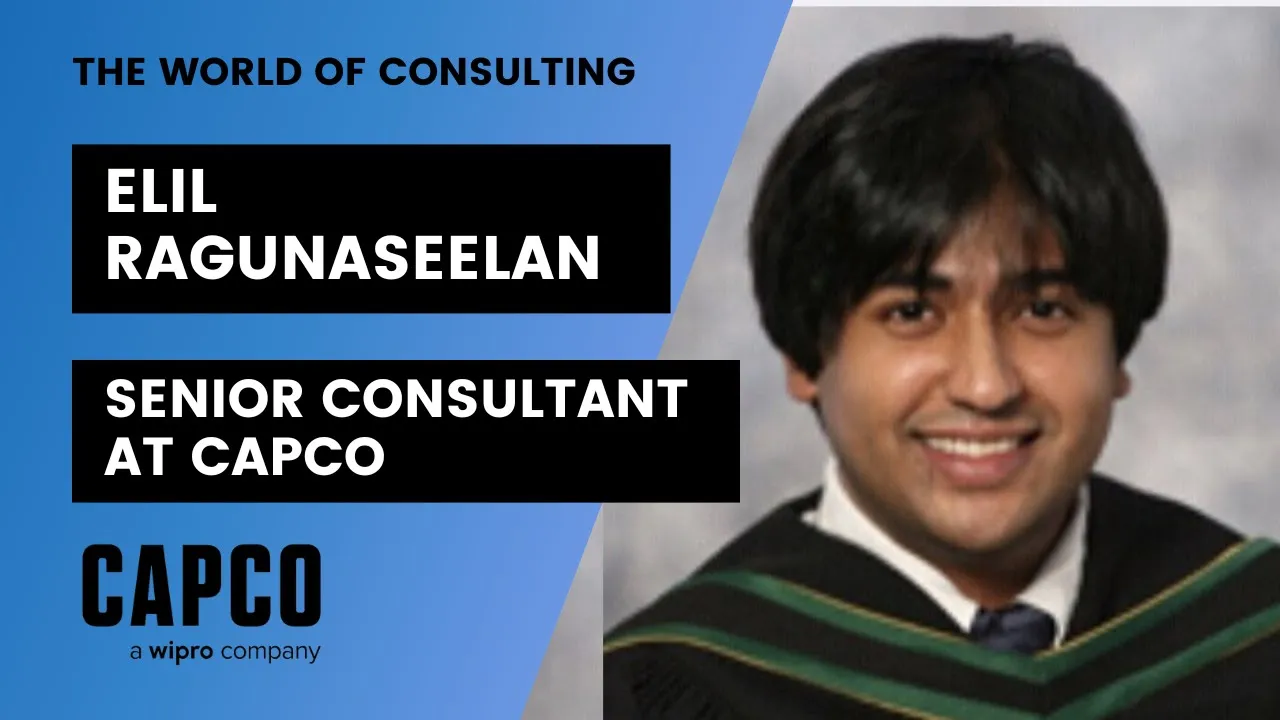
hi Alo thank you so much for joining us on our podcast we're really excited to have you on and to learn about your different insights and your career Journey so I wanted to start off with the first question and ask if you could tell us a little bit about yourself your educational journey and your career path so thank you for having me my name is alil I'm currently working as a senior consultant at Capco they are a Boutique consulting firm with offices all over the world you know and we currently specialize in the financial services
industry prior to that I worked at Bank of Montreal for about five years did dabbled in a little bit of financial reporting financial analysis and then also investment management and then prior to that Bea was my first job outside of undergrad I completed my undergrad at Queens in life sciences actually so very different from what I'm doing right now but through my studies I slowly realized that probably medicine isn't the right path for me and so after I graduated I gave myself a year to kind of figure things out before applying to pharmacy school and
during that I started working at bimo started off as a client Services representative for their Investment Management line of business and while I was working there for the year I realized how um interesting everything was cuz it was so different from science and biology and everything that I studied before and it was more numbers based it was more problem solving a little bit more strategic and a lot more people facing which I realized I enjoyed a lot so I decided to stick through and kind of figure out where things would take me and so I
stayed with beo in the investment management position for a little bit where I worked with in institutional clients we know how companies have like group tfsas group rsps and so we helped sort of manage their portfolios processing trades doing account reconciliation and that line of business was acquired by another firm so I transferred over to the financial reporting and financial analyst sort of role where I reviewed the financial statements along with the support of a whole bunch of other colleagues where we consolidate put together the financial statements actually for beemo's retail investment products so that
would include their mutual funds ETFs and I think also some private uh investment products as well and there I was exposed to you know more on the analytical side understanding how there are so many different types of investment products what they're made of because it's not necessarily just you know investing in one thing and waiting for your money to grow but but actually how that fund operates what their investment profile is like and then I was also introduced to the internal audit function so we worked with a lot of third-party Auditors like you know KPMG
PWC where we collectively audited the financial statements before submitting them to the regulator and so it was a lot of interesting work that I was doing there but then I felt like I had reached a ceiling cuz you know my background was in science and so I thought what can I do educationwise to sort of bolster myself to advance my career and that's when I went back to Queens and did my Master's in finance uh for a year full-time and I was working full-time at the same time so it was a lot of work but
it was definitely worth it cuz I learned so much about so many different things and I use that to sort of Leverage myself to apply for other jobs and that's where I landed myself at Capco in Consulting I was actually applying for a financial analyst role at CCO but it turned into a Consulting interview where I had to do case study interview prep and so forth and luckily they thought I was a good fit and so I was happy to try something new and I realized that there were some parts that were similar between what
I did before at bimo and what I did in Consulting and the was a whole lot of other things that school really prepped me for and I think it was mostly the communication side of things dealing with clients and learning more about how firms businesses operate so that was all really helpful and I've been at CCO for it'll be five years now and I know it's it's getting there and I'm really enjoying what I'm doing at Consulting so I'm glad I found myself here that's great it sounds sounds like you're doing amazing and it sounds
like a wonderful place to work as well so you mentioned that you started off as a financial analyst so I was wondering what's the biggest difference you believe in being a financial analyst versus a consultant and anything else related to that yeah no I think that's a really great question because I think for people who are in finance I think Financial analysts or Consultants are one of the two different Pathways that you think about taking I think the biggest thing is probably the amount of exposure to other clients that you have in the Consulting side
I think depending on the type of work that you do it could be the same work because there are so many different types of consultants and there are so many different types of projects too so I would say my first Consulting project was very very similar to a financial analyst role I was doing Financial modeling budgeting forecasting analysis the only thing though is that in a regular Financial analy role I'd be working in the corporate services function presenting to internal stakeholders and versus in Consulting I think you're working with external stakeholders your client and I
think the biggest thing is that the work that you do is part of trying to solve a problem for the client so you're a part of the puzzle and you Al think about how the work that you do can help solve a problem for the client I've always heard the term that Consultants are like doctors in business would you agree with that I would say in the sense of being very generalized you know because you get exposed to so many different Industries different line of businesses you have to be able to quickly get up to
speed on how the different companies work how the different line of businesses work so you become very generalized which I think is where the doctor's comparison comes from I think everyone has their special Niche like expertise that they kind of have in their back pocket if a situation ever comes across but yeah yeah that sounds great what initially attracted you to that Finance career I think it was the way the numbers could do storytelling so the financial modeling aspect of it and reviewing the numbers and making sure that everything tied out I think the fact
that it was used to either solve a problem or whether it was to tell a story I can give you two examples so the first one is when I was working at the bank and when we are helping to review the financial statements and we're making sure that everything reconciles and if we're not able to reconcile the numbers or the notes to supplement the table which a lot of people kind kind of forget about in the financial statements you're go back and try to investigate being like why is this not matching what's the Gap and
then you understand oh and it gets bigger too because it might be impacted by a political event depending on where the fund is located or a do like a natural event too so there's so many external factors that can impact the performance of how a company is doing and the numbers are the best way to see it and so sometimes you feel like a detective trying to solve a problem so I like that about it yeah it's like fun almost like trying to figure out how to escape escape room exactly you're literally trying to find
the key to the door to open and the door is pretty much making sure that all of the numbers tie out and then there's a lot of Clues a lot of missing pieces but then that's where you try to investigate figure out what's going on and then make sure that everything is reconciled yeah I think that's a great analogy as well has there ever been a huge event that has made a big difference on the numbers and you've been able to figure that out and been like wow I imagine maybe covid-19 was one of them
actually no well it it would have been really cool to see how Co affected the statements but I left beo uh I think just the year before okay I remember there were some incidents where I was reviewing the notes of the statements and just noticed that the numbers didn't match I it's been a while but yeah the numbers didn't match and I just remember reaching out to my colleagues to the portfolio maners asking being like hey this isn't matching the Auditors are inquiring into this can we figure this out together and um it was just
a lot of pulling and I think it came down to I think 2018 2017 I know Europe was pretty unstable I think there was brexit happening there was also a lot of instability in the pigs economy so Portugal Italy Greece Spain where there was a bailout that was happening so a lot of that influenced some of the listings that we held in the fund that I was investigating and so doing that deep dive trying to figure out and then finally having an answer to why the numbers were portrayed this way was pretty satisfying because like
oh wow like it's not just numbers that I'm looking at yeah I agree with what you said there and earlier about how numbers can tell a story they're not just there for the sake of being there but it's important about how they connect with other numbers or like bigger trends at stake yeah exactly yeah and could you tell me about a a specific project you worked on that you felt was really impactful on you or your company okay I think I can give two examples for two different types of impacts cuz I want to reiterate
one thing of a Consulting later on which I'll get to so the first one was my first project at Capco which I think was very impactful for myself and the company because I think we were able to win a lot more business afterwards but when I joined there was a lot of struggle on the financials there was an engagement that we had to deliver on that the bank wanted to deliver on and they had a timeline that was given to them by regulators and they had to meet this timeline but you know they ran through
their budget they didn't have any funds to continue and so there was a huge replanning effort when I first joined and um working together with the bank and I think because all the financial modeling that I did in school really helped a lot with that I think it was a portfolio of about 50 million or so where we were just you know using that to come up with many different unique ways to be able to make the money last as much as possible and we were able to deliver a huge project the project went through
covid as well so it was a huge shift for everyone was working in person it was a room filled with about like 50 60 people and all of us were forced to be remote and I think it was really really impressive how we still all managed to get our work done and deliver and I just remember remember that it was really impactful because this is what Consulting is about being able to quick thinkl on the feet on your feet I had to personally figure out oh there's this big chunk of money that we need to
manage and make sure that it lasts for its duration and I personally have never really worked on Project Finance previously was more corporate finance related activities but I realized oh I can use what I learned before to apply to this second thing about is quickly shifting from working in person to working remote and I think that both of those things really helped the firm realize that we can deliver very massive scale projects of really good value and the bank was very happy with their performance and so we were able to secure so much more add-on
engagements afterwards and so I think first project was very impactful the second one was the prono engagement so Consultants can also do prona work where we work with nonprofits and I think you know you're working in the corporate world you kind of realize oh you know I'm not really saving lives or really helping out that much so what kind of value are we really adding to helping the world and so I think my first Pono engagement was very impactful in the sense of you know we were working with a non-profit who wanted to come up
with a funding strategy yeah so it was still in the financial sector providing a financial advisory to a nonprofit so that's why it was considered proon a work but again like how impactful that was they were going to use that to fund their operations to help more people and you think it's like oh what I can do can also help people so I thought that was very impactful for me as well yeah and I think that for a lot of nonprofits it can be hard for them to get funding as well and it's their mainstream
of Revenue so it's great that you were able to help them and increase their funding yeah exactly just because they often don't have access to the same resources that a lot of the big Banks do and so having to provide those Services was definitely very fulfilling yeah that's amazing and in the end what kind of results were created in either of those either of those okay so for the client engagement I think the biggest one is that we were able to win a lot of business I was able to grow my career so I got
promoted from that project and also learned a lot about sales and contracts and a lot about more about deal making which I think is a little bit different than financial analyst jobs where you kind of learn about how to pitch projects win money and sort of the negotiation and so again I think my learning was exponential on that part of the aftermath and then with the nonprofit it was more of giving them a sort of a pipeline being like engage and Implement these sort of recommendations that we provide to you and they gave me their
financial statements and so it was more of you know using how their operations are and providing forecast for them being like if you apply these recommendations we expect that your Revenue would expect to grow by 1X 2x 3x Within These time periods and I think they found that very useful yeah that sounds like a great resource to have and I'm sure it was very rewarding for both you and the team as a whole M I agree what skills or qualities would you say are needed to be a successful consultant I think the main thing is
to be open to change and being proactive and detail oriented I think one of the biggest advice the best advice that I got from my colleagues is you put in what you get and so with Consulting you have to keep your eyes out for the details because that's where sometimes the answers lie but you also have to be able to quickly switch to the big picture cuz sometimes you get lost in the details and so that's where the ability to adapt to change is very important you're also required to be on so many different engagements
requiring different skill sets and learning different things and in the earlier years I was a little bit uncomfortable because oh this isn't really related to what I did before so I don't if I can be good at it and but then you kind of realize that there's a little bit of similarities and you stick onto those similarities and try to do the best you can and a lot of the feedback too if you're looking at promotions and progressing your career a lot of the things that they look for is tied to how well are you
able to adapt to different environments and you don't have to succeed right away I don't think that's what they're looking for but if you're able to get your feet wet your hands dirty in a new environment then challenge yourself I think that's what they're looking for because I know a lot of people be want to stay with in their comfort zone and myself included until like people told me you know you have to get out and try new things and the other thing too is remembering sustainability in terms your own performance so trying to avoid
burnout as much as you can I think that was a very big reminder for me because in Consulting the other difference too is it's not just the day-to-day work you do there's also account work that you do where you work with sales and Deals and there's also Community aspect of it too where you not have to but you volunteer your time to work on some other business development initiatives at the firm that all feed into your you know performance reviews and so forth and one of the things that everyone should keep in mind is that
you know it's a marathon and not really a Sprint so you have to be tactical about how you manage your time and how you make sure that you also keep some time for yourself to make sure that there's still work life balance because work life balance is very very different in Consulting compared to others you're very much able to have it but it's not how you expect it for other Industries yeah on the topic of work life balance I actually wanted to talk to you about it because I heard rumors that in Consulting you're working
very long hours so what are your thoughts on that I think that there is some truth to that but I think it wasn't new to me because I in audit the hours were definitely very crazy but I think in Consulting the thing is though it waxes and waines what I mean is when it gets really really busy where you're working 50 plus to 60 almost 70 80 hours a week depending on how crazy it is but then there's going to be quiet time there's going to be times when you know you can take the afternoon
off um or you're able to work at a cafe um if you're don't have that many meetings and so it definitely waxes and waines you just have to make sure that you take advantage of the quiet time to go on vacation or um make sure that you're taking time for yourself but the rumors are unfortunately a bit true okay but good to know that you're also able to take that time for yourself when you do need it yeah exactly like luckily with like most firms now they're very responsive to like work life balance I know
with the big four they used to have like you know Friday afternoons off for the summer or like you know it's pretty common place to shut down during the holidays because our clients don't work that often so yeah no I think work life B is definitely feas well yeah I think the work life balance and audit in Big Four was something that was also questioned so I think it's something that's not specific to just one industry but it could happen throughout yeah I would definitely say the work life balance and Consulting was a lot better
I remember working on the financial statements in that audit function I think you know it was all nighters when it was closer to the regulatory deadline you know being in the office till very late and then taking a cab home it was normal practice but I would say Consulting hasn't been that bad just yet especially now that we can work from home so you know most of us just leave the train go and take the train home at a regular time and then we finish our work in the evenings and then we have a lot
of flexibility in how we manage our time that's great have you ever experienced burnout by any chance or do you have any strategies for someone who is experiencing that so I I'm pretty sure I have I think it's very common place in the corporate world to experience like varying levels of burnout I think for me personally I think it's when I lose my motivation is when I feel like okay it's time to go on vacation usually around that time I am you know just working through the day but then I don't feel the passion or
wanting to do my best at work and or sometimes I'm very stressed and I'm having I wouldn't say nightmares but dreams about work and it it's happened to me before and that's when I didn't have the proper like burnout management strategies or almost burnout prevention strategies and I took some time off I think went on vacation did some traveling and then I felt like myself again and then so nowadays I think what I try to do is just try to make sure that I have time for myself know no matter how busy it is work
is work but health is the most important thing and so sometimes I have like 12 15 hour days and uh during those times I think I would try to at least you know have some time in the morning before I start my day or you know even like book yourself a massage go get a haircut or you know do things that you enjoy fun little things that you know cuz they add up cuz sometimes you might not be able to take your vacation for the next little while cuz it's busy season but if you wait
until then you might um get extremely tired and so little things every day really help and I think it it could be even better if it's something that you're passionate about doing exactly then you're motivated to actually stay throughout the long hours yeah yeah no I think what's definitely helped is that at the end of the day I do enjoy the work that I do you know Consulting comes with it uh you know the long hours no work life FS but I think you find a way to work through it and I definitely wouldn't still
be here if I didn't enjoy what I was doing yeah great and I know there there are a lot of students who are interested in a financial analyst as a career or a consultant so what advice do you have for them if they want to pursue a career similar to yours I would say Network as much as you can attend all of of the career events that you have at your school I know not all universities have co-op but if you do take advantage of that a lot of the associates that we hired whether it
was at the bank or at the firm they had previous Co-op experience which was really helpful on their resumés otherwise I think I just have a very strong resume where you did a lot of case competitions I think case comps are a huge thing for financial analyst jobs consulting jobs I think even for my interview even though I switched to Consulting I would say somewhere in the middle of my career I was fortunate enough to do case comps during my masters and I think like all of that gives a very robust resume that it's not
just academics but you know you are able to apply what you learn I think case comps are extremely helpful but the most important thing is networking going to to the career panels introducing yourself even reaching out to your LinkedIn Network for coffee chats I think that's the most important thing about becoming successful in finance or Consulting yeah that's great and what do you say that when reaching out for these coffee chats how are some ways that students can get a response or increase their response rate I think the most important thing is to sound genuine
a lot of the people that we reach out to are very busy and you want to be straightforward with the ask but then not be super blunt about it there is an art to it but more often than not people will respond if it's you know introduce yourself to sentences talk about why you're reaching out and see if you're able to book some time for a chat not to and I think the most important thing is to not book a chat and be explicit about looking for a job CU I think most people are not
able to immediately give jobs because they're not the recruiter and so forth but I think if you try to network with the intent of expanding like the people that you know learning more about the industry that you want to specialize in a lot of people are very open to it I can be of that like people are very receptive to that I think as long as you're sincere friendly and not follow up too much yes I know some people who maybe follow off every week or something and it's just it can get quite overwhelming and
I would say the most important thing is to not just discouraged because you know some people won't respond or some people will say that you know they're not interested in doing a coffee chat but there are a lot of people who are willing to listen to help provide mentorship or guidance and CU I understand that it can be intimidating when you're first starting your job hunting and like entering the corporate world yeah for sure but I think that what really resonated with me with what you said is the importance of not going into that chat
then tent to get the job but then tent to just learn more about the industry and the person and I think that can pay off exponentially you hit the nail on a DOT I think people like to talk about themselves so when you frame the co conversation on trying to understand their Journey what their advice would be how do they like their job what do they do to get their that sort of information I think that's very valuable within those conversations they might be able to be mention you know reach out to this person they
can probably help you with this specific question that you have or something but I think entering with a very open mind framework and just a learning mentality can like you said exponential rewards yeah amazing so hopefully now the everyone have a lot of tips and feel more confident in their preparation are there any other um tips you have for the interviews with the financial analyst or the Consulting what do you say that for example technical preparation is necessary at all yes yes technical preparation is very necessary depending on the type of financial analyst role that
you want to do because not every thing would require modeling but I've done a corporate banking interview where we had to do Financial modeling then another one where it was in real estate so commercial real estate where it wasn't modeling but I remember it was a worksheet of of questions where you had to have some real estate knowledge to be able to answer the technical questions so definitely the RAR of the job description and kind of anticipate what type of technical questions they would ask what I ended up doing afterwards even before the technical round
is I would have a portfolio so for corporate roles especially the more senior you are your portfolio not only comes from your I would say modeling or financial analysis skills but also how you're able to communicate your analysis that is business friendly and so being proficient in PowerPoint is a very huge thing and so like I remember having just a portfolio document with like my financial models my case PowerPoint presentations analysis everything so they kind of have like a repository to look through being like this is what I've been able to do what I can
do and then you're able to you know have some more substantiation to your technical round because technical rounds sometimes you'll do well on it sometimes you won't depending on the day CU nerves get in the way so for right so you want to prove it to them that you know maybe if this was an off day for me I'm still able to do this this is work that I'm proud of and so definitely having that would be very helpful but technical interviews you won't be able to skip them yeah I think that's very important because
it's a portion that can intimidate a lot of students and job Seekers I would say the more you do the more you get used to it I think and then after a while the interviews also sound pretty familiar they might not be the same questions but the theory behind it for example calculating the financial statement ratios calculate if it's an investment banking interview calculating the valuation of it completing a discounted cash flow model like all of that will be very standardized and more practice you do the better you will get at it yeah that sounds
like great of yeah so I was wondering you mentioned that for example when you're doing your technical preparation you might have to prepare financial models and I imagine this is also something you might have to present to clients what are some ways that you concisely persuade them if this is something that they might not understand that's a really good question I think this experience comes from the case competitions which is why really recommend um the students or anyone who is still in school to do as many k competitions as you can because the ones that
I did were around investment banking so we had to do Financial modeling so and I'll give an example of one I did where it was in partnership with uh canac cord genuity an actual uh firm that's working in downtown um we had to provide a pitch of a potential acquisition Target for them that's really important yeah um so you know we not only do we have to find a company that would be worth for them to invest into obviously the people who we would be presenting to are not going to be close to the numbers
of the analysis and so we kind of had to take a step back and pull back and say okay you have this really giant Excel let's go through it and highlight all the numbers that are impactful to our thesis or like why you should buy this company and so you would um go to the bottom line you would think about the valuation the synergies any cost savings that you find from the valuation and the modeling that you do any financing cost and so forth so you would highlight those put them into a very digestible table
on a PowerPoint doesn't have to be complicated but it can't be a full Excel table on a slide yes you have to sort of think about it from a storytelling perspective and that's where it comes down to understanding the company why they need to buy it not from oh you're going to make more money if you do this but it's going to save you money it's going to improve your Revenue in this line of business it's going to save you costs here and so all comes down to the storytelling I'm sure for students who are
interested in finance or Consulting the courses that they are taking probably already have like a Communications course I would really recommend them to take advantage of it cuz that some of the stuff that I learned on how to make good PowerPoints to tell analysis to very senior stakeholders I still used to this day that's great and I think that I agree with you if it was just the whole Excel there it's just too much you don't know where to focus on in terms of the future of cons Consulting where do you see this headed I
think with Consulting and I can only comment on within the financial service industry because that's the domain that I've worked on but I think there's been a huge push in digitization 2019 till now it's definitely slowed down because of the higher interest rates the banks have curbed their discretionary spending but it it's going to pick up again and I think with AI and machine learning coming into play in the last couple of years it's trying to learn how to leverage AI to provide more meaningful insights to our clients how we can leverage AI to save
more money or bring in more Revenue I think those are the use cases we're trying to think of Consulting is also expanding not upon your typical business transformation projects or strategy projects but a huge piece of sustainability from a climate change perspective from ESG that's been a very I would say controversial SL Hot Topic word in the industry the past couple of years and there's been a lot of focus because people are very concerned about the environment and not just from a climate change perspective but also from politics and so forth and so there's a
lot of focus on that and I think Consultants are trying to build a presence there but I think the main driver of all this I would say is AI trying to build out virtual assistance if you're in the tech space trying to use Data Insights if you are in trying to optimize how you leverage your data my personal stances AI is going to become really big not in the sense of it taking over but I think in terms of improving efficiency in especially in the data space on how businesses use the data because often times
they're in tables from so many different places and it takes a lot of Minds to consolidate and bring everything together to make your analysis you know with AI um and machine learning you can have everything in one place make it much more easier to pull out the very informative insights that you need to take it one step further and so I think there's going to be a lot of work in that space in the coming years yeah I think AI is something that's growing in a rapid race I don't know if you heard of Chach
BT which everyone uses so would you say that AI allows you to kind of focus on the more impactful tasks while it takes over more of the Mindless or routine task in a way I would say so yes yeah I I think with especi like tach PT I think a lot of us use it definitely from thinking about from note taking all the way to designing PowerPoint slides like they're able to do so much now that you know it brings your brain from working on those I would say mundane tasks to trying to solve the
more complex puzzles definitely I know maybe not on a Consulting yet but I know in some of my colleagues who are working in to Tech space chat gbt is already integrated into their workflows and so they use it for taking meeting minutes for helping to design PowerPoint slides and it was saving you time to do your actual work which is helping to solve a problem and so I can definitely see that crossing over into Consulting yeah and I I think 50 years ago we wouldn't have thought something like this would be possible and now it
is so exactly yeah really interesting and amazing the things that we're doing speaking on that theme you mentioned CSR I think it's something that's also really big I see a lot of companies talking about their sustainability strategies so when you're providing your recommendations to your clients is there ever a conflict between making them the most profits or losing profits but focusing on sustainability that is a really good question and I would have to be honest in the sense of with espe especially within the banks just yet I think sustainability is in their back pockets but
I would say I think the most important thing for them has been how to bring the most value to customers which of course improves their bottom line when it comes to the recommendations that we provide I think the business benefits we collectively come up with it together most often businesses will have a problem and they send out rfps to a whole bunch of competitors consulting firms where they ask you to come up with the solution and then the business itself reviews all the proposals and they end up going with the one that give you the
most bang for your buck essentially where they don't have to spend as much money but they're getting sufficient benefits those benefits can be anywhere from increasing customer value reducing costs increasing Revenue to the business sustainability is not something that has been factored into my or our personal recommendations just yet but it's all in the back of our minds and like for ourselves like in all the big four and like consulting firms sustainability and how we're marketing that and how we're trying to build that into our clients decision-making Frameworks and so forth is all coming together
and so in a couple of years I think it's going to be part of our recommendations that's great to know and amazing to hear about last question I have we're almost there is what would you say your long-term career goals and Consulting and how do you plan to achieve them that's a good question I think for me personally my long-term career goal in Consulting is to try and see where my cap is cuz I think how it works in a typical firm is you know you work your way up to a partner or you exit
the industry and you enter it into a director or senior manager or even higher type of role in the industry that you specialize in for example I think for me I haven't put my mind to where I want to be in terms of do I still want to be in consulting or do I want to exit the industry indry I think for now long term I want to just continue doing what I'm doing I definitely enjoy the sales aspect of Consulting the deals the contract negotiations aspect of it and so I think if I were
to have the opportunity and the privilege to continue working as a consultant and seeing how far that can get me I think that'd be very fortunate to do so but then I think the great thing about Consulting is that the exit opportunities are really endless I feel like some people might think that they might feel trapped they kind of just have to stick with this for the rest of their career but you can always exit out you're equipped with so many General skills across the business field that you would be successful anywhere that you sort
of exit into and I think that's sort of the message that I want to give is that the exit opportunities are endless for me personally again I think I want to stay in Consulting for as long as I can see where that takes me definitely want to be able to win some more deals maybe even become the lead of a practice at a firm or something like that and try to learn as much as I can about the way the whole Consulting industry works I think is probably my goal that sounds amazing and hopefully you're
able to achieve all that in the next few years thank you so much thank you so much Eli for joining us on our podcast it was amazing learning about your career Journey your different skills and qualities you think are need to be successful and future Trends you see emerging really enjoyed our time and wanted to thank you again oh thank you so much this is really great and thank you so much for having me


![Partnering for Success: The Importance of Collaborative Networks [CargoAi x Wisor]](https://img.youtube.com/vi/KBhvfYyXY4A/maxresdefault.jpg)
![#29 - Phillip Haid [A Better Leader], Founder & CEO, Public Inc.](https://img.youtube.com/vi/Jv9ayc9Nqzw/maxresdefault.jpg)