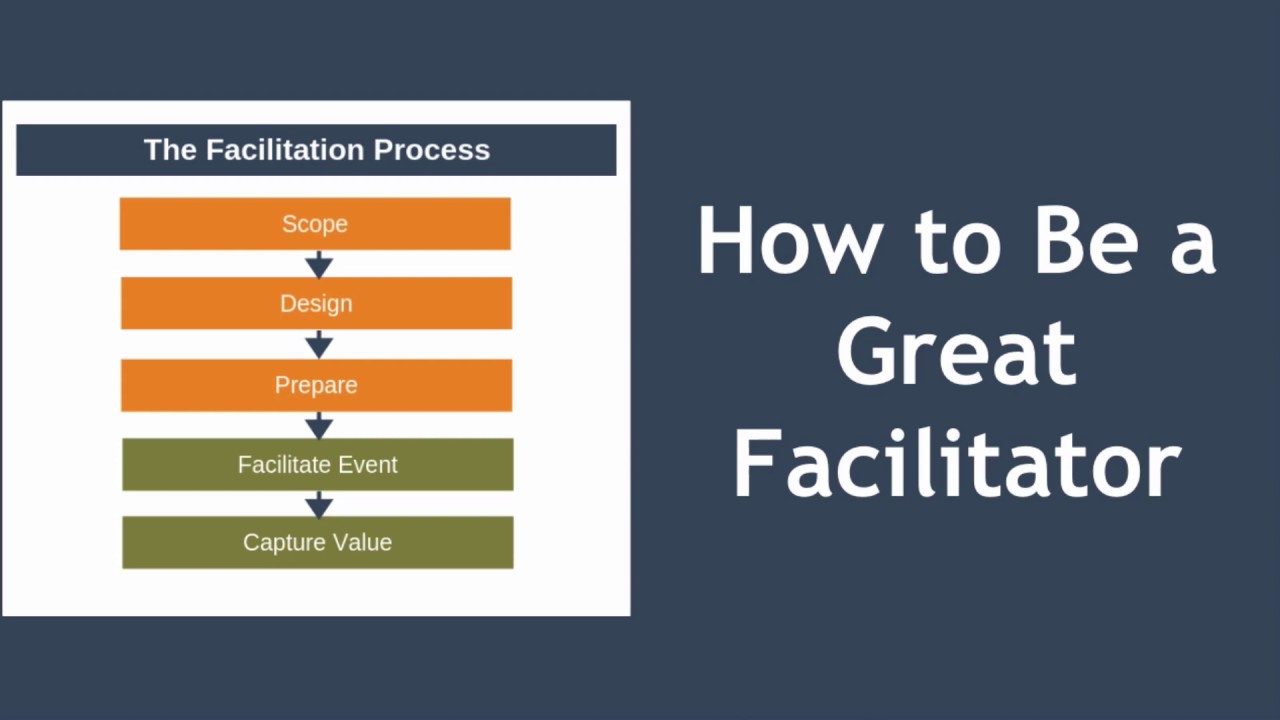
[Music] in lesson five we'll cover a key aspect of great training basic facilitation skills you will learn about facilitation skills that you can use when conducting training what's the secret to becoming a successful trainer what makes a trainer stand out from the competition facilitation skills are key to participant engagement remember adults learn best when they can participate in their learning participation assists all Learners regardless of their learning styles facilitating a training session is different than simply presenting and it requires additional skills facilitation has many benefits for the learning process it engages the participants participants who
are engaged in the learning process typically retain more it generate the learner accountability when participants are accountable for their own learning they work harder to gain something from a class great facilitation skills benefit relationships in the classroom strong relationships among participants and a strong relationship between the instructor and each participant are critical and finally facilitation benefits from instructure assessment of understanding instructors can measure how well participants understand a topic by asking them questions let's take a brief look at training facilities which refers to the space or room where training will be conducted a good training
facility offers the following features it's comfortable and accessible it's quiet private and free from interruptions and has sufficient space for trainers to work and interact let's discuss 51 training facilities have you ever been in a class or training session where you felt the facilities either helped or hurt your ability to learn press pause now to complete this activity in your seminar workbook when you finished press play to continue with the seminar adults need adequate facilities to promote learning participants need space to be comfortable and free from distractions inadequate facilities can be a barrier to effective
adult learning here are some details to consider when evaluating your training room noise check the noise from heating or air conditioning systems adjacent rooms corridors or outside the building room use rooms that are somewhat Square in shape lawn narrow rooms make it difficult for trainers to see and hear participants from the back of the room lighting the main source of lighting should be fluorescent lights incandescent lighting should be spread throughout the room and the room should be used with dimmers when projections is required chairs chairs should be on Wheels swivels and have backs to provide
Comfort glare check for eliminate glare from metal surfaces and other objects Acoustics check the bounce or absorption of sound to make sure folks can hear and Technology check the room to make sure it has permanent screens and computer with internet access and other electronic resources that you need for your training session let's discuss 52 my priorities for facilities as a trainer what will you prioritize in terms of your training room or facilities what's important to you and why press pause now to complete this activity in your seminar workbook when you're finished press play to continue
how an instructor sets up the tables and chairs also affects the facility's usefulness to the learner if possible arrange tables and chairs so each participant can see the instructor and most other participants this Arrangement encourages more discussion and interaction the figure above shows several types of seating arrangements fan style seating is conducive to allowing trainees to see any point of the room if a training priority involves knowledge Acquisitions with lecture and audio visual presentation being primary then the traditional classroom style seating might be appropriate traditional class from instruction allows the traine interaction with the trainer
but it also is more difficult for traines to work in teams so if training emphasizes total coup discussion and limited participation with no small group interaction a conference style Arrangement might be effective if the training requires both participation and total group instruction the Horseshoe style seating arrangement could be beneficial exercise 51 facili checklist develop a checklist of items that should that you should use as an instructor to consider when choosing or setting up a training room press pause now to complete this activity in your seminar workbook when you're finished press play to continue with your
seminar attending skills are about being attentive to the needs of your audience attending skills show that you're paying attention and actively engaged with participants when you use attending skills You're Building rapport with Learners you're communicating to them that you value them as individuals and are interested in their learning needs attending helps you gather information from participants your physical positioning enables you to observe people's behavior an important source of information in assessing how your training is being received it also encourages participants to interact with you there are four attending behaviors that you need to show that
you're interested in participants first you face them you maintain appropriate eye contact you move towards the participants and you avoid distracting behaviors check out page 72 and 73 of your seminar workbook for tips and tricks when using attending skills in your training let's discuss 53 attending skills what training experiences have you had that you experienced good attending skills from the facilitator let's pause now to complete this activity in your seminar workbook when you're are finished press play to continue with your seminar let's continue our discussion 54 trainer's first impression in your experience what makes a
good first impression of a trainer or a not so good first impression press pause now to complete this activity in your seminar workbook when you're finished press play to continue with the seminar observing skills help you assess how your training is being received based on observations you can make a decision to continue with the learning processes planned or to modify in response to participant needs there are three steps in using observing skills that you see here here are the three steps in detail step one observe the person's non-verbal Behavior are they smiling yawning nodding step
two try to determine the person's feelings based on what you've observed and then step three take appropriate action based on those inferences check out page 73 of your seminar workbook for a list of non-verbal behavior and some inferences about feelings that you might be able to draw then on page 74 explore the inferences drawn from the feelings you've identified let's try an exercise 52 what would you do using what you've just learned about observing skills provide action to take based on confirmed observations of the following participant feelings press pause now to complete this activity in
your seminar workbook when you're finished press play to continue with the seminar presentation skills are as important as the content being presented if you've ever attended a class where the instructor spoke in a monotone voice and failed to use visual aids or was ill-prepared or did not interact with their participants you can understand how important presentation skills are presentation skills are built on three elements one trainer credibility two preparation and three training AIDS let's take a look the trainer's credibility affects how well adult Learners receive information that's being presented adult Learners may have the tendency
to question whether or not this instructor knows enough to be teaching the class let's discuss 55 trainer credibility what makes a trainer credible to you press pause now to complete this activity in your seminar workbook when you are finished press play to continue the seminar adult Learners want to know that the trainer has sufficient knowledge and experience to teach the course they do not want a person teaching who has less knowledge about the subject than they do adult Learners value years as well as quality or depth of experience as it relates to the content being
presented instructors should explain their background at the beginning of a training to build a foundation of trust and respect with participants let's complete an exercise 53 trainer CR credibility read the sentences provided in your seminar workbook and determine whether the statement is true or false press pause now to complete this activity in your seminar workbook when you're finished press play to continue with your seminar preparation is essential for good presentations and can alleviate the instructor's feelings of nervousness concerning delivery thoroughly studying the participants materials leader notes handouts exercises and learning activities ensures that a trainer
makes an effective delivery arrive at the training site early so you can check facilities and resources available make sure all equipment's working prepare necessary flip charts posters or boards arrange backup plans in Case Equipment fails to operate correctly make notes about the presentation prior to class to help deliver information let's develop your seminar 51 my preparation checklist as you think about facilitating your training session create a preparation checklist press pause now to complete this activity in your seminar workbook when you are finished press play to continue with the seminar training AIDS enhance learning because they
enable the instructor to create an interesting visual or audio focus for participants communicating content using visual aids increases the retention of material and supports various learning styles when using visual aid AIDS consider visibility Clarity and simplicity participants should be able to view the aid from any seat in the classroom the information on the aid should be clear and readable keeping the information simple using keywords or short phrases with blank white space assists participants in reading and remembering the material let's discuss 56 training AIDS what are some of the important purposes of training AIDS press pause
now to complete this activity in your seminar workbook when you're finished press play to continue the seminar let's explore four effective training AIDs that you should consider for your training session handouts are written materials prepared in advance and distributed to participants during training the information covered in a handout can be used during the session and for reference after hand Arts are critically important for participants reference during or after after the session participants absorbing information at their own pace and participants retaining information there are countless formats in which a handout can be structured there are some
general guidelines to shape the development of any handout you use first clear and concise headings and titles are important concise content is critical and your handout must be visually engaging let's discuss five seven handouts why is it important to avoid unnecessary information on a handout press pause now to complete this activity in your seminar workbook when you're finished press play to continue with your seminar we' have all experienced the pain of a bad PowerPoint presentation even though we promise ourselves never to make the same mistakes we can still fall prey to some common design pitfalls
by keeping in mind a few guidelines your slides can stand out above the crowd there's only one goal for a PowerPoint slide presentation it should be a visual tool to help your audience understand your message that's it your slides are a visual aid to your presentation nothing more nothing less it's your job to equip your audience with the knowledge they need to take action here are some guidelines for creating great slide presentations do not use standard templates use meaningful visuals ensure consistent design with other resources you should have no more than words per slide and
keep it simple for more information on creating great slide presentation see Greg's how to fix your really bad PowerPoint presentation on YouTube let's discuss 58 PowerPoint don'ts what are some things you commonly see in PowerPoint that annoy you press pause now to complete this activity in your seminar workbook when you're finished press play to continue your seminar a flip chart is a large pad of paper set or attached to an eil the instructor can write on the chart to emphasize key points while talking to the class or prepare charts prior to class participants can use
flip chart pages to make presentations that are required by some activities completed flip chart sheets may also be posted around the room as a reminder of information to reinforce learning guidelines concerning flip charts include use colorful markers don't talk and write simultaneously write then talk to the group write keywords or phrases only ask participants to assist by writing for you don't write too much on one page print neatly and use large letters so participants in the back of the room can see the chart keep a blank sheet between pages of written material so the writing
on the next page doesn't show through and make tabs on flip chart pages to assist you in finding Topics in your presentation videos are another great tool used to demonstrate skills to participants or impact other types of content videos should be short no more than 20 minutes video cameras can be used to film participants skill practice sessions so they can evaluate their own skills using video Let's do an exercise 54 make a presentation prepare a 5 minute presentation to present the class based on content in your seminar workbook as outlined in this activity for online
seminars participants outline what you'd present and jot it down in your seminar workbook press pause now to complete this activity in your seminar workbook when you've completed press play to continue your seminar how well you listen to participants will affect how well you determine whether they understand your content effective listening also builds rapport with participants and helps you formulate the next question to ask keys to effective listening include the following guidelines put down down other work and con concentrate on participants when you're listening listen to inflection speed and changes in voice to detect any issues
allow the participant to finish speaking before you begin and listen to feelings as well as facts and frequently summarize what you understand by the speaker or the participant to say exercise 55 listening assessment assess how well you listen by rating yourself on the scale provided in your seminar workbook press pause now to complete this activity in your seminar workbook when you're finished press play to continue with the seminar listening skills enable you to demonstrate your understanding of a person's perspective they also provide you with feedback about how your training is being received listening involves two
key steps as you see here listen to the words maintain concentration on what the person is saying as you listen to the words being expressed try to grasp both the content and the meaning of the words from the participant's perspective while that might not be simple you'll find that the major road boox to listening to the person's words are the internal and external distractions that compete for good listening habits so let's discuss 59 distractions what are some inter internal distractions you must avoid what are some external distractions you must avoid press pause now and complete
this activity in your seminar workbook when you're finished press play to continue the seminar The Next Step summarize what is said to demonstrate understanding summarizing helps to demonstrate that you understand what the participant said summarizing requires your action in The Listening process otherwise known as active listening use phrases to respond such as I hear you saying or as I understand it before summarizing what the participant said if you then summarize the information accurately the person can confirm that you've demonstrated an understanding if you've summarized incorrectly or mis important information the person can add the information
needed for you to understand let's try exercise 56 summarizing practice summarizing the statements provided in your seminar workbook press pause now to complete this activity in your seminar workbook when you're finished press play to continue with the seminar asking effective questions is one of the many important skills of an effective trainer there are two basic types of questions for which you should choose closed and opened closed questions require a one or two-word answer these questions are used to get specific facts or yes or no answers from a participant open questions encourage participants to give longer
and more complete answers open questions often begin with words or phrases such as describe or tell me about or what happened or why let's look at developing your training session 52 my questions write some questions you might use when facilitating your training session press pause now to complete this activity in your seminar workbook when you're finished press play to continue with your seminar now let's discuss 510 questions why are open questions best for the training environment press pause now to complete this activity in your seminar workbook when you're finished press play to continue with the
seminar once you've decided on the type of question you will use you need to phrase it there are a few important considerations when phrasing a question first ask clear concise questions covering a single issue ask reasonable questions based on what participants know ask challenging questions that require thought and ask relevant questions that Direct answers discussion 511 confusing questions what happens when a trainer asks a confusing question press pause now to complete this activity in your seminar workbook when you're finished press play to continue the seminar the way you handle answers to your questions is important
in the training environment to ensure maximum learning you need maximum participation the way in which you respond to our participant's answer has has an impact on audience engagement some ways to handle response and maintain high levels of participation are to use positive reinforcement for correct answers acknowledge the effort of the respondent regardless of the answer and minimize potential embarrassment for wrong or incomplete answers one factor that can have powerful effects on student participation is the amount of time the instructor pauses between asking a question and doing something else calling on a student or responding to
the question research on classroom questioning and information processing indicates that Learners need at least 3 seconds to comprehend a question consider available information formulate an answer and begin to respond discussion 512 partially right how would you handle a question that's partially right press pause now to complete this activity in your seminar workbook when you're finished press play to continue with the seminar let's continue our discussion 513 redirect questions what might you do to redirect a question that was answered incorrectly press pause now to complete this activity in your seminar workbook when you're finished press play
to continue with your seminar questions provide the opportunity to ensure the entire group's learning as well that as that of an individual asking the question the way a trainer responds to questions will affect whether participants feel free to ask future questions and their overall engagement in your training content there are three acceptable ways to respond to a question one provide the answer yourself two redirect the question to our participant or three defer the question take a look at the guidelines and appropriate responses on page 88 of your seminar workbook let's discuss 514 why redirect why
do you think redirecting questions to participants whenever possible is important press pause now to complete this activity in your seminar workbook then press play when you've completed the activity let's try an exercise 57 responding to questions develop responses to the questions in your workbook press pause now to complete this activity in your seminar workbook when you finished press play to continue with your seminar now let's develop your training set session 53 my questions write some questions you might ask when facilitating your training session press pause now to complete this activity in your seminar workbook when
you're complete press play to continue with the seminar















![Facilitation Skills [FACILITATION TECHNIQUES AND SECRETS]](https://img.youtube.com/vi/VgRiQlLnGcM/maxresdefault.jpg)