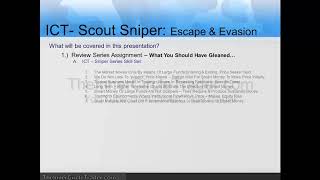
Hello folks this is ICT with the scout sniper basic field guide part 7 in our continuing series after this we only got one more installment left and we're complete okay we're gonna be looking at multiple targets okay and what specifically will be be covering in this presentation well we reviewing the previous assignment discovering the average number of pips intraday study on that And we're looking at the ICT chart examples and stop-loss orders revisited and we'll be looking at the average daily pip ranges we're gonna be discussing when ranges contract and why it's essential for you
to be prepared and the 30 pip stop loss and why gonna be looking at the ICT split gains ratio okay and why is it important to understand your trade setups what is the concern what makes a trade different to any other why is classification Essential to profit taking and the ICT split ratios explained and we're gonna be discussing are we in sync or not intermediate term ratios short-term ratios day-trading ratios and finally scalping ratios and in conclusion we're gonna have one more assignment it's the last one in this series it will be basically a review
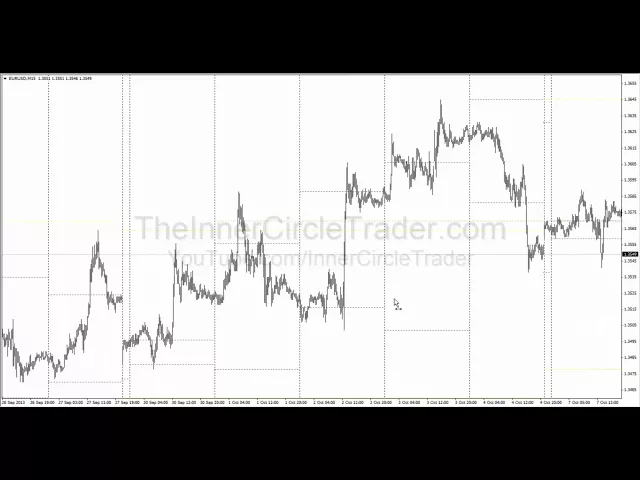
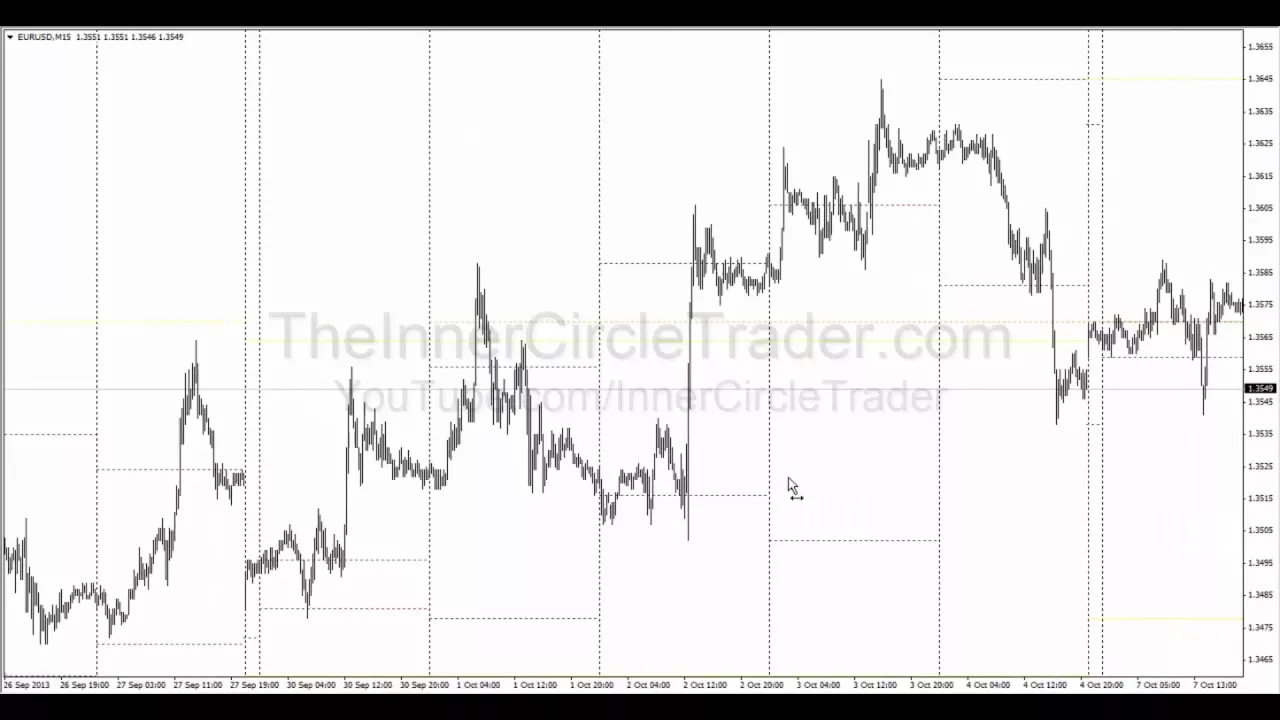
for you to go through all of the previous videos one more time try to gather up all your notes again and we'll be moving On to the final conclusion installment to this series I think what I have planned an outline it is still a little bit more to work to be complete but what I have so far you'll be very you'll be very surprised to see how these tools are used and when they use them and when not to use them so let's move on okay folks we're looking at the euro/usd a 15-minute chart and
keeping in mind with this teaching series obviously we talked about how trading in line with The higher time frame daily and using the 9 and 18 moving averages expansion with the images rather to kind of give you a bi model for institutional flows so more or less use this section of the marketplace basically the 30th of September through the 4th of October so you can pull that up when you're charged everybody the same markups I'm doing here and I have each day delineate with vertical lines and you can do that an empty four by holding
down control and Have it tapping why see that happening here and these horizontal lines let's take the vertical line so if you can see a little bit better this is still in eating the previous day okay just as previous day's high which is seen here and this is the previous day's low which is seen here okay I'm gonna share these tools on the internet and you'll be able to download and apply them to your mt4 platform as well we're going to look at a few things Here obviously beginning with the average pip range so this
day's high to low using this here we have 78 pips see the middle number here 70 pips okay so when this particular week this Monday it was 70 pips for that particular day this trading day we had the high here and the low laundry here right there on that candle so by looking at that range okay we have a range of 71 pips okay very close to the previous day's daily range we have this range here which is a Hundred and three on our four pips rather okay again that's this day's high this day's low
what this indicator does it actually plots the previous day's high and low so you can see graphically and there's a lot of uses for that but that we're not going to go into it here but you'll hear more about it us get into the eighth installment in this series okay we have 64 pips on this range here okay and now what do we what did we just see okay we saw 70 70 is you Know the pip range hang around that 70 to 80 pip marker we move into a hundred pips then here we shrunk
down the 60 so we had 70 70 s 160 okay so we had a contraction in the daily range right in here that means there is a pretty sizable move that's expected just simply looking at volatility alone okay this is why it's important to know when the daily range to start to contract you need to be prepared because Something's about to take place that you could capitalize on okay we're going into a new week here the market makes a small range again okay and that's this low here this high ne typically Mondays we don't like
to trade but you can see the high and low here on this day it's this range here so about 45 so that the daily pip ranges have really consolidated into a smaller tighter daily range so we're much much smaller than we were on this previous Week Bart comes down find some support we have the previous day's high here which is right here this candle here and the low here so we're going to put on this so it's easy to see 113 pips is this range here okay so the ranges are starting to expand okay and
previous days ranged as well okay we have 59 so we have another small contraction and daily range so we it would expect another move of Significance now it doesn't give you directional premise okay before I go any further I don't want to confuse you here when the ranges start to contract that does not imply directional premise it just means a volatility pop if you will where the markets really gonna make us swing one direction or the other is highly probable okay we're going to add some directional stuff in a moment but we have this daily
high here and daily low which is seen on Sundays candolyn Here or range which we don't like to do too much trading on Sunday here's Tuesday's of that week's daily range you can see that is communicated here and we start moving into more larger daily ranges for above 90 here okay and prior to this range here we had on that Monday of this particular week we have a range of 53 pips okay so we started to shrink up and we exploded we had a very nice increase in the daily range ok 161 pips ok which
was Seen here ok so what I'm trying to draw your attention to and this is not only do we look at price action on the charts but we're also measuring and keeping an eye on volatility because when the the ranges start to get small ok or if they drop off over the last 5 days much lower than the average daily range we're moving into an area where we're probably gonna have a very sharp price move and again that does not give you a prognostication influence I know it Doesn't give you any kind of directional premise
if you will it just gives you a neon sign that everybody looks for that something's about to happen well this one of the best things you can have because it's a shrinking of volatility ok you have like this quiet before the storm ok and because we're looking at a 15-minute chart and looking at one shot one kills per week ok one cherry-picked scenario for the whole entire week that We really try to hone in on for an opportunity with with the highest probability of profitability and the lowest probability of risk that's that's what a professional
trader spends his career doing that's his routine he looks for those conditions there's a lot of opportunities that he'll let go or she'll let go by with no regard whatsoever about who else is getting it you in your development towards a professional trade You want to be having that mindset as well you want to be moving towards a level consistency and not feeling like a dog in a meat market just running around chasing every little thing hanging off of a counter nibbling here and nibbling there and never really being satisfied I can't express how satisfying
it is to sit on your hands and wait for a specific environment specific condition specific set up and then watch it unfold exactly how you have waited for it Patiently and then take advantage of it execute no fear no worry no rushing absolute patience and there's no emotion whatsoever the emotion comes on the other side of the trade when you get out hopefully with the profitability hopefully with you know having very little drawdown doing the trade so moving in that direction as a developing trader that's where your mindset should be early on and if you
haven't done that you've been trained for a while you'd be Surprised if you started doing that very thing how much more significant your results would be and it would clear a lot of the emotional and fear and greed aspects that come inherent with trading so understanding the contraction of the daily ranges again is vital to understanding when next big move quote-unquote is about to ensue because we as traders that's what we need we need volatility to make money okay if the markets don't move it's very Difficult for us to make money okay unless you're an
options trader which you know I'm not gonna be claiming to be a an avid you know options trader but there's certainly means of taking advantage of the market place when there is quiet markets I'm just not that type of trader you know I need action so let's go back and look at a few things okay the previous video we talked about stop loss placement and managing trailing stops and such and I really Want to hone this in down to a very core principle so you can understand what it is specifically that you're trying to do
when you place your stop and why it's important to have a specific number of pips as a is a like a template if you will because we're trading with a one shot one kill mentality looking for one choice set up for the week we understand we looked at a few daily ranges here okay while it is Not always a hundred pips I classify the average daily range for the euro and they may be the British Pound USD in other words cabling fiber pairs I classify them as a generic 100 pip daily range now please do
not send emails to me okay or message me on Twitter saying Michael the fiber doesn't have an average daily range of 100 pips every day or it hasn't had it for this number of days or what I know that it will move in and out okay But in my mind I adopt a hundred pip daily range will it always have exactly 100 pip no will it go over it certainly will it double it sometimes certainly okay will it go very very small and have even a 40 pip or less daily range yes it can do
that okay so please don't don't try to start an argument with me because I'm really not interested okay I'm I'm showing you how I view the market it's up to you whether you discern if it's any value or not okay but because I have Framed it with an average of a hundred pips on a daily basis okay one third that okay is about 30 pips okay and my premise to trading with it one shot one kill mentality is if we're in an environment where we already expect bullish prices okay if we expect bullish prices we've
looked at the higher time frame daily chart maybe two nine day an 18 day are signifying that it is a buy model right now everything is institutional flows are Moving higher we've come off of nice higher level support levels okay and breaking resistance levels everything is bullish okay we've already learned that the market finds its low for the week typically between Monday and Wednesdays London open very high probability for Tuesday's long and open to create it but again we're flexible because we are not trading in black and white we trade in the gray okay so
we have to thrive in the gray we have a general rule to Expect the higher load of form by Wednesday's long and open okay but there's gonna be small deviations in that periodically okay it's because just simply because we want it to be like that always it's not always gonna be like that so you have to have some flexibility in trading and that goes along with your analysis as well so we're gonna go back over a few concepts with this whole week in mind okay and where again we're looking at the September 30th to October
fourth and four time reduction on the video again I'll just counsel you to go to your daily chart pull up you're moving in hour just to confirm this is indeed a time frame when the market is showing institutional flows being bullish what the average is crossing and everything trying to move higher we have Wednesday's trading here we have Tuesday's trading here and Monday we had a range okay From Tuesday's high here and Monday's low okay so market made a high here in an early in week took out this high here and trade it back and
receded back into Wednesday now this candle here move my little things here so I can see what I'm looking at this candle comes in at 12:15 gmt or 12:30 gmt rather now that's classic New York open so while we did have the market make a nice little low here in during its London session here New York came down swept at low out and then the real move came okay so we talked about that stop rating event okay but more specifically we're gonna go a little closer okay you can see what we have here this is
that Monday and Tuesday we're gonna pull up the range calling them too low dropping our fib right on this high okay so we have we've outlined our range here okay and we also know that because the market has been moving lower Were bullish we're looking for buys okay in this environment based on a daily timeframe we were looking for bullish scenarios okay okay so we have our fib from the low here up to the high here go out just one more a little click here as you can see we're looking at here's that Monday low
Tuesday's high and markets finding lower prices and then we move into this is London open for that Wednesday on the 2nd of October and then the New York open comes down raids those Lows okay see how clean that is they're just about the same level here and that's a real high suspect area door pocket of stops will be resting okay or a liquidity pocket and then our liquidity pool rather and market comes down raids that area here assumes all those pending orders that would be what it would be sell orders okay there would be sell
orders because anyone will be trying to buy long in here they're protecting in their mind by having a Stop loss in the form of a sell stop because if the prices come down lower they want to be getting out the market that self stop becomes a marker order to do what sell at the market who would be willing to take the other side of the trade those that are in the know so we need to price down here and you saw that rally up here's what we want to do we want to no one the
second of October when price was dropping down was there something over here okay that it was Trying to fulfill well if you go out to an hourly chart here is the bearish scandal prior to the bullish move up okay that's zoom in a little bit more okay go right there so we have price coming down touching that hourly order block prior that big move here on the 30th then we move higher here on that Tuesday and then we have the market receding down notice that price comes right down Into that sweet spot as well okay
but does not violate the 7 5 cent treatment level comes right down to the order block here okay just take this off cle-cle see what I'm referring to that's how precise it gets okay so when price comes down hits that level it starts to rally up now here's where we're going to introduce the concept of the effective stop loss placement okay let's go back down to the 15-minute time frame okay and we're going to show this is The whole London session open not the whole session it's up at the London open as defined by me
and here is the New York session it's defined by me okay and we're going to assume again that all things that we discuss in this video series or favoring an area to be buying in here we're going to highlight this area here again we're looking at this point here it's the beginning of time and price in this area here is where we'd be looking all that To the last portion of New York session so what I do is that this outside edge of this rectangles right here in the beginning of this rectangle edge is approximately
beginning here so what I've done was I've mapped out this whole area of where time and price are conducive for a buy okay so now we're gonna take the fib off and 135 tens are a nice round number we're going to assume that this level here is what we traded I'm not going to use this as the Ideal scenario okay so I'm going to show you how powerful this stuff is and you don't need to be so precise this whole area you've identified as a level of opportunity okay so this is a killing ground inside
of kill zones these are kill zones this is a killing ground okay this is an area where we'd be stalking a set up we don't look for any setups during this time period it's dead low in the marketplace this is like quiet time you wanna be trading in New York open I'm sorry is long enough I rather in or the New York open but we're looking for this move for the weekly rains to continue moving higher so as the market moves from Tuesday's high down into Wednesdays London open okay this is an area where we
would be hunting a set up okay if we used this price level here is 130 507 let's assume for a moment we traded at 135 15 right in here okay nice little area its previous day's low in here right in here So we're going to use that as our entry point okay because dealing ranges and Bank traders like to use bb's days highs and lows we're going to assume for a moment that we took that trade long in here in this consolidation little area in here we went along there if we use let's get rid
of this rectangle here if we use 30 pips as a stop our stop would reside down here okay 134 and 86 or there abouts okay and our entry would be approximately yeah Let's go down to where we said 135 15 okay so we have our entry points and that's showing 28 pips I would need this to go a little bit deeper oh yeah and that's that's why again I like to use sturdy piss because let's look at this okay with this range okay from that low and that daily range look how much of that daily
range that it consumes in terms of you know total daily range here look from this dailies high okay it's Tuesday hi look how much of that daily Range okay is consumed with that price most that magnitude of price again the low forming right here on that candle right there that's the daily low look how much of that daily range has been consumed with 30 pips so if you combine okay if you're combining the the mechanics of entering the marketplace at a specific time during a specific kill zone like London or New York open specifically looking
for the set up here even with this stop rate right there Okay right there you are not going to miss that opportunity to get along you're not going to okay so when you see this move price stabbing down like this okay by having all these levels identified you would at least be willing to see it trade down to that point here and your stop-loss isn't isn't triggered you're still good chunk away in terms of pips there's no reason for you to be fearful of that Okay so again 30 pips okay 30 pips if you are
timing your trade with one shot one kill looking for the choice days to be looking for the low to be forming Monday Tuesday or Wednesday okay even with imperfection with your entry point this is why you started pips okay and for for those of you who've already started thinking earlier on the video I'll loci picked the most cherry picking scenario there is now I gave This scenario to show you how even when my tools did not give me the perfect entry but still allow me to be involved in the marketplace okay these lows in here
resting below that would be a nice area of stops okay so it'd be a liquidity pool there the market rallies up a little bit and comes right back down takes those participants out okay this is the trick did you just swing in here just so that false move lower everyone would be chasing that prior to Move higher okay so we have the one that open to New York open by having that that framework okay we could be long in here looking for a move going into Friday okay here's Thursday's trading that that week and Friday
does not make a higher high in here but now let's go back to the stop-loss why and how we manage them I'm gonna see why again I use this specific example because again it shows you how you get two lines portion of the Move and you're not absolutely getting a low and you're not absolutely getting the high okay so now let's assume for a moment you've went along in here your stop-loss obviously as we just detailed is down here okay so by having this entry point the market moves up okay we're looking at a 15-minute
time frame what you're going to look for or the swing lows 1 to 15-minute timeframe okay and you're gonna be looking at the most recent to as the market starts to move Up okay you took out the previous day's high here right there okay so it's this swing low and then when this swing low forms okay here's this one and this one so now you can move your stop loss from 13485 up to this low here just a little bit below it okay so now by having that set up like that so now again looking
at how the market moves higher this would be a nice level to take some profits okay but now we're gonna be looking to preserve Our open position okay so if we took a portion of the trade off in this area here based on the previous day's high nice the reason to take it out not all of the trades but some of it okay we have when the market starts to move up and take out this high here we have this low in this low but now we have this swing low here okay so now you
have this low and this low so now you can move your stop up to just below this low okay so over here your stop loss would be Right about in this facility right here okay market comes down comes down does not read it okay as the market starts to make a lower low here than this one here are you nervous probably are but are you stopped out no so what do you follow the rules or your emotions the rules okay so now when the market starts to rally up here and takes out this high here
right on this candle here you look at where we're at in terms of swing loads we have this swing low in This swing low which is the lowest of them is to most to recent swing lows it's this one here so you would be able to move your stop loss just below that one okay so now is the market rallies up okay and starts to dip drip lower in here we have not made any new higher highs market eventually comes down and boom takes you right now right that's your stop okay and what happens as
a result are you upset about it No you controlled your risk did you make money in this example hypothetically you would have okay so that's one example using the stop-loss rules and and applying the weekly ranges and such let's look at again assuming we got in at 135 15 and you got stopped out on your whatever the balance would be that's 66 pips do you remember at the beginning of this video series we talked about how 30 to 50 pips a week you can build a career on there's 60 pips later At your feet did
you trade every single day no did you did you beat your head against the wall trying to figure out where the next bat pattern is where the next crab pattern is the next ICT reflection is no okay you would have a clear-cut routine that you would look for specifically every single week you should know what you're going to be looking for okay are you gonna be looking to be a buyer or a seller or sitting in your hands okay Or are you preserving your capital because you're already in position you're either managing executing or sitting
your hand simple okay now with all that the topic of daily ranges will be much much more involved in the eighth installment of this series because we're going to talk about the five-day average daily range we're just gonna briefly mention it here but I'm gonna reserve a much more in-depth discussion until the 8th video because I actually gonna have The tool released at the time I do the video upload as well so but those if you don't have the 5 the average daily range indicator for mt4 you'll be able to get it for free I'll
share it with you that's the one you see me using in my videos but regardless of what type of trade or you are okay and we're gonna be talking about trade classifications now why is it important and what's the big deal okay number one if you are short term Trading okay for instance everything was bullish going into this week here maybe you saw this as a selling opportunity on the lower timeframe of you this is an optimal trade entry that you you sold into okay and the market came down and you were you thinking wow
I'm really smart I'm making money but all of a sudden you married a vein the higher time frame intermediate term trade setup based on a daily timeframe suggests that this thing's going higher technically Can it always unfold like that no sometimes you're gonna have where the technicals suggest that it may continue to go higher but it doesn't do it okay and that's when you get to climax reversals we're not covering that in this series it's important that you understand that that's not what I'm trying to teach you here I'm trying to teach you to trade
within that big Lyons portion of the Moose that's all you need you don't need to be specific highs and Lows you don't need that okay so that's the powerful concepts coming through and bleeding out all the high-end nervousness that is presented with traders to feel like together cuts the highs and lows you don't need then okay notice that this straight setup was not to blow the week below the week was for no Monday okay this was a nice move I'm not gonna argue with anybody that would be short this okay say you showed up in
this area here around the 80 come down Here around you know that's 60 pips there's nothing wrong with that that's equivalent to what we would have made on this trade so what that's not your trade that's not your trade and that's how you look at it guys can come on the forums all day long I took this trade and I took that up too who cares you can't make any money on that trade and you can't lose any money on it either you can't gain any glory and you can't swallow any pride over either so
what Difference does it make while it's educational and inspiring to see other people's results do not assume that that should have been trade it you should have sucked why did you do the homework on that trade going into it because if you didn't do it's not your tray okay so keep that in mind you have no reason no reason whatsoever to worry about what the next guy is doing none okay So that five-day average there Lagrange is going to be crucial to us in the eighth video but for now we're just gonna understand that we're
gonna have to learn to take something off regardless of what type of trader were trading with in either intermediate term short term day trade or scalping but if you are marrying the vein here and looking to be a seller on this Tuesday with an overall higher level intermediate term bullishness underway You will marry this vein here and you'll if you don't manage your stops right okay you can get killed okay look at me and it didn't take very long for this market come back up to that high here okay so all those folks that were
shorting here and didn't use proper trade management okay and risk controls and preserving capital and taking profits as the market moves lower if you were thinking get in I'm gonna get out all my profit at my target that's it you See they're all or nothing well guess what you know you got nothing okay that's what this video is gonna be dealing with why it's important for you to take something off because you're never gonna be 100% as long as I've been doing this almost 20 years I'm not always right I'm not always right to where
it's gonna go to okay so I work within a 75 to 80% range of what I think the moves gonna do I drop back down to about 80% sometimes even set a high Percent of what I expect to see it in terms of magnitude moving higher or lower and that's what I'm trying to get to I'll let the rest of these guys try to beat their chests and say look man I got all to move good I applaud you but over time you will not be doing that I guarantee you you will not be doing
that so don't go into this game thinking is that's what you should be doing okay so now with the 5 a average daily range mentioned briefly that you should be Always trying to take some profit off there okay let's talk about multiple time frame trading okay multiple time frame trading again we discussed obviously the daily chart is used for any term trading okay or swing trading then you have the short term trading which is classified and the analysis is done with a 4-hour chart then you have the day trades that are arrived by analysis on
a one-hour chart and then anything at Fifteen minutes or five minute is obviously scalping okay so why say scalping I'm not talking free pips and five pips and six pips that's not that to me that's it's goober trading okay if you can't at least make fifteen to 20 pips on the setup don't even do it okay now how am I saying if you can't make there's no guarantee that anything's going to unfold it says like reward or risk there's no guarantee that those things are painting out but if you Don't at least plan to hold
trade to make at least 15 to 20 pips if it moves favorable for you then it should not be taken as a trade that's just the way I look at it you may argue with you and say you know I well I can make 10 pips 20 times a day great then you're a good trader and I'll leave it there but you're watching this video wanting to know what I do not necessarily having to have to do it but I look at the market where if I can't make at least 15 and 20 Pips or
at least willing to hold it net and net magnitude of pips I'm not taking the trade okay and that's usually where I'm using you trying to either take something off the trade or aggressively move to stop up to even or taking some of the risk off at least so now because we classify the trades in terms of intermediate term short term day trades and scalping we have to also understand that there is a classification for trading in sync and out of sync okay and What do I mean by that well the to higher time frames
which is the daily in four-hour if you're trading in those time frame directional premise then you are classified as trading in sync regardless of what time frame you're trading now you can trade counter trend or counter sink if you are out of sync rather as a day trader and a scalper okay where you can actually short-term trade you know counter the higher time frame okay but you got To be very very nimble doing that so I'm not gonna advocate doing that in this video series but you see me a lot of times in my market
reviews or my trade recaps that I do on YouTube you know it may go against what the higher time frames are saying but I'm still netting pips that comes with experience okay I do it just to show you that you can make money without a directional premise or bias but it's just better for your trades if you're trading in sync with That daily and/or four-hour time frames okay so if you're day trading in sync that means you're going to if the higher time frame daily or four-hour bullish then your day trades if you're a buyer
then you're trading in sync okay just remember that if you're selling in a day trade or scalping short while the daily end or a four-hour or bullish okay you are out of sync okay or your counter trend trading that's a very very important rule to understand in terms of Your analysis because if you can't generically define your market environments like that or your trading within the current environment in my opinion you're trading in the dark okay you will not be rule-based you'll be seeing moves like this in here it's really dropping off really handsomely and
you're gonna think well it's gonna probably come down here deeper well it may not as you see here it doesn't and It starts to rally though you know the other way that's very demoralizing if you haven't taken some profits off as the weight unit market moves lower and if you didn't even adjust your stop the guys that want to sell up here and I'm gonna keep my stop here and take all or nothing well got nothing again for the time and effort you put into the market it's important that you have something out take something
off the trade okay it doesn't make a difference if it was 20 Bucks you got 20 bucks it's 20 more dollars and you had before you put the trade on okay I used to be I'm gonna get my exit or I'm gonna get stopped out and that's just the way it is and man I got chewed up it you just can't do that as a developing trader because number one your minds not gonna let you do it okay you're gonna start saying well you know it took this many losses so I'm gonna be over trading
I'm gonna take more trades now and I'm gonna widen my stop because I know I'm right or I'm gonna be buying more and over leveraging okay and I'm gonna get out sooner than I should because I just need to get that money back and just causes all kinds of havoc you know emotionally and psychologically and then you forget about what you're supposed to be doing because you're focusing too much on the pain okay so by having these rules in place it helps you define what it is specifically you should be doing and that alone is
what Your focus should be cuz think about it if your perspective is limited to just just those things do you have time to be worrying about where it's going to go to if you already have a stoploss to find either gonna watch your six and collapse 50% on the trade or you're gonna go let it go down and hit your stop period that's it what's the worry about if you're worrying it's because you probably put too much on the trade or you've probably been trading too much It's it's just that simple guys but we want
to overanalyze it and blame something else outside of us okay I get a million emails asking what it is that makes me do the wrong things well and apparently that's human nature and we've said this earlier if you see a silent when Lauren says don't walk on the grass what do you barely want to do as a kid if you have children my kids want to do a long time don't touch wet paint man they got paint all over their Hands Oshkosh because it's got paint all over it okay they're new Nikes mmm it's got
that new stain that was on the picnic table that we were going through the park and says don't touch this it's got wet paint on it got a little rope around it okay well they're gonna go through the rope cross the red tape if you will do the hazard warning and I'm gonna do the very thing that you're not supposed to do okay that's human nature so that gets Back to are you gonna be a rule-based individual because if you can't follow rules you're not going to do well with this business you have to be
just you have to be disciplined and have it defined very very clearly what it is specifically that you should be doing if your trade plan is very detailed one can argue I have too many moving parts in my in my plan okay I don't have a whole lot of moving parts in my trading plan I have a whole lot of Moving parts in my understanding how the markets themselves work that's why I'm so effective that's why my analysis before it happens is so accurate every that the that's the premise to why I'm doing these things
cuz I want to communicate that to you you can do these things but it's gonna take time for you to overcome the you okay so by having a classification of your trades and understand what your trading and why you're trading it will Help you define where you're gonna take profits at okay so avoid that I'm getting all of my maximum profit don't do that okay because first of all you're not gonna be right more times than you think you are and you just want to pay yourself something okay and having that mindset that I'm gonna
have the maximum profit always cuz think about when you first started you got in there you looked at the charts what are you calculating said me I'm gonna make 20 Pips a day I can do this this this there's an all of a sudden in nine months you're millionaire one five an hour training camp it doesn't work like that guys it does not work like that you have to overcome a whole lot of internal things before these charts ever do anything for you so the way you grind that out is begin with a rule-based system
okay and the more rules you have that are clearly defined the less room there is for Emotional fear-based and greed based trading it's just that simple okay so now let's move on and take a look at the ICT split gain ratios okay guys we're gonna be looking at the intermediate term ratios now what is a split gain ratio well it's it's something that this really dis classified just for teaching purposes because I don't have any real specific I do this every single time I don't I don't have that okay so I'm giving you These ideas
to stimulate your decision-making in your own trading okay so don't think for a minute that this is always gonna unfold exactly like this it just obviously means free you need to stimulate your decision-making and you can come up with your own way of using these as examples okay to arrive at what you're most comfortable doing okay and the only way you're gonna learn which one you're comfortable doing is by just simply jumping in the pool and joining It okay so an area term ratio okay would be how am I going to take my profits okay
assuming that you have a hundred thousand dollar leverage in the trade in other words you have what we considered a standard lot in the euro that would be a hundred thousand dollars but each pip is gonna be worth $10 per movement up or down gain or loss out of your account in this example okay for M you turn ratios if you are in sync trading in the Higher time frame daily and/or for our directional premise okay you can take your profits in stages of 20 20 20 20 20 okay in other words out of a
hundred percent of that total position okay you could take two thousand of leverage off at your first target at your second target take another two thousand of leverage off take another two thousand off the third target fourth and final fifth okay that's the like an ideal scenario if you want to scale off in Five position exit points fives a whole lot but again we're talking Andreea turn trading so you could take that first 20 off at the average daily range for that particular day you took to trade on okay and then the next 20 could
come off at a previous daily high or a intra week high and then the next one could be a monthly high or we could start looking at Fibonacci 127 and 162 extensions okay any one of those things could be applied here okay but it's a Matter of how much am I taking off if you're gonna take out for scaling you could do 25 25 25 and 25 but where you're taking those profits at okay you're taking $2,500 of the hundred thousand that you put the trade on at at logical levels of profit taking old highs
old lows Fibonacci extensions okay previous range retracements in other words like a move say this is high here down to this low as price move up into what would be considered the 79 percent Retracement level here if you were long back in here you would be looking to take some profits in here okay and then obviously if it gets to this level here we could take profits there as well and then price starts to retrace okay assuming that we were able to you know be a part of the next leg up if you were buying
in here okay this old high would be an example this old high would be an example and then the extensions beyond that okay like this if we have our fib Pull it down to that low are 127 we an ideal level to take profits at the 162 would be a nice level and ultimately our higher level profit objective is a 200 extension we're here okay so it's using all the concepts together in a framework where it allows you to just really plan your exits and look for reasons to do it not simply because I made
this much money where are we reaching for in terms of price action okay and applying all of our tools if You want to scale out in three stages you could do 20% of the position and then 40 and 40 holding on to those last two portions at 40 and 40 because you want to be hopefully holding a larger percentage of the trade because you're trading in a higher time frame directional premise okay or will be considered in sync okay if you're trading out of sync and you're against the daily and or four-hour you Musca in
five stages you can take 40% off Initially at a price objective and then 10 10 10 and 10 okay leaving small portions on okay and even if just sake of luck even though you're against the higher time frames you could still manage to get some pretty good gains like we have here and like we have here okay so it was against the higher time frames but you're still able to you know hold a little bit a piece of the position and maybe catch some more of a you know volatility in your trade if you Want
to scale out of four stages you could do 50% of the position and 30 so you got 80% of the trade off then you can hold on for the final 20% scalers off in 10 and 10 then you have three scale stage if you want to take 60% off that would leave 40% you can scale off in 2 more stages at 20% again using logical levels of price levels and Fibonacci simply applying that the overlapping of reasons or confluences for for price to be moving to those Levels that's where you would be doing these these
split gain ratios in other words where I'm going to be taking my position and how much of the position that I initially put on would I be taking off now this gets back to your trade entry okay you can do this several different ways okay you can do it you can set your pissin up and do it as individual orders okay in other words if you're trading a hundred thousand you can for the assuming that you're trading In sync and you want to scale out at three three levels you could have your entry limit order
three separate entry limit orders to get the same price then your first of the three you could look to take profit off at a first objective okay and but the positions would be set up in such a way that you would have two thousand leverage four thousand leverage and then four thousand leverage okay so you're gonna take the first two thousand off at your first price objectives Remaining two positions would be open and then the second one would come off at another logical level of price objective and then once it's triggered the remaining order of
four thousand dollars would be setting in the marketplace and either it gets to its position or stopped out or whatever or you could just do the trade as a hundred thousand dollars and then go in and set your limit order to take partials off okay in some platforms will allow you to Do that I don't know what every platform each of you are using you just got to look and see what is available to you okay let's move on to the next one okay short-term ratios again assuming that we're trading in sync with the daily
the in sync ratios would be taking 30 percent off if you're scaling out at 3 you in this case it looks a little different because I'm taking the smaller one first because I want to have the maximum amount of leverage still in the Market place in my position so I'm gonna take 30 percent off and then I'll take 35 percent off the second profit objective and then remaining 35 percent would be taken at the third and ultimate price objective that I would have for that short-term trade 25 percent if I want to scale out in
two stages 25 percent at the first one and then 75 percent at the second price objective and give you an illustration and what that might look like is if I'm trading With a four-hour chart okay and it all I did was just gear down I didn't do anything I didn't pick anything just it just gave me this chart here assume for a moment that I went short here on this optimal trade entry right in here and back into this quarter block in here so if I went short in here around that 130 180 level the
first price objective would be down here this old low which is the reaction low from this point here down here that Would be my first price objective again scaling out while short-term trade at that point here it would be a hundred and forty six trip position I'm sorry 146 pips for the first scaling out okay so if I'm scaling out in two stages 25% would come off the trade right there at 140 some pips the next point of the ratio would be 75% I would take that out at either the 127 extension or the 162
extension conservatively but it's going to say the 127 we're not going to say we Got everything down down to here if you got to the 127 the remaining portion that would be in the trade would profit hypothetically obviously to that price point here of 191 pips okay and just for sake of completeness if you use the 162 extension as your final position you'd make 248 and if you helped for the 200 extension you can make 310 pips okay and you would just do the math on what you wouldn't make or risk on that trade now
if you're trading out of sync okay and For short-term trading you want to take larger portions off sooner so you would take 60% of the trade off and then 2 remaining positions at 20 and 20 okay and again all you're doing is looking for levels to take your profits out at that ratio in terms your open position initially you're scaling off a percentage in other words in this case out of sync you would take 60% off initially at your first target and then 20% off at your second target And then 20% remaining would come off
at your third and ultimate price level okay and in a good example that would be 60% off at an old higher low that you used your fib from and then 127 would be coming off at 20% and then 162 extension or 200% would come off on that final 20 percent of the initial position and if you want to do two stages on scaling that you're out of sync with on the higher time frames you would take 80% off initially and then let your 20% Remaining in the position go to your second and final objective and
obviously you can do double tap which is 5050 nor did you take your first objective is half the position comes off move to break even and then you hold for your second objective and you don't care what happens at that point okay and moving on to our day trading ratios okay looking at this if you're trading in sync you take 30% off of your position on the first target and on the second target Take 60% off and then you would leave 10% to see what happens okay because again you just because you're sure you're day
trading doesn't mean you can't try to capitalize on a move that would most likely continue on for several days again day trading don't think I got to get out all of my position today take a good chunk of the market out and move to new risk and lock in profits but leave a little piece on there because you may catch a lot more Of the daily range increase going into Friday or it may even continue going for you know weeks if you if it works its way where such your stop is never tagged you'd still
be in the market as it continues to move in your favor obviously if you move out in in three stages and you have all three timeframes in sync okay you could take 20% off 20% off at your first two targets and then leave 60% remaining for your ultimate subjective that's again only if you're Trading with all timeframes in sync and everything is things it's loaded for it to move up and then if you undo it in two stages you would just take 20% off at your first target and leave 80% for your ultimate price objective
the in other words it lowers if you were using a day trading entry to get in sync with a position or animator and trade based on the daily time right so in other words that's the reason why you would be holding 80% just taking 20% off and Holding 84 you know as much as weeks and if you're trading out of sync you would take obviously in three stages you would take 80% of the position off at your first target two remaining positions you can take off at 10% and 10% giving you your full one percent
off and then to scaling stages you could do against the higher time frame you would take 70% of the position trade off remaining 25% you would take at your second price objective and obviously if you want to You simply just do double tap when you're unclear okay in other words if you just don't know if you're in sync or not and your your day trading it just simply it's easy you just do double tap okay take half this turn off at your first objective go to break even and then look for your second objective 127
I want 62 extension period short and sweet nothing fancy okay moving on to our last a ratio this Is scalping ratios again this is for 15 to 30 pips range that type of trading either hold for your stock be hit or your target okay and you take a loss or you to wrist initially on the trade or you go to break-even in other words if you're able to trim some of that risk away that's pretty much and that's what you're trying to do in an ideal world if everything's in sync that's how you trade it
you look for your stop-loss at maximum loss or target or if it allows You to trim some of your risk away you move your stop-loss closer to breaking eventually into profit but that's that's that's scalping for you I'm not going to try to give you too many things for Scott because I really don't think traders should be do that but you know there's a people group out there that wants to hear about it so there you go or you can simply just use double tap soon as you get to 15 to 30 pips you take
you know 50% of the Position off and you can leave position open and catch anything that would be in sync with the hard time frames if you're counter-trend or out of sync from this for an hour and daily always watch your six you would look to take 50% of the trade off if the trade is questionable and just manage it like you would if you were trading in sync okay so it's really a generic way of looking at how I scale out profits and how I manage the position I generally have what ratio in Mind
before I even put the trade on okay the only time that it will deviate is when I'm in a enemy turn trade I may elect take more or less of the position off at the second third fourth and fifth stages it may become a third stage a three stage trade where I take all of my profits if it moves in my favor versus a five stage scaling out in other words if I think it was going to move to the 200 cent extension and I'm in that move favorably and I've taken off my first to
Scaling stages that third fourth and fifth actually may just drop down to I'm just going to take it all at the fourth or I'm gonna drop it down to what would be considered the opening remaining position of the trade say it's 30% of the trade I may take you know 15% off at one level and then 15% off the another level so again don't think that you're locked into these ratios this is a means of you deciding what you want to do at price levels that we've talked about in This course that being old highs
and lows that you use your reference points for your fibs your 127 extension 162 extension and then your two in an extension that's it there's nothing more to it there's nothing you know difficult about it it's just a matter of planning your trade around that analysis and where those levels are how much you're gonna do of profit taking when it gets there and preferably you want to have those in form of limit orders you Can always manage the limit orders after they're already in place treat them like stop-loss orders okay because it many times you'll
be surprised how fast some some markets will move and you'll get to your first project if you didn't get that and it recedes back to your stop-loss again very demoralizing okay so I counsel you to you know to use these as templates if you will to frame your your trading and your your level of scaling out profits That's really all there is to it it's no magic behind it you what you see here for you know twenty eighty could very easily be you know 70 and thirty you know there's no iron set of rules where
you have to do it this way and only okay it's it's unique thing for us as traders we can tailor this stuff to our own personality so again it's just a means of stimulating decision-making on your part scale out something and really to stimulate and try to you know inject the Idea that you should be taking something as profits as the trade unfolds because just simply because you think it's going to go up to a specific price level there's no guarantee it's doing that and it may not get there without coming back down to another
previous level and it may be the level your stop set okay so pay yourself get something out of the trade you know you you've invested time and effort and probably fear and worry about missing the move in the trade Setup so once you're in there you get some profits get some of it out okay so that's pretty much it for this teaching session in this in this video I just want to give you some ideas about what we're going to be doing in the eighth episode and how to get prepared for it I would count
so you obviously go back through all the previous videos okay and that includes this one go through your notes make sure you have a good collection of notes okay and read those Notes you don't have to see see the videos over and again once you go to it one more time but your notes you should read them at least once a day whether your trade or not read them once a day because by doing that it'll constantly feed your mind and you remember these things and you see certain things unfolding your charts oh yeah that's
that thing he was talking about or that's that in event that usually takes place and then you'll Start to learn how to engage the marketplace in price action will become a thing of expectancy okay you'll expect these things not what's going to happen okay when I sit down sure I'm not asking what's gonna happen I'm expecting something to happen there's a difference okay if it if at one over your head rewind again listen to that it's very different perspective as a professional trader I anticipate something whereas novice traders are Expecting something what's going to happen
you know you're asking everybody on the phone what do you think the euros gonna do what difference is what would I make okay cuz really are you gonna trade on what I'm telling you you shouldn't so have that in your mind as you go through your videos again get some good notes and we're gonna be moving into a really really cool final episode and a lot of guys that have been on the fence about my concepts will I think will be Pleasantly surprised on how useful that video will be until then guys I wish you
good luck and good trading Oh be enjoyed dis installment and coming up in the last and eighth in our series escape-and-evasion now this is pretty much like Mike be-all-end-all for application for my tools I get a lot of flack from the guys that aren't into me or into the tools or I just want to be you know adversarial they'll say that I have too many components and while I Have a very vast understanding of market analysis concepts and techniques I'm not always using every single tool so it's like a carpenter you know they may have
a toolbox full of all kinds of tools but you're not really driving a screw in with a ruler so you know there's certain times that you need a specific tool or where a tool is multifunctional okay but I did my very very best to try to concise condense rather and make it more concise as to when I reach for a Specific tool or application or a technique or concept and when I avoid not using it at all and I set it up in such different way it's like a flow chart and I think what you'll
be surprised is that I've applied how I sit down and I look at the charts from a top-down analysis down to the smaller timeframes and what goes through my mind as I do the analysis okay and it's kind of like an if-then format so if the market is presenting me this specific Criteria then I will do this this or that and if those functions are met with you know even more in marking conditions then I moved to another stage in my analysis so allows you to remove all the ambiguity all of the fog if you
will it's a I have a lot of military themed concepts or titles or you know teaching templates and that's just my personality I you know I've never been in the military but I think by having this framework it'll allow you to have Like a plan of attack okay and it will give you a means of you know systematically attacking the market and then you doing your own you know research and recon if you will and then you're moving out into the fields and doing that your very own without having any kind of input or stimulus
on my part or anyone else's because that's really what we're getting at we're trying to be building a measure of consistency obviously a means Of limiting risk as best we can we can't remove it 100 cent but we're going to do our very best and our trading to try to do that very thing and at the end of the day we should be hopefully moving towards profitability it's never guaranteed I can't guarantee it no other mentor teacher or author of courses can do that so while it is my goal to try to give you a
roadmap if you will on how I break down and digest the marketplace it will still and I'm promising you it will Still incur losses if you trade with real money with these concepts any of these concepts not just simply what's reading least on the eighth and final video but any of these concepts you are still inherently taking on risk that will invariably result in you losing money okay so you have to be very responsible and trade with an endemic account only when you think that you're ready to do it with live money you take that
decision and you make it your own And only responsibility comes along with it if you have success with these concepts obviously I'm I'm more than excited to hear what each of you are doing as you're developing and that's the that's my motivation and doing all these things I don't take any monetary gain out of it I don't request any kind of subscription fees or anything like that I get a high off of everyone else's development and when I see the feedback through either Twitter or emails or on forums that they've you develop to a measure
of you know consistently profitable or encouraging results that lead to more you know comfort levels in terms of not being fearful of taking a trade you'd be surprised how many folks are still fearful you're just getting involved in this in a demo account because they don't want face that that right or wrong conclusion to their decision and I'll have more to say about that in the in The last installment but what specifically will be covered in the escape-and-evasion well we're gonna be over viewing the entire ICT scout sniper basic field guide series in its completeness
okay because we have to do this in the more comprehensive fashion it just means we got to go through it all over again but obviously it's not gonna go 12 hours long but we're gonna break it down and be more precise and concise with what specifically you're Supposed to be doing with each one of these videos and the tools that are within them and we're we talking about adopting the ICT mindset to trading okay we're looking at the inner circle trader tips for continued trader development a lot of things that have not spoke in this
series I've held on to to the last video so I way it's at least six hours long I'm just kidding it's gonna be long but it's probably not gonna be six hours and we're gonna be revealing the ICT Flow chart to market analysis and tool applications so that way you don't have to guess or wonder what would I be using this tool at this time or would I be using that method at this time no you're gonna have a very clear generic way of going through the market breaking it down in a routine fashion that
way once you do it for a period of time you won't need the flow chart you'll listen no simply okay well it does this so therefore I'm going to do That if it's done this then I'm going to do that so you're always going to have a response to the current environment okay so either you're going to take action you're going to say on your hands or you're going to protect and preserve your capital okay there's your three engagements to the market place that's it it's all you can do either you're going to take action
you're gonna send your hands to do nothing or you're going to protect and preserve your equity okay There's only three things that can happen in the marketplace as you as a trader and you'll have every possible scenario that I could fathom okay in a manner of looking at the marketplace digesting it and saying okay what should I be doing in the mindset that ICT or myself utilizes in trading and obviously like all good things they have to come to an end I'll have a few more words on accountability and consistency so until then guys I
wish you good luck and good Trading