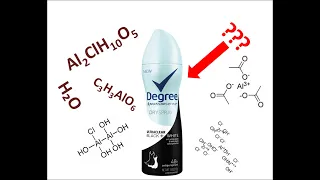
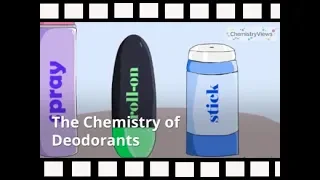
[Music] hello and welcome back to my channel today i'll be talking about the compounds that make up deodorant and how those compounds bond together i'll also be talking about what an antiperspirant is so here we have deodorant and here we have an antiperspirant and so this video is part of a two video series and in this video and i just said i'll be talking about deodorants and also what an antiperspirant is but i'll be talking about more of what compounds make the agent and how those compounds bond together in the second video i'll be talking
about what compounds make antiperspirants and how those compounds bond together so first of all deodorant and antiperspirants both help fight body odor but they both fight it in different ways the first deodorant which killed odor producing bacteria had been made in 1888 while the first antiperspirant which helped prevent both sweat production and bacterial growth was made in 1903 and so the main difference between deodorant and antiperspirants is a manner or way in which they reduce body odor so first let's talk about deodorants so deodorants as i said before help reduce body odor but they do
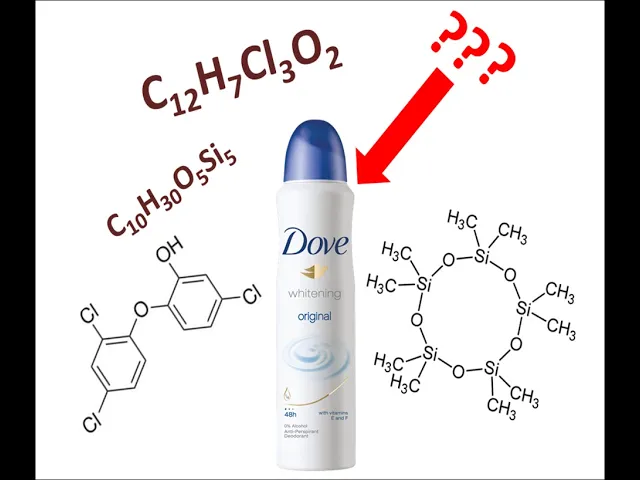
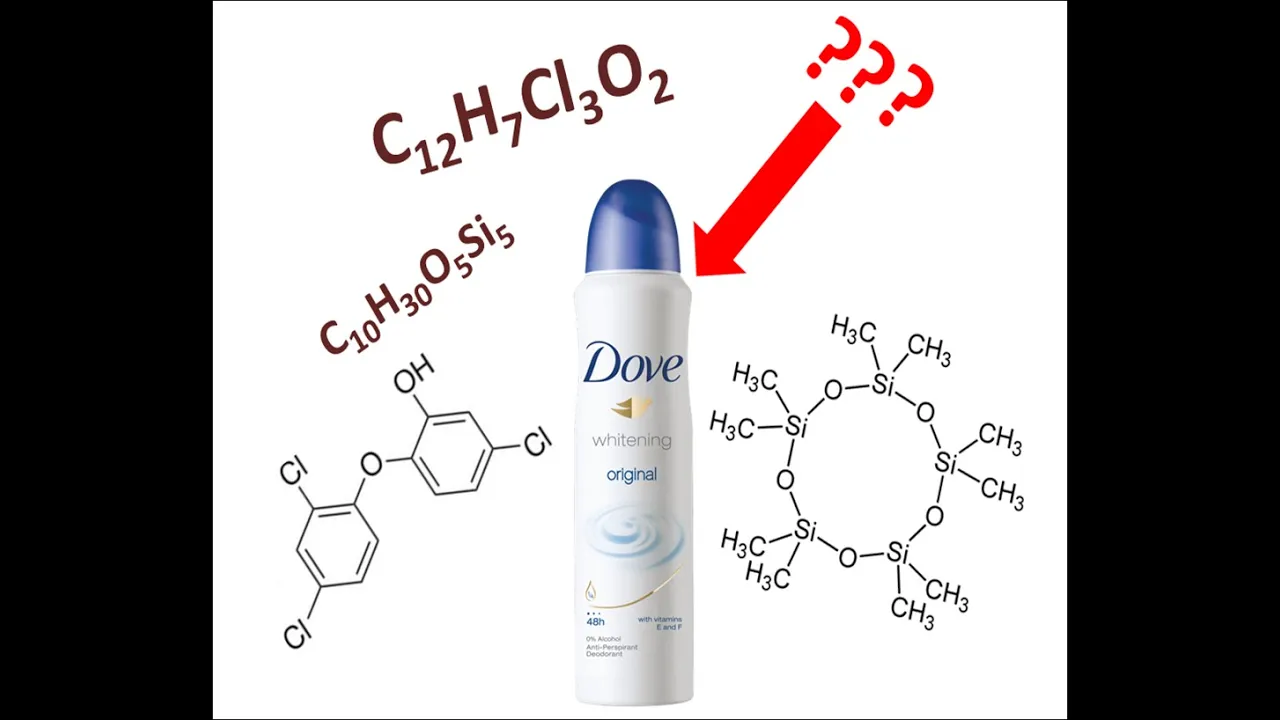
this by targeting the bacteria under your arms that produce various bad swelling compounds and so some deodorants use antibacterial compounds such as sun and so i'll be talking about turkishan next so this is the chemical structure of triple sun as a triple sign was first used in 1964 in hospitals because of healthcare and is also used as an antiseptic and it's also found in consumer products such as cosmetics household cleaning products plastic materials toys and also paints and so the chemical formula for trichosan is c12 h7 cl3 o2 and so the elements that appear in
trichosan are carbon hydrogen chlorine and oxygen the black is the carbon the white is the hydrogen the red is the oxygen and the metallic color gray or silver is the chlorine and so chlorine is a new element that we have not looked at before so chlorine was discovered in 1774 by khan wilhelm schiele who mistakenly thought it contained oxygen and so chlorine is in group seven meaning as i've talked about in the previous videos it only needs one more electron to have a full valence shell which means i only had one bond just like hydrogen
so let's take this crane atom for example so this chlorine atom only had one bond to this carbon atom and same with this chlorine atom only has one bond to this carbon atom and so even i just said it's like hydrogen chlorine is more like fluorine as fluorine is in the same group group seven so as i've said before carbon has four bonds as i said in a previous video because it has one bond to this carbon atom one bond to this hydrogen atom and it had a double bond here to this carbon atom and
so this hydrogen atom as i explained only has one bond just like the chlorine an oxygen atom has two bonds so this oxygen atom has one bond to a hydrogen atom or one bond to a carbon atom uh whether this oxygen atom had one bond to a carbon atom another bond to a carbon atom and so once again we see carbon rings now i've talked about this in a previous video and so carbon rings are usually found in organic chemistry or biology and so when you see carbon rings it shows it has a tough structure
and because these carbon rings help the other carbon atoms bond together which adds double bonds to these carbon atoms and single bonds to other carbon atoms so it's in rings and as i said before in another video you usually see this structure of carbon atoms in carbon fiber as carbon fiber is a very tough material as the next compound is deodorant in cyclomethicones both deodorant and antiperspirants often use cyclomaticones and so cyclomethicones are fast drying silicon compounds as solvents and so this is the chemical structure of it and the chemical formula of it is c10h305si5
and so the see the carbon once again the black atom and to the blackball is carbon and next we have hydrogen and the hydrogen is the white semi spheres and in this case every single hydrogen atom is bonded to a carbon atom and every single carbon atom has three hydrogen atom bonds and one bond to a silicon atom let's take this carbon atom for example add one two three hydrogen bonds and one bond to the silicon atom and let's take this carbon atom for example as one two three bonds to a hydrogen atom and one
bond to a silicon atom and so we've come across carbon hydrogen and oxygen we have never come across silicon until now as the silicon was discovered by jones jacob bertsulius a swedish chemist in 1824 as your silicon is in group four meaning it needs four bonds held four valence shell so let's look at it so this silicon atom has one bond to a carbon atom one bond to another carbon atom and two bonds to two different oxygen atoms here and so every single as i just said before every single carbon atom has three bonds to
hydrogen atom one bond to a silicon atom and every single silicon atom has two bonds to two different hydrogen atoms and two bonds to two different carbon atoms and every oxygen atom has two bonds between two different silicon atoms and so those are all the compounds that make up deodorant in the next video i'll be talking about what compounds make up antiperspirants and how those compounds bond together