Hello ladies and gentlemen, welcome to this afternoon or this morning uh webinar wherever you are in the world. Just want to say hi to everyone. Today we're going to be talking about why LinkedIn is still the number one opportunity to scale in 2026 2027. We have an enormous amount of people on this call. Um, so I just want to say hi to everyone. Thank you for tuning in. Uh, it was actually pretty amazing yesterday. I had uh one of the VP uh of marketing at LinkedIn on a webinar talking about how LinkedIn is so incredibly
powerful for coming up in AI machines that people's individual posts are getting referenced by chat GBT and Claude and now are driving people traffic from AI machines because of LinkedIn. I think the world is crazy right now. It's unbelievable. Um so look, where is everyone tuning in from? like let me uh pop your um your country in the chat. I'm interested. I'm currently in Salt Lake City, which is incredibly uh niche for me because I am a Londoner. However, we just launched an office in uh the US for my business, Searchable, and so I've been
out in the in the US hiring, pitching, meeting Customers, etc. It's been amazing. Um, so I'm just going to give it a minute for more people to filter in. God, we have people from everywhere. Unbelievable. The only the only negative to being in uh Salt Lake City is it's the first time I've been away from my son, Zach. Um, and I like really physically miss him and so I cannot wait to go home actually. Um, so look, amazing. Thanks for joining. Uh, let's get into it. Uh the one thing I will say as a as
a um uh as a note is the replay will be shared. We always share the replay. Um please don't spam the chat with your LinkedIn. If you do, unfortunately, with the greatest love in the world, we will have to um boot you out of the meeting. Um try and be as present as you possibly can for this presentation. And if you have question, put them in the Q&A. Um and I can't wait to answer them. So any founder right now uh with the right system can turn LinkedIn into their number one revenue engine for their
business. Uh so you know why are you here today? I think fundamentally it breaks down to I need more opportunity for my business. I need more visibility for my business. I need more leads. I need more uh customers. And you're not alone in thinking that. By the way, if we were to survey a thousand business owners, it's like 90% plus say that their number one problem is not enough leads and not enough business. And so everything I'm about to show you today is proof of that. Um, and it doesn't matter what industry you're in, how
big your audience is today. Um, and no, unlike a lot of the conventional wisdom, you do not need to go viral to be successful on LinkedIn. So my core belief in business is that leads, inquiries, you know, incoming um uh customer prospects are the oxygen of your business and without them nothing else really matters. So everything else in your business, the the product, the team, the pricing, the offers, um it only really matters if there is demand coming in. And I think we can all agree that if you have a reliable, scalable, you know, predictable
way to get highquality leads coming to you and a system to convert those leads into paying customers, um, that will drive your business positively. No one can disagree with that. And I think that people do not spend enough time on the lead generation and awareness of their business. And if they did, they would experience the ability of charging more for the same thing and they would, uh, experience a very natural growth in their business. So, uh, building an audience is not the same thing as building a business. Um, there is tons of LinkedIn advice out
there. There's, you know, videos, posts, courses. The problem is, and I hate to be the sort of like maybe the old man of the sector, um, but the problem is most of it is taught by people who have never built a real business. Their entire business is teaching LinkedIn. And so if your business is like teaching LinkedIn, you do LinkedIn, you teach LinkedIn, you do LinkedIn, like you do not run, in my opinion, what most people on this call run, which is a much more traditional business. Um, and so the entire focus of this is
to teach you the lessons that I've learned in my life from building real defensible big businesses that have big outcomes. Um, and I think that for most of the business owners on on this call, and there are, you know, hundreds and hundreds of you, you don't want to spend your entire life on just LinkedIn. And I and I and I I will often point to people who teach LinkedIn and their whole business is LinkedIn as like of course it makes sense for that person to be on LinkedIn for eight hours a day. But for you
as a business owner, your job is to run and grow your business. Um most of these people focus on all the wrong metrics, you know, like reach um and likes and reshares and so on. Uh and even to an extent, you know, followers. Um like you're not here to be a influencer. you're here to be an entrepreneur. And so, um, LinkedIn is a very different platform now than it was 6 months ago, and it changes rapidly. So, the advice from 6 months ago is less relevant now. The advice from a year ago is probably irrelevant
now. Um, and so, um, I want to get into the the practical advice here. And just as a a pre-warning, if people spam the chat with anything at all, if people continuously ask about uh recording, um unfortunately I'll have to remove you. As I said at the start, every every single call is recorded and sent out. Um but if you spam the chat with that, unfortunately, we'll have to remove you because it's distracting for everyone else. And I want everyone to focus on the content and not on people spamming the chat with useless nonsense. Um,
so with the greatest love in the world, you know, I want everyone to focus. Um, so you can build a successful and significant business using LinkedIn. At the creator accelerator, we've trained nearly a thousand uh founders now. 820 founders have gone through the official program. Many of them are generating seven and eight figures from their businesses with LinkedIn stated as their number one revenue driver for the business. and audiences grow 70 times faster than the average creator on the platform. And that's like a byproduct. That's not what we're aiming at. That is not what we're
aiming at. We're aiming at um revenue for the business. But um if you are doing what we say, which is creating high value intellectual property content, um educational content, you will drive massive outcomes for your followers as well. So, the single most common thing that I hear from founders is, "This will not work in my industry, Chris. We're too niche. We're too boring. We're too regulated. We're too serious or I don't have time or whatever." But like, here's a snapshot of all the industries we've had go through the TCA. Um, uh, you know, some some
call outs for me, you know, people saying this won't work in healthcare, this won't work in, uh, logistics, this won't work in cyber security. And now I can point to some of the biggest voices in the world on cyber security and healthcare who went through The TCA and now have you know much larger businesses much larger followings and so if you become the expert and the followed person in your space it will work for you if it's an interesting uh selection of content educational content. So, I've never really been more bullish about LinkedIn than I
am right now, which is crazy because I've been talking about it for such a long time. Uh, the mission of the Creator Accelerator business is to help 10,000 founders generate 1 billion in revenue from LinkedIn. Um, and of course like uh uh a billion is a huge number, but the aim is to help thousands and thousands of people generate more leads for their business. Um, so one of one of the things I'll say about that interestingly is for a few of you that might be two or three customers, two or three reasonably sized customers. And
if that happened across thousands of people, we're doing the right thing. And so for some of our members like Yinka, it was one launch, she made $4,000 from that from one product. Insane stuff. She doesn't have hundreds of thousands of followers either. Uh she has a niche audience. Her positioning is perfect. She helps really ambitious business women with holistic success methods. Her content and conversion strategies are really dialed in. And this is the thing I'd say a lot of people have um you know will have a big following and make very little revenue or or
generate very little leads for their business. And I'll always ask the question, are you sending email Newsletters? Are you sending automations and sequences? Are you sending DMs? Like are you producing high value follow-ups? And people are like, oh no, I was just hoping they would get in touch with me. And it's like it's that that's not how the world works. It is much harder than that. You need really high quality content and a clear route for people to get in touch with you and you need a clear ability to reach out to these people. That
is how you generate real sales. It is like completely you know fairy land to assume that you can build a following and then just people will just contact you. Like of course it happens to an extent but if you want a systemizable uh repeatable business that's generating lots and lots of leads you need to do this differently. So, how this is going to go to the um slightly arcsy comment from Mo in the in the chat. Um how this is going to go uh the five-step system that we use to drive revenue um on LinkedIn,
real demonstrations of how it's actually working, how this actually works with proof points and people who are doing this, stories from founders who have done this. Um and then I will talk you through um the the the TCA cohort 8. And if you're not interested in hearing about the TCA cohort 8, you can of course leave the call and get all of this incredible value for free. Not a problem at all. Does that sound fair for everyone? So I'm going to go through the value of LinkedIn and then I'm going to tell you a little
bit about how you can join the upcoming cohort. Um so for those of you that don't know who I am, my name is Chris Donnelly. Um I have been an entrepreneur now for 16 years. Uh I had a very uh slow and painful part of my entrepreneurship journey truthfully. Um you know when you've been doing it for as long as I've been doing it, you've been working as hard as I've been working on it. Um a lot of things probably look and feel quite straightforward for me these days to other people. But the reality is
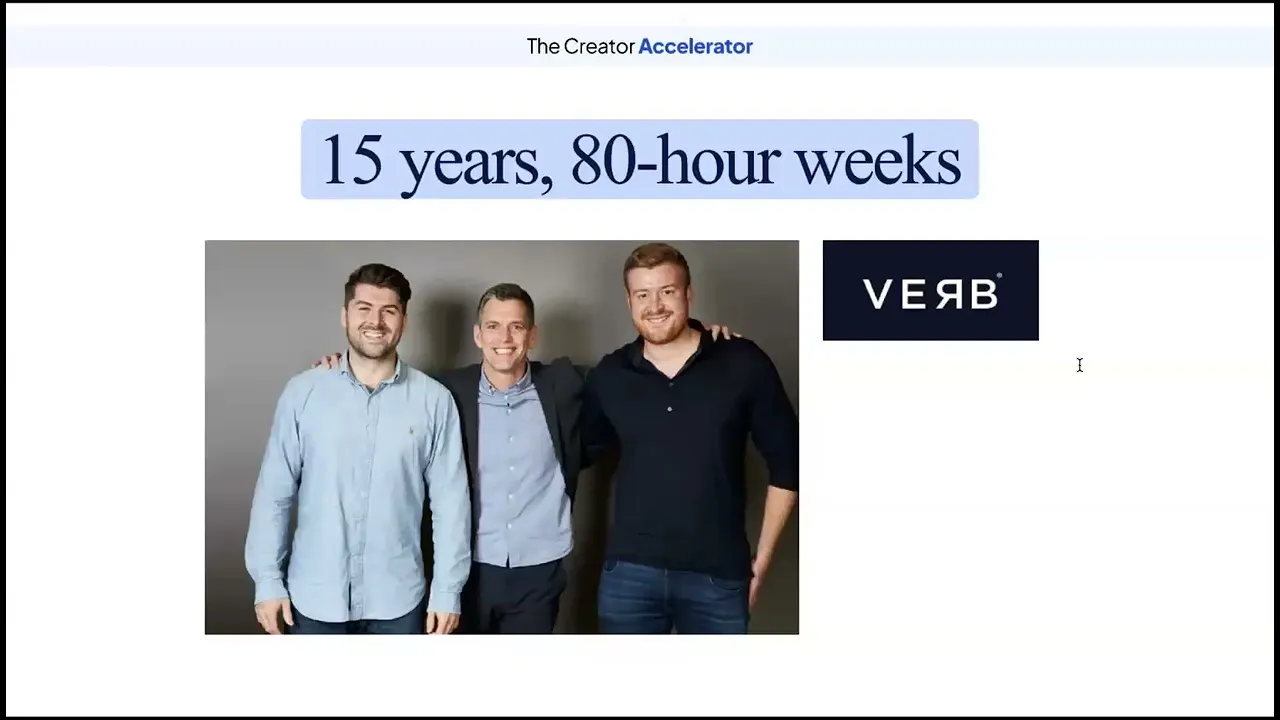
that I started at 18 and I've been building businesses from 18 at a high velocity of like hours and time and effort up until now. and I'm soon, unfortunately, about to be 36. I think my first real success though came with a company called Verb. And Verb was a digital agency that helped luxury brands. It was bootstrapped, so I never raised funding for it. Um, and we built websites for people originally. And so, every month we started our target from zero. We needed to sell more websites to make more money. Um, and then I came
across um a uh Thanks very much, Lisa. I appreciate that. Um, we we came across an agency that was selling SEO services. Like every month they were paid month in month out to deliver SEO. And so I looked at that and it was the first time I'd ever seen or heard about this thing called a retainer like a retained service. And so for me it kind of changed everything as to how I think about my business about you know the the the product is so important. The way people buy the product is so important. So
we flipped to being a business that delivered marketing services on retained basis every single month to our customers. Um and our sort of strap line at the time was we find high net worth individuals for luxury brands. Um truthfully though and you know so many of my my friends are on this call and and so many people know me personally I paid myself peanuts while I was growing that company. And so I was like 28 29 my my company made something like8 to10 million a year I had no house no savings um and I was
not in a great position but the company was worth a huge amount of money. However co covid happened and in co um I lost nearly 80% of our revenue for our customers either closing or stopping and so years and years of hard work and 80hour weeks went down the drain. Um so that made this like catalyst moment for me which was very like um very simple really if you think about it. I had a great business. We knew how to do the work and suddenly the world went dark, right? There was no leads, no inbound,
no inquiries, no nothing. And so I had a great business and no inquiries, but I had a great business with loads of staff. And so, um, the most important thing for me was I need to generate leads and generate leads fast. Um, and so Ben and I, Ben Asans, um, used to be a very big, uh, uh, creator, has now taken a a quieter life to build a few awesome businesses. Um, sat down in Marland in a park in in in East London, and we set about a plan of where have all the leads in
our business, where have all the inquiries in our business actually come from? like let's track the sources so we can do more of what is working and then Experiment with new stuff. And when I looked properly, you know, most of our leads as in the the first touch point for our leads, most of them were coming from LinkedIn. And I wasn't like a professional poster back then. I wasn't posting loads. I was posting very niche content about how luxury brands drive outcomes, right? And so I was shocked because I hadn't ever really put a value
on what my LinkedIn was worth. Um, and I wasn't posting regularly. I wasn't posting, I didn't have a team, etc. I was just doing it myself alongside my job. But in noticing that, I was like, "Okay, 70% of our best customers, their first touch point with our business is LinkedIn." Like, "Holy I need to drill down into LinkedIn because I have no customers right now, no inquiries, and I need to generate them fast." So we focused our entire strategy around that and we had a when co started quieting down we had this crazy you know
six months of working so hard like clubhouse LinkedIn every channel there was creating white papers running webinars that was the first time I started doing webinars. Um, and when COVID started slowing down, it was our company that had like an avalanche of leads. And every single day we were getting companies come in and the number one thing that they said is over co I was just reading your content about luxury brands. And so I did go on luckily enough to sell that business. Um, and I was left with that everlasting moment in my head of
like fundamentally my business was saved by this strange social media platform that a lot of People call cringe. And that's the truth. Like when I started posting on LinkedIn, I was called lame a hundred times by my friends. Um so many of my friends were um you know quite scathing about me posting on LinkedIn. But at this point you know I've built one of the biggest LinkedIn followings in the world. Yesterday I hosted LinkedIn themselves to talk about the evolution of the platform. U I've spent years training founders who own real businesses. Like I I
I don't want to train people on how to get good at LinkedIn so they can be good at LinkedIn, to teach LinkedIn, to train on LinkedIn. Like I'm not interested in that. I want to teach real business owners how to generate leads for their business because it is a very proven system. So I distilled everything I know down into a five-step system. And you know what? I'll tell you something. Interestingly, completely off the off script here, but I was so anti the idea of doing a cohort or teaching people because it has a bad rep
and like I'm a legit entrepreneur and I had such a a pain like in my soul about the idea of teaching. However, I then taught 10 people and I taught them together offline, you know, not offline, online with webinars and so forth. And the outcomes that those 10 people had were phenomenal. You know, some of some of the biggest creators on LinkedIn were in that original 10. Um, and what I learned is that because of my background in like marketing and branding and positioning and so forth, like I did know a lot about some core
things in business, which is like positioning. So, Who are you actually for and why are you the person that they should speak to? It is a topic that does not get spoken about nearly enough, right? People are like, "Oh, just post on LinkedIn without a positioning strategy." And I'm like, "Well, you're crazy. You're just going to generate like a bunch of 25 year olds who like LinkedIn, you know?" Then we move on to content. So, this is the engine that drives the attention to your business. And we have to be so intentional about this. We
can't just post like selfies and personal stories that expect that serious buyers at serious companies are going to buy from us. It's just unrealistic. And again, it's a narrative that is put out into the world by people who don't run real businesses. Um, so compounding, I had a very we're just wrapping up a cohort at the moment and I had a very good conversation with people where someone said, you know, I've grown 8,000 followers during the cohort. So like 8,000 followers in 10 weeks or something and they were like, it's nowhere near fast enough. I
was hoping to grow further. And I was like, you were hoping to grow more than 8,000 followers in 10 weeks? Like, who are you? [laughter] You know, like, like, are you know, are you a celebrity? You know, do you have the most amazing content in the world? And I think the reality is that building great content takes time and and feeling a um um a a automated Sorry, that comment threw me off. feeling an a compounding effect um only starts to happen once it compounds. And so obviously you can grow your audience faster when you
have more followers. Of course you can. Um but you need to build into that first. The next is what I was talking about earlier, capturing people. So how do you actually capture people? Uh it is lead magnets, uh landing pages, email sequences, highv value educational gated content. um like a a real value promise as to why to have a phone call with you. Um uh yes, the call is recorded. Please please stop asking. Um the number four so capture like turning that attention into a real audience and then conversion turning interested people into real customers
and that is not something that just happens with a couple of emails. They've got to go through a sequence of events experience value at each event. I always say to the people that I train like most is that at every interaction that someone has with you, it has to feel like a more valuable interaction than the last one. I try and train I now have a big sales team at Searchable and I say to them like every call you have with a prospect, it is your job to deliver value. Um, so how do you build
an audience of buyers and not an audience of followers? I know so many creators have, you know, 100,000 followers and their audiences are worth nothing in my opinion. Um, so to me, followers are useless. Like, if LinkedIn didn't pay such a huge amount of value back in return, I wouldn't create content. I just couldn't be bothered truthfully. And I'm I'm not here for like the likes and the comments. I'm here because it drives my business and I get to help people. Um, and so this is why like for for me I'm very very Bullish on
the idea if you have to create highv value content that people actually want to read. Like I don't want to I don't want to look at memes all day. I'm not interested. But if you create some content that is seriously valuable about business or digital or SEO or AO, I'm 100% reading it. I'm coming to a webinar if I think it's going to be valuable. But if I think it's like basic content, if I think it's like AI generated slop, I'm not. And that's what everyone else is thinking. So this graph shows a business audience
quality index. It shows uh the number of decision makers on a platform and an audience's buying power. So four out of five members on LinkedIn drive business decisions. That's like insane if you really think about it. Um there are 130 million senior level decision makers on LinkedIn including 65 million seale executives. Um, and so not only that, right, but 75 to 85% of B2B social media leads come from LinkedIn. So Facebook is a less valuable platform. It has huge reach, but I mean comparatively, I would say LinkedIn, sorry, Facebook, Instagram, Tik Tok, etc. They have
their audiences, right? Of course they do. But I don't want you to build on four platforms at the same time. I want you to build on one platform and totally nail your style of content and your positioning. And once you've got that, then you can expand to the other platforms. Eric Paraker and I, right, when we started posting on LinkedIn, everyone else was like LinkedIn, Instagram, Tik Tok, YouTube, you know what else, right? We just built on LinkedIn for a year dedicated one year. We took we went all in on it. And everyone says, "Oh
yeah, like Chris, you know, LinkedIn was like So much easier when you and Eric were growing." And yes, of course, there is the case that reach was easier to get back then. However, the the 50 or 60 people that we broadly knew in our group of people who were taking LinkedIn seriously, none of them grew like Eric and I. None of them did. None of them grew like us. And so, you can say it was easier and objectively that is true. But everyone we knew who was a professional creator didn't grow nearly at the speed
that we did. And so when I teach people in the TCA now, I teach it very much on the understanding that yes, it is harder now than it was then, but my god, is it going to get harder. And so the time to strike is now. It's not to wait another year, another year. Because I can tell you now, every single year. I've worked on social media forever. It gets harder every single year. So this is both algorithmic, but also great business advice. You need to become more niche and more focused now than ever before.
Okay. Um, the the content that you put out needs to mean something to someone. If you're a buyer, if your buyer is like a CFO or a lawyer or a dentist, um, you know, or a CEO of like a manufacturing business, their feed is not drowning in content. They don't follow loads of people. There is almost no one who is genuinely creating highly valuable content for these people. So, when you get this right, you often are the only person on their feed. So if you follow loads of people on LinkedIn, you are abnormal. You are
abnormal. Okay? Most professional business people operate in a slice of their algorithm and they're Part of LinkedIn that only sees things that are relevant to them. And so think about that for a second. If you create the content, you will be the person that breaks through. LinkedIn has 1.2 billion users. That is like this is insane. um like the stats on the previous page plus this and 1% um post anything at all. So like let's just think about that from a demand and supply point of view. Okay, if 1% of people are creating content, there
is nowhere near enough content on the platform for 1.2 billion people. So combine that with a higher than average quality content aimed specifically at your buyers with a warm outbound strategy, which I'll teach you about. um you're going to be one of the few people on that feed. So, don't misread the landscape. Okay? I helped honestly I've helped people who had hundreds like low hundreds of followers now have 70 80,000 followers over a six to six to 12 month period basically depending on the the sector. Um and that isn't the result that everyone will get.
I like to be really blunt about that. you will get the result that is dependent on the the effort that you put in. And it's not just about effort. This is the thing about life. People don't understand. You can work really hard and get results. I'm not, you know, of course you can. I know so many people who work really hard and don't make much money or don't see much success. It's about working incredibly hard on the things that matter the most at the time. And upfront, I like to be brutal with people at the
beginning of the TCA. It is your skills and your knowledge that are lacking. It is your skills and your knowledge that are lacking. You do not have the skills or the knowledge to be very good at posting on LinkedIn. And it's not just about like um working smart and not working hard. Like you have to do both. You have to like this thing that everyone wants, right? Which let's break down what what everyone wants. It's what we said at the start. It is an an absurd amount of interest in your business. Lots of leads for
your business. The right leads for your business just showing up and wanting to buy from you. that's what you want. But who doesn't want that? Like you don't live in a vacuum, right? Everyone is competing for more leads. And so it is unrealistic to expect that this is easy. And it's unrealistic that you can just work smart and use a few like LinkedIn um so AI automations, right? I've seen people butcher their profiles with AI because they think it's the easy way. So this is going to be hard and you're going to have to work
smart. And and honestly, that's the truth. If you're not happy with that, then it's not for you, honestly. So, right now in 2026, LinkedIn is interest media, not social social media. G, you see Gary Ve's post here last week on the death of social media. Um, this has only really recently happened on LinkedIn. Uh, whereas this happened on other platforms a long time ago. The platform knows who you are and serves your content to the people that Are relevant to the content. So, how many of you, for example, have liked a post on Instagram and
then a few minutes later, all you see, not all you see, but a lot of what you see is posts from that person. Even more so, let's say you don't like the content, but you stop and you read the full content or you watch the full video. The algorithm will serve you that person's content again. That is how it works. And so distribution or the the the the the idea of growing an audience is about creating great content that people actually want to read. And so I always like to say in the first week of
the TCA um you know you're you're this is going to be harder than anything you've ever done. The quality of your content is going to need to be higher than you've ever thought possible. Um and you're going to have to create content that people actually want to read. And I have no hacks for you. I have no tricks. I have no magic bullet that's going to make this thing happen for you. I can tell you every single thing that needs to be done and in what order. Of course, but I can't say, "Hey, like join
a join an engagement squad and like that will grow your following massively." Can you imagine, right, if it was that easy, how many people would grow fast on LinkedIn if it was just like you and your friends like each other's posts? That's complete and utter nonsense. Complete and utter nonsense. The the one different differentiating factor, right, is the people who create the best content grow the fastest. That Is that is simple. The people who create the great the best content will grow the fastest. Um, so to put it simply, LinkedIn used to be and like
we were good at this game at the time. LinkedIn used to be like a notice board and now it's more like a specific delivery system to um the the customers that matter to the content. A notice board is showing you a post to anyone who walks by. The delivery system is going to take your post if it's relevant and deliver it to the person that it's relevant to. Okay, that is the key. That's how the platform changed. I I read all this nonsense online about like um you know people who are like, "Oh, I used
to work at LinkedIn and therefore I understand the algorithm." It's like come off it. You know, like it's ridiculous. It's ridiculous. Like, you know, the the the only way you can study what works in content is by ingesting millions and millions of posts and then looking at which perform the best. Okay? And if you read the most recent updates from the algorithm, it backs all of this up. It says that they are more interested in serving the right content to the right people. I would explain what the best means. I just need to first educate
people as to the fact that you've got no chance if you're not working hard on this and you're working smart on this. No chance at all. It's too it's too competitive these days. Um, and I know this because I only just started on YouTube six months ago. I don't know if anyone here actually. Can you let me know if you see my YouTube because I work very hard on it. Takes up so much time and so much effort, but I love it. Um but LinkedIn, LinkedIn is similar in a sense for you as YouTube is
for me. YouTube is so hard. It is so Hard. It takes so much time, so much effort. Um but but but but in the last few months, it's started to crack. We are making better content. We are improving. We're making more educational content. We're looking at our comments and we're seeing what people are asking for and we're making that content which is more and more and more niche funnily enough. Same same. Okay. So, the delivery test um how does LinkedIn decide where to send your post? Okay. Um big love by the way to everyone who
watches my YouTube. It is like the labor of love of mine. It is like it is a passion that I equally hate because it's so difficult to do. Uh, it's so timeconuming with a little baby and running a business, but I'm glad that you love it and I'm glad it's useful. So, how does LinkedIn decide where to send your post? Well, number one is the address. It's obvious um it is obvious who this post is for. So, is it specific enough? Is it dedicated enough? Is it is it one post about one topic that hits
one niche? If that's the case, it will serve it to that niche. The sender. So, does your profile confirm that you're credible on this topic? A post about real estate from a profile for example that has nothing about real estate will not be delivered. So let's break that down. If your LinkedIn profile like I'm in SEO and AEO, okay. Okay. So appreciate the YouTube comments. I love it. Um but if you're it I'm an SEO and AEO. Okay. So that is what I do. I post about SEO and AEO and as a result I am
Credible for the topic I post about and I'm posting about the topic so it gets delivered to the right people. Now if someone else was posting about SEO but their profile wasn't about SEO then they are not credible to the topic. LinkedIn have made this abundantly clear in their recent updates. So first class you know a first class postage is it worth delivering? Does it have high value? Does it convey experience? Does it generate dwell time? Dwell time is the amount that people spend on the um the the the post. Does it have saves and
does it have shares? And VIP. Do you have a track record on the subject? Do people within your network already follow you for that thing? That's how I think about the delivery test. That's how I think about will your post be delivered to your audience? Um, so load delivery. So the this is when your post will get delivered to no one. And I hear every excuse under the sun. By the way, I hear that um, you know, I've been shadowbanned. LinkedIn doesn't like me. Um, you know, LinkedIn's like not serving my post to the right
people. It's like it's not a game of fair or unfair. This is just how the system works. That's very kind of you. Um, so low delivery, you know, this is like personal stories with universal lessons, lessons that apply to everyone or hot takes and opinions on things that aren't hot takes or opinions, like just motivational posts, um, you know, really broad observations or things that appeal to everyone. Whereas high delivery, the people who perform the best and grow the and you've even seen this recently with Some of the like big LinkedIn guru people who just
do LinkedIn, they have switched their content to the the the style we talk about. They're posting cheat sheets for the first time, carousels for the first time, deep content for the first time, and way like less selfies, you know, for everyone. So you want to create, and when I say IP, I mean intellectual property. You want to create your own intellectual property about your subject so that someone can buy into your ideas so that they are unique and they feel like a framework. And I've spoken about this before, but Simon Synynic start with Y is
one of the best frameworks, one of the best titles, one of the best idea captures ever. Okay? And with that, start with Y has a perfect circle around it. You know, the three golden circles. And so he has captured the idea of having purpose in your work with his framework. He's not the first person to ever speak about that. He's just captured an idea so incredibly well. And that's what you need to do as well. You need to build framework, create intellectual property um and case studies and um testimonials are key. Okay. So, um, I
want you to be able to emphatically like without any ambiguity show your customers that you do what you say you do. And if people are asking me, how do you get case studies when you don't have them? Well, I would say at that point, you don't have a full business. If you can't get good value and good results for your customers, you don't have case studies yet. And so as part of the TCA, I have spent years teaching people how To think about creating case studies and how to make sure that they get case studies.
Um, right. So here are some examples of things that used to work and now don't work. Um, and to someone asked me about personal stories in the chat. I'm going to explain a little bit more about that. What I mean is like let's assume I'm the buyer in your sector. Let's just assume that I buy products and services from your sector. If you're posting like personal stories of you looking great or your you and your friends or you and your family or just like stories about things that you've done, do you think that's really going
to help me make my decision as to whether I purchase your product or service? Like really, no. I'm going to purchase your product and service because I buy into the ideas, the process, the credibility, the reliability, and the value for me. I don't I don't want to be like so you know capitalist about this whole thing but that is how the world works. That is how the world works. And so like all these people who like leave LinkedIn and then become like LinkedIn trainers um like they didn't run a business at LinkedIn. They didn't have
to win customers at LinkedIn for themselves. And so they don't understand that it is really difficult to win customers and customers aren't interested in like all this you know fluff. Basically customers want to know that you can do the job. They want to know that you're you're on the forefront, you know. So, here's some things that aren't working. You know, broad hot takes, motivational posts, you know, quotes, billboards, you know, this stuff used to work incredibly well. Um, whereas nowadays the stuff that works really well and I can tell you I launched searchable put the
pricing live in January. The business does 5 million in revenue now. Like most of our customers have come from LinkedIn. And so this stuff works. You know, you're you're talking about cheat sheets, highly educational value work. You're talking about carousels that explain complex problems. You're talking about lead magnets that people want to get and they'll give you their email for. Do you know that at Searchable, we've had 48,000 people sign up to our lead magnets and a huge portion of our um audience is coming from it. Um so, let's continue. Um cheat sheets convert right
now. I mean I'm, you know, I will do a a webinar on the LinkedIn algorithm update um at some point soon uh if I have time. Um but um right now infographics are working. They have incredibly high conversion rate of interested customers to potential buyers. Um you know this SEO cheat sheet I can point to like honestly hundreds of customers who originally came through this like Claude skills. People want to learn how Claude works. Um, I am like a power user of Claude Co-work. I use it every single day. I have multiple sequence tasks going
on all the time. Like there won't be a single thing about Claude that I don't know myself because I feel like my personal output has gone up by 10 um 10 times. And in the TCA recently, people like begged me to do a how do I use Claude code myself and I hadn't prepared a um uh I hadn't prepared a presentation on it. So, I just did an offthe cuff I shared my Claude co-work like live and I just said to people, please don't like spread any of the information from my um Claude, please. And
I just did a full breakdown of how to use Claude Co-work. Um and and the thing that people don't get right, okay, about AI is I have a few sequence tasks in my co-work that read my email and read my Slack every single day. Okay, so I send millions of messages every day and it reads my fathom because I record every call I have. It ingests all of that and it writes me drafts to all of my messages that I have to send. Okay, and then if I go in and edit the draft, it reads
what I edited and improves its own brain. So my claude writes like me. That's how you do it. By the way, a little Claude lesson middle LinkedIn. Um so content that works today requires real effort. Um, so you don't just need to post. Uh, you know, just posting regularly won't work. It needs to be the right format with the right effort, with the right quality, with the right value. Um, the problem is it's hard. And so I hear people say like content feels like a slog. I can't post that often. I don't have time to
create content. I've got to run my business on top of all of this. I'm doing a lot right now and it's not driving revenue. Um, and so which is where like AI has become your best friend, but it's also your like greatest Enemy, right? It's your greatest risk and your greatest friend. So, LinkedIn obviously introduced this last week or the week before. Yeah, welcome Ashley, one of our incredible coaches from the TCA, incredible creator, incredible business person. Um, so LinkedIn is is being invaded by AI because people are lazy. I don't want to be a
dick, but people are lazy. They they don't have the time or the effort or the energy to put into creating great content. Um, people outsource everything to to to um AI. I want to give you a rule as to how to think about AI for a second. By the way, 10% of the upfront work should be focused on making sure that the task you're doing with AI is so incredibly clear. So incredibly clear. 10% up front, you are giving it context. You're uploading the right things. You're um uh you're um giving it your context on
your business. You're giving it connectors, you know. Then 80% is the AI doing the work and the last 10% is you polishing it. I say to everyone in my team, we are not an AI slot company. You own every word that comes off your email and your Slack. You own everything. If you send me AI slop, I will not read it. If you keep doing it, you won't be here. Um, it's it's it's tough because it makes everything feel like it's good, but most of the stuff that comes out of AI is bad. Um, so
when I started posting properly about what we actually did, I had almost no followers. like honestly a few a few hundred people originally at the during Verb. Um and from that, you know, I think maybe when I got maybe when I won Bugatti, I had like five or Six thousand followers. Um but I got a a DM from the head of marketing at Bugatti saying, "I love your content. Um we're just thinking about hiring an agency to help us with our Instagram and potentially launching on Tik Tok." So this is telling you it's a while
ago. Okay. Um and uh from that tiny following I got this inquiry. We worked the lead. I flew to Germany back and forth a few times. I did the real like business you know, made an amazing proposal, etc. And we won as a group of 26 27 year olds, we won Bugatti as our flagship customer on 240k ARR, um which is about 20K a month. And by the time we sold the business, they were maybe three or four times that size. We did their Tik Tok, their Instagram, we created content for their website. We did
everything. It was incredible. And off the back of Bugatti, we went on to win Aston Martin, uh, loads of other luxury brands. And I had 5,000 or 6,000 followers when she messaged me making content about luxury brands. Um, and so the proof is everywhere. And this is an interesting guy. Um, does does anyone in the chat know EOS, entrepreneur operating system? if if you've been in the entrepreneur game enough, like EOS is is is a a format and a way of thinking, a way of implementing um it's a way of running your business and it
will set you free. I'm not even joking. Like um it is a uh it's incredible and like the book Traction is By the same guy. Um anyway, Mark, who's the CEO of EOS, um went through the TCA and um I've got it here. He said it was the best single um educational cohort he's ever been through. Um and for for for him it was, you know, he has all this incredible content. He has all this incredible context. It was about making it in the way that worked for his audience. And he did not have a
big audience when he started, you know, and now obviously we've had loads of EOS um trainers and people come through the the TCA program because what it is, it's about amplifying valuable content, right? And so, um, Mark is a great a great case study for us. Like 200k in new business for EOS, three new personal clients, 2xed his LinkedIn following, 400 increase in impressions. And so, now we're on to compounding. And so, everyone wants things to happen really, really fast. Of course, they do. Um, however, in reality, uh, this amazing thing that we're in the
pursuit of takes time and effort and energy. And so, um, I always say to people in TCA, 10 weeks after TCA, my first 10 weeks on LinkedIn, I had literally a couple hundred followers on my first 10 weeks. And that tells you how long I've been doing it. Tells you how long I've been plugging away. Tells you how long I haven't missed a single day of posting in about four years. Um, and I've been posting for about six. Um, and so the question becomes like, how do you create hard content that is valuable and attracts
customers, but doesn't spend all of your time doing it? Like which brings us to this compounding nature. These are systems that have been designed for you to improve how you post. And just to put this in perspective, posting on LinkedIn is not just something you can do half-heartedly. Like I'd give up if that's the the the intention. This is everything that goes into growing an effective personal brand on LinkedIn. There are 85 tasks in nine groups on the screen. You have to be across all of it. So, you know, content planning, your profile optimization, your
network engagement strategy, your DMs and your outbound. Um, and I bet you're looking at that thinking, this is pretty this is pretty overwhelming. Um, there's a lot of stuff to do, but you are in the pursuit of an unbelievable goal and so it's going to take unbelievable hard work. Um, people don't have time to spend it on LinkedIn. Trust me, I do not have time to spend on LinkedIn. Um, I'm very busy as well. You don't want to spend your entire life on LinkedIn, but at the beginning, this is going to take some level of
sacrifice or rejigging of your time. You've got a business to run, a family to spend time with. Um um so how do you come up with a system that doesn't consume your week? I have memories of Eric Partaker and I like standing in airports together at 1:00 p.m. replying to all of our comments from our phones, right? And I remember every single lunchtime at my job getting my lunch, putting my lunch on the left, my laptop on the right, and doing my LinkedIn posting. And I remember weekends spending like eight hours on a weekend making
LinkedIn posts. It's very difficult. Um, so the 4hour content system. Um, so what if I Could tell you that you could do this stuff in in in four hours? Um, so we've designed the system. So one hour of ideation, one hour of writing, one hour of design, one hour of community engagement. Um, and you're gonna have to get really good at AI. And this is the thing, and here here's here's the like here's the like real hard truth of the matter is that there is no way you're going to do four hours a week at
the beginning. No way. However, at the beginning, you're going to need to learn the skills. You're going to have to generate the the the real knowledge. You're gonna have to give yourself some templates. You're gonna have to become amazing at AI. You're going to have to be very good at what topics work for you with your audience. Um, uh, don't worry, any questions you have, try and put them in the Q&A and I will answer them in incredible detail. Um, don't worry about it. And to someone who said a moment ago, um, this is good
background. No, this isn't background. I'm telling you the reality of the situation, why it is so difficult and how you can approach a system because people think it's just about like posting. Um, but if you don't get amazing at AI, if you don't become incredibly good at creating automated tasks for research, you're going to have no chance. And so you need the background. Um, so um three things that you will need in place is like a proven system um for content. So what content works for your audience? What content works for other people? Uh, what
content is going to be a conversion piece of content? What is going to be top ofunnel piece of Content? You're going to need to be incredible at using AI. I think most people are so bad. It is like shocking. People are like, "Oh yeah, I use a bit of chat GBT to rewrite my post." I'm like, "Come on." You know, it's like midway through 2026 now. You can get great at Claude. And for a 20 $20 a month subscription per month, you can get really good. Um, and then the last thing is you have to
get very good at delegation. You have to build a system to get very good at delegation. You have to hire a VA or an EA or a PA depending on your budget. You know, in the early part of my life, I had VAS, so like virtual assistants based in other countries. As I got a little bit more money, I had a PA who would help me on all of my tasks. And then nowadays, I have an EA and a chief of staff. But so the system fits however you know. And for those of you that
like really want to um learn about Claude because I've seen a couple of those comments coming through. Um I'm actually releasing a YouTube video in like a week and a half. Deep dive on my Claude. I just freeled it. I didn't like practice it, but um it's just me deep diving on my own claude basically. Um so how to find pre-validated ideas. So a pre-validated idea is an idea that is already validated as being successful. Okay. This is a huge topic of what we post about. This is this is the the thing that most people
struggle with. Um people take weeks, months to understand it. They get it so wrong. Um they are, you know, uh they're so confused about it. But I I'll give you an idea here. I'll give you an idea. Okay. the um if you look up the top 20 most successful books ever, all the topics and all the ideas in all those books were released in other books in the preceding 10 to 20 years. The ideas that we all like and the ideas that resonate with us are uh like uniform. Okay? And so when I create content,
if I start creating content, I'm looking at other content that's done well and then creating my own version of it. I'm not stealing. I'm not copying. Um, you know, I'm I'm taking really high quality ideas, creating my own intellectual property off the back of those ideas, creating frameworks, and then creating educational content for my audience. Um, and so take a focal slide to to keep in the back of your mind. So, some pre-validation examples. You can find prevalidation ideas from other platforms. I find a lot of mine from YouTube these days. You can use software
um that you can um uh use to like find people who have done well on LinkedIn, people who have done well on YouTube. Um you can find people who are doing well on Twitter. And if you can filter people via like low followers, high performing posts, you can see that it is the posts that are the most successful part of their of their strategy and not necessarily themselves. Um and so I want you to become very good at this. And this is the thing, right, is that people will be like, "Oh, Chris, like just tell
us how to post." I'm like, if you ask that, you don't get it yet. And I don't want to be a dick about that, but if you're asking for like the quick, you know, how to do your posting, Chris, you don't get it. It's like a strategy that underpins it all. You need to learn how to do this stuff consistently. So, you need a strategy. You need a um a playbook if you're going to make successful content consistently every single day. You need to understand this concept and be able to do it instinctively, which will
take a long time at the beginning. You're going to have to become like very into this to to to get it right. And once you've got it right, you can run it easily for 4 hours a week. I reckon I put in less than four hours a week these days. Um, so prevalidation examples. Um, this is my post on the left hand side. A very successful post format of mine. I'm pretty sure I pre-validated it from somewhere else. I just can't remember. And this is someone else prevalidating their post of my formats. They've seen my
format work. It's done really, really well on social media. It's been copied a thousand times, but they have done it for the executive guide to types of AI. Completely different post. And CLA who did it as a TCA um alumni and I think it's amazing. That's not copying. That's someone use using something that's proven, you know. Um so really nice example there. So trying to use AI authentically, how to do that. I'm on the move all the time. My favorite tool in the world is Whisper Flow. And if you're using Whisper Flow to generate ideas
and thoughts, you're doing it in a nonAI way. Yes, it's being recorded and synthesized or whatever. But I can record great ideas quickly on the move, on a plane, in a car, etc., and then just put them into a post for later. And most of the time, the origin for my post is coming from that. Um, Fathom. So, if you're having calls with your customers or you're having calls with your team, make sure that you have Fathom on. So you can collect all the insight that's happening on calls. You can pull out What are our
customer pain points. What is the most asked question? Um or you can use granola. So I prefer Fathom because it gives you the video. Um granola happens in the background and gives you just the transcript. Um uh you want to use Cleo uh which is a great tool. My friend Jake Ward and Lara um built that tool. Um incredible. Helps you find uh influencers who are doing incredibly well. Helps you find content that's very successful. helps you write as well. And then you want to use Claude like I was saying before. In terms of design
tools, at the beginning I want to teach you to do it quite manually and then over time I want to teach you how to do it with AI because you have to understand what makes good design first. And this is it you know like I'm sure in the in the comments and in the chat people are like just tell me the strategy just tell me how to do it. It's like you can't do it unless you understand the foundations. you just can't, you know, like you will end up using claw design to create really low
quality infographics. Um, so writing tip one is be um I don't mind by the way people take photos of these slides. I hope they're useful for you. Um, so writing tip one is be incredibly specific. You know, large language models, LLMs like chat GBT generate responses based on patterns in language. That means the more vague your prompt is, the more generic your response. So writing tip number one is to be very specific. A lot of people prompt and they say write me a post about leadership. Um and that will be a terrible post like awful
post. Um so what you want to do is you want to give it as much content as physically possible about the thing you're trying to create on. And for me I would say you really do need to do a research phase, a Skeleton phase. Like I'm writing my book at the moment by the way and like god it's tough to write a book when you're doing all the other stuff that I'm doing. Um, but I have an incredible setup in my Claude for my book. And I go back and forth non-stop with it about what
should my chapter structure be? What what is the point and the pain point I'm trying to hit within this chapter. And once I've created the skeleton, I then write it. I don't then let AI write it. So, um, writing too is um, is going back and forth multiple times on the same prompt and like sweating the detail. And this is the thing as well is like if you're using the wrong tools for this, you're already failing. If you're using Claude, you're using like a decent model at like a high velocity and you're giving it a
crazy amount of context, then it's, you know, really valuable. Which brings me on to building a um a clawed project, which is going to be essential for you. I will show you how to do it. Um, but even even before this, like in your Claude, you'd want to connect up your Gmail, your calendar, your Slack, your Fathom, your Drive, your Google Drive, your um whatever else that you're using because the more context you can give to the AI, the more noni it will be, okay? The more you it will be. And so this is a
good example of a profile optimizer core project like a really well-built out memory section with loads of instructions. Um a memory that is full of files about what makes good, what makes bad, tone of voice documentation, background documentation, ideal customer documentation, which means that in that Specific project, it's going to give me everything that I want. And I've built one of these for everything that I do. So whether it's LinkedIn post creation, whether it's writing my book, whether it's searchable product development work, even my wife and I buying a house, I've put in I've made
a claw project for buying that house. Um there's so many like people who aren't going deep enough on this stuff and then they're upset with the outcome from their AI. So [clears throat] when um when I was building Lotty, I think that was a very hard time for me to post because I didn't have a team set up. I was building a fast growth VCback startup and basically it was my lunch break and my weekends. Um, so try and take a a a screenshot of this. This is how I broke down my delegation at the
time. Um, so here's a delegation framework for everyone on how to think about doing a lot of tasks. Um, so audit tasks, you should try and put them all together. Like if you're going to do audit, you should batch them together. If you're going to do um uh like um uh tasks that are uh wait, let me take a step back. If you're going to do a a a group of tasks, and entrepreneurs get this wrong all the time because we have so many different focus points. If you're going to do five things, okay, so
look at my hand. You're going to do five things. Being very good at that those tasks and being very good at delegating those tasks isn't about doing the five things. It's about doing one thing and doing it really, really well. Okay? And so I feel like everyone tries to do everything at the same time. Whereas what you should be thinking is about sequences. So I'm going to do the first thing really, really well, then I'm going to delegate it. I'm going to learn it really, really well, then I'm going To delegate it. Second thing, I'm
going to learn it, build a system for it, and then delegate it. And so over time, I will teach you through the process of TCA how to take on more than you possibly think that you ever could, honestly. and still feel like you, you know, get to see your friends and family loads. Um, so I hear this all the time. Founders say like, I can't afford the team. I can't I can't be um uh I I I can't get a team of people to help on LinkedIn because it doesn't pay back basically. And then also,
I enjoy writing and I enjoy writing posts. So do I to be honest with you, I enjoy writing posts. Um, so even if you're at a low level, you definitely can afford to hire a virtual assistant for 10 hours a week because the opportunity cost of your own time is the more valuable part. Okay? If I can give you back 10 hours a week to think, how much more valuable will your business be? If I can give you, you know, five more hours back just to think about how to acquire new customers, how much more
valuable will your business be? And so people drastically uh underestimate the value of their own time. And therefore I try and teach delegation as my like bounding principle of entrepreneurship is that if you can get it right, it is a huge outcome for you. Um so how do you turn all of this content into clients and revenue? Well, what has worked what has worked previously in the last six months um isn't working today. What will work in the next six months will be different again. So content and algorithms will always change. But what stays really
simple is um the capture and the Conversion part of your um of your business. And so deplatforming is the the term that is used to deplatform people from LinkedIn or other social media platforms and get them onto a list that you control that doesn't depend on an algorithm. Um so the clearest example I I have here is a newsletter. Like single biggest leverage of my business is my newsletter. 300,000 subscribers. I built it over the last two years. Um, it's my biggest monetization channel. It drives the most customers to Searchable. It drives the most customers
to TCA. Uh, if I ever do a sponsorship deal, that's what they pay most for. If I ever want to drive a webinar, that's where I do it. Um, at Verb, we had my my agency Verb. We had the luxury lens, which was our newsletter. At LSI, we had um uh Care IQ. So, every business I've put this this plan in place. And so what you need to be thinking about is the content you're creating needs to have a reason for someone to subscribe to you. And once they're subscribed to you, that's when you can
sell to them. And so that's a change in mindset as to how to think about thinking about posting. Segmentation and personalization is critical. So I want to know who the people are who have subscribed um to my business because then I can send them really relevant messages. So, for example, my my business searchable, we have small customers who might track 500 prompts a month, and we have big customers who might track 50,000 prompts a month. Okay? And the response to those people has to be so fundamentally different. Some people are interested in how to write
blog posts. Some people are interested in how To track prompts. The response to those people needs to be fundamentally different. And so, how do you do all of that, right? How do you do all of that? But you have to segment them when they turn up. So you need to ask them questions when they turn up. And another thing about this is like um you know a lead magnet, weight list, any of these um proxies for purchases, like any of these things that happen before someone buys, you know, you're going to get like an 80
90% conversion rate on people who are signing up to weight lists and lead magnets versus a 1% purchasing rate or less for your business. And so putting a weight list or a a a lead magnet in front of someone, you're going to capture so many more people that when they're ready to buy, they could buy from you because you're emailing them regularly. Um so this is how you should think about um making a sale. You are nurturing someone towards a purchase effectively. Um you're nurturing someone towards a purchase. So, um, personal story, painoint, deep education,
using your IP and systems, specific case studies, um, and I was talking about this before, but the idea of putting out lead magnets that people really want. So, the LinkedIn GPT operating system, a lead magnet I did last year, thousands of people sign up for it because they're they think it's a very valuable um, thing and they're happy to trade their email for it. So, people say, "Oh, you can't do that for a normal business." Okay. I run a SAS business called Searchable. These lead magnets have worked incredibly well. Like how to rank on Claude,
how to rank in chatbt, how to create content with AI that ranks in in In chatbt. You know, you're we're talking about creating high value moments in time that people want to subscribe to you. So, the results are like um the the free trial like the free lead magnet that we have for Searchable converts at something like 39%. Think about that. Like people who sign up for a free trial at Searchable converts at like 39%. So, how do you make a free trial or a free lead magnet for your business? How do you create an
experience that someone can have for free to feel your product? And you know, people will say with a small audience, you can't do this. And so, my friend Heather did TCA uh had had uh grown her audience enormously, by the way. Um but as well grew her email newsletter from 1,800 to 15,000 subscribers and generated a $40,000 contract from her newsletter. And so you you might sit there and say small audiences can't do this. Well, if you're dedicated and niche enough and focused enough and do great work, produce great content, have a newsletter, you can
do this regardless of your sector. So, what have we covered so far? Expertise is better than just reach. Um, think about the delivery test like is your content worthy of being delivered to the people that you that you want it to be. [snorts] Um, how cheat sheets working are working right now. uh the 4hour content system that we will um go deeper and deeper and deeper on how to deplatform people lead magnets. Um and so I hope this webinar so far has been a useful um uh uh uh period of your time. Um and as
I said at the start, um I think that LinkedIn is in this strange moment in time where there's like a Perfect storm which for what founders is a huge opportunity to become uh a thought leader in your own space. LinkedIn audience is better than anywhere else. There is not enough content on the platform. We covered that. There's AI slop everywhere. People are being lazy with the content and the algorithm is now rewarding expertise and relevance. So, for the last few years, people have been like, "Oh, these big creators with big audiences, like they're, you know,
they're not experts." It's like, "Okay, well, that time has changed. So, is this your time now?" Um, so there's two groups of people. Group one, there are those of you that will go off on your own and do this, and I wish you the greatest luck in the world. I hope my content is very useful. Um, it took me two or three years doing it without guidance, basically. And then there's group two, um, who want to accelerate things. They want to go faster. they want to do this, they want to learn this in two or
three months rather than two or three years. So, if you have found it useful, I'm going to spend two minutes on the creator accelerator and then I'm going to do a Q&A and try and answer as many as I can before I fall off my chair. So, the creator accelerator is on its eighth cohort. It is incredibly proven now. The people who have gone through it have had crazy results. This is the founders edition. So, we're focused on working with founders. We've trained 820 founders so far and our big goal is 10,000 founders generating 1
billion in revenue. It's a 10-week comprehensive cohort with experts, um, all the resources you need, module content, uh, live calls every single week. There are four real outcomes that people are driving towards. Um, and I think that this is what we've covered today. The Four outcomes are about positioning yourself so that your customer wants to buy from you. Learning how to ideulate and design and use AI and delegate and do that at scale so it's not, you know, getting in the way of the rest of your business. How to create deplatforming for your business, how
to generate real leads for the business. Um, and then how to turn all of that into a clear automated monetization strategy. Now, will you become a massive creator in 10 weeks? Well, obviously not. If it was that easy, everyone would do it. But will you understand the skills, the knowledge, and have real momentum when you leave the TCA? Absolutely. Um, so I'm just going to go through positioning, content, uh, how content will comp compound over time. Um, compounding only happens when you've been doing it for a while and you've been doing it at a high
velocity. We move on to capture. know deplatforming. As I said, people really underestimate this. They really, really do not put enough time and effort into the capture part of their funnel. And think about all the conversations, all the eyeballs, all the impressions on your content every single day. What if you could just capture 10% of those, turn them into emails, and then introduce a new product when you when you launch it or introduce um a new service when you introduce it. Um, and then the last is um, conversion. And I think that the TCA goes
really deep into sales training. Um, how to handle sales Calls, how to do DMs, DM sequences, DM scripting. Um, because once you've generated all this interest and content on the front end, you need a high conversion rate. And if you do in in the same way that I've experienced across a lot of my businesses and TCA members have as well, you get a very automated flow of leads and then you get a very automated flow of conversion as well. And so how does it work practically? Well, on Monday the live module walkthrough for myself and
the team, [snorts] we will go uh over the module in like an hour's detail, then take Q&A. There will be a module of video content that I've recorded already. So you'll have that module one and then I will do an extra hour live on it so you can understand the module. Tuesday is roast my post. So Ashley will do a roast my post telling you what is working, what isn't working. Um Wednesday is pre-validate my post where we show you how to find great ideas for your content. So people struggle with prevalidation. We show you
how to find great ideas and include them within your content. And then Thursday is a Q&A really deep with me where we go through everything from business challenges to content challenges to reach to impressions to algorithm. And if something happens in the cohort like the algorithm changes or something big happens um you get to learn it live that day. like if we if we find it out, I tell you that day. Which is why in most cohorts like people go really fast because um at the end of the day, it's like a real um uh
a real uh moment to get like the hottest insight on what's working right now. And so um the last thing that um is very unique to our cohort is we have these things called clinics where the coaches we have a staff of incredible coaches all hundreds of thousands of followers all incredible businesses people like Justin and Ashley and Dora and Mike so many incredible coaches we have we'll do clinics which is an intimate um like eight person to one coach clinic where you go through your challenges your opportunities your things that you're struggling with and
so every single week you have loads of live contact hours. We have expert guest speakers comes in who run Dan's uh Dan Martell's YouTube channel. Phenomenal speaker, unbelievable knowledge. Eric Partaker, Michael Nada who runs a LinkedIn agency, so he shares like literally live from the trenches. We have Angus who runs Ali Abdel's YouTube um business. Tobias, who uh is the head of marketing for Help Bank, Simon Scrib's company. guest speakers are crazy. Um, and then the community, right? The community you get to meet incredible um, incredible other founders. You know, so many business partners met
on the TCA, have started business now and they met originally on the TCA. Um, and so you're going to meet a lot of other people. And this is the thing is like people are like, why don't you do one-on-one training anymore? And it's like, well, I can't help people as much if it's one-on-one. Because if I'm teaching a group of people, they can help each other. They can support each other. If they have similar audiences, they can engage each other. It's like unbelievable how much more valuable it is to do it as a group. So,
what's Included? You get the creator OS, which is my notion. It's how I run my business. Um, it's uh fully broken down. It has some videos included. Um, this is how to run your content at scale so it doesn't become overwhelming. Um you get every single GBT and Claude instance that we have. So every single um you know like the algorithm expert one the hook generator everything we create we give to you as well. This is something that I made myself which is the Chris coach. You can imagine now at this point in my life
I've done thousands of webinars honestly thousands and every single call I've ever had is uploaded to the Chris bot. So you get this as well as all the live content as well as me live multiple times a week. You can ask it any question about business and the answers are mad because I've answered thousands of business owner questions. You also get the digital business blueprint which is um this is a cohort I did a year ago on how to build a digital business separate cohort and during that cohort I sort of accidentally started searchable so
I didn't run that cohort again. Um but I made it it's incredible 10 modules on how to build a business. It comes included um in the in the TCA. Um, and so just to to round this off before the Q&A, uh, the investment is $6,500. Um, and there's three payments of $2,300. The majority of founders get the ROI back within, um, a few weeks or at least within a few months. Um, and it's clear like you can speak to hundreds of people who have done this before. There is literally no here. Um, and so I
just want people to think like it's if you're going to Invest and and I know that like we sell out every single time, make sure that you're willing to invest the time. I'll be honest, you got to put in the time. You don't just invest the money and it happens for you, unfortunately. You've got to put in the time. Um, so, uh, to apply, um, my team should send out a link for applications. We've changed how TCA works, by the way. Uh, you can't just buy it now. We used to sell it publicly on the
back of webinars, but you can't buy it anymore. So, you have to apply for it and we're taking a smaller selection of people moving forwards. That's like the biggest change this year. Um, so who is it for? Like it's for people who want to move fast effectively. Um, people who feel that they are coachable, people who can take advice and guidance. Um, and people who have something that they are able to sell, whether it's a service or a product. You don't need a big business, but you need a business. Like, I don't want people joining
who have no business. It just doesn't make sense. Like, we want to help people grow their businesses and not just their profiles. Um, and so if you're interested in applying, you can scan that. You can book a call. Unfortunately, people can't buy direct. I've already had a few messages on my Zoom chat from people saying, "I'm ready to buy today." You can't buy direct, so you have to apply and then there'll be a call. Um, so we've changed it because we want to do less people and do an even better experience moving forwards. Um, so
Exclusively from this master class, if you sign up for a call, you will get a 10% discount. We aren't going to be doing any other discounting, nothing. And so if you the only place you can get a discount is off the back of the master classes. Um, the TCA comes with a twoe guarantee. Um, and let's hear from one of our uh, coaches. Justin should be um uh on the call. Hey Chris, what's up dude? How you doing? Yeah, I'm doing great. Um how are you? Good, good, good. Um I thought maybe you could uh
just give us a little bit of uh your experience of the the TCA because it's been a it's been a journey you and I e Yeah, I know. And I I'll give everybody kind of a quick backstory. I appreciate you having me on today. So, I've been working with Chris for about I don't know four years now. Hey, when we connected back in 2022, I remember I was just starting on LinkedIn. He had 80,000 followers. I had 5,000 and he kept telling me just do what I'm doing. Do what I'm doing. And I didn't listen.
I thought that I was, you know, I just didn't listen. So, over two years, he went from 80k to 800. And I went from 5 to 60. So you see how that that worked out proportionally for us. So I joined TCA 2, the second cohort in uh 20124 October and just 3 months later My audience had grown by about 50,000 people. Now the key for me though was the business that I built around it. Okay, my ICP my business is around project managers, people who want to stay valuable in that AI era. So as the
audience grew, the audience became the business. It became an asset that I was able to create for revenue streams from my cohorts, uh, digital courses, coaching, and brand sponsorships. And none of that exists without the audience. Okay? So the offers just kind of sit on top. And the probably the most important thing I want to share is I saw Chris mention this. The the content attracts, right? But the selling for me happens off platform. I don't pitch my cohort in the feed. The feed is for attention. Some people do that and that's fine. I don't.
The conversion happens somewhere else. And my funnel is very similar. It's four steps. Things that I learned in TCA where I have a lead magnet. Mine is a bundle of cheat sheets when you join the newsletter. Um, it's a CTA of most of my posts and then from there they go into a 4-day welcome sequence. They get a webinar and the point then they join the cohort. But the point being that nobody goes straight from LinkedIn post to buying my course, right? But plenty of people go from a post to a free gift to four
emails to free training and then a purchase is natural after that. Each step is small, but it's an easy yes. So, what the biggest tip I have for content was after I stopped trying to entertain people and make it educational, okay, my audience grew. The audience really isn't looking for entertainment. They're looking for someone who's going to make their work life easier. When you have, you know, a cheat sheet or an infographic that solves a real problem, that's going to be entertainment all day. So the as I've moved, you know, even forward now past 200,000,
working towards 300,000, you know, boring, high value, and repeatable content is the thing that uh I'd like to to share with everybody. And, you know, it took a while, four years to for me to get to that point. I could have gotten to that point four years ago had I listened. Uh but here we are now. Thank you very much for that, dude. Um, yeah. I mean, we've all all had different journeys. I could I could go back and I could say, you know, I wish I'd worked on different parts of my journey faster and
I I'm just like proud of what you've built. It's incredible. And now you've helped so many people do it. So, it's awesome. Um, so look, um, ladies and gents, I am going to pull up the Q&A and I'm going to try and answer as many questions as I possibly can from the audience. the team thankfully and and helpfully have uh accumulated my questions together which is really useful. Um so let me pull these questions up here. Um uh so what uh time zone are the TCA calls? Um the main calls are at 400 p.m. BST.
Uh so Monday uh Tuesday, Wednesday, Thursday 4 p.m. BST. The clinics though are at different times to accommodate Our international audience. So we have people from um Australia who are uh using doing TCA and we have clinics that are aligned with their times but the main live calls are 4 p.m. BST. Um how long do you get access to um the TCA? So you get um uh so first and foremost the cohort is uh 10 weeks. There's a warm-up week as well, which is really um really valuable. And then you get access to the whole
TCA uh process for another three months after that as well. And for people who want to, I have a small community of X-TCA members who are in the academy and you can only join the academy if you've done the TCA. Um so people can continue their journey if they want to. Most people though can do the cohort, have a great experience and then and then move on. Um, how does it work for B2B SAS businesses? Well, I mean, I launched a B2B SAS business in in January and everything I've learned about um generating leads for
SAS. Like I thought my knowledge used to be good on it. I have now just done it over the last, you know, nine or 10 months. And so there will not be a question that you have on that that I won't be able to answer genuinely because search is moving so fast. um you know whether it's like content, webinars, landing pages, sequences, AI automated outbound um like how to find new contacts, how to enrich the Contacts, how to use AI within the company throughout like there won't be a question I won't be able to answer
on that. Um how much time do you think we need to commit to get the most out of TCA? I mean like how good do you want to be is the question really. Um when I when I was first starting on LinkedIn, you can ask Eric partaker. I worked all the time, non-stop, evenings, weekends. I mean, I didn't have a kid at the time and so it was like a different uh different different world. Um, but I worked very very hard back then. Um, and when I started YouTube recently, I have worked so hard. I
do it mostly on my weekends and my evenings because it's like a it's it's, you know, it's not um it's not like core to what I'm doing. Um, do you get access to do you need access to sales navigator to be successful? Um, so it's more of a complicated question. At the beginning, I might advise people to use the LinkedIn all-in-one product that drives a higher follower growth rate. All right? And it's cheaper. Um, as you're getting bigger and you build out your conversion funnel, then upgrading to Sales Navigator might work because that's a real
useful tool for generating leads. Um uh how do we decide what to post when we are trying to be a founder in one niche but our current career is in another? Look, I mean I get a lot of questions like that to be honest and it all depends on your current company and whether you're allowed to post. I can't answer that question for you. But if you can build an audience of many thousands of people on the side for a new subject when you launch your new company, it will be 10 times easier. quite literally
10 times easier. Um, and so when I started thinking about launching Searchable, I pivoted my content. People will remember this. I pivoted it really hard towards digital marketing and SEO. And so by the time we actually launched um, Searchable, my audience was super warm. What if I joined the cohort and missed the calls because of a work commitment? Will they be recorded? Everything in the cohort is recorded. Everything is recorded and put into circle. We have community discussion the entire time. All the clinics are recorded. So a lot of people will do their own clinics
and then they'll watch other clinics because it's great to learn from other people. Um my understanding is that LinkedIn algorithm punishes outbound links in post. What is your perspective on this? Well, it has changed over the years is the honest answer like yes at times it's punished and at other times it hasn't punished. Right now I would say it's it's clear that a post does less well if there is an outbound link like by by a delta of about 10%. Right? However, you've got to make the uh you've got to make the decision is do
you care about the post doing well or do you care about people clicking the link and joining your funnel? Like for me, I I don't mind having links in my post because I want to get people into the funnel rather than just the post do well. So, it's like a balancing act between those two things. Um, how much do you cover on high ticket offers sales on LinkedIn? It seems a lot of content is about lead genen. Um yeah, I mean a lot to be honest, a lot of the people who join the TCA sell
high ticket items. Um a lot of people are selling high ticket consultancy or high ticket packages and so a lot of our advice is around how to package those products, how to sequence them within a funnel and then how to sell them. But you can I mean you can we've had 820 founders go through the TCA. We've dealt with every type of business that there possibly is. Um, and like so many people can actually revenue directly to the TCA. Um, someone says, "You mentioned that TCA is for founders. I run a private investment group and
would use LinkedIn to get more leads investing in deals that I present. How would this be helpful for a business like mine?" I mean, you just answered it in the question. If you create content about um like startups and businesses and growth and so forth, you you generate an audience of people that are interested in that thing and then you um create a newsletter of interested founders. you can then put out deals to those people and you'll get a huge amount of people interested in deals. I have a friend who literally did the TCA and
does this now. Um, I launched a really good lead magnet, uh, put it for free on LinkedIn with a landing page, email sequence, free optional 30-minute call, uh, and I finally got engagement and people visiting my site, but as soon as people saw that it required their email to download their freebies, they left. Do you want the honest like harsh truth about that one? Is that the thing wasn't good enough? I know I never want to be a dick, but if people won't trade their email for it, it's not like some magic thing that's happening.
It's the the thing wasn't good enough as a promise to get the email. I see people I mean, there's two things to talk about here, okay? I see people releasing terrible lead magnets all the time. Just utter crap that they've made with AI. And then When people experience those things, even if they give their email, when they experience it, they're never going to trust you again. And that's the thing about life is that um sales and success comes through building trust over time. And if we're putting out crap, then you're not going to have that
trust. With the TCA work in the fitness industry, we've had a fair amount of people who either own gym businesses or own personal training businesses on a bigger scale than just like a solo PT. Um or like fitness education people or nutritionists. And again, if you can build a great audience of people like Dan Go for example is someone I helped in the very early days build his LinkedIn. Um, and we like helped each other to be honest a lot in the beginning. Um, great guy, amazing profile as well. How many participants can we typically
expect in a cohort? It's 100 people in a cohort. I have recently optimized my profile um chasing and testing different formats, but nothing else seems to be working. Well, you're probably testing the wrong thing. The content's not high quality enough. You haven't got support from friends and engagement, and you probably don't have a clear strategy. You're not using AI. Well, without seeing content, it's impossible for me to to to tell you exactly what's wrong with your content. But it will be a combination of those things. Um, are you suggesting posting fewer times? No. I'm pretty
um brutal on the fact that when people join the TCA, I want them to post seven days a week, which is tough. Um, but we show you how to post seven days a week. That's the reality is we show you a system um to post seven days a week. I have a relatively new startup. Each target it I have three relatively new startups. I'm not going to be I'm not going to give a nice answer to this. I have three relatively new startups. Each target a different vertical and demographic. If all three are included in
my profile, how can I convince the algorithm to send the content to the correct niche? I mean, don't have three startups. You know, if if you're struggling about how to think how an algorithm is going to show your content to the right people, imagine what people will think. Imagine like it just confusing. So confusing, you know, like for me, you you basically can't even see the TCA on the on my profile these days. It's just in my job section. And that's because I want the whole funnel to work perfectly for searchable. And then I use
my Instagram specifically for um for driving um uh leads to TCA and I use my newsletter and then infrequently I'll post but I I am I'm always telling myself off that I have two focuses. So to have three focuses with a small audience is a no-go. Um so every time you ask me that question I'll tell you off. Um how do we differentiate posting for industry peers and potential clients? Um, I wouldn't think about it like that. I'd think about how do I make really educational content for the sector and then conversion content that gets
them onto my email list. Um, look, I'm going to do maybe three or four more uh questions. I'm going to pick a couple that are really good here. Um, just to reiterate, you can't buy the TCA Publicly anymore. That is the big change. You have to apply and then there'll be a call. Um, and it's mainly because to to be honest, it's mainly because we want to do a smaller cohort than before. Um, and we think it's probably slightly harder on LinkedIn these days. So, we want to go deeper with people than we have before.
Um, uh, how do I use AI to generate cheat sheets? Well, I do it slightly differently from that to be honest with you. I use Claude to generate the skeleton of what a cheat sheet should be. I then create the outline of what that cheat sheet should be and then I give it to a designer that I have on the payroll. Um, however, the designer can't create me a great cheat sheet unless I'm doing most of the work myself. And nowadays, I have a team that support me now that my personal brand pays back a
significant amount of money. How are the strategies different for running a company account versus a personal? We will teach you how to run a company account. But I want people to focus on their personal accounts first because people's personal accounts convert at 20 times higher. 20 times higher than a business account. And then you can use your personal account to grow your business account. And as time goes on, when you're growing your personal account and your business account, you can use Sales Navigator to target people who follow both. It gets so cool once you do
this stuff properly. It gets so cool and it gets so automated. But this is the thing. People want the gold without having like to do any of the work. Like all of this stuff takes serious work, but you need to first learn the art of making great content. Um, right. Uh, just going to look at any like core remaining questions. Is there a best hour of the day to post? No. Um, I mean, I would post when you think your audience is online. So, I think that my audience is broadly like founders and marketers, and
I think they're probably online in their morning or probably at lunch. And so, I post for the American lunchtime. That's what I'm targeting. So, I post for the UK lunchtime, the American morning. That's how I think about it. Um, are people turning off LinkedIn because of AI slop? I don't know. I've never had more needs from LinkedIn myself personally. Um, but I think people will turn off AI slop on LinkedIn. And so that means they'll stop following people who publish that Whereas if if you're following someone who publishes only great content, you'll only be shown
content like that. And so all of it is self-fulfilling, right? And people will always be able to trick the algorithm. I mean, over the years, we've discovered, I don't know, 20 30 like hacks and tricks. right now. I don't genuinely believe there's any. Um, however, if we discover one, we will tell you what it is. But the only other thing really that you can work on is great content every day that that feels human. Um, uh, would the TCA be effective in generating leads for a public injury law firm? I mean, you could ask that
question on any sector and I would say the answer is probably yes. If more people in your sector, there's a great video I made called Micro Famous on YouTube talks about this, you should Watch it. Um, but if you become the name on everyone's mind in a certain sector, you will get the vast majority of the business in that sector and then you will have first right of refusal. And so I think this is a really interesting thing about like agency businesses or service businesses. You can only take on a limited amount of customers. And
so if everyone is coming to you first and you say no, then that person goes to someone else. And that's just how the cascade works in business. Um, uh, my team is going to give me the exact date for the cohort starting in a second. So I know someone's asked that question. Um, how can I get just the creator OS or your GBTs? Um, you can just get the creator OS otherwise we don't give out our other systems. Um the cohort starts on the 25th sorry the 28th of September and so uh if you apply
um we'll we will be in touch with you. Um right ladies and gents that's a lot of questions. I'm hope that was valuable. I hope today was useful for you. All I ever want is entrepreneurs to succeed. I believe so strongly in entrepreneurship. I can't tell you. I fall more in love with it every year which is both great for me and frustrating for my wife. Um I really hope that um everything was useful today and as you know I really am always trying to create content that helps people. Um the reason by the way
to you know on Zoom people can message you privately. I've got loads of people being like can you make sure you save my Seat. I wouldn't worry too much to be honest with you. All I would say is if you apply and you fit the criteria you will have a call. Um and so I wouldn't panic too much like don't worry about following up with me. Um, there's a great system in place. Lovely to see you. I hope you have a great day. Adios. Take it easy.