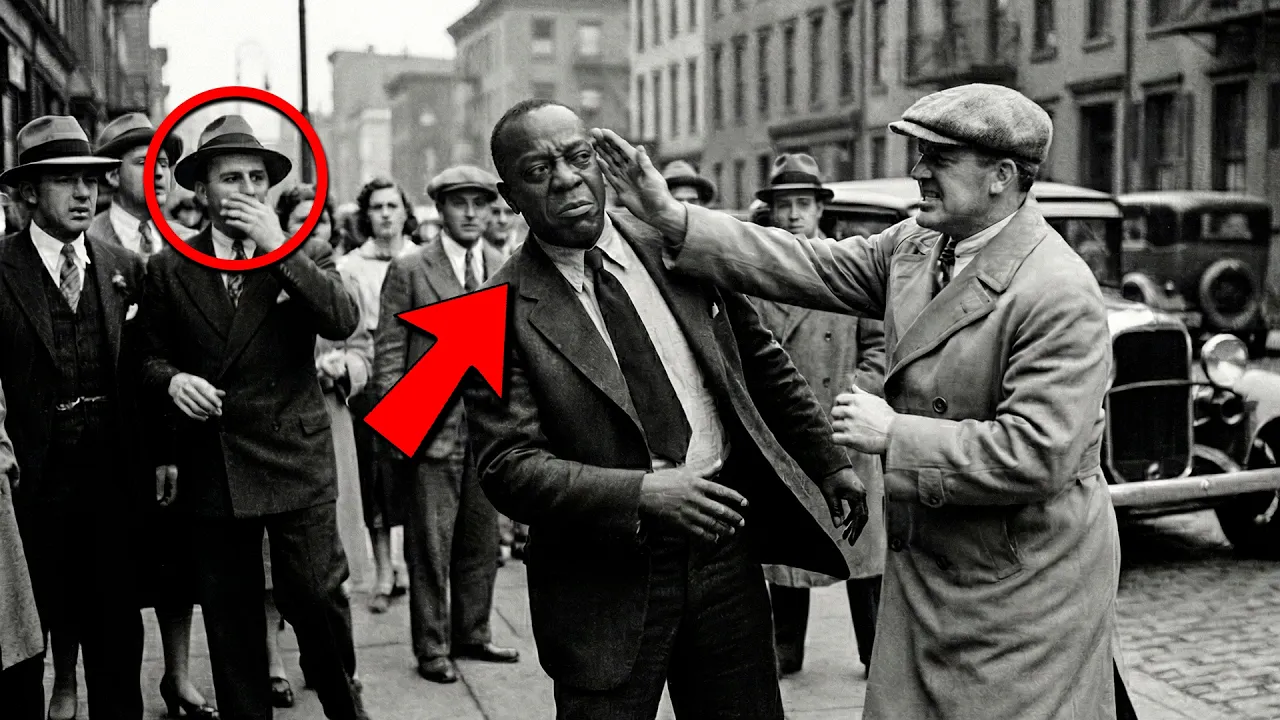
September 16th, 1935. The Cotton Club was packed wallto-wall. 200 people dressed in their finest, and a mobster who thought he ran Harlem just slapped Bumpy Johnson across the face in front of everyone.
The band stopped playing midnote. Women's hands froze with cigarettes halfway to their lips. Every conversation in that room died instantly because everyone knew what came next.
When you disrespect Bumpy Johnson in public, you don't walk out the same man you walked in, if you walk out at all. But what nobody in that room understood, not even the mobster who just made the worst decision of his life, was that this wasn't just about one slap. This was about a war that had been brewing for months.
About Dutch Schultz trying to squeeze Harlem dry. About respect that couldn't be bought or borrowed, only earned in blood. Before we get into what happened in the 47 minutes after that slap, do me a favor and hit subscribe.
Drp a comment if you think you know how this ends. Trust me, you don't. There's a story told in Harlem about the numbers racket in the early 1930s.
How it wasn't just gambling, it was the economy. Poor folks would bet pennies on three-digit numbers hoping to hit it [music] big. And the people running those games controlled everything.
the police, the politicians, the streets themselves. Stephanie St. Clare, [music] known as Queenie, ran the biggest numbers operation in Harlem.
And by 1932, she'd built an empire. Some believe she was pulling in $200,000 a week, which in today's money would be millions. She needed protection, needed someone who could handle the violence that came with that kind of money.
So, she brought in Ellsworth Raymond Johnson, the man everyone called Bumpy because of a bump on the back of his head from a childhood injury. Bumpy had already done time, already proved himself as someone who wouldn't hesitate when things got ugly. And by the time he started working for Queenie, he'd become the most feared enforcer in Harlem.
But Dutch Schultz, born Arthur Flegenheimimer, a Jewish mobster from the Bronx, looked at Harlem's numbers game and saw opportunity. He'd built his fortune on bootlegging during prohibition, survived gang wars that left dozens dead, and by 1933, he wanted expansion. He didn't ask permission.
He sent his enforcers into Harlem with a simple message. Pay tribute to Dutch or get buried. Some believe that in August 1933, Schultz sent 12 men into Harlem to make examples out of anyone who refused to comply.
What they didn't [music] know was that Bumpy Johnson had already been preparing for exactly this moment. The streets had ears and those ears belonged to Bumpy. Queenie and Bumpy fought back hard.
There's a story that over 40 people disappeared or turned up dead during the war between Schultz's mob and Harlem's independent operators. Bodies in alleyways, enforcers found beaten so badly their own mothers couldn't recognize them. But Schultz had something bumpy and Queeny didn't.
The police. Corrupt cops looked the other way when Schultz's men operated, but cracked down hard on Harlem's black gangsters. It wasn't a fair fight.
It was systematic oppression weaponized through organized crime. By mid 1935, Schultz had essentially won. He controlled most of the numbers rackets in Harlem, and Queenie had faded into the background.
Bumpy Johnson, though, he stayed visible. He became Schultz's representative in Harlem, the face that kept the peace. But everyone knew the tension was building.
Monday night, September 16th, 1935, the Cotton Club was celebrating something. Nobody remembers what anymore, but the place was packed. Jazz echoed off the walls.
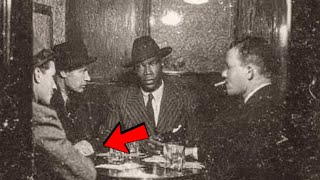
Champagne flowed. Bumpy Johnson sat at his usual table in the back corner where he could see both entrances and had his back to the wall. He was dressed sharp.
navy suit, crisp white shirt, gold watch chain visible across his vest. Some say Dutch Schultz himself was supposed to show up that night, but sent one of his top lieutenants instead, [music] a man we'll call the enforcer, someone who'd built a reputation in the Bronx for handling problems with brutal efficiency. The enforcer walked into the Cotton Club around 10:30 p.
m. with three [music] other men, all of them wearing the kind of confidence that comes from believing you're untouchable. The enforcer made his way through the crowd directly to Bumpy's table.
People who were there later said you could feel the temperature in the room change. The enforcer leaned down, said something to Bumpy that nobody else could hear, but based on [music] what happened next, it wasn't friendly. Some believe he was there to deliver an ultimatum from Schultz.
Something about tightening control, maybe demanding a bigger cut, maybe just asserting dominance. Bumpy apparently responded calmly, said something short, then turned his attention back to his drink. That's when it happened.
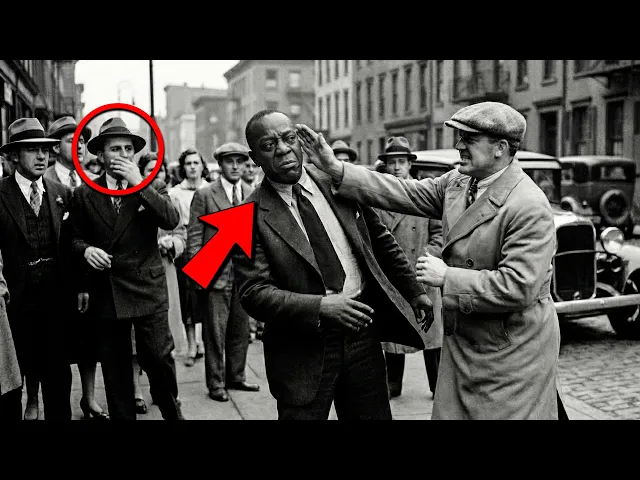
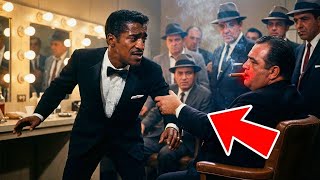
The enforcer, feeling disrespected, swung his open hand across Bumpy Johnson's face with enough force that the crack echoed across the entire club. The band stopped. Someone dropped a glass and it shattered.
Nobody moved. Bumpy's head had turned with the impact. And for what felt like an eternity, but was probably only 3 or 4 seconds, he stayed like that.
Head turned, jaw clenched. Then slowly, so slowly that people later said it was more terrifying than if he'd exploded with rage, Bumpy turned his head back and looked up at the enforcer. There was no anger in his eyes, just something cold and calculating.
He didn't wipe the spot where he'd been hit. [music] Didn't stand up. Didn't raise his voice.
He just looked at the enforcer and said something that made the man's face go pale. Then Bumpy nodded to one of his men standing near the bar. What happened over the next 47 minutes has been whispered about in Harlem for decades.
The enforcer and his three companions tried to leave the Cotton Club, but when they reached the doors, they found them blocked. not by Bumpy's men, but by regular people from the neighborhood who'd heard what happened and materialized out of the September night. The enforcer realized too late that he wasn't in a nightclub anymore.
He was in enemy [music] territory and the entire territory had just turned against him. They were escorted, and that's putting it politely, to a warehouse six blocks away. [music] Some say it was on 142nd Street.
Others claim it was closer to the river, but everyone agrees on what was inside. A single chair in the middle of an empty room. Bumpy Johnson arrived at 11:17 p.
m. He walked in, still wearing his navy suit, still looking composed, and he pulled up a crate to sit on directly across from the enforcer who was now tied to that chair. Here is what they didn't [music] know, and this is critical.
Bumpy had already sent word to Dutch Schultz about what had happened. He'd given Schultz a choice. Disavow the enforcers actions and send an apology or this becomes something bigger.
Schultz, who was dealing with federal investigations and pressure from other mob families, couldn't show weakness by apologizing to a black gangster in Harlem, no matter how powerful. His pride wouldn't allow it. So, he sent no response.
That silence was the enforcer's death sentence. They say Bumpy talked to the enforcer for over an hour. Not yelling, not threatening, just talking.
Explaining exactly why what happened at the Cotton Club couldn't stand. Explaining the economics of respect, how in their world, public disrespect was worse than theft, worse than betrayal because it made others think they could do the same. The enforcer apparently tried to argue, said he was just following orders, said Schultz would retaliate.
Bumpy listened patiently to all of it. Then he stood up, walked to a table against the wall, and picked up a tool that some accounts say was a ballpeen hammer. Others say it was something else entirely, but everyone agrees on what it was used for.
By the time Bumpy walked out of that warehouse at 10:04 a. m. , the enforcer was no longer recognizable.
They found the body 2 days later in an empty lot in the Bronx, Schultz's territory, [music] delivered back like a returned package. There's a legend that Bumpy left a note pinned to the body that said simply, "Respect ain't negotiable. " But that might be embellishment.
What isn't embellishment is what happened next. Within a week, eight of Schultz's men in Harlem turned up dead. Not in spectacular fashion, not as public warnings, just quietly removed from the equation.
Some believe Bumpy had been building a list for months, waiting for the right moment to act, and the slap at the Cotton Club gave him the justification he needed. Dutch Schultz apparently went into a rage when he heard. He wanted to flood Harlem with his entire operation, wanted to burn the neighborhood down, but his advisers talked him out of it.
They explained the math that fighting a war in Harlem would cost more money and men than the territory was worth, especially with federal prosecutors already building a tax evasion case against him. Some say that's when Lucky Luciano and the newly formed commission started seriously discussing the Dutch Schultz problem. Schultz had become too volatile, too unpredictable, and his inability to control Harlem without starting a race war that would draw national attention made him a liability.
October 23rd, 1935, exactly 5 weeks after the slap heard around Harlem, Dutch Schultz was shot multiple times at the Palace Chop House in Newark, New Jersey. The commission had ordered the hit officially because Schultz wanted to kill prosecutor Thomas Dwey against their wishes, but some believe the Harlem situation played a bigger role than anyone admitted. Schultz died the next day, October 24th, after giving a rambling, incoherent statement to police that became famous, but revealed nothing useful.
With Schultz gone, the power vacuum in Harlem's underworld shifted dramatically. Bumpy Johnson, who had been Schultz's representative, suddenly found himself in position to negotiate directly with the Italian mob families in New York. There's a version of this story that says Bumpy planned the whole thing, that he somehow manipulated events to get the enforcer to slap him in public, giving him justification to retaliate in a way that would expose Schultz's weakness and lead to his execution by the commission.
But that gives Bumpy more control over circumstances than any one person could have. The more likely truth is that Bumpy understood the rules of their world better than Schultz's enforcer did. Understood that some disrespects create obligations that can't be ignored.
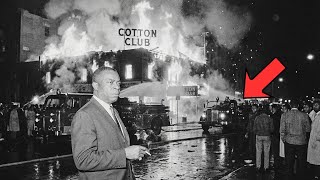
And when that slap landed in front of 200 witnesses, the enforcer had essentially volunteered himself for execution. The Cotton Club stayed open for decades after that night. The table where Bumpy Johnson sat became something of a legend, and some believe that for years afterward, nobody sat there unless they wanted to make a statement.
Bumpy himself continued running Harlem's underworld through various partnerships with the Italian mob families, eventually becoming one of the most respected and feared gangsters in New York history. He went to prison multiple times over the decades, but Harlem always waited for him to return. When he died in 1968 of a heart attack, thousands attended his funeral.
The enforcer who slapped him, history doesn't even remember his real name. He became a cautionary tale, a warning about pride and consequences. In the world Bumpy Johnson operated in, you could steal, you could lie, you could cheat on deals, and maybe maybe you'd survive the repercussions.
But disrespect someone like Bumpy Johnson in public in front of his people in his territory. That was choosing [music] death. The slap lasted less than a second.
The consequences lasted forever. Look, if you made it this far, you just learned about one of the most defining moments in Harlem crime history. The night someone forgot that respect is currency and paid with everything.
And here's the thing, this is just one story from Bumpy Johnson's life. >> [music] >> Next week, we're breaking down the time the Italian mob tried to take over Bumpy's numbers operation, and how his response, which involved zero violence, but destroyed nine men's lives completely, [music] became known as the 47 pieces incident. But you'll only see that if you subscribe right now.
So, hit that subscribe button, turn on notifications, and drop a comment telling me what you think would have happened if Dutch Schultz had apologized. Because these stories, they don't teach this in history class. They whisper them in Harlem.
But we're telling them here, backed [music] by research and legend every single week.