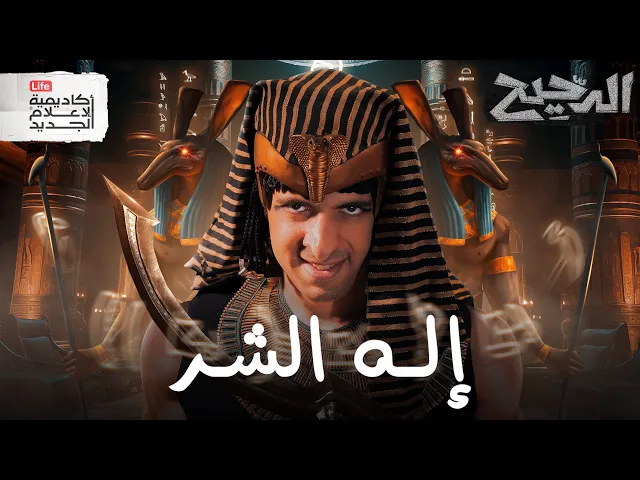
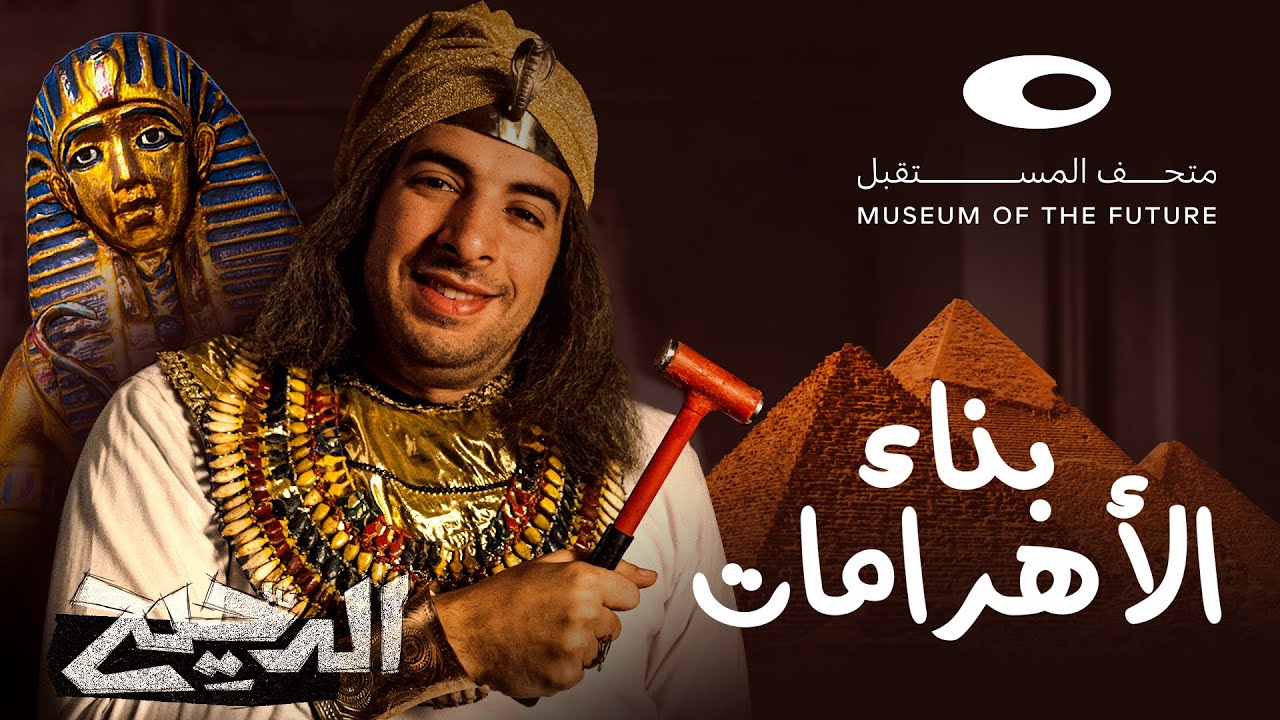
Congratulations on taking the throne, My Lord Set. Thank you, priest. Did you see when he said: "Oh, wow!
The coffin fits me so well! " It's unbelievable, for real! Did you see when Isis was running and screaming!
Unbelievable! It's epic! He kept calling himself God of The Underworld!
Go visit your underworld then, bro! -What's wrong, man? -Nothing Your Majesty, I'm okay.
I feel like you're not happy with what happened. You don't like treason or something? Or that I killed my brother and took the throne?
Of course not, My Lord. I actually thought it was cool. But if you'll excuse me.
. . Looks like you'll say something that'll make me mad.
Take care, I'm the god of evil! I feel like there was a smarter idea. You think it was a stupid idea?
I invited Osiris to dinner, made a coffin of his size, and when he got into it, I immediately closed it. Actually, it was a genius idea. The coffin could have not fit him.
Why didn't you poison the dinner? Because. .
. Or why didn't we attack him with spears and knives? This is not smarter, it's lazier.
After a few thousand years, when people ask how did the great Set get the throne, you want them to say he poisoned his brother? As if he was my husband who cheated on me. I have some news that might upset Your Majesty.
Isis found the coffin. What! Catch her!
Take the corpse of Osiris and cut it into 14 pieces, same as the number of provinces in Egypt, and put each piece in each province. Now that's a smart idea. She'll never collect the pieces.
Now, what? It's a smart idea! Do you have any good ideas?
Or do you only project negative energy? No, no. As you like, Your Majesty.
-I'm the god of chaos and evil, right? -Right! -Not the god of democracy or suggestions?
-No! -Am I the god of asking for opinions? -No!
You should be the god of cringe. Listen. .
. I have a wardrobe. If it fits you, take it.
Thank you so much for your generosity, but I'm not even a priest. I actually have hair. See?
Hair! That's just a costume for the sketch. I'm not a priest, I don't even work here.
It was nice meeting you, My Lord. Good luck with your evil. Hello my dear viewers.
Welcome to a new episode of El Daheeh. I have an evil story for you today, my friend. I'm here to gossip with you, my friend, about the old fight between the god Horus and his uncle the god Set.
"The show really fell off, Abo Hmeed. We're now gossiping. " Let me tell you, my friend, that gossiping about historical characters is the Department of History in universities.
That's what they do. In case of gods, it's the Department of Mythology, so it's academic to gossip. The fights between Set and Horus, Zeus and Atlas, and Gilgamesh and Enkidu, if you gossip about all of this, you'll get a PhD.
Good gossiping means a PhD. Horus got into a fight with his uncle Set for the throne of Egypt. Set was a strong opponent, not only did he kill Horus' father, the god Osiris, but also he was the god of evil to Ancient Egyptians.
"I feel like it's weird, Abo Hmeed. How can he be a god and evil? What you're talking about is called a devil.
Devils are evil, but gods are always good. " It's not a must for them to be good, as we all know Zeus wasn't that good. In fact, in Ancient Egyptian mythology, there weren't devils.
In fact, the world didn't know devils as we know them today until Abrahamic religions, the divine religions, Judaism, Christianity, and Islam. In the old ages, with the presence of old religions and Idolatry, the idea of a god and a devil who disobeys him and insinuates humans didn't exist. Evil in Egyptian mythology didn't need to be represented by a devil because of something that I find very interesting, Egyptian mythology didn't regard evil to be something contrary to good that must be destroyed or represented with something scary.
"How can evil not be something bad, Abo Hmeed? " It was regarded as a part of the world's balance. Just like how every story must have a bright and a dark side, gods represented concepts of the universe.
Even though they were opposite, their presence together made a balance. What if I told you that despite all of this, the concept of evil in Ancient Egyptian myths wasn't represented by the god Set at all. "Then who represented it, Abo Hmeed?
" If you look at the image on the screen, you'll see the parade of the god Ra, a scene that had to happen every night to allow the return of the sun and life. Look at that swirling snake, this was a symbol of destruction, annihilation, and the end of the world. Now look at the one stabbing it with a spear to protect the parade and allow the regeneration of life and return of the sun, this is Set.
"I'm confused, Abo Hmeed. You're saying that he was the god of evil and killed the snake so the sun would rise again. I don't get it, isn't the sun a good symbol?
" Actually, my friend, there is no place for simple answers in this episode, and whoever wants simple answers, should go to Tik Tok, I post jokes there. Set was a complicated character, my friend. Ancient Egyptians didn't regard him as a symbol of evil because, as I told you, ancient mythology didn't distinguish between good and evil, so the presence of Set allowed heroes to show the good in them, monsters to show the violence in them, and their fight eventually brought peace.
It was as if Set paid a tax of forever being the symbol of evil to achieve a good fate. "I feel like it escalated quickly. Can you please tell who is Mr Set?
" The god Set was one of the most mysterious gods in Ancient Egyptian civilization, his look is a mystery itself. Egyptians named the animal that Set took its face "Sha," but its Hieroglyphic description doesn't resemble any known animal. Is it an extinct animal or a non-existent animal and they imagined it?
Or was it an exiting animal and Egyptians changed its look? When you look at him, you feel like he's a hybrid of a giraffe and an anteater or some kind of a wild dog. If you think that it's look is the hardest mystery, let me tell you that we don't even know the correct pronunciation of his name.
Ancient Egyptians didn't write vowels, so it's impossible to identify the original pronunciation of its name. It's possible that his name isn't Set, my friend, it could be. "Come on, Abo Hmeed.
We don't know its name, look, pronunciation, species, or job description. Where should we start with? " If you want a scientific question, I'll use the language of Egyptologists, even though I just called them a bunch of gossipers, with apologies to the respectable Monica Hanna.
Let's ask another question, maybe we'll find an answer. When did the worshiping of Set start? His worshiping is very, very old, it's older than the pyramids, and older than the unification of Upper and Lower Egypt into a single kingdom.
The first recorded worshiping of Set was during what's known as the Pre-Dynastic Age, in a country in the south of Upper Egypt that was called Nubt. Some people suggest that it meant the City of Gold because it was close to a number of gold mines in the desert. Today, it's called Naqadah, and it looks like it was a very important place in Ancient Egypt.
To the point that there's a whole section in Egyptology called Naqadah culture because they discovered in it metallic carvings, old potteries, early writings, and pyramids older than the Giza pyramids. All of this was made in the New Stone Age, that ended 4500 B. C.
The Old Kingdom of Egypt was 3000 B. C. Can you imagine, my friend?
Let me make it easier, there are 2000 years between us and Cleopatra, and there are 4500 years between Cleopatra and this civilization, more than double. Set was worshipped in that place, which had a desert nature. What was Set the god of there?
He was the god of sandstorms that hit the Nile river valley and threatened crops. Ever since he appeared, there was a connection between him and the damage that could happen to people, therefore people worshipped him to avoid the sandstorms he represented. Set was the symbol of anything terrifying and anything that could destroy that community that was close to the desert.
They didn't worship him to get blessings, but to avoid his evil. Since that place was characterized by red sand, Set was called "The Red Lord. " A belief spread that humans and animals with red hair were his children.
In short, we're witnessing people in a geographic place, a desert with hard conditions, so they needed a suitable good for these conditions. Remember that we're talking about when Egypt was 2 kingdoms, Upper and Lower kingdoms. This was before King Menes Narme visited the king of the Upper kingdom, grabbed him by the neck, and hit him with the baseball bat, so he unified both kingdoms into one.
Now we have what some people call. Let me tell you that the unification wasn't good news to the god of evil. The unification made Egypt a truly agricultural community.
All of the country's resources went towards agriculture. Therefore, the king's legitimacy was connected to his ability of securing agriculture and its resources. Set was a god that opposed agriculture and fertility because Ancient Egyptians connected him to sterility as he didn't have kids.
"Forget about him, Abo Hmeed. There are more gods in the sea. " Looks like you're a beginner in the field of pharaohs, my friend.
Set was the main god of a huge sector of Egyptians, merchants of caravans, miners, desert tribes, and anyone who uses Route 66 worships Set because if they didn't, they would get killed by a sandstorm. Anyone who worshipped Set didn't accept the authority of the new king, if he disrespected Set. In fact, the new king would gain more influence if he worshipped their god.
Here, we can describe this complicated situation as a battle of political influence between a king and a god. We can see the echoes of this conflict in the myth of Set and Horus, which wasn't about a conflict between good and evil, but about the political question of who deserved to rule the unified Kingdom of Egypt more. In the myth, Set and Horus got into terrible competitions for 80 years to determine who deserved to rule.
During the conflict, Horus' eye was gouged and Set's leg was cut off. In the end, because both gods' were equally powerful, the council of gods accepted a compromise Horus ruled the black, fertile land of the Nile valley called "Kemet," and Set ruled the deserts and wild lands surrounding this area. To please Set even more, the council married him to 2 foreign girls, Astarte and Anat.
He also became the companion of the god Ra, wherever Ra went, Set went with him. If you think about the myth of Set and Horus, you'll find that it's different from other myths, where the god of civilization and light defeats the god of chaos and darkness. That didn't happen in Set's myth, the conflict ended with a peace treaty, where none of the 2 gods was defeated, expelled, or even tried to fight again, both gods were satisfied, just like the 'Lebanese Civil War.
' As if it was a political solution to the real life problem of unifying Upper and Lower kingdoms. Therefore it wasn't just an epic myth where one god had to win, but it needed some kind of conciliation. For example, every Egyptian king that ruled the unified Kingdom of Egypt was crowned symbolically by both gods, Set and Horus.
Ancient Egyptians saw that Set stopped any external elements that could threaten Egypt. Since politics and religion were almost one thing in Ancient Egypt, we can say that the uniting of both gods was achieved in the king's personality. The king had Horus inside him because he was a ruler, as well as Set because he was a warrior.
That's why some Ancient Egyptian kings named themselves after Set, for example king SETI I. If we talk about Set with today's concepts, my friend, we'll think that no king would name himself after a god of evil, but they actually named themselves after a god that embodied fighting abilities, Set. We can say that political vision contained Set, but there was a problem in the religious one.
Set appeared as a hero that protected Ra and killed the symbol of annihilation, but he also killed his brother and fought his nephew for 80 years. Something wasn't right. In order to understand Set even deeper, that we don't understand from the start, we need to do like Marvel fans and watch 10 or 20 movies to understand the shift that happened to the characters because the conflict between the gods is as big as the universe.
In order to understand how Set protects Ra in the image we displayed, fought Horus and gauged his eye, and did evil things, but we still don't consider him evil, we literally have to understand how was the universe created. We need to understand the Ancient Egyptian vision of the creation of the universe. Ancient Egyptians didn't have a specific myth for the creation of the universe, but we can say that the Egyptian society was so flexible and open-minded that it accepted multiple myths together, and even explained the creation of the universe with them.
"Wow! Is this the Egyptian society we know of, Abo Hmeed? " The myths of the creation that explained the presence of gods and their relations differed from one city to another, and even from one age to another.
All of them were regarded as an attempt to explain universal phenomena. The most important and famous myth that we chose to talk about today is the myth of the creation of the universe founded in Ra's city 'Iunu' or what we know today as 'Ain Shams. ' "The one that has the 'Protein El Aelaat' restaurant?
" No, my friend, 'Protein El Aelaat' is in 'Heliopolis' not 'Ain Shams,' you got myths and 'Hawawshi' confused, that's not good for digestion. In Ra's myth of creation in 'Iunu,' the world was eternal water, my friend, water that had no start or end called Nu. The god Ra appeared and then the appearance of gods succeeded him until we reach these 4, Isis, Osiris, Nephthys, and Set.
They're descendants of Ra, they were independent, but were still part of Ra at the same time, and part of his will to manage the world affairs. Ever since birth, Set was special. His birth wasn't natural.
Set was born in a violent and destructive way to the natural system. According to the myth, he tore his mother's womb, it exploded and he got out of her side because he chose when to be born. Even though he was born in that violent way that he chose, he was deprived of having children because he was born sterile.
Unlike his brother Osiris, who was a symbol of fertility and regeneration. When Set got married to his sister Nephthys, he couldn't have children. What did she do?
She got into an illicit relationship with Osiris and gave birth to Anubis, the god of death and mummification. I told you it's the science of gossiping. Set didn't stand still and was going mad.
"My wife, who's my sister, got married to my brother, who's my friend, and gave birth to a child who's my nephew and the son of my wife, who's my sister. What should I do? Now, I'm this child's maternal and paternal uncle, and stepfather!
What would 'The Lannisters' say? "Which uncle is from my mother and which is from my father? .
" After all of this, and to put an end to it, he did something that was never done in history, Set killed Osiris, his brother, and literally cut him into 13 pieces, and threw the 14th piece in the Nile, so that the fish would eat it. Isis, Osiris' wife, went to Nephthys, Osiris cheated on Isis with her, and told Nephthys to help her collect Osiris' body. After Osiris was collected, he magically made Isis pregnant with Horus.
[Arab Viewer]"Egyptians, what are you doing? Thank God for Islam! " Then, Osiris went to the other world and became its master.
Horus, Osiris' son, started fighting Set, his uncle, because he killed his father. When we get to know the origin story, that I told you as a prequel, we can sympathize with Set, the sterile god who was cheated on. Therefore, you'll sympathize with him when he fights Horus.
The fight between Set and Horus divided the gods themselves into a team for Set and one for Horus. They didn't know who was more sufficient to rule Egypt. During this fight, Ra, the great god who's the father of all of them, noticed a catastrophe that would destroy the entire universe.
"What catastrophe, Abo Hmeed? " -Apep! -"Isn't that a host on MBC?
" No, my friend. Remember the swirling snake I told you about in the beginning? The one I told you was a symbol of the annihilation of humans?
This monster was here to destroy the universe, and if he defeated Ra, everything in the universe, from the smallest tissue to stars would be annihilated. Apep wasn't a natural disaster, my friend, he wasn't a storm, a famine, or a drought, he was the 'Night King,' he was the equivalent of nonexistence and annihilation. Apep didn't want us to die and go the the other world, he wanted us to perish from existence and memory as if we were never born.
"That's better, Abo Hmeed. " Stop being so nihilistic, my friend. Just keep going!
Apep's original aim was to perish, a suicidal monster. There was a problem, he didn't have the self-annihilation feature, he couldn't annihilate himself. For some reason, he had to defeat Ra, only then he could annihilate himself.
We're not witnessing a greedy, evil, vengeful, smoking, and a simping monster, my friend. We're witnessing a monster with an existential crisis that wants for himself and the whole world to be annihilated. I don't understand why didn't Marvel make him a villain from Egypt.
While the monster had all of these goals, Ra saw that all gods were fighting. "Guys! You're fighting about something that will perish.
Keep in mind that none of you can fight the monster Apep alone, except for one god. " "I don't get it, which god, Abo Hmeed? The episode is about him!
"Oh, you mean Set? " Good job, my friend, the god Set. Since he killed a god before, Osiris, it wouldn't be difficult for him to kill a monster, specially because he was an immortal god.
"What I know about gods is that they don't die, shouldn't this apply to all god? Even Osiris went to the other world and will return. " That's where the trick lies, my friend, it tells you that Ancient Egyptians weren't straight forward.
Actually, the immortality of gods in Ancient Egypt was periodic. I don't mind if you don't mind. "What do you mean by "periodic," Abo Hmeed?
I don't understand anything. " Ancient Egyptians glorified all natural cycles. "Modern Egyptians do as well.
" Since the sun rises and sets, the moon has a monthly cycle that starts and ends, and the flooding of the Nile happens annually followed by drought, therefore everything has a start and an end. That's why Ancient Egyptians believed that even gods had a periodic existence, meaning that all gods had to die symbolically first to be reincarnated to life again. Even Ra had to regenerate himself everyday.
The only god who was immortal and didn't have to die symbolically or actually die was. . .
-"Set? " -Exactly, my friend, the god Set. There aren't any death stories of him, and we didn't find any stories that he regenerated himself because he was connected to a fixed natural phenomenon and not a periodic one.
"Abo Hmeed, didn't you just say that the sun rises and sets, and water fluxes and refluxes? " Yes, my friend, but the 'Great Bear' or 'Ursa Major' constellation exists in a fixed place in the sky. Set is connected to this phenomenon, and this is what qualified Set to fight Apep.
I really feel bad for the Ancient Egyptian Civilization, my friend. Imagine that saving everything in existence depends on someone who killed his brother, is sterile, usurped the throne, against agriculture, his wife cheated on him, and is called the god of evil. Imagine that that's your hero, a hero who doesn't have any of the basics of heroism.
However, the god of evil fought for the good side. Why? Because his nature is the closest among other gods to the monster Apep.
Oh my God! What a well-written plot line from Ancient Egyptians! Only those with equally bad pasts can argue with one another.
After all, Set was a part of the world and a part of Ra, therefore his fight with Horus had to end with peace, so he would be ready to fight Apep. This wasn't a fight in a battle that would end normally, but it's a regenerative fight in time that happens everyday, where Set can kill annihilation and bring victory to existence. The day Set doesn't kill mortality, we will not be there to witness.
In order for the Ancient Egyptian mythology to build the character of Set to be able to do this, it had to make him go through a terrible past. He went through a brutal birth moment, where he killed his mother after birth, he killed his brother Osiris, who was a god, and gouged his nephew's eye. As if he had the perfect CV to shift his personality to be closer to the monster's, so Set can defeat him and save Ra and the rest of the gods from annihilation.
"I really love Set now, Abo Hmeed. " It actually didn't stop there, Set's presence was necessary. When he killed his brother, he achieved what should've happened to turn Osiris into a martyr so he would become an immortal king in the other world.
Set killed Osiris in a symbolic way to help Osiris discover his power. Osiris' power was related to regeneration and resurrection. That's why priests used a metallic tool as a symbol of Set to open the corpse's mouth.
As if they were summoning Set's power to help dead bodies turn into living bodies in the other world, just like what he did with Osiris. We can say that Set was evil to some extent, but he was necessarily evil, where if you remove him, nothing will go right. Osiris was the symbol of regeneration and resurrection, he wouldn't have gained that power if Set hadn't exercised such evil towards him.
The killed god wouldn't have come back to life to create this cycle of resurrection and immortality. Egyptians were fascinated by Set, and they made him the 'Was' sceptre, a staff with a fork-shaped end and a head shaped like the Sha animal, the symbol of Set. The symbolism of this sceptre was inspired by Set's courage, where it can be strong and destructive at the same time.
"You explained this complicated scene to me, Abo Hmeed. You told me that he wasn't too good or too evil, and that Set was necessary for all of this to happen. After all of this, how can you call him the god of evil?
" Actually, Egyptians didn't call him the god of evil, my friend. The description of the god of evil appeared when the original holders of the story started to disappear from the scene, and new people appeared and told the story from their perspective. "It must have been the 'Hyksos,' those bastards defamed Set!
Never forget the Second Intermediate Period of Egypt! " Can you please be patient, my friend? I wasn't going to, but anything for you, Abo Hmeed.
Maybe the Hyksos did take over Egypt in 17 B. C. but, to be honest, they worshipped Set because they thought he was on of the forms of their god Baal.
At that time, some Egyptians didn't, let's say, like Set. -"Why, Abo Hmeed? " -Because he was the symbol of deserts that deterred foreign threat, but he let the Hyksos in.
It was clear that either he didn't exist, and that called for atheist thoughts, or he allowed the Hyksos in. You can say that his image was tarnished. When the ruling of the Hyksos ended and the 19th Dynasty ruled Egypt, which was known as 'The Ramsessides' Dynasty.
they tried to restore Set's image. "Come on, guys! It was just a mistake!
He killed the snake for you guys, let it go! " Some kings from the 19th Dynasty were named after him, and they held statues of him as a symbol in their military campaigns. The actual shift that happened to Set started when the Greeks entered Egypt in 4 B.
C. At that time, the 'Ptolemaic' dynasty ruled Egypt, who reconfigured the Egyptian gods to serve their political interests. The Greeks made a terrible mix between Set and Apep.
They considered both as a single entity. Since Set was evil and killed gods and Apep wanted nothingness and annihilation for everything, they're a perfect fit. They merged both into a single entity that looks like the mythical Greek monster 'Typhon.
' There was a merge between the Pharaonic Set and the Greek Typhon. In fact, Set's disciplines were named the Typhonians. They were accused of killing people and presenting them as offerings in their rituals.
Not just that, any person or animal with red hair was oppressed there. Domhnall Gleeson and Ed Sheeran would've had a huge problem there. The belief that those with red hair were Set's children went on in Europe until the Middle Ages.
Even in the local imagination, the devil had red hair. In the end, Egyptians hated Set because he allowed the end of their civilization. I mean, they're right, he allowed the Hyksos, the Greeks, the Persians, the Romans, the Arabs, the Ottoman Empire, the French invasion, and the British occupation, he didn't deter anything.
Actually, Set's state deteriorated even more, my friend. When the Romans ruled Egypt later, Set's face wasn't associated with a giraffe, an anteater, or a hunting dog, he was associated with a donkey. "Oh my!
A donkey, Abo Hmeed? " Yes, my friend, this was the Roman method of degradation, and also the Egyptian. Imagine that this happened to Set who fights Apep for us everyday.
The Romans used association to donkeys not to degrade Set only, but also anything, to the point that they used it to degrade Christianity later. This happened while Christianity was spreading in the idolatry Roman Empire. Even after the Roman Empire embraced Christianity, Set, or The Red Lord, became a symbol of the devil.
Now, we can understand why he's called the god of evil, and why he became a symbol of the devil we got to know from divine religions. Like most idolatry religions, Ancient Egyptians didn't know devils, but Christianity knew devils and made Set a symbol for them. What helped this is that the word devil in Hebrew, "Satan," and Set have similar letters, even though in Etymology, there isn't any connection between both words.
As the Hebrew word "Satan" originated from an old Semitic language, and it means an imposter and an enemy. The Arabic word "Shaytan," in its language bridge, could be closer to the Hebrew word Satan than the word Set. The connection between Set and the devil kept going until the modern era, to the point that, in 1975, a cult appeared named the 'Temple of Set,' they followed what they called 'Setianism,' and they performed the rituals of summoning the devil.
After all that nasty past of Set, to the point that it became clean afterward, and that's what we do to him? He ended up as the devil in a cult from some rural areas in the US. Poor Set!
Ancient Egyptian civilization declined for centuries, its language was forgotten and its temples and pyramids were buried in the sand. For long centuries, whoever walked in this land didn't know what it was, who inhabited this land, or who built this civilization. What's left is some engravings on stones, engravings that were meaningless in the deserts.
Until the symbols of these engravings were decrypted in the 19th century, and we understood Hieroglyphs and re-discovered the Ancient Egyptian Civilization. The problem is that we saw it through foreign eyes, we read stories, myths, and papyrus paper and explained them according to our environment and culture, so Set became a mere villain in an incomplete story. It became hard to explain his symbolism to Ancient Egyptians, his very compound, very complicated nature, and his necessary presence in a complicated, political, and religious system.
Unfortunately, Europeans weren’t the only ones to make this mistake when they discovered the Ancient Egyptian civilization in the 19th century. Even us as current Egyptians, who consider ourselves an extension of the Pharaohs as we lived on the same land, we read their myths through foreign eyes and according to our thoughts and look at life, instead of understanding it through their thoughts. We regard Set as a devil, and, as it's clear in this episode, this is much simpler than his truth.
After this episode, when we look at the image, that I showed you in the beginning, of the parade where Set kills Apep, Ra is there, and the sun is rising, I hope that you can see the meaning behind it, that it's not just a a drawing of gods, snakes, and a parade, but it's a 3D drawing. I hope that you can see this engraving with new eyes, as you now know how did the old eyes see it. Just like how Set killed Apep everyday, and life regenerated everyday, my sweet friend, you can watch the old episodes and the new ones.
Check the sources below and subscribe if you're on YouTube. Don't forget to subscribe! -"Can I tell you a joke, Abo Hmeed?
" -Yes, please say it because I can't. All right, Abo Hmeed. "Do you know why Queen Latifah loves the god Set?
" -Why, my friend? -Because he 'Set It Off. ' "Abo Hmeed, I feel that this joke needs a surgery to pull out the punchline and let it die in silence.
This kind of jokes must be exterminated!