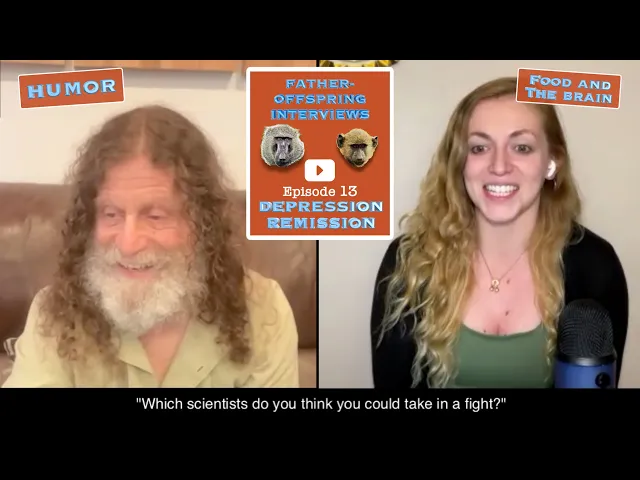
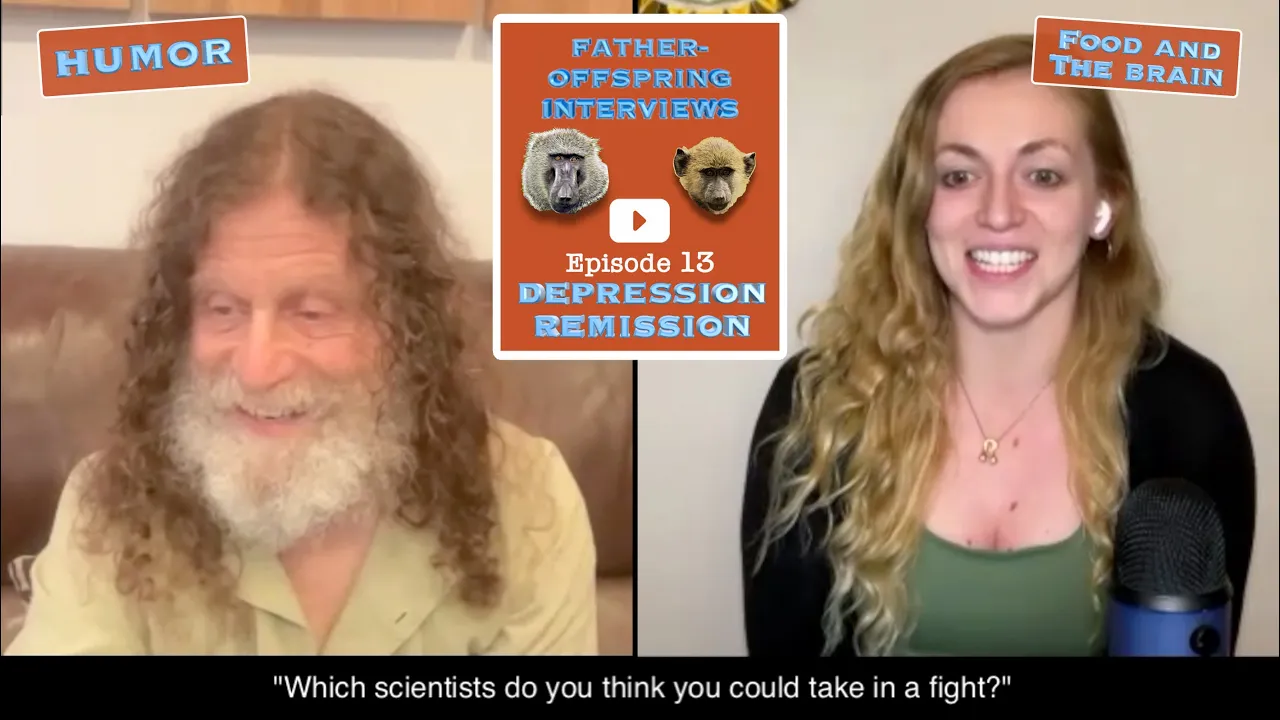
[Music] hi welcome back to Father Offspring interviews episode 13 our first question is from Cheryl from Canada who asks uh how does food affect our brain especially when it comes to mental health for example schizophrenia depression anxiety well separate of the obvious which is that our brain needs food um I think you're probably asking a more specific question uh this speaks to what was a totally exciting thing some decades back neurotransmitters all right neurotransmitters they're made out of precursor molecule they're made out of things and a whole bunch of neurotransmitters are made out of simple
dietary constituents amino acids for example dopamine neopine phrine are both made from this amino acid tyrosine uh ser that's made from tryptophan glutamate the neurotransmitter glutamate is an amino acid so as soon as people were figuring this out there was oh my God if you change the amount of neurotransmitter precursors in the diet you could change the level of neurotransmitters in the brain this was stuff in the 70s a couple Judith and Richard werman at MIT and they sort of pioneered this and this caused total excitement that you were going to be able to raise
or lower levels of neurotransmitters non-pharmacologically not having to use a drug to show instead just dietary stuff and everyone was so excited and so anticipatory um and it turned out most of that uh was kind of disappointing in that you can't push it a whole lot with dietary manipulations how come uh because your brain your brain is this very isolated organ there's this thing called the blood brain barrier which is very careful control the blood the brain exerts over what gets from your bloodstream into you your brain is immunologically privileged even though not as much
the brain is really carefully carefully regulating what it's taken up from the bloodstream so it turned out that you really can't change the levels of that stuff a whole lot dietarily this was a big disa appointment in the field um as a side footnote to that there's all sorts of excitement about the possibility that your gut microbiome maybe influencing neurotransmitter levels I've been a bit underwhelmed with that literature um but mainly what was tremendous excitement you can dietarily fix all sorts of things that instead you're drugging out the Wazoo these days no it turned out
to be a disappointment okay okay so uh Donna from Mexico says do you practice your comedy bits are your jokes part of your lectures from the beginning or do they kind of appear in the moment um well some of them are jokes I've been saying since the first Ronald Reagan administration and the Big Challenge there is to make it seem spontaneous and I have no reason to think that it still seems spontaneous um but some of them yes just occur to me on the the moment and usually you and I then have to edit it
out afterward because they are imprudent so that's the deal Donna all right so next um Glenn from Indiana says uh I was born in 1952 after the chemical diethyl sterol Dees was given to my pregnant mother in a controlled study with the hope that it would reduce miscarriage um are you aware of any ongoing neurological studies regarding the fetal brain development of children born to these mother s me and their grandchildren and great-grandchildren and the study is going to be linked in the description below just so you all know well Glend you officially what they
call a Dees baby Dees destral oh diethyl still Bol it's a drug that's not quite a steroid chemically but has some similarities to it and was able to mimic some aspects of estrogen and it was given in the early 50s to block or to decrease the likelihood of somebody miscarrying women who had lost a number of pregnancies in a row were put on Dees and immediately it was recognized there was a downside which is it increased the risk of some reproductive related cancers that are estrogen dependent types of cancers ovarian all of that but tradeoff
um and hundreds of thousands of women were given Dees over the decades and it was not until people looked closely that it turned out that in fact it had essentially no effect on miscarriage risk uh yet it was given over and over so there was that domain um but what people then began to figure out is uh interesting uh stuff happened to people who were fetuses while Mom was being given Dees the dees babies and a couple of types of reproductive cancer were more common um premature births and some of the associated complications of that
uh neurodevelopmental disorders ah increased likelihood of cerebral paly of ADHD of autism spectrum disorder um boys who were Dees babies um had an increased likelihood of hypospadia which is basically having the the opening of the penis in the wrong place on the side other versions of genitalia ambiguity and stuff um so miss and immediately the question is how big of effects these were and some of them were pretty small depending on your tastes the the elevated autism spectrum risk is in the range of 50% uh the ADHD about a 30% increase the risk of premature
birth complications with that fivefold tfold um and what you see is this is frequently the case with the sort of literature the first study because it's the first study and it had to be a whopping big effect to make people want to publish it um was pretty alarming over the years the risk ratio has you know toned down a bit nonetheless this is a real thing in the literature um which then brings up 's question of what about the kids of the dees babies the second generation and it turns out you're seeing a lot of
the same risk things there elevated risk of things like attention deficit disorder or ADHD um a small literature now on autism spectrum small literature on premature births and developmental disorders so that raises three issues immediately how big are these effects and again these ones in the neurological realm are in the 25% to 50% increased risk um the second question being how much should you panic as a result of that um and have they seen this now in the great grandkids I don't think they've shown it in Great grandkids yet but it will not surprise me
if they see it it will also not surprise me if it's a less dramatic effect with each passing Generation Um but the third point there is wait how is this turning out in the grandkid your grandmother took a drug in the 1950s how is this working and there's a couple of models for it one is if you were a fetus while Mom was taking Dees it caused changes in you including in cells destined to become sperm or eggs depending on which and that was a mechanis for passing on another mechanism is one now labeled with
this very trendy term epigenetics in that fetal exposure to a drug can cause changes in a way that would then be passed on to the next generation without it having to necessarily cause a change in eggs or sperm a change in proteins regulatory proteins that regulate gene expression things of that sort which puts us into a realm of stuff called endocrine disruptors environmental pollutants and stuff that turn out to have mimicking effects of certain steroid hormones estrogen in particular that may have some long-term effects there what's the biggest punchline you get something like this and
generations later even though the size of the Ripple seems to decrease with each generation the effects there for Generations afterward so so much for a drug that supposedly was preventing the chances of miscarriage and turning out not to at all and now many many decades later there's still an increased risk and it's then a matter of tast or punching it out as to how bad of a risk 25% increased risk is but yeah Generations later there is still an effect from having been a Dees taking woman in the 1950s our next question is which side
scientists do you think you could take in a fight this is sort of the uh the next Elon Musk versus Mark Zuckerberg kind of s okay um well that wonderful question uh first off noting that there's very few such scientists that could take in a fight um but I'd have to pick Margaret me Margaret me social Anthropologist um I would say for two reasons first off I'm short and and she was even shorter as she became very elderly um the other Advantage is that she's been dead for a long time so that would have to
tilt things in my favor complications there um it is debatable whether Margaret MEC counted as a scientist um and in even some circles it's debatable how much of a social Anthropologist she counted as what she was most famous for was saying that growing up Adolescent and female in Samoa was the grooviest on Earth people there had completely guilt-free consequence free polyamorous sex there and it was such a groovy non-western society that things like perim menstral syndrome were unheard of and suggesting that all sorts of affective things connected with endocrine modulations was mostly a function of
being an uptight Wester and it was subsequently shown that probably most of what she reported was her reporters her informants just making up crap because this like white lady was going to write it let's tell her that we have sex all the time and let's tell her that PMS whoever heard of we don't get that here never heard of it and she lapped it up because she had a strong hidden agenda for Western somatization of so I don't know if she counted as a scientist I don't know if she counted even as a social Anthropologist
anymore but my guess is by old age she did not pack much of a wallet with her right hand so I would take her on any day so the dead elderly Margaret me would be my choice all right so finally Helen from Ukraine asks does research confirm the possibility of stable remission after a case of severe clinical depression or is the risk of returning never quite zero well uh so appropriate getting a question like this from somebody in Ukraine uh go figure um what we have here is in a sense a false dichotomy between depressions
that are just biological they just endogenous it doesn't matter how wonderful and non stressful and non adverse the world is around you you're just GNA have a depression versus what people used to call a reactive depression which is well in response to something awful happening to you and this turns out to be a false dichotomy because there's an interesting transition between reactive depressions and then endogenous ones and the role that's critical for that is stress major stress what you see often is somebody's first episode of a major depression not U feeling down but like incapacitating
horrible biochemical disorder um but most typically you see somebody's first episode of depression is coming after a period of major stress major trauma loss of a loved one you know any such version by that in other words perfectly fitting the it is in reaction to an awful environment and what then comes down to is well you've just had this awful loss if you feel devastated and unmotivated and no joy in life anymore for 13 and a half days is that a normal response and once it hits 14 o two weeks out now what counts as
a depression we've got you know diagnostic arguments that are mostly driven by medical insurance and what they'll reimburse you for feel sad for 13 and a half days that doesn't count yet 14 days pow you've got official diagnosis so that as a complication right off the bat um but given that the question then becomes what goes into this transition between most of us who would be driven into a major depressive Episode by something traumatic enough and people who now struggle with that for the rest of their lives and there's this guy Robert post who did
some really interesting research n imh bringing an econ concept kindling kindling kindling wood you got I don't know I don't like fires very but you got like scraps of wood stuff you want to get kindling wood up like that and put a match to it and that's the stuff that makes a flame that gets the fire going and kindling got used metaphorically in the neurological literature um in the context of epilepsy things that would Kindle would act activate would jump start the brain into an epileptic seizure bursts of uncontrolled sort of synchronized hyperactivity and such
and post inocence borrowed that into the what is a kindling event in the environment what is it that will throw A Match Into Your genetic or developmental vulnerability to depression and his notion was that you know go get a major depressive episode after one awful legitimate trauma and what most of the studies suggested was afterward when you would fortunately come out the other end you were at no more elevated risk of a subsequent major depressive episode than anybody else it equilibrates second major trauma fall into a depression odds are more than 55 that you have
no more elevated risk than anyone else and I don't know what the current cut off number is but I think in his original studies three four five times that you have a major trauma traumatic stressor in life throwing you into a depressive episode and there's a transition there and that's where the system has been kindled that's where in effect you have transitioned from major depressive episodes in response to exogenous awful event reactive depress to endogenous so in reaction to a stressor in reaction to a stressor in reaction and somewhere around then it just begins to
cycle on its own and statistically at that point what you see is this someone who is likely to be struggling with this tragically for the rest of their lives there and no surprise a ton of work has gone into trying to understand what is that transition to this beginning to run all on its own rhythmically in a lot of cases seasonally in a lot of cases what is it that goes into some people having a lower or higher threshold than others how many of these traumas how severe do they have to be before you have
now thrown A Match Into the kindling and it now takes off on its own Forever After incredibly important subject and and the answer thus is you know if uh you've lued out with only one massive trauma like your country has only been demolished by one totalitarian state invading you the odds are you're going to be okay afterward multiple of them um in a sense the more mileage under the hood the more cumulative wear and tear the more likely the system is to tr transition from being in response to an identifiable overt punctate kick in the
ass to it just beginning to cycle inevitably on its own so I think that's the state of knowledge these days and that is it for episode 13 um keep submitting questions at the form found in the Instagram story highlight and bio or the YouTube video description I'm Offspring shaulsky and thanks for your continued support of Science and the beard