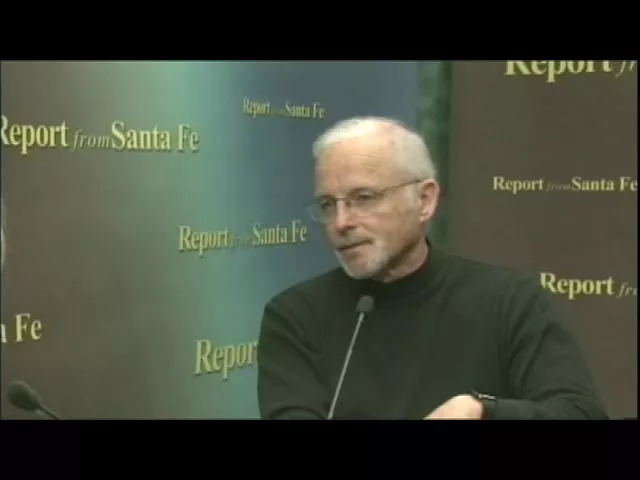
[Music] report from Santa Fe is made possible in part by grants from the members of the National Education Association of New Mexico an organization of professionals who believe that investing in public education is an investment in our state's economic future and by a grant from the Healy foundation Taos New Mexico hello I'm Loreen Mills and welcome to report from Santa Fe our guest today is Richard Louv an extraordinary author and journalist thank you for joining us well your book that really put you on the map you've got eight books you've got lots of articles you've
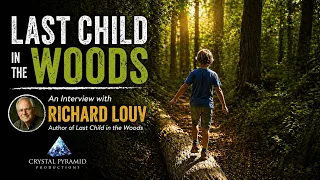
been on NPR television all those things your books are in what 15 languages 20 countries but you did something you really change the world when you wrote this one this is called the last child in the world in the woods the last child in the woods and what's the subtitle saving our children from nature deficit disorder nature deficit disorder and the vitamin that you take for nature deficit disorder is the title of your latest book vitamin in the essential guide to a nature rich life so we're going to talk about these you have some other
books tell us a little about your background I was a journalist for a long time I guess I still AM I was a columnist for the Union Tribune for 24 years and written a lot of books and grew up in Kansas City and I Love New Mexico I'm trying to talk my wife into moving here good now among your many awards you will see the Ottoman medal which was awarded to Rachel Carson your book the last child in the woods has been compared to her Silent Spring I mean that's as good as it gets Jimmy
Carter also got the Ottoman medal and you also hosted and you're the keynote speaker at the first White House Conference on environmental education you know what was that like what was it was interesting because this was the very first White House summit on environmental education the first one they ever did and I was asked to give the keynote and right after I got to DC to do this I learned that I'd been asked to do this right after the administration had cut thirty-five million dollars from the budget basically everything in the federal budget for environmental
education so I said oh now I've got to be a apologist for this so I was fortunately they shifted me to the end keynote and they sacrificed the Secretary of Interior at the beginning because we were looking at a hundred and fifty very angry environmental educators so at the end I'd had enough time to think about this so I said I woke up this morning thinking about the movie Jaws I know that's terribly environmentally incorrect but I don't care I like that movie and the reason I was thinking is I sing in that moment when
they're out on the ocean they figure out just how big a shark they're up against and somebody says we need a bigger boat so I said to the environmental educators we need a bigger boat as long as environmentalists environmental educators only talk to environmental educators they lose as long as conservationists only talk to conservation she lose it on and on we live in silos and buy a better bigger boat I mean a movement a movement to create a constituency for environmental education for conservation for connecting people particularly kids to nature and that movement is happening
it's already out there well this book last child in the woods is a clarion call this is the kind of book from which movements spring and you you talk about nature deficit disorder saving our children from nature deficit disorder and we all have a sense of what that is but how how do you choose to define that well first I always clarify this is not a known medical diagnosis maybe it should be but it's not it is though a way to describe ailing the effects of the alienation from nature not only on children but on
as well and my second book was called a nature principle and that's about the same topic but for adults and basically it is the fact that particularly children but that mean it means eventually adults because children do grow up are increasingly disconnected from nature on this is unprecedented in human history that children their formative years so few hours would be spent in the natural world you even say that our children are the first generation to be raised without meaningful contact with the natural world no not all children some children still do many still do but
the quantity of that is going down and has been going down for about thirty years in a rapidly accelerating and that has lots of implications it has implications for physical health psychological health cognitive functioning a sense of being having your own place in the world and that's what I call nature deficit disorder well the world has changed so much and you you address this very beautifully in your book it's a year 20 2008 that the balance shifted there were more people living in cities and we're living in the country and let's look a little bit
about what we've lost in that transition yeah and that's in the whole world that's the first time I can see in human history that the law well what that means is that either as in as urbanization continues and it will that one means one of two things either our species will continue to lose whatever connection that we have to the natural world or it means the beginning of a new kind of city a city filled with nature in nature rich City you know there's no reason that cities can't become engines of biodiversity I like that
second option a lot better than the first well there's a lot of visions of the future that are very dis topic and that the paint these very grim urban slum like enslaved cities where there's not you know there are not flowers and sunshine and butterflies you know and and it's very important to counter that because we really do have a choice no decisions we all make every day will decide which which way the future goes and there's good news here which is finally the people who study human development particularly child development after ignoring this issue
of how nature itself the natural world affects that development finally they started studying this and there was some research out when I wrote last child in the woods now that research has increased hugely and it all points in the same direction that attention deficit disorder for instance University of Illinois shows that just a little bit of contact with nature for kids with the symptoms of attention deficit disorder they get much better a recent study of 900 schools in Massachusetts found that green schools and I don't mean solar panels I mean you know a school garden
yeah nature around the school kids going out on field trips that in Green Schools compared to non green schools when you factor out the socio-economic factors the kids in the Green Schools do much better on standardized testing than the kids who go to non green schools and again they factored out all the all the issues that might throw that off in so many ways we're now finding that our connection to the natural world is vital particularly to children in their developing years but for all of us and we can turn this around and this movement
that's out there is doing that there's tens of thousands of people who are deeply dedicated to turning this around I do love all the research you've kind of compiled here one that fascinated me was they said he prisoners some of whom looked out on the concrete wall some of whom looked out on the courtyard with trees in it and the difference in their mental health and then their behavior with less quantifiable yeah and hospitals have known this for a while they have many hospitals have rooms with a lot of nature in them garden rooms for
for families to sit in when they're worried and all of that but also it's now known that a view out of a hospital window onto nature you actually heal faster you don't need as much pain medication when you when you when you're in the hospital so the people who use bio philic architecture which is that's using nature in the architecture itself but around the building in the building the people who work in those buildings are far more productive sick time goes down turnover gets better so what if whole cities were like that let's look at
children because you start this book with your own son asking you saying how come it was more fun when you were a kid you know and I think it was more fun when we were kids I remember that you know you would just go outside and play all day there was nobody helicopter mom and you hovering over you to be sure nothing happened you jump off things fall down you know and just come back at the end of time there was just and and kids would discover things and kids would would build their own reality
just from their own experiences it wasn't all spoon-fed them you know what did you say him say to him well first I was surprised that he said that because I thought his childhood was great as far as I could to help see to make sure you know and but it was many of those things it was it was actually the stories that I would tell my childhood was boyhood was filled with stories because we invented our own stories it wasn't a video game making it for us and every generation thinks that their childhood is better
the generation before so we have to factor a little of that into that but in fact when you do look at this research and I interviewed many many parents and kids to do this work the benefits to cognitive functioning to psychological health the reduction of depression the reduction of toxic stress not only for children but for adults no wonder it at least felt feels like it was better the wonder we made up our own stories we were I think in many ways happier and again I'm hesitant to say one generation is happier than the next
but I think we're out of balance I'm not anti-tick well that's what you call for beautiful balance in virtual world in the technical world with the natural world yeah and it's not necessarily 5050 when I talk about I mean ideally you'd have more of the natural world than you would with than you would technology but when you look at the schools for instance I know there was a recent funding of more time in the classroom spent on computers and panels and other elect teaching tools like that and my feeling was you know if you're going
to require an hour and a half of kids to be on a computer everyday in school why not package in at least an hour and a half of being outside in nature as well as that and you know I think education should have a new mantra which would be for every dollar we spend on the virtual we need to spend at least another dollar on the real particularly on experiences in nature because we know how that affects kids we know how that helps in in so many ways you describe a child being asked where he
liked to play the most inside the outside he said inside because that's where the electrical outlets are yeah yeah and you as a statistic I'm sure you've updated it was that the average child might spend as much as 44 hours a week plugged in to various electronic media yeah now that's the Kaiser Family Foundation did that study and first it was forty four hours a week and then they updated that just a few years later and they found it was up to I think 54 to 56 hours a week and they were stunned where do
those hours come from and plugged into some kind of electronic gadget you you described television as the most effective thief of time and you'd say unlike television Nature doesn't steal time it amplifies time right and that's what that's what we're wanting also you mentioned that Steve Jobs didn't want his own kids to be sucked into iPads you wouldn't let him use iPads yeah and here's part of the irony technology industries are really pushing a lot of computers and now even video games into the schools as teaching tools but in a sense they know better it's
amazing how many tech and I'm not saying that technology shouldn't be in the schools but it's amazing how many of the leaders in Silicon Valley have cabins off the grid in the mountains that they go to in order to recharge themselves and come back and be better programmers or whatever I wish that they would emerge as some of the leaders of this new nature movement we're speaking today with Richard love Louvre and we're talking about his books the last child in the woods and this one in case people haven't figured out how to go from
here to what how to fix it vitamin in five hundred ways to enrich the health and happiness of your family and community in nature so the question is what is it going to take to get people back out outdoors again well it takes a movement he doesn't just take a village it takes a movement and that is happening the reason for vitamin in which will be out in in April you my publisher tells me to remind people they can preorder it from their bookstores or Amazon the reason for vitamin and that's 500 things that is
wonderful things that either families or whole communities can do it's important that this isn't just laid on the shoulders of the parents the whole community can do things to connect kids to nature so that's what that book is you talk about not everything that counts can be counted and not everything that can be counted counts so if there's actually a quote from Einstein from Einstein that's who I was trying to find that out you're evoking for people who know what you're talking about nature and the love that they have for nature and here in New
Mexico we are very aware land of great natural beauty and most people really like to spend some time in it but but how do you so you're preaching to the choir here but how do you tell people who are just urban totally urbanized don't have parks near them even not even a park how do you evoke this how do you is there a natural yearning for the natural world well you know Wilson the great Harvard scientist a few decades ago came up with a phrase of biophilia hypothesis and by Ophelia's love of life but the
Biophilia hypothesis is that we are as a species hardwired genetically to have an affiliation with the rest of the natural world and we need that this is in us it's never too late this is part of our fiber part of our humanity and I mean I've gone with gang members from San Diego inner city San Diego up to the mountains east of San Diego and they go up to build trails and all that and in the morning these guys hardcore 18 19 20 year old gang members are scared to be out there in the woods
yeah and I said what are you scared of and I asked that of the leader there the biggest guy the guy with tattoos and he said it's too noisy out here I said what do you mean you your neighbor they can have gunfire he said no no in my neighborhood there's about five sounds and I know what they all mean out here there's seems like hundreds of sounds and I don't know what they mean you know they litter and people who work with young people taking them out that have never been in nature particularly from
inner cities they see this phenomenon but by the end of the day they see this - these gang members were like eight-year-olds jumping over a creek it was in them it came out who they were came out more than maybe it would have without that experience well are there programs for the inner-city kids for example I know of small ones but is there anybody on a big scale saying come out and play there are a lot of programs that are increasingly doing that the why is is now interested in that topic Sierra Club has they'll
go into inner cities and put backpacks on kids and go for a five-mile hike in the city looking for nature and they find it it's one of the important things to think about here there realizes that nature isn't just you know the mountains yeah it's also in cities and the vacant lots I grew up loving taking lives you know you can find anything there and President Obama recently this is a White House initiative and I was invited to be at the announcement of this announced the every kid and every kid in a park White House
initiative which is as of last September and for every year every 4th grader in America and that fourth graders family for a whole year will get a free pass to national parks any federal land and water a lot of people think it ought to be all kids and I agree but it's a great place to start yeah absolutely and fourth graders are really yeah magical and they're gonna focus on the neighborhoods where kids are least likely to get outside and make sure yeah I think that going to camp was something different in in my era
because you were actually outside and doing you know in the wild now there's computer camps and weight loss camps and drama camps and they're forgetting the campus of you know trudging along through the hot meadow and then looking in the stream and see who lives there but at least it's getting people out kids out of their ordinary contexts and I think there there is a counter there is a return of some of those nature based camps and the American Camp Association is really doing some good work in that area good well some kids that we've
spoken to say oh it's too late the end of the world it's too late we're you know climate change and and desert vacation and tract houses it's too late but you are very hopeful and I'd like to share have you shared some of your hope for a more natural well balanced world with our audience what's interesting last night when I spoke a young woman came up and actually said how you know how do you get to that place where you hope and I said it's a choice you know in truth there's no practical alternative to
hope despair doesn't get a lot done sometimes despair is needed in order to get to help mm-hmm and I think we need to you know Martin Luther King said and demonstrated in many ways at any movement any culture will fail if it cannot paint a picture of a world that people will want to go to right now I think most Americans if you're if you ask them what the far future looks like the images that pop up and or dominant are images of Blade Runner Mad Max best 100 hunk or the Hunger Games at least
there's a few trees it's a post-apocalyptic world the number one young adult genre of fiction for several years has been dystopic fiction it's about a post-apocalyptic apocalyptic world in which not even vampires are having a good time I'm not against that kind of literature I'd like to read it but what happens to a culture when the dominant images are like that and that we don't have another set of images of a beautiful future now we've got a robot's RS future that we think about it we have images of that kind of unsatisfying we've got a
sustainable future that also is unsatisfying because to most people sustainable means energy efficient and it stops there and it's about survival sustaining you know like Wayne McDonough says do you really want a sustainable marriage don't you want something better than that and that's and so that's the reason in vitamin End and in my sermonettes around the country I'd steer away from it's a good word steer away from the word sustainable or sustainability because try to imagine a sustainable future can you attach beautiful pictures to that maybe solar panels technical things but that's why I talk
about a nature rich future nature rich cities nature rich homes and backyards filled with native species that bring back butterfly migration routes and nature rich schools and I visited some just this morning in Santa Fe that are wonderful a nature rich life you can see that future you can begin to attach pretty quickly images of beauty and life to that image of the future so I think that's what we need to do so we'll say put the kids in the car and go to the mountain let's go to the park but don't turn on the
screen sitter now in the car yeah you know or or stay home and redo your yard in native species yeah one of the concepts of the nature principle the second book is conservation is no longer enough now we need to create nature as strange as that sounds even if we preserve and we should every square inch of wilderness we still have it won't be enough for the biodiversity that we therefore we can change our cities change our yards bring back biodiversity where it hasn't been in maybe hundreds of years and we can do this kids
can do this in their backyard one of the ideas and vitamin an is the idea of a homegrown National Park where thousands hundreds of thousands may be around the world why not call it the worldwide homegrown park begin to redo their yards and native species and yard after yard school yard church art all through this you know you'd have wildlife corridors in private land hmm bringing back the insects that are the basis for the food chain for biodiversity bringing back birds butterflies you know we can do this we don't have to wait for government we
can start tomorrow see so it's not just about going out and looking at beautiful mountains that's important it's about changing where we live changing our schools to create this nature rich life and you mentioned something called for schools in in Europe where they out there they go outside every day no matter what the weather is no matter what and they're and they they're the ones that don't get sick raining snowing out you go let's flu for your colds yeah and when one other thing about the psychological benefits of a child in nature or alone in
nature you talked about that a lot just give us a summary of what what the science shows us one of the most interesting studies is they've looked at urban parks and they found the urban parks with the highest biodiversity are the parks that have the best benefits for psychological well-being for human beings and I think that has something to do with our feeling alone as the species we kind of err arrogant about this as a species we think we can go it alone many people do not all and when you are surrounded I think by
species not around it enriches your life it makes you feel that you're not alone in the universe and somehow it's just having people around doesn't do that you have to have people around you have to have a bond with people what about that bond with not only your dog but with the Fox that comes through your yard you know with the birds that are in your backyard with the life all around you that connection that bond I think is absolutely necessary not only for us for our psychological health and well-being but to help prevent us
from destroying those creatures and I just then book I'm allegedly working on next alleged new book is a book about that bond between humans and other animals well when you do finish that book we would so much like you to come back and tell us about it I'd like to thank Richard Louv our guest today author of vitamin in and this wonderful book that I cannot recommend highly enough last child in the woods you'll be so glad you read this thank you so much for joining us today thanks thanks so much for having me and
I'm Lorraine Mills I'd like to thank you our audience for being with us today on report from Santa Fe we'll see you next week past archival programs of report from Santa Fe are available at the website report from Santa Fe comm if you have questions or comments please email info at report from Santa Fe comm report from Santa Fe is made possible in part by grants from the members of the National Education Association of New Mexico an organization of professionals who believe that investing in public education is an investment in our state's economic future and
by a grant from the Healy foundation Taos New Mexico [Music]