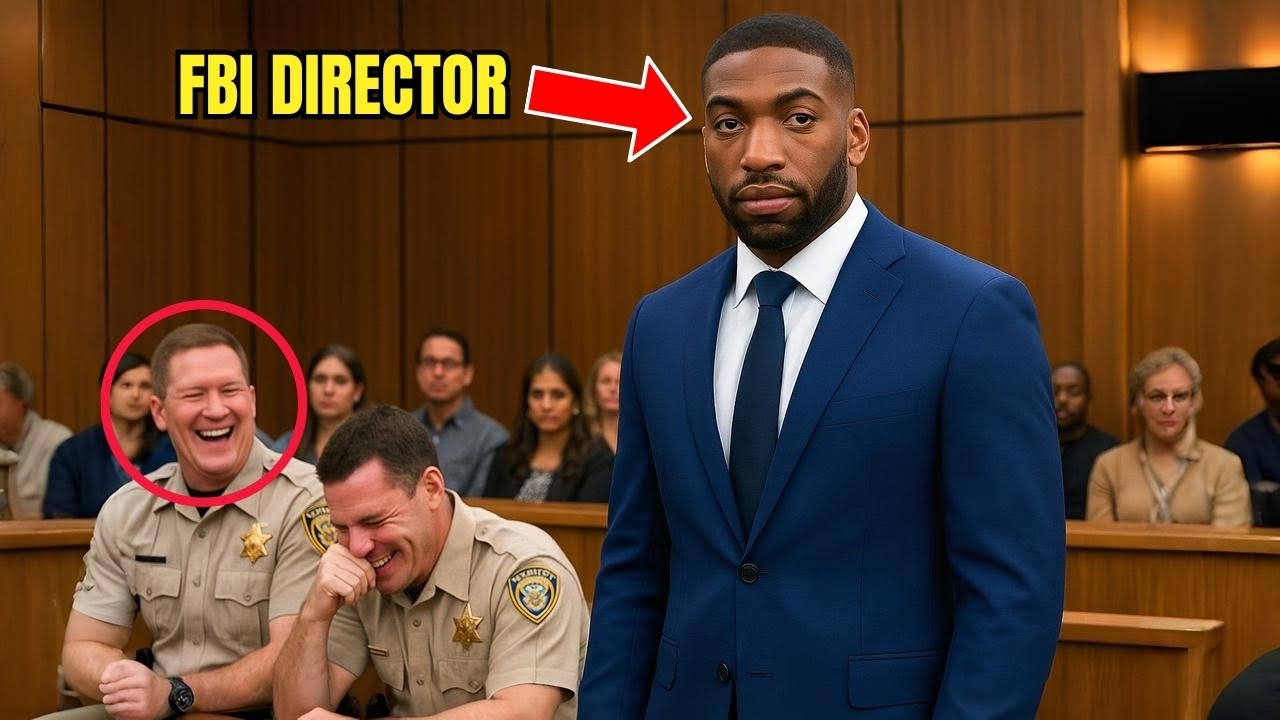
Greenwood Bookstore wasn't like the others. Tucked in the heart of downtown Savannah. Glass windows spotless, the scent of aged wood, tall shelves, soft classical music in the air.
Everything whispered intellect, but also murmured, "You don't belong here. Saturday afternoon, clear skies, a gentle breeze. Monica Ray stepped inside.
Gray hoodie, a canvas tote worn at the edges. The faded words read, "Banned books are still books. " She taught literature at a public school.
Once a month, she'd stop by, browse quietly. Today she was searching for stories for her third graders. Curious, restless, beautiful.
She moved slowly, fingering through pages, checked prices, studied the pictures, read carefully. She loved stories that whispered empathy where children learned to truly see each other. But after 10 minutes, something shifted.
A woman across the aisle gave her a look. Another employee leaned in, whispering. She's been standing there a while.
Children's section. No one said it out loud. No one asked her to leave.
Just eyes, murmurss, a silence that pressed. One silhouette slipped away toward the counter. A phone was drawn.
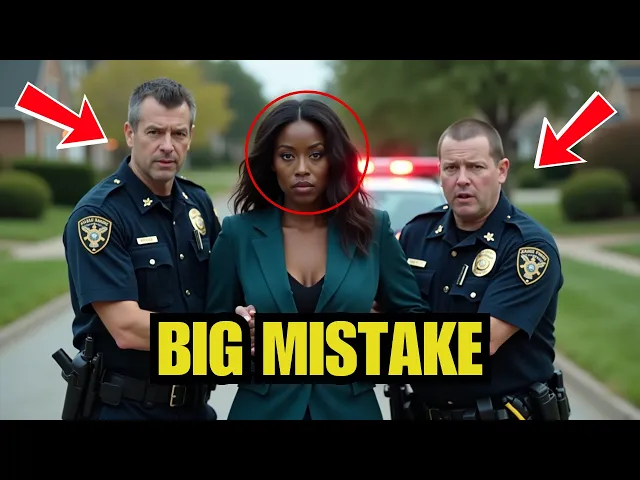
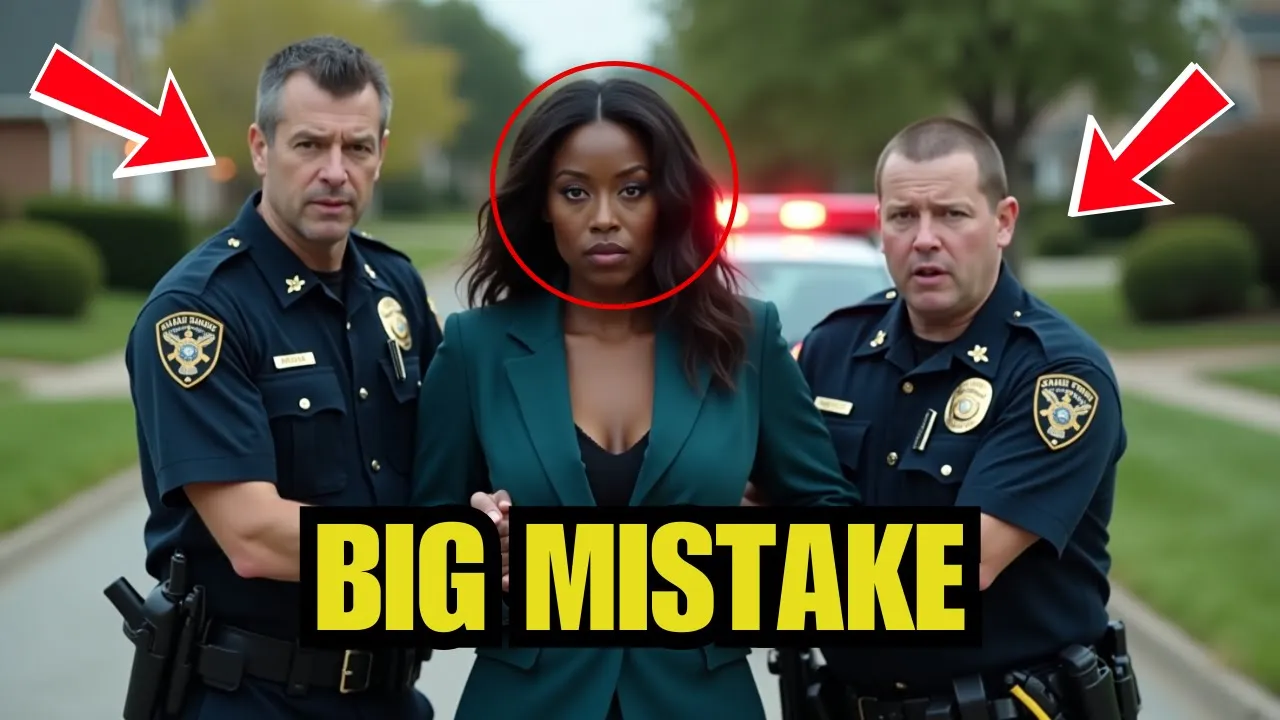
A call was made. 3 minutes later, the door opened. Two police officers, one tall, one young.
They didn't smile, didn't greet, didn't pause. Their eyes locked on Monica and her bag. "Someone reported you for causing concern," the officer said flat voice.
"No kindness. Why have you been here so long without buying? Monica looked up, calm, unshaken.
I'm selecting books for my students. Her tone steady, eyes still warm. Didn't know choosing books was a crime.
That didn't sit well with them. Ma'am, we need you to come outside or we'll have to take other measures. Monica gave a small smile, met their gaze.
Then do what you're used to doing. The handcuffs were cold. Steel clinkedked against her wrist.
The sound final, almost ceremonial. They walked her past the bookshelves, through the quiet, through the watching eyes. No one spoke.
No one stepped in. A little boy clutched his mom. Why are they arresting that lady?
The mother said nothing, pulled him away. Monica didn't resist, didn't argue, because she knew in places like this, silence was power, not fear, but documentation. The squad car rolled away.
No sirens, no flashing lights, just silence. Through the window, Monica stared out. eyes steady, unblinking, memorizing.
And at that moment, something happened. A boy outside, phone in hand. White t-shirt, ball cap, hands trembling.
His name was Troy. One of her students, Troy, didn't shout, didn't cry out. He hit record, kept the frame steady, captured the arrest, captured the silence and the weight of everyone's inaction.
Inside the car, Monica said nothing, but her mind was already at work. Badge numbers, timestamps, faces, the bookstore manager scowl, the car's license plate. Because Monica wasn't just a teacher.
She was a civil rights investigator, a former DOJ contributor, and she'd flagged precinct 14 years ago. She didn't scream, didn't plead because she knew this playbook well. And this time, they messed with the wrong quiet.
This time, truth would not be erased. The car stopped in front of precinct 14. An old building, faded brick, no clear signage.
No welcome, just a heavy door. Indifferent, cold. Monica was pulled out, hands still cuffed.
The young cop gripped her wrist tight. No explanation, no Miranda writes, no lawyer, nothing but silence and control. They led her down a narrow hallway.
Peeling walls, flickering fluorescent lights. No one met her gaze for long. No one asked her name, just scribbled female black.
She was brought into a dim back room, plastic chair, smell of bleach and mildew. She sat down. The cuffs stayed on.
The door closed behind with a harsh click. Outside, two voices whispered low. One was Mitchell, the other Turner.
She listened an old habit. Mark it as suspicious behavior," Mitchell said. Turner sat at the desk, typing fast.
She pulled up the video file, clicked delete. A message flashed. Deletion successful.
Cannot be undone. Monica tilted her head. "Read every word," she noted.
Turner's face, the green nail polish, the scent of strong coffee by the keyboard, the wall clock running 3 minutes slow. She noted it all, committing to memory. They didn't know she had trained the FBI.
Didn't know she'd authored internal guidelines. Didn't know she'd exposed a falsified case in Florida just last year. Mitchell walked in holding a typed report.
No ID. No cooperation, he muttered. Turner nodded, updated the file quickly.
In just 10 minutes, Monica became a suspect. She sat still, said nothing. No resistance, no demands.
She didn't need to because out there was Troy. And he held the truth. The door swung open.
An older man stepped in. gray hair, brown suit, folder in hand. He was the precinct chief, Robert Callahan.
He stared at Monica for a second, then turned away. "Hold her until morning," he said. "We'll sort it out after review.
" The words were rehearsed, the play familiar, but this time the ending would change. Monica looked down at her wrists, the bruises purple red, but her eyes stayed sharp, unafraid. Quietly, she shifted in her seat.
The landline phone sat on the desk, unlocked, no one watching. Turner had stepped out for coffee. Mitchell was on a call in the hall.
She turned, the cuffs tight, but enough. She lifted the receiver. Dialed, said Tuner.
Nine. A federal emergency line began to ring. Once, twice, then a familiar voice.
This is Derek Ray. Speak fast. She exhaled.
It's me, Monica. Derek jumped to his feet. His chair crashed behind him.
Are you safe? Say your location. Precinct 14, she answered.
They don't know who I am. They've deleted video. They're building a file.
Silence. Then Derek's voice dropped. I'm calling it in.
Straight from DC. Task force is coming. Lock everything down.
Say no more. Keep the line open. Monica hung up, eyes half closed.
She felt no rage, just clarity. She knew it started now, not with shouting, but with evidence. She wasn't the first to be treated this way.
But she might be the last to stay silent because today she wouldn't be erased. She was the one rewriting the entire record. Night settled over Savannah.
The wind died down. But inside, Monica, a storm had already begun to form. She sat still, cuffs biting her wrists, back straight, eyes steady.
No fear, no surprise, only patience. Outside, Mitchell still believed he was right. Turner sipped coffee, unbothered.
Chief Callahan picked up his phone. Who is she? Any prior?
The only answer, silence. No one knew. No one could trace her.
Monica had erased every breadcrumb. She came here like anyone else. And that that's what scared them most.
Not fame. But a quiet woman who remembers everything. Someone who doesn't raise her voice, but still makes people tremble.
Near midnight, everything stayed still until the front lights began to flash. Four black SUVs rolled into the lot. No sirens, no lights, no warnings, doors opened.
Black boots stepped out, plain clothes, no badges, but eyes sharp, movements precise, leading them a woman with silver hair. Her name was Elena Brooks, deputy director of federal internal Oversight. She cracked the Texas corruption ring, took down three police chiefs personally.
She walked in, no permission asked, flashed her credentials, locked eyes with Callahan, hand over every surveillance feed. Now main server, backup drives, everything. Callahan stood voice uncertain.
There's been a misunderstanding. Elellena didn't blink, didn't slow. We have full authority to search.
Immediately, Turner ducked under the desk, typing fast, but a plain clothes agent blocked her. Stop. Every deletion attempt is being logged.
Turner froze. Color drained from her face. Meanwhile, Monica still sat quietly.
The holding room door creaked open. Elena stepped inside. Their eyes met.
"No words needed. We've got you," Elena said softly. "Well done," Monica nodded, raised her hands forward.
"Ellena, I'll need a full system copy and the names tied to the false reports. " Elellanena nodded, no questions asked. Outside, Mitchell was forced to the ground.
hands behind his back, jaw locked tight. You're under arrest for falsifying criminal records. Turner was cuffed, too.
Too late to delete. Callahan tried to make an urgent call, but the line was already blocked. Elena turned to him.
Eyes flat. You're officially suspended. Effective now.
Precinct 14 was sealed shut. Every laptop, every hard drive, accounted for, checked, logged, every staff member ordered to sign statements on record. Everything moved like a scene from a movie.
Monica's cuffs were removed. She stood slowly, her wrists red and raw, but her eyes still blazed. Elena stepped forward, offered a coat.
You don't have to speak tonight. But Monica, Monica turned back. She faced the ones who had stayed silent hours ago.
Her voice quiet, but every syllable clear. Next time you see someone spending too long in the children's aisle. Don't call the cops.
Ask them what book they're looking for. She didn't shout, but everyone heard her. Her words echoed through the still hallway.
No one replied. No nervous chuckles, just bowed heads as if they'd heard a verdict. By morning, the news had already spread.
Woman arrested for browsing books. That headline flooded every social feed. Yet, no one knew her name.
Monica didn't post, didn't comment. She quietly filed a federal complaint, requested an open hearing with Department of Justice oversight. Meanwhile, Troy's video went viral.
Over 2 million views in 8 hours. Monica handcuffed in the bookstore aisle. America began asking uncomfortable questions.
Why was she arrested for doing nothing? Why weren't her Miranda rights read? Why didn't the bookstore manager speak up?
and the biggest, who is this woman? Really? That afternoon, Monica stepped forward.
She appeared at a packed press conference, no stylist, no PR team, no slogans, just a white button-down and a gray coat. She stood before hundreds of reporters. Flashbulbs sparked, questions fired, but she didn't rush to answer.
She spoke like she was teaching class. My name is Monica Ray. I teach literature.
I used to investigate. I've written hundreds of reports on people who thought they were untouchable. I went to that bookstore for comics, books for my third graders, but instead I was placed in a police car.
Not for breaking the law, but for being silent. No one interrupted. No one blinked.
The room listened like students in a lesson. I'm not here to ask for pity. I speak because hundreds before me never could.
No one recorded No one dared speak up and their files stayed dirty forever. I'm different. I remember.
I speak because I'm a teacher and a citizen. She paused, looked toward the front row. Troy sat there, gripping his phone.
She nodded quiet thanks loud as thunder. A reporter stood. asked clearly, "What do you want to change in the system?
" Monica replied, "No hesitation. I don't want apologies anymore. I want civics taught in every school.
I want cameras that can't be switched off. I want kids to know their rights before the cuffs. I want the truth where no one can erase it.
" Applause filled the room. Not loud, not wild, but warm and real. Monica didn't cry, didn't bow her head.
She smiled like someone who had stepped into the light. Outside, the crowd had started to grow. Handwritten signs waved in the air.
Justice for Monica. Justice for the silenced. Reading books isn't suspicious.
That evening, Monica got a phone call. from someone unexpected, the city's mayor. His voice was direct.
No small talk. I'd like to meet and hear you out. Monica agreed.
But she made her terms clear. The public must be there. So must the press.
And it needs to happen inside precinct 14 because change, she said, has to begin where the damage began Monday morning. The sky was gray and still light wind, but tension thickened the air. Outside precinct 14, something had changed.
No more seals, but the doors remained shut. Monica arrived on time, not a minute late. She wore a thin sweater, black slacks.
Elellena walked beside her, silent as ever. Behind them, a few reporters filmed quietly. The mayor stepped out.
Press suit practice smile. He extended a hand politely. Ms.
Ray, thank you for being here today. I'm here to listen and find a way forward. Monica didn't shake his hand.
She simply nodded. Not out of disrespect, she said, but for clarity. I'm not here for fame or favors.
I'm here to return voices that were taken. Inside the small meeting room, cold air lingered. Four powerful men sat at the table.
One the acting police chief, another the city's legal council. Monica stood, no chair, no papers, just one slim folder in her hands. Inside names, 38 people detained like her.
all for suspicious behavior that meant nothing more than existing. She opened the file, read each name aloud. Men, women, disabled, elderly, each name is an untold story, she said.
Each record a silent humiliation. The city attorney shifted frowning. What do you want?
Stated clearly. Monica didn't flinch. Her voice dropped.
Calm, controlled. I want the entire oversight team replaced. I want every internal video made public.
I want every officer retrained. And I want restitution paid to victims, funded directly from the mayor's office budget. The room froze.
A brow furrowed. A chair creaked. But no one dared say no because outside the people were watching.
A reporter raised a mic toward her. Monica faced the lens. Didn't flinch.
I don't want to be famous. I just want people to stop pretending they don't see what's happening. The mayor finally spoke.
His voice smaller than before. I don't deny the system is flawed. But you're pushing too fast.
Monica cut in. They were arrested in under three minutes. And how long has the system taken to change?
I'm not rushing. I'm just done waiting. Her words filled the room.
No mic needed, but every word landed. Elena nodded once. Set her own file on the table.
Federal review begins today, she said. Anyone who signed a false report will face full prosecution. One man stood red-faced.
You don't have the authority to order this city around. Monica turned to him. Calm.
I'm not giving orders. I'm demanding justice. She walked out.
No applause. No backward glance. Outside.
The plaza was full. People shouldertosh shoulder. As Monica stepped through the doors, a hush fell.
Then a single clap. Another followed. A handlettered sign rose in the crowd.
We stand with Monica. She does not stand alone. Applause grew louder.
Rolled down the block like thunder. Not in anger, but in rising truth. Monica didn't cry, didn't beam.
She simply lifted a hand like a teacher greeting her class and whispered to herself, "Today the kids will learn something real. " 3 months after the meeting at precinct 14, Monica was gone from headlines. No talk shows, no big speeches.
She faded from the spotlight like she'd never been there. But truth was, she had simply returned to her classroom. A small aging school at the edge of the city, second floor, walls with peeling paint.
And it was here Monica began again. The old chalkboard was replaced with glass. The chalk replaced by soft watercolor markers.
No one there knew what she'd done. To her students, she was still just Ms. Monica.
Each morning, she arrived before the janitor. Each afternoon she stayed later than every kid. On her desk, lesson plans she wrote by hand.
The first unit was titled Know Your Rights. She didn't teach from textbooks. She told stories, real ones, no names, no cities, just emotion and questions.
If one day you're misunderstood, should you stay silent or remember? Should you scream or look them in the eye? Where does justice begin and with who?
At first the kids were confused. But soon they started to understand. They wrote journals, drew protest posters.
One asked, "What if the grown-ups are wrong? " She smiled. Then you speak up anyway.
There were no first place awards in her class. Instead, she gave no how to protect themsself and asks questions when something feels wrong. Each week, one child told a story, not for points, but for courage.
One day, Troy returned, taller now, white shirt, camera strapped on. He asked to take pictures for the school paper. Wanted to write the teacher I admire most.
Monica gently declined as she always did. Start by writing about yourself, she said. You were the one who stood still and filmed.
I just refused to forget. The photo still made it to the board. Monica by the window, eyes looking outward.
In her hand, a comic book gifted by her students. Title: The Girl Who Chose Books in a World of Doubt. A year later, Precinct 14 had a new name.
Now it was the Community Law Learning Center. Fresh paint, glass doors, no bars, no fences. Out front, a quiet bronze plaque.
Nothing flashy, just these words. Here, one person didn't scream, yet was heard. Because justice doesn't need noise to be real.
It only needs someone who doesn't look away. In memory of Monica Ray.