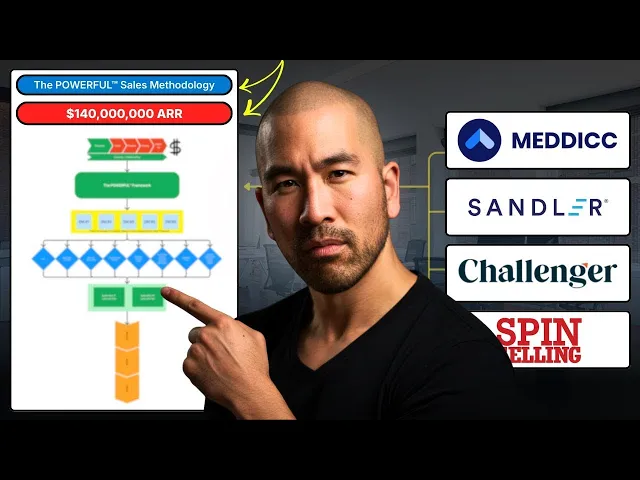
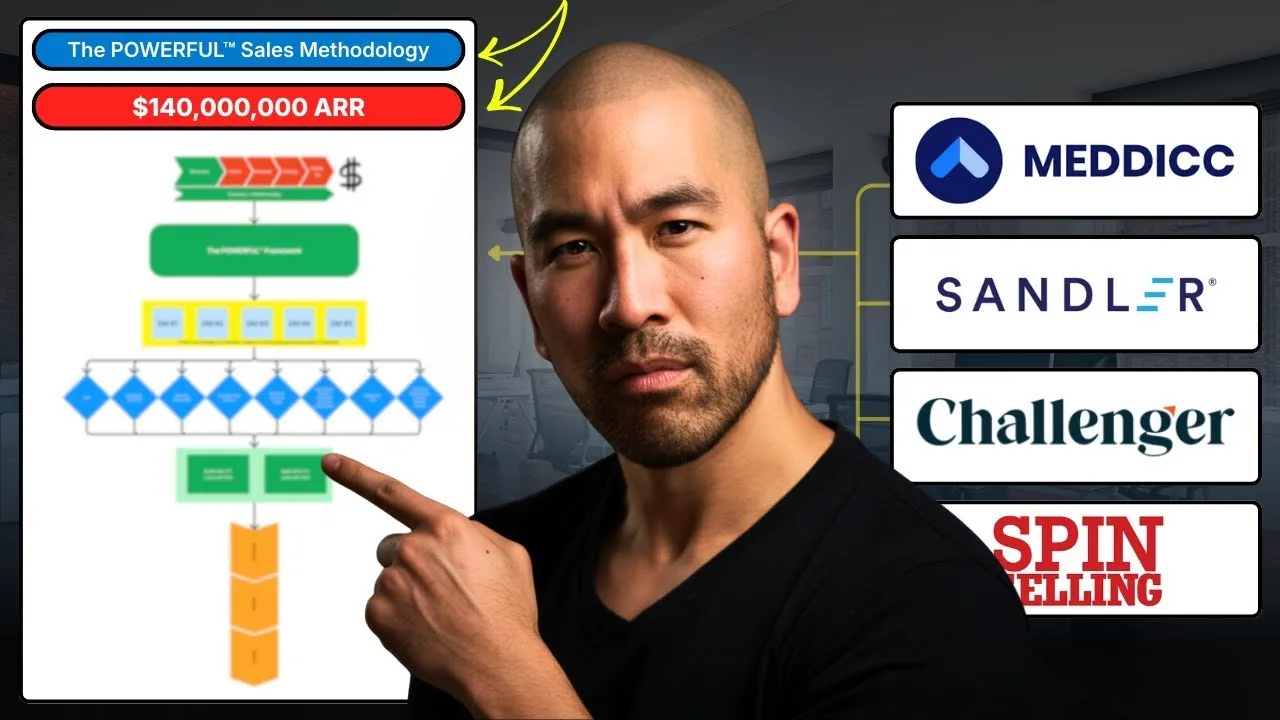
In today's training, I will reveal to you the new simple and predictable sales methodology that we're using close deals at over 40% consistently even in a tough saturated market with tons of competition and with specifically premium price solutions now because everyone makes really big claims. She's proof pulled right from my sales CRM and we're averaging as you can see a 100% show up right now. This is usually about 9% plus. So this is a little higher than usual. But also a 58% win rate over the last six months. And this is based on discovery to
close, not proposal to close, which can lead to falsely inflated closing ratios. And you're still spending time upfront with those prospects in earlier stages of the process. Now, we utilize a methodology called the powerful system. And it's night and day different than the other methods you're familiar with because of How it's able to systematically and ethically take a completely cold prospect to close as fast as possible without feeling sleazy for deals that could be as low as 5K AR up to 5 million ARR. This is what leads to higher closing rates, higher shel rates, more
revenue culture, larger deal sizes, and being seen as a trusted advisor in the eyes of the customer. and not just another salesperson. You'll do less work and close far more. This is how we're Able to close at 58% with a 100% show up rate. It's because the methodology applies to your entire sales process. Now, the best part is that you don't have to change it drastically depending on the company you work for or the offer you sell, what your company already does. I've used the same methodology to take my own business from zero to close
to 800 clients for coaching and training services in the last six years. And before this, I use the same system to Generate over 700 million in 13 years when I was in corporate sales. Now, you might be like, hey, who the heck is this guy? So, allow me to introduce myself. My name is Marcus Chin. I'm the sales coach who has coached and trained the reps and teams from some of the largest companies out there. We work close to 800 clients sell for organizations like Salesforce, Google, Zoom, Qualrix, Ozero, HubSpot, Gartner, Dropbox, Paychecks, Dell, Microsoft,
and like so Many more. Even down to startups that have, you know, basically zero recognition and are barely doing a million ARR. I've trained and coached teams and reps the entire sales process from cold to close. So or can blow out their sales targets and reps can max out their comp plans and create the life of their dreams with financial freedom. Now I know what some of you are probably thinking right now which is oh right hey those who can do teach right now I'll Tell you what sadly that is true for a lot of
the coaches and trainers out there but be even before I started my business on September 19 2019 I carried a code for 13 years. I started in the field as a B2B rep right before the recession hit in 2007. It was a startup division of a Fortune 500 company that had no real training, resources, marketing or support. I was also placed in the smallest out of my entire team. Now, I wish I could say I came out Swinging just absolutely crushed it. I didn't. I mean, instead, I almost got fired for my terrible results. Now,
fortunately, I eventually figured out this methodology and it allowed me to ultimately hit and exceed my quota 13 years in a row, doing 100 250% to my number and ultimately win every single word like Presence Globe every single year. I also earned 12 promotions my first eight years hitting number one in every single role and that's in two Major Fortune 500 companies and in that time closed over 700 million TCV which equates to about just over 140 million ARR. I got to the point where I was actually even running a sales organization for 110 plus
for several several years. In my last five years, I also average over $600,000 a year in earnings between my base commission bonuses and equity in my early 30s. So, if you're actually watching this on YouTube or Spotify, you can see some Pictures from President Club, large keynotes, riding corporate jets, and like so much more. But I don't share this to impress you, but to impress upon you that none of this would have been possible if it wasn't for me running a really strong sales methodology. Because here's the truth. We're in a recession, but not the
type of recession you're probably thinking about. We're in what's called a trust recession. According to Force's research, sales people from Mentors the least trusted group followed by social media influencers national media. So, I want you to think about that for a second. People are more likely to trust some stranger on Tik Tok or Instagram over you, a career salesperson or sales leader. That's absolutely crazy. But I'm not shocked because skepticism is higher than ever. buyers are coming into conversations far more educated than ever they ever have before and it's more competitive than Ever. So like
hard selling persuasion tactics, those fancy oneline closing tactics, memorize objection rebuttals, mirroring, face scarcity, you know, end of month or end of quarter end discounts and what what all those things they no longer work. So how do I know? Because I've tried them all my journey and frankly it never felt authentic to me. It felt pretty gross and I know my prospects felt it as well. But the biggest reason these tactics don't work, Well, they break trust with your prospects. And on the other sales methodologies I found, they are far too linear and too focused
on the company and not on the prospect, which leads to less trust to begin with. This leads to high no-show rates, low win rates, long sales cycles, constantly getting ghosted and millions and loss deals. This is what I call the old way of selling where you one you prospect the buyer two you contact them then you three qualify them Then four you pitch your solution five you over objection then six you close if you go from steps one to six that's what most people think selling is like but think about even the last time you
invest in something major was that linear of a process I can guarantee you it was not it was probably more like this image from guard you can see on screen where there were many many many steps that went all over the place and it wasn't necessarily linear. So thus Your sales process must offer a flexible methology that incorporates this and cannot be rigid like a memorized script. That's why I've had to design a process after writing over 10,000 sales calls personally that takes someone completely cold to close as fast as ethically possible that allows the
flexibility based on the complexity of the prospect and deal. And the solution is not just a memorized sales script for you discovering demo calls you can read off Or give to your team to read. The solution is the powerful selling system. It's a new simple predictable selling system that thrives in a trust crisis using Socratic based questions that get the prospect to sell themselves and lead to a virtually objectionless close while being easy enough that even if you have a brand new working with zero sales experience, they can implement really quickly. And since implementing this
in my own business, we've been able to Consistently close at over 40% with over 9% show up rates and bring in over 700 clients. The powerful methodology creates a better buying experience for your prospects. So, they're literally begging for your solution and thanking you for selling them. It positions you as a trusted advisor as you're having actual business conversations versus like an order taking rep. And the best part, they don't feel sold because all you do is serve them using this Methodology. So let's walk through this exactly how it works so you can apply to
your sales organization or for yourself if you're an AE. Now first let's understand the old way that's being taught still. Okay. So first off here is the old way. It's what most people are very familiar with, right? And it starts off very simple which is first you know you have your discovery and then you typically have your demo then proposal then you'll handle objections attempted To maybe multi multi- thread and follow and close you have your followup and then maybe it's a little bit unknown. We're not really sure what happens here. This could be a
close you can get ghosted. We don't really know, right? It depends uh based on the average closing promotion reps. Most people end up getting ghosted or deals fall the status quo. And ultimately, when you think about how people run their conversations with their prospects, they do basically This, which is they spend about 10% of the time focus on the prospect, which is maybe asking questions or covering maybe some of the basic needs, and then spend the rest of the time talking about how awesome their solution is, their company, etc. And I'll tell you right now,
I've seen the data. I've been on many, many calls. I've listened to thousands of calls from other people as well. And this consistently is what I see across the board. And this is what Ends up happening. It's a big issue. So, you know, first off, let me change color my pen real quick. Number one, you're stuck in a lot of price battles, okay, to attempt to earn their basically earn their business, right? Where it gets to the end, they're basically trying to beat you up and they kind of throw you what's called the sea of
sameness with everybody else. and they're saying, "Hey, in order for us to earn your business or or for you to earn our Business, you have to lower your price because this is what XYZ competitor is doing." And this is essentially just, you know, a race to the bottom. This this is not fun at all. No, no one wants to do that, right? Or sometimes you get stuck into what's called the perpetual follow-up cycle, right? Because it's it's ongoing because a prospect is not quite it's for lack of a better term convinced, you know, and ultimately
they think it's stuck in what's called status Quo, right? you know which or they can choose competitor even if solution is better but generally speaking I find most time it falls in the SAS quote it just literally just gets stuck there and then they don't go anywhere else and this is usually because of what's called also uh omission bias where they feel safer not making a decision and just being stuck with their current bad situation than actually make a change. The other issue we see we see as well is You ultimately end up spending 90%
of your time chasing following up. And this is like wild and a lot of times, you know, if you're a sales leader watching this, this is what a majority of your time your your team is spending time on, which is constantly following chasing prospects down. They're not sure what to do with these pro products who ghost them. So they're trying to enter into like these like sequences basically get them re-engaged, you know, and Ultimately I hate to say, but usually it reads a desperation. Usually those emails, those calls, they sound so desperate actually repels them,
right? And you get what we, you know, we call commission breath, which is pretty pretty uh pretty smelly if you could not tell. So, as a result now of like the low win rate, we often see most leaders then drive their team to say, "Hey, we need to see more people, make more calls, send more emails. Let's play the Numbers game." Right? And as an AE, a lot of times if you're not being, you know, if you're not being pushed down to do this, you're trying to do it yourself. You're like, man, I'm not closing
deals I want. It's a numbers game. That's what I've been told. Let me go ahead and just start making more calls and try to get more prospects in the funnel. And that this is a this is a big issue across the board, right? And this is where I see when we look at all The stats consistently, even the time of this recording across across the board, especially in the software world, only about 40% of people are actually even hitting their number, which is pretty crazy, right? So that means the majority of people are completely missing
their number as a result. So they continue try to play the numbers game. So this becomes a very bad cycle across the board. So what we want to do is we want to take this right here, this piece Right here, and what we want to do is we want to show you the new way, which is we want to flip it across the board. So it's very simple. We're going to flip it upside down, if you will, just like this. This is a powerful methodology in which we're going to spend a lot of time focused
on the prospect. In fact, we we're going to drive towards 90% and we'll spend actually very little time 10% if you will focused on your proc and your company. We want them to spend Entirely on the problems and pro the problems of our prospects. And this is a shift for a lot of people. And we we're going to walk through how ultimately, right? And I'll kind of show this in a second. This is very very key. But we're essentially we're flipping everything upside down. Okay. And this system allows you to systematically sell effectively because we
use socratic based questions that naturally lead to the prospect selling themselves. So Instead of you trying to convince them, we'll use questions in a very strategic way so they sell themsel across the board. And this is even before you do a demo, present your solution. This is like incredibly incredibly powerful. I'll give you a really really simple example. I remember like hopping on a sales call with one of my reps and we we get on a sales call and uh you know this this the stakeholder quite frank was kind of a tough kind of you
know kind of Tough you can tell like really stoic guy no real emotion and we're we're guiding this guy through the sales process. This was an outbound booked one and we're using some crackbased questions. We start to see this guy start to open up. Now, initially when we first sat down, the guy said we had only 30 minutes of conversation. But because the conversation was going so well, he was open to having a long conversation. We end up spending two hours with this guy Going deep into his problems, his pains, his challenges. And here's what
was really, really fascinating in that time. We actually spoke zero about our solution, our offer. In fact, we didn't even really tell any customer stories or, you know, try to say any any results or anything. We focus entirely on this guy and it was actually quite powerful because actually actually at about two hours he says, "Oh crap, I I need a jet. I have actually another appointment Right now. I gota go to like a dentist appointment or something like that." He's like, "Can we have another call because I'm really interested in hearing your actual solution.
I don't even know what you guys have to sell, but I'm sold." Now, maybe he's being funny and facitious, whatever it was, but that was a great indicator of how powerful it can be when you do the questions right now. Little side note, my rep ended having another meeting with the guy and closed The next call. It was a pretty good sized contract too. So I share this with you because this is really really key. Okay. So ultimately our process wants to be 100% customer centric. Okay. And we're focused on solving business problems. This is
really really vital. A lot of times I see a lot of sales professionals. They're selling it to people. They're selling below the line. So they're solving like not business problems. They're solving like lowlevel Problems whatever it's going to be. For example, let's say if you sell a customer, you know, customer support tickets, you know, software, they're saying, "Hey, you can stay more organized and manage your support tickets so you don't miss a single ticket." And yes, maybe that really matters to maybe the CS manager or the support team, the department for that. But do execs
really care about that? Yeah, they yeah, they obviously want That done, but how do they link that to the business algorithm problem? So, this is really key. So, we want to focus our discovery on business problems and that's really I mean that's what sales is really about. Okay. Um and reality is is when you solve business problems, companies will happily pay you or your team for those problems. Okay? And when you do it effectively, this will lead to higher win rates, increased deal sizes, faster sales cycles, more revenue, Increased profitability, happier reps, happier teams, happier
companies. I mean, ultimately, this is better across the board. So, let's kind of walk through a little bit how how that looks, right? So, for instance, here we'll keep some components relatively similar, if you will. just to keep it overly simplistic because obviously in your sales process you might have one or two more steps but I'm just going to make it overly simple for intent for the Teaching purposes but yeah you'll have the discovery yeah you have the demo you have the proposal the closing the follow-up you know etc but here's what's really key notice
here here we're inserting the discovery multi-threading all the way throughout okay and what we're going to insert here is this powerful framework this is we're going to utilize this as part of the process this ultimately allows you to not just do just discovery just your in your just Your quotequote discovery step. We're going to run all the way through and we do it effectively. It will lead to more closed business as I even shown you even with my own business as as an example. Now, but here's what's really really critical. So, what we want to
do make do as part of the process is we want to make sure of course this powerful is done to all the stakeholders inside the deal. And you know, HubSpot has said there's an average at least five Stakeholders in every buying process today. And obviously, it can vary depending on what you sell. If you sell into the enterprise, you're going to have potentially way more. I mean, I've had deal cycles where we have like a dozen or more people. And some of them are directly impacting who makes decisions. Some are indirectly. So, it all matters
well. And we're going to drive towards the powerful framework. And and if you haven't figured out by Now, powerful is an acronym, right? And it covers eight core things which we're going to cover. So let me kind of zoom in on this inside so you can really see it really really well. So first off and these are these are the eight things we want to cover in every single uh scenario for every single stakeholder as you saw in that image. So first off number one do they have pain but specifically do they have a a
lot of pain or a huge problem that's driving Them to take action. This is really really key. Okay. And this is the difference between, you know, a 10K problem versus a million-doll problem versus a $10 million problem. And I'll give you a really, really simple example. So, a really, really key rule here is what I call the rule of 10x. And what that means is like the problem you're solving for should be 10x the price of your solution. So, for example here, if you have, you know, if it's Just a 10k problem and you're selling
a, you know, let's call it a 30k solution is that is that's a little harder to justify versus, you know, if it's a million-doll problem and it's a 30k solution, that is a no-brainer, right? So, in fact, you can sell I would say I'd even argue a 100k solution if it's a million- dollar problem you're solving for. So, and on top of that, the bigger the problem, the more you can drive them to take action. And you know, if you've Seen any my other past videos, you know, typically when we're helping them quantify the level
of pain and problems, we want to cover their direct cost, their indirect, and their opportunity cost. We want to quantify that level of pain. That's really critical because the bigger the problem, the more likely they are to solve it. But on top of that, when a business is actually looking to solve problems, what do you think they care more about? a 10k problem or a $10 Million problem. Again, depends on the context of the business, but this is something you always want to consider. Very, very important. So, number one, we have to cover. It's a
huge problem across the board. Ideally, the bigger the problem is quantified, the better it's going to be. Number two, what is the opportunity cost or the cost of inaction? So, if they don't solve this problem, is the opportunity cost very clear and quantified? This is really Really critical. So, we have the those direct costs I mentioned. These are some of the other opportunity costs which are very very vital. So if they don't take action, what will be the negative ramifications or ripple effects of the problem not getting solved? Again, this can be direct or indirect.
And this can be really really powerful. So I'll give you a you know a really simple example. So, you know, I was work working with a a client and when they when they first Came to us and they were talking about the problems that they were having, their first low-level problem was their team wasn't really weren't really just doing good follow-up. They didn't really have they had a low win rates. They weren't really doing some of the core parts of a sales process, etc. And he just saw as, hey, we're just missing our number. When
we started to dive even deeper, we start to uncover there's a huge opportunity cost across the board Because not only were they not closing those deals, the deal sizes are actually pretty small. So, they're selling to these corporate enterprise opportunities and they would only maybe get, you know, 10, 20, 30k deals off it where the opportunity to sell more into it from other departments, expansion, mult multi multi-year was really hundreds of thousands of dollar if not millions of dollars. So, the opportunity cost is massive for every single deal. So when You actually extrapolate across their
entire team of what they're already doing, I mean it was really multi-million dollars like millions of dollars in opportunity cost and the cost of an action because of what they're already doing. So this is oftent times if when you work through the numbers with them it can be very telling for them of what of why they need to start taking action now. This can be a huge opportunity. So next we want to go into You know what are the wants and desires or you know the ROI what some people call call as well which is
the return on investment. So do we know their desired outcomes uh that are personal in business? What is their ideal state? So we notice here here we're uncovering this is really if you if you think about this almost like their their current state if you will of where they're at and this is like their their desired state. So this helps us increase that Gap as my good friend Kenan calls it as well. Okay. So we want to get really clear. Do they even know what they want? So if they don't know what they want that
could that's not good. So some sometimes we have to help them realize what's most important for their business. Okay. Then we have E executive level influence. So you know who are the decision makers? Okay. And how do they make decisions internally? What's the buying process? So a lot of times I find Uh for many sales professionals and teams is they ask these questions far too late. They're uncovering the executive level influence. they're uncovering that like you know like mid to late stages in a deal or when they're trying to get approval across the line and
they realize at that point we don't have all the right stakeholders properly engaged. We don't know what's important for them. We don't even know how they buy internally. So we want to make sure We're uncovering who those players are, how they work internal, what's the political atmosphere for how they make decisions as well. Is it formal? Is it informal? You know what does that look like? And who do we need to worry about that might be blocked from the deal? This is absolutely vital when you can uncover up front. helps you take different steps in
your sales process. So you can see why that's so critical. Okay. Next we go into our resources and Resources are not just budget. So sometimes you know people talk about hey you know what's your budget? Reality is is let's say if it's a cold out opportunity and they weren't looking to solve whatever problem you're solving for. They may not have allocated a budget for that at all. Right? But can they get access to funds? Okay. Can they reallocate budget? Because here's here's reality, right? Like when you look at organizations there's a reason why some Organizations
have constant reshuffleling of people and even money is because budgets constantly change and sometime people think once they have a set budget it never changes. No, what does change are priorities. If the priorities have changed the budget then follows the priorities. So we want to uncover what does the funds look like right? Do they have access to controlling that budget those funds or do they have access of people to that Right? What's that look like? Okay. On top of that, depending what you sell as well, sometimes there might be a deployment of people internally that
they require, you know, or resources to actually use you. So, you know, for example, we're working with a great client in Toronto and they help companies with u basically doing complete rebrands uh when they do mergers and acquisitions. So, it's a very very very cool business and you Know part of the resources that is also required potential is like actual doing of the work. So they're going to help consult and work with those companies, but those people need to have people on their team to do some of the work. If they don't, that's okay. But
then understand that upfront helps them create a better solution to show them once they're ready to get closer to that stage. So this is really critical. You want to uncover these things because These are things potentially that can block you from making the deal happen later on. And then then we have F. This is like this is part the F part of powerful which I love. This is what a lot of people miss which is do they have fear of failure? Okay. So meaning do they doubt their own ability or their current vendors to solve
the problem to highest level. I mentioned earlier status quo is the number one deal killer and a lot of times you know if they if They go through everything with you maybe multiple calls be over a series of you know six to 12 months. If we don't do a good job on covering if they have fear of failure about this they'll say something like yeah you know what maybe it seems a little too expensive and we're going to try to do it internally. We're gonna try to take care of our current vendor and only if
we uncover if they have doubts about their own situation or doubt about the current Vendor are they going to actually make a change and I'll give you a really really really simple example right so you know I was on a call with a prospect a couple couple weeks ago and you know one of the questions I always like to find out is which is hey so why even look externally to get help why not just work with your internal team to solve this problem and it was really cool was their answer and they they said
Well, listen like we've actually have tried we've actually tried For a number of years. We hire different enablement people um you know which it's they create good content but none of them are actually practitioners. So there's it's not not real tactical. It's all theory based. We continue to do that and we continue to miss our number literally year after year after year. So everything they teach is very much just like you know it's just it's not designed for real world application. And so they've already tried this path and That's why they want to go external.
Now, they've also have hired past companies in the past, like they've hired Sandler before, you know, they've hired a challenger sale before or the Challenger Group. And I said, "Hey, so that makes perfect sense, but why not just okay, like you've had you you've already used Salem before, you challen you said you were happy with them. Why not just go back and just reach out to them and see if they can help you?" And Their answer again was also very very telling. say, "Well, this, you know, it was really good information and knowledge for, you
know, for those sessions, but we need something that's comprehensive and ongoing to reinforcement, actually changes behaviors and changes systemic challenges." So, that was really cool to hear because this what they're telling me here is there's a fear of failure and they doubt their past vendors they've Used. They doubt their own ability and this is why they need to go external. This is really powerful. This helps prevent that future objection. Hey, we're going to take care of internally on ourselves or we're going to use our current vendors we already have. And if they happen to bring
up later on, if you uncover this already, we can ask them and bring this up and ask them, hey, so I'm a little confused here early. You mentioned you've already tried Internally. You said it wasn't a good strategy for you. Help me, can you help me understand a little bit what's causing this change in heart of wanting to go internal now? So this is like a great thing to uncover up front as part of the powerful framework. Next, and we want to uncover what's called the U, the unequivocal trust. So do they have 100% trust
in our company, our solution, our team, and you? So trust makes everything happen. So I think a lot of times I've Seen um social media reels of people say, "Hey, you need to be more likable. You need like is a big big part." I would say, "Yeah, to a certain extent. What's far more important is how much they trust you, your organization, your solution, and being able to deliver what is prompt because trust is the ultimate thing." Because reality is is if you're selling a complex deal, you could be working with five, six, seven, you
know, 10 or more stakeholders. They're not all Going to like you, but do they trust you? And think about even in your own life. There's probably certain people that maybe you like them personally, but maybe you wouldn't trust them with managing your money, making decisions for you. So trust is a very key thing. So we want to incorporate and cover the level of trust as part of our journey in the discovery process. And then last but not least, we're looking at what's called the little things. So these are Really the the specifications the specific use
cases maybe certain features they want or little details are really important maybe decision criteria um how they currently do things use cases to be able to a really clear recommendation that meets their needs and this is I call this essentially the little things because generally this is what people are uncovering and discovery calls up front they say hey cool like how many total users how many total License um what tool are they using right now you know what features do they want? Um, you know, like what services do you currently get depending on whatever you
sell. So again, those are important to a certain extent, but they do not matter as much as these other components because the other components are powerful. This is how you drive the deal forward. This is how people make actual true buying decisions. So this is absolutely vital to understand that. So That's that's a powerful framework. And just to recap this this this key comp this image right here because I want to make sure this is really really clear. When you are executing the powerful framework right here, it is absolutely critical that we're doing it for
every single stakeholder because think about this for a second, right? The problems a manager is going to have and the opportunity cost they perceive, aren't they going to be different than perhaps An exec, a seale, like a CMO, a CXO, a CRO, a CFO? They generally are, right? So, we want to make sure we're uncovering all these things for every single one because each of those stakeholders are going to believe different things and they're going to want to want certain things. They're going to have different pain. They're going to have different opportunity costs. They're going
to quantify it differently. They're going to have Different wants and desires. They uh will have different needs in terms of what they actually want to go after. So, this is really critical. Okay. So this is why with a powerful framework, it's so versatile because depending who you first meet with and other stakeholders, you can jump all the way through this process and cover all these core things and go around to make sure you fully bet the full opportunity out and have a really good understanding of what's Going on with the situation. So a couple things
I want to really emphasize as part of the process and I want you to really think about the most common reasons and objections you get for deals that stall and basically cause you cause you to lose them, right? or your team to lose them, which is maybe it's like, you know, it's oh it's too expensive, maybe it's not in the budget, maybe it's not a priority, maybe the ex decision maker has shut it down, need to think about it Or whatever, right? When we execute the powerful framework super effectively, which we just went walk through,
it's actually systematically eliminating objections proactively. This is really key. We're doing this all up front intentionally. You know, it's like we're putting the golf tea down. We're putting the ball down. We're getting screwing up a shot. We're getting ready to to knock the ball down the green. We're not just like, you know, throwing the ball down, Closing our eyes, and grabbing the club. We're being very strategic with this. So, the highest possible like likelihood for the greatest possible outcome. So, this ultimately leads to what I call SPO alignment. And SP, which I'll cover in a
second, leads to faster closes for increased amounts. And let me show you exactly what I mean. So what I have found across the board, this is what most people do. This is what typer takers do, which is they they say, "Hey, I have this really awesome solution. It's going to help solve some lower level process problem pain or problem achieve outcome." So for example here, let's just say you sell some sort of cyber security solution and you're working with a network administrator and you say, "Hey, we can make your job easier and save you some
time." So that person says, "That sounds awesome. That sounds amazing. Thank you so much. How much is the solution? Solution is $100,000. They say, "Okay, let me talk to my boss. Let me get back to him. Let's see what happens." And ultimately, what happens is you get ghosted. It stalls out or goes close loss generally speaking. And unfortunately, [clears throat] I see us far too often, which is this, which is they get on a call with the prospect and they drive towards this type of alignment, right? Which leads to this. On the flip side, trusted
Advisors, they do what we covered today, which is they take their awesome solution. Now, for sure, when they meet with that stakeholder, they're going to show how it solves their problem. It helps achieve the desired outcome, but they'll also link it all the way through to the business exec impact and key priorities. This is like so vital, right? This is like this is where the money is, right? But they do it all. It's it's uncovered and valid all Throughout the whole sales process. They're multi-threading with all the stakeholders. It's direct directly aligned through the org.
So you see this is like this goes all the way through. Okay. And the clear there's a clear business case that's built together with your champion using the powerful framework. Because if you think about this, when we actually go through and we actually ask all these questions just like this and we uncover all the core Components for all the stakeholders, we actually end up building the business case to help sell internally. We're actually doing it up front before they're asking for a business case. And this is like this is wildly powerful when done right because
when you do consistently just like this, just like this, you'll close more business, right? Like we've seen this with our own business. We've seen this with thousands of sales people we've trained the Hundreds of sales or we've seen as well because ultimately there's what's called above the line and below the line. So above the line are typically what's called you know organizational pro level problems initiatives and they're basically sea level problems initiatives and then there's below the line which is their department level problems. We can't really see the red. Let me use different color. There's
like department level problems initiatives and manager Level. And oftent times most sales professionals whoever they meet with generally speaking they're meeting below the line people. So there's some below line problems but what we need to uncover is we need yeah we want to cover those two and solve those two but what are the above the line problems and challenges and when we do it powerfully effectively the framework I disc I mentioned this allows you to establish linkage okay above the line. So you Actually are establishing how this links to this is a direct connection. All
right so I'll give you another example. So, I was working with uh talking with a sales organization uh about a a week ago. Pretty large sales organization about 200 plus uh employees. Um they do about 5.2 billion dollar a year in sales. So, pretty uh pretty high revenue per employee count actually very very impressive. And they have primarily grown um through just referral business Taking a lot of orders. And when they reached out, they said, "Hey, Marcus, we just want to like, you know, focus on maybe getting some some sales training, you know, just like
maybe like, you know, like our bud is maybe like 30 or 50K. Can you come in do some couple workshops for the team, train them on like outreach, maybe some discovery, etc." And that was kind of what the focus was. Now, when I started to go through my discovery and I'm going Through the powerful framework, right? we uncover there are some core systemic issues going on because I'm making sure I'm uncovering again just so you can see it very clearly we're uncovering all these core components right here right and we start going deeper and we
uncover very quickly as part of the process that first it was hey you know my CR chief officer wanted me to go and take a look and um uh you know like see if there's any option for some sales train that's Kind of like the first kind of you know go-to as you're going deeper you start to realize hey there's actually huge skills gap and their big their biggest challenge was they're leaving so much money on the table that they believe it could bring an extra $2 billion a year in revenue by solving these core
problems. So suddenly you went from a very small problem to a executive problem where they're trying to solve a $2 billion a year problem and suddenly That budget that we're looking at went from you know maybe 30 to 50k to looking to 100 200k every single year because now looking for a true partnership in solving those core problems. Now, we can only offer a 100 or 200k, you know, package as part of their ongoing training, development, and resourcing and enable can only offer that if it's a big enough problem. If it was say a million-dollar
problem, chances are pretty good. They'd be like, "Yeah, this Is this is not really worth the time." But now we're looking to solve an executive problem. So, we went from going from first meeting and talking with below the line, okay? you know, you know, below the line and then we made the shift as part of the conversation because of powerful to link it to above. So, not only then do we uncover bigger problems, we can cover larger pockets to solve for that problem. But realistically, because we're also we're Also solving a bigger problem. Now, now
we can create a better solution for them. It's far more comprehensive that solves systemic issues. So this is the power when you actually run powerful effectively because now you're having business conversations with the execs to solve highle problems that are high priority and high cost that they want to move quickly on to solve the actual core issue. So let's recap this as we cover a lot so far. So from a high level, the Powerful mythology gives you the flexibility in your sales process because it falls in the perfect intersection of psychology, strategy, and tactics. And
most methodologies are purely focus on all the tactics that get outdated over time or really maybe too high level that aren't applicable. So by now you should understand why the powerful methodology is so effective and powerful and taking a completely cold prospect and systematically building Trust that leads to higher win rates, increased deal sizes, faster sales cycles, increased revenue, increase profitability, improved scalability, better results, which ultimately leads to building stronger sales organizations actually last for years. So, if you like our help to implement the powerful sales methodology into your sales team or organization, I highly
recommend you book a call below to speak to my team to see if we can help you. We're looking For driven sales execs who want to build a powerful framework into the org sales process in the next few weeks. Now, this is not for everyone. Your org must be in B2B is doing at minimum 10 million a year in sales in the org itself and your team must be selling product or service that is at minimum 50,000 arr. So that means you're probably in either mid-market or in enterprise. Now this has already been valued by
the over 140 million AR I've sold personally with my Team and I and we want to help more orgs crush it. So you have zero risk by simply booking a call to discuss implementing the powerful methodology into your sales organization. Now for those who still need more information, you know, let me explain why I believe the powerful methodology is the most effective sales process for B2B or to close at over 40% consistently. So reason number one, it transforms B2B sales people into trusted advisors and Positions them as a category of one. So for instance here,
you might already know some of these buyer sets, but 50 to 90% of the journey is already complete before a buyer interacts with the sales rep. This is from Spotio and BD buyers have are already 57 to 70% already through the buying research before contact and sales. This is from Gartner and 62% of B2B buyers say web search was one of the first three resource they use to learn about solution. This is again From Gartner and 77% of B2B purchase that they would not even speak to a saleserson until they've done their own research. And
close to half of buyers view like three to five pieces of company's content before even talking with a sales rep. And here's what's even scarier. 82% of B2B decision makers think sales reps are unprepared. And 58% of those buyers report that sales reps are unable to effectively answer their questions. So what do all these stats Mean? It means trust is at an all-time low. And it's why buyers spend more time on research upfront. Once again, on call with a salesperson, they are expecting to talk with a pro, someone that they can trust who can advise
them to make the best purchasing decision for their business. So if you do not have a proper sales methodology in place then each sales call is like a gamble and ultimately you'll have to rely on discounting or price to close which is Not sustainable in the long run. But if you build a sales process that's customer- ccentric and business focused, which is exactly what the powerful methodology is absolute best at doing, you are positioning yourself or your team as a trusted advisor aka the expert and a category one even in a competitive and saturated market.
This allows you to close faster and for larger amounts. It's how you build trust consistently and effectively. I mean, think about This in your own life. Who are you most willing to trust and buy from? Perhaps maybe it's your doctor whose position as the trusted adviser for your health or maybe it's your financial advisor, CPA who's positioned as the trusted adviser for your money. I mean, these are very saturated markets and there's nothing really special about the services products they offer yet you trust them. Now think about on a grander scale for big organizations like
think about big Consulting firms like you know McKenzie, Deote, Asenture you know and so and so on because they are positioned as a trusted advisor for companies they can charge lally millions of dollars a year even they have consultants on site who are literally fresh college grads with zero experience. I mean, take a look at this example McKenzie proposal on the screen. Depending on the work streaming, you can see it's a $1.5 million deal upwards of $5.4 million. This is all Because they are perceived as trusted advisors. Now, these companies did build a brand to
be seen as trusted advisor for being around for decades and most of us don't get this luxury. So, this is why the sales process is so vital. That very first call is the first live experience that your prospect has with your company. And within seconds, they'll determine whether this person they're talking is of value to them or not. Or they can trust them as someone Who can advise them or not. So if your team is like shooting from the hip or some sort of substandard sales methodology, trust goes down and so does your org's win
rate. So you must remember trusted advisor created through the sales methodology they run. Trust is the new oil in the world full of skepticism. The powerful sales mythology is your new oil rig. So reason number two, your org no longer needs to use sleazy tactics to close and create Urgency. Now I embarrassingly used to try to use all different tactics to try to close. You know, the Benjamin Franklin close, the doorork knob close, uh looping, time discounts, high pressure, whatever. Now sometimes it worked, but most time it didn't. Um, but all of them made me
feel really gross and like I was selling my soul. So then I committed to creating a sales methodology to position me as a leader and not just another salesperson who Also systematic close at a high rate. I wanted to be sustainable, repeatable, and ethical. That's what started the journey of creating the powerful framework. So now we have 100% confidence in every single sales call we run that we're selling the right way that is best for our customers. Reason number three, your CAC drops and your revenue output jumps without adding headcount. Let's make this simple. Most
eight to multiple eight figure sales or Try to grow by doing one thing, more activity, more pipeline, more reps. But if your win rate is low, more volume just means higher CAC and lower efficiency. So let's do the math. Imagine scenario number one. A 25% win rate. Assume your team runs 5,000 discovery calls a year. At a 25% win rate, you close 1,250 deals at a 50k ACV. That's 62.5 million in revenue. Now imagine scenario two. 40% win rate versus 25. Same team, Same pipeline, same 5,000 calls. So stronger methology. Now your team closes 40%
which is 2,000 deals. At 50k ACV, that's 100 million in revenue. And the difference has 37.5 million additional revenue without adding reps, pipeline or meetings. That's why the smartest CRO and sales VPs care about win rate. It's a fast way to create a leverage the entire revenue engine. When you close more of the deals you already have, you need fewer opportunities to hit the same Number. Your rep cost per deal drops, your manager cost per deal drops, your sales cycle shortens 25 to 50%. Your operational overhead drops, and your CAC naturally falls. You're not paying
for more pipeline. You're converting the pipeline you already have. Reason number four, you have far more flexibility in your process and it feels more natural. I've tested all mythologies and spoken to thousand reps over the years. Most have a bias towards mythologies because They feel inauthentic and scripted. It's that same linear image I showed you before. The powerful frame is designed with flexibility in mind and allows you move in and out of the process depending on the buying process and the prospect while allowing you to authentically and systematically uncover the things you need to build
trust, create urgency, and move the process forward like the image you can see. That's why reps like Joe Moras you see on the screen are fired up To use mythology as it's systematically eliminating objection leads to the process getting cut in half quickly and that's why he's saying got to throw in your way. I use a revised inbound call we discussed and the flow transition along with the capture business data case points was absolutely incredible. It's not really a surprise why he became the number one rep out of over 600 and did over 418% to
his target. Now reason number five, it gives you a uniform and Clear and consistent strategy for every sales opportunity. So it's easier to scale across your or I remember going on sales call all types of reps early on. What shocked me was was that everyone ran a different process and essentially just winging it and even they were performing they could not explain what they were doing except for hard work, play the numbers game and be patient. I mean pretty useless for a new rep. And once I figured out the early forms of The powerful mythology,
I started teaching to my peers, mentioned to my teams when I got promoted. And the best part, success became predictable as everyone spoke the same language, actually the same process. New hires ramped up, got productive 50% faster than the rest of my peers teams. Our teams became known as the success factories as new hires went in and came out rock stars. And now they had a clear path to success for every single sales Call. Reason number six, you can utilize the framework to improve your opportunity qualification. Having a clear consistent definition of what a qualified
opportunity is is key to having a proper pipeline hygiene. When this is unclear, you end up spinning their wheels. You know, you and your team end up spinning spinning your wheels on unqualifi qualified opportunities versus spending qu focused time on the right opportunities that Will actually closed. When you use a powerful mythology, if you're missing any of the elements, it becomes crystal clear. The deal may not be as qualified as thought. This is actually why some teams will even create custom fields in their CRM for the teams to fill out to improve the qualification process.
Or some will use a simple tool like you see on the screen to quickly rate each opportunity. Reason number seven, you can derisk deals proactively. Have you Ever had a rep tell you about a deal that's going to be closing by quarter end, only get surprised it's getting stalled or pushed out? I mean the reality is that many of these situations can be anticipated by using powerful methodology and then gauging your deals against it. It's using tool like I just said just showed or a seven flu uh or or like our seven figure blueprint tool
on the screen that's based on powerful mythology that helps you identify pink Or red flags early on so you can take action now to derisk the situation. Now, most deals are not lost because of one mistake or missing data point, but several. Using consistent sales methodology, like a powerful system allows you to systematically look at every single deal and derisk it as fast as possible. So, for instance, Josh Patino, as you can see on screen, closed over $38,000 in just a few short weeks using this exact methodology. Reason Number eight, improved revenue forecast. I remember
giving my sales manager my forecast and uh let's be real here. It was just a guess. Okay, the truth was I had no idea the risk level of my deals. So, winning them was a basically a gamble, which meant my forecast was a gamble. And unfortunately, this hasn't changed much for most sales people in sales orgs because we're now able to ident exactly what's a real viable op and what's not. We're able to improve Our forecasting accuracy. This predictability show allows for better earnings management for sales salespeople and better revenue cash flow management for leaders
and CEOs. Uh reason number nine, you'll be ahead of the curve with a major competitive edge in the marketplace. According to Forbes, 55% of sales people lack basic sales skills. That's wild. This is an environment where it's harder to sell than ever before, where prospects are More skeptical than ever, and they expect more than ever as well. So by implementing the powerful methodology, your or will be leaps and bounds ahead of the competition even if they have a better or cheaper product. And if you're a salesperson, that means you'll win far more deals and earn
far more. If you're a CEO or sales leader, that means your team is now positioned for success in the future. The key is to do it now while it's still a blue ocean and before Everyone else catches on. So, if you're ready to jump on this one-of-a-kind opportunity, I highly recommend you do not hesitate and book a call below to speak with my team now. We're looking for driven sales execs who want to build the powerful framework into their org sales process in the next few weeks or months. There is no hard sale because obviously
it doesn't work that way anyways. We only want to work with leaders who see the value of this new Sales system and want to be the first to leverage for the product or service that they're actually selling. So, book your call below now. Again, there's zero risk to you setting up a call to discuss how we can customize a powerful framework to your industry product and service and you. Now, if you are interested but still have some questions on the powerful framework, let's discuss that next. So, you might be wondering, hey, will this work for
our industry or our Process type? So, whether you are in tech sales, med device, IT services, consulting, waste management, payroll, cloud, etc. Whether you sell the CIO, CTO, CFO, CRO, CEO, CHR, VP of engineering, chief of people, ping manager, whatever. What's a common theme amongst them all? Well, they are human beings. The same brain wiring has been put in place for over millions of years. You can see the graph on the screen here. This from the Smithsonian that Shows it changes over time from over 3 million years to today. I mean, you can see our
brains have not really changed that much, especially in the last million years, especially not in the last several centuries. Ultimately, we all operate whether we like it or not off Maslo's hierarchy of needs, which is we all desire to have our basic physiological needs taken care of, then safety needs, then love and belonging, esteem, and finally self-actualization. So remember, just like how you were not born out be salesperson or sales leader, neither was I. Your prospects aren't born to be a CFO, CTO, whatever. There is no genetic wiring that makes them biologically different than anyone
else. That's why the power of mythology is based on human behavior and sits in the middle intersection of psychology, strategy and tactics. These are timeless strategies and that is why the core foundation has been so effective in all Aspects of my career and for all the hundreds of clients, tens of thousands salespeople you we've implement this with. It's why we have literally have dozens of live interviews in over a thousand documented wins with successful clients in dozens of industries selling hundreds of different products and services. Now, you might also be wondering, do we need to
change our entire sales process to adapt to this? Well, I'll tell you, not necessarily. It Depends on what your current system is producing. If your existing methodology isn't delivering the win rates, sales times, or CAC efficiency you need, then maintain the status quo won't suddenly create better results. Small leaks in the sales process compound quickly at scale, especially if you're running a multiple 8 figureure organization. For some teams, implementation of a series of targeted improvements to elevate what's already working. For others, the Underlying process is fragmented across reps, managers, and re and regions, and the
fix requires a more meaningful reset. Like if you could just simply screenshot this framework and expect a team of 20, 50, 200, 500 reps to execute consistently, then every or will already be doing it and it wouldn't create a competitive advantage. That's why we rebuild the methodology with you step by step ensuring it's aligned to your actual motions. It's integrated into Your existing stages and definitions, adoptable by managers. It's scalable across the reps of different experience levels, measurable inside your CRM, and consistent enough to forecast properly, flexible enough to support deal complexity. This isn't about
forcing your team to sell like someone else. It's about installing a system that makes your entire or more predictable, more efficient, and more profitable. It's both a science and an art. Once the Baseline's installed, it becomes far easier to evolve, coach, and operationalize across the team, and the dividends compound for years. Now, some of you might also be thinking, "Hey, can't I just keep doing what I'm already doing?" I'll tell you what, if you and your team are already crushing it, keep rocking and rolling. uh maybe you and your team already closing at 40 to
50% based off disco to close which is awesome. Here's the really cool part. Chances are good you're already doing a lot of things right which makes integrating the powerful methodology even easier and even more effective. It's like the professionals who are at the top of their game. If they're already in the top 10% to get the top 1% it's rarely one big tweak. It's usually a series of small tweaks compounded that lead to insane results. For instance, Wes, as you can see on the screen here, has always been a solid top rep. He had A
solid closing rate, but that went to 100% at his peak, but more importantly, he was closing bigger deals faster. I mean, selling 2.5 million on a million dollar co is no joke, as you can see on the screen. You know, or we had another sales organization who was absolutely been crushing it and was consistently already closing over 40% for selling to the SMB market. Once we basically helped them tweak it even more, their team increased their confidence. They Actually went up market. So their deal size went from 105K to over 250K in 6 months with
a very similar win rate. That is the power of the powerful methodology already applied to already solid sales skill as exponential gains when the foundation is already strong. And when it's applied to entire sales org, it drives predictable growth, improves efficiency, and enhances the performance of the entire sales team, raising raising your revenue per Employee, which leads to increases in cash flow, increase in profitability, and ultimately contributes to the overall success of the whole organization. Oh yeah, while also creating a far superior buying experience for your customers, which increases your chances for upselles, increasing lifetime
value and renewals. This also leads to happier sales professionals who feel good about selling something they care about and Genuinely helping their customers. Turnover goes down as reps crush it and they make the money they want to make while building a world-class culture even in the toughest times. It's why Dave, a sales director, was able to get his team to hit 300% to quota. has even through COVID have the highest 12-month new high retention rate, meaning more revenue, more profit, less stress. So, that being said, I'd like to formally invite you to book a call
with our team To discuss how we can help you install the power of methodology into your sales process today. We're only looking to work with execs who are leading sales or doing a minimum 10 million a year in sales and want to scale to nine figures. Understand how incredible the powerful methodology is for predictably closing. We're only looking to work with sales exacts who are leading sales or doing a minimum over 10 million a year in sales and want to scale to nine figures and Who understand how incredible the powerful methodology is for predictably closing
at 40% without sleazy sales tactics so your team can hit and exceed sales targets. Also in the rest let's explain how the process works, how quickly you can start seeing results and what you get by working with us. So first I cannot overemphasize this. It's not just one thing that makes a powerful mythology work. It's not just memorizing a sales script, writing down list Questions and so on. It's a system. Each component works handinhand with each other like a recipe in a kitchen where the ingredient contributes to the taste and texture of the dish. Forgetting
one ingredient can change the flavor entirely and lead completely unknown result. So now you as a sales leader, you could trial and error your way to figure it out, but it would take easily running 50 plus live sales calls try to figure it out, which will literally cost You literally stalled or lost deals. And that's on top of leading the strategy and vision for your org. And by the way, it's taken me personally literally over a decade to refine this. and I hit next 13 years in reward while working to prove this. But maybe you're
special and you'll figure it out way sooner. The reality is this is my life's work. I've taken the complexity of sales and other failed methodologies and distilled it down to a system that is repeatable and Scalable across dozens of industries proven not just by my teams and me, but by thousands of sales professionals around the world. And after running over 10,000 discovery calls personally, losing thousands of deals and working with hundreds of clients, we've distilled it down to an exact science. So, here's how it works at a high level. So, number one, we'll help you
install the proven sales fundamentals into your org sales processes and make them Recession proof for every part of the sales process from prospecting through close using the powerful methodology. the same proven system that has generated close to $2 billion in sales for my teams and clients. Number two, we'll identify and coach the exact constraints in your sales process within days of working together. We'll review call recordings and deals to identify the biggest gaps to fix immediately and we give you the fastest results. This Will give you the exact areas to adjust to move deals forward
to close faster so you can hit and exceed your revenue targets. Number three, we'll help you systemize results. Now that we cover the biggest areas to improve, we'll start implementing the systems, tools, habits, and routine that lead to predictable results year after year. And because we've seen hundreds of sales processes, having tens of thousands of calls, we are far better at this than anyone else In the industry. We've been able to virtually guarantee success because we've developed a systematic approach like I've shown you. So, picture this at the Oracle level. You've got stalled deals across
your pipeline. Managers are spending hours chasing updates. Reps are resorting to more followup, more discounts, and more hope. And forecast calls turn into guesswork. That's a reality when every rep is running their own version of a sales process. But when We partner with your org, that changes. Your leaders get a clear operating system for diagnosing deals, unblocking momentum, and coaching reps of precision, not opinion. Your reps know exactly why a deal is stuck and what needs to happen next to move it forward. You eliminate the guesswork and the inconsistency and the org becomes far more
predictable. No more let's just follow see what happens. No more quarter end surprises. No more roller coaster Performance across the team and the support is built for leaders. You get structured guidance deals and implementation oversight without adding headcount equity dilution or hidden costs. The only limited is our capacity. Because of the hightouch nature of the work, we only take on a small number of leadership teams each month. So if you're running a B2B sales or in midmarket or enterprise and you want a methodology your entire team can execute Consistently, this is the next step. Book
a call. We'll walk through exactly how the power methodology would integrate into your current process and what it will look like across your managers, reps, and pipeline. You'll answer a few quick questions so we can prepare a customized plan for your org. So, if you're tired of inconsistent execution, subpar win rates, or deals that never seem to get across the line, book your call now. Again, we only take A limited number of orgs each month, so timing matters. Book your call below as we walk through and stone the powerful methodology will look like for your
entire sales organization.