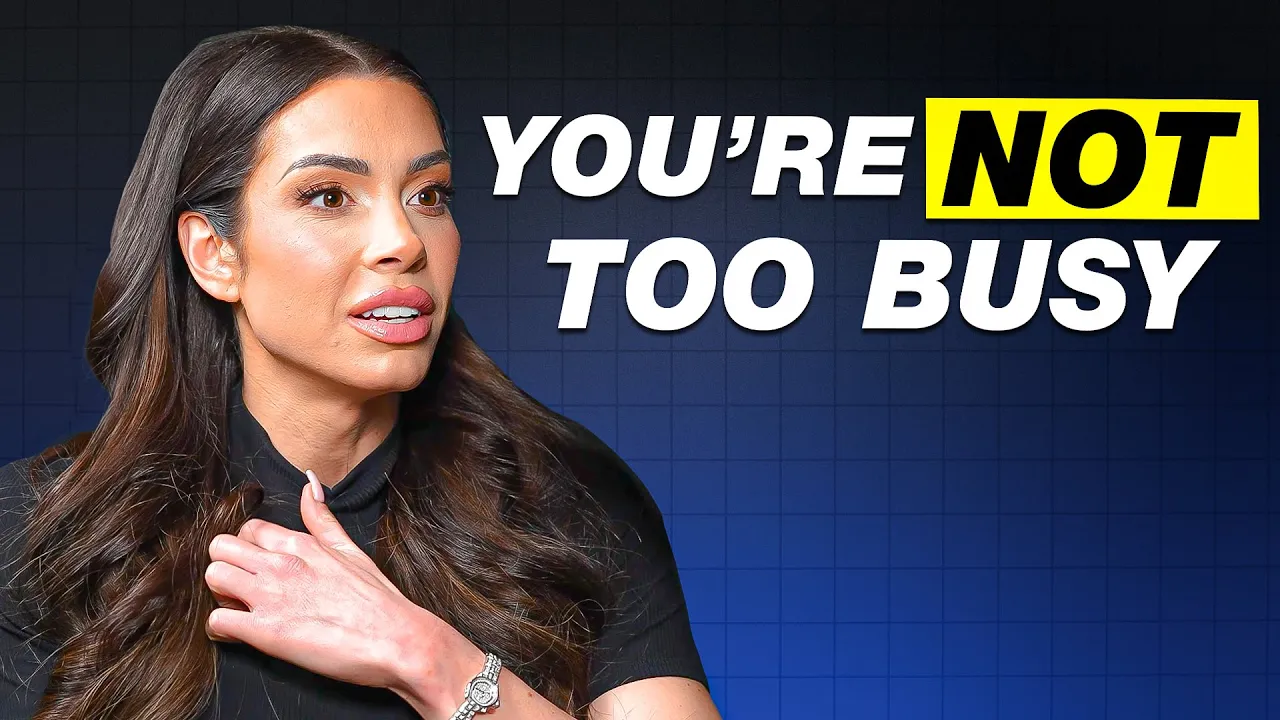
when it comes to the weight of carrying the Ops and the CEO responsibilities and then speaking podcast content what's your why for even investing in it for even taking the time to deal with that pressure and allowing that fire to maybe not be put out for a while because you've scheduled the content why are you that committed to content you know it's interesting because I think at this point I start to see the reward from it because my skill has gotten better I've gotten more comfortable but in the beginning it just it didn't even feel that way I would even say each month it starts to feel better and better I think because I'm just really determined on some level to be able to provide an example of what I always wish I had had and I tell people this a lot I'm like make the content that you want to consume and so like that's kind of what I'm doing I kind of wish that I had had somebody who had it's like I am the person that 10 years ago I wished I had and because of that I want to keep putting out the content for probably some like weird nostalgic like that is what I wish I had had and I would like to be that for other people uh whether it be true or not it is something that motivates me a lot to think about and when I'm talking to people in a lot of my content that's who I'm thinking about is like me 10 15 years ago what would have been helpful for me what would have been content I would have wanted to watch and that would have made my life better and so I always keep that in the back of my head because I think there's a lot of times where you can want to indulge in the selfishness in the moment of like I'm tired I'm exhausted I've got other to do like this is not how I'm making money with sponsorships on content you know what I mean but when I anchor with that which is like well you did all that in your last business and you still felt like there was something missing and I think I can anchor to that which is like what was missing was that I wasn't sharing anything I was learning with anybody else and so to a degree it felt selfish because I could be helping other people if I just put an extra 20% of my effort into something and I think that's what I remind myself of now now I will say at this point there's probably a lot more reinforcement like if you do it long enough your content starts to itself starts to reinforce you because you're like I know what's going to hit I know this I know that right but for the first couple years did did did not feel that way at all you know and I think um there's still times when it doesn't but I think that's what got me through it for the most part is just remembering why you started and having that reminder because I think that's who I talk to in most of the content so you personally don't need sponsorships you don't need AdSense um you've got acquisition. comom and a lot to do but you also acquisition. comom invests in companies what percent that you acquire or jump on are doing content well when they start um none none of them are they actively creating content and not just doing it well or they're not committed to creating content like more of our businesses than not don't create any and and do they not need to or would from your opinion do you say one of the ways we would grow the company is is you should consider this and where I'm going with this is is there a framework to help a business owner determine if they should invest in content yes so I'll put it like this if a company comes to us and the way that they acquire customers and build their brand is not propelled by content and they are smaller then I think that it would be probably quite the burden on the business to suddenly start saying you need to start making content because they've got something that is working is it what I think is absolutely best no but I think that if it's working let's keep doing it let's do more of it and then once we have bandwidth we have some team members in place and we have more momentum in on these other things that we're doing to grow the business then let's say hey we've got excess resources let's put it towards this thing I think it's a matter of sequence um you know if somebody starts a business and it's working really well and they're not making content I think that trying to stretch yourself 50/50 between two things when you have no help is probably not the best idea regardless of it's content or something else and so for me it's more of a matter of sequence of like okay once we have excess resources and we have excess time and we have skill on the team to take over these other things that do work well so that they can maintain those things and if not even just grow them then I would say let's look at adding in cont content and so I also think that to that degree I'd think through well what kind of content is it content around the company because I would say that like two of our brick and mortar chains for example the founders don't make content but we make content around the brand right of the chain of it's a lot of like client testimonials it's a lot of like you know walking into the locations and showing them around and saying like this is what we have and like it's a different style than like what me and Alex do right and so I don't tell the founders like hey you should make personal content I'm like hey this would be really cool if we captured this in the studio we did this or like how about when you know customers are walking in we're showing these lines or like just stuff like that so I think then there the next question is like should the business make content or should the person make content which I think is absolutely a case-by casee basis because some Founders in our portfolio for example I think less than more like maybe two uh would have the natural they have enough of a base level skill set that making content wouldn't be such a stretch and it would probably do pretty well off the bat whereas a decent amount of them don't have that base level of skill and I think we just need to hone in on like hey if they don't even have the skill yet of like running a really great meeting for their entire team and like showing up as a fantastic leader then why would I think that they could like speak to an audience on Instagram well it's actually a very transferable skill and so I look at that which is just what's the return on effort and is that what's best for the business right now it's not that I don't think they would ever make content but but at what point and I love making content and I think it's a great way to grow a business I also think that there's just a sequence for everything and you have to solve for like what is most important right now that if we were to do this one thing it would grow the business the most if that's content cool let's do it if it's not content let's not try and do content too let's tackle what the constraint is right now so probably would you agree with this that most businesses in the proper timing should build bu they should build their business's brand and if can use content for acquisition they should yeah personal branding might not be for everybody do you agree with that I'll put it like this I think personal branding is just showing who you are so if you're a person it's not going to do well for you if you're a great person it's going to do really well for you if you a likable person it's going to do great for you and at the same time there are people who are people have great followings because they're polarizing so I guess that's a thing it's just not my thing that way like I wouldn't want to make content if people on me all day it could get views sure but like I don't know part of me like that wouldn't be fun so what would you say to the busy business owner listening to this that does want to create content but says I'm too busy it is a great excuse for people who are scared and they're nervous to be like I'm just too busy to do it I mean I said it to myself for years like and to be truthful like I still feel like I'm too busy to do it like every single day that I have a Content day I'm like oh my God if I had to stay back this is what I could get done and so what does that mean for me it means that a lot of times I don't take days off you know what I mean like I mean Alex and I were talking about it like we have not taken a full day off since before Thanksgiving and that's just the season I'm in and so I think for people who are going to do it you just have to ask yourself this which is it's not that you're too busy it's that you have something that you would have to give up in order to make the content are you willing to do that or not is it worth the trade and so for me having a one less free day and knowing that I'm going to probably work on the weekend is worth the trade for some people it's not and I just think you have to ask yourself that question and be real about it so instead of saying this that you don't have time it's actually just I actually have chosen to do something else instead because when people say for example right I don't have time to out so you're just sitting doing nothing right it's you're doing something else instead of working out yeah so if you're not making content you're doing something else instead of making content maybe you're scrolling on Instagram maybe you're thinking about making content and sitting there ruminating about how terrible or how good it would be like you're doing something else in place of making content so what is that thing and that thing that you're doing instead is it worth the tradeit you're hitting on like limiting beliefs and you get to coach really high level successful people including things like maybe it's just fear making excuses what are those most common things that you actually think if we could self-identify and fix those we could propel so much faster highle successful CEOs or operators Founders that Sim similarly are are the the biggest common themes that maybe you're unlocking in people you're coaching through acquisition.
comom there's a difference between people who are good and people who are exceptional so good CEOs I would say that a lot of the time it is fear and they're just fearful of what people are going to think whereas I think in the exceptional operators or CEOs it's that they are truly gassing it and so they don't they feel guilty pulling resources from their team to help them make content because in some weird way they feel like they're so self-sacrificial that they don't feel Justified making personal content or taking resources from the company that could be put elsewhere and sometimes there's a of the two and so I think it's just I mean I make most Decisions by just providing evidence and stating facts which is you know if we look at for somebody for example who's more of the self-sacrificial one um it would just be looking at what would be the return on effort of making the content versus a marketing funnel a direct response Etc and so like the argument I might make to that person is that yes we have direct response marketing and we have um paid marketing but how much could we lower the cost of acquisition if we also had organic marketing because what we've seen is that in our companies that have both organic marketing and paid marketing that's the ones that get the best returns and their CAC is significantly lower like like four times lower because what does somebody do when they see an ad for a company they go and Google it and then they say oh let me go look at them and Snoop around you know it's the same as when someone applies for a job they're not just like oh I'm going to apply and yeah oh yeah not going to Google that like it's like you obviously put it in Google and you're like let me sniff around and see what the they do you know and like sneak up on them and so it's the same for advertising and so it's just I make the argument to somebody that if you did this I think that we could get a reasonably we could reduce CAC by you know 3 or 4X and so that is a I would say like for somebody who's really exceptional making a logical argument like that is compelling whereas somebody who is fearful of what people will think I think it is much more of an approach of reminding them that they are the leader of the company and that if they are not going to confront fear and overcome it then who will like you are truly supposed to be the most Brave person in this entire company you set the bar so if you're not even willing to get in front of a camera can you ask your employees to do anything that's the way I look at it it's like you won't even get on a stage in front of 50 people and you ask them to do what and so for me something that's always propelled me is just I will never ask others I'll will never put them in a situation more uncomfortable than one I ever been in which means I really want to put myself in some uncomfortable situations because I want to make sure that they grow as well and you cannot you cannot expect other people on your team to grow by putting them in lesser conditions than you were in so if I put my team in a condition that is stressful and then I try to buffer the stress by making it actually not quite as bad as whatever I had to experience don't actually make it any better for them they don't get they don't gain the skills that I got and so I think that that's a another way to look at it it's like you're the one setting the bar and everyone's going to follow from there and so those are probably the two things that I would say uh have to work on with different different styles of leaders if you enjoyed this podcast and are ready for some deep dive YouTube strategy just go to think masterclass. com to get access to my 1hour on demand YouTube strategy class you'll be looking over my shoulder as I share my best tips and you can watch it on Demand right now at think masterclass.
![I Posted ONLY Business Content for 30 Days [STRATEGY REVEALED]](https://img.youtube.com/vi/JOfsujnXxCg/maxresdefault.jpg)