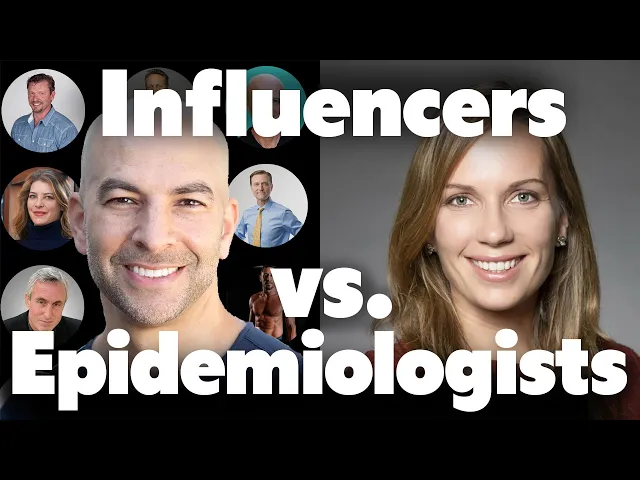
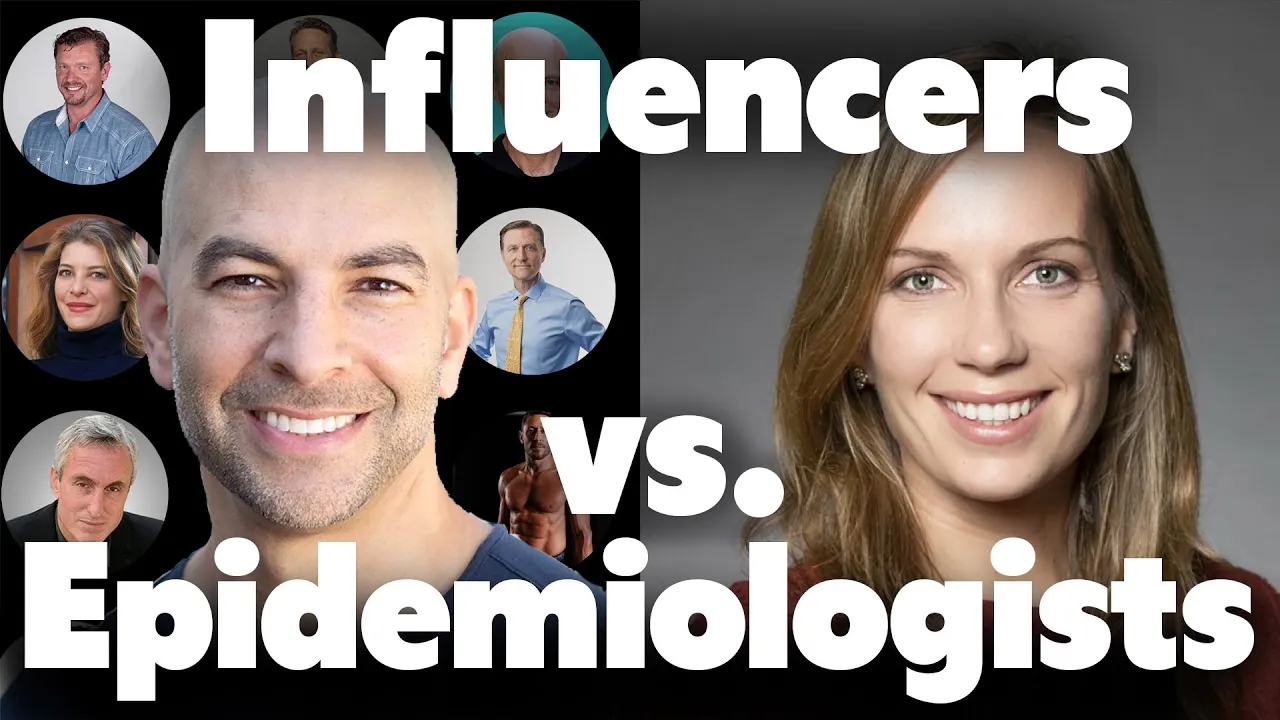
over the last year some very large Studies have fueled the fire in the Raging debate over animal protein big studies linking diabetes to red meat consumption have launched major headlines and emphatic rebuttal from influencers with language like this if you want to show an example of how not to do scientific research this is it so shoty science garbage ignore ignore ignore but the big B studies keep coming here's one from TS linking animal protein to lower life expectancy and various chronic diseases in women the big question is who to trust in this debate many Scientists
Publishing these papers are epidemiologists and to my knowledge most of the people calling them out have no background in epidemiology epidemiologists study the health of populations and a typical question they study is how does air pollution affect human health modern epidemiology usually involves big data and specialized knowledge so it's hard for mere mortals and even doctors to understand it's like Radiology both you and your doctor seek help from a working radiologist to interpret your latest MRI like Radiology it takes years of study to understand epidemiology and I'm not aware of any major influencers who seek
help from epidemiologists to interpret the very papers they dismiss and those epidemiologists have almost no presence on the internet they're too busy actually doing epidemiology but there is a guy who tracks them down and asks them to their faces how do they answer their critics so you are a nutritional epidemiologist Yes sounds fancy one of many at Harvard how many are there at Harvard I have no idea there's a lot I've reached out to quite a few I keep turning up new names and you might have a very fair question about me yeah well what
do you know about epidemiology punk in my earth science days I was VP of research for a large company that had something like 34 water testing labs when I was there I made a popular episode about the epidemiology of posos chemicals that far as I can tell hasn't received any critical push back I have to say once you're steeped in environmental epidemiology or toxicology as I sometimes call it it is a shock to step into nutritional epidemiology the first thing you hear is you cannot determine causality from observational data duh from an observational study you
know it's this cliche Association is not causality and they also know that you can never prove causation with observational research you can only suggest a possible Association and so much of what we've been told regarding what is healthy and what is unhealthy is based on observational studies which were never meant to infer or create um the judgments regarding causality internet influencers say it takes an Interventional trial to do that what in environmental epidemiology it's your job to infer causality and the second edition of the book that we just you know came out with not too
long ago is really focused on um making judgments about epidemiologic evidence in a in a sophisticated and thoughtful way so causal inferences really evolved quite a bit and it really is the unifying theme for what we're trying to do with epidemiologic studies is we're trying to design them and interpret them with that goal in mind and the tools that are now commonly applied of directed a cyclic graphs dags use of multiple bias analysis and so on again with the intention of trying to use OB observational data to make uh causal inferences and you can almost
never do an Interventional trial because you're dealing with toxic substances doctors consumers governments all demand that you infer causality and state your level of confidence there are dozens of books on causal inference from observational data I've read a few and UC Berkeley alone has more than a dozen professors who list one of their Specialties as causal inference the the second shock is how respected environmental epidemiologists are and finally we get a certain level of respect and appreciation for us and our work this is an old New Yorker cartoon and it was so typically brilliant of
you to have invited an epidemiologist to the uh the cocktail party among the very educated Elite New Yorker types of readers of course there's actually cache in being an epidemiologist contrast that to how ridiculed nutritional epidemiologists are by the most popular influencers this is the kind of stuff that makes nutritional epidemiology the literal laughing stock of all scientific research the problem is that epidemiology is incapable of distinguishing between correlation and causation you've no doubt heard this countless times nutrition is such a Frau topic I fully understand why Dr Tobias introduces herself at parties this way
so what do you tell people at a party that you do a party I would 100% omit the nutrition part because that only digs up people's dietary preferences and think you're judging them yeah or all sorts of rabbit holes that you know everyone loves to talk about what they like to do or eat personally here's an example of the respect that toxicologists get Ken Barry made a video on the posos chemicals that Dupont has a history of dumping now you might say well I'm sure that you know the chemical companies did long term studies to
prove that these things are safe uh before they put them in everything but the answer would be no they did not anyone want to volunteer for a long-term study on the effects of industrial chemicals on humans doesn't it remind you of the famous scene in the movie Aaron Brockovich by the way we had that water brought in special for you folks came from well and hinley dupon and kimor agreed to a fine of $671 million just a few years back but you're not going to agree to pay $671 million in a settlement unless you're guilty
that settlement was based on epidemiology a seven-year study I'm very familiar with of 70,000 people it provided enough causal evidence for a jury to convict Dupont and Dr Barry didn't question that epidemiology epidemiology works best when you have an acute exposure on a well-characterized population as that study had but we don't always have that for widespread exposures like air pollution and yet we still successfully infer causation as you will see in this episode that we've done many times in Nutrition a third difference is consumers sometimes get mad at toxicologists when they can't find a large
effect but they sometimes get mad at nutritional epidemiologists when they do for example people who lived near Camp leun thought their cancers were the fault of chemicals at the base a reasonable intuitive thing to think but epidemiologists couldn't prove it former Camp leun residents went uh ballistic they thought that we were had exonerated these exposures so they didn't cause Health harm and that we were failing we were part of the coverup but if epidemiologists cast shade on eating too much red meat there is hell to pay this is an actual press release issued by the
researchers themselves people who eat just two servings of red meat per week may have an increased risk of developing type 2 diabetes I think that anybody with any Common Sense can see that this study is foolishness on its face this study has a preconceived notion that a plant based diet is good for you and that red meat is bad for you I know several of the authors of that study well and I interviewed the lead author they're not vegetarians or vegans and they tend to have amusing conversations like this or each like gourmet cheeses you
have to find excitement somewhere yeah so the gourmet cheeses are really exciting for you I mean I think that would be like yeah one of life's great Pleasures for you yeah once in a while recreationally yeah yeah it's like recreational marijuana I should mention another thing that profoundly influence my thinking about epidemiology before we get back to more of Dr Tobias I left earth science after 17 years and join next computer the company Steve Jobs started after his breakup with apple we built an operating system that could support multiple processors and you could gang the
computers together to work on big problems what I saw it next was a computer that could handle big data I had watched how big data revolutionized earth science that operating system became os10 and iOS and I got to watch Big Data revolutionize industry after industry for example I had friends who worked at search engines like excite Bing and Yahoo but I didn't know any of them who understood the power of big data and extracting legitimate signal from Big noise Yahoo's intuition was that human curation of the internet would produce better results than search engines as
the internet got noisier but Larry pagee and Sergey Brin at Google understood big data and the power of being able to make sense of faint signal in ginormous confounded data they hired a lot of PhD scientists some of whom I know and they crushed every other search engine Big Data revolutionized every industry it touched bringing us companies like Amazon it's doing it again with AI I know big data is very hard to understand and it involves a lot of deep math I think the closest parallel we have to the situation in nutrition is Moneyball baseball
manager Billy Bean took a chance and hired a statistician and it revolutionized baseball we are card counts at the blackjack table we're going to turn the odds on the casino you're discounting what Scouts have done for 150 years here's what he says years later we also caught up with Mr Moneyball Billy Bean the game is really smart in fact I would say that baseball has become one of the most intelligent Industries in the world in my opinion and you see it now with the use of analytics the the people running baseball teams are much different
than when I started I think it's a compliment to the intelligence of the game The Parallel with nutrition is the most popular voices have no background in Big Data so they fall back on intuition but what I see in modern epidemiology is big data and Big Data gets better as Time Marches on and it ends up crushing intuition so Gary TS wrote a science an article for Science magazine in 1995 where he really goes after epidemiology saying it generates so many false positives and confuses the population things like is alcohol related to breast cancer come
on that's a false positive radon is that associated with and another false positive what is it with epidemiologists and have to confuse and scare all of us and have competing studies and all that but you point out that there was another study just a couple years ago that followed up almost 30 years to see if his false positives really were false what did that study say right so this study followed the evidence from you know this big laundry list of signals where we probably can't put much trust in them because it's epidemiology um I never
heard of the original paper but I love the idea of this follow-up paper and this group out of Emory led by Tim lash who is the editor epidemiology the academic Journal but what they found was about almost like 30% of this list of 40 plus associations are now he characterizes false positives correct yes so now yeah we're we're now either settled science so much so that there was public policy around it right like when you buy a house you get the raate on testing in your basement right that was pseudo science and unsettled and too
small of a relative risk to be trusted in that 1995 paper another one tanning beds and skin cancer I mean of course that like who would who would say that's not causal right the only people actually going to tanning beds are just you know I'm only going to do it for a couple years because I'm 20 or whatever but nobody would believe that it doesn't cause cancer when I read Gary's science article from 1995 I was expecting it to be like his current science's broken tour with various podcast hosts that made my ears bleed but
my take on the article from 1995 is he had interviewed legit epidemiologists and he knew a little about causal inference although we've come a long way in 28 years so there was some basis to his skepticism back then even if he went to a lot of effort to pick examples he thought were false positives but think back on 1995 the web was crude companies like Amazon and Google didn't exist only Industries like Airlines and banking could afford the IBM mainframes that allowed them to access big data and I was working in a company developing something
we thought would be revolutionary a smartphone we made a hit documentary about the very difficult path of what Gary probably would have called broken science back then that culminated in modern iPhones and Android phones which have changed the world so I expected Gary to weigh in on this review of a paper that he wrote 28 years ago I mean it's scientifically fascinating right but I couldn't find any of that instead he's double down on the idea that observational studies cannot determine causality you know you and I know that what these studies do is they identify
associations between foods and diseases but the associations are only can only generate hypotheses that broke my brain for a while but I think the answer turns out to be simple I did a stint in the book industry and we knew from A Century of sales that to create a breakaway bestseller in nutrition it had to have three elements one the Breakthrough books say nutrition stist got it wrong two but you the author have figured it out because you're a doctor or journalist who reads a lot of papers and three it has to be positive about
animal Foods especially meat consider Peter aa's book outlive he's not a longevity researcher he hosts Gary on his podcast he knows very little about epidemiology dismisses almost all nutrition research and recommends a very high meat diet he checks all the boxes for runaway bestseller just like Gary does for his books that effect is greatly Amplified on social media where influencers who fit those criteria get more than 10x the views and subscribers of people who accurately report what science really does know about nutrition okay there's always an exception how not to die is a runaway bestseller
and it didn't check any of those boxes most nutrition scientists are very open to hearing other points of view like from Gary's colleague and fellow journalist Nina tyel but you know what I actually don't really mind the skepticism because it helps the field get better if it's dishonest which a lot of it is I'll be honest at least seeming to me um then that can be problematic but when you know I first heard that there's people who think saturated fat and meat are good for you as a student I remember thinking like how like what
science are they reading and I thought it was genuine and maybe I don't know it is but I read Big Fat Surprise to try to understand how all of the science could could actually be like read from a different perspective I wanted to understand what miscommunication or um sort of like room for multiple interpretations there was with nutritional epidemiology because if if you could look at the same body of evidence and have two completely misread different reads of it then that's then we have to do better science right you need to be a little bit
clearer if if that's the case but I was actually disappointed it was not like healthy skepticism with really carefully um you know described reasons why the science um was being read a different way it was just completely um not that you bought the book merchants of Doubt Nai Naomi arc' book I ordered it it's on my desk it's a great book I whenever I see Nina I just think of that book you know the Exon Mobile ads and climate science were enti it unsettled science her blog is entitled unsettled science she's highly linked to Industry
she shows photos of herself with the dairy Council and adan's Association and all that so what is this line I hear all day long correlation is not causation and from observational studies you cannot infer causality well correlation does not guarantee its causation right but it's hard to have causation without correlation right yeah causation implies correlation so I I love this causality and correl I could talk about that for hours I think it's so fascinating not all correlations turn out to be causations I think there many examples where evidence had maybe suggested something so one of
the main hypotheses that the nurse's health study wanted to test was total fat and breast cancer that did not pan out in the observational epidemiology like it did in some of the ecological evidence the correlation was seen across country where countries with more total fat intake had more breast cancer but a lot of things can explain that right so you can't just stop with a correlation and say oh that's probably causation you know there isn't this well it's from the seven country study so it's right you know there was a lot of research that happened
after that study but it happened to be right for saturated fat and heart disease Dr Tobias just mentioned ecological studies that's where you study people around the world in search of high exposures for for example I'm aware of a study where they affix air pollution sensors to Children's packs in Mumbai and Beijing among other places the seven country study was ecological because they were looking for populations around the world who had a big difference in their heart disease rates so Finland had nine times the rate of heart disease of Japan and the other countries were
somewhere in between instead of food frequency questioners the scientists replicated their meals and then shipped them back to the lab for chemical analysis and then they followed those populations for 50 years you can see in this chart that as saturated fat in the diet rose five-fold heart disease deaths Rose ninefold in combination with other types of studies epidemiologists inferred that saturated fat is a strong causal factor for heart disease I have never seen an internet influencer show this chart as their promoting the health benefits of saturated fat if you're wondering who follows a cohort for
for 50 years meet my buddy Henry Blackburn a core member of the seven countries team the whole time still playing in his band at 99 a half years he's been incredibly helpful to me in my quest to fully understand the study we just lost another core member Jerry stamler at 102 and before that anel keys at 100 doesn't look like avoiding saturated fat shortened their lives I don't like anecdotes or small sample sizes but the odds of three American men on a team of roughly 18 scientists with no genetic relation born in the early 1900s
and making it to 100 years of age is around 1 in 10 billion I should clarify that ecological studies report population averages so this chart is showing an average of maybe 700 men in eastern Finland an average of maybe 700 men in Japan etc for the studies Dr Tobias was referencing data is reported on individuals they're actually complimentary each helping to understand the other I recommend this short but solid intro to epidemiology book for people who are interested in comparing the different study types and how they complement each other I really dislike the pyramids people
create to stack rank different study types they all have strengths and weaknesses and how good they are depends on what you're studying epidemiologists generally look at every study type they can get their hands on and interpret them together for example some people promote Interventional trials as the gold standard and they are for drugs where you just have to take a pill and adherence is high it's harder with food because adherence tends to fade after a year or two depending on what the scientist asks you to stop eating and how hard it was for you to
resist it cuz those McDonald's fries are truly amazing right has your mother ever made anything as good as a McDonald's fry not even close and another challenge with food interventions is it's hard to design a placebo for food and chronic diseases take decades to develop and Interventional trials last way less than that for example low carb diets tend to look very good for 6 months for weight loss and diabetes okay for a year or two maybe neutral for 3 to 5 years and bad after that an Interventional trials can't capture that by the way we
tend to use the word epidemiology for long-term observational trials but short-term Interventional trials are also epidemiology now tell us about that clinical trial you're doing yeah so epidemiologists do clinical trials as well it's not all observational all the hierarchy of evidence pyramids I've seen place metaanalyses at the top but here's the thing Industries have figured out how to game them epidemiologists point out that all you need is a computer and internet connection for a meta analysis for example beef check off paid three Consultants to write a paper about red meat not being a cause of
diabetes they chose 21 randomized trials averaging less than 10 weeks duration for their metaanalysis well yeah red meat doesn't cause diabetes in a few weeks it takes decades as longer term studies are showing but it didn't stop influencers from promoting beef check offs gamed meta analysis eating red meat does not C caused type 2 diabetes and now results from a large metaanalysis back this up there are great metaanalyses but they come from reputable teams not funded by industry a very powerful type of study the pyramids don't list is the kind where you add randomization to
observational studies genetic epidemiology melan randomization as a tool for causal inference so your genetics are random ly assigned you have a random half from you know each of your paternal maternal genetic yeah that is unrelated to your socioeconomic status to your health status to your preferences of food it's it's just who you are genetically assigned from the very beginning yeah so if you randomly got you know one of your parents LDL cholesterol elevation genes and your sibling randomly didn't then that's like an investigator saying you're going to have high LDL your whole life you're going
to have moderately lower LDL your whole life it seems to me one of the Revolutionary things about it is it's from birth yeah whereas when you do these studies on stattin they're not prescribed until somebody shows heart disease so like you're 40 years old or something before you get a Statin prescription so it it doesn't speak to the first 40 Years of your life whereas mandelian randomization does and I think that's why it's so dramatic when people doubt LD yell is a causal factor of of heart disease which is all over the Internet saying it's
bunk it doesn't you know I don't know how you can look at melan randomization and say it doesn't that's this variability that you know gets captured in your data and what you're what epidemiology is trying to understand and to look for why do some individuals have higher LDL versus lower the fact that there was a set or there are a set of genetic drivers of that was very convenient for this tool to then look at from a more causal perspective the role of LDL and heart disease because now we don't have confounding from smoking and
lifestyle and satin use um not to say those can't impact the analysis in one way or the other they certainly can but yeah I agree it would it's incredibly hard to refute that data with all of the other accumulation of data as well so a very common thing you hear on the Internet is you need a big effect size for epidemiology to work your risk needs to at least double for epidemiology to mean something not just Rise by 20 or 30% well that may have been true before the rise of truly big data in epidemiology
but it isn't true anymore let's look at the story of trans fats if you'll notice it says all vegetable right couple of scoops of this I get all the vegetables I need it serves up just like ice cream m [Applause] what's the story on trans fats how did we figure out that they weren't healthy yeah trans fats I think is one of these really just cool neat tied up with a bow examples of epidemiology and policy ending up doing the right thing for public health in the end one of the big questions that the nurses
health study was able to answer was trans fat with long-term heart disease and it was certainly not designed to answer that question but this is sort of one of the big advantages of existing cohorts you can go back and as new hypothesis emerge if you can in some way have measured that exposure which they were able to do because they had all this diet data now you could look at a new exposure with existing data and already you know 10 and then 20 30 years of followup and so the signal between consumers of high trans
fat versus low trans fat and we're only talking the difference between a couple of grams per day it's like five grams versus I know two or three grams amazing yeah the risk of of heart disease was was so much higher that was replicated a number of other cohorts the feeding studies sort of looking at cholesterol levels and what happens when individuals are given and then removed and given trans fat it's just goes up drastically with that so the mechanisms seem to be there the biological plausibility and you know the this doesn't happen very often with
with diet and nutrition but it was an industrially manufactured exposure that did not have to be there so it could just be removed trans fats which were banned and finally out of the food supply in the US by 2018 had already been um banned in several countries in Europe and around the world for at least a decade by that point what about the argument that small effect sizes like 1.2 1.3 yeah are irrelevant epidemiology cannot mean anything unless you have an effect size at least of double statistically there are more likely to be more false
positives at low relative risks but but that's not the only piece of evidence that that we use right we triangulate data from so many other sources and when a moderate effect size or a small effect size corroborates with the experimental data the animal models the biolog iCal plausibility dose response from feeding studies that 30% is looking pretty good and actually the the relative risk for trans fat comparing five versus two and a half grams per day is like 1.3 it was small but it but it was could not be explained by anything else so you
saw how careful Dr Tobias is when inferring causality and how she considers all the factors and epidemiologists have a lot of tools for inferring causality but consumer prefer to believe in a single simple cause here's an example the very people who are warning that correlation is not causation are unwittingly inferring cause to the observations of their blood glucose readings since carbs raise blood sugar they're inferring that carbs are the cause of type 2 diabetes but blood pressure Rises when you exercise so does that make exercise the cause of high blood pressure we believed that a
half century ago and that's why I had to mow the lawn for my grandfather and father so they could avoid blood pressure spikes but a core tenant of epidemiology is that chronic disease is multifactorial epidemiologists at the Framingham heart study have figured out that lack of exercise weight sodium intake more than 500 genes stress anger atherosclerosis and air pollution all play a role in high blood pressure the story is the same for diabetes epidemiologists know to combine a lot more types of data than just blood glucose for example among the many risk factors are weight
body composition where we store our fat lack of exercise age genetics ethnicity sugary drinks and surprisingly many research groups are reporting that red meat consumption is probably causal I made episodes about the causes of diabetes the good news is glucose monitors are very good indicators of whether you have diabetes but very weak indicators of the cause epidemiologists have very sophisticated tools to infer causality like dag charts if you want a master class on how to use them I recommend this video from Peter Tennant who is very solid for me as a scientist it's been genuinely
the most sort of thrilling moment of my career in the last two years to start to learn about these methods and the implications that they have Peter has a one-we boot camp on causal inference Harvard has one for two weeks every summer and there are many more for every influencer on the internet who's convinced their diet is the one there is another who believes the exact opposite it's impossible for a consumer to go on social media and not be baffled but we made a spread sheet of 114 country dietary guidelines each created by their own
scientists I'll link it in the description they are remarkably consistent more plants Less meat less prod processed food we've interviewed scientists involved in dietary guidelines from Norway Japan Canada and the US for a future episode the difference is as far as I can tell all country dietary committees got epidemiologists involved who understand big data and causal inference there are precious few influencers who understand epidemiology and they're aligned with country guidelines the really beautiful thing is once you learn a few simple principles of epidemiology you can see through instantly some pretty crazy claims could the seed
Wheels be the primary cause of the diseases of civilization they are poisons plain and simple even though that talk went viral and swept across the internet you now know what epidemiologists have known for 150 years that chronic disease is multifactorial not only that but he's inferring cause from a strong correlation that seed oils are in ultr processed foods and Ultra processed foods are one of the causes of the diseases of civilization but that correlation goes the other way when seed oils are added to Veggie stir fries for example the moral of the story is if
you have problems with your eyes seek an opthalmologist which Chris is but if you want to infer causality seek an epidemiologist if you're wondering why the constant change in scenery it's because I'm with my family and I'm catching spare moments whenever I get a chance the the second instant tell is when an influencer says you cannot infer cause from observational data most of them are doing exactly that but they're inferring cause from anecdotes or data that was never intended to infer cause the world is getting heavier United States leads the way and here's where the
US dietary guidelines were introduced 1980 the third tell is when they claim food frequency questionnaires are trash the Reliance on food frequency questioners something I've even filled out myself just to prove how ridiculously useless they are like ask me what I ate 2 days ago not a chance I'm going to be able to give you anything within an order of magnitude of reality G Peter delivers misinformation with such confidence I imagine 99 of 100 people believe it probably the ones who don't have a little bit of knowledge about epidemiology all you have to do is
pull up the questionnaires which are public on the net and you'll see they don't ask you to remember what you ate 2 days ago the food frequency questioners can you talk about how they're designed I understand from Reading Walter wet's textbook which you teach from right yes that it's like a two-year process all kinds of testing and iteration yeah I mean even more than two years I think it's always a work in progress a food frequency questionnaire is not trying to ascertain what the person had yesterday right I think that's such a big misconception no
one can remember that but what everyone can remember is what their Di has been on average over the last year ask anyone their habitual diet and they'll instantly respond oh I have bacon and eggs several times a week and I always have coffee with some cream and sugar in the morning people remember what they do habitually including Peter who reports that he eats 5 to 10 sticks of deer jerky loaded with salt sometimes on The Daily these food questionnaires have been continually refined for 40 years and compared against weighted food records and 24-hour recall people
can remember what they ate for 24 hours there is another very critical factor that governs how accurate these questionnaires are such a big misconception is nutritional epidemiology or epidemiology in general to some people um has no idea how to measure exposures or behaviors and nobody remembers and if they do they're going to like maliciously tell you the wrong answer and that was actually one of the motivations for enrolling this spefic spefic population of of nurses um they would be able to sort of recall and understand all these questions with a medical lens right so they
knew what you meant when you asked elevated blood pressure or dyslipidemia or osteoporosis like this it was not meant for aay audience the whole questionnaire this population in the cohort had you know the an educational background in the sciences and could like quantify and estimate it's my personal opinion that Dr zatia and Kenobi are doing a lot of harm by disavowing epidemiology without knowing much about it and instead relying on intuition and anecdotes to infer cause I made an episode about Dr aa's book here I am in a self-driving Robo taxi no driver look at
that wheel go made possible by Big Data they're everywhere and I can't believe I'm watching a recent video from nah tyol where she's taking us back to the US Food Pyramid from 32 years ago in her never-ending quest to discredit science it cor correlates with a huge increase in obesity so obesity uh before the guidelines were started in 1980 obesity was at 12 133% and now it is uh well it's officially at almost 43% but that's a number from 2016 I suppose it's possible that this humble home economics teacher from Sweden who invented the food
pyramid 18 years before ours is the person to blame Sweden's pyramid looked just like ours with grains at the base but then why is Sweden's obesity rate 16% 128th in the world is she also to blame for Japan's obesity rate they too came up with a visual guide that places grains as the largest food group but their obesity rate is just 4% you don't want to see a causal diagram for obesity so many causal arrows the largest share in blue have to do with the rise of fast and junk food Sweden has a lot less
of that and social influences in red Japan has a whole lot less of that I made an episode about Japan's school lunch and food education program which is the Envy of the world but the plot thickens and darkens why is nutrition advice so wrong why is it so out of sync with the science and I think the only way to really understand this is not uh innocent incompetence but I think there are a number of forces working behind the scenes that influence nutrition science the internet loves a good conspiracy about dark Forces I suppose it's
possible that all of the 114 countries with similar food guides have dark Forces to corrupt their science s but I think there's a simpler explanation the scientists on the Committees understand how to infer cause without that ability Superstition and conspiracies do run wild I would love to leave it there but I deserve a slap if I leave the impression that nutrition misinformation is single cause nah brings up a crucial point I really want to focus on trying to draw back the curtain so that people can see the forces and the conflicts that are behind our
trusted scientists and institutions I am all in on understanding the role of corporate influence and that's why I've interviewed Marian nessle twice the author of the Acclaim book food politics and it's why I often mention how important the books about merchants of Doubt are but here's the thing with just a glance at social media or Book Sales you can see consumers are not getting nutrition advice from epidemiologists they're getting it from influencers and while epidemiologists are supposed to disclose conflicts of interest influencers don't have to but we have some windows into the finances of influencers
we have a law suit which means that things that big companies and famous people wanted to keep HED are dropping into the public record and this one is a doozy in July 2023 the longevity Doctor Peter Atia sued the fitness Tracking Company or a ring claiming that it owes him $1.3 million in unallocated stock options but this is not a runof-the-mill lawsuit to collect on an overdue bill it is a blueprint for the relationships between medical companies and medical influencers and offers us a rare Peak into the money that moves around behind the scenes that
subtly and sometimes overtly affects the way that all of these people people communicate human health information it details how much money Atia was supposed to be paid how and when he took direction from Aura to land stories and the mainstream media and most importantly at least to me his role in placing the fitness tracker into scientific studies in order to market the product that's Scott Carney and I recommend his channel if you're curious about how your favorite influencers bring in millions in 2021 just a few years ago huberman had what seemed like a definitive stance
on blue light and circadian rhythms it doesn't matter if you block the blues yeah if you're looking at bright light at night you're going to disrupt your circadian he even sort of made fun of companies that sold gimmicky products to block blue light the concept of blue light being bad um led to the a lot of product development but last month he changed his tune Roa and I designed these glasses which as you can see have red lenses that filter out the specific short wave lengths of light that activate the cells that wake you up
did a lucrative sponsorship opportunity change his opinion on settled science influencers know that if you get big views and subscribers you can get big sponsorships and your sponsors will promote you as you promote them and they also know you don't get big views with the message each your veggies kids that's the message of epidemiologists who don't get the views or make the millions Peter dropped out of his medical residency didn't get board certified and joined the famous business consulting company McKenzie he knows how to land appearances on Oprah Rogan huberman ET Etc and he knows
the talking points that get the views when is the last time you heard of an epidemiologist appearing on Oprah Rogan or huberman and bringing in millions in sponsorships you may be asking what about you Chris are you sponsored by big epidemiology this is actually my expensive retirement Hobby yes expensive expensive is definitely the right term I don't accept donations gifts sponsorships freebies and I turn off all the ads that YouTube will allow me to turn off remind me of why I do this again if you're going to promote broccoli you ain't in it for the
fame and the fortune just ask an epidemiologist almost there don't forget your phone keys or holiday cheer