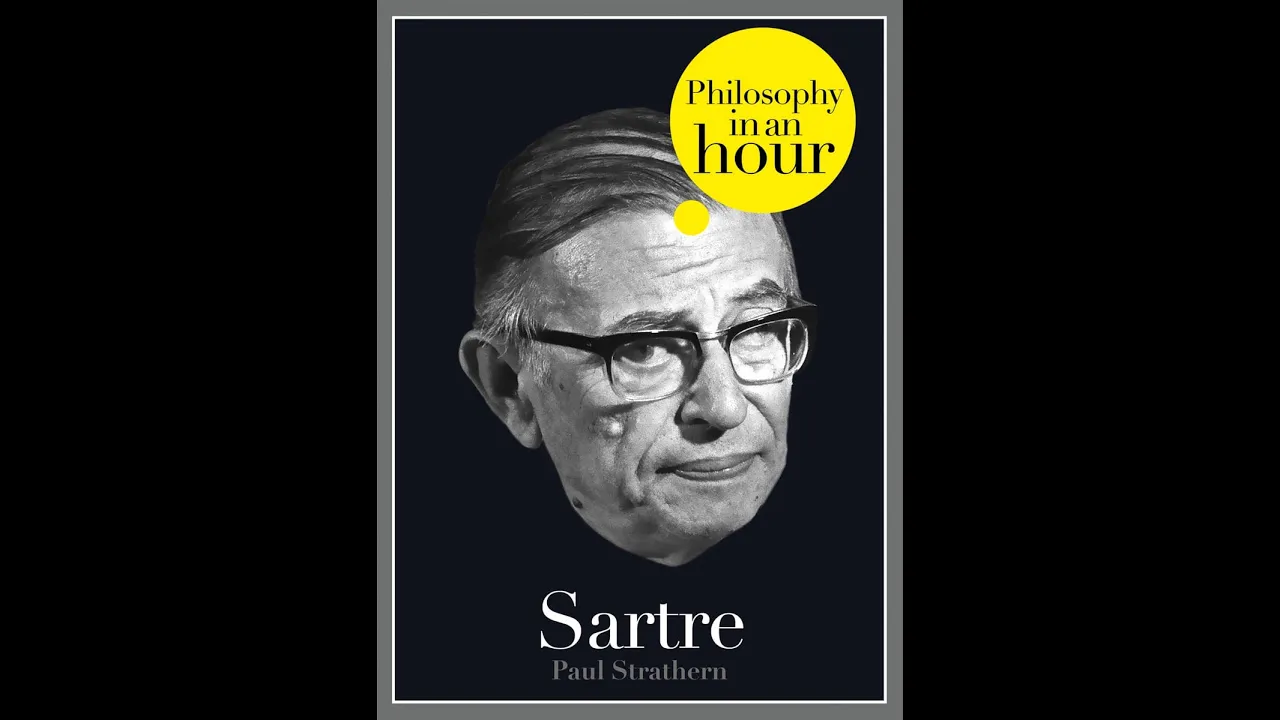
Philosophy in an hour such by Paul strathm read by Jonathan Keeble introduction Jean-Paul search was the most popular philosopher in history during his lifetime his work was known to students intellectuals revolutionaries and even the general reading public the world over Two main reasons account for this unprecedented popularity neither of which has to do with such as abilities as a philosopher first he became the spokesman for existentialism at the opportune moment when this philosophy filled the spiritual Gap left amidst the ruins of Europe in the aftermath of World War II and second his later adoption of
a revolutionary stance against Authority struck a chord in the era of Che Guevara Worldwide student unrest and sentimental Sympathy for the cultural revolution in communist China where politics was concerned satra wrote about almost everything alas events proved him wrong about almost everything 's earlier philosophy is another matter he may not have been the first existentialist but he was the first publicly to accept this label he was also one of its most able exponents Satra's ability to develop philosophical ideas and their implications remained unrivaled in the 20th century but this was done with imaginative Brilliance rather
than analytic rigor as a result he was dismissed with contempt by many Orthodox thinkers who claimed that neither he nor existentialism had anything to do with real philosophy existentialism was the philosophy that showed the ultimate freedom of the individual succinctly encapsulated by The nightclub singer Juliet Greco whatever you do you become existentialism could be as shallow as this and in the hands of such as profound as any contemporary philosophy it was the exciting and personally involving philosophy of action or to its critics the ultimate theory of introspection bordering on solipsism the belief that only I
exist yet all are agreed that in satra's hands existentialism became a revolt against The European Bourgeois values that lay in Ruins after World War II the bourgeoisie essentially the middle class came to stand for all that existentialism was not it was impossible to be an existentialist and a bourgeois satra's life and works Jean-Paul Sartre was born a Bourgeois his father was a young naval officer who died of a fever in 1906 when sarch was one year old Sartre was to describe this as the greatest event of my life had he lived my father would have
laid down on top of me and squashed me having been denied this edible fantasy satra claimed that he grew up with no sense of filial obedience no superego no aggressivity he had no interest in Authority nor any wish to exercise power over others so it comes as something of a surprise that this saintly childhood gave rise to An undying hatred for the bourgeoisie and any middle-class habits or values associated with this worthy section of the community a lifelong need to combat any sort of authority and a desire to establish psychological dominance over all who came
into close contact with him Sartre was to examine with the Brilliance of Genius the intricate workings of his mind but more obvious points often eluded him Search's mother Anne-Marie along with her saintly infant returned home to live on the outskirts of Paris with her father Carl Schweitzer Uncle of the African missionary Albert Schweitzer grown Parish feitzer was a typical French patriarchal figure of the period he dressed in elegant suits and a Panama Hat his word was lore in the otherwise entirely female household and he was constantly unfaithful to his wife in his autobiography limot words
satra Remembered him as a handsome man with a flowing white beard who was always waiting for the next opportunity to show off he looked so much like God the father that he was sometimes taken for him here surely was a super ego straight out of Central Casting but Sartre refused to acknowledge his grandfather in this vacant psychological role young Jean-Paul and his mother were treated like the children of the Household and satra came to regard Anne-Marie more as a close sister than as a mother unlike the father figure that he claimed he didn't need this
mother sister figure was to become an essential requirement for the rest of his life judging from all descriptions including his own satra appears to have had a blissfully happy childhood surrounded by doting females young jean-paul's ego quickly expanded to make Up for its lack of a superior element as if sanctity were not enough the child Saints now declared to himself I am a genius no one contradicted him even grandfather swept him into his arms and called him my little treasure with characteristic obtuseness satra was later to declare I hate my childhood and everything that survives
from it unlike other conceited little brats who came to the conclusion that they are a Genius such had the imagination endurance and exceptional mind necessary to fulfill this self-appointed role search was soon filling exercise book after exercise book with long Tales of nightly adventure and heroism it was now that Sartre suffered from the accidents that was to mark his appearance for life while on a Seaside vacation he caught a cold in those days the medical profession had A respectability that far exceeded its actual ability and the young boy's cold was allowed to develop disastrous complications
as a result Sartre suffered from glaucoma in his right eye which led to strabismus and a partial loss of vision in brutal unmedical language he now had a grotesque squint with one All But Blind Eye left in a permanent oblique stare but solipsism can soon overcome even Such blemishes and jean-paul's childish Idol continued then something really awful happened his mother had the thoughtless of Frontier to marry again Jean-Paul was horrified he was no longer the center of anne-marie's attention and the new Madame Morsi moved to far away La Rochelle with her usurper husband Joseph at
the age of 12 the awkward wall-eyed child traveled to the port of LA Rochelle to live with his mother and Joseph Morsi in satra's autobiography written in his 50s his 43 year old stepfather is remembered with the vividness that speaks of deep feeling my mother did not marry my stepfather for love he was not very pleasant it all thin man with a black mustache uneven complexion very large nose the authoritarian and utterly Bourgeois Missouri was ideally cast for the role Of the wicked stepfather he was rich lived in an opulent mansion and was an eminent
citizen in a provincial city of impeccable provincial complacency Joseph Morsi was president of the local dolone Bellville shipyards he ran his business efficiently in old-fashioned capitalist style any threat of a strike was preempted with a lockouts until hunger resolved the issue every evening after work he would call His stepson into the glittering front Salon where he would give him additional lessons in geometry and algebra in keeping with his General demeanor Monsieur malcy preferred the Orthodox approach to teaching persistent failure to arrive at the correct answer would result in a slap meanwhile the little prig in
his smart Parisian Knickerbockers was greeted with whistles of derision by his less fashionable fellow pupils at the lye sea This baptism of fire induced self-sufficiency and introversion such was not one to be cowed by bullies his undefeated egoism developed into a full independence of mind the more perceptive among his classmates recognize that the short puny Dandy who had a face like a frog possessed an exceptional mind despite the fact that he didn't excel in exams possibly as a direct result of his stepfather's insistent tutoring France's best mind of His generation usually settled about a third
of the way down from the top of his class satra occupied the traditional double role of Resident genius and class scapegoat he was the unpleasant spotty little character in glasses who knew everything and made sure everyone knew this but he had also developed the revealing habit of making blunders one anecdote will suffice it Characteristically the source is satra himself 40 years later like all the other boys at the lycy satra would fantasize about the women in the port's red light district his exceptional imagination had soon outclassed the rather poultry exploits of his teenage classmates I
told them that there was this woman with whom I went to the hotel that I met her in the afternoon and that we did what they said they did with their I even asked my mother's maid to write me a letter dearish Jean Paul they guessed my trick I confessed and became the laughing stock of the class these were tough times World War one had broken out and many of satra's fellow pupils were living alone with their mothers their fathers having been called to the front the Carnage in the trenches took its toll and his
bereaved classmates took out their grief-fueled aggression on Anyone perceived to be in a position of weakness such developed a mental toughness as well as a certain ambivalence he refused to conform just to join a gang of thoughtless idiots but he longed to be accepted he wanted to be popular but on his own terms this ambivalence too would remain lifelong but in the privacy of his room the little frog face with the walleye would Become a prince seated at his desk the boy who kept consoling himself I am a genius was already starting on the impossible
task of becoming one the exercise books filled with Tales of romantic chivalry had given way to autobiographical texts and now he began to write entire novels by the age of 14 he had completed his second novel Gertz Von berlishingen about a medieval German tyrant This reaches its climax when the Tyrant subjects rise up against him destroying the local Mills and weaving shops some of which bear more than a passing resemblance to shipyards the Tyrant is finally put to death in ingenious and excruciating fashion his head is shoved through a hole in a steeple clock so
that it emerges at the Roman numeral 12. the Tyrant sweats out his last moments of life in increasing anguish as the arm of the clock Rises Second by second toward the point where it will decapitate him at noon this combination of Anguish violence and Mortal extremity were to be Hallmarks of the mature writer in whose Works they retain all the immediacy of adolescent angst the intense teenage Growing Pains that search are now experienced were to leave an indelible mark at this age such feelings are often inextricably mixed with Awakening Philosophical questioning part of sartre's Genius
was his ability to retain this combination and the emotional intellectual force it generates in a young mind growing into awareness and bewilderment in 1919 sarch began stealing money from his mother's purse this he used to carry favor with his classmates buying them exotic cream cakes and rum Barbers at a smart local cafe satra's Joy at his popularity the sickly Taste of the cakes is undermined by guilt and uncertainty an underlying sourness another poignant emotional combination that was to become a recurrent theme sticky sweet and nauseous inevitably satra's ruse was unmasked involving him in further ridicule
from his ungrateful School Pals and the usual parental rumpus some sort of climax was reached and satra volunteered to return to Paris Preferring to live under the iron rule of God the grandfather rather than that of Mammon the cliche stepfather Sergeant the rebel was now learning to choose where to Rebel which circumstances were best suited to his particular form of rebellion useful First Steps in what was to turn into a lifelong campaign at 15 satra became a weekly border at the prestigious lyce Ori cut he began reading voraciously absorbing a Huge range of literature much
of it Beyond his emotional or intellectual comprehension meanwhile his writing branched out into notebooks of aphorisms and philosophical speculation the standard of these Paul says can be judged from his definition of love desire consists of treating a woman as a means not an end love consists of treating a woman as an end not a means As with so much of this kind of quintessentially French wisdom his remarks teetered between the spuriously epigrammatic and genuine insight his philosophy teacher remarked perceptively of his excessive elaboration of insufficiently clarified ideas which remains to this day the Orthodox anglo-american
position on satra's entire philosophy satra passed his Baccalaureate the tough National School graduation exam and secured a place at the economal superior contrary to its name there is nothing normal whatsoever about this school which skims the cream of France's University students a selection of satra's contemporaries here gives an indication of the standard these included such future stars as the philosophers Remo Aral and Maurice Merle ponti the leading Anthropologist Claude Levi Strauss the finest if most Hysterical Theologian philosopher of her time Simone vile the future great director of the echol itself Jean epaulette and the writer
philosopher sumon de bovoir satra thrived in this hot house atmosphere according to friends his ugliness vanished the moment he spoke the spotty little student in glasses Shone at the cafe tables of the Left Bank except when he's asleep he thinks all The time he was the best and most generous companion imaginable underneath the cynicism and self-disgust which he willingly displayed his secret was indubitably a great softness which he managed neither to acknowledge nor to disclaim according to sarch himself I was a thousand Socrates emerging from his shell he developed a prodigious thirst for beer and
Discovered to his Delights that young women Bamboozled by his intellect were capable of finding his ugliness attractive his thirst for sexual conquests was soon second only to his thirst for beer but neither of these could match his appetite for books ideas knowledge he read everything it appears except what he was required to read for his courses to the astonishment of everyone Especially himself such failed his first attempt at the aggregation graduation exam as a result during the following year his Brilliance became a little more directional despite his failure such remained the star pupil by now
he had acquired the scruffiness encouraged by student life in Paris where running water was a rarity Sach had soon dispensed with such Bourgeois Customs as bathing and took up smoking a pipe whose Aroma was presumably strong enough to disguise any other emanating from a nearby source he would be seen at cafes in the Latin quarter engaged in intense intellectual discussion with his circle of cronies which included arrow and briefly Merlot Ponte philosophy was the usual topic of conversation there was no point in joining this table unless you had Something particularly intelligent to say and could
say it with intellectual Verve one day the group was joined by a tall serious-minded 21 year old girl who was interested in philosophy her name was Simone de Beauvoir and she quickly demonstrated that she could hold her own in their philosophical discussions Simone de Beauvoir was of impeccable Bourgeois background much like such She had received an upper-class Convent education which she was now earnestly rebelling against she quickly acquired the nickname the beaver a symbol of hard work and energy according to the member of the group who christened her any salacious American associations with this name
would have been viewed dimly even by such as determinedly on Bourgeois group though the men were not above similar Revelation witticisms when they were Having a few beers on their own Charming pretty dresses horribly she was wearing a hideous little hat was how the Debonair 24 year old sarcha assessed to Beauvoir it was love at first sight according to De Beaufort either way such and the Beauvoir became lovers Sartre soon assumed the additional roles of Mentor exposure of Bourgeois behavior and clothes advisor from now on I'm going to take you under my wing he told
her It didn't quite work out that way despite her Brilliance he demolished her in argument but the beaver responded with honest and penetrating critiques of satra's ideas for the first time in his life he'd met his match the beaver's critical pronouncements were received like holy writ but it went deeper than this here was the double which de Beauvoir had fantasized about during the long Lonely years of her adolescence and satra far from becoming her fashion advisor soon found himself being mothered suggestions of baths change of shirts pimple cream and so forth de Beauvoir may have
found her psychological double but Sartre had also found someone who had slipped into the vacant role of sister mother these roles were embryonic and largely unconscious to begin with but right from the start it was obvious that this was No casual passing relationship yet there could be no question of them entering into any permanent relationship that would have been bourgeois even the idea of regarding themselves as a couple was philosophically unthinkable Bourgeois Domesticity cohabitation fiancee conventional affection such dangerous elements had to be avoided at all cost no theirs would be an open relationship they decided
no strings attached The student lovers studied ate a cheap Left Bank bistros made love discussed ideas in the cafes in bed walking in the Jade and the Luxembourg and studied and read and studied and read and explained and studied again during the hot summer weeks and then they took their aggregation when the results of the philosophy exam were posted such was first de Beauvoir second the cream of France's coming Intellectual generation left trailing in their wake cozy University days over the student lovers now had to face the real world teaching for de Beauvoir military service
for such in true intellectual fashion they decided to Define their relationship stated his position the abiding passion of his life was writing all else would always remain secondary Apart from writing he believed in travel polygamy and transparency after military service he had plans to become a lecturer in Japan he wanted to preserve their special relationship but also enjoyed the company of other women he refused to surrender his principle of personal Liberty therefore all notion of Bourgeois Fidelity was out on the other hand he did recognize that theirs was a special relationship they would therefore agree
to a two-year Lease they would have two years of intimacy together and then they would separate for two or three years they would remain extremely close but their relationship wouldn't grow stale and develop into a habit like any Bourgeois relationship the two-year lease would ensure this having defined their relationship incuriously Bourgeois and capitalist terms satra proceeded to elaborate on this in a more emphatic philosophical Manner drawing on kant's distinction between necessary and contingent truths if I can't a necessary truth was one whose denial involved a self-contradiction for example philosophers seek the truth seeking is part
of the definition of a philosopher so to deny this statement involves a self-contradiction on the other hand to deny the statement philosophers often talk twaddle does not Involve a self-contradiction the statement is not necessarily true or untrue in any logical sense unless that is your definition of a philosopher includes the inability to talk twaddle the truth of the second statement is thus contingent sarcha proposed that throughout their two-year lease and in the period after it his relationship with the beaver would be necessary any other Affairs he or she might Embark upon would be Considered contingent
obtuse unphilosophical thinkers may be forgiven for jumping to the wrong conclusion here what did such really mean when he had a contingent relationship it was not necessary even to tell her about it on the contrary this was where the third element of sartre's travel polygamy transparency Life Plan came into play he wished for his relationship with the Beauvoir to be utterly clear and truthful they would tell each other everything and have no secrets viewed from a lifetime away it's difficult for us to appreciate the novelty and daring of this relationship Paris may have been the
traditional city of lovers but France in the 1920s remained in the Stranglehold of Bourgeois morality as indeed did most civilized parts of the world apart from Utah The nuclear family was the foundation of conventional morality respectability was the order of the day and hypocrisy was the order of the night people broke the rules but not publicly sarch and above work came out of the closet this was an audacious thing to do in France at the time and their example was later to become an inspiration to intellectuals around the world here was an attempt to live
an honest And open relationship in which both Partners were independent and free if relationships were to be rational this surely was the way they should be whether or not even this relationship managed to achieve rationality is another matter which will be discussed at a consequent stage of its development suffice to say that for the time being it did or at least appeared to do so in the immortal words of the man who so heroically defined the new relationship Between thinking men and thinking women the beaver accepted this freedom and kept it such set off for
his 18-month military service and a Beauvoir began teaching psychology at a girls school in the Paris suburbs such must have been the worst Soldier since Buster Keaton but he eventually managed to escape into a meteorological units where his friend Arrow was the instructor Together they blew up weather balloons and observed them Drift Away across the Loire Valley off-duty he read voraciously again everything from philosophy to detective mags in between times he would concentrate his exceptional mental powers and think usually straight onto the page the beaver received and sent voluminous almost daily letters in which they
discussed the workings of their minds And on the weekends they would meet such as invariable greeting I've thought up a new Theory in fact he was doing very much the opposite destroying one Theory after another Descartes was wrong Kant was inadequate Hegel was bourgeois not one of the traditional philosophies was adequate to life as it was lived in the 20th century intense introspection had made satra Aware of his psychological topography and he became fascinated by Freud but in the end Freud too was not up to scratch psychoanalysis denied the autonomy of the Mind as the
intellectual edifices fell one by one all that was left was the freedom of the individual the lecturer's job in Japan fell through so after the Army satra took up a teaching post at La arv another Provincial Port City the brilliant young student from Paris was suitably unconventional enough to become popular with his students but not enough to get himself the sack one day during the holidays he was sitting drinking apricot cocktails with the beaver and arrow at a cafe in montpanas was expressing his dissatisfaction with philosophy it never came to grips with real life Are
all disagreed with him hadn't he heard of the German philosopher herself and phenomenology you see more pretty comrade if you're a phenomenologist you can talk about this drink and that's philosophy satra listen Spellbound here at last was the philosophy he had been looking for a philosophy of the individual and his involvement in the world such applied for a grant to study herself and in 1933 set off to spend a Year at the French Institute in Berlin the overall term for the philosophy that Sartre had chosen to study was existentialism this was originated by the 19th
century Danish philosopher and religious thinker sorenkirkegaard he believed that the only basis for a meaningful philosophy was the existing individual philosophy had nothing to do with detached contemplation of the world and The rational attempt to decipher the truth for Kierkegaard truth and experience were inextricably intertwined we had to abandon the idea that philosophy was some kind of exact science previously philosophic certainty had been based upon epistemology which studies the grounds upon which we base our knowledge but Kierkegaard insisted that being human meant more than thinking We are not just reasoning minds with a body attached
human beings are not simply or even primarily knowers they also desire choose act suffer and experience a wide range of emotions which color their experience these two are all an integral part of experience they are all involved in what it means to be human this was what real philosophy should be about according to Kierkegaard it should be existence philosophy I.E Existentialism a word he coined kierkegaard's philosophy stressed the irrational element in human existence thus turning all previous philosophy on its head typically he said and the first thing to understand is that we do not understand
for him subjectivity was truth and truth thus became subjective philosophy should not aim to explain or illuminate the darkness of the world it should aim to illuminate existence Itself we should aspire to become this life in its complete consciousness of itself here the first real difficulties of existentialism began to appear in trying to explain itself it became like a snake swallowing its tail having disavowed the rigidities of conceptual thought and argument this left its own Concepts and arguments blurred and muddied To the rationalists this rendered such arguments ultimately meaningless but Kierkegaard remained undaunted by such
attacks he continued to maintain that instead of dealing in abstract principles we should concentrate upon the particularity of experience and its essentially individual nature only in this way do we come to realize our utter freedom true when we experience this sentiment of the possible it may overwhelm us with A sense of dread or angst yet this very angst is identical with the realization of our ultimate freedom to choose our life the German philosopher Edmund hersell was born in 1859. four years after the death of Kierkegaard his work is now regarded as a development of the
existentialist tradition though he was far from being a direct follower of Kierkegaard and in fact disagreed with him on several Fundamental points unlike Kierkegaard herself retained a certain belief in traditional philosophy at least in its aims indeed his starting point was an attempt to overcome the division between the two main strands of contemporary philosophy namely rationalism and empiricism the rationalist elements was epitomized by its originator the 16th century Frenchman Rene Descartes he based his systematic rational view of The world upon one Bedrock certainty kojito ergo sum I think therefore I am the empiricist argument was
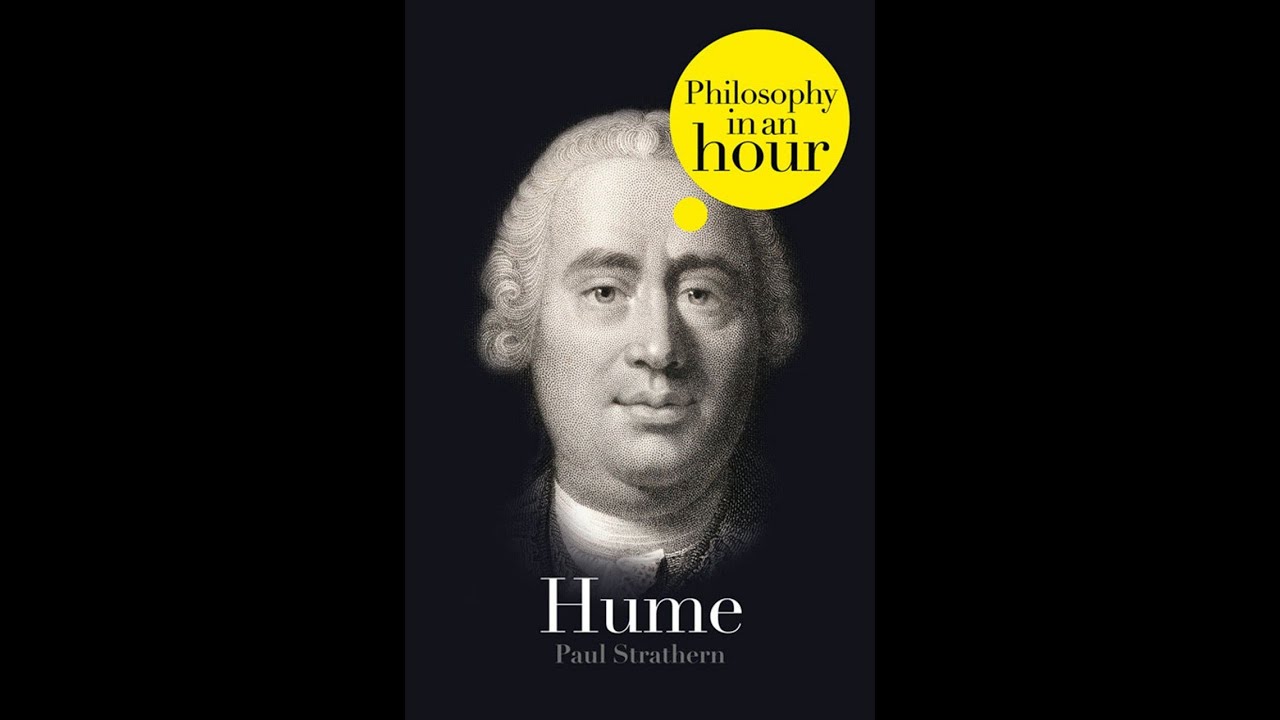
most forcibly put by the 18th century Scotsman David Hume who maintained that we can know nothing for certain apart from what we actually experience even such things as causality can never be certain for we never actually Experience One Thing causing another simply a succession of events Herschel tried to resolve this dichotomy By seeking some fundamental level which underlay both points of view he declared that only by analyzing the immediate experience that precedes systematic thought can we discover the philosophical ground upon which such things as logic and Mathematics I.E the domain of Reason are based we
must return to the immediacy of reality as it presents itself to our experience this could be done only by analyzing the Raw material of Consciousness prior to the presuppositions or theories that we so habitually impose upon it in other words we must deal with the basic phenomena of our experience to this activity hercel gave the name phenomenology in this way herself sought to turn philosophy into an exact science mental acts could be described in a way that freed them from our prejudices about the objective nature of the world They could also be analyzed in such
a way as to free them from assumptions about their own nature thus phenomenology would require a scrupulous and scientific examination of one's Consciousness as well as of one's intellectual processes so that one could determine the ultimate phenomena of experience and experience it as it is now satra could see what are all meant when he said that even talking about a glass of apricot cocktail could be Philosophy by examining the sticky bilious phenomena that constituted this encounter we could come to philosophical conclusions about the nature of experience our being and the world and thus existence itself
this was existentialism may you live in interesting times says the old Chinese curse Berlin in 1933 was about as interesting as it gets Before sartre's arrival in September Hitler had won election as chancellor of Germany and during the ensuing year he set about consolidating his power marching his Stormtroopers through the streets with banners and flares holding public book burnings dissolving the trade unions purging the Civil Service and Academia of Jews here was ideal schooling for someone who was later to set himself up as one of the leading political theorists of our Time or so one
might think but satra had something far more interesting to study his own consciousness judging from most reports such spent his year in Berlin in a kind of solipsistic days straining to discern the pure untrammeled phenomena of his experience meanwhile the cabarets of isherwood and Sally Bowles were being smashed to smithereens This lack of concern for the phenomena of reality what actually went on out there and how things worked in practice rather than theory was to become a persistent feature as such as philosophical activity with regard to the epistemology and phenomenology of existentialism this floor remained
implicit but it was to become increasingly obvious as he developed a more political philosophy In 1934 Sartre returned to teach at La Havre here he began to keep a notebook of his phenomenological Quest de Beauvoir persuaded him to turn this into a novel eventually this would be called la nozee nausea it is about a quasi-autobiographical character called and his aimless life in provincial bouvil mud town precious little happens but this is Perhaps the greatest portrayal of the existential condition ever written it is a deeply involving work but it's also something more that rarest entity a
philosophical novel that is neither abstracts nor didactic in a profound sense this is what existentialism is such is nothing if not ambitious here he poses the fundamental question what am I but he refuses to answer this in any intellectual way for him the answer lies In describing and brilliantly evoking the very feel of existence sartre's phenomenological Quest had now led him to expand his notion of contingency Hume had shown that we experience no such thing as causality going on to expand his argument necessity is something that exists in the mind not in objects in other
words we impose it on reality it is an assumption a Prejudice which May have proved vital to our Evolution but this does not mean it exists in reality Hume saw all this intellectually satra's Brilliance was to realize the truth of this inexperience I.E existentially everything was contingent indeed our entire existence was permeated with contingency looked at in this way the familiar skin of cause and effect necessity and so Forth which cover the world simply melts away take for example what happens when we look in the mirror to begin with we see something familiar but the
longer and more profoundly we scrutinize what we see the more unfamiliar it becomes in the same way this unfamiliarity can extend to our entire existence we thus exist free from all necessity all certainty But as Kierkegaard had shown this realization of the world's strangeness and contingency and our consequent freedom in it brings anguish angst dread for such stroke rockinta this manifests itself as nausea which is likened to the taste of oneself the very flavor of existence this phenomenological Quest reaches its climax in a celebrated passage where Rock and Tang confronts and experiences the root of
a chestnut tree In an even more profound way than one's face loses its familiarity in the mirror for rock and her the particularity of the chestnut tree becomes utterly alien and yet absorbing it no longer had the inoffensiveness of an abstract category it was the glue of actuality this root was molded in existence the diversity of things their individuality was only an illusion a veneer This veneer had melted giving way to moist solidity monstrous and chaotic nude fearfully and obscenely nude ultimately reality was viscous and obscene during this experience rockinta had been nothing but awareness
and concomitant with this awareness came the realization of the utter absurdity of everything but once again this was no intellectual Realization this absurdity was neither a mental idea nor a spoken word but this long snake rotting at my feet this wooden snake I realized that I'd found the key to existence the key to my nausea to my whole life and experience the absolute the absolute or the Absurd confronting this large bulbous poor neither ignorance nor knowledge mattered The world of explanations and reasons is not that of existence as a result of this Sasha understood man
is what he is in the present tense and he's only there this had important implications for those who sought meaning in their existence one cannot put life into perspective while living it it steals up on you from behind and you find yourself inside it Sartre wrote several drafts of LA noze and between times wrote a series of short stories these are less profoundly philosophical but have a distinctly existential feel to them in contrast to the novel they depict various attempts to escape responsibility for one's own existence the best of these is the wall where a
man facing death by execution tries to imagine in existence he might have lived Rather than facing up to the reality of his actual existence industrious as ever Sacha also wrote directly philosophical Works in which she attempted to apply rehearsal's phenomenological methods to an analysis of the emotions and the imagination in sketch for a theory of the emotions the first inadequacies of the phenomenological approach become apparent the emotions are viewed as an evasion of The phenomenological transparency that confronts existence naked they create a magical world of self-delusion in Seeking a theory of the emotions satra avoids
a psychology of the emotions psychology is viewed as subordinate to philosophy rather than as an integral part of the individual we may achieve phenomenological transparency by using our reason rather Than our emotions but its object is hardly a reasonable state such as nothing but awareness may have the intellect in advance but the vision of viscous obscene nude reality is charged with emotion likewise the consequent Brave attempt to take responsibility for our own existence and act accordingly can never totally elude psychological or emotional content it may be salutary to try to act as if We are
free of our psychology but we can never completely achieve that freedom yet satra's insistence that we must never hide behind such things is undeniably a brave prescription for a philosophy of action by now de Beauvoir had a teaching post at nearby ruong and they would meet on the weekends they also continued to correspond at length during the week as they had intended at the outset their Relationship remained totally open there were no secrets whatsoever between them yet here again this utter transparency would never be free of psychological undertones voyeurism and other murky elements soon became
apparent apart from its transparency the necessary relationship was not flourishing sat and above were no longer had sex and the 30 year old Sarge was developing an Appetite for young girls de Beauvoir was of course aware of this he told her absolutely everything in graphic detail which seems to have appealed to the lesbian element into Beaufort possibly to ensure that she remained in control of the situation de Bova introduced such to one of her 17 year old students but only after she too had enjoyed a brief fling with her Wanda was a wave-like half Russian
who Had long blonde hair and anarchic temperament red Spinoza barefoot in Winter Etc later satra would move on to Wanda's younger sister Olga throughout sarch and a Beauvoir retained the exemplary transparency between themselves but where the others were concerned a web of Deceit to match any Bourgeois provincial hypocrisy was soon being spun sartre's other attempt at utter Transparency was also not quite what it seemed years before even such accredited Pioneers as old as Huxley Sartre began experimenting with mescaline it was under the hallucinogenic effects of this drug that he saw the vision of the chestnut
tree root that he described in lagnose a whether it was mescaline or his own psychology that caused him to see Ultimate Reality as viscous and obscene is difficult to tell and in a way Irrelevant La noze is presented as a work of fiction and satra's Brilliant rendition of his vision is a consummate metaphor for phenomenological transparency though this was not a first here literature was way behind art a quarter of a century earlier a similarly brilliant metaphorical deconstruction of our suppositions about reality have been achieved by the cubists in 1937 such managed to secure a
Teaching Post in Paris and was able to return to his beloved Left Bank once again he could write in the cafes this was not an affectation the Left Bank had been the thriving Latin quarter student District of Paris since swelled before the time of the poet Francois vyong in the 15th century many of the houses were centuries old and lacked even basic facilities such as stoves for heating or cooking and Reliable Plumbing The occupants of such accommodations spent much of their time in the countless cafes and cheap restaurants that had sprung up to remedy this
domestic oversight in April 1938 Laden Jose was published followed a few months later by a collection of sartre's short stories entitled lemur the wall both were received with critical Acclaim establishing such as the coming left-bank literary figure In 1939 his sketch for a theory of the emotions was published to somewhat lesser claim but it nonetheless added to his intellectual street cred sartrip was on the brink of Fame but Europe seemed to be on the brink of War such however had spent a year in Berlin and knew the reality behind Hitler's aggression I know this state
of mind of the German people Hitler couldn't possibly dream of going to war he assured his friends he's Definitely bluffing next day Hitler invaded Poland and the French army was mobilized within 24 hours Europe was at War and such was in uniform the war divided my life into Sarge wrote later he was to emerge from this experience completely transformed in all but the Acumen of his political judgment sarch was posted to a meteorological units at the Eastern Front overlooking The Rhine Valley the Germans could never attack here France's eastern border with Germany was protected by
the impregnable Maginot Line the last word in modern defense this consisted of a linear Fortress of concrete bunkers and tunnels with modern gun emplacement stretching from Belgium to Switzerland but the French army was not entirely modernized one of the essential modes of communication on this front remained the Carrier pigeon and the French Army Reserves consisted of not a few men of the caliber of private such apart from the distraction of sending up a couple of weather balloons each day such was utterly committed to his work unfortunately this had nothing to do with the Army's work
sarch was welt into the first draft of his next novel and was busy studying Heidegger with a view to completing a really big book on philosophy the sights Of a private reading a book of impenetrable German metaphysics which even to Germans read like a code doesn't seem to have bothered such as patriotic colleagues or even come to the notice of his officers sartre's existentialist ideas were developing fast in light of our contingency and thus the absurdity of our existence we must take complete responsibility for our lives he explained in his almost daily pages long Letters
to the beaver we have no right to bemoan Our Fate every individual Wills his own destiny he Wills his character and even the circumstances under which this character Acts taken to its logical conclusion this has some peculiar implications but such was never one to shirk such difficulties yes this did mean that he as an individual was responsible for everything he explained to the beaver Which meant he was even responsible for World War II and he must be willing to accept this responsibility and act accordingly as he later put it this is my War it is
in my image and I deserve it everything happens as if I carried the entire responsibility for this war so I am this war this seemingly ludicrous position is in fact far more defensible than many Seemingly more plausible philosophical positions one has only to think of nihilism or wittgenstein's claim that's all philosophy was just a misunderstanding due to linguistic errors as we have seen satra's existentialism has its roots in both hume's empiricism and Descartes rationalism taken to their extremes both of these Veer toward lonely solipsism Hume we do not actually experience the Individual existence of others
Descartes if everything except I think therefore I am is uncertain then the existence of others must also fall into this category such merely grasps the bull by the horns he shows the implications of both Descartes and Hume it may go against all common sense like most philosophy and much of modern science but if we are true to our own Consciousness and fill it out all accepted prejudices and Assumptions such as is a defensible position it is also a brave one filled with an almost nietzsian fortitude and optimism this is my lot I will make the
best of it if I am free to change my life I must be responsible for my life we may draw the line at the multiple sclerosis sufferer or the snatched hostage forced to live chained in a dungeon but something akin to such as existential attitude informs both Stephen Hawking and several of those who survived as Beirut hostages such people accept what is determined in their fate and yet overcome this with their remaining freedom they do in one sense take responsibility for their entire life traditional philosophers object to such as position by insisting that philosophy should
describe what is not what ought to be no matter how morally laudable this may be But existentialism insists upon plunging philosophy into action so it's not surprising that it should at least partly appear to be a strategy for living admittedly this comes close to being morally coercive but at this stage satra's idea of good was sufficiently open-ended to exclude his existentialism from the charge of being merely a system of morality and disguise only later as his existentialism became More socially involved with this change meanwhile unaware that he was merely a pawn in the existential condition
of a meteorological private in the French army Hitler over and Belgium outflanked the Maginot Line and invaded France they have overstretched their resources and will be unable to defend such a large front satra reassured de Beauvoir but he must have changed his mind for within a month carrier pigeon traffic on the entire Eastern Front came to a halt As private search willed his and the French Army's surrender such was now able to travel to Germany to study Heidegger in his native land in a prisoner of war camp their conditions were no laughing matter even so
sarch continued with his reading program as indefatigably as if he was still at the front line defending his native land Heidegger held the key it was he who had taken existentialism The Next Step Beyond rehearsal's phenomenology Heidegger's main work was zein and zeites Being and Time published in 1927. in this he denies traditional viewpoints such as those of Descartes and Hume as an individual I am not and can never be a detached Observer of the world one whose utmost certainty is that he thinks Descartes or that he has experiences Hume no primarily I am aware
of myself as an existent being in the midst of a world For hey Digger My Utmost certainty is my Das sign literally being there more helpfully translated as my being in the world Heidegger's concept of being is contrasted with knowing through thought or experience and the abstract Concepts that arise from this knowing such Concepts do not capture the individuality and specificity of my being in the world this latter and attaining a deeper awareness of it is The business of philosophy Heidegger's main preoccupation is with the question of being in pursuit of this he even rejects
herself's notion of phenomenology acts of Consciousness free from all presuppositions such as achieved by phenomenology cannot be the fundamental source of our knowledge being in the world remains our primary awareness and only from this can we begin to approach the question of the Meaning of being my fundamental sense of my own being is of course besets by the host of trivialities involved in my being in the world the distractions of everyday existence but it's still possible to approach an understanding of the significance of being how only in the anticipation of death is all accidental and
provisional possibility driven out when one has grasped the finitude of one's existence It pulls one away from the unending multiplicity of possibilities which immediately present themselves possibilities such as comfortableness shirking and taking things lightly to achieve this absolute resoluteness we must be free for death this is all very admirable if a little Germanic but why should we not seek out Comfort diversions and relax a bit because this is not the way to understand the meaning of being According to Heidegger but why is such activity necessary or alternatively does such activity or even the words that
describe it have any meaning at all this like many other Concepts Heidegger uses remains Woolly and devoid of exact definition indeed the jargon he generates in trying to describe these woolly Concepts often degenerates into the very word mysticism he deplores Two examples were suffice temporality gets experienced in a phenomenally primordial way in Das signs authentic being a whole in phenomenon of anticipatory resoluteness or the wearing of an act of understanding which assigns or refers itself is that for which one lets entities be encountered in the kind of being that belongs to involvements and this wherein
Is the phenomenon of the world and this is far from high desert is worst but back to Heidegger's more intelligible arguments for many people in the early 20th century Germany Heidegger's life would have appeared to be the epitome of comfortableness shirking and taking things lightly he lived the life of a university Professor completes with a well-appointed lodge in the Black Forest His highly ambivalent attitude toward the Nazis reeked of shirking to say the very least and he certainly took the Nazi period lightly enough not to issue any later apology for it but the strengths and
weaknesses of Heidegger's philosophy should not be identified with the strengths and weaknesses of the man himself at any rate satra didn't and this is what concerns us here yet even taken at face value Heidegger's Arguments are not always what they seem underlying his Earnest exhortation to shun Creature Comforts face up to things and take life seriously are hidden assumptions which are at extreme variance with certain contemporary attitudes for instance in the aftermath of Nietzsche's Epoch making pronouncement God is dead many now believe that life itself has no overall purpose there is no such thing as
good or evil And thus life has no Transcendent value or meaning in which case it is futile and can even be regarded as an absurd joke Millions die of famine in Africa through no fault of their own a jovial non-entity of limited talent and ambition becomes the most powerful man on Earth so what right do we have to claim for our own existence the privilege of utmost seriousness Likewise we spend much of our time shirking relaxing from the hardness and suffering of existence or facing up to Ultimate questions about it this shirking is often called
enjoying yourself which leads to happiness the goal of rights-minded philosophies from Aristotle to the present day this enjoyment of life or shirking can range from Reading High literature to knitting woolly socks Heidegger's favorite hobby and as to Comfortableness without it there would be no civilization or thought of any kind culture from mathematical reasoning to operatic sentimentality or poignant Penny flute playing requires comfortable Leisure for its creation caught without woolly socks having lost the key to my Mountain Lodge on a snowy night in the Black Forest my thoughts do indeed turn to the question of being
but in a rather more practical sense than Heidegger had in mind and this is no ridiculous example by Heidegger's criteria my frigid thoughts in the snow-bound woods would have been shirking the issue Heidegger's philosophy is just as rooted in the Primacy of thought as that of Descartes such understood this and saw it as his task to divert Heidegger's profound analysis of being from thought into action He sought to return it to kierkegaard's original existentialism where philosophy was concerned with subjective life the choices and acts of the individual but first instead of philosophy involved in action
it was necessary for the philosopher himself to become involved in some action Sarge was determined to get out of his prisoner of war camp which he finally managed in March 1941. according to the legend he escaped In fact he managed to obtain a forged medical certificate which ensured his release and returned to Paris on compassionate grounds had he escaped it's unlikely the Germans would have issued him a free rail pass to Paris and he would have been on the run with no identity documents whereas in fact he lived quite openly resumed his old teaching job
in the suburbs and found a room just around the corner from the beaver Amidst The Bleak discomfort of Nazi occupied Paris such sat down to write his philosophical masterpiece letra elino being and nothingness this was to be no ordinary achievement for a start the final draft of satra's work occupied more than 700 Pages this required more paper than was easy to come by in a city beset by wartime shortages well it was difficult to come by enough bread consisting of chaff and Sawdust although the cafe where satra wrote still served coffee made with ground roasted
acorns as is evident from its title satra's work was heavily influenced by Heidegger and not just in its ideas there are long passages in which satra allows his normally pellucid prose to become bogged down in a morass of jargon being a truly creative writer satra refused to take on Heidegger's jargon wholesale and set about inventing his Own impenetrable terminology fortunately the main message of satra's philosophy is radiantly clear and can be conveyed with a minimum of existentialist gobbledygook this was to be no ordinary book of philosophy as he explained to De Beauvoir there will be
a few boring passages but there will also be a few spicy ones one concerns all holes in general and the other focuses on the anus and love Italian style to avoid disappointment I had better reveal that we will be concentrating on the philosophical rather than the speleological aspects of this work first an explanation of the title letra elino this delineates between human consciousness or nothingness nail and being or thingness better as satra explained Consciousness is total emptiness since the entire world Is outside it thus Consciousness is outside the realm of matter I.E it is not
better in the jargon and for this reason it remains beyond the Realms of mechanistic determinism it is free here's satra's notion of being deviates from that of Heidegger fasatra being is the conscious being of the individual who has the power to organize his awareness of the world Herself's phenomenology had returned Consciousness to the Vivid and intense awareness of artists and biblical Prophets once again Consciousness became awful threatening hazardous with havens of Grace and love but satra goes beyond this we do not arrive at a fundamental awareness of ourselves by simply being more profoundly conscious as
say in a mescaline-induced vision No we do this by our actions and such choice and action takes place not in any trance of heightened awareness but in reality on the streets in a town in the midst of a crowd a thing among things a person amongst people for Saturn the fundamental is consciousness not Heidegger's being but Consciousness cannot exist in a vacuum it must be conscious of something here is where sacha's philosophy becomes One of action unlike Heidegger his main focus is not on the nature of being but on its two aspects these he distinguishes
as the in itself and the for itself the in itself is everything that is without Consciousness the four itself is the nothingness the Consciousness that is free and undetermined by the world of thingness or being like Heidegger this too would appear Ultimately to rely upon the Cartesian certainty of thought but satra dismisses the notion that his Consciousness is thought that results in knowledge like that of Descartes the four itself doesn't actually know anything the point of view of pure knowledge is contradictory there is only the point of view of engaged knowledge the four itself is
our purposive perception which chooses and acts Asatra puts it Consciousness chooses itself as desire in other words Consciousness actually creates itself through its choices satra's entire philosophy hinges upon the freedom of the individual to choose in doing so he chooses himself and this Freedom remains even when the individual finds himself in an historical situation that appears to hold him captive here the philosophy Echoes the man with His passionate belief in Freedom and personal Liberty it also Echoes the historical context what could be more precious than freedom in a country under occupation by an enemy satra's
examination of and insistence upon the individual's ability to choose himself shows all the Hallmarks of being written during the war in this it's a brave philosophy of defiance If I am enlisted in a war this is my War it is in my image and I deserve it no mention is made of the enemy the enemy is acceptance of the status quo of the given going along with the crowd rather than choosing oneself the enemy is the acceptance of other I.E all that is other than my individual consciousness yet such also makes it plain that this
is an absurd situation the human Enterprise individual Endeavor Is ultimately futile there is no ultimate good no God no Transcendent set of values against which all are or will be judged again the echo of living under a vicious and immoral regime is plain here equally obvious is that such as description of the individual human predicament transcends the particular conditions of Paris under Nazi occupation half a century later our predicaments May appear less Bleak and intense but its lineaments remain identical if we accept such as atheism nowadays we may be inclined to a more optimistic view
but in a strict sense The Human Condition remains absurd and futile these two words were to become existentialist favorites to the point of cliche among the more trivial Cafe philosophers of the Left Bank they became a Shibboleth if you didn't consider life to be absurd and futile You couldn't possibly be an existentialist in light of this it's worth examining these two key words a bit more closely what precisely do they say about the lineaments and nature of our individual predicament futile comes from a Latin word meaning outpouring I.E overflowing or leaking from a jug to
no purpose Nowadays it tends to mean ineffectual incapable of producing any worthwhile or lasting result absurd originally meant out of Harmony and now means not conforming to reason or custom but the English use of this word has humorous connotations which are often entirely lacking in Continental European usage for Heidegger The Human Condition was something of utmost seriousness and even for satra it was no laughing matter Ironically it's the pragmatic and humor-oriented attitude prevalent in the English-speaking World which would appear more in need of existentialism than po-faced Continental seriousness our Common Sense attitude frequently tends to
a shallowness devoid of philosophic content existentialism's attempt to delineate the individual predicament can lend a certain background depth to the way for thin eye of modern Western Self-understanding futility and absurdity can be self-enhancing as well as self-defeating but back to being a nothingness the enemy is the acceptance of other insisted such here sarch was approaching the solipsism of his early attitude toward the war curiously he was supported in this view by his contemporary Gabrielle Marcel who was in fact the first French philosopher to embrace existentialism In Marcel's view as far as the individual was concerned
Society is expressible as a minus sign Marcel was able to escape the charge of solipsism by embracing Catholicism satra's individual was utterly alone the other is the hidden death of my possibilities asserted such but as previously mentioned Consciousness is consciousness of something Consciousness nothingness has an object Being such thus escapes the strictest solipsism which maintains that I am the only thing that exists and the so-called outside world is merely part of my consciousness but satra's position still leaves his individual Consciousness very much on its own out there in the end he is forced to resort
to a convoluted argument of higher jargon this boils down to the common sense Reasons we all accept for the existence of others in the private reverie known as our life now that others have been admitted to the other satra can introduce a morality ironically his morality has nothing to do with others it is a suitably absurd morality for an absurd world with no apparent irony he maintains all human activities are equivalent thus it amounts to the same thing whether one gets drunk alone or is a Leader of Nations if one of these activities takes precedence
over the other this will not be because of its real goal but because of the degree of Consciousness which it possesses of its ideal goal anyone who has brought up a child become involved with a dope addict or felt the need to place everything on a sure thing in the Kentucky Derby will spot it once the floor in satra's heroically Liberal argument for the equivalence of all Human activity yet paradoxically his ensuing argument here makes utter sense of his seemingly ludicrous earlier assertion in choosing what we do we should be aware of what we are
doing and must take full responsibility for it my aim should be to increase my Consciousness to become more self-aware and more aware of my predicament as well as accepting responsibility for my predicament my actions and the self I Create with those actions if there is no such thing as ultimate good and evil ultimate value then no human activity is intrinsically better than any other we must accept that they are indeed all equivalent we choose to make one act better than another and we do so by our own choice this boils down to the very opposite
of some causal woolly liberalism where anything goes With each choice I make I am creating not only myself but implying an entire morality whether I like it or not as satra indicated this should be enough to make you think get smashed or run for president but be aware of what you're doing this brings us to one of satra's key Concepts morve four literally bad faith but perhaps more easily understood as self-deception we act in bad faith when we delude Ourselves particularly when we attempt to rationalize human existence by imposing upon it meaning or coherence this
can be done by accepting religion or any set of given values it also includes any acceptance of Science in so far as this attempts to impose an overall meaning on life to act in bad faith therefore means to avoid responsibility for one's actions by shifting this onto some outside influence Another key concept of such as existentialism is that existence proceeds essence this means that a human being first of all exists encounters himself surges up in the world and only defines himself afterwards according to such there is no such thing as human nature because there is
no All-Seeing God to have a conception of it a human being is nothing else but what He makes of himself he exists only as much as he realizes himself he is thus nothing more than the sum of his actions nothing else but what his life is satra's explanation of human behavior inevitably Falls foul of the usual psychological interpretations one has only to consider the concept of the subconscious its influence on our actions and its role in the formation of Personality satra attempted to overcome such objections by proposing his own existential psychoanalysis in being a nothingness
he uses this to interpret a variety of human actions his main argument is as follows what I am is nothingness which is an absence of being what I long for is the being that surrounds me which I lack Sacha argues that our desires and the Actions we take are tributaries of this flow towards being I desire the world I desire to possess it and indeed to be it in a certain sense I actually become the object I possess thus by possessing something my nothingness becomes being this Echoes the process by which my nothingness becomes being
in the eyes of others more than that it serves to protect me From this reifying infliction by giving my nothingness something to shelter behind much the same thing happens when I destroy or consume something I appropriate it and Destroy its impenetrability to me such analysis is taken to its logical extreme with an existentialist interpretation of what happens when I smoke a cigarette a lifelong two packs a day passion of sartrus In his view smoking is also an acquisitive and destructive action my cigarette is the world as I smoke it I destroy it and absorb it
the fact that this may be destroying me is not even considered this would be an abrogation of my responsibility for the world presumably my freedom is choosing to be God claim such a choice which is Manifest and echoed in all my actions let's a linear ends with yet another Convoluted argument which characteristically appears both philosophically interesting and spurious in equal measure every human reality is a passion it attempts to lose itself in order to become being at the same time becoming the in itself which escapes contingency the thing which causes itself which religions call God
thus the passion of man is the opposite of The Passion of Christ for man loses Himself as man so that God may be born but the idea of God contradicts itself and we lose ourselves in vain man is a useless passion let Elinor was published in 1943 in Nazi occupied Paris it attracted little attention Beyond those who considered themselves philosophers fortunately this latter group was and remains considerably larger in France than in any other country with the Exception of Ireland where the entire population falls into this category as a result word soon began to spread
from the few who had actually read the book to those who wish to talk about it as if they had existentialism with its handy nihilistic slogans existence is futile man is a useless passion and so forth soon swept the Left Bank in 1945 World War II came to an end the anti-fascist Allies were victorious in Europe but European ruins the futility of this absurd situation was apparent to all existentialism spoke of such things in the language of now there was no such thing as ultimate Justice Millions had died and those who survived had little else
to believe in but their own individuality France had been humiliated and now had a need for Heroes preferably cultural this was after all France it was necessary to Show that there had at least been heroic spiritual resistance to German barbarism Picasso filled the artistic slot despite the fact that he was Spanish and satra filled the literary one he had after all written a few articles for the resistance press under the pressure of popular Acclaim satra even went so far as to write a short book explaining existentialism in simple terms called translated as existentialism and Humanism
and existentialism now became France's intellectual export to the world already the hero of the Left Bank he now became famous among intellectuals everywhere he even began traveling and giving talks about existentialism the old religions had failed this new religion of atheism and defiant despair precisely matched the mood of the time Juliet Greco became famous singing existentialist songs in the cellars of The Latin quarter and Jean-Paul sartz sat at his table in the Cafe De floor with Simone de Beauvoir at the next table writing his philosophy the singer in her black outfit in the cafe philosopher
on the boulevard joined the Eiffel Tower and Notre Dame among the tourist sites of Paris but Sarge didn't sell out it was not in his nature to conform to anything let alone Fame and success Bourgeois Concepts wreaking of bad faith He continued with his philosophical development as ever writing writing writing novels plays articles books and when his podgy hopelessly unathletic body began to falter under this constant driving he resorted to the chemical life working all day every day arguing and drinking into the early hours Sartre kept himself going on uppers and downers to keep his
mind ticking turn it off wind it up again and every now and then set off the alarm Then the beaver would take him on vacation discreetly disappearing while he entertained his latest intellectually dazzled young existential East Sartre believed in being unpredictable indeed his whole philosophy was posited on this so it comes as something of a surprise that his philosophical development had all the unpredictability of a runaway Steamroller beginning from an almost solipsistic Individuality it became increasingly engaged with the world society at large the political situation was to become another existentialist buzzword after the useless passion
of being and nothingness and the first outreachings of existentialist psychoanalysis existentialism flowered into a humanism is such as clearest exposition of existentialism Within a few years this 30-page work had been translated into every Major World Language it contains the usual pithy slogans of quasi-nihilistic defiance we are alone without excuses that is what I mean when I say that man is condemned to be free previously satra had seen this Freedom as gratuitous indeed it seemed to encourage that notorious French concept the ACT gratui an impulsive spontaneous Action heedless of the consequences fortunately this self-indulgent Menace appeared
more in literature than in life for example the character indeeds The counterfeiters Who spontaneously pushes a passenger from a speeding train such acts and the gratuitous existential Freedom they exhibited were said to be asocial they showed how the true individual existed outside Society Beyond its mores judges tended to a similar view ensuring That the perpetrators of such acts remained in this existential predicament for as long as possible but satra's insistence on our gratuitous Freedom was little more than his first realization of what existential Freedom actually meant it was in a way a purely philosophical realization
the pre-war provincial School master in lahav who proposed it did indulge in the occasional minor act gratui frequently Involving large amounts of beer this made him popular with his students but no act gratui prevented him from turning up to take his class in the morning Star Trek soon came to understand that although this was a tenable philosophical attitude it was hardly a plausible social attitude indeed rather than being asocial as its proponents heartily claimed it was in fact just plain anti-social In lax's satra's understanding of individual Freedom takes on a social aspect for such this
Freedom now implied social responsibility previously he had held that with each choice we make we are not only creating ourselves but implying an entire morality from here it's only a small step to social responsibility but it is a major step It acknowledges the existence of others rather than just other and accepts that these others play a distinct role in my predicament in choosing for himself man chooses for all men for in effect of all the actions a man takes in order to create himself as he Wills to be there is not one which is not
creative at the same time of an image such as he believes he ought to be Do as you would be done by peace on Earth to all men of good will such sentiments occupy a central place in the morality of Western Civilization they received their strongest philosophical backing with kant's categorical imperative upon which he based his entire moral system Act only on that Maxim whereby thou cast at the same time will that it should become a universal law satra's morality was not original it Wasn't even existentialist though he claimed it as such by setting it
within the context of his own existential outlook on life and his conception of freedom in Lexus satra translates this humanism as follows man is always outside himself it is only by projecting and losing himself Beyond himself that he makes Man exist on the other hand by pursuing Transcendent aims he himself is able to exist thus man is self-surpassing and can grasp objects only in relation to his self-surpassing he is himself the heart and center of his self-transcendence in other words man creates his own Transcendent ideals which may transcend the world being but are at the
center of his own Transcendence nothingness there is no other Universe except the Human Universe the universe of human subjectivity as part of his anti-bourgeois attitude such had always inclined toward radical socialist views though he insisted I am not a Marxist but as his existentialism inclined towards social engagement he found himself identifying a similar drift in philosophy itself he concluded that there had been only three philosophies of the modern period That of Descartes and Locke the Forerunner of Hume that of Kant vs Hegel and Marxism he soon began to see existentialism as a parasitical system living
on the margin of knowledge which at first it opposed but into which today it seeks to be integrated in no time he was maintaining that Marxism has reabsorbed man into the idea and existentialism seeks him everywhere where he is at his work in his home in The street by 1952 such had become a Marxist but individualistic as ever he refused to become a member of any political party and her verse as ever is Chief bet Noir became the Communist Party now consider that true Marxism has been completely Twisted falsified by the Communists previously he had
been a revolutionary for philosophy now he became a philosopher for the revolution Radical movements around the world took heart from his writings he made revolutionary pronouncements on the issues of the day in South America in the Africa emerging from Colonial rule even in maoist China satra's books were read and his ideas debated among intellectuals he visited Russia and communist Eastern Europe attempting to steer his revolutionary ideas between the rock of totalitarianism and the hard place of Existential freedom his pronouncements were used and misused by the concerned authorities and freedom movements to their own ends as
ever satra's readings of the political situation bore little relation to political reality ideas remained his Forte here indeed was a futile existence in an absurd world but there was undeniable bravery in the position he chose to adopt his right-minded but simplistic stance During the Algerian War of Independence against France ensured that his flat was twice bombed by French right-wing extremists on another occasion he stood alone on his soapbox outside a car factory which had been seized by the workers delivering a speech of solidarity through his megaphone while the armed police lined up to storm the
gates neither the police nor the workers paid any attention to his intellectual Analysis of the situation he remained essentially a one-man band of idealistic awkwardness but through his magazine let Tom modern his voice spread across France Europe and the world accompanied by De Beauvoir he met Castro visited Prague after the Russian invasion had tea with the commander of the red Chinese Army back in Paris he continued to write obsessively driving himself from coridane a legally Available amphetamine-based upper the result was logaria vast books filled with convoluted dialectical and marxist-inspired arguments which never came to any
conclusion satra's last important quasi-philosophical work critique de la rezon delectic translated as search for a method was published in 1960. in more than 750 Pages he tried to work out his relationship to Marxism I believe that only a historical approach can explain man he now maintained his ideas echoed Marxist historicism whose deterministic critique of the development of civilization and dialectical analysis of historical change appealed to his intellectual Outlook he remained a Marxist but inevitably it had to be his kind of Marxism classical Marxism had failed to adapt to The particular circumstances of history geography economics
and what have you but satra's main criticism of Marx himself May yet prove prophetic in satra's view Marx had not laid enough emphasis on the question of scarcity yet in analyzing this problem such once again let his ideas run away with him all human relationships are governed by scarcity he maintained even when there appears to be overproduction scarcity appears in the form of a scarcity of Consumers the basic rule of civilization in its present stage of development remains kill or starve even the violence that leads to conflict is internalize scarcity and so forth yet among
all the nonsense flashes of the old genius remained especially in the plays he continued to write in these the artist was better than the intellectual the enemy be he assassin or Torturer is often made to appear a tragic hero trapped in a situation from which he feels There Is No Escape he understands what he is doing and is responsible for his acts but cannot do otherwise in the words of the leading satrian critic Philippe toddy such enemies are victims of their own acts and crucified by their own intentions prisoners at the bar of history and
yet with no execution about themselves These victims are the last representatives of a Christian sensibility in a world where God is dead but neither history nor love can take his place in 1964 sarch was awarded the Nobel Prize for literature specifically for his autobiography of his childhood limotte words rather than for any of his philosophical or political writings inevitably he rejected the prize Insisting the writer must refuse to let himself be transformed by institutions although suffering from increasing ill health such continued to issue intransigent political pronouncements on the events of the day in his magazine
litope modern and to head all manner of Street demonstrations against the authorities right-wing extremists replied with slogans such as shoot such and the police longed to lock him up but he now Had a friend at court president de Gaulle magisterally recognized a fellow great man of history and let it be known you do not imprison Voltaire but by this time search was not so much of Voltaire as Tintin the intellectual current of the time had passed on new ideas were emerging such as structuralism and post-modernism and with them new figures but derida Foucault pygmies in
his shadow they may Have been but Paris is also the city of fashion these were the latest intellectual fashion of the Left Bank of engaged intellectuals and of the chattering classes worldwide such was old hat as the 60s became the 70s such increasingly paid the price for living the chemical life his Faustian bargain which had enabled him to work harder than others and live harder than others attended by De Beauvoir and his faithful Retinue of young existentialists some of whom were by now mature women such became increasingly frail the pills the writing the drinking the
smoking the women he had to cut down on them all in the end on April the 15th 1980 at the age of 74 sarch died his funeral four days later attracted a spontaneous crowd of more than 25 000 followers as it made its way through the Latin quarter past the cafes where He had written his finest works the denizens of the Left Bank the most disrespectful audience in the world had come to pay their last respects to the most disrespectful hero of them all from sartre's writings man is condemned to be free existentialism and humanism
the world of explanations and reasons is not that of existence nausea the essential thing is contingency in Other words by logical definition existence is not necessity to exist just means to be there what exists simply appears and lets itself be encountered you can never deduce it nausea the first effect of existentialism is that it puts every man in possession of himself as he is and places the entire responsibility for his existence upon his own shoulders Existentialism and humanism it is inadmissible that a man should pass judgment on man existentialism does away with this sort of
judgment an existentialist will never take man as the end since man is still to be determined existentialism and humanism atheistic existentialism of which I am a representative maintains that if God doesn't exist there is at least one being whose existence comes before its Essence that is a being which exists before it can be defined by any conception of it that being is man or as Heidegger calls it human reality man first of all exists encounters himself surges up in the world and defines himself afterwards man is not definable because to begin with he is nothing
he will not be anything until later and then he will be what he makes of himself Existentialism and humanism being is the world the other nothingness is the human reality the radical negation by means of which the world is revealed human reality is what causes this nothingness to be outside being and nothingness Consciousness is complete emptiness because the entire world is outside it being a nothingness my Acts cause values to spring up like Partridges being a nothingness man is a useless passion being a nothingness hell is other people in camera that was philosophy in an
hour such by Paul strathurn read by Jonathan Keeble


![Philosophy In An Hour - Jean Paul Sartre [AUDIOBOOK]](https://img.youtube.com/vi/096X84tk8Aw/maxresdefault.jpg)