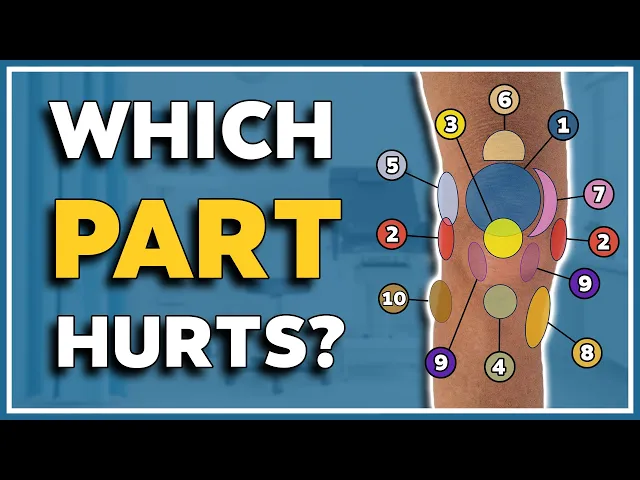
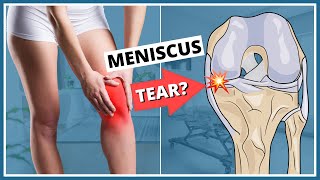
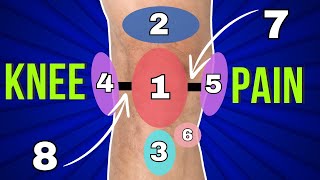
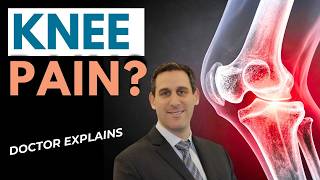
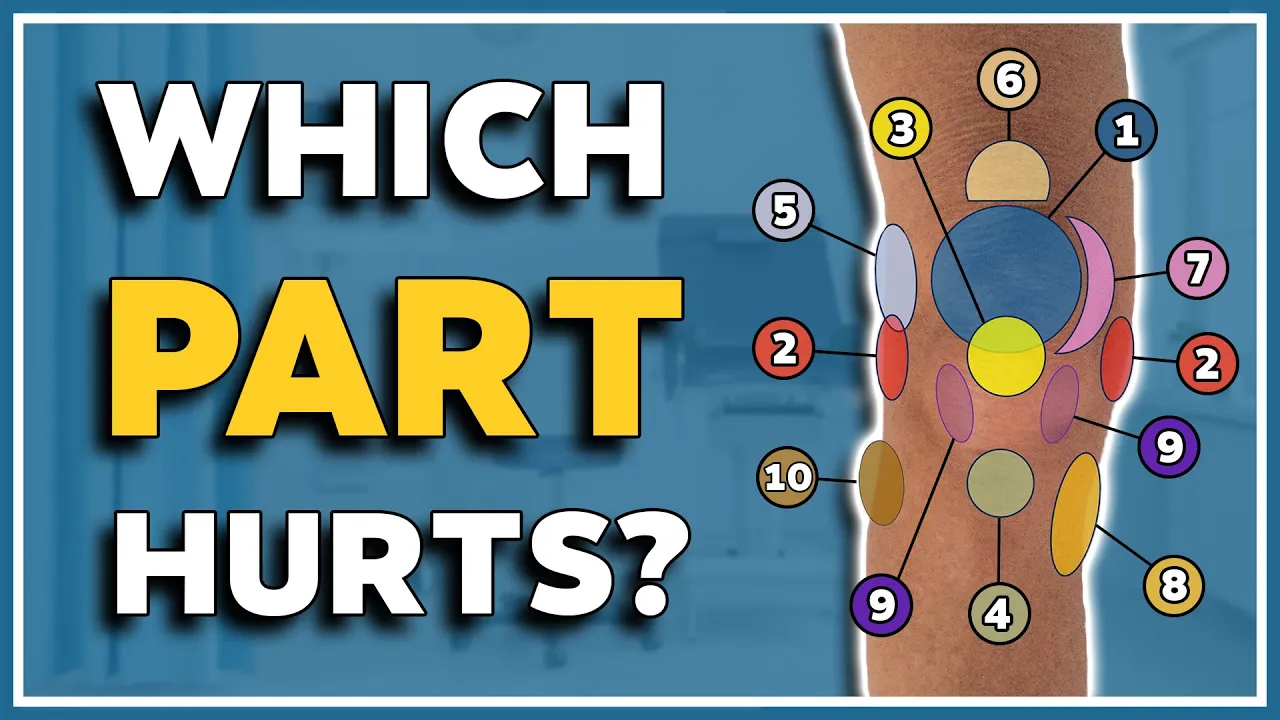
the exact location of the pane is one of the most important factors when you want to know what is going on in your knee and the reason is that almost always the anatomic structure that is located at the area of the pain is responsible for the problem so when you know where exactly the pain is most pronounced you can relatively easily deduct which exact anatomic structure is responsible and come to the most likely diagnosis and an appropriate action plan so in the next minutes I will describe the 10 most common pain locations in the knee what they precisely mean in terms of what is the problem and which treatment options there could be 1. patellofemoral pain syndrome also called anterior knee pain syndrome because the pain is located in front of the knee at or around the kneecap it is almost always caused by a cartilage problem under the kneecap which depending on your age could be either because your cartilage is too soft we call that chondromalacia petali or because of wear and tear of the cartilage induced by intensive sports or heavy labor which at an older age is called patellofemoral osteoarthritis the treatment is exercise therapy to strengthen the patellofemoral mechanism if needed in combination with weight reduction the reason is that body weight has an important impact on the load of the patellofemoral cartilage as high as Factor 7 During certain activities sometimes injection therapy with hyaluronic gel or PRP may be needed as well surgery is on only seldomly needed 2. meniscus you have a medial and a lateral meniscus either one can be a source of pain usually because of a tear or a crush or wear and tear if that is the case please have a look at a separate video that I have made for further confirmation also here the treatment consists of exercise therapy in order to strengthen the knee together with temporary avoidance of deep flexion activities so that the meniscus can heal if there is an unstable tear you may need an MRI and possibly surgery to fix it tree patellar tendinitis the diagnosis of patellar tendinitis is easy because the pain spot is very typical please have a look at this video if you want to become 100 certain the treatment of patellar tendinitis is to reduce or stop all harmful tendon learning combined with specific exercise therapy for strengthening the tendon 4.
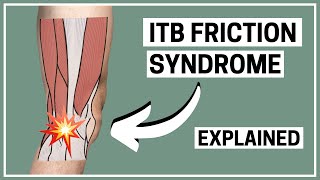
osgoodschlatter the pain is located at the insertion of the patellar tendon onto the shin bone often this occurs in adolescence and is caused by relative overload but it also can be a problem later in life the treatment is load reduction and physiotherapy for most of the cases 5. iliotibial band friction syndrome ITB friction Syndrome causes pain on the lateral or outer side of the knee and can irradiate sometimes up and down over the outside of the leg in case you have an ITB friction problem please have a look at this video where I explain what you can do about it 6. quadriceps tendinitis in quarter substantinitis the pain is located at the upper side of the kneecap where the quadriceps attaches also here the diagnosis is therefore usually easy the treatment is to reduce or stop all harmful tender loading combined with anti-inflammatory measures and specific exercise therapy for strengthening the quadriceps then 7.
Plica Syndrome implica syndrome there is inflammation of the soft tissues located at the medial or inner side of the kneecap this is a particularly sensitive area of the knee so this condition is quite common the treatment consists of anti-inflammatory measures correction of patellar and nutrition and specific strengthening exercises for the correction of patellar endotrsion you may want to have a look at this video that I have made eight best answering of tendonitis in past and Serena's tendinitis the pain is located somewhat lower than implica syndrome both conditions can however occur at the same time because they are frequently caused by the same mechanism that is inward position of the kneecaps also called patellar endotrsion the treatment is therefore almost identical as for Plica Syndrome anti-inflammatory measures correction of patellar and nutrition and exercise therapy with the physiotherapist 9.