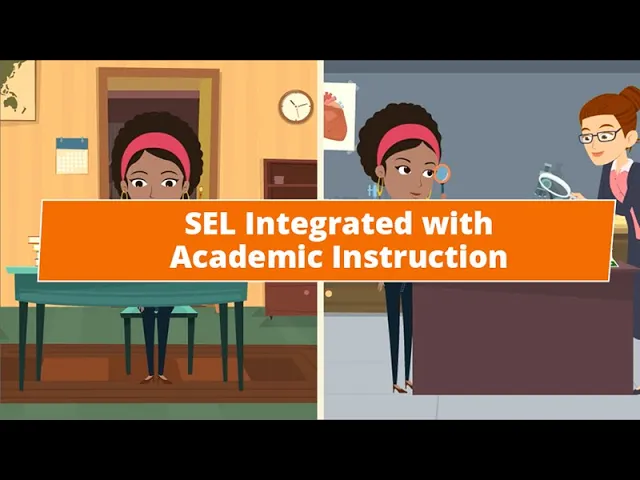
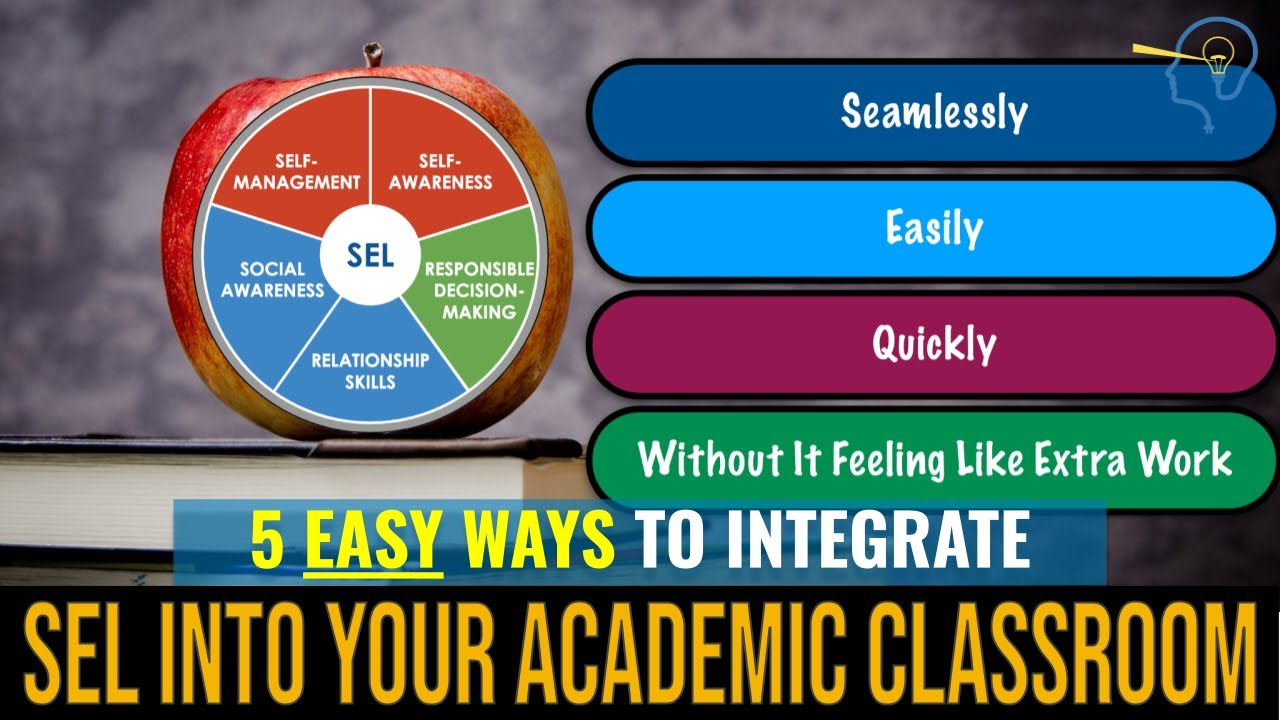
(clock tick) - [narrator] Alongside families and communities, schools play a significant role in supporting young people social and emotional development. Setting aside time to teach a set of skills in a specific environment is critical, but so is making sure SEL is woven into daily school life. This integration falls into three categories, academic mindset, or how students think about their own learning, aligned SEL and academic objectives, or the content students learn and interactive pedagogy, or how students learn.
(soft music) - When we think about academic integration of SEL, we think about building our students mindsets as learners, we think about integrating social and emotional competence standards into our academic standards. So the lesson is actually accomplishing both. And we think about the way in which we do that.
- [Narrator] When A teacher understands that their job isn't solely to teach academic content, but to really help a student grow in their learning by expressing care and concern by providing support and communicating high expectations than the educator is truly fostering the first foundational category integrative SEL, the academic mindset. - A teacher that is really successful at integrating social emotional and academic learning recognizes that one learning is a social enterprise and you're in a room with lots of other people. So paying attention to the social interactions and, and deepening the connections between people and building friendships and relationships across classmates is really critical because you're all in there learning together.
And then the second piece is connecting to each individual and understanding like what's gonna, what's their entry point into this. And the more you know your students, as human beings, the more you can kind of help them make those connections. - [Narrator] These aligned SEL and academic objectives.
The second category and integrated SEL instruction commingle through group work, respectful debates, journaling, and lessons. - Math class, for example, that looks at fractions can be treated in a very conventional way, which just says these are numbers of a kind and they are parts of holes and display geometrical and things like that. In a social emotional fashion, what you would do is you would tie that, indeed to relevant topics to learn themselves.
Because fractions, incorporate divisions and distributions and our youth around the nation around the world even know that some things are distributed fairly and unfairly. And so an understanding of mathematics from the context of what it means to share it equally, is rooted in some very specific actual lived problems and circumstances. So that kind of a lesson rather than simply being about numbers and symbols becomes about actual lived culturally relevant experience.
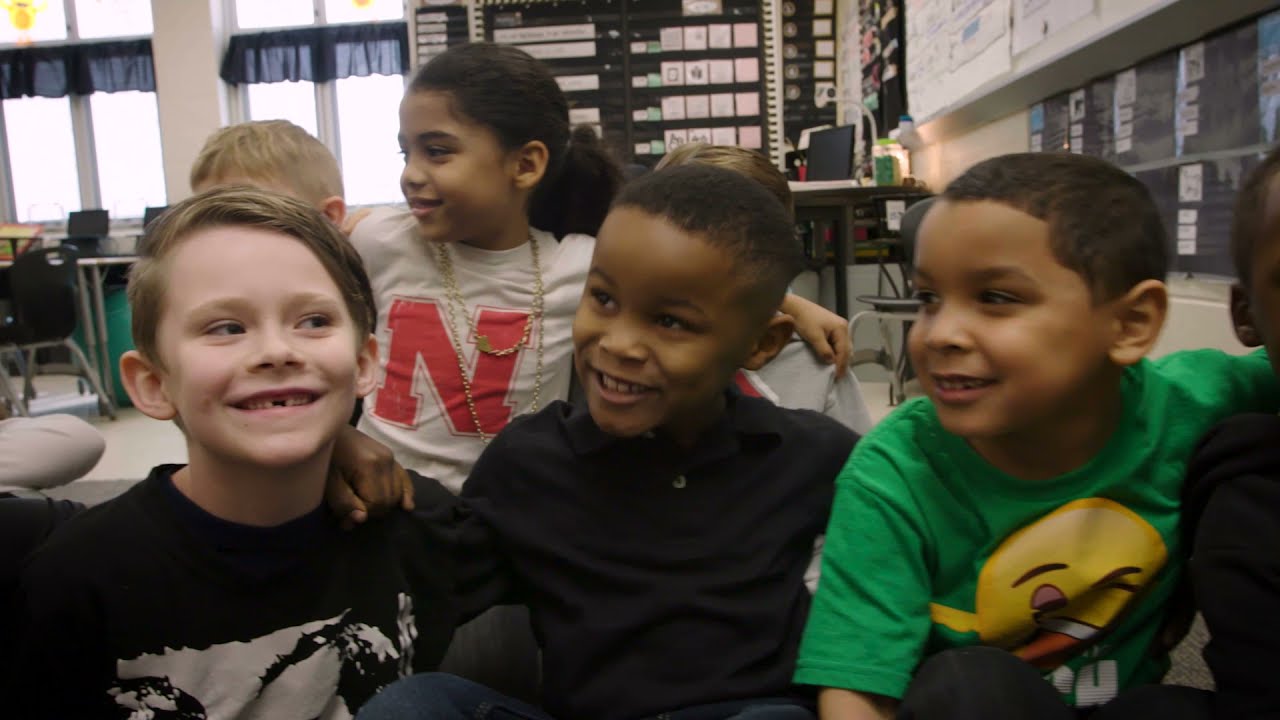
- We've always known that relationships are key to helping kids feel comfortable and to achieve at school. It's not something that we do. It's part of who we are.
We try to bring their lives to what they're learning. And I think that is something that kind of helps the trust, the respect the emotional growth of students. There are times when they're sitting in circles and are talking about something that maybe happened in history and the emotions that were going on in there.
What do you think people were thinking? Why is it different now than it was then? - [Narrator] The third aspect of integrated SEL is the interactive pedagogy, or method of teaching.
It allows for well facilitated classroom discussions, students self assessments, partner work, and student voice. - So if you were to walk into a classroom where SEL is integrated into the day, you would see experiences and lessons where students are interacting a lot with each other, that the students voice is Present if not more present than the teachers voice, that the students have opportunities to deeply reflect on the material on their own social emotional competence on ways in which the material relates to their personal lives, they'd have opportunities to reflect on the bigger experience and what how that fits in. So they would be much more engaged in a deeply more personal way with each other and with the material that allows them to both process the material and to develop their own social emotional competence at the same time, - [narrator] Integrated SEL is rooted in relationship, whether that's teacher to scholar or peer to peer, the model behavior speaks the loudest.
- If you are struggling day in and day out. It does not matter how much planning and preparation you put in, okay, you have to make sure that you build the relationships with scholars, any veteran you talk to, I don't care what business industry you're in. If you want successful people working with you and around you, you have to make sure you build those relationships.
You have to communicate that Same thing goes for a classroom. Okay? When you're leading that classroom, you have to make sure that you have that connection, that you're empathetic with the children.