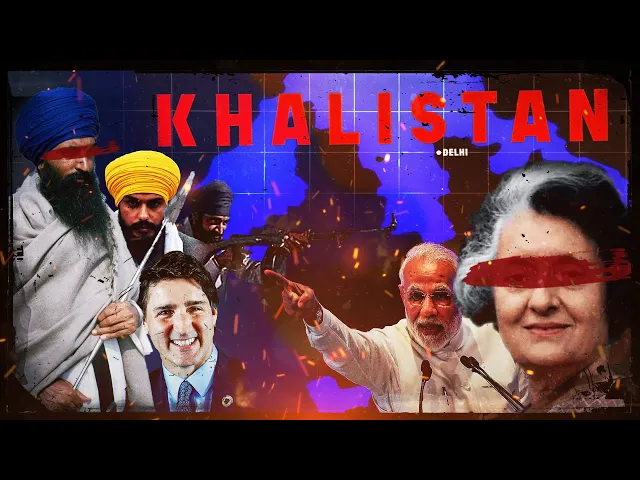
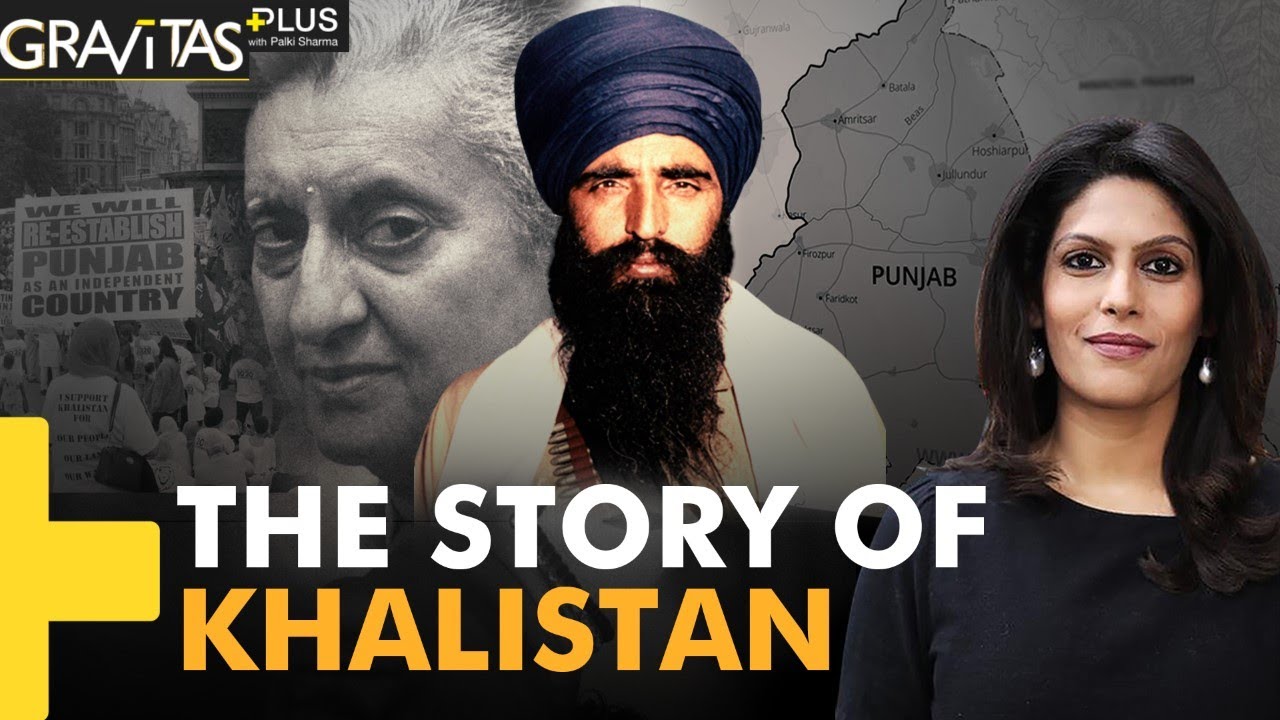
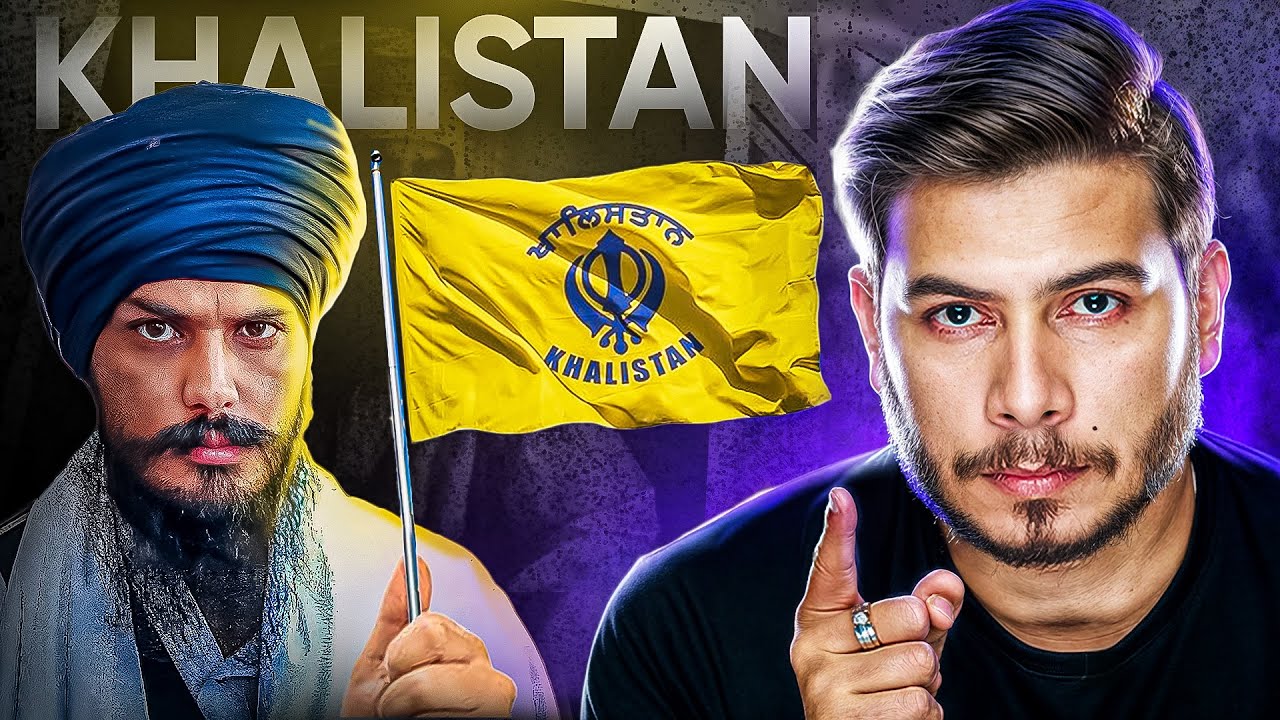
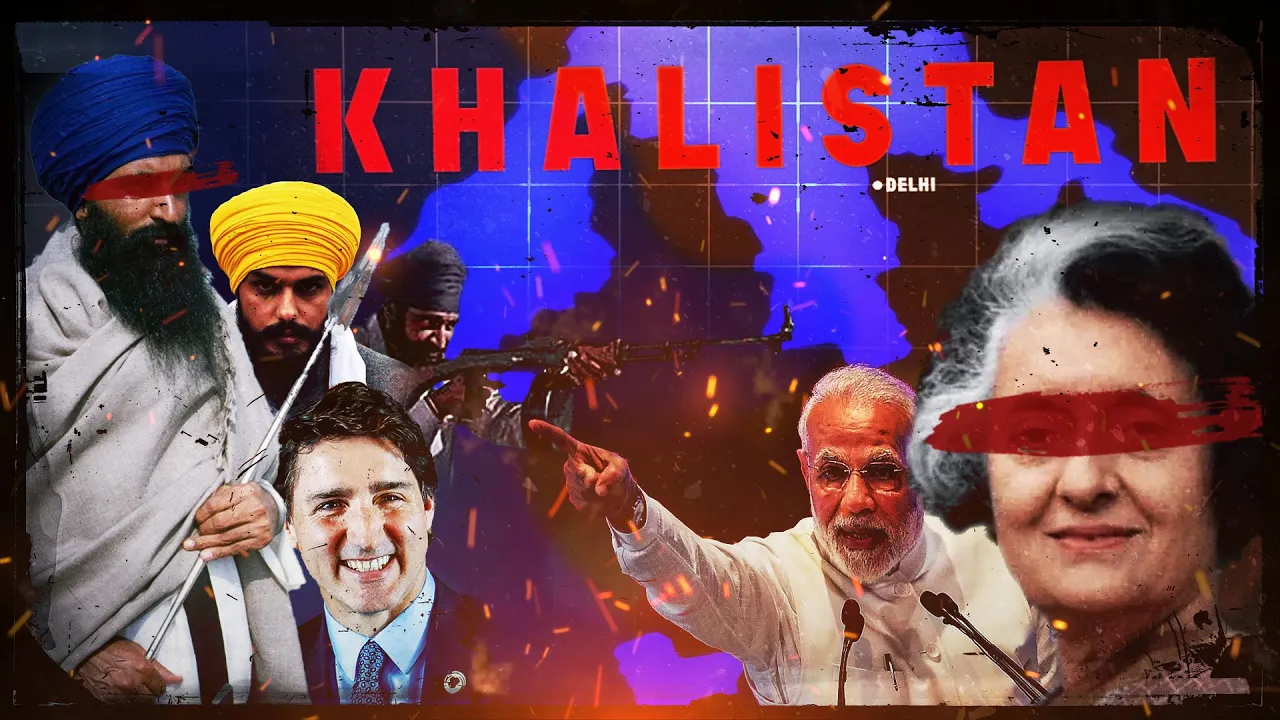
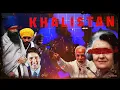
This video is sponsored by Nebula, support me directly while getting access to dozens of Original series, early releases, and more by following the link below. -Rising Music zoom in on map- In February of 2023 thousands of Sikhs stormed a police station in the Indian state of Punjab. Setting off a month-long manhunt for a charismatic preacher named Amritpal Singh. He rose to fame by demanding a new country, Khalistan. NEWS ANCHOR “Khalistani sympathisers vandalised the Indian High Commission in London” In March Sikh protesters in London raised the Khalistan flag above the Indian embassy in London. In May,
Paramjit Singh Panjwar (Pah-Rahm-jeet Sing Pan-jah-waar), leader of the Khalistan Commando Force, was shot dead in Lahore, Pakistan. On the 18th of June Hardeep Singh Nijjar (Knee-gerr), head of a Canadian gurudwara, a Sikh place of worship, was gunned down in the gurudwara’s car park in Vancouver. According to India he was the leader of the Khalistan Tiger Force, and the “mastermind...of many terrorist acts in India”. His family claims he was a plumber and loving father of two. In September, Canadian Prime Minister Justin Trudeau raised eyebrows when he said Canada was “pursuing credible allegations” that the Indian government
was behind the killing. Canada hasn’t provided any evidence for the claim and India dismissed the accusations as “absurd and motivated”. Each nation has expelled their diplomats, India has warned its citizens against visiting Canada, and India media is enraged at Canadian accusation. It's the most serious incident between the two countries in decades. Nijjar supported Khalistan, an independent state for Sikhs, a minority religion in India. Sikhs are 1.7% of India's vast population of 1.4 billion but make up 60% of the population Of the Indian state of Punjab. For the Sikhs, the Punjab is their spiritual homeland. After
India, Canada has the largest Sikh population in the world. The Canadian parliament has more elected Sikhs than India’s. The bloody 1947 Partition of India and Pakistan ending British colonial rule and a labour shortage in Canada encouraged many Sikhs to migrate there. Today there are almost 800,000 Sikhs in Canada. There is even a new migration wave of British Sikhs moving to Canada to flee the horrors of… living in Britain. Khalistan is currently not a country and the borders of this theoretical state are uncertain. Some maps look like this, others like this. But if you drew a
line around where most Sikhs live it would look like this. Today the Khalistan movement is banned in India, which accuses Canada, the UK, and the US of sheltering Khalistani "terrorists." Few threats have devastated India like the Khalistan insurgency of the 1980s and 1990s. A dark chapter that left tens of thousands dead, unleashed tanks on one of Earth's holiest places, orchestrated the most chilling terror attack in Canadian history, and silenced India's most formidable Prime Minister this movement appeared extinguished by the mid-90s, only to rise again from the ashes fueled by unresolved tensions and leap into headlines
in 2023. So what is Khalistan? Why has it resurfaced? And can fertiliser be blamed for it all? Well, let’s find out! [Music: Archival Footage Voiceover] Separatists call it Khalistan Tonight mobs of Hindus have been attacking Sikhs To declare a state of emergency, suspend rights, imposed censorship and arrest hundreds of leaders of opposition parties Credible allegations between India and the killing of a Canadian citizens Hardeep Singh Nijjar. Bhindranwale claims the government was set on genocide Bhindranwale wanted for murder The terrorist attack was the deadliest in history until the 9/11 incident Mrs Gandhi is assassinated [Music swells,
everyone claps at Cogito’s attempt at editing an intro] With over 25 million followers Sikhism is the world’s 5th largest religion. Sikhism, pronounced like Sikh not Seek, started here, in Punjab pronounced Panjab not Poooonjab, 500 years ago, with this man, Guru Nanak. A Guru in Sikhism is a spiritual leader. Guru Nanak rejected the major religions at the time Hinduism and Islam and preached something new. He preached that all humans regardless of caste, race, or gender were fully equal and that people should dedicate their lives to selfless service to their community. Every Sikh gurdwara offers langar, a
free communal meal for all visitors. The Islamic Mughal Empire persecuted the early Sikhs and executed several Gurus. So martyrdom and resistance against oppression are deeply important to Sikh culture. The 10th Guru, Gobind Singh, named the Guru Granth Sahib, the Sikh holy book, as the final and eternal Guru. A clever if somewhat dark decision since a book can’t be executed. In 1699, he created the Amrit Sanchar baptism ceremony. Baptised Sikhs formed a new community, the Khalsa. Khalsa Sikhs follow a strict code of ethics and wear the five K's. They also take new surnames; Singh for men
and Kaur for women. Khalsa Sikhs stand out visually on purpose so they can’t hide and so must stand up to injustice, which is why they always carry a kirpan or sword, a symbol of their duty to defend the defenceless. While turbans are not part of the 5 K’s Sikhs commonly wear them to cover their long hair and they’re an easy way to identify a Sikh. That was very condensed, I have a whole video on Sikhism if you want to learn more. The Khalsa Sikhs became famous for protecting their Hindu neighbours. They fought the crumbling Mughal
Empire until 1799 when Maharaja Ranjit Singh, the Lion of Punjab, seized Lahore, and created the Sikh Empire. The Lion beat back British and Afghan invaders. His army of Sikhs, Muslims, and Hindus were trained by imported European generals. In this multicultural empire Sikhs made up only 8% of the population. Maharaja Singh donated gold for Muslim mosques, Hindu temples, and Sikh gurdwaras. He completely refurbished the Golden Temple, in Amritsar, one of the holiest places in all of Sikhism. He covered it in gold, before that I assume it was just called the temple. After Maharaja Ranjit Singh’s death
the British invaded twice until they destroyed the Empire in 1849. They absorbed the Sikh Empire into their own while also grabbing the Sikh’s massive Koh-i-Noor diamond for Queen Victoria. Impressed by the Sikh’s military the British recruited Sikhs into their own armies. Soon Sikhs who comprised only 1% of British India’s population, made up 20% of the British Indian Army. From the blood-soaked trenches of the Somme to Gallipoli to Singapore, Sikhs fought and died alongside their British, Indian and Commonwealth comrades. In modern India with just 2% of the population Sikhs make up 8% of India’s military and
the Sikh regiment is the highest decorated regiment of the Indian Army and Sikhs have served as Presidents, Prime Ministers, and Chiefs of the Army and Air Force. Sikhs went on to be at the forefront of the Indian independence struggle and gave their lives at a disproportionately high rate. Okay, It’s 1940, the British Empire has ruled India for about 200 years and hasn’t exactly been a fantastic time…for the Indians. The Indian National Congress led by Mohandas Gandhi and Jawaharlal Nehru is championing the massive Indian Indepence Movement. On the 23rd of March 1940 in Lahore another Indian
independence party, the Muslim League, declared independent India should form 2 countries, a Hindu majority India and Muslim majority Pakistan. The Sikhs were caught in the middle. The Sikhs felt that in a Muslim state they would be persecuted but they also felt that in a Hindu-majority state they would be assimilated. The Akali Dal, the primary Sikh political party, demanded a Sikh state for “protection of the religious, cultural, and economic and political rights of the Sikh nation”. If Muslims could have “Pakistan” then Sikhs thought they should get a “Khalistan”. The problem for the Sikhs was they were
only 15% of the Punjab’s population. Sikhs lived alongside Muslim and Hindu neighbours in mixed communities so in no district in Punjab were Sikhs the majority. It’s 1947, Britain is essentially being forced out of South Asia and this guy Lord Mountbatten has been made viceroy of India. His job was to divide British India into two countries. The problem is that Punjab and Bengal both have a mixed Muslim and Hindu populations, there’s no clear division. The Sikhs, who had fought and died in Britain’s armies and gave their lives for Indian independence, were regarded by the British planners
as a ‘nuisance’. Punjab would be carved up without taking the Sikhs into consideration at all. The Akali Dal, realising Khalistan would never happen sided with the Indian National Congress. India would be an overwhelmingly Hindu country but Nehru outlined that it would be secular and minorities would be protected. Nehru promised that "the brave Sikhs of Punjab are entitled to special consideration. I see nothing wrong in an area and a set up in the North, wherein the Sikhs can also experience the glow of freedom…I would like them to have a semi-autonomous unit”. The Partition plans were finished
by August 9th 1947. Mountbatten kept the details secret until August 14th, literally Independence Day. So all the celebrations were held and then the Partition lines were revealed. On August 14th and 15th India and Pakistan were born. Bengal and Punjab were sliced in half and the secrecy meant no troops were prepared to mitigate the disaster. Punjab was torn apart. The west went to Pakistan so Muslims fled there. The east to India, so Hindus and Sikhs fled there. Across India 20 million people had to move over these new lines leaving their entire homes and ancestral lands behind,
never to return. By the end 1 million people died and at least 3.7 million people went ‘missing’. No other people of India paid such a price to end colonial rule. Sikhs were cut off from 150 of their holy sites. The birthplace of Guru Nanak the city of Nankana Sahib and Lahore the capital of the Sikh Empire were in Pakistan. Amritsar, home to the Golden Temple, was in India. Ok, it’s 1948, Partition happened, Gandhi got assassinated, and most Sikhs now live in India, an independent, secular, and democratic nation with Nehru as its first Prime Minister. Once
the dust settled the Sikhs regrouped in East Punjab now 62% Hindu and 35% Sikh. Sikhs get busy and become one of the most prosperous communities in India, raising Punjab's per capita income to the highest in the country. But Nehru backed out of his promise. The Sikhs did not get a state where they could “experience the glow of freedom”. India is a Union, a federal democracy with a central government in New Delhi and separate state governments in each state, with their own elections and powers. As a minority in Punjab, Sikhs had little power. They feared that
if Sikhs did not control a state in this Hindu-majority and Hindi speaking India Sikhs would lose their traditions and language and Assimilate into the larger culture. In 1950 India finished its constitution. In it Sikhs were categorised as Hindus. Sikh leaders refused to sign it, it went through anyway. The Hindu Marriage Act of 1955 defined Sikhs as Hindus too. This didn't exactly calm Sikh assimilation fears. They were determined to get a state but the Congress party was dedicated to secularism and wouldn't create a state on religious lines. The Sikhs had an idea. Most Sikhs spoke Punjabi
while Hindus in the area mostly spoke Hindi. A Punjabi-speaking state would be a Sikh one. So the Akali Dal demanded a majority Punjabi-speaking state, creating a movement called Punjabi Suba. In 1949, the Sachar Formula divided Punjab into Punjabi and Hindi-speaking zones but kept the state united. The language of the zone would be the language taught in schools. Hindu organisations rallied against this, advocating "Hindi, Hindu, Hindustan" leading Punjabi-speaking Hindus to declare Hindi as their native language in the 1951 & 61 census, in order to shrink the Punjabi-speaking zone. this didn't exactly help communal relations between Sikhs
and Hindus most of India states were reorganised on linguistic lines in 1953 for example Tamil and telugu speakers got Tamil Nadu and Andhra Pradesh the exception was Punjab the Akalis saw this as religious discrimination and their protests were massive tens of thousands would get arrested on purpose they would strike they would lay down on railway lines some Sikhs would even fast unto death in protest then on the 4th of July 1955 the police forced away into the golden temple to arrest protesters. Sikhs at this point felt that the government in New Delhi was actively discriminating
against them in 1966 after the Sikhs played a vital role in the 1965 war with Pakistan Prime minister Indira Gandhi Nehru daughter agreed to split Punjab Along linguistic lines creating a Punjabi speaking Punjab and a Hindi speaking Haryana this drastically reduced the size of the Punjab but increased its Sikh population from 35% to 60% however instead of celebration the Sikhs felt betrayed valuable resources like forest and mineral rich mountains were allocated to Haryana and himal Pradesh Punjabonly resource left was its vast River Wars which were to be administered by Delhi not by the punjabis Chandigarh
one of the wealthiest and happiest cities in India is a planned city built in 1953 to replace punjab's capital Lahore now in Pakistan the Sikhs expected the city to be given to the new Punjab instead it was declared a joint capital for both Punjab and Haryana but will be administered directly from Delhi Darshan Singh Pheruman went on hunger strike in 1969 in protest. His tragic death in October led to widespread protests. Under mounting pressure, Indira Gandhi agreed to transfer Chandigarh to Punjab, scheduled for 1975. However, in the early 1970s, India faced widespread protests and strikes.
Indira Gandhi declared a state of Emergency on June 26, 1975, suspending fundamental rights, censoring the press, and arresting opposition leaders across India; she ruled by decree for two years. 50,000 Sikhs would be jailed without trial for protesting against the Emergency. The promised Chandigarh transfer never happened. What did happen was that in 1976, Indira Gandhi issued an executive order dividing the waters of the Ravi, Beas, and Sutlej rivers among Punjab, Haryana, Rajasthan, and Delhi. Punjab was given only 24% of the water from its own rivers. okay so there's essentially a dictatorship in India Sikhs have been
arrested states are fighting over water but I want to talk to you about fertilizer in the 1960s and '70s the Green Revolution hit India but mostly Punjabt he Green Revolution introduced High yielding varieties of Wheat and rice these engineered super seeds demanded industrial Scale farming equipment massive amount of water and huge quantities of synthetic fertilizers pesticides and herbicides Punjab India's fourth smallest state became India's bread Basket saving the nation from famine and soon produced 70% of its wheat and 55% of its rice but the profits of the Green Revolution mostly went to Rich landowning Farmers
from a caste of Sikhs called jats who make up about 50% of the Punjabi Sikh population Sikhism as a religion is extremely anti-caste but caste exists in spite of that rich Farmers benefited from mechanized farm equipment agrochemicals and hybridized seeds but poor farmers were encouraged to take on debt to buy all this equipment and fertilizers. The debt crushed them [News narration] Southern Punjab is the epicenter of an epidemic of suicide the mass suicide of the foot soldiers of the Green Revolution death by high interest loans Kanjeet Kaur’s husband swallowed pellets of poison two months ago
one of his friends told us he'd been a Big man with a big personality who just drowned in debt SIKH MAN SPEAKING: the government says you should not kill yourself this way you should kill yourself that way and we won't give you any money unless you do it this way my nephew jumped off a building cracked his head open and died the government said he should have drunk pesticide then we'd have paid money the government should just tell us how they would like us to kill ourselves The debt crushed them and they lost their ancestral
lands to rich land owners by 1980 10% of rural households controlled 75% of agricultural wealth the super seeds also needed massive amounts of water a lack of water would lead to economic and ecological devastation so the punjabis were quite sensitive to water rights fers felt cheated that 76% of the water flown through the their Rivers was diverted to neighboring states these poor or landless peasants couldn't find other work because the industrial sector was purposefully underdeveloped between 1980 and 1985 only 0.04% of India's total budget for industry was invested in Punjab Sikh peasants saw the benefits
from their work flow to other parts of the country while thousands of young unemployed Sikhs had to immigrate to the UK and Canada so what happened was a new technological Revolution took a society that was already self-sufficient and had its own rituals and traditions and social expectations and just crushed them with debt and landless poverty so these engineered super seeds fed India but mutated social relations in the Punjab causing debts wealth inequality and massive youth unemployment which bred resentment resentment directed at Delhi The Emergency ended in 1977 and Congress was destroyed in the elections that
year. In October 1978, the Akali Dal adopted the Anandpur Sahib Resolution. It shows how fed up Sikhs were. They demanded India be a real federation where states not Delhi ruled themselves. Delhi should only control Defense, Foreign Relations, Currency and Communications. The resolution demanded Chandigarh and other neighbouring "Punjabi speaking areas" be handed over to Punjab and that Sikhism should be classified as a separate religion to Hinduism. It also demanded that “The arbitrary and unjust Award given by Mrs. Indira Gandhi during the Emergency on the distributions of Ravi-Beas river waters should be revised” Brought back to power
in 1980 Indira Gandhi imposed President's Rule in Punjab. That means she dismissed the Punjab’s elected government and ruled directly. This is where things fall apart. The Akali Dal's demands could easily have been met through India's federal system. But several problems stopped any progress being made. 1. Indira Gandhi wanted a more centralised not federal India 2. Congress didn’t want to lose votes in Haryana by giving into the Sikh demands 3. The Akalis despite being the primary political party for Sikhs never enjoyed full support from all Sikhs. Their base was Jat Sikh farmers and some urban Sikhs.
In no elections did The Akali Dal get more than 50% of the Sikh vote. The Congress party could rely on support from Hindus, non-Jats and people from disadvantaged castes which Punjab has the highest density of in India. And 4. No party had enough support to force the other to compromise For years the Akalis and Delhi were in negotiations. Harkishan Singh Surjeet, who took part, said: ‘Three times in six months an agreement was reached and three times the Prime Minister backed out. Each time the interests of the Hindus in Haryana weighed more heavily with her than
the Sikhs’. So over years no progress on Sikh demands were made. Which alienated people from the political process and created a power vacuum. A Sikh preacher called Jarnail Singh Bhindranwale stepped into this vacuum. Bhindranwale was a gifted speaker and preacher that skyrocketed to popularity in the late 1970s he encouraged Sikhs to get baptised the baptism rate for Sikhs Rose from hundreds per week to thousands per day and crucially Bhindranwale preached that baptised Sikhs should be shastridharis or weapon bearers he was connecting Sikh arm resistance to the Mughal Empire centuries ago to Sikh resistance against Deli
Bhindranwale himself was always seen wearing an ammunition belt He harvested the anger at the effects of the Green Revolution, the Congress Parties' centralising policies, and the Akali's inability to win their demands, and his sermons built a narrative of an Indian state stealing wealth from Punjab, trying to Hinduize Sikhs, and erase their culture. This resonated with rural Sikhs, especially Jats from struggling families that felt humiliated and cheated. “The Hindus are trying to enslave us; atrocities against the Sikhs are increasing day by day under the Hindu imperialist rulers of New Delhi; the Sikhs have never felt so
humiliated”. Bhindranwale reinforced a Sikh identity and criticised Sikh men that cut their hair or that didn't wear turbans. He earned more followers by denouncing alcoholism which was destroying rural Sikh families “if I had my way, you know what I would do to all…who drink whiskey-shisky every evening? I would douse them in kerosene oil and set fire to the bloody lot”. As people flocked to Bhindranwale and his puritan version of Sikhism he introduced a new element to Punjabi politics, violence. "Don't buy televisions and refrigerators…When the Hindus come at you are you going to hit them over
the head with your TV antenna?...You should obtain guns, submachine guns, bombs and grenades and kill all the' suckers of blood" The Akalis were famous for their non-violent agitations. But the Akalis weren’t winning. Disillusioned Punjabis were receptive to Bhindranwale's claims that militancy was the way forward. But where on Earth did this guy come from? Surprisingly, he was originally created by... The Congress Party. This isn’t some crazy conspiracy, it's well documented. Giani Zail Singh (Gee-ani), a Congress member and future Indian President, along with Indira Gandhi's son, Sanjay Gandhi, provided financial and political aid to the obscure Sikh
preacher after losing the 1977 Punjab elections. Their aim was to destabilise the Akali government by creating an extremist religious movement, forcing the Akalis to either side with extremists and lose moderates or ignore extremists and lose religious support. Bhindranwale would also terrify Hindus. When Bhindranwale's extremism escalated, Congress planned to crack down on him, save the Hindus, painting them as strong leaders and launching them to victory in the next election. From a purely Machavillian viewpoint it wasn’t a bad plan. But soon Bhindranwale followers formed squads that eliminated the 'enemies' of the Sikh faith. Nirankaris a Sikh group
he was at war with, Communists, government servants, political Opponents, suspected informers, and police were assassinated. Hindu and Sikh temples were attacked. On September 9, 1981, Lala Jagat Narain, a journalist that critiqued Bhindranwale was assassinated near the city of Ludhiana. The prime suspect was Bhindranwale and his followers. On September 20th Bhindranwale made a dramatic surrender to the police before a crowd of thousands. In the riots that followed, police shot and killed dozens of Sikhs. By the end of the month 10,000 Sikhs had been arrested. On 29 September 1981, five members of the Dal Khalsa, an extremist
Sikh organisation allied with Bhinranwale, hijacked Indian Airlines Flight 423 from Srinagar to Delhi and diverted it to Lahore; they demanded Bhindranwale’s release from jail. Pakistani commandos assaulted the plane when it landed, freed the 117 passengers and arrested the hijackers. A month later the government released Bhindranwale. His jail time only made him more popular. 'The government has done more for me in one week than I could have achieved in years.' By the end of 1981 he was the most powerful man in Punjab. Congress realised “we had created a monster we could not control”. But he never
demanded an independent Khalistan. “We wish to live in Hindustan itself. It is the central government’s business to decide whether it wants to keep the turbaned people with it or not. We want to stay.”. He wanted the demands in the Anandpur Sahib Resolution. On May 1, 1982, the government of India broke off talks with the Akali Dal and banned several Sikh organisations. Bhindranwale and his followers retreated to the Golden Temple complex in Amritsar. It became his headquarters. Soon weapons and armed militants were pouring into the complex. Among these militants were former soldiers, including Major-General Shabeg Singh.
This guy trained the Bangladeshi liberation army in the 1971 war that India joined to Help free Bangladesh from Pakistan. He was a household name in India. He joined Bhindranwale and organised the militants’ defences in the Golden Temple complex. Difficult for non-Indians to understand but this was genuinely a crazy transition that really shows how Sikhs felt in India at that time Indira Gandhi soon classified the Anandpur Sahib Resolution as a secessionist document and vilified the entire Sikh community as anti-Indian terrorists. On October 6, 1983 a bus in Punjab was ambushed by militants and six Hindu passengers
murdered. President's rule was imposed on Punjab. Sikhs were now the national enemy of India. This was fairly awkward. Sikh men held influential positions, the President of India, Giani Zail Singh, was a Sikh, and so were the most significant military leaders. Up until now Sikh’s patriotic credentials were impeccable. Indians saw them as the sword of the nation. Those that fought to protect India. Turning them into terrorists jeopardised the entire Indian state. During the 1983 Asian Games held in New Delhi the Haryana Chief Minister issued orders for the police to halt all Sikhs from entering New Delhi
and frisk them all to ‘teach Sikhs a lesson’. Among those who were subjected to the ordeal of being stopped, searched, and humiliated was Lieutenant General Jagjit Singh Aurora, a war hero that had accepted the surrender of Pakistan after the 1971 war. Again a crazy development! This would be like strip searching George Patton at the Los Angeles Olympic games, just an absolutely incredible provocation. Branded terrorists, Sikh men were increasingly executed by police or extremists groups, creating a pattern of "encounter killings” a the term used by police to imply that the victim was killed in a violent
encounter. In most cases the encounters were staged and the victims entirely innocent. These murders justified Bhindranwale’s claims that Sikh’s were second-class citizens and He painted himself as the saviour of the Sikhs. “The government calls me a terrorist, but I am only fight government discrimination against Sikhs” In early 1984, the National Security Act was amended to allow detention of Punjabis without trial for up to two years. At the end of May 1984 Indira Gandhi for the 5th time abruptly terminated the negotiations with the Akalis. Over 200,000 Sikhs had been arrested in the last 22 months. The
president of the Akali Dal, Harchand Singh Longowal, still dedicated to non-violence, delivered an ultimatum: starting on the 3rd of June 1984, the lifeblood of India, Punjab’s grain shipments, would stop. Punjab had become a powder keg, just one spark away from devastation. On 2 June, Indira Gandhi gave approval for “Operation Blue Star” military action to eliminate Bhindranwale. The army moved into Punjab, the border with Pakistan was sealed, train service to Punjab was halted, journalists were expelled. A total black-out enveloped the state. The Golden Temple complex at Amritsar had been completely fortified and rifle wielding militants were
prepared to fight to the death to protect Bhindranwale who was located in the Akal Takht. Operation Bluestar launched on June 3rd. On a normal day the Golden Temple provides free meals to 100,000 visitors. But this was a Sikh holy day, the martyrdom day of Guru Arjan, a day where the Golden Temple Complex was packed with thousands more pilgrims than usual, men, women, and children. There was no warning provided to the people who poured in. At approximately 10:00 pm the army sealed off the area around the complex. The pilgrims were now trapped inside between the militants
and the army. June 4th erupted with artillery fire reducing the Ramgarhia Bunga to ruins. Relentless shelling Shattered the militants' defences, and soldiers advanced in under heavy sniper fire from militants. On the evening of 5 June, the army led by a Sikh Lieutenant-General Brar, sprayed bullets into and then breached the Golden Temple, which only housed pilgrims and priests. The militants, under the command of Shabeg Singh, heavily fortified the Akal Takht and other buildings and put up a stiff resistance, inflicting heavy casualties. As casualties mounted, Brar sought Delhi's approval for tank fire at the Akal Takht. Tank
shells smashed into the militant defences as pilgrims hid in the rooms throughout the complex. During the madness the Sikh Reference Library, holding 20,000 literary works and original writing from several gurus, was burned down. On June 6th the Akal Takht was pummeled again by tank fire. Special forces stormed the building at night. On the morning of June 7th Bhindranwale, Shabeg Singh's, and dozens of followers' lifeless Bodies were discovered inside. At the end of Operation Blue Star, bodies were strewn across the Golden Temple, the Akal Takht, one of Sikhism’s most important structures, lay in ruins. Because the
area was closed to reporters, it is difficult to assess the casualties. The government claims 493 "civilians/terrorists" killed and 83 troops killed. Independent estimates claim between 700 soldiers and 1500-5000 civilians were killed. Whether it is 493 or 5000 or anything in between it is: “A figure which is appallingly high for an operation conducted by an army against its own people." For Sikhs, seeing their Mother India litter their holiest site with bodies, felt like an all out assault on them as a people and left a brutal scar on the Sikh psyche. 4000 Sikh troops in the Indian
army mutinied and thousands of Sikhs turned out from London To Vancouver to express their anger. On the 9th of June 1984 The Montreal Gazette quoted a Canadian Sikh protestor “Previously we did not support Khalistan, now we are supporting it openly” Operation Bluestar was the spark for the Khalistan movement. Bhindranwale became a ‘martyr’, causing a surge of recruits to the Khalistan cause which barely existed before then. Sikhs once the heroes of India now began to see an independent Sikh nation as their only defence. At about 9:20 a.m. on 31 October 1984, Indira Gandhi was walking through
the garden of the Prime Minister's Residence in New Delhi on her way to an interview for Irish television. As she walked by her two Sikh bodyguards, Satwant and Beant Singh, they opened fire, ending Indira Gandhi's 15-year reign over India with bullets, a chilling revenge for Operation Blue Star. Within days of Indira Gandhi's assassination, New Delhi became a cauldron of hatred. Collaborating With the police, Congress politicians orchestrated a brutal pogrom of Delhi's Sikh community. Mobs rampaged through the streets, targeting Sikh men, women, and children who were subjected to horrific acts of violence, including being burned alive.
Thousands of Sikh women were sexually assaulted. Officially 2,700 were killed but the figure may be closer to 10,000 Sikhs murdered over the course of four days. These weren’t riots, they were carefully organised and directed. The aftermath of this violence left at least 50,000 people displaced, their homes and businesses reduced to ashes in the flames of hatred. Sikhs remember these killings and Operation Blue Star as ghallughara or “Holocaust” Indira’s son and successor Rajiv Gandhi appeared to condone the violence when he said ‘when a mighty banyan tree falls, the earth beneath it is bound to shake’. Almost
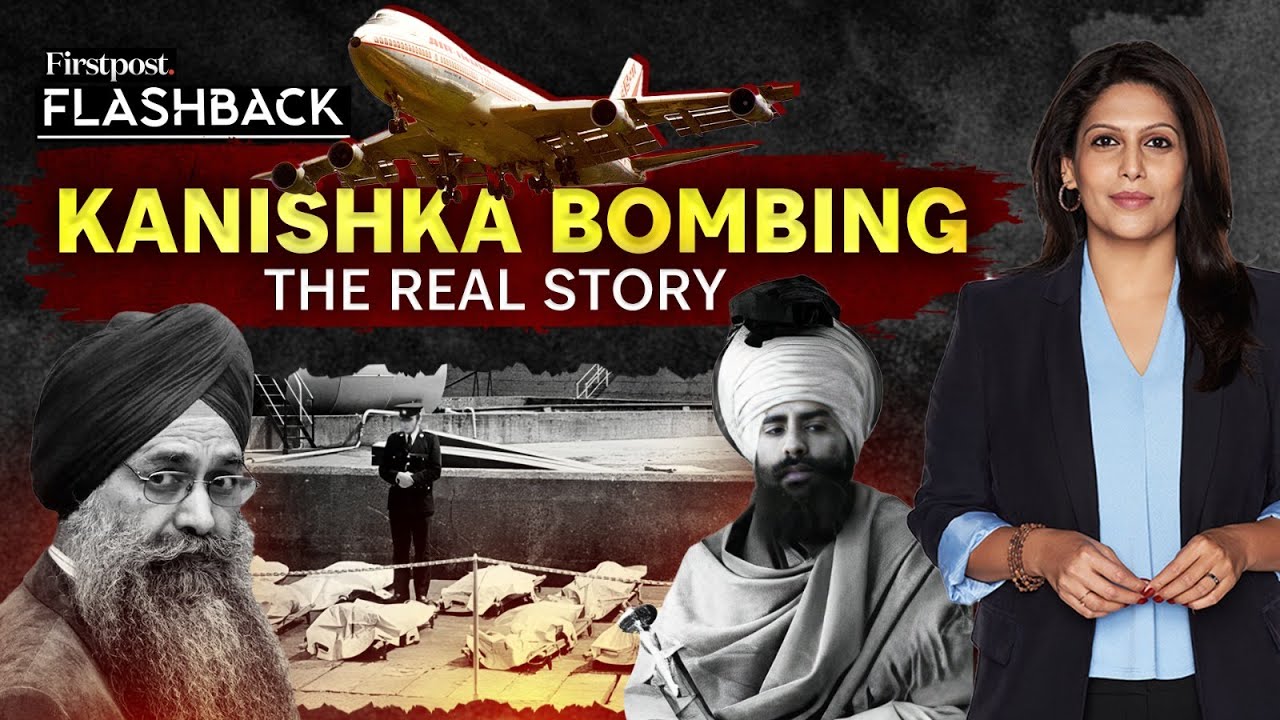
no perpetrators of these killings have ever been held accountable for their crimes. Members Of the Congress party known to have organised the attacks were awarded with government positions, the police that took part were not punished, while many Sikh families must live with the loss and trauma. To the Sikhs this genocide remains an open wound. The involvement of the state in teaching Sikhs a lesson made them feel like they had become second-class citizens. On 23 June 1985, Air India Flight 182 operating on the Montréal-London-Delhi-Bombay route was blown up by a bomb mid-air off the coast of
Ireland. A total of 329 people aboard were killed, mostly Canadian citizens and mostly Hindus although about 40 Sikhs were killed too. On the same day, a bomb set off at Narita Airport in Tokyo, Japan, intended for Air India Flight 301, killed two baggage handlers. The Khalistani group Babbar Khalsa International were held responsible for the bombing. Before 9/11, this was the largest act of air terrorism, it remains the deadliest terror attack in Canadian history. Bhindranwale never advocated for an independent Khalistan. But after the killings there was now a full on insurgency in Punjab. A war between
the Indian government and Khalistani militants. The Akalis still wanted a peaceful negotiation. Longowal, as head of the Akali Dal in 1985, condemned acts of violence, and repeatedly declared that the Akali Dal was not in favour of Khalistan. He came together with Rajeev Gandhi, now Prime Minister. The Rajeev-Longowal accord signed on 24 July 1985 agreed to transfer Chandigarh, resolve the river water disputes, reenlist the Sikhs that mutinied, and bring the perpetrators of the Delhi genocide to justice. One month later Longowal was assassinated by Sikh extremists but right after the Akali Dal won a landslide electoral victory
which reflected widespread support for the accord and peace within the Sikh community. Rajiv Gandhi, fearing a loss of Hindu votes, permanently Postponed the accord. No transfer, no reenlistment, no justice. On April 29, 1986, various separatist Sikh organisations and armed groups gathered at the Akal Takht and made a declaration of independence for Khalistan. The structure and borders of Khalistan weren’t clarified, except that Sikhism would be the state religion. Punjab descended into vicious bloodshed at a rapid pace. In 1986 there were about 500 deaths related to the insurgency. In 1991 alone there were about 5,000! The diaspora
provided funding. General Zia-ul-Haq’s Pakistan smuggled AK-47 assault rifles, rocket launchers and explosive devices into Punjab. Violence by Sikh extremists continued to escalate. On November 30, 1986, the Khalistan Liberation Force killed 22 bus passengers near the city of Hoshiarpur. Punjab’s government was dismissed on 11 May 1987 and the state was placed under President’s Rule. Punjab would be directly ruled by Delhi for the next 4 years. The government, unwilling to meet Akali demands, resorted to force. Prominent Akali Dal members were arrested, the party lost all control of politics in Punjab. On March 6, 1988, the central government
passed the 59th amendment, suspending fundamental rights and suspended article 21 that said "no person shall be deprived of his life or personal liberty” allowing Sikhs to be detained and killed without evidence. Government forces, unable to identify militants, indiscriminately arrested Sikhs, thousands were detained, tortured, and often killed in "encounters.". Usually their only “crime” was having a beard and turban. Punjab police were given official approval to eliminate "terrorists" without oversight. On August 30, 1989, the Punjab Police Director General offered rewards of $5,560 for killing "hard-core" terrorists. Julio Ribeiro, Director General of Punjab Police, summarised the policy as
responding to "bullets with bullets." The Khalistani militants responded with more bullets. Militant attacks were designed to maximise casualties, usually Sikh and Hindu civilians. Such as on the 15th of June, 1991, when militants opened fire on trains near Ludhiana, killing 110 passengers. In the first half of 1991, militant groups assassinated more than 24 political candidates. During the late 80s and early 90s “Villagers ... remain under constant fear of the terrorists as well as the police…Being sandwiched between the two…they remain bewildered and demoralised” In 1986, Gurmej Kaur’s youngest son, Sukhdev, was arrested by police: “It was a
common phenomenon in Punjab then. Civilians were abducted, taken into illegal custody and tortured”. Police accused Sukhdev in a murder case in Amritsar. He spent seven months in jail before a court acquitted him. Sukhdev was 12. By 1990 Gurmej Kaur’s 3 sons including Sukhdev and her husband were killed by the police. “We were not even given their bodies. They were cremated secretly” There are thousands of stories like this of Sikhs that suffered terrible injustice during the 80s and 90s. In 1995 Jaswant Singh Khalra filed a petition to the Indian Supreme Court claiming police had cremated 25,000
unidentified bodies. Later that year, Khalra was killed by the police. The state's excessive and unchecked force against Sikhs fueled a sense of persecution that fed militant ranks. For instance, Wassan Singh Zaffarwal, chief of the Khalistan Commando Force, a militant group linked to several bank robberies and assassinations of communists, police, and those who criticised Khalistan. Zaffarwal initially had no interest in the Movement and never followed Bhindranwale; he instead was radicalised by police harassment. As the police failed to end the insurgency, in 1991, 38 Indian Army divisions and security units, totaling 250,000 personnel, entered Punjab, imposing army
rule in major cities and conducting village-to-village sweeping operations. By 1995 the militancy had died out. But the capital transfer never happened, the water rights weren’t resolved, and no justice was brought to the victims of Blue Star or the Delhi genocide. So why did the Khalistan insurgency end? The overwhelming scale of state violence severely weakened the Khalistan movement. Thousands of Khalistanis, especially the leaders were killed, and replacements lacked competence and ideological commitment. According to Political Science Professor, Hamish Telford, “Over time…the militants increasingly engaged in robbery, extortion, rape, indiscriminate Killings” Narinder Singh, an old militant said “They
ended up like street gangs”. In 1999 "Terrorism in Punjab: Understanding Grassroots Reality," a survey on militant motivations, revealed that for those recruited before 1985 over half were committed to Bhindranwale’s ideals, by 1990 that was only 2%. By the end of the movement the average age of a Khalistani militant was 22 and ¼ were unemployed, nearly 40% cited the thrill of battle as their primary motivation to join. Another 12% sought financial gain, 11% were influenced by peers, and only 5% joined to create Khalistan. Over 80% came from marginalised Jat farming families and 64% came from rural,
poor and underprivileged backgrounds. This is pretty revealing because it shows us how the Green Revolution’s impact fed the militancy and how the militancy struggled to create a Khalistan movement that appealed to non-Jats. Khalistanis never unified Sikhs into a modern liberation struggle which meant it lost direction. It also reveals that the Movement could have been stopped non-violently if the economic conditions in Punjab were changed. With its ideological leaders dead the Khalistan movement fragmented into factions that targeted each other and innocent Sikhs, alienating the people. By the 90s Sikh civilians accounted for over 70% of militant attack
victims. Mazhabi Sikhs considered lower caste by some Jats were often targeted. Non-Jat Sikhs opposing "Jatistan" knew they had more in common with Hindus, Christians, and Muslims of similar economic standing. Sikhism is a religion built to defend the defenceless within a few years Sikhs in Punjab rejected the violence and turned on the militants. One of the fiercest militant leaders, Wassan Singh Zaffarwal said once the villages “turned against us…we knew it was over.” Today there are no agreed figures on the overall death rate that also include the ‘disappeared’ But most likely the violence from 84 to 95
took about 40,000 lives. This included approximately 30,000 civilians, 7,628 militants, 1,769 police officers, and around 1,700 soldiers. In the 90s the Akalis regained political control by adopting a strategy that emphasised the common Punjabiat (Punjabiness) of all – Hindus, Sikhs, Muslims, Christians and others and pushed for populist economic policies to revive the agrarian and urban sectors. In the 1996 parliamentary elections the Khalistan-focused party received 3% of the vote and won 0 seats. The movement was dead. Or at least it was dead in India. In Punjab the active insurgency is over but for many diaspora Sikhs who
left India due to events like Operation Blue Star and the ensuing violence, the memories of their community's suffering and a desire for Khalistan endure. After the 1984 Golden Temple attack, some diaspora gurudwaras were taken over by Khalstanis, Becoming platforms for Khalistani recruitment. The Khalistan narrative resonated because it was rooted in real atrocities against Sikhs. Gurdwaras displayed photos of recent Sikh "martyrs" alongside historical Sikh martyrs, creating a centuries-long narrative of Sikh oppression. It isn’t odd to see killed Khalistan militants on massive banners outside some Canadian gurdwaras, like the one outside Nijjar’s Guru Nanak gurudwara which has
an image of Talwinder Singh Parmar who was behind the Air India Flight 182 bombing. This has caused widespread condemnation by most of the Canadian Sikh community. Websites like Sikhs for Justice share stories of Operation Blue Star and massacres of Sikhs, reaching a younger, often religiously lax Sikh generation while graphic images of Sikhs tortured by the Indian government circulate freely online that have maintained a sense of oppression and injustice. Many Khalistani activists, like Nijjar, are labelled as “terrorists” under India’s Unlawful Activities (Prevention) Act which means they would be detained without trial if they ever travel to
India. This doesn’t exactly calm the diaspora Khalistani sense of Indian persecution. However, in the diaspora, the Khalistan movement faced the same problems as in the Punjab, division. The Khalistan Council wants a secular Khalistan state, while Babbar Khalsa International demands an orthodox Sikh theocracy. The movement's influence is constantly challenged by non-Jats who are often disinterested or hostile to Khalistanis. However the Canadian state has essentially ignored the Khalistan movement or even tacitly supported it even if mostly through a complete lack of knowledge and unwillingness to learn about what they consider a foreign problem. India has accused Canada
especially of supporting and harbouring Khalistanis, enabling the movement's survival outside India. While Khalistan seems to be more popular outside of Punjab “The larger Sikh diaspora disassociates itself from the pro-Khalistan sentiment. That’s why some Sikhs have protested against Khalistan supporters overseas...While only a small percentage of the Sikh diaspora is calling for Khalistan it reverberates because they are loud”. Almost four decades have passed since Operation Blue Star and the insurgency, fading these events into distant yet painful memories for many. For the nearly 40% of Punjabis under 35, the insurgency is history. Nearly 40 per cent of the
state’s population lives in urban areas now and the agriculture workforce declined from 62% in 1971 to 30% in 2011. Which has eroded the once-dominant rural agricultural villages and traditional Jat society, the old base of the Khalistani movement. Today's Punjab has different priorities. But while the Khalistan movement was crushed the problems that spawned it were never resolved. In 2020 the Modi government in India brought in new agriculture legislation that would deregulate the industry and potentially impact farmer’s income. Tens of thousands of protestors, led by Punjabi farmer’s, marched on Delhi in what might be the largest protest
in living memory. While the protestors were defending their livelihoods the government tried to delegitimize the protests by calling them “Khalistanis”. Social media exploded in India where many right-wing accounts called for a repeat of the 1984 genocide against Sikhs. One popular tweet was “A tree had fallen in 1984 and the earth shook. He (Modi) is Mount Everest. There will be total devastation” a reference to what Rajiv Gandhi said to justify the massacres of 1984. Sikhs were once again made aware of how quickly they could be turned into the national enemy. A sticker popular across Punjab read:
“We are farmers, not terrorists.” The year-long Farmers’ protest eventually forced the government to repeal the laws. Sikhs are still struggling to secure their separate and unique identity. While the Indian National Congress was at least nominally secular the BJP sees India as a Hindu state, one of a Hindu Jagriti (awakening) and openly calls for India to be governed by the “great teachings of the Vedas”. The Vedas are the holy texts of Hinduism. This is quite appealing to many Hindu voters, BJP is the most popular party in the country but in this video I’m trying to explain
the Sikh perspective and I hope you can see how this might be quite concerning to Sikhs. Modi has actually done a lot to try and win Sikhs votes to the BJP cause, more than most Prime Ministers, but the party's Hindu nationalist rhetoric and Hindu nationalists’ insistence that Sikhs are Hindus continue to alienate Sikhs. Prime Minister Modi’s calls for a Hindu nation have some Sikhs saying “If you can call for a Hindu nation, then why can’t we call for a Sikh one?”. 4 decades after Blue Star a new call for Khalistan has emerged, led by self-styled
Sikh preacher Amritpal Singh. After a decade of living in Dubai, Singh returned to Punjab in September 2022 and rapidly built a following around himself with calls for an independent Khalistan. Singh led marches calling for the protection Sikh rights and started a religious revival encouraging hundreds of Sikhs to get baptised into the Khalsa. He travelled the state accompanied by supporters carrying automatic rifles. In his rhetoric and appearance, Singh was clearly attempting to be Bhindranwale 2.0. Singh's preaching environment mirrors Bhindranwale's. Punjab, fed India for generations, but suffers the consequences of the Green Revolution alone. Farmers weren’t told
of the effects of chemicals. Punjab grapples with high rates of cancer, renal failure, stillbirths, and birth defects, with 80% of groundwater in Malwa unfit for drinking. 15,000 farmers committed suicide due to debt worries from 2000 to 2015. In 2016, farmer suicides in Punjab rose by 118%. There is still very little industrialization in the state which has an 8% unemployment rate and as we saw before unemployment was the common factor among militants. A 2017 study found that the majority of young Punjabis have problems with drugs or alcohol, with more than 20 percent addicted to heroin. This
neglect combined with rising fears of Hindu supremacy can create a collective sense of discrimination and radicalise people. One of the first things Singh did when he reached Punjab was to set up a drug rehab centre. In the same way Bhindranwale was anti-alcohol Singh has managed to gather followers with his anti-drug campaign. Amritpal Singh paints Khalistan as the permanent solution to Punjab’s drug addiction, mass emigration, economic woes, and fear of young Sikhs abandoning tradition. He promised a Punjab that kept its wealth rather than seeing it syphoned off to Delhi. It’s a message as powerful today as
it was in the 1980s. In February 2023 Amritpal and his followers armed with guns and swords attacked the Ajnala police station in Punjab to break out a prisoner. A manhunt began to arrest him. In March, Indian authorities shut down internet access and text messaging to Punjab’s 27 million inhabitants for days while they searched for Amritpal Singh. After avoiding capture for 35 days he was arrested along with 200 others. Amritpal is currently in prison in Assam [awkward line delivery due to having to cut out a mistake] Some in India argue that individuals like Singh, who suddenly
emerged from Dubai, and the recently slain Nijjar in Canada, are tools of Pakistan. Pakistan undoubtedly supported the Khalistani movement in the 80s and 90s, which may explain why few Khalistani groups claim territory in Pakistan, despite significant Sikh heritage there. Hamid Gul who had led Pakistan’s intelligence agency stated "Keeping Punjab destabilised is equivalent to the Pakistan Army having an extra division at no cost to the taxpayers." Whether Pakistan's support continues today remains uncertain. Strategically, Pakistan wouldn’t want an independent Khalistan; they'd just want to weaken India. The Indian media often blames the entire Khalistan movement on Pakistan;
but Pakistan can’t create a movement they can only opportunistically add fuel to the fire that multiple Indian government’s have failed to put out over the years. Some are worried the internet shutdown and arrest of more than 200 people was too harsh. “Once you put them in jail, you radicalise them for life,” said Kiranjot Kaur. “The hurt from 1984 still continues.” Hurt that can be directed by anyone with political skill or mismanaged by someone that lacks it. Currently 95% of Punjabi Sikhs Express pride in being Indian and 70% believe that disrespect in India contradicts Sikh identity
but legislation perceived as taking away punjab's wealth or Disenfranchising its people political parties playing with people's lives to earn votes the rise of a Hindu first ideology concerns about urbanization and the eroding of Sikh tradition and the lingering absence of justice for those affected by blue star and the Delhi genocide could easily be a potential catalyst for future trouble especially if the diaspora is willing to fund it and branding the Sikh Community as khalistanis or terrorists whenever politically convenient without addressing these issues could threaten India's stability managing these issues is crucial because punjabis know that
if the militancy returns it will be them that suffers to ensure that the militancy never returns Khalistanexpert GBS Sidhu emphasizes the need for a Truth and Reconciliation Commission in Punjab like in South Africa This commission should investigate the tragedies and inform Sikhs of what happened between 1984-1995. Questions like the actual death toll in Operation Blue Star, accountability for those that took Part in the Delhi genocide, and details about police encounters in Punjab, must be answered. Punjabi’s need to be told what happened to missing loved ones. A veteran reporter Gobind Thukral stated, "closure hasn't taken place
at the level of state and society." Until a sense of closure is extended to the Sikhs, the Khalistan movement will persist, its embers smouldering, ready to ignite at any moment. So you just watched an hour long documentary on the Khalistan conflict. I remember as a kid growing up watching documentaries like this, learning about the world and its history fascinated me. It seems though that popular television has abandoned well made documentaries for cheap sensationalism or reality tv and independent creators that want to make good educational content have picked up the slack. That’s one of my favourite
things about Nebula, an independent streaming service owned by creators like me, and is packed with the best documentaries online. Nebula offers you videos by professionals like actual lawyer Devin at LegalEagle and actual engineer Brian from Real Engineering who provide expert insights into those fields through their videos. But it also offers you well-crafted documentaries made by independent creators. Documentaries researched and written with accuracy in mind and with visuals to help break down complicated subjects like the Nebula Original series "The Logistics of X," created for Nebula by Wendover Productions which explains complex industries like how Saudi Arabia
handles millions of pilgrims going on Hajj or how the global arms industry works. Real Engineering documentaries on World War 2 are a visual treat that tackles D-Day from a rarely seen point of view. Modern Conflicts will help you understand topics like the Lebanese Civil War, Real Science can teach you how something as basic as sweat made humans an apex predator, and City Beatiful’s Great Cities original series will give you a whole new appreciation for how a city like Shanghai functions and those are just a taste of the Available Nebula Originals, exclusive content produced just for
Nebula produced with quality not clicks in mind. Seriously Nebula is producing some of the best stuff out there, they’ve helped produce best-selling plays in London that you can watch on Nebula and even movies. Nebula doesn’t only offer Originals though. The 100+ creators on Nebula have all of their Youtube content available on Nebula ad-free and many upload their videos to Nebula days and sometimes weeks in advance. This video was on Nebula days ago. Creators like Johnny Harris and Jet Lag videos are on Nebula First long before they hit Youtube. So if you want to watch some
of the best documentaries online, want to watch videos ad-free, or you simply want to hear Wendover Productions explain the global arms trade in the best way possible while supporting this channel then go to my link go.nebula.tv/cogito . Using that link you’ll get a 40% discount on an annual subscription, which makes it just $2.50 per month, a fraction of the cost of most streaming sites for the best educational content online on a platform Owned by the creators. But wait there’s more! This holiday season, unwrap the gift of…knowledge with Nebula Lifetime Memberships! We’ve recently started selling these
in limited batches and they’ve been incredibly popular. For just a one-time payment of $300, you’ll get access to Nebula forever. You can snuggle up on these cold December nights, with a cup of hot cocoa as Polymatter explains China’s Nuclear Policy to you in his Original Series; China, Actually. You can do this with peace of mind knowing that with a lifetime membership you never have to think about managing your subscription again. And this holiday season Nebula is offering lifetime membership gift-cards so you can share Nebula with your loved ones and both get addicted to the new
season of Jet Lag together. With Lifetime Memberships you get endless and unlimited access to the hours upon hours Of current and future Nebula content and the lifetime memberships are a way for us to raise capital for new even more ambitious original projects. Use my link go.nebula.tv/cogito to grab these exclusive holiday offers and support independent original creators. Oh and one last thing. Lots of you supported me last year by signing up for the Curiositystream and Nebula bundle. The renewal for that is coming up and I need to tell you that if you renew that bundle for
2024 you’ll still get access to both but Curioistystream will not be sharing the subscription fee with Nebula. Since many of you signed up to the bundle in part to support Nebula creators is to sign up directly with Nebula using my or another Nebula creators link. I know this is confusing and I apologise and since Nebula doesn’t want anyone to have to pay for something twice if your bundle did renew you can purchase an annual direct Nebula subscription today at a discounted rate of $30, and we won’t Start the clock on your subscription until your bundle
access expires. Thank you so much for watching. I really hope you enjoyed this video. It took me a long time to put together and I unfortunately had to cut things and simplify things. It's impossible to cover an entire people in just one video but I hope you enjoyed this brief introduction to the Bengalis. Leave a comment on which people you would like me to cover next. If you are Bengali please leave a comment if you think I left something out or if you want to make fun of my cooking or pronunciation abilities. A link to
my Patreon is also down below if you want to help support the channel, all patreon get early access and get to join a Discord server with me and other Patrons. Sources I used are also in the description.