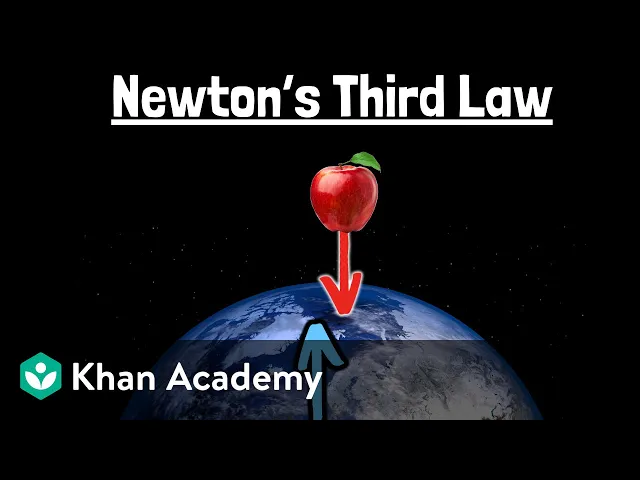
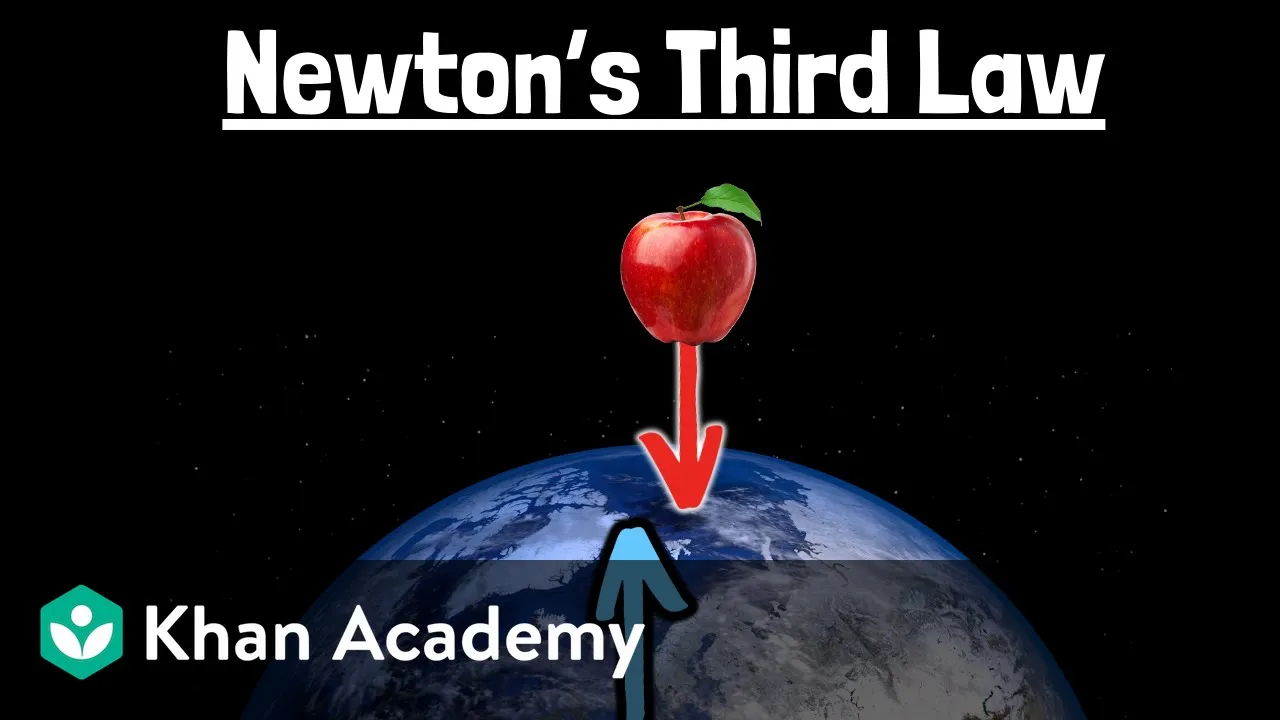
Earth puts a force on an Apple making it fall down but the question is does the Apple put a force on the earth as well and if it does is that Force bigger smaller or the same that's what we're want to find out in this video now to try and answer this question let's start with some familiar examples consider kicking a ball when you kick a ball you put a force on the ball does the ball put a force back on your leg well yeah because your leg does get hurt a little bit right I
mean if you want an extreme case imagine this is an iron ball and you're kicking it very hard now you can imagine that foot really really hurting so yes when you put a force on the ball the ball also puts a force back on you when you kick the ball the ball kicks you back let's take another example when you're pulling up you are putting a force you putting a downward force on that bar okay now that force is actually over here but I'm just putting it over here okay you're pulling down on that bar
so you put a force on that bar down but then why do you get pulled up oo that means that bar is also putting a force on you so what we seeing over here is when one object puts a force on the other the other puts a force back on the first object so coming back over here we could now use this and we could guess that hey if the Earth puts a force on the Apple maybe the Apple also puts a force back on the earth as well but now comes the big question which
force is bigger well for that again let's come back to our familiar examples what if I kicked the ball harder well now you can imagine your get your leg get getting hurt slightly more than before in other words the ball also kicks you harder interesting what happens if you pull on the bar harder hey you get pulled up quickly as well that means oo the pullup bar also puts a harder force on you okay now I'm going to save you the trouble people have measured these forces and it turns out that these forces are always
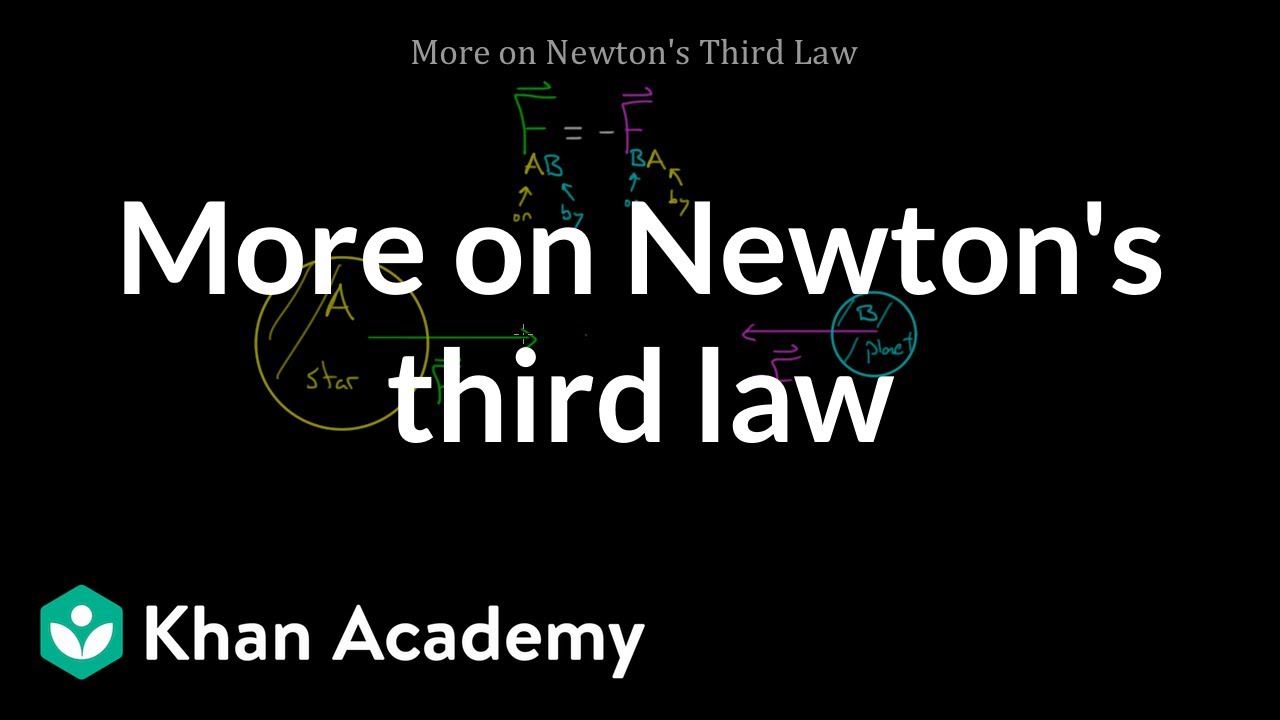
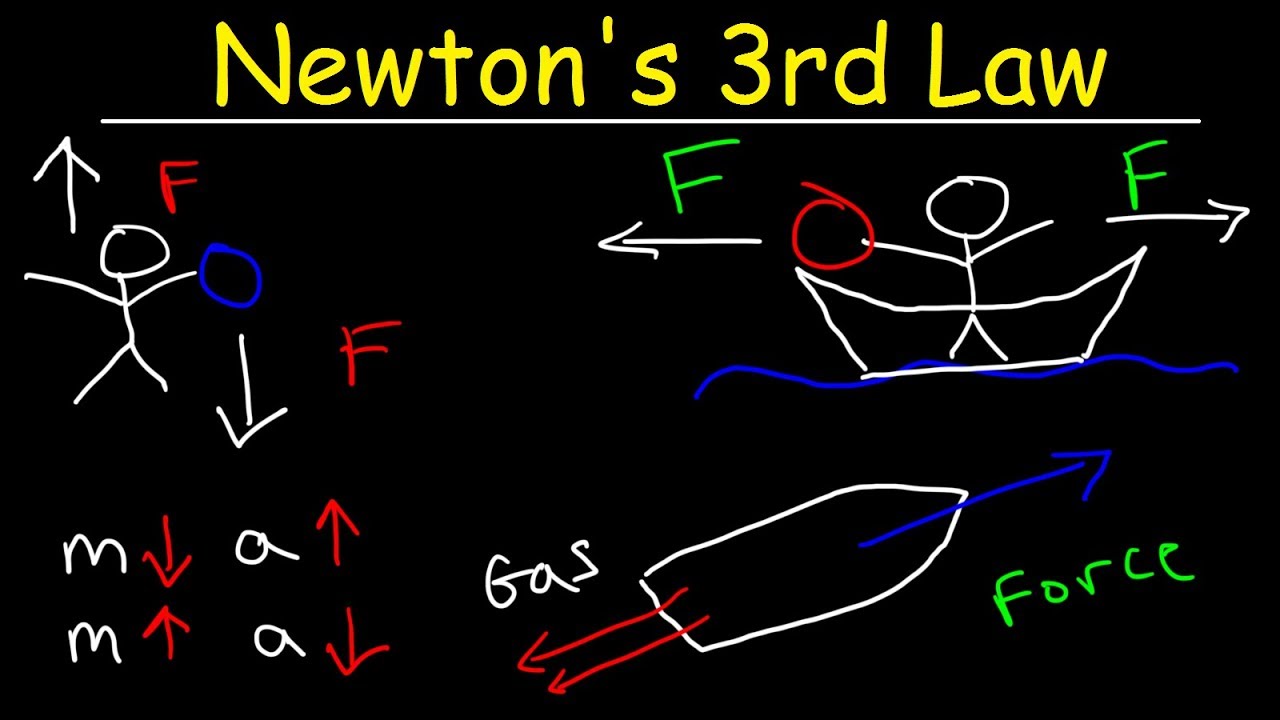
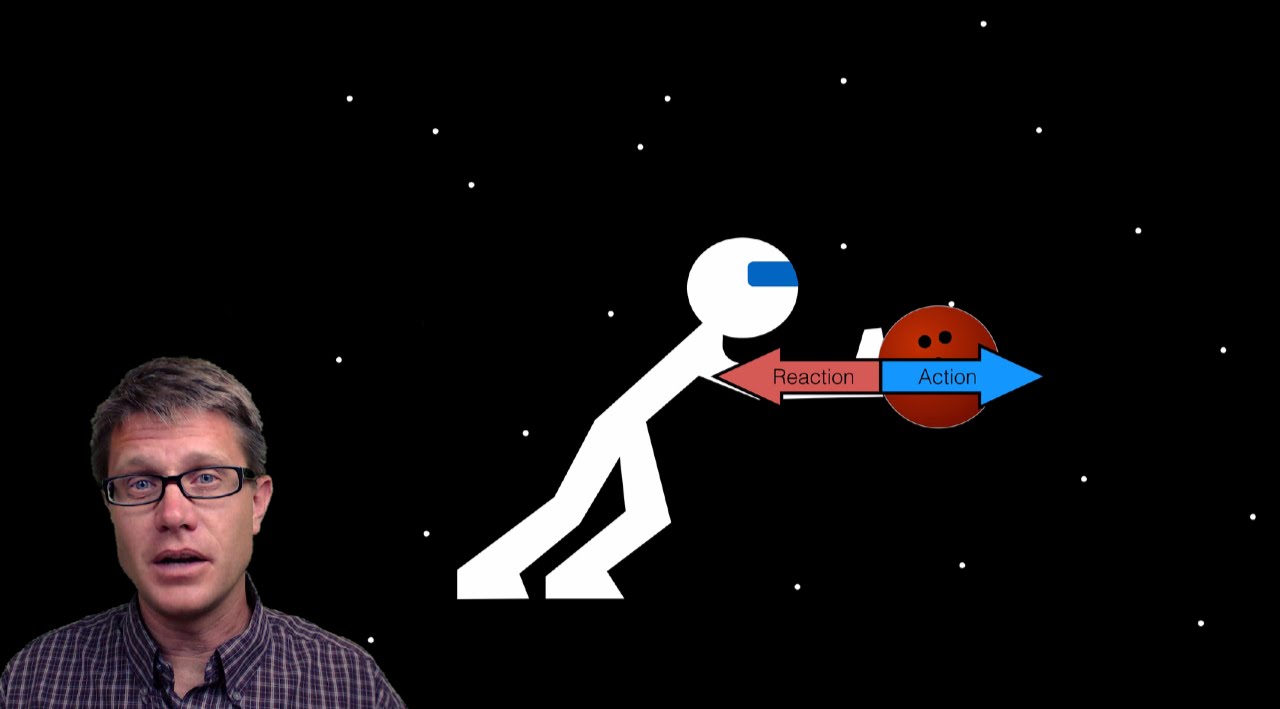
of equal magnitude and that's what we call Newton's third law Newton's third law says that when a a puts a force on b b will put an equal and opposite Force back on a now we can also write this in the form of an equation we can say that the force that a puts on B will always be equal and opposite to the force that b puts on a think about it you put a force on that ball the ball puts in equal but opposite Force back on your foot you pull down on the bar
the bar will pull up on you with an equal and opposite force and the same thing applies over here whatever Force the Earth puts on the Apple the Apple will put an equal but opposite Force back on Earth Newton's third law but wait a second I have a huge problem with this we're saying that the earth and the Apple put the same force on each other but if that is the case then why is it the Apple that accelerates very quickly towards the Earth but the Earth doesn't accelerate very quickly towards the Apple ah now
we're talking about acceleration when it comes to acceleration we have to think about not just the force but the mass as well remember Newton Second Law it says the acceleration is the net force divided by the mass if objects have a huge mass they have a lot more inertia and this makes it much harder for them to accelerate so now think about them Earth has a huge mass and therefore it's much harder to accelerate and therefore when you put that force on the earth it'll hardly accelerate mass is humongous so it hardly for all practical
that acceleration is zero but when you put that same force on the Apple that the force is exactly equal put on the Apple well apple has a much tiny mass and so because it has a much smaller Mass it's much easier to accelerate the Apple that's why when you put that same force on the Apple you will see a big acceleration on the apple and since our eyes can see the acceleration and we don't think usually about the masses that's why we make a mistake thinking that hey if there's a big acceleration there must be
a lot big there's a bigger force acting on it that's the mistake tend to make but be really careful about that Newton's third law has no exceptions the two pairs of forces will always be equal regardless of their velocities regardless of their accelerations wait a second I have another problem with Newton's third law if the forces are always equal and opposite always then shouldn't the forces always cancel out shouldn't the forces always be balanced there should never be an acceleration right like what's going on again that's an interesting question but think about it these two
equal and opposite forces are always on different objects for example when I kick the ball the first force is on the ball and then that equal and opposite force is back on the leg these are two different objects now for example I am thinking about I'm doing the physics for this football let's say then I won't care about the leg in my free body diagram I will only think about the forces acting on the ball there might be this Force because of the kick there might be other forces acting on it and I'll take the
net force of that and divide by the mass to calculate the acceleration notice the force that comes on the foot is no longer in my equations okay because I don't care about that so since these two forces are always acting always acting on two different objects over here you can see when I'm pulling down on the bar that force is on the bar now look at the equalent opposite force that is acting on me over here same is the case over here one force is on the Apple that other equal and opposite force is on
the Earth so since the two forces are always on two different objects they will not cancel out okay another question that we could be having is that in a lot of places you will see Newton's third law written as action and reaction every every action has equal and opposite reaction I don't really like that wording mainly because words like action and reaction makes us feel like we're talking about some kind of an action that you're doing right but when it comes to new law we're not talking about any action we're talking about forces it's only
applicable to forces and nothing else so because there's a chance of misconception I usually don't like to talk about that but there's another big problem with the using the words action and reaction see reaction usually happens after action so again this might make us feel like you know you you first hit the ball so this is the action force for example then the ball hits you back as a reaction force you might think like that but turns out that's not true these two forces always happen at the same time when you're kicking the ball at
the same time the ball kicks you back it's not that the one force happens before the other it happens at the same time the force is last for the same time as well similarly when you are pulling down on the bar at the exactly the same time the bar is pulling back up on you since these forces act on act at the same time and they last for the same time that's why again the words action and reaction can be highly misleading so I'm just going to get rid of that okay the last question we
could be having is where would Newton's third law be applicable when it comes to say problem solving for example um it's mostly applicable when the force on one object is given to you but you're asked to do the calculations in the physics or maybe say asked to calculate the acceleration of the other object for example let's say we're given that hey a fish is swimming in water and it's pushing the water back with a force of 10 Newton so this 10 Newtons of force is on the water but now what if we are asked to
calculate the acceleration of the fish how do we calculate that because we don't know the force acting on the fish well this is where we can use Newton's third law well if the fish pushes the water back with 10 Newtons of the force then the water will push the fish forward with exactly equal but opposite Force so 10 Newtons of force as well so now that I have that force and if there are other forces acting on the fish as well that's given to me then I can calculate the net force acting on the total
force acting on the fish and then I can calculate the acceleration of it another example another familiar example could be when you fill up an balloon with air and you let go of it what happens the balloon flies off why does that happen it's a classic application of Newton's third law you can see the balloon is pushing down on the air with some Force now according to Third Law the air pushes back on the balloon with exactly the same force in the opposite direction and it's that force that makes the balloon go up and yes
if you're wondering Rock ETS also work on a very similar principle now of course Rockets are way more complicated than a balloon with Airfield in it but at the end of the day if you're thinking about the forces over there the rocket puts a lot of force on the hot gases that come out and the gases will put a lot of force equal and opposite force on the rocket itself making the rocket accelerate upwards but of course there's a lot more going on when it comes to Rockets okay let's take one last example before wrapping
things up we have Batman standing on the ground and we know that gravity is pulling down on him but the ground Brown puts an upward force on him the normal force are these two the equal and opposite forces that Newton's third law talks about why don't you pause the video and think about it well the answer is no because remember the way I like to think about it for me the biggest clue for me is that the equal and opposite forces are always acting on two different objects think about this always on two different objects
but here this gravitational force is acting on Batman and the ground is pushing up on again Batman so this normal force is act also acting on Batman so these cannot be equal and opposite forces that newla talks about in fact these need not be equal there are cases in which the normal force can be bigger or smaller than the force of gravity so to wrap this up what are the equal and opposite forces of these two forces over here well if you think about gravity well I think about it Earth pulls down on Batman therefore
Batman will pull up on earth that is the equal and opposite force of this one what is equal and opposite force of this one let's see the ground pushes up on Batman that's how you do it you just you just State the sentence and then reverse it so the ground pushes up on Batman therefore the Batman will push back down on ground with an equal and opposite Force so the equal and opposite force of this one will come on the ground