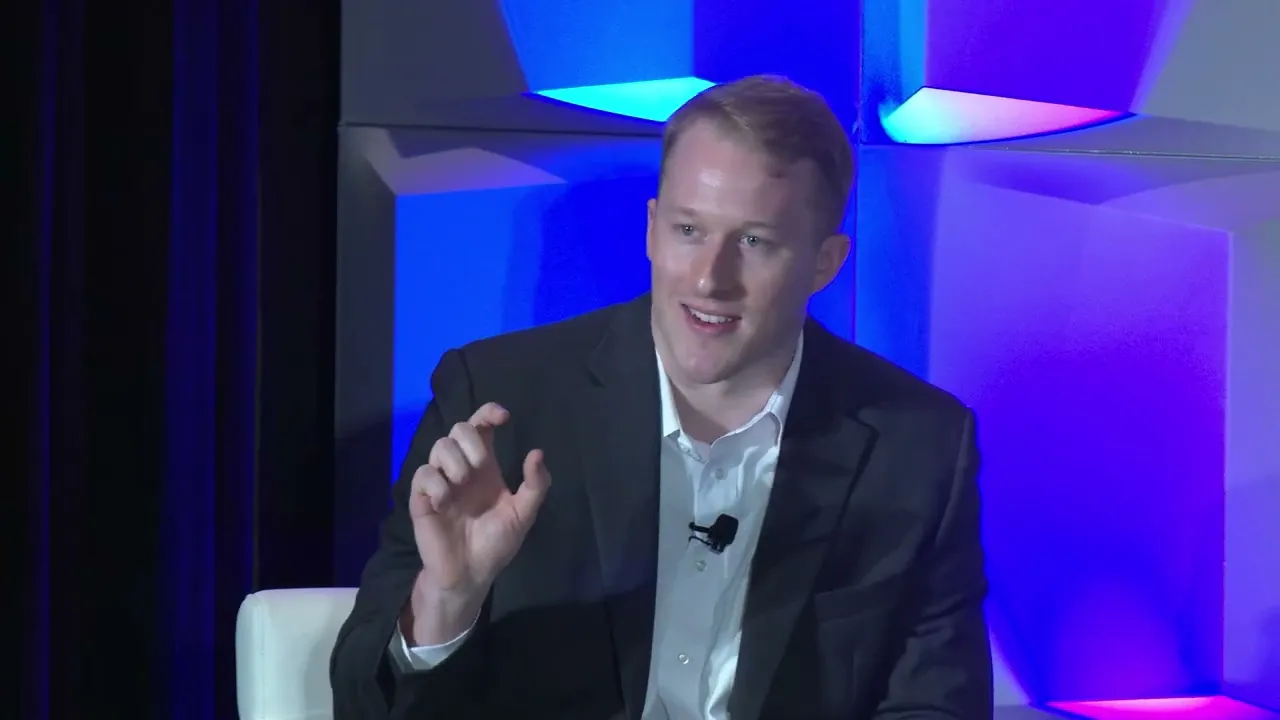
Okay good morning welcome everybody thank you so much for coming here to small business enters the chat we'll be talking about AI Innovation and project lunch pin my name is Casey Rock I'm a computer scientist at the Army capability development command devcom underneath devcom I work at c5isr so I've been involved with a lot of the programs that are going to be pioneering AI specifically project lunch pin now This is a great opportunity for everybody here because after the last presentation we talked big strategy Big Ideas we had senior leaders from industry and the Army
talk about how we're going to try to solve this problem and it's a tough problem right everybody has AI Solutions but what's really unique about small business and how we can fit in is that we're trying to craft the strategy around how the Army uses and takes Leverage from industry specifically small business so why we're here today we've got a lot of folks on this panel uh and what's great about this is you have the opportunity to learn about some of the programs that are tailored towards small business specifically Army xtech and the cber program
and you get to hear what this means for you right why are you here talking to us today it's it's a really great opportunity you hear about decoding the Army's digital transformation and why that's important to folks like us who preach transformation and modernization you'll hear about integration and accelerating Synergy between Army and entrepreneurs how we can Leverage The Best of breed Technologies from entrepreneurs into our processes and then more importantly and I think the most important thing is how we can empower the soldier through this modernization and how we can find a way To
get AI to actually make an impact to their workflows so just one statement I'll say that we are recording this and then there will be a online posted uh at the Army X Tech uh website so without further Ado we'll start introducing the members of our panel we'll start with uh Dr Willis oh great I guess we're going out of order no it's it's great to be here I do appreciate everyone um coming and joining us this morning so I'm Matt Willis um I work in the office um that manages all of army acquisition and
research and development and specifically you know in that that role I manage many of our small business uh facing programs specifically you know focusing on Innovation so the extec program is a prize competition it's kind of the easy button to you know getting your foot in the door in terms of understanding Army challenges uh and we really make it simple to to work with The the government at least as as simple as we can because it is still the government but uh and then we also have the the small business Innovation research program so this
is actually a program where the Army will pay for research and development to be executed uh by you a small business and support of um your your capability uh on on average per year we're investing about $350 million uh in small businesses across the country AI is a Big Focus for us you know as as Mr bang mentioned on the last panel you know it's it's really critical that we tap into Innovation that's happening in the private sector identify ways to um you know apply that to to Army challenges and just this year uh just
in AI focused small businesses were investing over hundred million and again I think that demonstrates you know our Focus you know again on how we can tap into Innovation that's happening across the country to To support our our soldiers great thank you we'll pass it over to Brandy chzn thank you Casey thank you Dr Willis uh Brandy chzn peo iws which is program executive office intelligence electronic warfare and sensors um I'm here as a representative of project lynchman my SP my focus specifically is as a procurement coordinator so facilitating the acquisition and developing the contract
strategy for project lynchpin um you'll hear us talk about AI Innovation and within peo IW ands project lynchpin is setting itself up as the ecosystem or the infrastructure for delivering AI systems and services to the Army now there's nothing particularly Innovative about a pipeline we've we could purchase a pipeline off the shelf it's the way that project lynchman is doing this the way that they're pushing small business Innovation the way that they're pushing openness and modularity that really is Going to bring AI Innovation to the Army and allow us to scale no well said and
I think that's something that we we live every day right with lynchpin and last but certainly not least uh major staha thank you Chris so major Nick staha I work in the office of the assistant Secretary of the army for acquisition L and technology in the digital transformation directorate and uh we have the task to uh digitally transform uh this small entity we know as the US Army and uh to do as the secretary of the army uh said on Saturday uh go faster uh in uh deploying our capabilities out to war Fighters um so
that we uh Remain the uh Premier War fighting force in the world fantastic well I think at this point we can start diving into some of the questions that we have and they're really tailored toward the topics that you hear today all interrelated right all of them are focused on AI but trying to get at Certain portions of how we accomplish this so to start off I think we'll we'll go to the big one scaling Ai and I'll pose this to the group how can organizations balance the need for flexibility and scalability in AI systems
and what challenges arise in regards so maybe Dr Willis if you want to start us off and then we can pass this there sure so so I certainly think um you know at least from the overarching uh Army digital Transformation strategy right is how can we take um processes you know that you know have traditionally been you know paper based and bring us into well the today world right I mean we all in our daily lives rely on capabilities that have this core strategic underpinnings uh you know that are rooted in um in Ai and
and digital capabilities but I think so from a small business you know scaling perspective right we're trying to figure out within The Army really RIT large with our Innovation strategy again how can we uh tap into Innovation that's already happening in the private sector you know for uh commercial based applications and scale those in a way that support the highly complicated highly stochastic you know highly unpredictable environment that uh that we Face uh that our soldiers face you know in um in their missions and so I think that again what we're trying to do from
a um investment Strategy again is how can we help businesses navigate that path right understanding that through um research and development Investments we make through let's say the small business Innovation research program uh which are up to about $2 million each you know you really you can accomplish things with that but you can't accomplish everything so again we've been really trying to develop a holistic layered strategy for how businesses can leverage Army Resources to benefit them in terms of their their um their commercial commercial applications but then how can we link all of those programs
and projects together to to support our needs no fantastic and I think this is a great transition to one of the programs that's really getting after this and I'll this to Brand if I can and kind of take that and add on to what Dr Wills was saying and we think about AI systems and operationalizing them what our Current model is it's very stove piped it's very siloed and lynchman is attempting to flip that by using a collaborative approach collaborative across the dod we're partnering with the Navy we're learning from their AI efforts through project
ammo we're in active engagement with ai2 C with d CDO diu and we could just play alphabet soup up here and would go on for a while but this is a change from how we have typically approached projects within the Army but it's critical for that element of scaling and also the element of modernizing so then I think the question really becomes why small business because you have your pulse ear your finger on the pulse of development and within your small business um ecosystems and for particularly for a nent technology such as AI you're able
to help inform and shape the government and our AI initiatives and uh I'd like to add to That in following up on comments from Mr Young bang our principal Deputy who spoke earlier you know he said to get after AI we've got to decouple the software from the hardware and we've got to decouple the data from the software and there are a few ways that we're getting after that right now so a couple U about three months ago the uh senior acquisition EX executive for the Army um wrote a memo that uh separates our material
release Authority from for Software from Hardware so if you're familiar with um the the way things Army has done things in the past it takes a long time to get a material release out uh so it's part of our effort to uh use modern software uh uh practices uh he had decentralized the decision-making Authority uh from essentially the fourstar level and and now it's gone down to the peo level um and um you made that a a more adapted process and then the second uh thing That I'd like to talk about is uh with decoupling
the data so uh we are on the cusp of uh putting out a unified data reference architecture calling the udra um and that is uh going to uh level the playing field in terms of um how data is structured and U the formats for the metadata so that we create um a workable data mesh and that that data uh standardization is what's going to enable uh AI at scale across the force so that we are able to um you know share Data and allow for some of these Exquisite capabilities uh that we're going to have
uh when uh AI uh implementation comes uh comes around and I would add to that give a sneak pre preview uh here in the uh spirit of South by Southwest uh in the coming weeks I think you're going to um see an announcement from uh a salt leadership about an implementation for the udra that going to allow businesses including small Businesses uh to go in and um start to uh experience that and uh and see how that operates that's fantastic right and I think it's good that we we've now got Esa representation we've got lynchpin
working this and I think really the big question for why everybody's here today is how does small business business fit into this picture right how can they help inform this information inform us as we we go through this because as Mr Bang said we don't know all the dimensions of AI it's super complex right and a lot of times we understand Army acquisition but how does small business fit into this I I mean I I personally believe and maybe I'm I'm biased based on my job but uh I I personally believe that small businesses are
critical uh for the Army for the the dod for the for the US you know r large to stay a breast of uh of you know state-of-the-art capability development Um etc etc so so I think that um I'll go back to to one of the earlier comments right which was you know traditional capability development in the Department of Defense right it's very it it was typically very stove piped you know you start with a uh research project it goes into acquisition eventually there's you know some engineering development risk reduction goes into production and then we
acquire and field the system and this takes what I don't know like 20 years You know it's crazy uh to think that a small business would uh be able to you know overcome or be able to you know um sustain such a long timeline and so I think one of the the great things about how the Army is approaching AI through project lych pen and through other things is to really flatten that right um we are having synchronization at the ground level in terms of all these different capabilities that will contribute to uh our um
you know Integration of AI across the force and that means that there are opportunities for small businesses to contribute uh across the entire you know spectrum of capabilities that we're developing um and so I think utilizing programs such as you know xtech uh such as SBI such as other uh mechanisms that allow small businesses to contribute to our mission is really uh empowering and enabling project Lynch pen you know Vice the other way around yeah fantastic Fantastic and I think this is a good transition to Brandy I might just carry that one for a minute
yeah go ahead so I do want to just add on I I think it's an incredible opportunity for small businesses I describe myself as a non-traditional defense employee you hear non-traditional defense contractors I really resonate with that I didn't come from a pathway um that was directly through the military I didn't come from a defense industry I came from Private Industry I had my preconceived notions about what working with the Department of Defense was like so when I see small businesses come to project Lynch it really is an opportunity for us to mentor and engage
and interact and that's where we really create that culture of innovation that's desperately needed for the modernization efforts that the asalt office is standing up um I think I really just wanted to add there that I think particularly with Project lynchman we understand the challenge of small businesses is getting into the government ecosystem and we're using Pathways such as cber office and xtec to open that door and to really encourage small businesses to come and partner with us yeah and if I could add one more thing I think what's really unique about pin is that
we have folks who are really high-tech computer science nerds like myself and then we have folks like brandy who were genius In acquisition and trying to figure out an acquisition strategy that really gears toward Innovation it's been one of our most important challenges and I think this really comes to collaboration right how does lynchpin collaborate with industry how can industry collaborate with the Army right these are all the things I think um are going to be critical for us moving forward so I'd love to see what your ideas are on collaboration I thought you were
Insulting me saying I wasn't high-tech but I can operate my smartphone most of the time my teenagers help a little bit of the time um do your point about participation and collaboration and I think Dr Willis really started to hit at this in the Lynch pin pipeline There's an opportunity for all of Industry at multiple elements of insertion in the pipeline so it's small medium and large you look at the dod and you're getting the head nod with over 800 S&T research Efforts that were launched in the past two years there's a giant head knot
that's this space that we want to invest in significantly we're going to look to small businesses to help inform our decisions about governance about standards for metadata about open API inference points and there's an opportunity through these Pathways for us to bring in that Innovation and for you to inform us as you know as we modernize what is best of breed what Does best of Industry look like what's the newest the latest and how do we Implement that in our particular use case yeah well said and I'd love to see your your opinions absolutely and
follow up that uh as well you know um there are a variety of ways that small business can engage with the Army to influence our governance um and decision- making so for example uh our office uh recently conducted a request for information through the sam.gov website about a Policy for software bills of material right and uh you know I want everybody to know that if you respond to those we are going to um you know you know first of all of course read everything but then we break it down by demographics and so one of
the things we looked at is you know how do how if there's a requirement for um software build materials you know what do large businesses say about it what do small and mediumsized businesses say about it Right and in in this case the response from from everyone was was positive right um but you know we look at that and if it looks like there's going to be a challenge for small businesses to compete then and we're going to probably change the policy right and uh make sure that that that opportunity is there and the second
thing I'd like to point to is that uh you know as you saw with Mr bang earlier the senior leadership at at asalt is very eager and interested uh to Work with small businesses and so uh for example uh you may have read where Mr bang um is working with industry for a uh proof of concept for cyber as a service for small business right like helping and that looks at helping defay some of the cost for interacting with the Army like brandy said because we recognize that access to Army systems to Army people sometimes
Army facilities and bases uh can really be a challenge and it that program in particular looks At that I C piece uh to uh enable small businesses and uh defra some cost so that said you know when you engage with uh Mr bang as he said earlier the key is to meet him halfway and uh they will you know receive um you know multiple pitches every day from from industry right what what stands out in their minds are the ones that you know thought about what the Army does and thought about a particular application for
the Army and where small Business can really get creative in this is um you know to think um you know outside of the box if you will of all the different applications for AI that are out there because I don't I don't think anybody could say authoritatively that they know all the applications for AI out there I mean the Army has a tremendous number of sensors sensors that like no normal people don't don't think about right when you think about the electromagnetic spectrum and all That kind of stuff right generates tons of data that's passively
floating out there I think I think one a good example comes from pows with the uh the sensor Suite that's on the helicopters for uh defending those aircraft right they're fly they have an Exquisite um sensor Suite they fly over the terrain right think of all the the data that's collecting right so that's a particular particular Army one that Might not just be something you pick up from observing ordinary business or ordinary life uh and so folks that come with ideas um that have Army applicability are are are definitely going to get a lot of
interest from the senior leadership and I I think it really speaks to one of the benefits of utilizing the small business office is it allows the government to buy down risk with nent Technologies so exactly as you were describing Nick these Emerging Technologies where they're may be alternative applications or research approaches that we as the government haven't considered a small B business often will bring that to us and the small business research grants and awards allow us the opportunity to extend that research and to pursue uh potential applications within the government that's fantastic and I
think a key theme that I I keep hearing out of everybody is that there's Innovation Collaboration uh and one thing I really want to tie on with collaboration is that everybody thinks when we're talking AI it's who can build the best model right how do I increase the performance the T results of this model when in fact really there's a lot of Industry involvement that pushes us to say how do I increase the workflow that makes somebody's experience better and I'd love to see given that there's opportunity so much for this space What Are some
other ways that we can increase workflow with AI and and specifically project Lynch I know that's one of our biggest hurdles so I can take this one and I think um you talk about scalability it for the government for the Army is about pushing the modernization efforts and consolidating our AI efforts consolidating our AI talents to deliver really a high quality AI capability in the end um so when I think to your Question Casey about how do we how do we approach this problem I think it's also about how do we Engage The End user
and with project lynchin the collaboration aspect is there from the initial design concept we're engaging our end users as our technical points of contact as judges to review white papers and it's really interesting to stand up these Innovation units within our military commands and see their willingness to participate and tell us when things Absolutely will not work and to also say have you thought about doing it this way yeah I think that's perfect right because one thing that we've heard a lot from industry is you know user Center design and Mr bang said soldier center
design and this is a perfect example of why this is applicable because like we said we could develop really high tech models but we need that feedback that feedback mechanism to make sure works so I'll ask major staha you know how do we Given that there is this feedback mechanism from the soldiers out there how can we influence their knowledge about their tasks and their workflows and then design um or try to shape technology around that right so you the best way to talk to Soldier well you have two options I think right you either
talk to real soldiers out in the field which may or may not be uh easy for any any given company right um you know the other thing you can do is sort Of put yourself in that perspective and what I would like to drive home here is you know we're not just talking about like infantry men out in a trench or something like that I mean that that is definitely a major use case for the Army um as the secretary said the other day we're always going to have folks that uh you know are carrying
packs and rifles on the ground and flying helicopters and driving tanks but the uh scope of the Army's activities are are vast right and You can go down to the Cyber Center of Excellence at for Eisenhower and uh we've got Uniform service members doing cyber defense of the Army's networks you can go up um you know I'm not saying visit these places right because you what other places we've got are like undisclosed locations around Fort me and we've got soldiers in uniform um you know doing um interesting access type of operations to with our adversaries
right um and you know a lot That that stuff is yeah there's an army piece to it right but then there's also a technical piece that um you know folks can can imagine what that looks like and what some of the challenges are uh that the Army has and you know we're going to need you know obviously that that's an area where we need a lot of um AI capability as well and and you know it's almost like a situation where if you can think of you know an activity then there's a good chance that
the Army has Some some place in it as Mr bang in the last session just uh talked about with uh you know the Army being the the significant actor in uh coming up with vaccines for Corona virus right uh so you know find where the the Army has a you know a military occupational specialty or has a unit that does that type of thing um and then think about it from the Army perspective and I think you can you know without necessarily needing to directly engage with soldiers You can understand use cases that the Army
would have I think the what I was hearing as you were talking about that Nick was you we tend in AI to jump towards algorithmic Warfare and that isn't the only use case that the the Army is looking at there are multiple use cases and ultimately with project lynchin what we look at is reducing the cognitive workload on our war fighter so that can be implemented in many different ways it's taking tasks that Used to be very manual compiling battle reports or course of action um and looking at AI to how can we push down
that decision point so that an AI algorithm is is doing that information gathering and helping us make those informed decisions at our military levels and this definitely ties to workflow and I think to what your point is there's multiple places within the portfolio that AI fits in tough question question that everybody asks is you know How do we buy down the risk of deploying AI how do we ensure that what we develop is trusted by the end user and of course obviously small businesses uh we we want help with that so I'd love to see
from Project lynchpin from digital transformation and and if there's any ideas from small businesses how they can fit in to help us there that'd be great Insight do you want to start anyone okay um scalable Danny is that Your question yeah um okay so we talked about industry collaboration um we talked about buying down risk through the small business office um scalable robust TI I think you're going to see this coming out soon and Mr bang talked to it as well we're not looking to buy a better Mouse tra we're looking to say that within
the context of the dod the way that we deploy AI has to be looked at in a very safe and secure way that is the inherent Context of the environment that we're deploying in so what we need are robust and automated t& Solutions that help us meet that use case that help us say that the case we deploying AI within the the government is going to be slightly different than deploying AI to your smartphone because there's an inherent risk in there um how do we how do we address that with small businesses right we give
them the right Pathways to get involved and a key piece is that we open Ourselves up to the degree that we can to be open and transparent about giving access to small business to data that you need to inform your systems to our use cases and that's an initiative we're working on right now to have how do we get small business into um an open source community so that they can have access to these specific Army data and develop solutions for us that are high quality and yeah I would certainly add that you know one
way or there's a few Ways to to get your foot in the door right because I know we've been talking about all of these complex challenges right that the Army is facing um I think that one point though that I'd like to to go back to is that we're not expecting small businesses or The Innovation Community per se to understand the the challenges that that we face or that our soldiers face you know on the battlefield we're really looking to Um simplify you know our our R&D in a way that we can identify uh you
know the core technical underpinnings for a capability that might have an application in the um you know in the private or civilian sector but also might have an application um to to our our systems right and so I think that using program program such as you know the extec program or using the small business Innovation research program is a way that you can build that Partnership so again the sbir program is a mechanism whereby the Army will pay you up to $2 million for research and development to support a need um but it's not just
money right uh it's also um having that connectivity to you know an army stakeholder uh have opportunities to tap into uh into Data or into our um you know our sandbox for uh be for being able to to test different you know software Solutions we're being able to have a you know Cooperative research and development agreement with our different Laboratories you know across the army so again you can leverage resources um that we have available uh to help you be successful so I think that that's a big piece here right is that yes the Army
has a lot of big AI challenges yes I believe there's a a lot of great things happening in the private sector that we can apply to to our our challenges but we aren't expecting the private sector To go at it alone right we're here to help and we want you to be successful because again all of these investment dollars uh that we you know are are putting into AI based capabilities either from you know a science and technology perspective from an engineering perspective from an application perspective is really because we want to develop a capable
system and then utilize it uh so you know it makes us different from let's Say you know like the National Science Foundation which is great things for science across the country uh but they're just really seeding Innovation again we're trying to both seed Innovation uh mature it buy down risk uh in our systems and then acquire it yeah and I think when I hear you talk about that it's the concept of the Valley of Death right we've talked about this before um how can you utilize programs such as project Catalyst such as xtec to Cross
at Valley of Death with programs of record um we categorically have not been incredibly successful in this area but project lynchpin is aiming to change that through a very modular and agile Contracting strategy you're going to see competition built into very short periods of performance rapidly turning over contracts so that we can ensure we're getting the best of breed but so that we're also employing a competitive ecosystem where another small business Who's developing an asent technology can come up and come into the ecosystem and we want to make sure that those opportunities like Dr Wills
is saying are available for all and you know I just said in um Dr Wilson and Brandon you guys have already U I think hit this I just want to put the final U hammer on it which is U I think it's going to be important for uh businesses to understand their risk profiles when they are bringing products To the Army uh Mr bang talked about it earlier I mean we want to get to the point where uh you know we're buying third party uh generated algorithms um but there there's going to have to be
risk assessments along with those and folks are going to have to understand the supply chain of those algorithms um and I think you know very nent um uh drafts of this idea right now but you're likely to at some point in the future see something like an AI bomb Right where uh where folks can uh you know describe their lineage and so that's something to to start looking about and that will make a competitive difference later on and what what challenges do we face from digital transformation I mean I think we we get very ambitious
right AI is a Hot Topic but what are some of the challenges that you see uh in your your career right so you know digital transformation is our task right the Purpose is to get to Agile to get to continuous um to get to cicd right um so that we're delivering continuously to um the war Fighters and so challenges of digital transformation as you might imagine for an organization with the size and scope of the army um tend to be cultural and they tend to be uh process oriented right so you know we we have
a Workforce that wasn't necessarily um you know brought up in the in the you know digitally native right in terms of uh Program management and that sort of thing so uh you know one of the directors from Mr bang has been and to um you know upskill the workforce by taking courses and that's all about making sure that our acquisition Workforce can communicate well with with industry right and uh be good product owners for this uh for the things that we're asking from industry and understand how software uh is developed and and processes of agile
as Mr bang Said he's the the Army scrum Master right and so um um you know flowing down from that on our on our own scrum teams we we've got to at least understand what the scrum Masters are doing and then be good product owners ourselves uh and then uh you know the other piece is uh process-wise and that is something our senior leaders are spending most of their days on right so talked about the uh software directive that um the secretary of the army Announced on Saturday and if you haven't read it recommend you
go read it there's a lot in there right U there's a lot about like brandy was talking about you know Bridging the Valley of Death there's talking there you know we've talked a little bit about um the challenges of Contracting with the Army right there's a piece in there about uh how the Army standing up at Contracting Center of Excellence U for dig uh for working with software at Aberdine Proving Ground right so there there are a lot of those pieces in there that I think are are are basically foot stops hint foot stop hints
you know for working with the army uh as we go through the digital transformation process that's well said and I think the next question naturally is why is this a good fit for small business you know we we lay out the challenges we lay out that Innovation is derived from small business but Dr Willis from your uh expertise why do you think it's a great fit for small businesses to be where they're at today with the way the Army is looks to AI so yeah I mean I would go back to you know what I
what I stated earlier right and that this is a holistic uh army strategy stry right in terms of trying to implement and deploy this digital transformation you know across all aspects of the army from uh you know Upskilling to a project Lynch pin to uh inherent capabilities within all of our our defense systems and so um with this idea again of this open systems architecture that we're trying to integrate into as many of our systems as we can that is really a pivot I'd say away from again the traditional approach of uh there's we're you
know developing and deploying these large systems which are being developed by one large Prime business um and they just Leverage their own internal research and development dollars to um to improve the capabilities the pivot here particularly again with with AI and digital transformation is the underpinning is there's opportunities for um throughout the life cycle of you know these U capabilities that we're developing which again can span you know 5 10 15 20 even longer years opportunities for for small businesses and capabilities to be spun in and spun spun out right so there's It's not just
you need to get in uh to develop a capability at the beginning right there are opportunities throughout the life cycle for small businesses to improve our capabilities uh to um you know change or transform the way that uh we operate and I think utilizing programs like SBI or like you other mechanisms can really Empower you know and enable that yeah definitely and I I'd love to to kind of talk about with Brandy you know lynchpin is trying to to Leverage these because the critical Technologies the critical Innovation comes from small businesses from what we've been
engaged with I think that's one of the big things we've seen with project lynchpin is just how can we engage with small business understand what their experts are thinking and then come back to the high level with uh how we can do this from a strategy perspective and I I think it's it's definitely AEM to what we've been going After it is yeah I think we've had on Project lynchman 200 plus industry engagements so um I hope no one is saying that we're not getting out there or making ourselves available multiply it by two it's
close to 500 at this point okay um yes so making ourselves available um I think sorry what was your question Casey I lost myself yeah I mean I think it's really like how lynchpin is using small businesses right so so that that agile piece that um Dr Willis was Talking about for a moment you're there's a place in in the pipeline for the prime sure there's a place in the pipeline for the small business for the medium based on use case and capability and what are you bringing as a value proposition to the Army and
so we're not going to see within the systems of AI that vendor lock situation that we as an army have typically gotten ourselves into where we've locked into um a yearslong contract with a prime and then Been unable to modernize at the speed at which uh we can outpace the threat and So within lynchpin you are bringing in that Spirit of competition you are bringing in Rapid agile Contracting so that we can get more small businesses into the ecosystem we can create a competitive environment that will give us these emerging innovative ideas as well oh
perfect and if I could just add because um you know why should you work with the Army right and um I you know There there's just a straight business piece to it right but I you know and you know with AI you know you may um you know have a different experience with this but we have a small business that uh is actually the Prime on a uh system that does uh navigation for soldiers GPS base system Right Next Generation uh dagger if you know what that is so you know I the last time I
interacted with that small business they were out at Fort wuka doing a limited user test on This system and you know they spent week uh running around in the woods with a platoon from the 101st Airborne and I think there is this kind of extra thing that goes with working with the Army right like they're they're Pro you probably find easier you know businesses and organizations to work with than the Army right for the reasons that we've talked about today but you know these you know little experiences will come along right where you're with the
the 18year olds out in the woods right sharing War sto they're sharing War Stories you're sharing your version of War Stories right and uh you know you're figuring out how to make sure those 18 19 year olds get back to their families right after you know going somewhere in um fighting for the country so I I think that you know if if everything's equal right and you can go work with somebody else because you have limited resources you have to invest Your uh resources wisely you know like that can be that can be a factor
right because it can be a cool thing to work with the Army and uh know that you're doing a good thing yeah I think we still get credit for the internet right we do some cool things and just to add to that as we're looking at project lynchpin and specifically these modernizations within the Army we keep talking about openness and transparency launching open API Standards open um Frameworks for architecture I think there will be just sitting from my small chair as sign ific impact on society and how it views AI as well and to be
in the Forefront of that informing the governance around AI it's an incredible opportunity for a small business absolutely and and and thank you for all the Insight I this was this was great and I I want to pass this over to Dr Willis uh before we conclude I I know that you have an announcement that You wanted to to make well well we do have some time for questions but yeah so I think that you know and I appreciate the the panel you know I think the talking again about project Lynch AI Innovation how the
Army can be more deliberate about integrating um capabilities you know across uh the profile of our investments and specifically again how small businesses can contribute right it's it's critical critical critical for for the Army uh to Um ensure that we are you know integrating and deploying the uh most technically capable Solutions we must rely on on small businesses which are at the Forefront of of technology and capability development and so I know again we've talked about or the audience you might be a bit overwhelmed right we've talked about all these challenges that we fac in
the Army we've talked about you know some different opportunities for um for Resourcing for getting your foot in the door but uh you know I I wanted to he certainly say that you know this isn't all ethereal right this isn't theoretical this is real and so uh I wanted to announce that you know starting today um we we're opening a new competition a new xte competition SP focused specifically on scalable Ai and project lynchpin in a minute I I'll have Brandy you know speak to some of the details but so throughout this Competition uh you
we're we're offering up to $600,000 in cash uh to to small businesses and cash is great because you can use it for anything um and uh in addition to that up to $25 million in in small business Innovation research awards that will come after this and one of the the ways that um the Army uses the xtec program is really to um again make it easier for businesses to work with us and move very quickly right so we can uh so this competition is opening Today uh I think the the website is live now um
and uh we will be moving very very quickly in a matter of months to uh select you know a handful of companies who will then be developing these AI solutions for the Army so again $25 million in in R&D Awards you know plus you know $600,000 in cash again we're we're really trying to move quickly because we recognize that you know the pace of government working with the government working with bureaucracy can Be challenging right and it just doesn't uh uh work uh for for small businesses particularly when the halflife of a technology is you
know six or 12 months uh and the government takes two years to get someone working on on a critical R&D project you know that's just uh you know the timelines just just don't match up so again definitely want to make sure that you know we emphasize right that we're putting you know our money where mouths if if you will but I guess Brandy Can you speak to a little bit of the the yeah absolutely um so when we talk through AI Innovation I think the question really is for project lynchpin is how do you um
how do you generalize an architecture and a strategy and infrastructure for AI and then scale that and then similarly how do you harness the power of scalability in AI we've seen AI models as you give larger data sets as you retrain models you inherently see this scaling or this Bettering of the model how does lynchpin take that concept and scale that across the Army and perform uh provide a secure and trusted pipeline so there are three topics that we're going after with this new xtec scalable AI 2 competition um the first is scalable tools for
automated AI risk management framework and algorithmic Analysis um I think about this as an automated way to get after a risk or a threat class identification for AI we don't Think there is one tool to solve it all we absolutely do not think that um but what we are looking for from industry is how do we assess the risk of pre-trained models we know our future is bringing in thirdparty models how do we assess that risk how do we establish various benchmarks and what are the robust solutions that the Army can deploy to ensure that
secure and trusted AI so we're looking for toolkits we're looking for Solutions we're looking for that Innovation and that automated AI risk management framework work space that's our first one uh second one is scalable techniques robust T and E of AI operations pipeline so um testing and evaluation um within po iws our focus is on that intelligence electronic warfare and sensor so you see us focus on imagery on video on RF U but we also really want to get after these really high standards that the government has For TNA prior to deploying any AI solution
to our end user we need to have a robust system of testing and evaluating that model um I think there's this this concept of the the ship of thesis right as you retrain a model you are essentially putting a new piece on each time and you're bringing yourself further away from what your ground truth was that you used to train that model how do we inherently to the best that we can say that that is a secure and Trusted model like is that model at the end when you've replaced each piece of it by retraining
it the same model that you started with it's a challenging problem to get after but we truly believe that small business has innovative ways to address this if we can bring an automated that would be even better too um but we really want those novel approaches to t& and then finally scalable techniques we prioritizing a center of mass Algorithm so you've heard us talk a lot about how project lynchpin is going to do this digital transformation a culture shift to deliver value through the adoption of Advanced Technologies talked about the why I talked a little
bit about reducing the cognitive workload on our user and then the how is the center of Mass idea is deploying an AI system in a specific use case that would take a lot of the cognitive workload off of our user and bring it into specific pieces Of you know of information they would be manually putting together so how do we approach that how can we deploy Ai and that specific spe EXC specific use that was a lot so but I do think we're going to have questions and and I'm sure you can always find case
here myself in the reception afterwards and we are posting it live as well we will be busy it live okay yep and just uh the website is live so if you want to read those topics over Again feel free to check it out and at this point I think we'll open up to some questions we've got some folks ready to to go after it so I'll just speak really loudly I'm sorry um uh so I have a ton of questions and I'm sure I'm going to find out more as I look up lynchpin and uh
extec but primarily for these purposes uh my questions are on the process for applying I personally work at the Joint level for the dod and I'm very familiar with Enterprise thank you uh as well as the acquisition process there which is a beast of its own and I'm learning the cber process which is uniquely challenging so my question I guess is uh in the sense of uh lynchpin and xtec uh how is it how is the application process differ or um is it still part of the CER framework so I will say we we've made
some significant changes in the last few years so especially in the Army again recognizing It's not like just the last few years we recognize you know how small businesses you know can contribute to our mission but about three years ago um we made a deliberate strategic shift in terms of how we could U be better you know stewards uh and make it easier for businesses to work with us so I will say across both SBI the Army SBI the IR process and the extec process we've made it very easy so you know the application process
is like a one or two page white Paper it's a it's a nothing you know and I'd say historically yes uh within the Army in the SB program sometimes the applications could be you know 40 or 50 pages which is crazy right I mean that's a significant time uh and work investment for small businesses and again if they're trying to balance okay I can you know work with the government which it's going to take really long there's be long lead times there might be a great payoff at the end but you Know uh my funding
Runway is very short or you know pursuing commercial applications you know under the old way they would almost always pick the commercial application right so again we've been really trying to be deliberate about how we make it easy for businesses to to get their foot in the door through very simplified processes through our SBI our process you know we can get companies on contract in less than a month uh you know it's in Changing all aspects of the program so that you know we can you know harness Innovations you know at the at the speed
of innovation Vice at the speed of you know normal government great contract thank you very much uh and I'm sure you're already aware and I'll just leave with a comment that the cber application process is so challenging that there are companies who help you with the civer process right so hopefully we get to a point where that's not as necessary Thank you again and I think to that you guys have an accelerator program right as well to offer like a mentoring through the small business process not the application but through these those unique small business
challenges yes so for both the extec and SBI program we do have an xtec or a business accelerator to uh basically provide that you know those underpinnings uh to again help a company be successful whether they become you know a DOD or an army partner Or not absolutely next question yeah hi my name is Brian first off just thank you for serving our country uh you've you've been using the term small business and obviously that can look like a lot of different things and I was just curious to know if you could maybe talk about
some of the attributes of uh small businesses that end up working with you that thrive versus some that you maybe hired or brought into the fold and then It was like Beyond just the solution space that they were working in like brought challenges so just if you could talk in that that area sure so I I certainly think you know that and yes of course there's the government definition of what a small business is and you know that all that aside but uh certainly small businesses that are are successful or businesses that in general are
successful or those that you know are I'd say you know Question the status quo uh those that you know are willing to to Pivot those are willing to uh to take a chance um and recognize again that this is all moving very quickly and we're um I think one of the the great ways that the Army has leveraged a lot of these programs right is to recognize that it's a way for us to take risk um in a lot of ways the Army cannot take risk but when we're investing in you know Innovative technology development
we need to take Risk and and in that way we need to recognize and understand that the R&D the capability development it might not always work out but I think the companies that um have you know invested in a capability and if it didn't uh work from a technical standpoint um they might pivot and then um continue to engage with us so there are actually a few specific examples for companies that participated in the extec program early on they didn't win they uh took all of This feedback that that we provide so one of the
things that I didn't mention is that we're trying to be as transparent as possible so we'll provide feedback good bad you know indiff but mostly You Know It uh companies that have been able to Leverage The those that feedback and pivot uh have been extremely successful um and so I think that um you know certainly the willingness to uh to put yourself out there and again you know not rely on you Know the same old status quo and we've also had companies that have worked together again to develop a a capability so um I guess
did that answer your question yeah yeah yeah thank you very much we'll provide a little more context and I'd like to hear Nick's opinion too um I think of this as like a paradigm expansion not necessarily a paradigm shift that when you're working with a small business we often inside the dod have to do our own internal education About this is not a typical Prime it's a partnership they're they need to be small businesses that do well and Thrive are those who are willing to ask questions when you're in the contract who are willing to
be informed and who are also willing to challenge some of our Solutions as well to say how do we get to a yes not I can't do that for you and that that Mutual partnership is really what makes small businesses Thrive yeah and I I would just add to That you know from a program manager standpoint you know when you you look at the risks associated with small business right like a lot of it will come down to uh you know do they have the reach back to go back to a term from the last
session multi disnary disciplinary approach right I mean it can be a challenge you know for a small business when they hit that roadblock that requires uh some degree of knowledge outside of their core competency and it Doesn't necessarily mean that they you know need to go out and hire somebody or something like that but are they part of an ecosystem uh and a network that uh allows them to uh you know to reach back or or over or whatever they need to do to uh overcome that obstacle yeah like the project Vista initiative and even
Dr Willis was talking about the partnership and the teaming you know the dod can't we can't tell you to partnership we Can't give you guidance on teaming but is if you as industry choose to partner with a counterpart you might fill in some of your capability Gap and together you bring us a solution that's welldeveloped thorough and Innovative that's a win for everyone okay so I think we're getting close to time so if we want to have one more question uh I think that'd be perfect that was actually kind of a perfect segue into my
question um I I I Work for a small business that's had the privilege to work on a number of these spb contracts with you all um and and my experience one of the things we've always been interested in is understanding what the other companies who are working on some of these contracts are actually doing uh not specifically so that we can outco compete them but more so that we can understand how we can better collaborate and I was wondering if you've ever given Any thought into how the Army can serve as sort of a Matchmaker
so to speak um between small businesses who may not even be aware that you know each other exists such that the the some of the parts you know might be greater um than than any one piece yes 100% it's like a seated question no but um so one of the initiatives that we've been working for the last year because you're right I'd say that you know across the Department of Defense I I read some Statistic that there's you know thousands and thousands of Information Systems in like a whole like three of them talk to each
other or something something ludicrous like that right so um and it's a b it's a big challenge right understanding from a technology development technology integration perspective particularly you know for many of these capabilities that are going to require multiple different capabilities to you know develop a Holistic solution having a tool uh that provides opportunity for collaboration is critical and so for you know the last I guess 12 to 15 months we've been developing the armite tech Marketplace which will serve exactly what you described it's a you know system that you know has vetted uh capabilities
um linked to you know small businesses whether they were developed through SBI or program or not and it it'll be a tool that you know can not Only provide opportunities for Army stakeholders such as the program Executive offices or PMS when they're doing market research to identify what's out there in terms of small businesses or large businesses in terms of what they've developed but also provide an organic capability to seed that collaboration across small businesses or also potentially with with large businesses so um you I think that again we've talked a lot about how small
Businesses contribute to the ecosystem but you know large businesses can also help with many things in in terms of enhanced uh capability development manufacturing scalability deployability you know engineering uh risk reduction and so a tool like this we think will really help to provide those those connections um so so absolutely thank you well I I appreciate everybody attending this concludes our panel one thing I'd like to invite everybody will Be at a reception over here from 12:30 to 2 so please uh feel free to join us we'll be engaging with um our team up here
as well as the senior leaders that pitched before so thank you everybody and I hope you have a good rest of your [Music] day