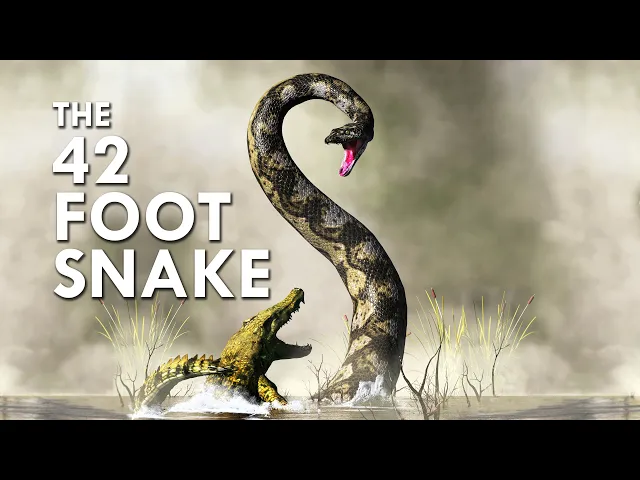
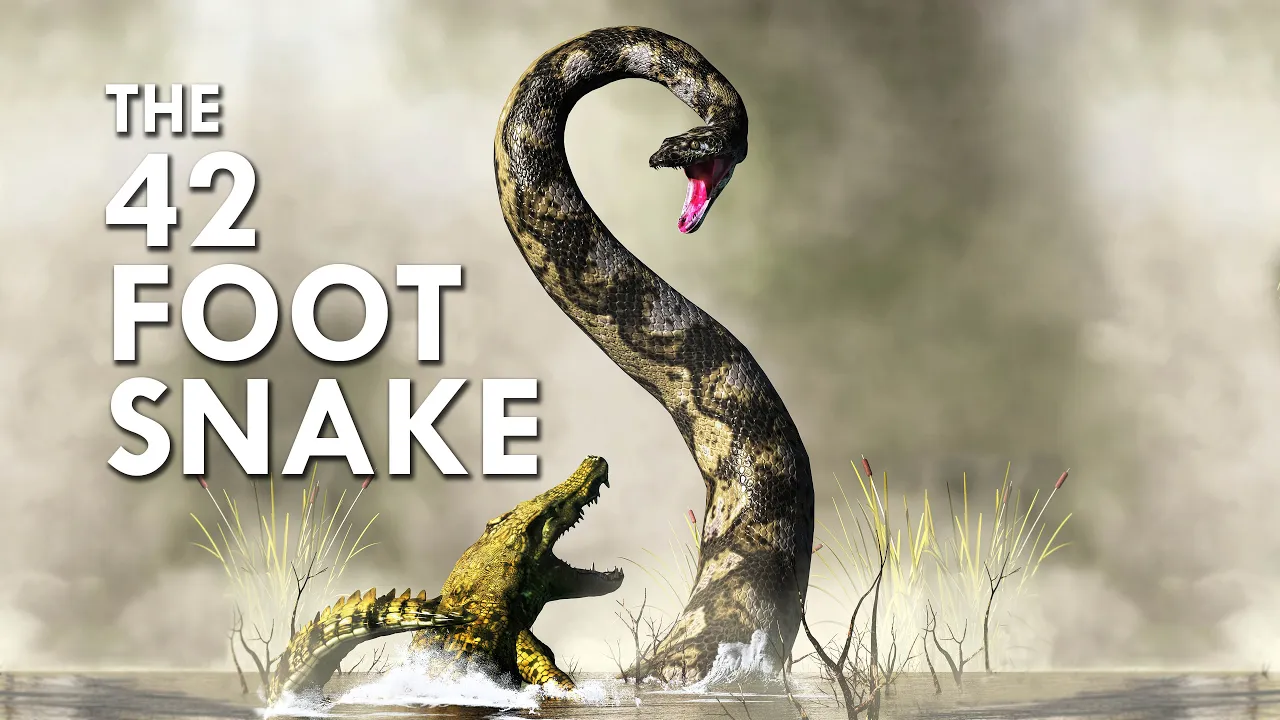
this super-sized snake is the largest the world has ever seen this gargantuan reptile was so long that it wouldn't have had any trouble wrapping itself around the belly of a blue whale this is titanoboa [Music] hi i'm talia louie mary and this is paleologic titanoboa is the new kid on the snake block having only been discovered in 2009 but it's been making a big splash in paleontology circles ever since titanoboa was discovered in the cerejon coal mine in northeastern colombia that is where it gets the second half of its scientific name titanoboas and it certainly
deserves the first half as this snake was a true titan initially the paleontologists studying the site didn't even recognize the vertebrae as snake bones since they were so large even they were shocked to find such a massive snake among the layers of coal at a whopping 13 meters long and almost a meter wide titanoboa weighed over 1 100 kilograms that's longer than a tyrannosaurus rex as wide as a doorway and heavier than a walrus before titanoboa the largest snake ever discovered was gigantophis garstini a seven meter long serpent that lived in north africa about 40
million years ago but at about twice its length titanoboa makes dragon tofus look like just a little guy in comparison to give you an idea of how these two giants stack up against snakes today the longest living snake is the reticulated python which averages just over six meters long or about the length of a short school bus until titanoboa was discovered herpetologists debated for decades just how large a snake could theoretically get their best estimate was around 12 meters long and titanoboa at 13 meters long absolutely smashed everyone's expectations among the fossilized ribs and vertebrae
that were found in the coal mine about 30 individuals of titanoboa were identified including a complete skeleton and skull the rocks in which they were found were dated about 60 million years old from shortly after the mass extinction that killed off the dinosaurs that makes titanoboa the world's largest predator we know of for a period of over 30 million years until the emergence of megalodon 23 million years ago you know the massive 15 meter long shark everyone's favorite whale eater snakes like titanoboa are poi kilothermic or in other words they're a type of cold-blooded animal
whose body temperature fluctuates this means that they cannot regulate their own temperature and rely on thermal energy from the environment to power their metabolism the body shape of poikilotherms which are often flat like fish or elongated like snakes helps them heat up and cool down quickly the largest snakes today live around the equator because the higher temperatures allow for the development of bigger bodies the further you get away from sweltering temperatures the smaller the poi kilotherms become to determine titanoboa's size paleontologists took the relationship between the size of living snakes and their vertebrae and applied
it to the ancient serpent paleontologists believe that titanoboa had more than 250 vertebrae so how did titanoboa actually get this big the growth strategy of other giant reptiles since the last mass extinction has been to extend the duration of their growth so that they keep growing for longer one study suggests that titanoboa not only spent more time growing than its ancestors but was also growing faster which would explain why this snake was able to get so big a large proportion of the adult individuals found in the coal mine were 13 meters long suggesting that this
may have been the average adult size and not just an outlier prior to titanoboa's discovery not a single land-dwelling animal from 55 to 65 million years ago had ever been found in tropical south america because of the relationship between size and ambient temperature the discovery of titanoboa actually helped scientists gain a greater understanding of the environment and climate in which it lived they concluded that the temperature would have needed to be at least 30 degrees celsius to support titanoboa's growth to those gigantic dimensions plant fossils in the area that resembled today's tropical plants showed that
titanoboa lived in an ancient rainforest the oldest one ever found in south america and the foundation on which our current amazon ecosystem is built but titanoboa wasn't the only treasure discovered in the cerejon coal mine fossil hunting can be difficult in areas where there is no exposed rock the mine however unearthed a wealth of other fossils from turtles to crocodiles to fish this showed that the area at the time was a swampy environment similar to the florida everglades the presence of these aquatic animals supported the hypothesis that titanoboa spent lots of time in water given
its huge size titanoboa was likely quite awkward on land and probably preferred to glide around in the water like today's anacondas their teeth also seem to be better suited to catch fish which supports the idea that they were aquatic their diet likely consisted of giant freshwater fish and potentially large crocodiles step aside steve irwin these guys were likely the original crocodile hunters will titanoboa remain the largest snake ever discovered or are there even larger fossilized serpents waiting to be uncovered if so i hope that one day they slither into our lives [Music] so what should
we talk about next please let us know in the comments and don't forget to subscribe for new episodes every week thanks for coming along on this journey through time i'll see you later