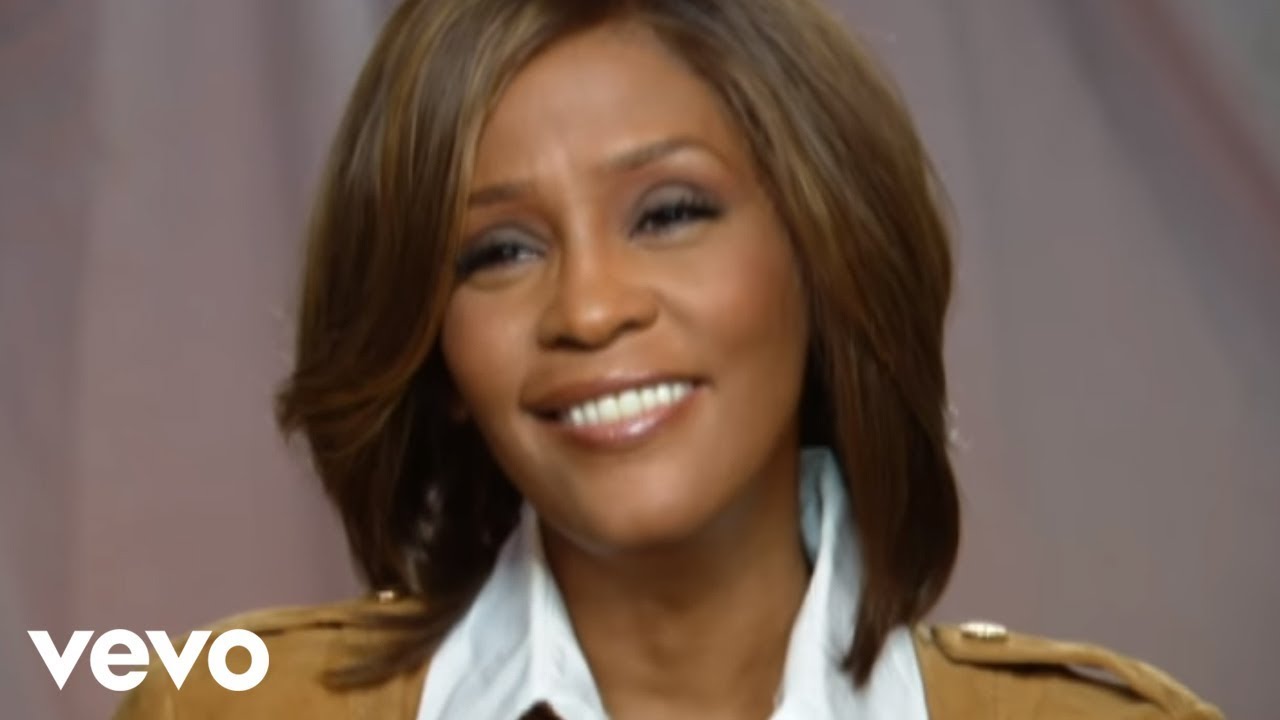
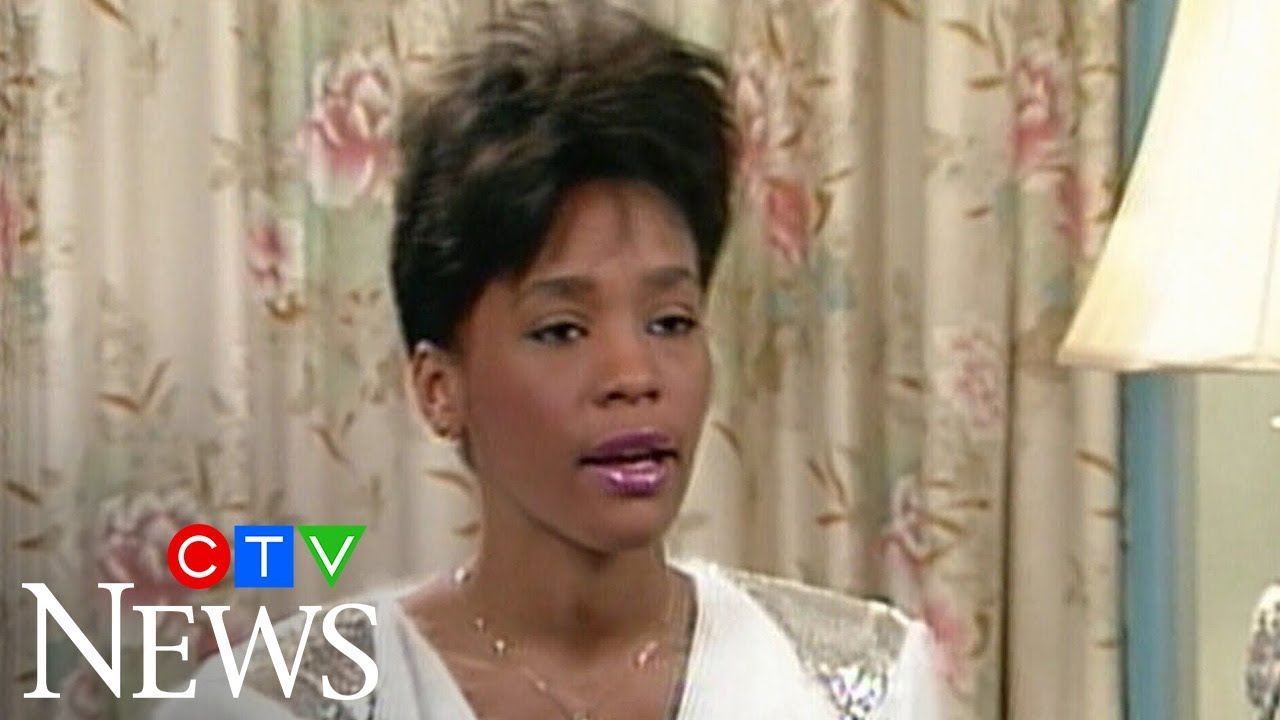
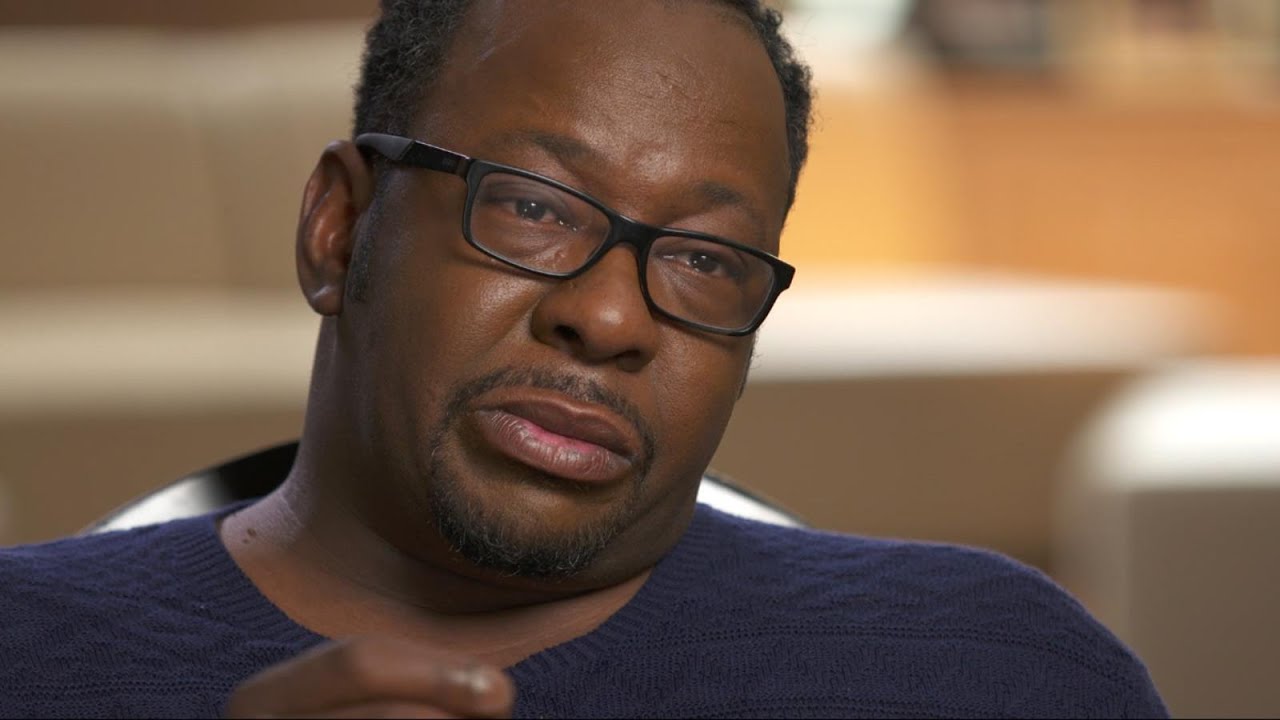
- I think it's very entertaining. I do. But I love music.
I love to hear the voice. The human instrument. The elements that make up a great pop song, for me, was the melody and the lyric content.
Whether it be about love strong, or love weak, love in between. It talks about the ups and downs and experiences of love, basically. Love gone bad, love gone good, love indifferent.
It's just, it's got a melody and a song, a story to tell. - [Interviewer] Let's talk about the early days of MTV. What are your earliest memories of MTV?
Do you remember when you first saw it? What you thought? - Yeah, I remember that I couldn't get on.
(laughs) I remember that it was a major breakthrough for African American entertainers to be on MTV because it was solely for rock artists. I remember Michael Jackson making a very big breakthrough, and then, Tina Turner, along with myself, and Bobby Brown, and a few others that were major breakthrough artists on MTV, but I do remember the hassle of introducing black artists to MTV because, let's face it, it was solely for white artists at that point. - [Interviewer] It was primarily a rock station.
- Well, yeah. Jimi Hendrix is dead. He was the only black rock and roll artist.
(laughing) - [Interviewer] You mentioned Michael. I think he's really credited with really breaking down the color barrier. - Yeah.
- [Interviewer] Why do you think that's important? Or what are your thoughts on that? - Well, you know, I've always had this thing about why does it always have to be a breaking ground for people who are just totally gifted and talented?
I would think that because of the talent, and the humongous talent that African Americans and other artists who are Caucasian Americans have, why should they be a breakthrough on MTV? I didn't get it. But again, you have to be outstanding to break down the walls.
And Michael, and a few others, are outstanding. So, it was cool. It was very cool.
- [Interviewer] Now, were you watching the channel back then, or were you so busy with your early work in career? Did you get to see it much? - Sure, sure.
MTV was a must-watch. Was a must-watch, because we were watching the growth and the progress of what this music television station was going to do. And everyone knew it was gonna be huge, and large, and in charge.
So, what we had to do was watch the format to see if we could fit in, or see if we could break it. So we did both, basically. - [Interviewer] Let's talk about some other early MTV artists.
- Yeah. - [Interviewer] You recently worked with George Michael. - Yeah.
- [Interviewer] On the duet. - Yeah. - [Interviewer] Do you remember his videos from his days in Wham?
- Oo, yeah. ♪ Wake me up before you go go ♪ Sure, sure. I do.
- [Interviewer] Were you a fan of his music then? - I was, yes. I thought he was very cute and adorable.
And very poppy, very catchy. The George Michael, what five or six, seven years from that point, from Wham, was totally different. He grew up and became this phenomenon who talked about things that people really didn't want to talk about.
- [Interviewer] What did you think of his solo work? What did you think of him breaking away from You know, it was kind of risky, I would assume. But what did you think of his solo work?
- Sure. Anytime you break away from group it is risky. Unless you are the group.
And let's face it, George Michael was the group. So, him breaking away and doing a solo thing was not a surprise, but definitely a phenomenon because he took off like Foof! Just skyrocketed.
- [Interviewer] His first big solo success was with a video and song called I Want Your Sex. - Mm-hm. - [Interviewer] And despite its pro-monogamy message, it caused this huge uproar because it debuted on MTV just as the AIDS crisis was making headlines around the world.
But do you remember that period? What do you remember about that? And how people reacted to his video and his song?
- Well, I think we had to remember that it was the first kind of big impact of AIDS. It was like wow, what is this thing. What are we dealing with here?
This HIV virus thing. And I'm sure George Michael didn't have an in on whether AIDS was gonna be large, and, in fact, it was. I don't think that he did a song to oppose it, or be in opposition of it.
I think his song came out, and then, there was this AIDS thing. You know what I mean? I don't think that he condoned it or anything.
I just think that basically it was just by coincidence that that happened. But who could stop AIDS? You know, from doing what it did.
- [Interviewer] So, this was the late 80s, and around that time, or actually a couple of years later, there were few very, very successful producer-driven dance pop acts. C + C Music Factory, Technotronic. - Sure.
- [Interviewer] And they were often fronted by these sort of skinny little model types who weren't actually even singing. - Yeah. - [Interviewer] As a true vocalist, what did you think about that?
When all that-- - Shame, shame, shame. Shame on you. Yeah, because I know of, for instance C + C Music Factory Martha Wash, was the singer on that record, and when we saw the video we saw a very cute little dark-skinned child singing the song which we knew it wasn't her.
I certainly knew it wasn't her because I knew Martha Wash from years ago, and the woman can sing. And you can't mistake that voice. So, to me it was like well wow, you made this hit song off of this woman's voice.
How come we can't see her? What's the big deal? Because she's a heavy-set woman with a beautiful face and this gigantic, fabulous, tremendous, rock-kickin'-ass voice.
What's the problem? Is it the image situation? Well, today I know that there are beautiful big women who can sing and we love them.
Why are we afraid to hear the truth? - [Interviewer] Right around the same time that all this happened was the whole sort of Milli Vanilli scandal. How much do you think all those stories and all that hurt pop's credibility?
If at all. - Well, let's go back now. Let's go back to the days of like West Side Story when we saw Natalie Wood singing, and we knew it wasn't her singing.
I mean, you know, come on. It's called a business. And if you can make it by getting over, you will.
People will do it. If you can make a song, and claim that you sang it, and you didn't sing it, and nobody knows the difference unless they're in the studio with you. What does it really matter until you get busted?
- [Interviewer] I just felt bad for those guys-- - And they got busted. Point blank. Busted.
- [Interviewer] Over the next few years, MTV really started to turn its attention more towards certain kinds of rock music, and hip hop. - Right. - [Interviewer] And the only real pop artists getting MTV play were the real vocalists like yourself, Boyz II Men, Mariah.
Do you think that was a reaction at all to sort of the phoniness of that period right beforehand? Or do you think tastes just changed? - I just think people weren't going to put up with that.
Period. We were not going to put up with fake singing. And taking credit for something that wasn't there.
Americans were just not going to put up with that, and that was the bottom line. It didn't have anything to do with me, or Michael, or the vocalists, or people who could really sing, it was just that we weren't going for that. That's out.
That's out. This is called music. It's called singing.
It's called entertainment. Then let's do that. - [Interviewer] This was right around the same time as The Bodyguard and I Will Always Love You.
Which are amongst the biggest albums and singles of all time. - Yeah. - [Interviewer] To this day still and probably forever.
Why do you think that music touched people in such a strong way? - Again, you know, it's, it's. .
. I'll Always Love You tells a story. You can't beat lyrics like bittersweet memories that's all I'm taking with me, so goodbye, please don't cry.
We both know I'm not what you need, and I'll always love you. You can't beat lyrics like that. And you can't beat a melody as beautiful as I Will Always Love You, really.
Or the Greatest Love Of All. You know, songs like that. They are stories that people can identify with.
You know what I mean? Anybody. Children were singing the song at graduations, at weddings, at funerals.
It was just an overall emotional feeling that you could deal with on all levels. You know? - [Interviewer] Let's talk a little bit more about some of your own work.
What do you remember about your own first music videos on MTV? Do you remember the first time you saw one of your own clips on the channel? And what it was?
- Yeah, I remember trying very hard to get You Give Good Love on MTV, and they weren't accepting it because it was a very, very R & B kind of song. And then, I remember coming up with Saving All My Love For You, and it hit so hard and exploded so heavy that they had no choice but to play it. I love it when they have no choice.
I love it. I love it. - [Interviewer] I was in high school then, so don't blame me for not playing it.
- Okay. - [Interviewer] I would've played it. - Okay.
- [Interviewer] What point do you think MTV, once Saving All My Love For You and then, How Will I Know, which was just huge for the channel. - Yeah, yeah. - [Interviewer] How important do you think that was into taking your career to another level?
- We're talking about around the area of Madonna, and Prince, of Michael Jackson, Bobby Brown, and the whole, you know, the image was starting to become very imagey. It was the look. It was the hair.
It was the makeup. It was the way you moved, the way danced. The way your mouth sang a song.
You know what I mean, the way your head moved. All those little gestures and things became very important for video purposes. You know what I mean?
The radio, like they said, video killed the radio star. Well, it kind of happened. You know what I mean?
We had to be visual. And MTV made us be visual. So, we had to pull it off.
Really. - [Interviewer] Looking back on all your videos, do you have any favorites? Or any you're totally embarrassed about, or anything like that?
That you wish you hadn't done it that way. - Do you know, there's just one video, and I love it, but it's so. .
. My daughter looks at it, and she goes, "Mom, that's you? " And it's How Will I Know.
I look the craziest. I had on all kinds of hair colors mixed in with other hair. It was just wild.
It was very Euro. 'Cause I did it in England. And I remember coming off of tour and I was so exhausted.
I was so tired. That I just remember just saying okay just do what you wanna do with me, and I'll just do it. And when I came to, I had all this stuff on.
This makeup, this wild makeup, and this silver outfit that was itching me to death, and I kept going like this through the whole video. You don't know what I went through that day. And this hair, you know.
And that became. . .
It was just crazy. It was just How Will I Know. I didn't even get the concept.
It was just do the video. That was very embarrassing at some points. - [Interviewer] You mentioned your daughter watching some of your clips.
- Yeah. - [Interviewer] Does she ever watch MTV? Do you let her watch MTV?
- No, I don't. Unfortunately, you guys play very explicit videos which are very influential on little girls. And I happen to have lingerie in my room, and my daughter loves to go in and put on my shoes, and my dresses.
I want her to stay out of the lingerie. So, I don't want her to think it's cool, at the age of eight, to have to be sexy. Either you are or you aren't, there's no putting it on.
And I want her to naturally be aware of her own sexiness. And not that it takes having to open your legs or give us tits and ass, and all that stuff, to be accepted. You know?
I want her to use more than that. So, I kind of refrain her from the MTV crowd until she's old enough to handle it.