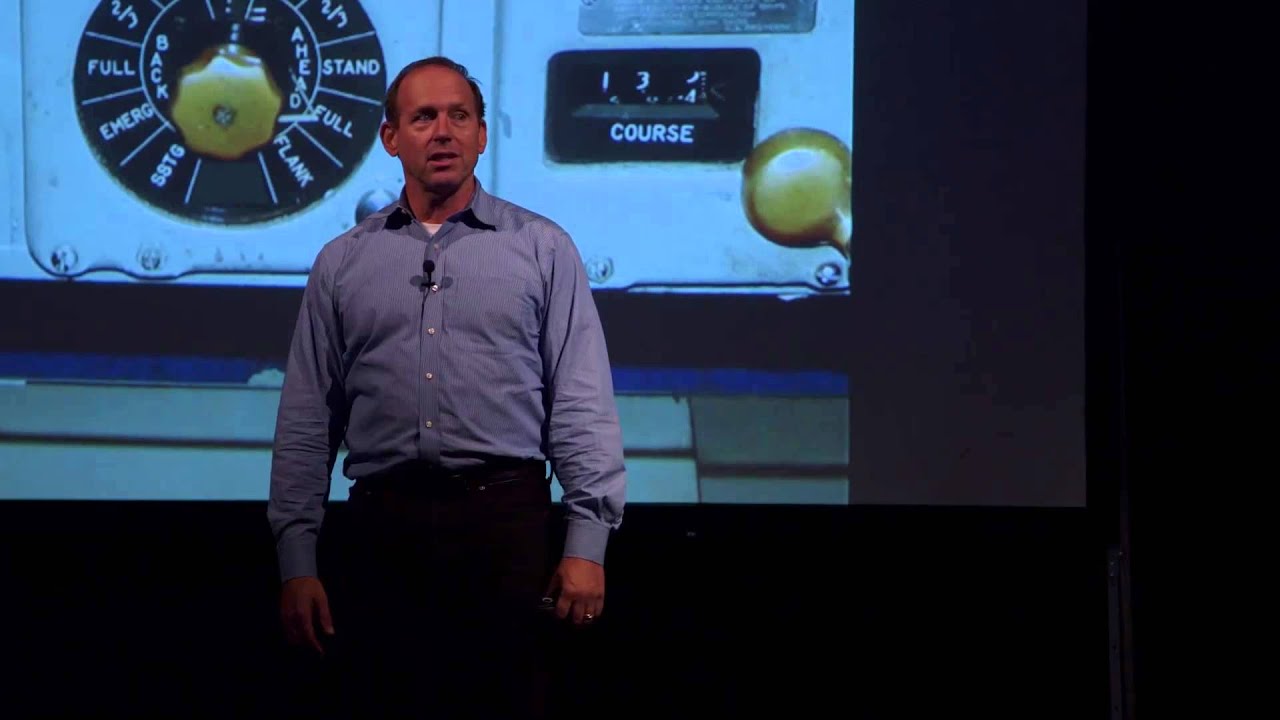
[Music] hello everybody welcome to talks at Google we've got an incredible speaker today I'd like to introduce captain David Mark a captain mark a is a best known for his work that he did with the USS Santa Fe where he took that nuclear-powered submarine from worst to first and it ended up generating some of the most leaders that the Navy has ever seen out of the submarine program he's going to share some of his insights today of what he has learned over his time in the Navy how he has an alternative take on leadership and he you know shares these insights with companies around the world and I think we're very lucky today to have him here at Google he's a he's documented a lot of his his story and his insights in the book turned the ship around a true story of turning followers into leaders so without further ado captain mark a thank you thank you hey thanks stand up okay yeah so thanks a lot thanks for having me yeah we we advertise the book and AdWords a lot sell a bunch so what does having to run a nuclear submarine having have to do anything to do with working here at Google well hopefully by the end of this session that you'll have some connections and what I want to talk today about our seven myths of leadership seven things that I thought I was dead sure I knew about leadership which I now think are actually unhelpful or just basically wrong so here we are on this up with a crew on the submarine submarine spend most of their time underwater and even when the submarine is on the surface most of its underwater like an iceberg but here's the submarines and drydock there's a crew of about 135 the average age is 27 years old so it's probably not much different than what we have here these are the officers these are the only guys with college degrees then the technicians the blue shirts are the other guys who do all the work and then over here these are the Chiefs so they've been technicians they did a good job they got promoted they've been in the Navy for six eight ten years we promote them we let them the same Brown highly fashionable brown uniform that the officers wear and we turn them into leaders we say they're leaders so there's not a lot of room on a submarine because we're going to put all these people inside the submarine and most of the submarine is taken up by equipment so there's not a lot of exercise space so for example one of the things we do is we take a SEAL team and we and we have to deliver them to wherever they're going to do any seals out here Special Forces people I know we've got at least one marine okay so so these seals are super fit individual individuals they in the gym all the time but there's no gym on a submarine so their bodies deteriorate every passing day so the Navy says you can't bring these seals on board until the very last minute because the submarine is a toxic environment for these elite into these elite individuals these elite athlete now this was always troublesome for me because we lived there for 180 days no one cared about that so here's what happens they say I've got to pick up a SEAL team so we take the submarine away from the shoreline we surface it which we don't like to do put it in a vulnerable position and we want to be there as short a time as possible then the helicopter shows up with the SEAL team they're going to come down this rope these guys in orange this is a submarine crew I'm up here in charge of this deal right and then we got to find some young guy to go back here and hold onto this rope because it's important to tether the rope at the bottom SEAL team comes down one at a time now this young man in my case there were all men we now have women on submarines which i think is great but this young man's got to make a bunch of snap decisions because we're moving together and if the helicopter hovers and it starts moving away so I let go of the rope I hold onto the rope a wave comms could knock someone overboard and this person's going to make a bunch of decisions they've got a helicopter hovering right over their head even even if they had time no one could hear them what do you want me to do about and he couldn't hear the response so for this to be successful we need to train a team that needs to know what they need to do and make decisions without being told without being told oh by the way this is my view from up there on the bridge right I can't even see what's going on and we think oh when when I get into the moment of crisis when when the whatever when the disruption comes we're going to really want to win and we're going to win because we really want to win has nothing to do with winning its are you willing to do the hard work before you get to here have you created a team that when this happens you don't need to tell them what to do that's going to determine success in this event but this picture I think is exactly relevant for you guys exactly relevant because you can walk down the hallway you can stand behind an engineer you can stand behind one of the people one of the sales people and you can watch them you know move the mouse right move it left you know click in a closed bracket and we we get a sense oh I can control it but for the most important things that you all bring to work with every day which is you know your creativity and your and your passion it's just like this it's invisible and the degree to which we go out there and try and tell people what to do we're just throwing cold water on that spark that comes inside of every human being to do this we're controlling cold water on their passion this is a hard lesson that I learned because for me leadership is all about telling people what to do for a long time seven myths of leadership what is leadership now I hope to have this be a little bit interactive and I know we're broadcasting it so everyone can participate including the remote people hopefully you have phones brought your phone and we're going to go to this website called pol L Evie polleverywhere pol le vie comm and I got about a half a dozen of these throughout the presentation just to get a sense of what we all think here or any of web-enabled device here like the computers so go ahead and type this in if you would pol L e be calm ten and I'm going to bring up the first question it's a warm-up question alright good we're getting there okay so you see it right up here pol le vie comm slash intent I was like what's your arm town what city did you grow up in good good good good I figure you guys at Google would figure this out I have some audiences need a little help let's see I'm guessing Ann Arbor don't put a space and it treats every response like a every word like a separate response now we're building a word cloud which I know you've seen the idea is the more people type in the same word that bigger that particular word get so we see Detroit which makes sense I'm here in Ann Arbor and Arbor Chicago Dunes ogz and Boston Burlington Danang I saw Johannesburg Pittsburgh Lambertville all right so it's great we got that that's our warm-up question now I'm going to have two very serious questions serious question now I'd like you to kind of take a take a stand here one side or the other if you had to which is business value here at Google more business value be created either a people independently thinking or be better about doing what they're told so I'm going to get a get a bunch of results here and then we'll go ahead and expose the results okay you guys are pretty far over on the displaying independent-thinking that's good because that's what this whole talk is about creating a team that displays independent thinking now it didn't used to be like this for your parents grandparents great-great grandparents work used to look like this for the last several hundred years of our human existence we've come through this thing called the Industrial Revolution and work during the Industrial Revolution was what we called for most people neck down it's what do I do with my hand this is a radio factory outside of Philadelphia just before World War two these people are hired for what's happening here with their hands not what's happening up here one person in the back of the factory is on the thinking and the deciding for these people and these people are all in the doing part and it turns out that this legacy of work is an anchor because the language and the structures that we use for organizations still in many ways harken back to this legacy so when we say we come we come to work and do our jobs like the fact that we even say we kind of work and do our jobs because most of you too actually don't do anything like you you think your jobs I would say all right but we don't say because that sounds weird but that's because this has influenced the way we talk and so that's influencing our behaviors and schools were designed to create people who were comfortable going into environments like that so the schools are about conformity and compliance now this group of sad people is the 1977 Concord Kyle high school math team and this is me I was a mathlete yeah I have some weird I can't even look at the camera I have weird have weird social issues and any map mathletes out there yes all right thanks for good yes I knew a good we'll have at least a couple great people so so I was in the math in the chess team and I was on the computer Club and my high school is one a few public high schools without of computers back in 1976 it was this big machine and we fed in these tapes the pink tape that was punched holes in it and we had the computer do like amazing things like count to ten and calculate square roots and you'd feed the tape in in the evening and you push play you'd watch it and then you go home and you come back the next morning and find it like it hung like two minutes you'll have to start over again but anyway that's what that was kind of that like that was me in high school and it was the 70s and we were in this tough time in the country and I felt I wanted to do something about that and if you're a geeky introverted kid and you want it and so for me I wanted to go in the military I had no military in my family but it's like I'm gonna I'm gonna be a submarine commander like why I don't know popped in my head I think it was because if you're an introvert and you want to go into military it's you can hide and so that's so I set set my past self down that path and you know what it actually happened so here is my book now remember as a geek I was hooked my studies very seriously here's my leadership book from the United States Naval Academy here's what it says leadership can be defined as directing the thoughts plans and actions of other souls to obtain and command their obedience or confidence of respect and their loyal cooperation now what do you think of that I want you to just talk to your neighbor for 30 seconds about this how would feel to work in this environment we're gonna have a short conversation we're going to keep going go okay five four three two one does anyone have any words that kind of come to mind to describe this so I'll repeat them for the like this is Chatham I micromanage good rigid prescriptive deadly wash intimidating tell me more about intimidating scary don't mess up right it's fear-based environment very good what else so this is predicated on the assumption that first of all the leader knows all the answers and your job is just to show up and do what you're told right so and then we say well where's your passion where's your you know where's your engagement we get to you guys do these employee engagement skirt surveys you do yeah okay like remember the like I'm not engaged because you made me feel this way so we're going to fix this I call it no Alltel Oh leadership and one of the questions I'm going to leave you with is where here in this quadrant do you want to operate as a leader I thought it was no long telo leader knows all the answers gives all the others that was the best place you could be as a leader I got order to be the captain of the USS Olympia seventeen years after I graduate from the Naval Academy I was super excited about it the Navy took me out of my job and they sent me to school for twelve months so I can learn every single detail this ship it would be like having the CEO come in here and like stand behind your desk and know like you know fix your code freaky anyway there was another submarine the USS sent today and the Santa Fe was the Enron a submarine Susana say was a submarine where you saw a picture of sailors every year a quarter of them common a quarter leave and then when they leave so that's like about 35 people to say hey I was your Navy experience would you like to stay in three of them said yes that's how bad it and the captain of Santa Fe was supposed to be there for another year so we're like Oh who's who's going to get the poor job of being the Santa Fe captain because it was a year ahead of time and that's in the Navy announced the captain but you know what he quit early and I said well we can't have a summer without a captain so mark Kaye Santa Fe that was my own sugar moment because now I'm about to be a no not leader because the problem wasn't the bad morale impossible force the problem was the Santa Fe was a totally different submarine for one of the newest submarines in the fleet so my questions here is because I'm going to I'm going to take over a broken team and my question is and this is quoting some work that you guys have done here at Google is what's the most important determinant of team performance who's on the team what positions they're in or how the team interacts so let's see if you guys raise your own eat your own dog food on this one yeah it's very good exactly and it turned out for me now I didn't know any of this because Google wasn't even invented then but I couldn't control who came to the ship the Navy decided who came to the ship and I couldn't put change the positions the only thing I could play with was how he basically was how we talked about to each other that was the only variable I had and it turned out just by luck that was turned out to be the most important one and the other cool thing about it is it's the thing that everybody on the team can do everyone participate everyone participates so here I am get you know I don't know how this is going to work because I never taken over a situation where I didn't really basically know all the answers so Mike my world is turned upside down here yeah my hat should fall off that does down this on our room so there's no windows on a submarine what we learn about the outside world we listen to you here the seen a movie like this pinging pinging that sonar we don't do any of that pinging that pinging would give us a way we convert the sound to these these yellow lines and we analyze it and we say oh that's the surfer ship that's a school of shrimp that's a distant oil well that's a summary it's important to know what's what and then we have all these buttons so this is how we interact with our equipment now on the Olympia I would have known how every button did works but on Sam say no so walk down the ship I just took over and I said hey tell me what your bugs here and the sailors would be like well this button is the button is that and they're all confident about what they're doing and then it reads like this button off to the side like over here okay what about this one I noticed the sailor would avoid the button so I knew hey what about this one Percy like I forget that was a no-no because they expected this well I'll tell you but I didn't know either so the first thing was oh and I shouldn't ask that question because now they're all looking to me and it was very scary going into combat for me was not scary but this was very scary right who want to pretend I knew but I couldn't so I just said first of all the clock was ticking in my head tick tick like I don't know either but your submarine captain like yeah go figure and I said let's present to habit so I'm going to start getting to some of these myths now myth number one good leaders know all the answers wrong fact good leaders say I don't know I don't know opens the door to learning even when you know it's awful I think just say I don't know what do you guys think right for as long as you think you know and you keep saying you know stuff you're not going to create a team that's curious it has a learning mindset so it's okay to say you don't know something it's going to break the paradigm from the normal no Alltel paradigm the next thing I have to do with this not this is how we control the speed of the submarine now I just took over the worst-performing ship in the fleet and what we're going to do is our favorite exercise we're going to shut down a reactor and we're going to run on an electric backup motor and it's not like a Tesla right this is a 300 horsepower electric motor but it's in at six thousand tons of marine so this electric motor just barely pushes the submarine through the water and there's two speeds so what's happening is when you're operating on the electric motor with your actor shut down you're draining the battery pretty quickly and there's our race tickets reactor started so here we are we're running along and ahead one-third we shut down the reactors the very first drill I'm standing in the control room the officer has been on the submarine the longest bill green as his name is controlling this and he's doing the right thing is ahead one-third conserving the battery now in every other submarine I've been on there's two speeds to this electric motor but unbeknownst to me or on the Santa Fe is only one so I'm thinking hey if we speed up it's going to drain the battery faster it's um stress on the team train harder and so I suggest hey why don't we speed up on this electric motor and he gives the order but the sailors sitting at this panel does nothing actually kind of goes like this a guy said hey what's going on he says captain on this is this ship unlike your other ships it's just one speed motor that was embarrassing and I thought about bill I said bill do you know about this and he said yes sir I did really it will riddle me this why did you order it what do you guys think he said exactly because it's all about telling people what to do and do what you're told and this was like a hammer blow to my head because the whole leadership training was about being really good at telling people what it is so I said look I'm going to stop telling you guys what's the div I'm gonna stop giving you guys order I'm never going to give another order as a captain of a submarine and they're like okay no one know what that would look like but it was better than dying which is what would have happened eventually so we say good leaders give good orders that's the myth I don't think good leaders actually don't give orders they create a team that doesn't need to be told what to do so now I've decided not to give my guys any instructions I still don't know the submarine so now I mean no not tell my leader now if you're brand new to an organization maybe this is where you need to live for a few min for a few days weeks or months but eventually people are going to stop paying you for being down here okay so it's not a good long-term strategy now the torpedoes here's how they work first of all is a long wire pays out through the ocean so when we shoot the torpedo it connects back to the submarine and it sends signals back saying here's what I'm seeing as I'm out here looking for the bad guy and we can steer it you can say TURN RIGHT 20 degrees turn left whatever and we can chase chase down the enemy enemy so they're pretty poke then they don't hit the ship like you see in the movie they actually go under and then they detonate and what we're doing is blowing a hole in the ocean why because then the ship falls into that hole breaks in half whoo and you end up right here and so that's what sinks the ship so these fourteen torpedoes are big deal here we were loading a torpedo in Japan now I was all about empowering my team I got on this kick of I'm not going to give any orders like what do you think and it was just all about that I was really good about it effect I was really bad about it because I did it so well then we were setting up to do this and they made a mistake and before we did it with the torpedo we do it with the shape concrete shape which is the same shape and weight so but it's a nert and we end up dropping it we almost could have killed somebody now I was really scared I was like Allah this is wrong this is the wrong way to do business I need to go back and be in control of everything but I talked to my team and we said you know what it's not that we're just missing something and here's the model we came up with we said I give it too much control I was irresponsibly giving control and what I really needed to do was tune the level of control to how much they knew about their jobs and the clarity of purpose this is the why the simon Sinek talks about because if you say you know it you get to make a decision on which customer you call you can talk just forget the script just talk to him you need to know what we're trying to achieve right and so we now say leaders tune the word is tune we retune the level of control and we invite the team to higher and higher levels so we don't empower teams first of all teams are already empowered it's inside a human every human being but what we do is we tune the empowerment to the levels of competence in control otherwise it's just irresponsibility now this is dr. Steven Covey wrote 7 Habits of Highly Effective People which is an awesome book and I was a huge Covey fan and what happened on the submarine if things start going really really well every single sailor in the next 12 months were enlisted 35 out of 35 and we were evaluated by the Navy and the crew the Santa Fe got the highest score in the history of the inspection team they never they hadn't records that had a higher score and everyone was really confused like how did that crew that was so bad get so good and the rest of the Navy thought I was just giving some really great orders anybody my beers would call me as they you know congratulations most may give us a really good orders act like well you know actually I'm trying this new thing like I'm not giving orders not tell them what to do like what like yeah a never mind you know because from their paradigm it's just didn't work but what we had done I realized that later what we've done is gone from like one liter and and 134 followers and one thinker and 134 doers just like that picture of the factory to 135 active thinking passionate creative people which I call leadership my role as the captain was simply to create this environment where people come to work and just be their best that's all I did every all day long all day long and it works amazing and so dr. Kevin says I he watched the ship and now we were about intent like I'm stop telling you what to do but you got it you got to come tell me what you intend to do like if I'm not telling you what to do and you're not doing anything then I'm leaning back and you're not leaning into me like so I actually think leaders leaned back and the team leans forward and so dr.
Kovac the how we talk to each other I said this this is how I think you guys are doing it when people come up and say well tell me what to do we resist telling them what to do the instinct is you want to because you know the answer and it's so psychologically fulfilling to say yes do this well I solve so many people's problems today well then done I feel good about that and we said well what do you see this is description what do you think we think we should do what do you hate what do you intend to do maybe we just like do it right depends on what it is we would just invite people we have call us the latter and you guys have a card that describes how this plant but this is how you tune it this is why it's that's very like you can dial it in exactly alright question for you so you got someone on your team and [Music] they're down there tell me what to do and you know the poo you probably don't have any of these people at Google but just imagine you did and they're like well what do I do here and you want you're inviting them you say well what do you think what which we do and they just seem stuck and tell me what to do what keeps people stuck and tell me what to do go ahead and send up a bunch of words who we get and you can just type in a bunch of words then hit enter and have all the words come up let's see you get a whole bunch of work let's see we got confusion confidence disillusionment understanding and experience mistakes pride misunderstanding status superiority and fear fear is always the biggest problem it's always done this to over 100 audiences in 20 different countries and every single time fear has been the biggest word in fact if I aggregate those hundred speeches this is what it'll look like people the reason people are not telling what they think it's not because they don't know it's because they're afraid of being wrong they're afraid of being laughed at they're afraid of being the person who thinks different from everybody else to pray for afraid of taking response whatever it happens to be and this gets me to the next leadership myth I thought my job as the leader was the quote motivate my team and a lot of times motivating that adds stress come on guys we can do it right and what leaders need to do is make it feel safe because fear is the problem so the antidote to fear is safety so my job all day long was to say yeah it's okay you know express that in probabilities you know just just give me a scale one to one you know one to ten well we how do you think about that and just really ask questions in a way that made it feel safe I'll give you an example example people would come up to me and they'd say well I think we should do this are you sure no that doesn't feel safe like oh I'm not sure to be honest right or they had this false prophet while yes I'm sure right which is always wrong so it's like how how like what's your sense of enthusiasm over this and we'd ask questions we Oh like if you want to clue clue for asking questions I always try and put how at the beginning like how likely it is we're going to launch a product on time now will we launch on time all right we just make it safe and all day long try to make it safe for my people to share what they thought even if it was potentially wrong or different especially if it were different P where were fighting a fire we were not very good at this when I first got to the ship and then we'd sit in a room we do a retrospective or critique or fact-finding I don't know whatever you want to call it and I heard a lot of they I was listening to the language and they would say well they they didn't pressurize the hose they didn't change the batteries on the thermal imager they hung the gear up twisted so it took me longer to get there than it should where's all this day referring to all these other people on board the submarine servers day by rank there was day by Department and I got upset one day with this day because didn't feel like a team and said there's no more they on Santa Fe it rhymed so that was good you can only use the word we very next day the engineer walked up to me now he wants tell me that the supply department he's in charge of engineering that the supply department has ordered the wrong part right you know I'm talking about so he comes up to me and he says captain I got bad news I'm kind of hanging out in the control room like we usually do it says captain I got bad news I said yeah and what he got says captain we can't fix the pump because he wants to say they but he can't so he says because we ordered the wrong part and I kind of looked at him he looked at me I look at him and he just goes like but super agua I think there's no blame and recrimination so when I go into organizations I listen for what I call the we they boundary like where where is it we like say well like were you know we're in engineering but you know they're in marketing and where does it go from we today because as soon as you go for we today that's where the team boundary ends and so the problem is most people say well think like a team and you know here's some posters that tell us what there were sent some emails to encourage people or whatever that doesn't make team performance happen we just said the word we and six months later we'd rewired our brains and it felt like a team people would come down the ships at all it's amazing feel like a team they wouldn't even know why but it was because we were now became one big way and so this is gets me to there's there's no day on Santa Fe myth number five which is teens think their way to new action and you know any change management that I've seen starts with what we got to create a mindset and blah blah blah blah blah that's I'm going to think my way to new behavior which I don't think is the way it works we behave our way to new thinking appropriate examples in your lunchroom because Google did a study because they wanted more team interaction they found out they had all these little small tables and all the lunch rooms so when people go to lunch that only sit with two or three people at most you replace them now you have those long tables it's because when you go to lunch now you can sit with bigger groups of people we don't give people lecture if you don't annoy them with a whole bunch of emails we just put some big tables in and they sit with more people I get to know more people and it feels like more of a team so we activated new thinking so the end of the day partly because I was curious and not afraid to say I don't know I learned a I learned it pretty well and my temptation was to go back to be the old no wall towel leader because I was firmly rooted in that behavior and when I got stressed out I would always default back to that day that was my default wiring hadn't slept well didn't eat well you know what my boss yelled at me of course you know it had the old people and but I'd seen the power of not telling my people what to do because I'd seen this explosion and creativity and performance in the team I saw the excitement in their eyes and so I really resisted it and so now I tried as much as possible to live over here even when I knew the answer and they come up to me so what do you want to do here I would really resist telling them because over here you focus on ownership over here is your focus on the long-term over here you're focusing on your people developing them into leaders and yet some days you might need to operate over here but here's task accomplishment this is short-term this is where unfortunately a lot of leaders live all the time and you should decide where you want to be here you should decide and it shouldn't be determined just by whether you know the answer or not most leaders if they know the answer they operate here if they know they operate here they're down here right I can't tell you cuz I don't know or sometimes like me they'd operate here I can't I don't know if I'm still going to give you an tell you myth number six leaders know all tell all the fact is the right place for a leader to be is to still know your job I'm not saying the lesson does not don't know your job that's what it took for me to understand the power of this though but to resist giving your team the answer sorry one last pull when I saw a lot of what I'm talking about is about giving up control and so I want you to think and again push in a bunch of words in fact take 30 seconds talk to your neighbor and then together let's put in a bunch of words about what it feels like to give up control here's what Anna thing I tell my CEOs that I'm coaching to do I say you can go to dinner next time you go out to eat you don't get to order I want to just turn to the waiter the waitresses they pick my meal they're all control freaks oh this freaks them out so I want you to get that in your head and think about that and put the set up a bunch of words see we got yeah just coming out I love it because look what we got scary risk losing listen we're going to lose control and at the same time I have trust and freedom and other good things right they're all coming up on the screen and this these words here this is how I felt everyday as a submarine Kevin every day when I was trusting my team every day when I'm saying you guys get to choose this is how I felt and I felt felt for a long time but these were the wrong feelings this was that I was doing something wrong because I felt this way I felt I was a little bit nervous and scared I call it the I call it the suck air through teeth maneuver right that's your call see what you guys do with that but I now think this is actually the way you're supposed to feel every day as a leader every day if you don't feel like you're on the verge of this then you're playing it too close to the vest you're too in control you're to come through and you're not building a team it's just about you and so the final thing here is we talk about all trust your gut trust your instincts but part of leadership is feeling the way your program does a human that feel because your program that want to be in control and reduce uncertainty and it's waiting into that leaning leaning into that discomfort and acting contrary to how you're actually your gut might take you many times because it's not normal to put your life in the hands of some other person you're not biologically wired like that but I think this is the real way that leader this is why leadership was hard that's why we have so few really good leaders because you have to act contrary to that so we go back to this and here's my plug to you guys okay you guys are some of the most creative talented smart people on the planet working for an amazing organization and what I worry about when I when I interact with your young people to me sorry young people right millennial or coders is like I don't care about that leadership stuff you know because we've associated a bad word with leadership because leadership means you know telling people what to do and we have so much baggage over leadership like well I don't wanna be a leader I just want to be a coder right I just want to do my job and the world needs you the world needs you to be leaders not in the traditional so I'm going to go out and tell a bunch of people what to do but into the way of like everybody in the organization where I'm going to listen to the diverse opinions I'm going to encourage someone to say something I'm going to be part of making it safe to say something that's different than what everybody else thinks right and so that's my ask of you guys is don't shy away from that yeah you're going to do your jobs and you got to do that but start bringing in the leadership piece you can all you're all leaders and we need it the world needs that the planet needs that the problems are too complex too hard too sticky to thorny like know like if you're not convinced at this point that no group of quote experts are going to be strong I don't know what's going to like so we need you the world needs you guys one other thing we have is we have a channel done YouTube of course but cause leadership nudges where I have what you can see there's 150 of them now and they're like typically 60 to 90 SEC's I just talked about one little thing one of the little things we talked about today and sometimes weird things I'm going to show you one I'm going to tell you how you can enroll in these but I take this one I was in the Edinburgh a couple of weeks ago and in the hotel bathroom I saw something was really interesting to me so I'm in a bathroom here so that but this is never ended we Nana's organ design so they can't help replies the desire to death hey is pose as wasn't me down you have your neck brace Magnus look like that or clip it this was in you read it covered the bundle of this was you can't put the button once but fun to see now I love it yeah so I have fun with that one obviously so so let me show you you got your phones out you can just text the word nudge to for for 144 and you'll get on our nudge you can will enroll you in the nudge is you can also sign up form on the website because I think this texting is the US only thing so you go for four one four four types of weird nudge we're not even ask for your name we all we need your email and then you're going to get on the on a nudge list but also you go back to the YouTube channel and look at some of the old ones and if you want to share some of what we talked about today with your team first or anybody else they're all another YouTube channel with you know a little little 60 90 second things okay so that's it and and I'm have a short conversation here with neuron when you come on up but remember my ask I need you guys to be leaders you think of it don't shy away from stepping up and being leaders we just have time here for about one question for the film piece so I wanted to ask you you mentioned it the average age of the SantaFe was 27 years old yeah and the average age on our sales floor here if you can you know average in people like me is about 27 years old so I skew the average up a little bit in the tech industry on the whole skews younger do you feel that there are you mentioned Millennials do you feel that there are generational differences as far as how the leadership philosophy should be applied actually no and I think like just like all these myths there's another mess and one of the myths is well Millennials are different than everybody else like somehow they're like aliens are weird and so I have three kids are all in their 20s now so they're all Millennials and so I I speak a little millennial here's what I think I think Millennials are just like our parents and our grandparents are Gregory grand-prize so in terms of our genetic wiring and what what they want as human beings what I think is changed is that the ability to say this job isn't worth being treated badly has changed in the United States when I was growing up the average new house was 1,500 square feet the average new house size today is 2500 square feet the average family size went from household went from 2. 5 to 1.