[Music] The sky was darkening over Jerusalem. But what was approaching was not just night. It was the third year of the reign of Jehoakim, king of Judah.
On the horizon, a storm of iron and fire marched mercilessly. Babylon had awakened. The sacred gates have fallen.
The temple was desecrated. Princes and priests were cast in chains. Their cries silenced by the dust of exile.
Among them was a young man whose destiny would change the course of history. His [Applause] name was Daniel. But this is not just the story of a captive.
It is not just the account of a prophet in a foreign land. It is the beginning of an invisible war between human kingdoms and eternal decrees. It's a whisper from the ages, a warning for all times.
Some say Daniel spoke of the past, others that he foresaw the end. What if the words that were sealed for centuries are about to be fulfilled and the wise ones will understand. Jerusalem is burning.
The sky is covered with dark clouds. As if the heavens themselves were mourning what was happening. Amidst the cries, the clashing of swords, and the cracking of collapsing walls, the Babylonian army, advances relentlessly.
Nebuchadnezzar, king of Babylon, watches the sacred city to be taken. His eyes show no mercy. Next to him, advisers write down names, wealth, and order.
The separation of the most promising young people from the ruins. Four teenagers are dragged. Daniel, Haniah, Michelle, and Azeriah.
Their clothes are dirty, but their gaze remains steady. They are taken to a foreign land where their names, culture, and faith will be put to the test. In the heart of Babylon, the palace gates open like the mouth of a hungry monster.
There, under the command of Aspenaz, the chief of the king's officials, the youths are renamed. Daniel becomes Beltazza. Anonyas is called Shadrach.
Mishel is renamed Meshach. And Azeriah receives the name Abednego. In the training hall, fine delicacies, succulent meats, and aromatic wines are served.
But Daniel looks suspiciously. It wasn't just food. It was consecration.
The food and drink had been offered to the Babylonian gods. Bravely, he approaches Aspenaz. >> I ask you not to make me defile myself with the king's food and wine.
Aspenaz hesitates. He sympathizes with Daniel, but fears Nebuchadnezzar's anger. Daniel insists.
He proposes a test. Try your servants for 10 days. Just give us vegetables to eat and water to drink.
Then compare our appearance with that of the other youths. The proposal is accepted. 10 days go by.
Daniel and his friends look healthy, stronger than everyone else. Impressed, Aspen allows them to continue with their diet. As the days go by, the God of Israel honors the faithfulness of the young people.
They excel in knowledge, literature, and wisdom. Especially Daniel is granted something extra, the gift of interpreting visions and dreams. At the end of the 3 years of training, the young people are brought to the presence of King Nebuchadnezzar.
The throne room is gigantic, golden, opulent. The king observes them closely, asks questions, and tests their reasoning. At the end of the audience, he stands up and declares, >> "In my entire court, there is no one who compares to these four.
They are appointed to important positions. Daniel in particular receives the direct attention of the king, but the peace is short-lived. A disturbance shakes the throne of Babylon.
One night, Nebuchadnezzar wakes up with his face covered in sweat. His heart races. He turns in bed, takes a deep breath, and tries to remember, but the dream fades like mist.
Something unsettling remains in your soul. He calls the wizards, charmers, and astrologers. [Music] >> I had a dream that deeply troubles me.
I want to know what I dreamed and what it means. The wise people look at each other confused. Tell us the dream, O king, and we will interpret it.
But Nebuchadnezzar rages. >> I refuse. You must tell me both the dream and its interpretation.
If you do not, you will be cut into pieces and your houses will be turned into piles of rubble. [Music] Fear spreads like a wildfire. No man can read another's mind.
No wise man dares to speak. The king enraged issues a death decree to all the sages of Babylon. [Music] Daniel upon learning of the decree seeks out Ario, the captain of the guard in charge of executions.
>> Why is the king in such a hurry? >> Upon understanding the seriousness of the case, Daniel asks for time. >> Ask the king to give me some time.
He retreats with his friends and together they do what they know. They pray. On their knees they cry out to the God of the heavens.
Oh God of my ancestors, I praise and thank you for you have given me wisdom and power and revealed to me what we asked for. You revealed the king's dream. >> That night Daniel has a vision.
The mystery is uncovered. The next day he presents himself to Arioch. >> Do not kill the wise men of Babylon.
Take me to the king and I will interpret the dream for him. Destiny now calls him to the throne room. Firm steps, resolute eyes.
The crowd waits in silence before Nebuchadnezzar. Daniel does not boast. No wise enchanter, wizard or soothsayer can reveal this mystery.
But there is a god in heaven who reveals mysteries. And there in that sacred moment, the young Hebrew begins to reveal the content of the dream that the king had forgotten. It is a huge statue with a head of gold, a chest of silver, a belly of bronze, legs of iron, and feet of iron and clay.
The king's breathing stops. Daniel continues, "You, oh king, are the head of gold. After you, an inferior kingdom will arise.
Then a third one of bronze and a fourth kingdom strong as iron. In the end, a kingdom that God will establish will come. an eternal kingdom that shall never be destroyed.
>> The throne of Nebuchadnezzar trembles before the greatness of the revelation. The king bows down before Daniel in admiration. Certainly, your God is the God of gods and the Lord of kings.
Daniel is promoted. His friends receive high positions in the province. The name of the God of Israel begins to echo within the walls of Babylon.
But in the heart of the king, something begins to change. Pride grows and soon a new trial by fire approaches. The days go by.
The golden glow of the Babylonian throne reflects the growing vanity of Nebuchadnezzar. Still impressed by the revelation of the dream, the king sees himself as the center of all power. Despite the prophetic warning that other kingdoms would come after his, Nebuchadnezzar decides to rewrite his own destiny.
He orders the construction of a colossal statue 27 m tall entirely made of gold from head to toe. A direct affront to the vision he had received. The statue is erected on the plane of Dura as a symbol of his eternal glory.
A decree is issued. When you hear the sound of the trumpet, the flute, the harp, the liar, the bagpipe, and all kinds of music, bow down and worship the image that King Nebuchadnezzar has set up. Anyone who does not bow down will be immediately thrown into a fiery furnace.
The crowd bows. Musicians play. Men and women kneel like waves bending before a storm.
But three figures remain standing. Amid the prostrated crowd, Shadrach, Meach, and Abednego challenge the royal decree. The news quickly reaches the palace.
Jealous advisers rush to the king. Oh king, you said that anyone who does not bow down will be thrown into the furnace. For there are Jews who do not worship your gods, nor adore the golden image you have erected.
[Music] Furious, Nebuchadnezzar orders the three young men to be brought before him. His expression is grim. He tries to give them one last chance.
Is it true that you do not worship my image? If you bow down now, everything will be fine. But if you don't, you will be thrown immediately into the furnace.
and what god will be able to save you from my hand? >> Sedra, Mesak, and Abednego respond with courage. >> Oh Nebuchadnezzar, we do not need to defend ourselves before you.
If we are thrown into the blazing furnace, the God whom we serve is able to deliver us. But even if he does not deliver us, know, O king, that we will not serve your gods, nor worship the image you have set up. Silence.
The throne trembles with anger. The king orders the furnace to be heated seven times more. Strong soldiers tie the young ones.
The furnace roars like a ravenous monster. The men who throw them in die from the heat. But the three fall into the fire and do not scream.
The king suddenly stands up. His eyes widen. He speaks perplexed.
Didn't we throw three men bound into the fire? >> Yes, O king. >> But I see four men unbound walking in the middle of the fire, and they are unharmed.
And the fourth man looks like a son of the gods. Nebuchadnezzar approaches the furnace and shouts, >> "Shadrach, Mach, and Abednego, servants of the most high God, come out and come here. " They come out.
Their clothes are not scorched. Not a single hair was burned. There is no smell of smoke on them.
The advisers watch in silence and awe. The king then declares before the entire court, [Music] >> "Praise be to the God of Shadrach, Mach, and Abednego, who sent his angel and delivered his servants. No other god is able to deliver like this.
They are promoted to even higher positions, but deep down the king remains torn between fear and pride. An internal struggle begins to grow. One night, while the city sleeps, the king has another dream.
This time, it is different. He sees a gigantic tree that touches the sky and is visible to the ends of the earth. Its branches feed and shelter all creatures.
But a heavenly messenger descends and shouts, "Cut down the tree, trim its branches, spread its fruit, but leave the stump with roots bound with iron and bronze. Let the human mind be removed and be given the heart of an animal until he recognizes that the most high rules over the kingdoms of men. " The king wakes up disturbed.
He calls for Daniel. The atmosphere in the room is tense. Daniel listens to the account in silence.
In the end, he is astonished. His expression changes. Nebuchadnezzar notices.
Do not be afraid to tell me, Beltsazar, what does the dream mean. Daniel takes a deep breath and replies, >> "Oh king, may this dream apply to your enemies. The tree is you.
You have grown and become strong. Your greatness reaches unto the sky, but you will be expelled from among men and will live like animals. You will eat grass like a cow.
And this will last seven times until you recognize that the Most High rules over the kingdoms of men. " The king remains silent. Daniel with compassion pleads.
>> Oh king, accept my advice. Renounce your sins and practice justice. Maybe then you will prolong your prosperity.
[Music] But time goes by and pride wins. [Music] 12 months later, while strolling on the terrace of his palace, Nebuchadnezzar gazes at the city. [Music] Isn't this the great Babylon that I have built as a royal residence with my power and for the glory of my majesty?
Before the sentence ends, a voice echoes from the heavens. >> Oh, King Nebuchadnezzar, your royal authority has been taken from you. >> At the same moment, he goes mad.
He is expelled from the palace, lives in the fields, eats like the oxen. His body gets wet like the dew. His hair grows like eagle feathers.
His nails like bird claws. The glory of the most powerful man on earth is reduced to humiliation. At the end of the seven times, the king lifts his eyes to the sky.
His reason returns to him. He kneels down and with a choked voice declares, "Praise the most high. Honor and glorify the one who lives forever.
His reign is eternal. He humbles those who walk with pride. " Restored to the throne, Nebuchadnezzar acknowledges there is a God above all thrones of the earth.
But Babylon will not last forever. Soon another king will emerge. One who will disdain the sacred and whose end will be sealed by an invisible hand.
Time passes. Nebuchadnezzar disappears from records. The throne of Babylon now belongs to Belshazza, the grandson of the former king.
But unlike his grandfather who learned to fear the god of the heavens, Belshazza indulges in mockery, arrogance, and rampant idolatry. It is night. The palace is filled with music and wine.
A lavish banquet is offered to a thousand nobles. Women dance. Pagan priests chant profane songs.
The atmosphere is one of drunkenness and decadence. Amidst the euphoria, the king has a Macabber idea. >> Bring the gold and silver cups taken from the temple of the Hebrew God in Jerusalem.
Let's toast with them. The sacred relics that had been consecrated to the God of Israel are now desecrated in a mocking ritual. Belazar raises a cup.
the deities of gold, silver, bronze, iron, wood, and stone. Everyone laughs, drinks, celebrates. But then the room falls into a sudden and cold silence.
A hand appears without a body, just luminous and supernatural fingers that write fiery words on the palace wall before everyone's eyes. Men [Music] panic. The musicians stop.
The glasses fall to the floor. Belshazza turns pale. His legs shake.
His knees knock together. He shouts, "Call the magicians, the fortune tellers, the enchanters. Whoever can decipher these words will be dressed in purple, receive a gold chain, and be the third in the kingdom.
But no one understands the inscription. The mystery paralyzes the court until the queen mother hearing the commotion enters the room and addresses the king with reverence. [Music] Oh king, do not be troubled.
Among us there is a man in whom the spirit of the holy gods dwells. In the days of your grandfather Nebuchadnezzar, he revealed dreams and mysteries. His name is Daniel.
[Music] Daniel is brought. Now older, his face carries wisdom and firmness. He observes the scene, the cups on the floor, the spilled wine, the fiery writing still pulsing on the wall.
Belazar tries to seduce him with promises. [Music] >> If you interpret these words, you will be dressed in purple, receive gold, and rule by my side. >> But Daniel refuses.
>> You can keep your gifts. Give your awards to someone else. Still, I will read the inscription and reveal to the king what it means.
Silence deepens. The eyes in the room fix on him. >> The king, the most high, gave Nebuchadnezzar power, glory, and majest.
But when he became filled with pride, he was brought down. You, Belshazar, knew all this. But you did not humble yourself.
On the contrary, you rose up against the Lord of heaven. You brought the temple cups for this banquet. You praised gods who see nothing and hear nothing.
But you didn't glorify the God who gives you breath. >> Daniel points to the wall. >> This is the message.
Mey, God has numbered the days of your reign and determined the end. Techwell, you have been weighed and found wanting. Pim, your kingdom will be divided and given to the Mes and Persians.
>> The sentence is given. Daniel remains silent. A shiver runs down the spine of those present.
Belshazzer, astonished, still keeps his word. He orders Daniel to be dressed in purple, places gold on his neck, and declares him the third most powerful in the kingdom. But it is already too late.
That same night, while the king sleeps drunk and the city drowns in arrogance, Cyrus the Persian and Darius the me's troops invade Babylon through the Euphrates River waters, secretly diverted. Without resistance, the gates are taken. Belshazzer is killed and Babylon falls before the new empire, the Meadow Persian Empire.
Daniel, now at an advanced age, once again survives the fall of a kingdom. His name, fidelity, and wisdom are recognized even under the new administration. Darius, the median, becomes king, and Daniel finds favor with him.
The new king organizes the empire into 120 provinces governed by satraps and appoints three supervisors to coordinate them. Daniel is one of them. Quickly, he excels so much that Darius considers placing him over the whole kingdom.
Envy sprouts like weeds among the other officials. They plot in secret but find no fault in Daniel. No corruption, no negligence, no deviation.
We will never find anything against him except something related to his God's law. In this way they deceive the king with flattery. Oh King Darius, live forever.
We propose that you establish a royal decree. For 30 days, anyone who prays to any god or man except you, O king, shall be thrown into the lion's pit. The king, flattered, signs the law without knowing the real target of the conspiracy.
Daniel hears the decree but doesn't change anything in his routine. Three times a day, as always, he kneels in his room with the windows open towards Jerusalem and prays to his God. Spies watch, run to the king with the accusation.
Daniel, one of the exiles from Judah, did not obey the decree. He continues to pray three times a day. [Music] Daario is anxious.
He tries to find a way to save him. But the law of the Mes and Persians cannot be revoked. In the evening, the king, saddened, orders that Daniel be taken away.
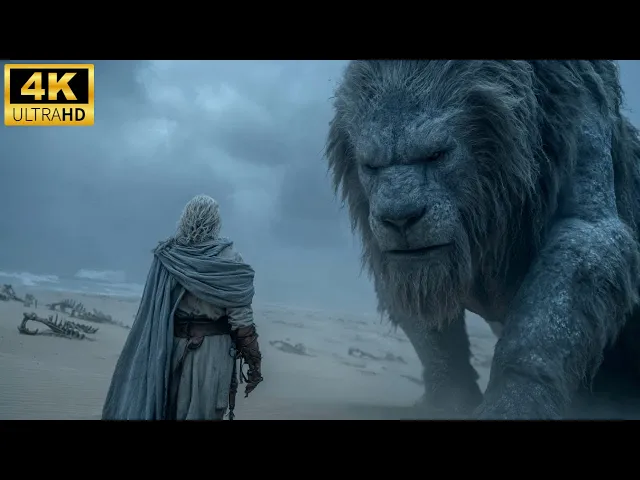
Your God, whom you serve continuously, will deliver you. Daniel is thrown into the lion's den. A stone seals the entrance.
The king stays up all night without eating, without music, tormented. At dawn, he runs to the den. [Music] Daniel, servant of the living God, did your God save you from the lions?
And a voice echoes from the depths. Oh king, live forever. My God sent his angel who shut the mouths of the lions.
They did not hurt me as I was found innocent before him and also before you, O king. Daario is happy. He orders that Daniel be taken out without a scratch, and the men who accused him are thrown in instead.
The lions devour them before they even hit the ground. Daario writes a new decree. Worship and revere the God of Daniel, for he is the living God who endures forever.
His kingdom will not be destroyed. His dominion will never end. Daniel's faith shines brighter than ever.
But even he can't imagine that soon he will begin to see visions beyond his time. Apocalyptic revelations that span kingdoms and centuries. The days of action and politics are behind us.
Daniel is now in his old age. The youthful features have given way to a wise and serene expression. Still respected in the high circles of the new empire.
He dedicates his evenings to meditation, fasting, and prayer. But the peace surrounding him on the outside contrasts with what begins to happen in God begins to reveal visions. On a silent night, Daniel falls asleep in his chamber.
The curtain sways with the wind. He wakes up with his heart racing. He has just witnessed something that human words can barely describe.
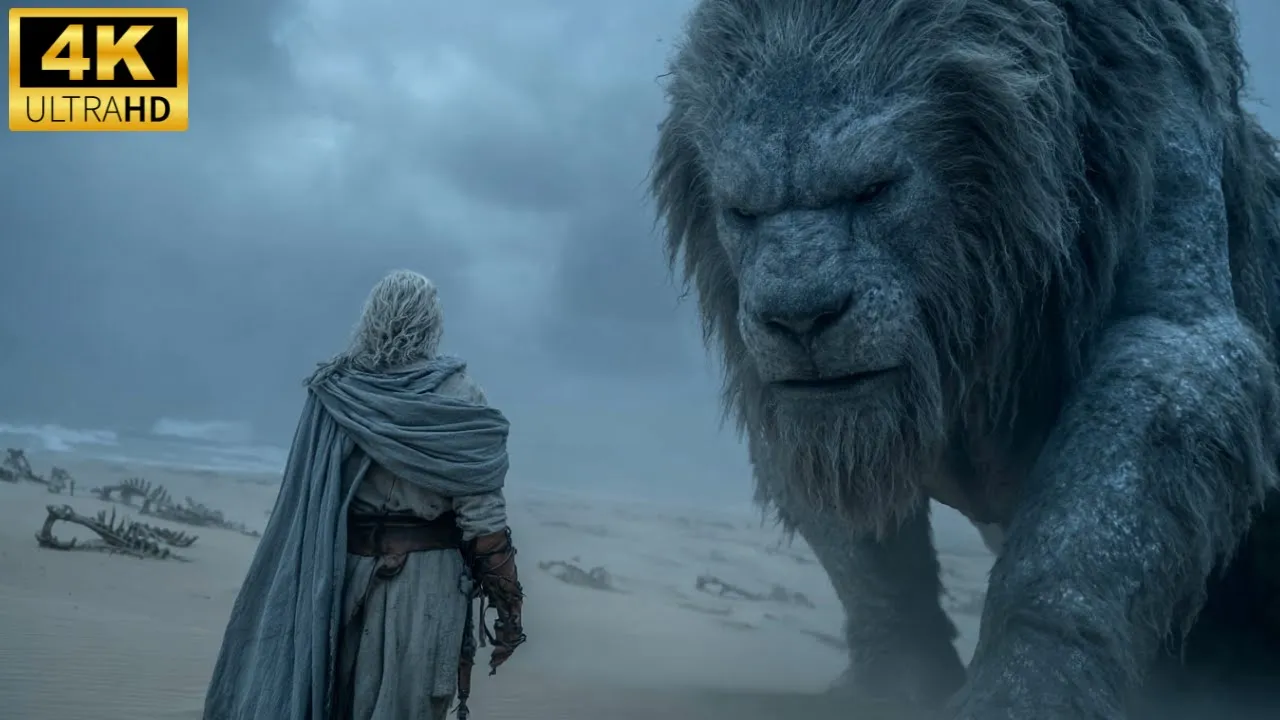
I had a vision during the night. I saw four winds of heaven stirring up the great sea, and four great beasts, different from one another, came up out of the sea. The first was like a lion with eagle wings.
As I watched, its wings were torn off. It was lifted from the ground and given a human mind. The second one seemed like a bear risen on one side with three ribs between its teeth.
It was told, "Get up and devour a lot of flesh. " The third was like a leopard with four wings on its back and four heads, and dominion was given to it. But the fourth was different, terrible, frightening, very strong.
It had big iron teeth. It devoured and tore apart, and what was left, it trampled with its feet. It was different from all the previous ones with 10 horns.
While Daniel was watching the horns, another small one appeared, knocking down three of the first ones. It had eyes like a man's and a mouth that spoke arrogantly. As I watched, thrones were placed, and the ancient of days took his seat.
His clothing was white as snow, and the hair of his head like pure wool. His throne was flames of fire. A river of fire flowed before him.
Thousands served him. Millions stood before him. The books were opened.
Daniel watches the scene with fear. The little horn continues to speak against the Almighty. But then I saw someone like a son of man coming with the clouds of heaven.
He approached the ancient of days and was led into his presence. He was given dominion, glory, and an eternal kingdom. Daniel wakes up sweating, falls to his knees, his mind is troubled, his spirit distressed.
But God has not finished. Another night, another vision. This time in the form of a symbol and conflict.
He sees a ram with two tall horns, one higher than the other. It runs to the west, north, and south. No animal can resist.
But then a goat appears from the west with a notable horn between its eyes. It flies over the surface of the earth without touching the ground. With fury, it strikes the ram and destroys it.
The goat grows in power, but its great horn breaks. In its place, four smaller horns appear, and from one of them appears a small horn which grows powerfully. It brings down the army of the heavens to the ground, casts down stars, desecrates the sanctuary, ends the daily sacrifice, and prospers even in rebellion.
Daniel hears a voice ask, "How long will this vision last? How long will the sanctuary and the army be trampled? " And the answer comes, "Until 2,300 afternoons and mornings.
Then the sanctuary will be cleansed. >> Daniel wakes up again exhausted. For days he remains ill, shocked by what he saw.
None of these visions are immediately clear, but the spirit of God starts to give insight. Sometime later, during the reign of Cyrus, king of Persia, Daniel delves into the scriptures. He reads the writings of the prophet Jeremiah.
He discovers that the desolation of Jerusalem would last 70 years. The revelation moves him deeply. He dresses in sackcloth, covers himself with ashes, and prays fervently, "Lord, great and fearful God, who keeps the covenant and mercy with those who love you, we have sinned, committed iniquities, and been rebellious.
We did not obey your servants, the prophets. Justice belongs to you, but to us the confusion of face. Forgive us, Lord.
Incline your ears and hear. While he prays, a shining figure appears before him. It's the angel Gabriel sent with a divine answer.
>> Daniel, I have come now to give you wisdom and understanding. From the beginning of your please, the order was given and I came to inform you. You are very loved.
>> Gabriel reveals the prophecy of the 70 weeks. >> 70 weeks are decreed for your people and your holy city to finish the transgression, to put an end to sin, to atone for iniquity, to bring in everlasting righteousness, to seal both vision and prophecy, and to anoint the most holy. Daniel listens closely.
Gabriel goes on, "From the issuing of the order to restore Jerusalem until the anointed one, the prince, there will be 7 weeks and 62 weeks. Afterward, the anointed one will be killed and will be no more. The city and the sanctuary will be destroyed.
A people of a prince who is to come will come like a flood, and until the end, there will be war and desolations. " Daniel writes everything down. But his heart is restless.
The numbers, the times, the events, everything points to something far beyond his era. He sees, still in vision, a time of distress that will come upon the people of God. But he also hears a promise.
Wise men will shine like the brightness of the firmament, and those who lead many to righteousness like the stars forever. Once again, Daniel wakes up. The window in his room filters the pale light of dawn.
He sits wrapped in silence. His face bears the marks of someone who has seen the invisible, and his eyes have the depth of someone who has traveled through time. But one last vision still approaches.
A cosmic battle between God's angels and the forces of evil. The final revelation that will end your prophetic calling and seal the words until the time of the end. Daniel is on the brink of the last great revelation of his life.
Now elderly, he carries the weight of the kingdoms he witnessed crumble. The kings he advised and the visions that changed his soul. But now what he will see transcends empires.
God will carry him to the unseen battles to the end time where nations, kings, and powers intertwine under divine supervision. In the third year of Cyrus's reign as king of Persia, Daniel begins fasting, three full weeks without wine, meat, or perfumes. The burden of prophecy consumes his days.
On the 24th day, beside the Tigress River, he lifts his eyes and time seems to stop. I saw a man dressed in linen with a belt of pure gold from the region of Ufas. His body was like barrel, his face like lightning, his eyes like flaming torches, his arms and legs shone like polished bronze, and his voice was like the roar of a crowd.
The men who were with him run away, terrified. Daniel falls on his face to the ground without strength. But the celestial being touches him and lifts him gently.
Daniel, man who is greatly loved, pay attention to the words I am going to say to you. From the first day you set your heart to seek understanding, your words were heard. >> But then the revelation, there was a war in the spiritual realm.
The prince of the Persian kingdom resisted me for 21 days, but Michael, one of the foremost princes, came to my aid. The curtain of the invisible opens. Angels and powers engage in battles that shape the course of history.
Daniel sees beyond the human armies, sees the forces operating behind the kingdoms. The celestial messenger continues, "Now I return to fight against the prince of Persia. Next will come the prince of Greece.
But first, I want to reveal to you what is written in the book of truth and then begins the longest and most detailed prophecy ever given to a man. Daniel hears about kings of Persia, about the rise of a powerful king of Greece, Alexander the Great, whose early death will divide his empire into four. Of these, two will stand out, the king of the south and the king of the north.
Their wars, alliances, and betrayals unfold before Daniel like scenes from a future not yet lived. The king of the north will exalt himself, desecrate the temple, abolish the daily sacrifice, and set up the abominable idol. He will flatter those who violate the covenant.
But the people who know their God will show strength and resist. The vision speeds up. Daniel sees persecutions, martyrs, false peace treaties, palace intrigues, and an arrogant ruler who will exalt himself above all gods.
He will exalt himself above everything that is called God. He will honor a strange god with gold, silver, and precious stones. He will act against powerful fortresses with a strange god.
>> But your downfall will be sudden. It will come to an end and there will be no one to help. >> Daniel breathes with difficulty.
The magnitude of what he sees exceeds his human capacity. But the revelation is not over. The messenger speaks of the end of times.
At that time, Michael, the great prince who protects the children of your people, will arise. There will be a time of distress such as has never happened since the nation existed until that time. But at that time your people will be delivered.
Everyone who is found written in the book and then the whisper of eternity. Many of those who sleep in the dust of the earth will awaken. Some to eternal life, others to shame and everlasting contempt.
The wise will shine like the brightness of the sky. Those who lead many to righteousness will shine like the stars forever and ever. Daniel trembles.
His face turns to the ground, but once again it is touched with tenderness. The messenger concludes, >> "Go, Daniel. These words are sealed and closed until the time of the end.
" Daniel tries to understand everything he heard, but the answer is straightforward. >> Follow your path. You will rest, and at the end of days, you will rise to receive your inheritance.
Silence. The scene ends with Daniel in his chamber looking at the Babylonian horizon, which no longer belongs to glorious kings. His eyes, now tired, gaze upon a distant time.
A time when kings and kingdoms will fall. But the eternal rock will triumph. On the wall, the shadows of the sunset dance.
Daniel kneels one last time, whispering, "Your kingdom is eternal, O Lord, and your dominion will have no end. " Thus ends the journey of the faithful prophet, of the exile who refused to defile himself, of the wise man who interpreted dreams and saw the invisible. Of the servant who prayed three times a day, even under the threat of death.