Hello and welcome to this first podcast of the body matters seminar. So I'm going to share my screen. I hope you saw my other message that I recorded on I campus.
Um what I'm asking students to do is to watch the and listen to the podcasts every week if you can. Um you really need to do it regularly. um so that it'd be easier for you to um uh organize your work if you do it this way.
So what I'm asking students to do to help them work regularly is just listen to the podcast which I'll try to keep short um and then answer what I call a valid validation question which is going to be a very short um question I'm asking um to for you to answer in writing uh directly on a campus. I'll create the space for you to um log in your answers um uh on a weekly basis. Uh and in the podcast um I will say I I will explain which validation question I'm asking you to answer in writing.
And when I say answer in writing is just a couple of sentences just really to make sure that you've um uh been able to uh uh watch and listen to the podcast. So, here we go. I'm going to share my screen.
It's taking some time. Um, you should see uh the presentation uh now. And um what I wanted to uh do in this introduction class is really uh give you a few um references as to the historioggraphical and uh theoretical underpinnings uh of the class.
So the class tries to look at um uh the history of the body through objects um in the long 18th century. To uh to understand the what's behind this class uh we first need to talk about the body uh and also about material culture and how we can um uh understand uh complexify maybe our understanding of the past if we look at material sources and not just say written sources. So um to get you to start thinking about these questions, I've selected objects you will um be familiar with um that relate to the contemporary body.
So just take a few seconds to think about, you know, what these objects um tell us about the contemporary body. Um, and I'm using this really as a tool to make you think about um the historicity of the body, how the body is a historical product or is the product of its times. Um, what I mean by that is that we may think that the body is an organic given that at the end of the day we have ears and eyes and hands and feet and 10 toes and 10 fingers just the same as people in the 16th century or people in the 18th century did.
So that the body doesn't really change. Yes, maybe diet affects obesity rates for instance today. Uh but that in terms of its capacities and what the body means um history doesn't affect that.
Well, I suppose this class is um to make us think again about that. Um, and I'll start with a sort of um um, you know, I'm asking you to imagine um, if you could go back in time and say give the AirPods to an 18th century person. Now, they would be very puzzled obviously.
Um but um not only are the AirPods obviously something that couldn't be produced in the 18th century in terms of the mechanics, the engineering of it, the electronics of it, but as I said, even if you traveled back in time and gave it to an 18th century person, it wouldn't work because the 18th century person didn't think it was normal to have music um um being sort of played direct directly into their ears. So, um even if the object was um transported back in time, it wouldn't fit in. It wouldn't it wouldn't work with the 18th century body was it kind of works.
It is meant to be used by the contemporary body. Not that the that not that they they they wouldn't hear the music, uh but it's just it it it doesn't really fit in with what was expected um for a body to act, to behave as, to be equipped with. There were other equipment um to the 18th century body, but not portable music.
Portable music wasn't one of those. Um and um another example I can give you about the historicity of the body how the body actually does change and its expectations its requirements but also it's even its sensations change um is if you think of smell. So smell um we think that some reactions of our body are instinctive and one of them is what we consider a good smell or a bad smell.
um good smells. You know, there's you can uh um don't agree about other pe you not you can not agree with with other people but or not agree on with other people. But bad smells usually um they are smells which we instinctively think of as bad and which would um in some cases even trigger a physical reaction in our body of revulsion of say maybe wanting to throw up because the stench is just too horrible.
Um, and a good indication that the body does change is if you think again with that time machine, if you were transported, if we were transported back into the 18th century, we would probably not be able to bear the smell. Uh, because to our standards, the 18th century would be a a stinking century. uh because you've got to imagine that there is no sanitation um system.
So there is no sewers um which means that excrement um human excrement uh rubbish all this um is um around you know doesn't get taken away put in rubbish bag and into um in incinerators uh by people at night when you're sleeping. Um and the street uh would be um covered in rubbish. Um it would be covered in human but also horsemenure.
So the the effective levels would be really really high to standards that we probably would really struggle to cope with. Um and yet obviously 18th century people thought this was normal. Um um they didn't they weren't commenting on the bad smells.
They weren't being revulsed by the bad smells. They didn't want to throw up because of the bad smells. The um the the bad smells was kind of part of the old factory world.
Um so something that seems as instinctive as revulsion um is actually something that is learned. Um and it's not because our reaction to something seems instinctive um and seems to come from our body without us reasoning about it that it is not actually fashioned by the environment in which we um have developed. So I think these are two um examples that I hope u help you to see what I mean by the historicity of the body.
How the body has a history uh and you can um um write or try to write that history of the body and of changing bodily practices. And um one way um suggesting we can do this is by looking at objects that relate to different bodily practices. Now the idea of looking at different aspects of um history through the material traces, the material artifacts um of different time periods um is um something that um is not new to some extent.
Um there was a series of uh podcasts created by the BBC a few years ago in collaboration with the British Museum which led so to a BBC podcast uh as well as a book of which you see the cover on the screen, a history of the world in a 100 objects. And basically um they chose a 100 objects from the British Museum and created a 100 podcasts uh taking each object as a kind of pretext maybe or starting point to explore and capture uh particular moments in world history or particular time periods or particular civilizations. Um, and uh, the ambition of this class is much more modest because we're not looking at the history of the world.
We're not going to be looking at a 100 objects and we're going to be much more modestly looking at the history of the body in the long 18th century. um um looking in particular at sets of objects, not necessarily always one object, but a series or a set of objects, a type of uh material culture that was specific to bodily practices uh done then that maybe we have um become less familiar with. we are very familiar.
You know, you see the face mask, you see the AirPods, you know exactly what they are, where they go on your body, why people wear them, what meanings they have. also in terms of socio so socioeconomics. Um and um so the objects we're going to be looking at obviously you don't have that familiarity with them just because you don't have the familiarity with the culture and you're not part of the same in a way bodily culture that um uh they were used in.
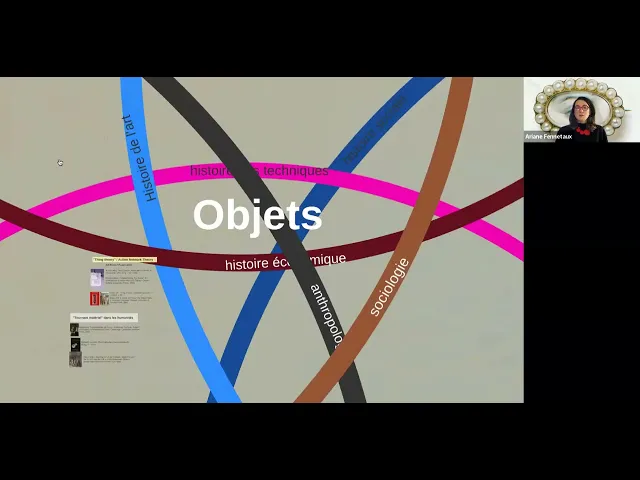
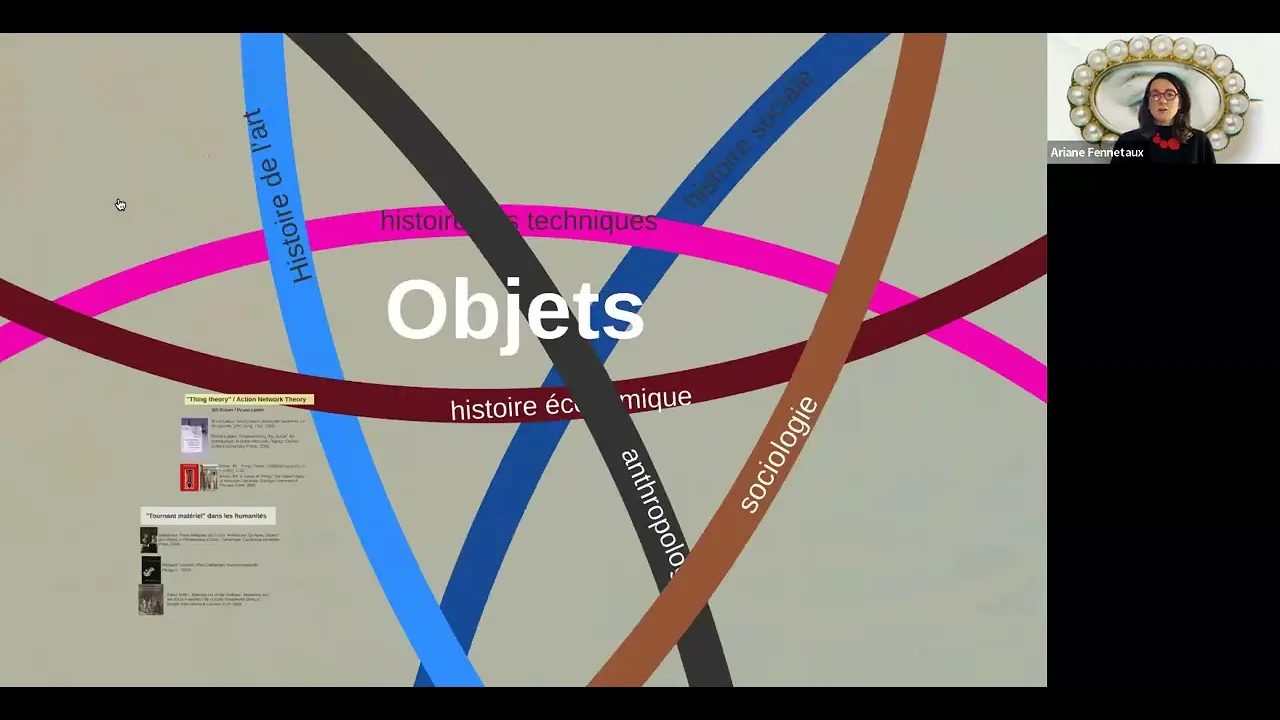
Um now objects are a good um way of unlocking aspects of the past because they sit at the crossroads of uh different fields and because they sit at this crossroads they can also be made to radiate in a way in all kinds of directions. If you think of the objects like the AirPods, um, of course they relate to or they can be analyzed in terms of history of technology or history of techniques. Um, of course, in terms of economic history, you know, if you did a history of the airports, you'd have to um understand the birth of a mega uh global brand like Apple.
um and the particular branding model that they have um thrived on. Um they can be understood in terms of sociology. Um um the AirPods as a kind of social marker um um other objects maybe not the AirPods but um can be understood also radiate towards history of art.
If you um think of the um painting, the eye miniature that is on the cover of the handout and was um behind me when I spoke at the beginning. This is a piece of art. Sorry, it's a it's a miniature.
Um but it's not just a miniature and it's not just a piece of art. It's also an object that um lent itself to different practices. Um, and this is what I mean by being at the crossroads and radiating in all kinds of directions, which when you look at objects, you kind of have to unpack what's behind this kind of compact, dense artifact.
Um and um this uh what has been seen as a material turn that is a fresh interest in materiality in the humanities dates back to roughly the late 1990s. um from if we think of the kind of earliest examples um or uh to the early 2000 um and as any kind of movement in academia it uh gathers speed and momentum and develops over years um so we we are still to some extent in what people call the material time so I'll explain what I mean by material turn by the word tan in French material this image of a tan or a toer um comes from the idea that um you to kind of understand it to understand the concept you've got to imagine um how in a way um scholarly knowledge is built and the way scholarly knowledge is built is by having students, people like you um who read books that are on their bibliography. Um and they all kind of more or less belong to the same generation.
So they're all exposed to the same bibliographies more or less give or take to the same ways of thinking, ways of approaching the past. Um, and then they come to having to write their own piece when they become graduate students, when they have to write an MA thesis for instance, they're told, well, you can't just repeat what's being said before. Uh, even more so if you do a PhD where you're going to have to bring something new.
So, how do you bring something new? Well, you're going to have to try and identify an area of scholarship that hasn't really been delved into, that hasn't really been looked at, um, and that seems to be missing from in a way what you've read so far. So, I'll give you an example that's not the material town, but another type of historioggraphical movement.
And this is the turns. It's the equivalent of a historioggraphical uh movement. Um, and one example I often give stu to students because I think it enables them to to clarify that idea of the historaphical shifts is what happened to the history of the 18th century um between say the 60s and 1960s and then in the 1980s and 1990s.
Um if you look at the books that were written on the 18th century in the 60s and the 70s most people were most historians were mostly interested in the industrial revolution. This was the big topic. Everybody wanted to know how England or Britain um became the industrial power that it was.
So um uh studies were devoted to mechanization to inventions to tracking um just how more productive the new machinery was um the output of the new manufacturies the organization of work in those manufacturies etc etc. So all the um historians um focus was production you know we want to account for production and then different areas different corners of the the question of production became explored but then after a while like when you've studied production from all different angles historians started thinking well hold on why were all these things produced after role. What is it exactly?
Why did um entrepreneurs what did manufactury owners want to produce more things, more things more efficiently, more things more quickly, more things cheaper? Well, you can't really understand this unless you also become interested in consumption. Yeah.
After all, you don't produce just for the sake of producing. you're producing because people are going to consume. And in the 80s and the 90s, you started having historians turning away from looking at production to turn their gaze towards consumption.
And so the sources they used were different, the questions they you they asked were different. And obviously the answers they brought were different. So this is a good example of a turn.
A turn in the historioggraphy. You've got to imagine that it's like a generation of scholars looked left and then they turned their gaze right or the other way. They turn their gaze the same direction.
Um obviously there are different turns happening at different times in different fields. So it's you know um it's not like all historians form this block uh but this image of a generation of people who kind of select people start asking them themselves or each other or rather themselves initially. um um similar questions is interesting and obviously um something else you need to bear in mind is that historians or any scholars are always the children of their own times.
So you can only ask the past or you usually ask the past past questions which preoccupy you in the present. Um so it is not very surprising to some extent that consumption started being a topic in the 80s and the '9s which kind of saw the triumph and consu of consumerism in the west and um it's to some extent it's no less surprising that today a lot of historians start being interested in the history of the environment and that environmental studies have become become a thing because as a generation we are increasingly preoccupied by environmental issues. Um so enough of uh this kind of digression on terms but I think it's important um because when you do your MAS um when you read artic scholarly articles uh when you read books you're going to see that at the in the introduction of studies of articles or books um historians or literary scholars usually um write something that they you we call a literature review that is a state of the field a state-of-the-art what has been written on the field so far and why is my study different why do I need to publish this why is this going to be helpful to the community of um specialists and in a way when you write your thesis you you're going to have to do the same um now two um important theoretical underpinnings to this material turn.
Um so this increased interest in materiality which in the previous slide which I didn't comment upon but you could see in works of philosophy with a craftsman or works of um history of art with David Sulkins um painting out of the ordinary or um uh in literature in Renaissance literature with a book by Sty Brass. Um, one or two important theoretical references um are Bill Brown and Bruno. Bill Brown is a literary scholar uh American literary scholar um who and you can see it's kind of around the same Yaz 2000 um 1990s for the Bruno one.
Um so uh sorry Bill Brown came came up with something he calls thing theory in which basically um he calls attention to objects in literature and the role of object of of objects in literature. Um so I'm not going to dwell too much on Bill Brown. Um I want to um uh dwell a little bit more on Bruno because I think I'm more interested in the way he um invites us to think.
So Bruno is French, but he spent part of his career in the UK. And so he published things also in English um and um and also in French, but most of his work was initially done uh in a lot of his work at least was initially done in in English. Um so he came up with something that is called action network theory or a N.
um which is kind of a big word um to say something which I think is very interesting which is that modernity in the west has been built um upon a fallacy basically and this fallacy is that subjects and objects are two distinct um and completely different entities and that out of the two subjects act are agents and that objects are only passive recipients of our actions. So objects are acted upon and subjects are the only agents. uh and in a way that this division um between subject and object has um uh underpinned uh the rise or the construction of the modern subject.
Um, I am modern because in a way I I pit myself against objects. And um, Bruno explains or argues at least that this is a fantasy. And this is why we have never been modern because in a way we were wrong to think that objects and subjects were two distinct entities.
Um because yes we act upon objects but objects are not just passive recipients of our actions they also have their own agency. Um and in particular they act on us. Um so a good example um to illustrate this is if you think of your phone.
So of course you use your phone. you're the one who, you know, touches the screen and makes the call or writes that email or takes that photo. But obviously, I think we all realize that we're also acted upon by a phone.
The phone shapes um informs, transforms our behavior, um our attitudes, uh social interactions. Um so the phone is not just a passive object in that object it also acts upon us. So basically um this is a key kind of instrument to think about um objects because they are in a way part of um this network of agents and of course they don't have any willpower.
objects have no willpower but it doesn't mean that they have no power on us. Um now if you um come to social history which is kind of more my background uh and the way social history has taken into account uh material culture objects there is a field in particular in French history called cure material and this um came um as a consequence uh of something called lean and here I I'll tell you about another of these historiographical shifts another of these historiographical changes uh which the echo deanel initiated when um uh traditional history so the history that was born in the 19th century which is really when the kind of history as a science became shaped. Um so traditional um traditional history was mostly focused on the history of rulers, the history of countries as in war, diplomacy, um uh heroes like Nelson for Britain or Napoleon for France um of key historical figures Um, and it was mostly a history from the top, a history of the top, echelons of society and from the top.
Um, and this was seen as the only kind of serious type of history you could do, more or less political history. Um and the Eldan uh was quite different in the way it advocated for a much more to some extent down to earth approach to history where you would be interested not just in you know what rulers or important people did or decisions or treatises they signed but in how people lived you know So the kind of daytoday realities of of of [clears throat] people, it's not necessarily poor people, but it's not it doesn't have to be just the aristocracy and and decisions that involved whole countries. It can be how the bourgeoisi lived, what type of things they consumed, um what type of access to literature they had.
Um so uh this strain of history uh which is you know uh not history from the top but something like history from below um it's really something that Lean brought and um a good representative of this school of thought is the French historian called Daniel who passed away last year actually and he was he was a fantastic historian um and he wrote a lot of books um but I'm citing only two uh and you can see from the title it's banal so it's things that in the past wouldn't have really elicited any interest they're not supposed to be interesting they're and back in 1989 um having a serious sburn historian write a book on the history of clothing um in the existing literature at the time was a bit of a sort of um little revolution to some extent. Um it was um a whole book dedicated to something that is seen usually as trivial um uh female and not that interesting. Um and he made a whole serious study of it.
Um now in um these books the the books of uh culture material um as um Dominic Pulo uh who is a French art historian who uh wrote a review uh of the book that you have on the screen which is a book that is kind of more or less contemporary but was written in and published in English called consumption and the world of goods and is about the 18th century. Um uh Dominic Pulo identifies in this book in this English Brit or English language book a slightly different approach to that of somebody like Hash um which who was really doing social history that is uh the history of clothing for instance he was interested in interested in was how different um types of consumption of textile and dress uh were part of different social strategies depending on your meure, depending on your class. Um and that clothing was thus a tool in a way of um social identities, collective identities.
Um, and Dominic Pulo identifies in in in this study what he sees as a more anthropological approach to objects in which objects are not seen merely as consumer goods. That is goods that you buy and either you own or you don't own. So basically he identifies something that goes beyond the study of consumption as ownership or the study of objects as social markets.
So it's not just about knowing who owned what, what type of people owned what type of object. For instance, were uh laborers did laborers own books? Uh did um farm workers uh own mirrors or own clocks?
It's more about um what relationship uh to objects these people had. And to study that you need to go beyond um sources that just tell you about whether an object is in somebody's house or isn't which was is the kind of golden source of social historian which is what they call what you call in English probate inventories which is a great source because when somebody dies you have a lawyer um a coroner who goes a lawyer rather who goes around the house and lists everything people had in the house. So this is a gold mine for historians because you kind of gives you a feel for what people owned.
Uh but it also just tells you about one instance and it doesn't tell you about how people interacted with goods and it doesn't tell you about the kind of life of the object. once it's been purchased. Um and this is the type of um approach to objects or to goods to consumer goods that anthropologists like Mary Douglas or Araadur um slightly earlier um um kind of advocated in favor of um one reference that is often cited that is important uh maybe to remember is Arunad the social life of things.
Uh because that phrase the social life of things is or the idea that things have biographies is something that you find often referenced. Uh and what he means by that is that just as people have social lives, sometimes they're popular, sometimes they're less popular, sometimes um they're um rejected, sometimes they're applauded. um objects also have social lives.
Um they're um became they become entangled in networks or relationships that give them value um or deprivives them of their value. So if you think of clothing for instance today you can have something that is really fashionable today is going to have a high both cultural price or cultural value economic price is going to be expensive. It's going to be seen as highly desirable but in a few years time it's going to lose its value.
It's going to lose both its economic value, that is, it will be less expensive and it's going to lose its appeal. It's going to be less desirable and therefore lose its cultural value. So, if you wear if you wear it, we'll be seen as Ranga or old fashion and you won't get the kind of social credit that you would have had uh when you wore it when it was at the peak of fashion.
Um, so you forget it in your cupboard or maybe you sell it, maybe you give it to a charity shop. Um, so this is an example of an object that shifts in value, but then maybe 10 years later, then this piece of clothing is not kangar anymore. It becomes vintage and therefore desirable.
And in um vintage shops, people are going to want to buy that 501 jeans that five or 10 years ago was so unfashionable. Um so then it this object becomes revalued, acquires new cultural and economic value. So this is a kind of short example of how objects are seen as having social lives fluctuating in value.
Um and another example is um of the social life of things is uh objects don't just get produced and bought but once they are bought they get used and things that can happen to an object that gets used is it wears for instance it breaks down. Is it going to get mended? Is it going to get repaired?
Is it going to get maintained? Is it going to be passed on? transformed.
So all these um interactions with the objects are also part of the social life of the object. So if you just reduce objects to consumer goods as something you buy, you only look at purchase. So you freeze only one moment in the social life of the object.
And uh really it's more interesting to have the whole social life of the object from its uh production to its uh dissolution. Um um another area of or another kind of underpinning um to this approach of objects or two objects rather is a um a program which was born in America at the University of Delaware um in 1952 where they set up an MA so a master's program the master where they called in early American culture uh and they offered this MA as a joint MA or an MA that was jointly taught by the University of Delaware and the Museum of Winter which is a decorative arts museum. And when I say jointly taught that means you had curators, the conservator, but you also had um historians and kind of traditional academics teaching in that MA.
Um and the students would work on the collections of the museum on the objects in the winter collection. And in this MA um was formulated a kind of method in a it was a kind of laboratory to try and see what you can do with objects, how you can work with objects, are objects sources, are there archives? Um and you have two um examples of articles which were published in a journal called the Winster Portfolio which still exists today.
Um and one of them is uh Edward McClung Fleming and the other one is Jules David Brown. And you have extracts from the Jules David Pran one, the mind in matter, an introduction to material culture theory uh in the handout and I would like you to read the introduction to that until he gets to method. I think it's page three.
uh and and write a very short summary um of of what you've read. Um note down the bits that you think were important or relevant or worth remembering. I'll skip that.
Um very recently, as in in the last two or three years, there's been new interest from the French. So it's not Daniel Rush, it's like 20 years or 40 years later. Um but they're often people who studied with Daniel Rush initially or um or no actually that's not true because Pango is a contemporary historian and um and Patrick Bush is a medieval historian.
So they're not uh the same period. So maybe he was one of the undergraduate uh uh lecturers but they wouldn't have done their PhD with him. Anyway, so these the two examples I wanted to draw your attention to was magaz based on that book.
Um so in a way this is a little bit like the history of the world in 100 objects uh but the French version and you can see it's taken about 20 40 or maybe 30 years uh for the idea to percolate um to France um and which is a magazine that was done on um two or three years ago. You can still see the episode watch the episodes on the A website and I think on YouTube maybe. Um and uh but in both cases although in lameund one chapter is dedicated to one object and in fair same one episode is dedicated to one object or one object type.
Um, in both cases though, although the books or the series talk about objects, they don't really take objects as their sources. And I think this is the big difference with the way um people in material culture studies that is people in England and Britain and the US understand when they mean material culture. Uh um this is the big difference with what the French mean when they say that is for people doing material culture in Britain or the US.
Objects are sources. Um they're not necessarily superior or better to written sources, but they shouldn't be dismissed as inferior either. This is what Henry Glassie writes.
it would be a mistake to assume that written documents and artifacts artifacts is a kind of synonym of objects say the same thing and that the written document is the more reliable source um indeed and I'll let you read uh the second quote but if you think of um women in the 18th century uh for instance and you think okay uh I'm going to write a history of women in the 18th century but actually women in the 18th century very few could write. So the sources you're going to be reading are mostly written by men. They might mention women.
They might be about women, but they would have been written by men. So what does it mean to write a history of women if you the only sources you have are pens are seen from the point of view of men? Um, can you hear women's voices?
Um, are there not other sources you could use to hear women's voices? Um, is that not problematic to look at the history of somebody who hasn't left their own version of of of their lives or their experience in writing just because they couldn't write uh and they couldn't read. And um with these thoughts I leave you.
I'll stop sharing. And uh I hope the recording's gone well because [clears throat] actually this is the second time I'm recording this podcast today. So I hope the sound's working well and that um you find it interesting.
So, I'll put on I campus a little assignment box for you to um do the little summary uh of uh of uh the reading. And I'll see you next week.