I'm paleoanthropologist Steve Churchill let's answer some questions from the internet this is caveman [Music] support at Sean Spain asks how did cavemen hunt with clubs animals are really fast we often think of cavemen as having clubs they probably use clubs but we know that by the time humans were moving into Ice Age Europe that they had really long Spears like 6 or 7 feet tall and we know sometimes they were tipping those Spears with stone like this to make lethal sharp stabbing Spears early modern humans had real long range projectile Weaponry like bow and arrow
and in some places spear throwers the spear has a knock on the other end which fits into that hook and so the spear would just be held parallel to the spear thrower and then when you throw it it allows you to propel the spear over a distance of about 40 meters or about 120 feet at Karen Ryden asks I did 23 in me I had 89% of the neander variant of all in their system what does that mean you have more neandertal genes than 89% of the people who have submitted their DNA now most of
us only have a small proportion of neander genes only about 1 to 4% early members of our species migrated Out of Africa they met and sometimes interbred with the neander tals so if you have any ancestry from Europe or from Asia you probably have got some neandertal genes we have complete genomes of several neander tals we're able to know for instance that some neander tals had red hair so you might think hey if I have red hair maybe I got that from neander tals but it actually turns out that it is a different Gene that
causes the red hair in theander tals so not all red heads are descended from theander tals but because most redhe heads are European most redhe heads have got some neandertal genes in them at slugg apotamus as you think Ice Age is historically accurate well it actually is pretty pretty accurate you see in this clip here some animals moving past these gigantic thick ice sheets most of the animals that are depicted in Ice Age giant ground sloths wooly mammoth saber-tooth cats were actually around here in North America in places the ice sheets were as much as
2 and2 miles thick and I love the way that they depict the barren land and just dirt around the glaciers when you have ice sheets like that you get deserts forming right up against them because the ice sheets suck all the moisture out of the atmosphere and creat snow over the ice sheets I think that the humans that they depict are also pretty accurate they're shown wearing tailored clothing we find bone needles in the archaeological record beginning about 30,000 years ago and that indicates people were able to stitch together clothing but there are a couple
things that are inaccurate you wouldn't see animals up near the ice sheets animals live where their plants grow and the other thing is there are no saber-tooth squirrels in the fossil record at Andy doodle 56 asks okay paleoanthropology nerds what species is the Geico caveman anyway well let's see looking at the brow Ridge morphology and the really big nose and the facial architecture it looks a lot like a neander at shes the alishna asks what happened to neander TS well frankly I think we did them in humans moved into their territory out competed them and
out reproduced them they were short and stocky and very muscular they also had short limbs short arms and short legs so that reduced the surface area by which they lost heat and they had kind of a strange architecture of the nose and face which also helped them deal with cold air that they were breathing those bodies were really good at producing heat but that's not good for conserving energy they had very costly bodies they were costly to move move costly to feed costly to keep warm and so they didn't have a lot of room left
over in their energy budgets to devote to reproducing they had a lot of competition in the form of large Fierce carnivores things like cave Lions cave hyenas saber-tooth cats wolves grizzly bears and so probably for much of their history in Europe neander talls were just hanging on by a thread at Roxy not L asks hey where did early humans live if you look at the earliest stages of human evolution the first 4 million years is entirely here in Africa where we've got little Apen the ostr Opus we find them here in the rift valley in
East Africa in countries like Kenya Tanzania Ethiopia and we find them in southern Africa in cave systems outside of Johannesburg by about 2 and a half million years members of our own genus like homohabilis start to crop up and that includes Homo erectus and Homo erectus is the first one to actually leave Africa we pick up homo erectus initially in the Republic of Georgia and then eventually in Indonesia and you might wonder how did homoerectus get to Indonesia those are islands out there keep in mind this is during the ice ages and during glacial intervals
sea levels drop and in places where there's a shallow sea the sea floor becomes exposed and Indonesia just becomes a peninsula connected to the southern part of Asia and so homoerectus could walk out to those islands meanwhile a new species emerges it comes out of homo erectus most of us would call it homo heidleberg enus it looks like this guy right here the very Homo erectus looking with big brow ridges and massive face these guys up here in Europe gives rise to the neander tals and in Africa they evolve into our own species Homo sapiens
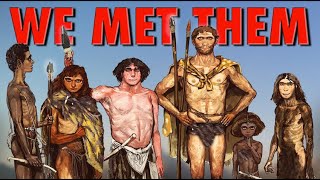
about 300,000 years ago and by about 70,000 years ago they started expanding Out of Africa and they probably encountered populations of homo erectus which they knocked off and by 40,000 years ago they are moving into Europe and starting to encounter the neander tals who they knock off and by about 20,000 years they're all the way up here in eastern Siberia and they cross the bearing land bridge where they become the Native Americans that we know today at reality Seeker asks did cavemen have a sense of humor they probably did have a sense of humor this
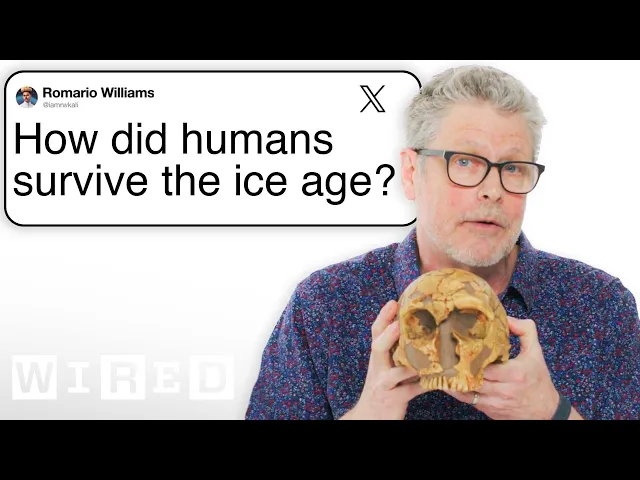
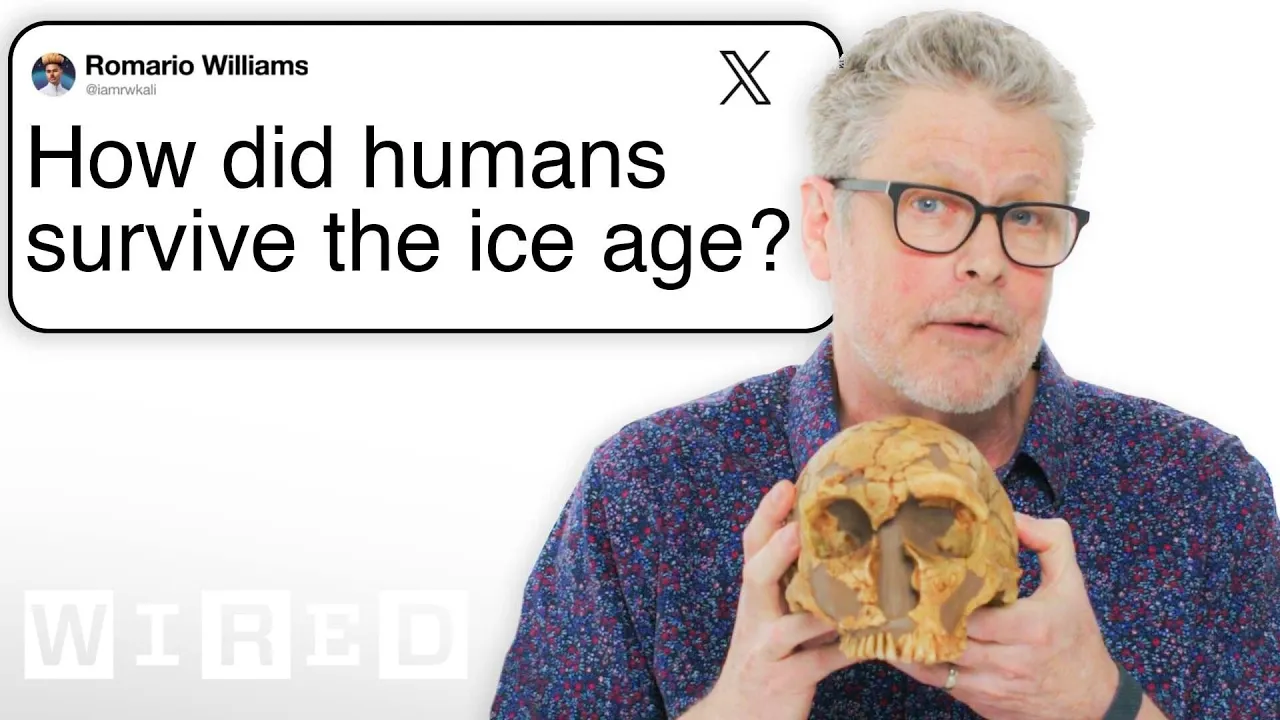
is a depiction of an i which is a kind of a wild goat you know you can see its head here and its body and its legs and it's got something coming out of its rear end here which maybe is the first poop joke at imw KI asks how did humans survive the Ice Age gosh I can hardly bear to be outside for more than 5 minutes when the temperature drops below 0° C neander tals had fire sure but these early modern humans in Europe probably had better pyro technology hearths which channeled the air flow
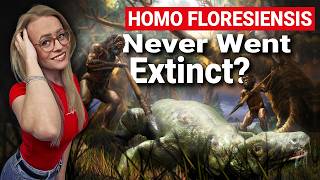
so they could really stoke the fire when the ice ages really ramped up they stayed put and they just hunkered down and dealt with it at a hasty retweet asks you know how they discovered those fossils of 3T tall early humans in Indonesia they called them Hobbits as a nickname which is really cool but they really missed an opportunity to call them neander shorts I'm totally going to steal that one because that's at the intersection of dad jokes and pale anthropology the hobbits are a species of early human and they come from a little island
in Indonesia called Flores Island so the species is called homo floresiensis these guys are the descendants of homo erectus homoerectus got out onto Flores Island got trapped there when you get trapped on an island if you're a small-bodied mammal like a small rodent or something you tend to get larger if you're a larger bodied mammal you tend to get smaller which is called Island dwarfism and so these little Hobbits find themselves living in a backdrop of giant rats and tiny dwarf elephants called stegodon and being hunted by things like kodo dragons at Caleb llama asks
honest question did Cav men have pets the only domesticated animal that we have during the Stone Age is the dog the earliest Undisputed dogs in the fossil record come from a site in Germany called bon Ober castle where there is a human Buri with a dog they're used to help with hunting they're used to help fend off carnivores we don't start to see things like cattle or goats until humans settle down and start engaging in agriculture after about 10,000 years ago at World of paleo anth asks how did the a afarensis specimen dub Lucy get
her name Lucy is a 3.2 milliony old partial skeleton from Ethiopia that represents the species Australopithecus afarensis and she's one of the most famous fossils out there she was found in 1974 the team that found her was playing The Beatles song Lucy in the Sky with Diamonds incessantly in Camp and they named Lucy in honor of that song at fifo kwii asks things I'm too tired to Google when did hominin start having hair that grows indefinitely long in a quadraped most of the sunshine is falling on their back and the hair protects their skin they
don't have as much hair in the belly because it's Shady down there for a biped most of the solar radiation is falling on the top of the head and the shoulders and the upper part of the back so homoerectus probably retained hair on the top of the head to block out solar radiation and evolve the capacity to grow it longer to protect the head shoulders and the upper part of the back from sunburn at B z73 asks so like what did cavemen do about dental hygiene well unfortunately probably not much we do have some fossils
which denote habitual use of toothpicks where they've used toothpicks so much that they've actually created little grooves in their teeth but before that we've got guys like this guy from Africa he's about 250,000 years old he's a representative of homo heidleberg enus and he's got absolutely rotten teeth with huge cavities probably because he was eating a lot of honey he's got a hole in the side of his head here which is probably from an infection from bacteria entering the bloodstream from these cavities and circulating around and setting up an infection in the side of his
skull and this is probably what killed him at twins z254 64257 asks what's your favorite ancient hominid my paleoanthropology friends oh that's like asking me to pick my favorite child I will say that these guys are one of my favorites a 250,000 year old species called holti I was a member of a team that found them in caves in South Africa down a a chute which is about 40 ft long long and gets down to about 7 in wide uh way too small for me to get in there we actually needed an entire crew of
small bodied excavators to get down into this chamber they have an apiz brain they have very primitive morphology in the face they're probably one of the most primitive members of our genus but very late in time there are Relic species that just hung on without changing very much through time until we find them in the caves of South Africa at Blues liquor asks what is the missing link between ape and man well as a paleoanthropologist I got to tell you we hate the term Missing Link and that kind of thinking leads to conceptions of a
March of progress where evolution is just a stepwise series of progressive changes through time but the Human family Tree was very very bushy there were lots of species we recognize anywhere from 28 to 30 of them at roughly 6 million years ago our lineage began to diverge from the lineage that leads to living chimpanzees and bonobos our earliest ancestors would look like a chimpanzee like this chimp skull here they had very snouty faces like a chimpanzee but you'd be impressed by the fact that they're walking on two legs and that their canine teeth this Big
Fang here was actually a little bit smaller but other than that they're very chimpanzee like at shrub plays asks if gigantopithecus existed why can't Bigfoot why not indeed giganto us was a huge ape if it was standing on its hind legs it was probably about 8 ft tall maybe twice the size of a gorilla with a huge head and huge teeth they probably lived on bamboo like panda bears and they lived in Asia up until about a half million years ago and some people have thought that maybe the yeti in the Himalayas or Bigfoot in
North America are just Relic populations of gigantopithecus that would require that gigantopithecus crossed the Bearing Sea into North America without leaving any kind of fossil record but maybe that happened at Patrick Sun ask bro when did language start if we look at neandertals they have brains which were every bit as big as ours and they seem to have the neural structures that one would need to produce language we can tell from Holes for nerves in the base of the skull that they had very good motor control of their tongues neander TS had a very long
low brain case and a more projecting face and that results in a flatter base of the skull so neander tals probably could only produce one or two vowel sounds in our species Homo sapiens our face is tucked up more under the brain case and we have a more globular cranial Vault and that creates a bend in the base of the brain case we have flexion here this flexion gives us a resonating space that allows us to make the full range of vowel sounds keep in mind that even monkeys and use verbal communication there are things
like pant Hoots and chimpanzees which mean something to their group members at seven light Bringers asks what the did cavemen do for fun well probably not a lot to tell you the truth we know in the later part of the Paleolithic or the Stone Age that they're making some musical instruments because we've recovered flutes made out of bird bones people don't start painting on Cave walls until modern humans are in Europe towards the end of the Ice Age what's really cool about these cave paintings is they often tend to make use of features and relief
in the walls of the cave such that if you had a fire going in the chamber of the Cave the flickering of the fire would make these animals look like they're moving these Paleolithic artists were using a lot of different pigments uh sometimes it's ground ochre which is an iron oxide sometimes it's manganese maybe they're crushing up plant material like berries and a lot of times we get handprints where they put their hand against the cave wall and then probably by chewing up some manganese or some ochre and spitting it they're creating like a spray
paint pattern around their hand at vichel asks what makes humans unique creativity moral Consciousness ability to reason and rationality self-awareness what's really unique about humans is the extremes to which we carry these things the extremes to which we become dependent on technology language and social connections we know from the archaeological and fossil record in Europe that neander tals lived in very small social groups they may have only known 40 or 50 other neander tals early modern humans seem to have extended social networks they seem to be trading things over long distances and so early modern
humans in Europe probably knew hundreds of other early modern humans at Venus rule deck asks the one history question I want answered to this point is what is the freaking purpose behind the Venus figurines well Venus figurines like this Venus of vill andorf that you see here some people have thought that they are fertility figurines but the truth is not all of them are females most of them are not even human figurines and probably what these things are are trade items as people go visiting other groups they're carrying them along to give us gifts at
mcus asks quick question what did cavemen do if there were no caves in their area if they happen to live in an area with no caves they just made do with open air shelters primitive tents from sticks and animal skins and use animal skins for bedding it's ironic that we call them cavemen because first off they were usually living in rock shelters not an actual cave and when we do find them in caves they were always just living in the mouth of the cave at CFA Yin asks so what did humans eat before the discovery
of fire our ancestors were still eating a lot of vegetable material and that meant they needed big guts because you got to have a big gut to break down that high fibrous diet by the time homoerectus came along they're starting to cook stuff they're starting to mash food probably with stone tools this is a hand ax about 1.7 to 1.5 million years old from Africa this is probably a large-scale Butchery tool and the great thing about fire is that it allows us to break down the food before we ingest it and we can actually get
a whole lot more of the calories and nutrients out of it so those are all the questions for today thank you for watching caveman [Music] supports