That night, the lights in New York shone brighter than usual. The studio was packed with people, but no one laughed. No one spoke.
They didn't know exactly what was about to happen, only felt clearly that something was coming, and it was powerful enough to change everything. Caroline Levit stepped onto the stage, not as the White House press secretary, not as a politician, but as someone carrying an information bomb, something powerful forces had tried to bury for years. In her hand was a small ordinary USB drive, but she gripped it as if it were the last weapon on a battlefield.
She didn't need a microphone. She didn't need a script. All she needed was the truth and one person to confront.
That person was Oprah Winfrey, media icon, talk show queen, one of the most powerful women on the planet. But tonight, Oprah wasn't sitting as the interviewer. She was the one being questioned.
It was the moment everything began. A night when the media couldn't control the narrative. A night when an icon was placed under lights, she couldn't control.
And perhaps the night the truth was finally heard. Before diving into the story, comment where you're watching from and don't forget to subscribe so you won't miss the latest stories. The studio atmosphere was thick, taut as a bowring.
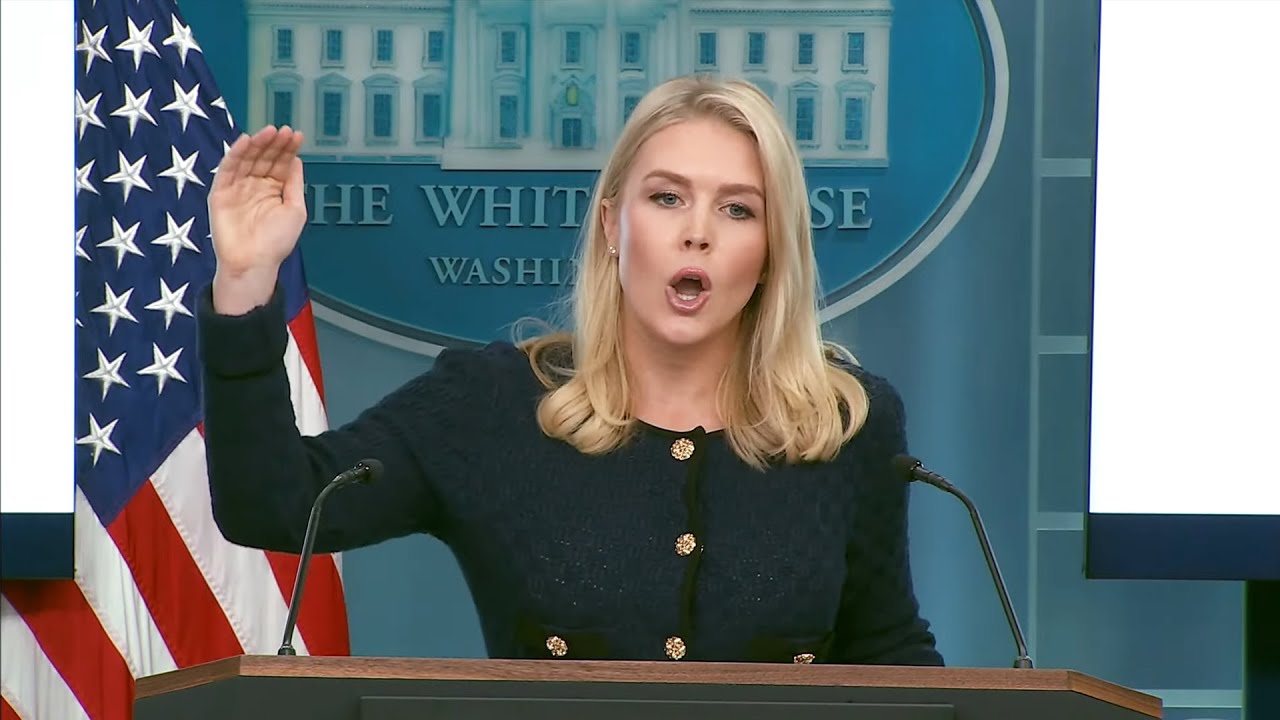
The stage lights shone directly on Caroline Levit, standing at the podium, her gaze cold as steel, her shoulders steady without a hint of tremor. Her face was carved in resolve, her steely eyes piercing the audience. Not a single unnecessary movement, not a trace of hesitation.
Across from her, Oprah Winfrey sat in a black velvet chair like a throne. She crossed her arms, lips slightly pursed, a forced smile barely visible. The eyes that had once opened the hearts of millions now held weariness.
The host stepped lightly to the center of the stage. He glanced around the audience where hundreds of eyes were glued to the stage as if awaiting a historic trial. His voice rang out clear, each word carefully weighed.
Ladies and gentlemen, rarely do we witness a moment like this. A space where two great forces of America stand together. Political power and media power.
He paused, letting the words sink into the tense silent air. Politics and media, two forces shaping public opinion, policy, and modern history. His gaze turned to Caroline Levit.
His voice was slow, precise, Miss Levit, according to the information we've received. You hold a document that could change how the public views Oprah Winfrey, one of the greatest icons of contemporary media. Is that correct?
Levitt nodded, her hand tightly gripping the USB, then activated the large screen behind her. An email appeared titled film discussion Oprah and Harvey 2014. We start with Harvey Weinstein, Levit declared, her voice sharp, each word like an arrow.
This email proves Oprah knew about Weinstein's misconduct, but still collaborated to protect the Butler project. The screen displayed a line from Oprah Harvey. Keep things stable.
Don't let small troubles ruin the project. The audience murmured some raising phones to record. These small troubles, Levit emphasized, were whispers of Weinstein's harassment, which Oprah ignored.
Oprah stood abruptly, her voice sharp yet polished. That email was distorted. I only worked with Harvey for the film, nothing more.
I knew nothing about those allegations until they went public. Some audience members clapped, but the applause faded, mingled with skeptical glances. Levit didn't flinch.
She signaled and the screen switched to a video. A young woman, about 30, appeared, her eyes red, but her voice firm. She introduced herself as Sarah Thompson, an actress who had worked on a Weinstein project.
In the video, Sarah recounted a 2012 meeting in Los Angeles. "I met Oprah at a film promotion event," she said, her voice choking. I told her Harvey tried to force me in a hotel room.
I begged her to speak out, but Oprah just looked at me, put a hand on my shoulder, and said, "There are bigger things to protect. " After that, I was cut from the film. The audience fell silent, some covering their mouths, shocked by the account.
Sarah concluded. Oprah knew, but she chose her reputation. Levit turned to Oprah, her voice lowering, filled with indignation.
Sarah begged you for help, but you chose to stand with an abuser. Why didn't you protect her? The audience grew noisy, some shouting.
Oprah, answer, while others still clapped in her support. Oprah shook her head, hands gripping the chair. I don't remember that conversation.
If it happened, I wouldn't have told her to stay silent. This is a personal attack, Moose erupted. But Levit remained calm, her gaze locked on Oprah, she continued, signaling for another document to be shown.
A memo from the Weinstein Company allegedly from a former assistant, stating that Oprah requested to quickly handle a complaint from an actress, implying Sarah. This is no coincidence, Levit said. Her voice sharp as a blade.
Oprah didn't just know about Weinstein's behavior. She helped cover it up to protect her film project. The audience descended into chaos.
Some shouting, "The truth, Oprah. " While others shook their heads in disbelief. The host raised his hand, trying to restore order.
Caroline, "These are serious allegations. Are you certain of this document's authenticity? " Levit nodded, her eyes not leaving Oprah.
Everything I present comes from reliable sources, ready for public verification. But Sarah and other victims can't wait any longer. She paused, looking at the audience.
And this is just the beginning. There are more secrets to be exposed. An Oprah fan retorted, "This is a smear campaign.
Oprah is an icon of compassion. " Conservative outlets praised Liv, while liberal media called her an opportunist. In the studio, the atmosphere was like a furnace with the audience glued to the stage.
Phones raised to record. The studio air was boiling, thick with tension and anticipation. Whispers spread through the room.
Caroline Levit stood tall at the podium. The lights cast onto her face, her gaze cold and resolute, her right hand still tightly gripped the USB as if it were the final evidence between truth and lies. Across from her, Oprah Winfrey leaned slightly forward.
Her hands clenched the chair's arms, knuckles pale, her face maintained a professional calm, but her eyes betrayed tension, hard to conceal after the recent blows. The host nodded slightly, his voice ringing out, deep and composed, like a helmsman balancing a stormy wave. Ladies and gentlemen, you've just witnessed controversial content surrounding the connection between Miss Oprah Winfrey and Harvey Weinstein.
A sensitive topic, but one that demands transparency. He turned to Caroline Levitt, maintaining a focused yet courteous gaze. Miss Levitt, can you reveal anything more?
Levitt gave a slight nod. No indignant expression, no savoring of victory, just cold focus. Let's talk about Miss Oprah's leadership academy for girls in South Africa.
She said, her voice even not raised, but each word deliberate like stones dropping into a still lake. She lightly touched the control panel. The massive LED screen behind her lit up.
A photo appeared. A sprawling school campus under the golden African sun, white painted gates, a row of trees leading to classrooms. Levit stepped aside, letting the image be seen clearly.
This school, she said slowly, was promoted as a beacon of hope, a place to nurture future female leaders for the continent. She paused for a beat. The audience held its breath.
But for some of the girls who lived here, Levit continued, her gaze sweeping over the crowd. It was the start of traumas they'd carry for life. The room fell deathly silent.
No more phones raised, no more whispers, only the image of the school campus fading, preparing to shift to a new video, and everyone knew something heavier was coming. Levitt pressed on, her voice rising, filled with controlled fury. In 2007, a dorm matron named Virginia Makopo was accused of sexually abusing multiple students.
Oprah flew to South Africa, publicly apologized, and promised to make things right. But what did she actually do? She paused, letting the question hang, then signaled for a video.
The screen switched to a young woman, her face half hidden in shadow, her voice trembling but resolute. She introduced herself as Amina and Kosi, a former student of the academy. In the video, Amina spoke slowly, her eyes distant.
I was 14 when it happened, she began, her voice heavy with pain. The matron, Virginia, targeted me and others. We reported it to the school staff, hoping Oprah would help.
She came, gave an apology, but nothing changed. Virginia was acquitted, and we were told to forget it. Amina's voice broke as she added, "Oprah's apology was like a passing breeze.
We needed protection, not words. " The audience gasped, some shaking their heads, others whispering in shock. Levit turned to face Oprah, her gaze unflinching.
You knew about the abuse, Oprah. You had the power to act. But you hired lawyers to ensure Virginia went free.
Why did you abandon those girls? The question cut through the studio like a blade, the audience erupting, some shouting, "Tell the truth! " while others clapped for Oprah.
Oprah stood, her face showing a mix of hurt and defiance. "I poured my heart into that school," she said, her voice firm but tinged with emotion. I flew to South Africa, met with families, ensured the school was safe.
These allegations are being twisted to smear me. Levit didn't waver, she signaled, and the screen displayed a document, a contract between Oprah's legal team and a South African law firm dated 2007. This document shows you paid to bury the case, Levit said, her voice low, but icy.
You didn't just apologize. You orchestrated a cover up to protect the school's reputation. The audience's reaction was like a breaking wave.
Some booed, others sat stunned. A woman in the front row shouted, "Why did you do it, Oprah? " while another raised her hand in dismissal, still loyal to the media icon.
Oprah's eyes narrowed, her voice rising with indignation. "That document is misrepresented. I did everything I could to protect those girls.
This is a targeted attack. Booze rang out, but Levit stayed calm, her gaze locked on Oprah, she continued. Amina and the other girls deserve protection, but you chose your image.
That's the truth. The audience grew noisy again, some shouting, "Justice for Amina! " while others shook their heads in disbelief.
The host raised his hand, trying to restore order. "Caroline, these are grave accusations. Can you guarantee the authenticity of these documents?
Levit nodded, her eyes not leaving Oprah. Everything I've presented comes from reliable sources, ready for verification. But victims like Amina can't wait any longer.
She paused, looking directly at the audience. And we're not done. There are more secrets to be exposed.
The tension in the studio continued to rise. No one spoke. Every gaze was fixed on Caroline Levit, who stood firm at the podium, the lights illuminating her resolute face, her eyes not blinking once.
Across from her, Oprah Winfrey sat motionless, her hands gripped the arms of the chair, her lips pressed into a cold, straight line. In the eyes that had once comforted millions, a flicker of unease now glinted like glass under pressure. The host adjusted his microphone, trying to keep his voice steady despite a hint of hurried breathing.
"Levit," he said, his tone even but lower than usual. "The information you've shared clearly carries great weight. Can you share more?
" Levit took a slow breath, her gaze sweeping the audience as if measuring every reaction. Then she stopped right on Oprah's face. Let's talk about another name, she began, her voice low, each word piercing the already thick air like needles.
Joas, the man Miss Winfrey introduced to millions of viewers as a great healer. He pressed a button on the control panel. The LED screen behind her lit up, displaying a clip from the Oprah Winfrey show in 2010.
In it, Oprah appeared radiant on stage, her eyes bright, her voice full of conviction. He has helped thousands find hope again. A healing energy I've never seen anywhere else.
The studio audience stirred. Some furrowed their brows. Glances toward Oprah beginning to emerge.
Not anger, but curiosity and doubt. Levit didn't need to say more. The clip had planted enough seeds of suspicion.
But Jo was no healer. Levit continued, her voice filled with controlled fury. He was an abuser accused of sexually assaulting hundreds of women and Oprah elevated him.
She signaled and the screen switched to a new video. A woman about 40 appeared. Her face weathered but her voice strong.
She introduced herself as Maria Costa, someone who sought out Jois because of Oprah's endorsement. In the video, Maria recounted her experience, her voice trembling but resolute. I watched Oprah on TV, heard her praise Jois.
I trusted her, so I went to Brazil to heal from a past assault. But Jo took me to a private room and forced himself on me. Maria paused, her eyes read.
I felt betrayed. Oprah made me believe in a monster. The studio audience fell silent, some covering their mouths, horrified by the account.
A man shouted, "Oprah, why did you do it? " Levit turned to face Oprah, her voice firm. Maria and hundreds of other women went to Joas because of your endorsement.
You made him famous, but when the allegations surfaced, you stayed silent. Why? The audience erupted, some shouting for answers, while others still clapped in support of Oprah.
Oprah stood, her voice trembling with emotion, but maintaining composure. I introduced Jois because I believed in his work at the time. When the allegations emerged, I stepped back.
I'm not responsible for his actions. Levit didn't back down. She signaled and the screen displayed a document a financial record from OWN showing funding from an organization linked to Jois in 2011 after Oprah promoted him.
You didn't just promote Jois, Levit said, her voice like a razor's edge. You took money from those associated with him. You profited from an abuser's fame.
The audience gasped, some shouting, "Shameful! " while others shook their heads, unwilling to believe. A woman in the crowd yelled, "Oprah, explain yourself.
" Oprah fired back, her voice rising with indignation. "I didn't take money to promote anyone. These documents are fabricated, and I won't let myself be smeared like this.
" Applause from her supporters rang out, but it weakened, drowned by booze. Levit pressed on, her voice lowering, heavy with weight. You built your image as an inspiration.
But there are other lies, she signaled, and the screen showed a quote from a biography where Oprah's aunt revealed that her childhood poverty story about keeping roaches as pets was exaggerated. "You crafted a story to sell books while people like Maria paid the price for trusting you," the host interjected, his voice tense. Caroline, you're making numerous accusations.
Can you guarantee the authenticity of these documents? Levit nodded, her eyes not leaving Oprah. Everything I present comes from reliable sources, ready for verification.
But victims like Maria can't wait longer for justice. She turned to the audience, her voice soft but firm. They deserve to be heard, and the truth must be exposed.
The host leaned slightly forward, nodding gently, his voice rising as if to close a stormy segment. Thank you, Caroline, for the information you've shared. We But before he could finish, Caroline stepped forward, raising her hand lightly toward him, not interrupting rudely, but as if continuing an argument, she wouldn't allow to be cut off.
"Not yet," she said, her voice calm, but resolute. There's one more crucial piece, a part of the picture the public deserves to see in full. The host stepped back slightly, nodding.
He understood the stage was no longer his. Caroline returned to the control panel. Her fingers glided over the touch buttons, and once again, the screen behind her lit up.
This time, no famous face appeared. Instead, it was a series of emails. The subject line, confidential production issues per month.
neat publicity studio expectations. She didn't need to explain at length. The emails spoke for themselves.
Exchanges between studio representatives, PR teams, and Oprah's name repeated multiple times as the one coordinating public relations, shaping statements, and notably a phrase highlighted in bold red. We should ensure Mo'Nique's narrative remains off message. Oprah will handle it.
Caroline looked up, her gaze now shifting from icy to solemn. This is no longer about a publicity disagreement. This is how Hollywood silences those who don't follow its unwritten rules.
And Miss Oprah played a part in it. The air in the studio was thick. The host didn't intervene.
The cameras began to slowly zoom in on Oprah's face. Once again, she wasn't the one asking questions, but the one facing a heavy silence where every explanation would be scrutinized under the spotlight of doubt. Mon'nique starred in Precious, the film Oprah produced, Levit began, her voice low but weighty, as if building a case.
But when Mo'nique refused to promote the film overseas without compensation, her career plummeted. Why? Because Oprah insured it.
She signaled and a video appeared. Mo'Nique filled the screen. her voice strong, unyielding.
"I told Oprah I had a family, a talk show, and a comedy tour," Mon'nique recounted, her eyes blazing. "I wasn't obligated to fly to France for free. " After that, Oprah spread that I was difficult to work with.
Suddenly, Hollywood shut me out. The audience stirred, some gasping in shock, others whispering animatedly. Levit turned to Oprah, her voice icy and probing.
Mon'nique dared to stand up for her rights and you punished her. You used your influence to blacklist her. How do you explain that?
The audience erupted, some shouting, "Oprah, speak," while others clapped for the media icon. Oprah stood, her presence commanding, but her voice tinged with irritation. "I supported Precious to elevate meaningful stories," she said, each word deliberate.
"M'nique chose her own path, and I had no role in her career. These accusations are baseless. Her supporters clapped, but the applause faded, overtaken by growing skepticism.
Levit didn't flinch, she signaled, and the screen displayed a series of emails allegedly between Oprah and a prominent Hollywood producer dated 2010. The emails were brief but heavy with a line from Oprah. Mon'nique's personality is an issue.
Move forward without her. Levit's voice rang out full of force. This isn't speculation.
You called Mon'nique trouble and Hollywood listened. You didn't just produce films, you controlled careers. The audience's reaction was like a breaking wave.
Some booed, others sat stunned. A man in the crowd shouted, "Why did you do it, Oprah? " While a woman nearby shook her head, still loyal, Oprah fired back, her eyes flashing with indignation.
"That email is fake," she snapped, her voice rising. I've spent my life opening doors for others, not closing them. Mon'nique's career was her own doing, and I'm not responsible.
Her words sparked applause from fans, but the atmosphere had shifted with many in the audience exchanging doubtful glances. Levit pressed on, her voice like a sharp blade. "Not just Mo'nique," she said, emphasizing each word.
"You shaped Hollywood, deciding who shines and who gets snuffed out. " she signaled and the screen displayed a list of names, actors, writers, directors, allegedly penalized for challenging Oprah. The host interjected, his voice urgent.
Caroline, you're painting Oprah as Hollywood's gatekeeper. Can you prove this? Levitt nodded, her gaze steady.
These documents and testimonies come from reliable sources, ready for verification, but the pattern is clear. Oprah's power comes at a cost. She turned to the audience, her voice softer but resolute.
Mo'Nique and others paid that price. The audience was swept into a whirlwind of controversy, their eyes fixed on Caroline livid as she stood resolute at the podium, the stage lights glaring down on her unwavering icy face. The USB in her hand seemed an untouchable symbol of truth, making the studio atmosphere even heavier.
Across from her, Oprah Winfrey sat still, her hands clutching the chair's arms, her face revealing a mix of tension, anger, and helplessness after the accusations about Mon'nique. The host, sweat beginning to beat on his forehead, held the microphone close, his voice slightly faltering under the pressure, but still striving for professionalism and control. Live it.
So far, you've presented extremely serious allegations, and our audience is closely following every detail. He paused, taking a deep breath, his eyes scanning the room before returning to her, his tone warmer, inviting, "Do you have anything more to share? " to help the audience understand the full picture.
Levitt inhaled deeply, her gaze sweeping the audience before locking onto Oprah. We've talked about Harvey Weinstein, the South Africa school, Zhao Deis, and Monique," she said. Her voice low but powerful, like a final hammer strike.
But this is the evidence tying it all together, a recording showing Oprah knew about the wrongdoings, but chose to conceal them. She pressed a button on the control panel, and the large screen behind her lit up. But instead of an image, a sound played, Oprah's voice, clear in a recorded private conversation.
We need to keep Harvey stable, Oprah's voice said coldly. If this gets out, the whole project will collapse. The audience was stunned, murmurss exploding like crashing waves.
This recording, Levit continued, her voice sharp, was made in 2013 when Oprah discussed Weinstein with an associate. She knew about his behavior but chose to protect her own interests. The audience erupted, some standing, shouting, "Oprah, how could you?
" while others shook their heads in disbelief. Oprah shot to her feet, her face pale, her voice trembling with fury. That recording is fake.
I never said those words. This is a conspiracy to destroy me. Her fans clapped, but the applause was weak, drowned out by the growing booze.
Levit didn't waver. Her gaze locked on Oprah. You can deny it, but the truth doesn't change.
You knew about Weinstein, about the girls in South Africa, about Joas, and you destroyed Monnique. All for fame and power. Her words were like a tempest, sweeping away the last remnants of silence in the studio.
The audience grew chaotic, some raising phones to record, others shouting for justice. A woman in the crowd yelled, "You owe us an explanation, Oprah. " While a man bellowed, "Caroline's right.
" Oprah, now stripped of her usual composure, stepped closer to the podium, pointing at Levit. "You're a tool of a dirty political agenda," she shouted, her voice piercing. "I've spent my life uplifting others, and you dare stand here and smear me.
" The audience was divided, half clapping for Oprah, the other half booing in protest. The host raised his hand, trying to restore order. "Everyone calmed down.
" "Oprah, do you have anything more to say? " he asked, his voice nearly drowned out by the noise. But Oprah didn't respond.
She turned, her eyes flashing with anger, and swiftly walked off the stage, leaving the audience stunned. Booze and applause mingled, creating a storm of sound. Levit stood firm, her gaze fixed on the path Oprah had taken.
She turned to the audience, her voice low, but powerful. Oprah may leave, but the truth stays. Victims like Sarah, Amina, Maria, and Mon'nique deserve to be heard.
I'm here for them. " The audience erupted, many standing to clap while others sat, their faces showing shock. The host, looking as if he'd just run a marathon, tried to steer the show back on track.
"Caroline, this is a monumental moment. How do you feel? " he asked, his voice slightly shaky.
Levit looked straight into the camera, her gaze unwavering. I'm not here to tear anyone down. I'm here to expose the truth.
Those who've been hurt deserve justice. Her words sparked thunderous applause. The studio shaking with the energy of a historic moment.
Levit sat down, feeling her heartbeat pounding. She knew she'd pushed the confrontation to its peak, but the consequences were still looming. Oprah's exit was a temporary victory, but she wouldn't stay silent forever.
The host trying to keep the show moving turned to the audience. We've just witnessed an unforgettable moment. Caroline, "Any final words?
" he asked. Levit stood, her eyes meeting the camera. "Everyone, the truth doesn't stop here.
What we saw today is just the surface. Stand for justice. " The audience roared with applause, the studio like an arena, and Levit knew she'd ignited an unprecedented media storm.
The storm in the studio hadn't subsided as Caroline Levit left the podium, the stage lights dimming, but the aftermath of the confrontation lingered like a razor sharp blade cutting through the air. Oprah Winfrey had walked off, leaving the audience in a state of shock and division. Some still clapped, calling her name, while others whispered, their eyes revealing doubt after the stunning revelations.
The host, his face tense, tried to wrap up the show with a trembling voice. Thank you, Caroline Levit, for bringing us an unforgettable talk show. We'll be back soon.
But the audience seemed reluctant to leave, their phones glowing, capturing the historic moment. Outside the studio, the internet exploded. On social media, millions of posts flooded in within hours.
One user wrote, "Caroline Levit just did what no one dared. Made Oprah walk off stage, but Oprah's supporters didn't back down. This is a political smear.
Oprah is an icon of compassion, not a villain. Conservative news outlets hailed Levit as a hero with headlines like White House press secretary exposes Oprah's empire. Meanwhile, liberal outlets branded her an opportunist and Trump's tool.
Social media split into two camps, each growling as if ready to plunge into an online war. Levit backstage felt the weight of what had just happened. She sat in a waiting room chair, still clutching the USB, her gaze distant.
Her phone buzzed incessantly with notifications, but she didn't check them. Instead, she thought of people like Sarah, Amina, Maria, and Monique, those who trusted her to tell their stories. But that pride was quickly overshadowed by pressure.
An assistant rushed in, voice urgent. Carine, reporters are swarming outside. They want your comment.
Levitt nodded. But deep down she knew this was just the beginning of a bigger battle. Within hours, a wave of criticism surged.
An independent journalist known for investigative pieces posted, "Levid is playing a political chess game. Who's behind her? Trump or someone else?
" The post garnered thousands of shares, sewing doubts about her motives. Some Oprah fans began attacking Levit, calling her a wrecker and fame seeker. A venomous comment read, "Levid is just Trump's puppet, targeting Oprah because she's a liberal icon.
" The words felt suffocating to Levit, though she tried to maintain a tough exterior. Meanwhile, Oprah didn't stay silent. From her office, she held a brief online press conference broadcast on Owen.
With a somber but resolute voice, she said, "I've spent my life inspiring and uplifting others. Today's allegations are an attempt to destroy my legacy. I won't let them define me.
Her words ignited her fans, but the impact wasn't as hoped. Ow. Faced a drop in viewership, and some sponsors began pulling out, wary of the controversy.
Additionally, a few victims of Zhao deas and Weinstein publicly thanked Levit, weakening Oprah's stance. Levitt, back at the White House, faced an urgent meeting with the communications team. An adviser warned, "Caroline, you've stirred a hornet's nest.
The liberal media is digging into everything about you. You need to prepare. " She nodded, but deep down, she knew she couldn't back down.
What she did wasn't just for herself, but for those who had been hurt. A post from an anonymous user made her pause. "Thank you, Caroline, for speaking for us.
Don't give up. " The words were like a ray of light, reminding her why she started. The talk shows audience, now spreading the story worldwide, continued to debate.
Some hailed Levit as a trailblazer, while others saw her as a destroyer of an icon. In the studio, the show's video was uploaded to YouTube, racking up millions of views in hours. The comments below were a battlefield.
Levit is a hero clashed with Oprah is the victim. Levit knew she had changed how the public viewed Oprah, but the cost was division and unrelenting pressure. The next day, pale sunlight filtered through the White House press room windows, casting light on Caroline Levit as she stood at the podium, preparing for an unprecedented press conference.
The media storm from the New York talk show hadn't subsided, and she knew the world was watching. Her audience wasn't just the reporters packed into the room, but millions on platforms, fiercely debating Oprah Winfrey and the shocking revelations. Levit took a deep breath, her gaze sweeping the crowd, her voice ringing out, calm but powerful.
"Today, I'm not here to declare victory," she began. Each word chosen carefully like stones paving the path to truth. "I'm here to urge everyone to look at the evidence about Harvey Weinstein, the South Africa school, Joel Deus, and Monnique, and decide for themselves.
The truth doesn't belong to me or Oprah. It belongs to those who've been hurt. " Cameras flashed, capturing every moment.
Levitt held up a stack of documents, copies of what she presented on the talk show and declared, "All of this is ready for public verification. Justice begins with transparency. " The story Caroline Levid exposes Oprah with shocking proof.
Oprah cancelled reflects a profound aspect of American society today. the battle between truth, power, and accountability in a world dominated by media and social networks. Through Levit's journey from confronting Oprah on the talk show with allegations about Harvey Weinstein, the South Africa school, Chel Deis, and Monnique, the story portrays the public's division.
From those hailing Levit as a symbol of justice to those defending Oprah as an icon of compassion, the explosion of hashtags on social media, coupled with the personal pressure Levit faced, like threatening messages and media scrutiny, mirrors the polarized reality and cancel culture in America, where an individual can be glorified or destroyed in mere hours. The lesson from this story is the importance of balancing courage and speaking out with sobriety about the consequences in a society swayed by public opinion. Levid dared to challenge Oprah, a powerful icon, because she believed in justice for victims like Sarah, Amina, Maria, and Mon'nique.
But the price she paid, doubt, threats, and pressure on her family reminds us that speaking truth requires preparation and resilience. In real life America, where social media disputes can ruin reputations or careers, each person must consider do they have the evidence and resolve like Levit to confront power. At the same time, learn to listen to both sides as the audience in the story was divided between Levit and Oprah to avoid being swept into the whirlwind of public opinion and losing sight of the truth.
Be courageous but also wise because truth is not just a destination but a challenging journey. Thank you for joining us in exploring the shocking truth in Caroline Levit's journey.