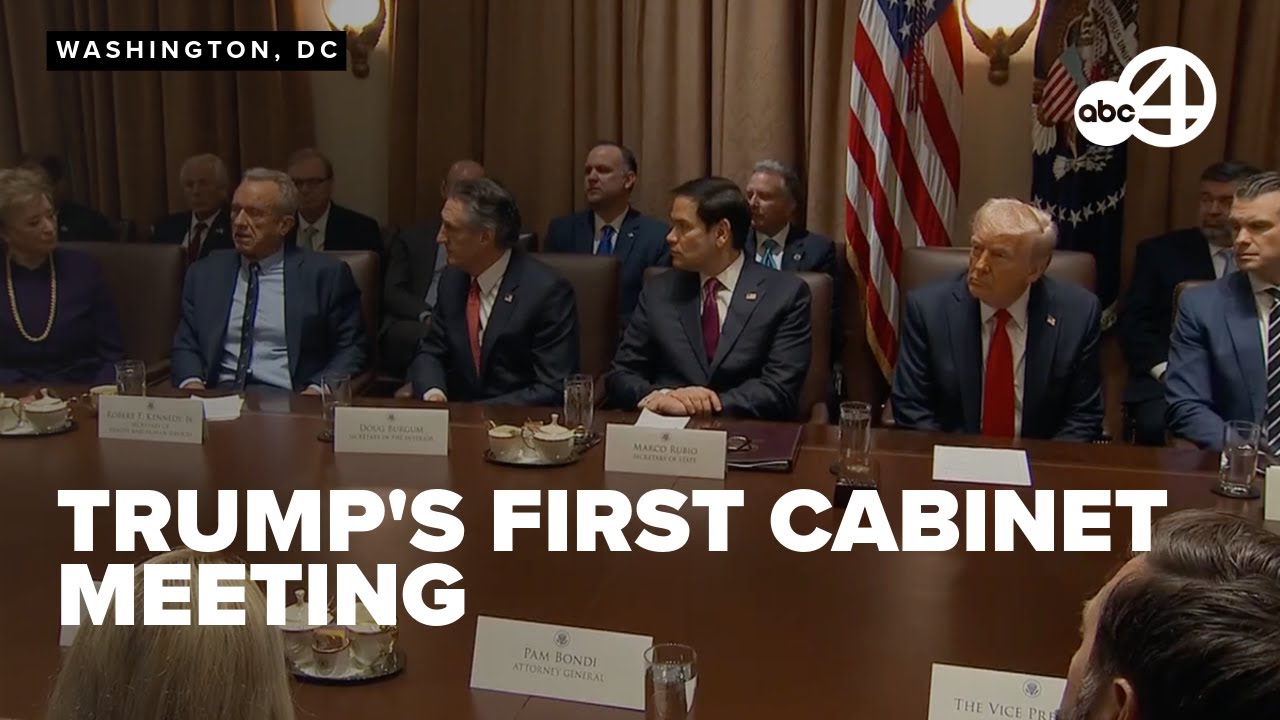
The evening air outside was crisp, carrying the sharp bite of early February as it wove through the streets of Washington, D. C. The city, always buzzing, felt particularly charged tonight.
Just blocks away, the Capitol stood illuminated under a navy blue sky—a silent witness to the kind of political battle that was unfolding, not in a congressional chamber, but inside the studios of the American Pulse. Inside, the warm glow of studio lights cast long shadows on the polished wooden table where microphones stood poised like sentinels, waiting to capture the evening's words. The hum of radio equipment mixed with the quiet murmurs of producers and technicians working behind the glass.
Chris Bennett, the show's veteran host, adjusted his headset, the weight of the moment settling over him. This wasn't just another broadcast; this was a statement, a confrontation, and, depending on who you asked, maybe even a warning. Across from him, Donald Trump sat relaxed but focused, his signature confidence evident in the way he leaned slightly into the microphone.
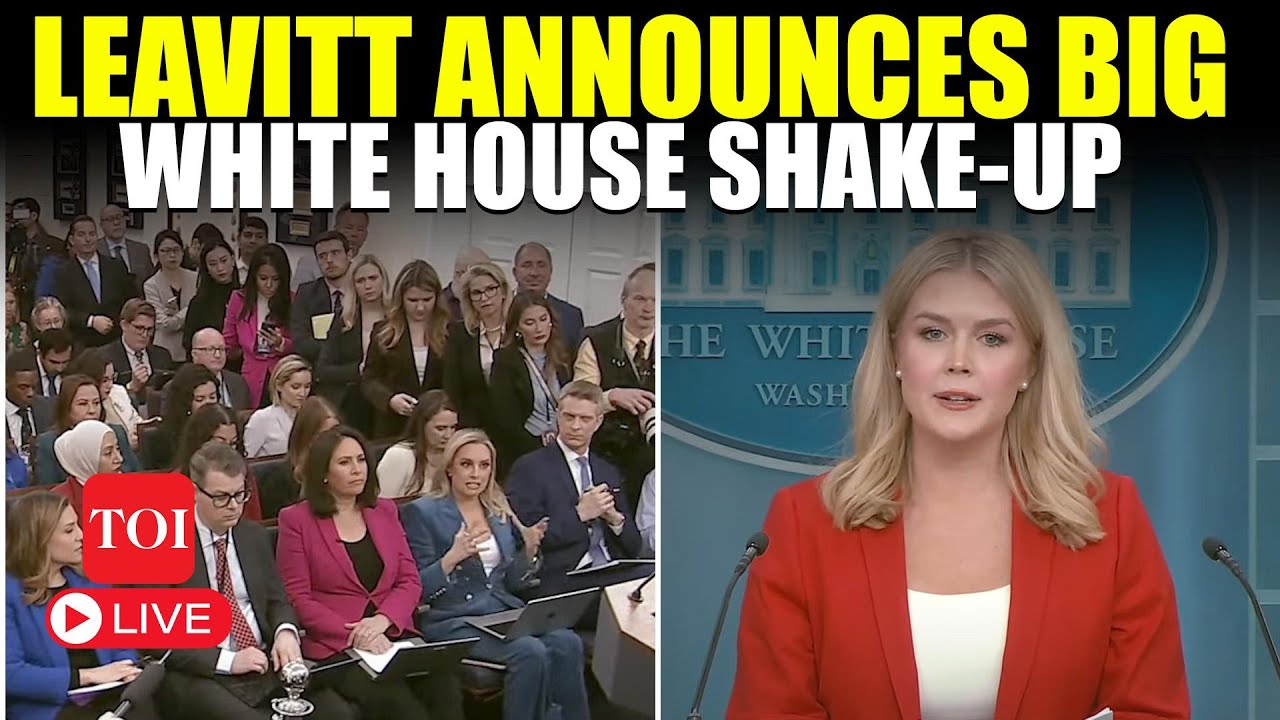
Next to him, Caroline Leavitt, sharp-eyed and prepared, glanced briefly at the notepad in front of her, but she already knew exactly what she wanted to say. Beyond them, a semicircle of reporters from CNN, ABC News, The Washington Post, and other major outlets occupied the press row, their notepads and recording devices at the ready. They weren't just here to listen; they were here to push back, to challenge, to hold ground in what was certain to be a clash of political wills live on air.
Chris took a steadying breath before leaning into his microphone, his voice calm yet edged with anticipation, filling the room. "Good evening, America. Welcome to the American Pulse live.
If you're just tuning in, buckle up, because tonight's conversation is not for the faint of heart. " A few quiet chuckles from the press section. "Joining us in the studio is the 45th president of the United States, Donald J.
Trump, and former White House Press Secretary Caroline Leavitt. And of course, we're joined by members of the press—representatives from some of the biggest news outlets in the country—who will have the opportunity to ask their questions directly. But before we get into that, let's start with the issue at hand.
Mr President, you've made it clear that states that do not comply with federal law regarding transgender athletes will face consequences. So let me ask you straight: what happens if a governor refuses to enforce your policy? " Trump didn't even pause; his response was immediate, unwavering.
"Well, we are the federal law. " A ripple of reaction ran through the room; some journalists blinked, others scribbled furiously. Chris held up a hand, signaling for the discussion to continue.
"Clarify that for us, sir. " Trump's gaze didn't waver. "Well, they better do it.
" Chris leaned in slightly. "And if they don't? " Trump's voice remained steady, almost casual, yet there was no mistaking the weight of what he was saying.
"They better do it because they're not going to get any federal funding at all if they don't. " A hushed tension settled over the studio. From the press row, Sarah Collins of CNN was the first to react.
"So just to be clear, you're saying any state that refuses to comply will have its federal funding cut off entirely? " Trump nodded, his tone matter-of-fact. "Every last cent.
" Chris glanced over at the press section, already anticipating the next challenge. He didn't have to wait long; Mike Reynolds of ABC News pressed his mic. "And what happens to those governors, politically speaking?
" Trump exhaled sharply, as if the answer was too obvious to even explain, then with a slight smirk, he delivered his response. "Well, enjoy your life after, governor, because I don't think you'll be in elected politics much longer. " The room was silent for a split second, then the press pool erupted into hushed but frantic murmuring—pens flying across pages, fingers tapping at keyboards.
And just as Chris was about to steer the discussion forward, another reporter's voice cut through. "And I think this is ABC again. " Chris turned toward the new voice, giving a slight nod.
"Go ahead, let's hear it. " The conversation was far from over; in fact, it was just beginning. The studio remained charged with energy.
The debate had escalated from governors defying federal law to a broader ideological battle, but Chris Bennett, a seasoned host, knew where the conversation was headed next. He adjusted his mic, his eyes shifting toward Donald Trump, who sat unfazed, waiting. "Mr President," Chris began, his voice measured, "we've talked about states that don't comply; now let's talk about the policies themselves.
There's been a lot of backlash on both sides regarding men competing in women's sports. You've been vocal about this issue; why? " Trump straightened slightly, placing both hands on the table.
His response was immediate. "Because it's insane, because it's unfair, and because—Chris, everyone knows it. " A few murmurs rippled through the press row, but Trump didn't pause.
"Let me give you an example. There was a women's weightlifting record that hadn't been broken in 19 years. Then, one day, a guy walks in—someone who transitioned—and he shattered that record by a hundred pounds.
" Chris leaned in slightly, fingers interlaced. "And you believe that—? " Trump cut him off.
"I know that, and so does anyone with a functioning brain. " From the press section, Rebecca Langston of The Washington Post was quick to respond. "Mr Trump, some would argue that these athletes are simply competing as their true selves, that they're following medical and legal processes to transition and should be respected for that choice.
Are you dismissing that entirely? " Trump exhaled sharply, shaking his head. "Rebecca, this isn't about feelings; this is about biology.
You can change your name, you can change your pronouns, but you can't change reality—a 6'2", 220 lb biological male competing against women. . .
" "Isn't an even playing field; it's a scam. " Chris glanced at Caroline Levit, who had been silent so far. "Caroline, I imagine you have something to add here.
" Levit nodded, turning toward the press. "This isn't about respect or identity; it's about fairness, and fairness isn't subjective. We're watching women who train their entire lives get their dreams ripped away in a single day.
We're seeing scholarships, titles, and records stolen. And the worst part? The very people who claim to fight for women's rights are silent.
" A slight pause settled over the room. Then Mike Reynolds from ABC News leaned forward. "Mr President, you're suggesting there's no way to make this fair.
What about regulations, weight classes, hormone requirements? " Trump scoffed. "You can regulate it all you want, Mike.
You can create as many guidelines as you like. At the end of the day, if you put a biological male in a competition with biological females, he wins every time. That's just science.
" Chris shifted slightly in his chair. "And your solution is? " Trump didn't hesitate.
"Ban it completely. No exceptions. " No one in the press pool seemed surprised, but that didn't mean they weren't ready to challenge him.
Sarah Collins from CNN spoke up. "So, if a state refuses to ban it, if a governor disagrees. .
. " Trump leaned forward, his voice lower now but somehow even more resolute. "Then they lose their federal funding.
Simple. " Chics hailed, slowly scanning the room. The tension was thick.
This wasn't just another policy debate; this was a battle line being drawn, and the fight had only just begun. The tension in the studio hadn't faded. Trump's bold statements on transgender athletes had ignited a fierce debate, but he wasn't done yet.
Chris Bennett adjusted his posture, fingers lightly brushing against his notes. "Mr President, you've made it clear that this ban is necessary to protect women's sports, but some argue that it's too extreme, that there are ways to ensure fairness without completely excluding transgender athletes. Do you believe there's any possible way to strike a balance?
" Trump shook his head immediately. "No. The only way to solve this problem is to ban it entirely, because if we don't, it's only going to get worse.
" He leaned slightly into the microphone, his voice firm. "Let's look at reality. We put a fan in place, and it was necessary to protect women.
If you watch the Olympics, you saw two transitioned athletes competing in women's boxing. They stepped into the ring, and it was brutal. " The room fell silent, waiting for him to continue.
"There was an Italian female boxer, a real female boxer, who had trained her entire life to get there. She faced a transgender opponent, and after one punch, she immediately said, 'No, no, no, no more. ' She had never been hit like that before.
" Chris raised an eyebrow. "Are you saying she quit the match after just one punch? " Trump nodded.
"A simple left jab, Chris. Not even a hard punch, but she got hit so hard that she immediately said, 'I can't do this. '" From the press section, Sarah Collins pressed her mic button.
"Mr Trump, that might be one isolated case. Are you saying there are no female boxers who can compete fairly? " Trump let out a small chuckle, but there was no humor in his expression.
"Sarah, they forced her to go back in. They pushed her out there again. They told her, 'Go back out, you'll be fine, you can do it.
' And guess what? She got hit again. This time, she went down immediately.
And when she said, 'No, no, that's it,' she meant it. She didn't want to die in the ring, and that's the craziest thing I've ever seen. " No one in the room spoke immediately.
Chris Bennett leaned forward, his voice lower. "Mr President, it sounds like you're saying the people making these policies are ignoring reality. " Trump let out a dry laugh.
"Chris, they're not just ignoring it; they're pretending they don't see it. They know a biological male has an undeniable advantage, but they still push women into unwinnable situations. And when it becomes impossible to deny, what do they do?
They say nothing. " Caroline Levit, who had been quietly listening, nodded in agreement. "What frustrates me the most is that these same people always talk about protecting women, but when a female athlete gets knocked out by a transgender competitor, they go completely silent.
" Chris slowly nodded, turning back to the press. "All right, does anyone want to challenge that? " Mike Reynolds from ABC News immediately raised his hand.
"Mr President, but isn't this just one example? If the sport had clearer regulations. .
. " Trump cut him off, his eyes sharp. "Mike, how many examples do you need?
How many female athletes need to walk away in pain? How many records, titles, and scholarships need to be taken away before you admit this is a real problem? " Silence.
Chris Bennett crossed his arms, taking a deep breath. "Your stance is clear, but the bigger question is, who is going to step up and fix this? " Trump leaned back, his voice lower but no less firm.
"We will. And for those who try to stand in the way, they're about to realize that America has changed. " Chris scanned the room.
No more frantic typing. No more shuffling of papers. Everyone was just waiting to see what would happen next.
The tension wasn't just inside the studio anymore; it stretched across state lines, through the airwaves, straight into the office of Maine's Governor, Ethan Carter, who was now joining live via phone. Chris Bennett adjusted his headset, the faint crackle of the call feeding through the speakers. "Well, ladies and gentlemen, this conversation is about to get even more interesting.
Joining us now live on the line is Governor Ethan Carter of Maine. " A slight pause, then the governor's voice came through, calm, steady, but firm. "Good evening, Chris.
I appreciate the opportunity to. . .
" Chris exchanged a glance with Trump, who looked completely on phase, as if he had expected this all along. “Mr President,” Chris continued, “it seems you've got the governor's attention. Go ahead.
” Trump didn't waste a second. “Well, Governor Carter, let's get straight to it: Are you going to comply with this policy? ” There was a slight pause on the line, then Carter's voice remained neutral.
“My administration follows all state and federal laws currently in effect. ” Trump smirked, shaking his head slightly. “Well, we are the federal law.
” The room froze for a moment; the weight of that statement settled heavily over the broadcast. Chris leaned in. “Governor, do you care to respond?
” Carter didn't hesitate. “I respect the president's authority, but my duty is to the people of Maine, not to political pressure. My administration will make decisions based on what is best for our state.
” Trump leaned into the mic, his voice sharper now. “Well, Governor, then you better do it. ” Silence.
Trump continued, “Because if you don't, Maine won't be seeing any federal funding. ” A brief crackle on the line, then Carter's voice, still measured: “With all due respect, Mr President, I don't respond to ultimatums. ” Trump chuckled, shaking his head.
“Oh, this isn't an ultimatum, Governor. This is reality. ” He paused, then delivered his next words slowly, deliberately.
“Oh, and by the way, your people, even though they lean liberal—although I did very well there—don’t want men playing in women's sports. ” Chris turned toward the press row, watching as reporters absorbed the moment. “So, Governor, do you believe your citizens actually support transgender athletes in women's competitions?
” Carter exhaled before answering. “I believe my citizens expect fairness, and fairness means upholding laws that reflect our state's values. ” Trump nodded slightly, leaning back.
“Then you'll have a decision to make. ” The line crackled softly. A few seconds passed, then Carter said, “I think I've made my position clear.
” A sharp click echoed through the studio as the line with Governor Ethan Carter went dead. For a split second, silence hung in the air. Then Chris Bennett raised an eyebrow, scanning the room.
“Well, that was something. ” Behind the glass of the control booth, producers were scrambling, checking the connection, but inside the studio, all eyes were on one man: Donald Trump. He leaned back in his chair, completely unfazed, as if the exchange had been nothing more than a warm-up.
Then he spoke without waiting for anyone to ask the next question. “Every state has complied,” Trump said, slowly and deliberately, letting the words sink in. “Good,” he paused, then glanced toward the cameras, his voice steady but firm.
“And Maine? ” He shrugged. “Governor Carter thinks he can play games with this.
Let me make something very clear: I'll see him in court. ” A few reporters immediately sat up straighter, pens flying across their notepads. Chris tilted his head.
“You really believe this lawsuit will be successful? ” Trump didn't hesitate. “Oh, I'm looking forward to it, Chris.
” There was no anger in his voice, just sheer confidence. “This is going to be an easy one—a real easy one. ” He let his gaze sweep across the press section, almost daring someone to challenge him.
No one did. Then Trump went further. “And as for Carter,” he exhaled sharply, shaking his head, “enjoy your life after Governor, buddy, because I don't think you'll be in elected politics much longer.
” The tension in the room thickened. Chris glanced around, his journalistic instincts kicking in. “So you believe Governor Carter's political career is over?
” Trump shrugged. “Chris, people aren't stupid. They don't want politicians standing at podiums talking nonsense; they want leaders.
They want someone who's actually going to stand up for them. ” He shook his head. “Carter?
He just lost everything. ” Some reporters were still typing frantically while others exchanged quick glances. Chris, ever the host, turned back to the press section.
“All right, who's next? ” Silence. Trump smirked; he knew they wouldn't be able to resist writing about this.
The only question was how would they spin it? The low hum of the studio microphones filled the air, the slight rustle of papers and clicking keyboards the only sounds cutting through the silence. Chris Bennett, ever composed, adjusted his headset and flipped through his notes.
The discussion was far from over; it was simply shifting focus. “Mr President,” Chris began, his voice smooth but direct, “we've covered compliance at the state level, but let's go deeper. Title IX, as you know, there's a legal framework in place.
Every state has a responsibility to comply. How do you respond to those who argue states should have the freedom to make their own decisions on this? ” Trump leaned slightly into the microphone, his voice carrying that unmistakable authority.
“They don't get to make that decision. They have an obligation—a legal obligation. ” The studio seemed to tighten around his words.
“And let me tell you something: we will be enforcing it aggressively, because this is about protecting American citizens. ” The words hung heavy in the air; a few pens scratched against notepads. The press was listening closely.
“Says it like it is,” Trump added, almost as an afterthought. Chris nodded, then motioned toward the press pool. “All right, next question.
” A small burst of static preceded the next voice. A journalist from ABC News stood up, clearing his throat before speaking into the microphone. “Mr President, let’s shift gears to the economy.
Some members of Congress in red districts—your strongholds—are facing pushback from voters at town halls. ” Trump's eyebrow twitched slightly. “About what?
” the reporter continued, his tone measured. “Americans voted for you based on immigration and the economy, but now some voters say they're frustrated by mass layoffs. They don't like what Elon Musk and other executives have been doing.
What do you say to those concerns? ” Trump tilted his head, studying the journalist. A chess player considering his next move.
“Who do you work for? ” The reporter hesitated just for a second. “I work for ABC News, sir.
” There was a beat of silence, then a short, dry chuckle from Trump. “ABC News? No wonder.
” A few scattered murmurs rippled through the press section. Chris, ever the professional, tried to steer the conversation back. “Mr President, if you could directly address the concern…” Trump waved a hand dismissively, cutting in, “Let me just tell you, I have today the highest poll numbers I've ever had; the highest poll numbers of any Republican president ever.
” The ABC reporter parted his lips as if to counter, but Trump didn't give him the chance. “Oh, and not according to The View, I know. But we haven't even checked the Democrats yet, and that's what I was just told.
” A small smirk tugged at the corner of his mouth. Chris took a breath, glancing around the room. Some reporters were furiously typing; others sat frozen, watching, waiting.
This wasn't just a conversation anymore; this was a battleground, and Trump—he was winning. Chris Bennett kept his gaze steady. “Mr President, back to the economy.
There's been criticism, but there's also strong support for your policies. How do you respond to this divide? ” Trump didn't hesitate.
“They like the job we're doing; they like the job Elon's doing. ” A few reporters exchanged glances, sensing where this was headed. “He's doing something a lot of people wouldn't have the courage to do.
” Trump leaned back, eyes sharp. “We need to streamline this country; we need to streamline…” He paused for a moment, nodding slightly. “You know why?
Because we want our country to survive and thrive. ” His voice hardened, every word landing with weight. “And we're uncovering billions and billions of dollars in waste, fraud, and abuse—billions.
” He raised his hand slightly, as if the number was too massive to fully grasp. “And I'm talking about numbers you wouldn't believe. Then a small smirk—remember this: we haven't even started yet.
” Chris Bennett nodded toward the press pool. “Mr President, there's been backlash about some of your policies. ” Trump cut in immediately.
“And people got a problem with that? Well, it's actually just the opposite. ” A few reporters leaned in slightly.
“We've polled it, and guess what? People are thrilled. They can't even believe it's happening.
” Trump gestured slightly as if the whole debate was ridiculous. “And here's the thing: it won't affect many people; it'll only affect the ones who get caught stealing. ” He let that sink in for a second, then shook his head with a small smirk.
“I'll get to the press secretary in a second, but first I just got to show you guys something. ” His eyes glinted with amusement. “This guy's a stand-up comedian.
” One joke. The press murmured, unsure if he was joking or setting up another punchline. Before anyone could jump in, a journalist from the front row spoke up.
“If I could, sir, just a quick question about Cash Patel. He's set to be sworn in soon as your new FBI director. Can you share your reaction to that, and what do you say to concerns from agents across the country who fear they'll be fired en masse simply for doing their jobs?
” Trump didn't hesitate. “No, I—I think the agents are very happy about Cash. In fact, they led the charge for Cash.
” He grinned. “And what a great name, right? ” A chuckle rippled through the room.
“One of the reasons I like Cash, one of the reasons I wanted him in, was because of the respect the agents have for him. And I think he's going to go down as the best ever in that position. ” Chris raised an eyebrow.
“You seem pretty confident in that. ” Trump nodded. “And it turns out he was very easy to get approved.
” He shrugged. “You know, I wasn't sure. He's a tough guy, a strong guy; he's got his opinions, and I wasn't sure how it would go.
” He gave a small knowing smile. “But he went through very smoothly. ” Trump glanced around.
“I don't know if he's in the room right now, but he's going to be here very shortly. ” Then, with a slight smirk, he added, “I'm saying the right things, huh? I can't speak too badly about him.
I better be careful. ” A few chuckles spread through the press section. Chris exhaled, shaking his head slightly.
“Well, Mr President, that's certainly one way to put it. ” The discussion wasn't slowing down, and Trump—he was just getting started. Trump tapped his fingers lightly on the table as if deciding just how much of the truth to share.
He wasn't in a rush; the room was waiting on him. “I'll say this about Cash Patel, and Howard understands this too. ” A few reporters perked up immediately, pens at the ready.
Trump never mentioned someone without a reason. He leaned in slightly, lowering his voice just enough to signal that what he was about to say was worth listening to. “And I think this is ABC again, isn't it?
” A few scattered chuckles. Longtime watchers knew Trump had a habit of calling out the press mid-answer, and ABC News was often at the top of his list. He raised a hand as if to say, “Hold on, I'm not done yet.
” “They're bringing in tremendous dollars. They're going to be spending a lot of money in the United States—more than they ever have, by a factor of ten. ” He arched an eyebrow, as if even he was impressed by the number.
“Not bad, right? ” His eyes swept the room, landing on a reporter who was furiously scribbling notes, barely looking up. “Hey, what are you doing?
” The room froze for a second. The journalist looked up slightly, caught off guard. Trump tilted his head, voice dropping just enough to make the moment.
. . "Sharper, have you ever reported that my administration signed a memorandum to counter digital service taxes?
" The journalist flipped through his notes, scrambling for an answer. Trump smirked, shaking his head. "What are you doing, then?
" He squinted slightly, as if piecing something together. "Are you reading it? " A few reporters exchanged glances, some letting out quiet laughs.
Trump tilted his head, clearly amused. "Can't you just say it without reading? " He shrugged, his voice carrying that signature mix of mockery and challenge.
"You know, if I were a journalist, I think I'd probably know the important stuff without having to flip through a script, right, Chris? " Trump glanced at Chris Bennett, who maintained a perfectly neutral expression—the kind only a seasoned host could manage in moments like this. Chris cleared his throat, bringing things back into balance.
"Mr President, I believe the reporter was just verifying his information. " Trump shrugged again, flashing a knowing smile. "Oh, yeah?
Or maybe he just heard about it for the first time. " This time, a louder wave of laughter rippled through the press section. Some reporters typed furiously, trying to keep up with the rapid pace of the exchange.
Trump leaned back in his chair, arms crossed. The room suddenly quieted again, not because there weren't more questions, but because everyone wanted to hear what he'd say next. Chris Bennett glanced at the clock.
The press briefing had stretched well into the evening, but the tension in the room remained thick. Trump was still seated, relaxed, one arm draped over the chair, his gaze sweeping across the press corps, but the focus was no longer on him. Chris Bennett, maintaining his role as moderator, gave a slight nod to a Washington Post reporter, who immediately seized the moment.
"Caroline, this question is for you. " Caroline Levit tilted her head slightly, a glimmer of challenge in her eyes. "We're hearing from constituents, even in traditionally red districts, who are raising concerns about what they call a 'chainsaw approach' to job and budget cuts.
They claim it's being done too hastily, without organization, and in an overly aggressive manner. How do you respond to that criticism? " Trump leaned in slightly, narrowing his eyes as he watched Caroline's response, as if he himself was anticipating how she would handle it.
Caroline didn't waver; if anything, a hint of a smile played on her lips. "I love this," she let the words hang for a beat, ensuring everyone in the room was waiting on her next move. "I love how the media cherry-picks a handful of critics and tries to pass them off as the voice of the entire country when, in reality, the overwhelming response from the American people is full support for what this administration is doing.
" The reporter raised an eyebrow, likely preparing to interrupt, but Caroline was already ahead of him. "If you actually look at the numbers," she turned slightly, her eyes scanning the press pool as if daring anyone to challenge her, "70% of Americans, according to CBS, believe that President Trump is delivering on the promises he made. 70%!
" The room fell silent. Caroline pressed her lips together briefly, then shook her head slightly. "So it should come as no surprise that this administration is committed to cutting waste, fraud, and abuse.
The president campaigned on that promise. The American people elected him on that promise, and now, for the first time in a long time, they're seeing a president who actually delivers. " The reporter still attempted to cut in, but Caroline simply raised an eyebrow, waiting for a more substantial question.
Chris Bennett smirked slightly, shaking his head, then turned to the reporter. "Would you like a follow-up? " Silence.
Trump let out a quiet chuckle, then leaned toward his mic. "She's good, isn't she? " A few reporters typed furiously; others simply sat watching, waiting.
The room now belonged to Caroline. The press briefing had gone long into the evening, but the energy in the room hadn't faded. Trump was still seated, observing, waiting as the press pool continued their questioning.
Chris Bennett glanced at the lineup of reporters, but before he could call on someone, Trump leaned into his mic, his tone sharp and deliberate. "You know, this is something the Democrats have been promising for decades. Decades!
And yet, not a single one of them got it done. " He leaned back slightly, letting the words settle before delivering the punchline. "President Trump is the first president to actually do it.
" A few murmurs in the crowd; some reporters were already furiously typing. Chris raised a brow, amused, then nodded toward a reporter from NBC News, who wasted no time. "Mr President, speaking of getting things done, wasteful spending is one thing, but fraud is a crime.
So, has this administration turned over evidence of fraud to the Justice Department, and when should we expect to see indictments? " The question hung in the air for a second, but before Trump could answer, Caroline Levit stepped in. "That's a clever question," she said smoothly, a knowing glint in her eye.
She let the room breathe for a second before locking eyes with the reporter. "But let's be clear about something first. I think all Americans would agree that taxpayer dollars shouldn't be going toward things like"—she paused, raising a brow—"funding mastectomies in mosm Beek.
" The room shifted slightly; a few reporters glanced at each other, some scribbling notes. "Or Dei programs overseas. " She shrugged, her tone light but cutting.
"I think it's fraudulent that the American government has been ripping off taxpayers in this way for decades, and I think it's fraudulent that for years nobody has done a thing about it. " Trump grinned slightly, watching her work. "But here's the real fraud," Caroline continued.
"If you actually look at the numbers—according to an Inspector General report from the Social Security Administration—we're talking about $71 billion in fraud over multiple years. " Tilted her head, waiting for the inevitable pushback. Sure enough, Peter from The New York Times leaned forward to be clear that $71 billion was reported from 2015 to 2022, not in a single year.
Caroline didn't hesitate. "Yes, Peter, $71 billion," she gestured lightly, "not in one year, just to be clear—one report covering multiple years. " Then, just as before, she leaned in.
"Are you defending $71 billion in fraud, Peter? " Silence. She turned, glancing at Trump with an almost playful smirk.
"This reminds me of something you said earlier, Mr President. " Trump raised a brow, amused. "You said we were finding billions and billions of dollars in fraud, waste, and abuse.
" He nodded, his voice casual but firm, "And we haven't even started yet. " Caroline snapped her fingers. "Exactly!
" She turned back to the press. "The American people, who are struggling with an inflation crisis, don't want their tax dollars going toward pointless DEI programs overseas. They also don't like knowing that $71 billion in fraud has been floating around Social Security.
That's a problem that needs fixing. " She folded her arms. "And President Trump is fixing it.
" Peter tried again, but Caroline simply raised an eyebrow, waiting for a question worth answering. Chris Bennett smirked. "That's your fifth question, Peter.
Let's move on. " He gestured toward another journalist. "Elena, do you have anything to add?
" Before she could speak, Trump leaned into his mic again. "You know, I've noticed something. " He gestured broadly at the press pool.
"The media seems to be the only group of people who are actually against cutting waste, fraud, and abuse. " He shrugged. "I don't get it.
" A few uneasy chuckles filled the room. "We won't be deterred," Caroline added, crossing her arms. "Not by the press, not by the people who are adamantly opposed to cutting government waste, and certainly not by those who have spent decades allowing it to happen.
" Trump grinned, nodding in agreement. Chris leaned into his mic, shaking his head with a grin. "There's nothing quite like a conservative woman taking control.
" Trump let out a quiet laugh, his expression one of pure approval. Caroline had just shut down the press again. The intensity in the room hadn't faded, and neither had the back-and-forth between the administration and the press.
Trump, still seated but clearly engaged, leaned into his mic. "Let me make something very clear. Just like we've told our Russian counterparts," his voice was deliberate, controlled, "this administration is focused on stopping the fighting and moving forward.
We can spend all day arguing about what happened in the past, but that's not going to change the future. " A brief pause, then suddenly, from the crowd, chaos. Two reporters started speaking at the same time, their voices clashing over each other.
Chris Bennett raised a hand to regain order, but before he could, Caroline lit stepped in. "Reagan," her voice cut through the noise, "I just called on you. Go ahead.
" The room hesitated, but then another voice, Deanna from CNN, tried pushing through. Caroline whipped around, eyes narrowing slightly. "Shut up, Deanna.
" A few stunned looks; some reporters shifted in their seats, others glanced toward Chris Bennett to see how he'd react. Chris simply leaned back, clearly letting this moment play out. Caroline folded her arms.
"Excuse me. " She took a beat, scanning the room before speaking again, calm but firm. "I'm taking control here.
" Silence. She held her ground, letting the room adjust to the fact that she wasn't going to be talked over. From the side, Trump smirked, leaning into his mic once again.
"She's good, isn't she? " Chris Bennett finally spoke up, chuckling as he did. "Well, you heard her.
Reagan, go ahead. " The room reset, but the message was clear: Caroline Levit was running the show. A hush fell over the room, not out of respect, but from some closer to acceptance.
The reporters, usually armed with follow-ups, sat with fingers hovering over their keyboards, searching for the right spin. But what could they write? They had just been outmaneuvered again.
Trump leaned back, the hint of a smirk playing at his lips. He had seen this before, this moment when the press realized they had lost control of the room. Caroline stood tall, her expression unreadable, but there was something unmistakable in her stance.
She knew. Chris Bennett, ever the professional, finally cleared his throat, glancing at the clock. "Well, I think that about wraps it up.
" The cameras were still rolling, the world still watching, but the fight was over. Outside the studio, the night air had turned crisp—the kind of sharp coolness that only comes after a storm has passed. The city hummed, oblivious to what had just unfolded within these walls.
Headlines were already being typed, tweets drafted, but none of it would change the reality of the moment: the press had come prepared to corner Trump; instead, they had witnessed a masterclass in dominance. And as the lights dimmed and the microphones clicked off, one truth remained undeniable: this was their arena, and tonight they owned it.