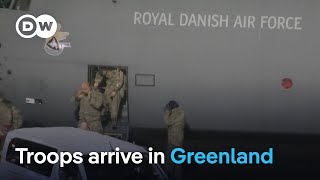
Now, as climate change alters weather patterns and landscapes, it's also reshaping the geopolitical stakes in places where resources were once hard to reach, like the Arctic. American and Danish officials are expected to meet amid President Trump's threats to take over Greenland. Though Greenland itself has made it clear it rejects the idea.
>> Greenland big eyes. I would say >> Greenland does not want to be owned by the USA. Greenland does not want to be governed by the USA.
Greenland will not be a part of the USA. We choose the Greenland we know today which is part of the Kingdom of Denmark. Now we are faced with a geopolitical crisis.
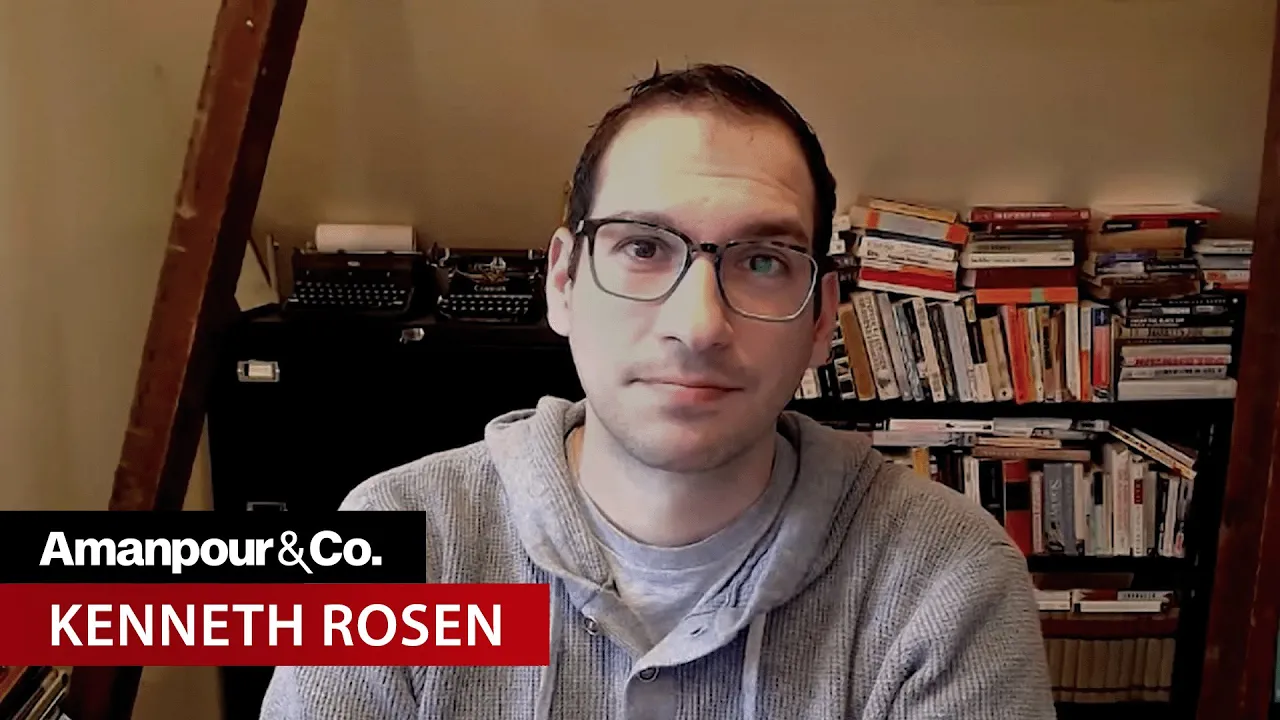
And if we have to choose between the USA and Denmark here and now, we choose Denmark. >> The US focus on the mineral-rich territory signals a growing interest in the changing region, including from other global superpowers like Russia and China. Journalist Kenneth Rosen speaks to Walter Isacson about his new book on the topic and how national security could transform in the Arctic.
>> Thank you, Biana. And Ken Rosen, welcome to the show. >> Thanks, Walter.
>> You have this great new book out, Polar War, which is actually quite chilling in many ways, reading about you in the uh far north. Uh but tell me, let's start with to what effect is climate change having on the geography of the far north of the Arctic. It's really changing everything in the circumolar north.
Uh what once was significant sea ice that covered the Arctic Ocean um at the North Pole during the summer is now dissipating and melting over the summers to the point where scientists believe by 2030 or so that sea will be completely ice free. Um that's probably the most dramatic effect we're seeing. But with the receding of that ice along the coastlines of say Alaska and the barren sea and elsewhere in the Arctic Ocean, uh the communities that live along the shorelines are now facing no more protection from the ice, protection from um typhoons and and other weather events that once were trapped underneath ice or kept at bay because of the ice.
>> In your books, mainly about the struggle for power, all the spies being involved. So tell me how what you just said affects national security of the United States. So, as that ice melts and perafrost thaws, um, one of the main concerns, one of the driving components of a of a power competition in the high north is, um, the opening of sea channels, commercial seaways, principally above, uh, Russia's land border with the Arctic, uh, what they're calling the northern sea route.
Um it's a significant change because ships coming from East Asia to Europe would sever about 10 to 12 days off their journey. Um a huge impact on shipping and the cost of shipping um across across what was the Sewish Canal and could now be a potential alternative. >> So this week of course the big news is that Secretary of State Rubio is going to negotiate.
Tell me about that trip and what you think they're really trying to achieve there. >> Well, as you know, Walter, it came on the heels of um President Trump stating after um attacking Venezuela and unseeding Maduro that he wanted Greenland again, which was not something that he has not said before. He said it several times both in his first presidency and now um the second term.
Um and it seems as though he was considering a military option but now is potentially looking at a diplomatic option. Um he's gone as far as saying that he would pay for Greenland. And of course, Walter, having read the book, you know that um the US has a long history of wanting Greenland and uh trying to acquire it or or having some control over it during World War II.
Um, so it's not out of the realm of possibility that a president would want it, but to but to do it in such a bicose way is is a little troublesome when as we mentioned earlier, the the region's in a in a strange state of affairs already given climate change. >> Well, yeah, you mentioned that we've had a long history of this. I didn't realize that right at the end of the Civil War in 1867, we're buying Alaska, which is somewhat of a, you know, an analogy to this.
And we're also thinking let's also buy Greenland. So explain how long we've been um thinking about this. >> Well, Secretary Seard um President Lincoln's Secretary of State was the one who wanted to buy what a lot of people in Congress, a lot of Congress, congressional members thought was an ice box, right?
It would just be this place that would end up getting giving nothing to the US. Just be this total tear on resources and a strain on the economy. Um but eventually turned out to be a boon for the US as as we know with the Trans Alaska pipeline.
>> And you're talking about Alaska. Yeah. Right.
>> It's just Alaska. And and so after that they were considering the Congress and and the president were considering well maybe we shouldn't have to fight for a lot of the territory that we won. Maybe we could actually go out and purchase it.
They had considered buying Canada as the UK was rolling back its territories overseas. Um and one of those other potential pro parcels of land was Greenland. um and turned out to be a muchneeded uh part of our national defense during World War II.
>> And President Truman, I think, was thinking of offering a hundred million dollars, I read. >> Yeah. Now they're talking about, you know,5 billion or just a couple trillion dollars for Greenland.
And it's it's almost a moot point because the Greenlanders have said, the in people of Greenland have said time and again that they're not for sale. They want to do business. They certainly want to open up their economy.
They're looking at expanding their tourism and fishery industries, but um an outright takeover, whether it be through cash or arms, is not quite beneficial to their interest, and they know that. >> So, if there's not going to be an outright sale, what do you what could there be that makes some sense? Is there anything that the Trump administration could get uh other than what we already have in our treaties, which is military bases?
>> I think it's an expansion on what we already have. I think that the Trump administration hasn't outlined clearly that the agreements we maintain with Denmark is that we can build more bases, that we can expand our military footprint there, that we can get leases for mines, and that we can open up the mining industry if we want. Now, that's a whole different conversation about the implausibility of operating mines in the high north.
But we already have a really great relationship. We being the Americans have a great relationship with Denmark that could foster exactly the things that President Trump is talking about without the excess need of of of taking over another country or shelling out half a trillion dollars a year to sustain that economy, which is what Denmark already does. >> Well, wait.
You said that it would be impractical perhaps to do a whole lot of rare earth and other mining in the high north. Uh why is that? Is the infrastructure uh impossible?
>> Well, the infrastructure is impossible because there's the short seasons, right? Um it's it's dark for all of winter. The the shoulder season of summer is uh four or five months where you can get boats in and equipment in.
And um that is long before you even build out roads or the infrastructure needed for mining. I mean, Walter, Greenland is two and a half times the size of Texas and it has 100 miles of roads. Um so there would be a lot of development that needs to go into it.
Um there's already difficulties in Alaska and um northern Canada when it comes to building out military bases or rare earth mines and um you know looking down the the at the longevity of such a place you need to look at 25 50 years rather than the normal 5 10 15 years of when a mine's going to be profitable. So there's a lot a lot more that goes into it and there's got to be a lot more investment over a longer period of time. Let me read you a sentence from the book which deals with Russia.
You say, "Russia is leading the charge with more military bases in the Arctic, greater competency in cold weather operations, and a fleet of ice breakers that dwarfs the maritime Arctic fleet of every other nation. So, is it uh inevitable that Russia has a huge military advantage uh throughout the Arctic? " They certainly have the positioning um and they have the equipment.
Um their ice breakers somewhere north of 50 or so nuclearpowered ice breakers um have a lot more time in the water and are up there more and more frequently. Um whether or not their military capabilities are up to snuff, up to a conflict or or um up to readiness for an event in the high north is is unclear given what we saw in Venezuela with unmaintained um surfacetoair missiles and other equipment. So they certainly >> How does Ukraine their involvement affect their ability in the high north?
Well, I one of the interesting notes that I found from traveling the north is that um a lot of the drone strikes that were undertaken against Kev were initiated from the Koala Peninsula, which is where Russia keeps its nuclear armed forces um and it its bastion on defense. Um so it remains a place of a launch pad for a lot of the military strikes in Ukraine and it could be seen that that would translate to perhaps a launch pad for strikes against uh Eastern or Western Europe or even the United States. You talk about how the Russians are much better with ice breakers, which seems like an obvious uh tool you need for that region still.
Uh and you know, in this area, Ballinger shipyards built a whole lot of ice breakers, but they need to get the magnets and some of the rare earth from China in order to do it. Are we handicapped because of things like that? >> I'm not sure.
A lot of the issues with the ship building was the fact that the US Coast Guard continued to change the designs of the ships as they were being developed. These uh security cutters, these polar security cutters, which is a program long delayed 10 or more years and into 20 years now. Um and that's one of Trump's desires for Greenland is to get those rare earth minerals that would ostensibly fuel some of the development of greater technology in the military.
Um, but I don't think that particularly pertains to the ships themselves, which uh is a whole another mess and nightmare. Lack of funding, lack of Coast Guard enrollment, enlistment, um, and and and loss of of the the admiral leading the Coast Guard only when Trump took office uh, in January of last year. >> You talk about the ships we might need in order to defend parts of the Arctic, the icebreaking ships and all.
It would seem to me, especially having read your book, that this is a good region for drones as opposed to humans, whether it be drone ships, drone warfare. Is something happening along those lines? >> That's a great point.
We haven't seen a lot of development of these autonomous vehicles or autonomous aircraft uh in the area in part because uh the guidance systems are so hampered by this change in magnetic north by um uh digital um guidance versus actual guidance of you know trying to navigate in a place where the compass is spinning non-stop. Um that's why Starlink has proven to be so invaluable in the region because we don't have the US doesn't have the satellite capabilities up in the high north but Starlink does. So when I was traveling with the US Coast Guard in uh the Arctic Ocean just north of Norway um they were in love with the fact that they finally had Starling for the first time and they were testing it out for the rest of the fleet um for the rest of the Coast Guard to see if it would work up there.
So things like that, satellite imagery and um more satellite coverage of the high north is is where they are looking. >> And what about those technologies, Starlink, other satellite technologies? How would new technologies help uh solve this?
And to what extent is uh there a counter uh to that all the spies and the jamming that you talk about in the book? >> Right. So an overreiance on technology is definitely a hindrance, right?
Um but if we can develop more satellites in the region then we have better communications. The alternative to that is what I saw in Ukraine and also what I while reporting in Ukraine what I saw in the high north is that going back to simpler less technologically reliant tools is what's going to save you in the Arctic. more and more uh battalions in the Swedish armed forces are using um land cables or um uh telegram cables to connect radio posts rather than use actual radio signals because of the predelection for the plastics to break in the cold weather for the lines to go down um in a in a supertorm or or the like.
So going back to the simplicity of knowing the Arctic and living in the Arctic and having the tools that are just enough to get you by are probably sometimes are probably sometimes more better than in excess and technology new drones which could ice over if they they fly into the wrong cloud and then and then collapse. >> Well, one of the things you describe is how our bases are languishing that even the old technology is falling apart. Um so specifically to the Pacific Space Base in uh northern Greenland u the runways are buckling every summer as the perafrost thaws.
Some of the buildings are outdated and are collapsing with the perafrost thawing and some of the barracks for the the people who live there. The few people who live there are not even Wi-Fi equipped. Um they were just living in a sort of um tent in the north without the the amenities of a modern life.
And even in Alaska, this was the case with the fences that were surrounding Islesson Air Force Base um becoming exposed to um melting or thawing perafrost and melting ice so that someone could even crawl underneath um a chainlink fence now and get access to the base. >> When you look at China, it's got no border on the Arctic, but they're calling themselves a near Arctic nation. And of course what you describe makes sense to me suddenly which is they could get whole new roots for their entire you know supply chain and trading system if they do it.
What are China's intentions in the Arctic? >> It wants to develop what it's calling the polar silk road um also along that northern sea route to um get a stake in the Arctic. Right now the Arctic Council the primary governing body in the in the high north is composed of eight nations um and China is just an observer state.
So, as long as it can keep pushing its way into the north and find reasons to support Russia and its endeavors, um it can also become a player up there. But ever since Russia's invasion of Ukraine, you know, as we were mentioning in Spalbard, you know, Turkey signed onto the Spalbard treaty. All these other nations are claiming near status and wanting to have a piece of what was traditionally just the lural states and then a few others.
Um so, you know, a lot of different nations are are are making headway. India is making headway and saying, you know, we are an Arctic nation because climate change affects us all. There's a valid argument there.
But as far as cooperation in the high north, search and rescue, fisheries inspections, um that has largely been retained by the the Arctic powers and a lot of them don't want to lose that. >> Well, you say that China is trying to create I love the phrase an Arctic silk road uh through there. It was just a few months ago, right, that they did the first route up there.
So they seem to have much more of a claim than any of these other nations talking about being part of the near Arctic. >> Well, it's a catch 22, right? We let China steam across this northern seaw route.
And actually, South Korea just announced that it was planning on doing um uh one of these routes in the in the coming months from um East Asia to Roderdam. The problem is that western nations can't undertake it because of sanctions and they'd have to face um permits given by Russia in order to even transit that area or face military um buzzing as I mentioned in one of the chapters of the book. Um so while we could potentially have American or Western companies transit that route, the cost of um insurance premiums is really high.
you'd have to somehow evade sanctions and pay Russia for the the sponsorship to be able to go through that route. And you'd have to have the vessels in order to be able to um navigate safely were ICE to appear um and not and stop the stop the vessel in its tracks. So, it's it's something that's possible, I think, but it's also hard to undertake when we're also sanctioning the country that is overseeing that very route.
At the end of the Cold War, we kind of thought that the Arctic in some ways could be a great place of international cooperation. What happened then? And is there any way we could get back to some something like that?
>> Right. Soviet leader M Gorbachov called it a zone of peace, right? Um and now from what from the reporting that I did over the last two and a half, three years, it's become something of a zone of war.
and what we can do to keep it to keep it together to keep that cooperation ongoing. It's very hard to say, Walter. I mean, just with all the recent rhetoric coming out of Washington, I think a lot of people in Denmark and the Scandinavian nations, the Arctic nations more broadly are worried about the next two weeks, let alone scientific cooperation.
They're worried about their own borders and and their own populations. Um, and I think we're we're moving much much farther away from that conversation of how do we get back to uh peace and and cooperation and more toward a conversation of do we need a different framework for managing our international relations up there. >> If we wanted to get back to an era of peace and cooperation and you could have two minutes with Secretary Rubio as he goes on this trip, what would you advise him?
>> I would tell Secretary Rubio that we are stronger together in the north and that it's a long known facility of living in the cold regions that you will come to rely on your neighbor and your neighbor will come to rely on you. Um no matter what kind of relationship you've had, it will always come down to who you know and how well you cooperate together. U we have a lot of assets in the high north and we need to strengthen them not deteriorate the cooperative mechanisms that we do have um in the hopes of getting something that isn't there yet.
>> Ken Rosen, thank you so much for joining us. >> Thanks Walter.