I've worked for some of the most successful entrepreneurs that you can imagine. I have normally been the guy behind the scenes. I've been doing this for 16 years now. In these 16 years, I have noticed some lies that I think a lot of people believe. First one is all views are good views. And first, I want to start with defining what branding and what brand is so that we're all on the same page and then we can kind of move forward from there. So branding I define as a pairing of things. That's just branding. Good
branding is a intentional pairing of relevant things done consistently. The done consistently part is the key and we'll hit on that in a little bit here. Brand I believe is the byproduct of branding. Brand is when your audience inherently associates you and the thing that you are intentionally pairing yourself with consistently. Some examples for this uh Savage Fenty uh this is Rihanna's uh lingerie company and they entered the market in a world where Victoria Secret dominated and all they did was advertise to one body type and what Savage Fenty saw was a massive gap in
the market. And so what they did is in all of their marketing, in all of their product photography, they intentionally paired themselves with body type diversity. They showed women of all different sizes in every one of their campaigns. And it's no surprise that within 3 years they were worth over a billion because they did this. They were intentionally pairing themselves with something over and over and they wanted the audience to inherently associate them. So when they thought of, you know, I can't I don't buy Victoria's Secret or whatever, they would immediately opt to Savage Fenty.
The other classic example that we all know is Nike and Michael Jordan. Nike was a running company. Nobody thought of basketball when they thought of Nike. They paired themselves with Michael Jordan. Greatness in basketball personified. And by doing it, the key is consistently over time, the audience started to associate Nike and basketball. It was no longer just a running company. The consistency is the key part. If he would have worn Nikes one game, it wouldn't have hit. It's the fact that he wore Nikes every night, every game for years that the audience started to see
that. So if we believe that branding and brand are as we just defined, I would argue that there is definitely a world where you could put out a piece of content where you are paired with someone or something that you do not want to be paired with. I do not believe all views are good views. I believe that there are many cases where actually more awareness around a bad pairing for you and your brand hurts more than helps. Pepsi in 2018 released a campaign where they were trying to pair themselves with social activism. This was
during a time in America where there was a lot going on. It was a very sensitive time. They chose Kendall Jenner as their spokesperson for this and it did not go well. They got 1.6 6 million views on YouTube on their upload before they took it down. But the internet is beautiful and they downloaded it and people were uploading it everywhere. By the end of the campaign, it got over 60 million views. This was not good for Pepsi. This didn't help them in any way. These were not all press is good press, all views are
good views. It was the very opposite of that. Another example to make it a little bit more contextual to the room. I am currently going through this process of being public and going from behind the camera and behind the scenes to being front. And what that means is I'm doing podcast interviews. And I think we all know there's some wonderful amazing humans on the internet, really trustworthy, but like you said at the top of this, there's a lot of huers and scam artists that go around pretending to offer value to their audience and do not.
And a lot of those characters have podcasts. If I choose to go on those characters podcasts over and over and over, what am I doing? I'm consistently pairing myself with those individuals. And so the people that consume that content that do not know who I am, they lump me into that crowd. Think of it like in high school, if you sat at the goth table, you're automatically a goth. If you sat at the jock table, you're an athlete. Obviously this is the way that humans interpret our brands online. Whatever we are consistently pairing oursel with
that is how they will interpret our brand. So I want to emphasize there is such a huge it's very valuable to figure out what you want to be known for and what you want as far as positive associations. But the other thing that you really want to make sure that you're doing is figuring out what do I not want my brand associated with and how do I intentionally not pair myself with that because it's equally if not potentially more potent and powerful for how your brand is perceived. Throughout this talk you're going to hear me
reference a workbook. This is actually a workbook that we developed with the free six-h hour and 22minute course on our YouTube channel called How to Build Your Personal Brand. I encourage you to go watch the course, but if you'd like, there's actually a link in the description somewhere and probably a pinned comment on this video that links you to how to download the workbook. We don't cover everything in this talk that's in the workbook for sure. That's the course. But there's a couple of exercises that we do throughout this talk that are actually in the
workbook and it makes it a lot easier for you to follow along. If that is of interest to you, please click the link in the description. Uh it's free, not trying to charge you anything for it. It is my gift to you. So, what I would like to do is a very quick exercise. This is not in the workbook, so just grab a piece of paper and we're going to write out four ideal brand associations. But here's the key. Two of them should be brand associations you want to be known as being for and then
two are things that you want to be known as being against. So for example, while you're writing this down, mine are two that I'm for are building a brand that lasts. The other one is creating content that converts. Okay. The two that I am against is maximizing for views and virality and leading creatives with fear. Cool. So what what you just did there is these are kind of your north stars. So what you want to make sure that you're doing when you make content is you are repeating this over and over. And something that and
this is totally not what I had written. But something I hear a lot of people say is like I feel like I'm just saying the same [ __ ] over and over again. And it's like well yes what's the alternative? Making [ __ ] up. Like, and so I think the the key here is you want to figure out what do you want the association that inherently is drawn on by your audience and then how do I just ram that over and over through different stories and scenarios over and over and over. Lie number two
is I'll figure it out as I go. Uh this is one I hear all the time. I I know you know it comes with good intent. I love a persistent attitude and things of that nature, but I think ultimately what ends up happening is there's probably a lot of people in this room that have had seasons of time where they've tried content and then they've backed off and then they've gone back in. Some of you have been doing it for 2 years and you're like, I have no [ __ ] clue why I'm doing this.
I couldn't tell you if it's working or not. I don't even know what working is. And I think it comes from a place of not defining what our goal is and what the end in mind is and then reverse engineering that to today. If we don't know where we want to go, how do we know what steps to take? It reminds me um of a little scene in Alice in Wonderland, and I'll butcher it hardcore for sure for any of the uh hardcore fans, but there's a cat who I used to call Chester, but I
guess it's Cheshire cat. And the cat is sitting in the tree and Alice walks up to the cat and the tree and there's multiple different paths she could go on. And she basically asks the cat, "Which way should I go?" And the cat says, "Well, where do you want to be? Where are you trying to get to?" And she's like, "I'm not sure." And he says, "Well, then it doesn't really matter which way you go, does it?" I personally believe that we're all building a brand in here. Some of us are doing it intentionally and
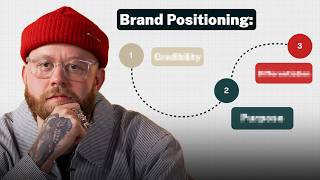
we're writing what our brand is and some of us are doing it unintentionally not thinking about it and our audience is the one who is determining what our brand is. I would prefer to be intentional with it. And so being intentional brings us to the brand journey framework. This is like my favorite way to get clarity on your brand. If you don't know why you're doing what you're doing, this will provide it. This is four questions. They're very simple. This is in the workbook, by the way, so you can I don't know what page it
is, but it is in the workbook, and I highly recommend you do it. Do not let the simplicity of it stop you from actually doing this. Question number one, I like to start with the end in mind and reverse engineer my way back to today. So, question number one starts with the end in mind. What do I want to have happen? Okay, so I'm going to walk you through an example here of all of the answers to these questions so you can kind of see how I think about it. So, the example might be, you
want to speak on stages to help young women grow their business. Amazing. I [ __ ] love that. That's awesome. Question number two, what do I need to be known for in order for that desired outcome to happen? Okay, so using this example, if I want to speak on stages to help young women build their business, well, in order to do that, what would I have to be known for? potentially being a woman who has built a business and probably not just my own business but helped other women build their businesses as well and gotten
success with that. Thank you. Um that takes us to question number three which is what do I need to do in order to be known for the thing so that my desired outcome happens? We get known for [ __ ] not by talking but by actually doing stuff, right? And so crazy answer to this one. If I want to speak on stages to help women scale their business and I know that I need to be known as a woman who has scaled a business and helped other women do that, what do I need to do?
I need to build the [ __ ] business. Plain and simple. I need to do the business and then I need to help other women build their business as well. This takes us to today and this is where it gets really granular. What would I need to learn in order to do the thing to be known for the thing so that my outcome occurs? If I need to build a business, there's probably a lot of things that I'm going to need to learn. I'm going to need to know HR, marketing, recruiting, sales, product, all these
different elements. And within each one of those five that I just mentioned, there's a million different things. This gives you the path of how you're going to go from today to where you want to be. So, what I want you guys to do is actually take a second and we'll we'll pause. I'm not going to talk. Fill out the first question. So, I'll tell you mine. >> It's going to sound so audacious. I want to work with whoever I want, whenever I want, or whatever I want. And in order for that outcome to happen in
my world, I have to be known as somebody who can scale a brand that lasts and converts. How do I get known for that? I do it. >> And for me, I've done it in one specific industry. If I want to work with whoever I want, whatever I want, whenever I want, I need to do it outside of the industry I've already done. So, that's my next step, right? And the learning was the first 10 years of my career. Learning the platforms, learning how to work with talent. Um, your desired outcome could be that you
want your business to hit a certain number. for I mean literally it can be anything you want. This is your northstar 100%. This is your why and your what. Uh so what we've done right now is we've gotten clarity on what our brand is and why we're doing it. The next thing is amplifying it. So I I view that as like building the restaurant and then now we're going to tell people about the restaurant so they come and eat. Okay. So that's content strategy. Now, a couple of quick disclaimers here. I believe that content strategy
is built effectively like a great personal trainer puts together a great training program. I recently went on the journey of getting back into fitness. I competed in powerlifting uh when I was a lot younger and definitely don't look like I compete in powerlifting anymore. And I hired a trainer, a personal trainer. And you know, with my background, it'd be very easy for me to just jump in and start going really crazy. But we built a system that we knew I was going to stick with and build up the habits of doing and then we can
optimize and refine later. Content strategy is the same way. If you look at all the characters that are making content online in a way that you admire and you try to replicate what they're doing, it's like me trying to do Chris Bumstead's workout or Ronnie Coleman's workout. I'm going to break every [ __ ] limb I have. it's just not going to work. Okay? And so what I want you guys to do is take everything that I'm saying and figure out what is a version of this that I'm actually going to stick with and then
I can add more volume over time. The other thing is uh we're going to do a quick exercise here to figure out your medium. I assume most of you know what your medium is that you make content in. Medium being video, audio, written or photo/graphic style content. Those are the four ways I think that you make content online. If you do not know what your preferred version is, one quick way to do that is to figure out what do I feel most comfortable doing? Again, I'm really big on picking something that you're going to actually
stick with. So, if the idea of filming a 6 hour and 22-minute video makes you want to vomit, then okay, let's not do video. Maybe 6 hours and 22 minutes is a little extreme, but even the idea of being on camera, maybe you start with an audio podcast. Maybe you start with written. So if you can real quick, you don't even need to write it down, just think in your head, what is the medium that I am going to be using and deploying? The other thing that you can think of if you're just like a
performance optimizer hardcore, what platform is my ideal customer living on the most and what medium does that platform prefer the most? Lie number three is if I just keep posting, it will work eventually. Uh the strategy that I see the majority of people using in content is they hit publish and they just hope that it's going to work. And that is uh you know I I I love the the dedication and everything, but that is not how you actually make content that converts. I've talked to over 2,000 business owners just in the last year alone.
And I hear things all the time like, "We're not getting traction on Instagram. YouTube's not converting. I don't know what content to make. I don't know what works and what doesn't work." And I think that ultimately it comes down to the fact that they're not being intentional with their content. Just like we talked about being intentional with your brand, you want to be intentional with your content. And figuring out what works versus what doesn't comes down to a great debate that has existed in the online content space for a very long time, which is quality
versus quantity. Which one do you do more of, quality or quantity? And I believe that it is based off of a misunderstanding of what quality is and what quantity actually is. I believe that quality is something that you don't know what it is. You don't know what it is. You don't. You don't. You don't. I don't know what quality is. Our audience is what knows what quality is. They determine what quality is. So I hear people say all the time, I made this really high quality video on YouTube and nobody watched it. That is a
contradictory statement. If nobody watched it, it was not a quality video. And that's fine. That's no like hard feelings on you. That just means you got to take another swing at it. And so I believe that you use quantity to inform what quality is. Okay? You post more to find out what your audience is [ __ ] with and then you do more of that. A really good way to think of this is for those of you who are just starting posting or you've been posting for two years and you're not getting [ __ ]
You might be getting 13 26 views on a video. Let's say your average is 13 views. If you post 14 videos on Instagram, my bet is one of them is going to get 29, 32, 47, something like that. One is going to perform higher than average. Even at that small number, that is an indicator to you that your audience wants more of that content. What I see everybody doing is they are optimizing or trying to optimize their content off of their general content, everything they're making, the good, the bad, and the shitty. But what you
want to do is you want to optimize off of the content that you see is working every single month. Okay? And so what I like to do is it's called the accordion method. In the beginning to acquire the data on what your audience wants more of, you expand the accordion, meaning you do more content. Let's say it's 14 posts a week on Instagram. I'm not there yet. I'm not even close, but let's just use that for an example. What you're going to do is you're going to post 14 times a week on Instagram. This is
the expanded accordion phase. And then after I would argue probably even five weeks, you're going to have enough information on what your audience is liking more of. And in the beginning, it's going to be less scientific. You might not have that many clips to be able to analyze and see what is occurring across all of these clips that I can bring forward. So, it might be looking at what were you talking about? What was the format in the way that you conveyed the information? Okay. And then you're going to contract the accordion. And that's where
you take, again, using the arbitrary example of 14 posts a week, you're going to take the effort, the resources you deployed to those 14 reels a week to seven. Same amount of effort, less output. You're increasing the odds that these videos will perform better because you are optimizing off of content that has performed better. It sounds so simple. It's wildly simple. Yet, almost nobody I talk to actually does this. If you want to take it a step further, you actually want to develop a tool where you are tracking this information. Show of hands real quick.
Who's heard of oneof10.com? Wow. Amazing. Real quick, I'm just going to give you all some free game. Oneof10.com. Write this down. 10.com. This will blow your guys' minds. It's an amazing platform. You're basically able to look online and see outliers for YouTube videos. In any niche, you can see that this video went up on, you know, Sammy's account and she normally gets 10,000 views a video. This got 120,000. It was a 12x outlier. This is a real quick little deviation from what I was going to say, but this website is phenomenal. This is exact like
100% all of you should go sign up for it right afterwards. I do not have a sponsorship with them or anything like that. They are just a wicked program. Uh what we have done is we've actually developed our own version of this to be able to track performance across all platforms. So instead of just YouTube, which is what one of 10 provides you, we built like a really fancy intuitive very advanced Google Sheets page where we track this information. But what we have is we have a little formula that we've created. And with this formula,
we are able to grade our content against our benchmark. So what you do is you calculate the last 90 days of the content that you've produced, what the average performance on likes, views, uh, and whatever metric you want to track on the other, watch time, whatever. And then what you're going to do is figure out what that benchmark is, and all future content you upload gets graded against that. So, if we determine that your average is 10,000 views, instead of when a video gets a 100,000 saying, "Oh, this got 100,000 views." We label it as
a 10x outlier. The beauty of this is every week, every month, every quarter, you can look at this sheet and know very quickly what you should continue doing and also equally as quickly what you should stop doing. the content that you're posting, cuz most of you in this room are doing this. You're posting [ __ ] that you know isn't working, but you just keep posting it. This sheet helps you eliminate that entirely. Cool. So, tracking data is important. And again, quality versus quantity. I you will rarely ever hear me say I made a high
quality video. I always talk about the level of effort that Trevor and I put into a piece of content, but I never sit here and say subjectively that something is quality or not. That's for you guys to determine. And you can look at my YouTube channel right now and you can see what content my audience is deeming as quality versus the stuff that they're clearly not seeing as high quality. Lie number four, I can't make content for every platform cuz I don't have the time. Now, I think a lot of us can relate to this,
whether we're in that season right now or we've been in that season in the past or we have a bunch of time right now, but we don't want to spend all of it making content. This makes a ton of sense to me. On one end of the spectrum, I've worked with people that will allocate 20 hours a week to making content. On the other end of the spectrum, you have Gary Vaynerchuk, who I work for, and literally, I have so many memories of waiting outside of his office. He had a glass office and I'd be
waiting for the 60-second moment between meetings where one person stood up ending the meeting and between the next person coming in. I'd run in, get a Tik Tok clip with him real quick and then move on. I understand that like there are many ends of the spectrum here. And so what I like to use is the waterfall distribution method. This is how I believe that all of us in here can create a content system that scales. And I I got to pay love to the man himself. This is an adaptation of Gary Ve's content pyramid.
Uh if you guys haven't, I would recommend. This was a project that he released in 2018. It's still very relevant now. 86 pages of insanity. It's this deck that he released on how he thinks about content creation. Um it it's very powerful, but I have a couple little little tweaks that I've made to it um that I'll walk you through. So, waterfall distribution method. Step one, you're going to establish your pillar content. This is the content that you're going to put all of your effort into and then reap the rewards of that effort with your
micro content that we'll get to in a second here. Pillar content is going to be either a YouTube long form video, Twitter thread, newsletter, anything that's more long form that is not just one one thought, it's multiple thoughts. Now, best practice on this, in my opinion, and this is contrary to what a lot of my counterparts would say, I believe you want to make evergreen content for your pillar content. Some of you in this room are in an industry where you have to make more timely content. Totally understand that. Do your thing. But for the
majority of us, we're going to get far more value out of evergreen pillar content. Two reasons why. One, whatever platform you distribute it on, if it's evergreen, well, if somebody discovers it in 2025 or 2032, it doesn't matter. it's still relevant to them. Number two is when you clip content, when you extract your micro content, which we're going to talk about in a second, you're going to want to continue doing this for months and years. And if you have evergreen content that you're pulling from as your pillar content, then you are able to actually redeploy
it two or three years down the road and it's still relevant for your audience. So evergreen content I I define evergreen content as something that is useful and relevant right now and something that is useful and relevant in 5 years. Nothing changes aka principlebased teaching. The reality is is the best content you make is going to be based on the [ __ ] you're doing right now. It's going to be the same principles that you're sharing in every piece. But the way that it's varied is the different stories and scenarios of your clients, your customers.
You the best exercise that you all can do right now. It's a two column approach. You're going to make two columns. On the left side, you're going to write out all the things that your counterparts in your space say that you disagree with, that you don't like. And then on the right side, you're just going to write out what your version of that is. And that's what you're going to pound over and over and over. I will unless you know new information, new uh things to say, but as long as things don't change, I will
keep pounding the fact that like virality should not be anybody in this room's northstar. >> Views is not what you want to track. Conversions is what you want to track, right? It's the same thing, but I'll tell it to you in 50 to 100 different ways via the 50 to 100 different stories that I have based on helping clients overcome that view. Step number two is you are going to extract the micro content or as I like to call it mining for gold. And what this is is let's use the example of a a YouTube
long form video that we're using here. You're going to go through, let's call it 25 minutes. You're going to go through and find the moments in this video that are the best nuggets that can live by themselves. Okay? They do not need the context of the rest of the video to make sense or to serve your audience. Now, I'm not saying you clip it. You're just identifying these moments. And this is where it's a little bit different than the content pyramid. Step three is you're going to package the micro content contextual to the platform. Real
quick analogy here. I am Caleb presenting myself in a certain way in this room. And when we talk, I will do the same thing. On Friday this week, when I meet up with the boys and go ride our Harley's, I'm going to show up slightly different than I do here. I'll behave different. I'll talk different. I'll use different language. And then on Saturday, if I go get lunch with my mom, I'm still Caleb, but I'm going to show up a little bit differently, contextual to the environment I'm in. This is analogy that Gary's been giving
for years. Your brand is the same way online. It's not that you're being inauthentic. It's that you're showing up to the different platforms and presenting a side of yourself that resonates most with that audience given the lingo, the jokes, everything that they're doing on that platform. A very clear, obvious example is you're going to behave differently on LinkedIn than Tik Tok. It's not that you're being inauthentic, it's that you're reverse engineering the needs of the individuals on that platform at that time. Okay? And so I believe that we've mined this moment from our pillar content
and then what we're going to do is we're going to package it for the platforms. Let's use an example of Instagram and LinkedIn. So we have our YouTube pillar and we mind a moment from it, right? We pull a single moment. Let's call it 3 minutes, something like that. Now the traditional view is you cut that into a short and then you post that everywhere. My view on it is you figure out what is the best version to tell this moment on the platform I'm posting. So instead of maybe cutting a reel for Instagram, maybe
you take that moment and you turn it into a carousel. Maybe for LinkedIn, it has no video or visual component and you only take the transcription of that moment and you rewrite it. Don't be the chat GBT bro that blends in with everybody else on LinkedIn. Write it. Make it sound like a [ __ ] human. and then you post that on LinkedIn. And the beauty of this is that you're you're making content that's relevant in the way that people are consuming at that moment. You're not the person who is still doing the 2020 2021
tactic today. You're being relevant 24/7. And all it is is reverse engineering what formats on the platforms I'm prioritizing are doing the best right now. And you don't have to be a rocket science scientist to figure that out. It's genuinely very very easy. All you have to do is go through your feed, find the creators that you admire, go on their page, and look at what posts they're doing are doing better than the others. That's literally that's the easiest way to be able to figure out what format on the platform that you're posting is doing
best. And step number four is really, really complicated. So get ready to write this one down. There's a lot of steps. Step number four is post that [ __ ] And you'll see in the workbook I I propose like a very complicated, it's not that complicated, but more complicated probably than it should be. Uh, you know, a posting cadence. Monday post this, Tuesday post this. Here's what I would tell you. Don't overthink that [ __ ] When we started, I'm talking like I've been behind the scenes on teams that are producing 350, 400 pieces of
content a week, okay? Like I have very high expectations. When Trevor and I started making content for me, our goal was one YouTube video a week or sorry, a month. And then when we would post that, we would do one or two posts on Instagram to promote it and one post on LinkedIn to promote it. And that was it. That's like four posts a month. That's it. Now, as of I think it was last week we started, we're now doing three Instagram posts a week, two LinkedIn posts a week, and one YouTube video a month.
So, we've rapidly increased the volume, but it's because we've gotten the process and system in play to be able to do that. So, what I was articulating there is we started with a ridiculously simple posting strategy and then we're optimizing it over time. So, for you guys, don't over complicate like, oh, I need to make sure that I have two LinkedIn posts every week and four Instagram posts and one. I believe that is too big of a barrier for entry and you're not going to stick with it. So pick whatever is the easiest thing for
you to do right now and then increase it over time. Big big key here. Something that I think is really important. So we talked about the pillar piece and then mining and then repackaging, right? >> Y >> use an example of YouTube long form. That's where your pillar content is. And then an easy one would be YouTube shorts is what you're going to repackage for. You're going to take moments from the long form pillar piece and you're going to clip them for YouTube shorts. The reason why I say that as a real benefit is it
doesn't take that much extra effort to then take that YouTube short and post it across Instagram, you know, Facebook, LinkedIn, Tik Tok, you know, all the other [ __ ] ones. Um, so what I want to do though, real quick, is show of hands. Who is a solo creator that has nobody else working on their content? Literally, there's not like a VA. You don't have a contractor, nothing. Okay, cool. So, for those of you, and that's actually way less than I expected, so that's [ __ ] awesome. Good on you. Uh, what I want you
to do is write down your primary platform, the platform that you are going to be making your pillar content on, and then your secondary platform. And then for the rest of us who have a team, I expect a little bit more out of you because you got some bandwidth. Pick your top three platforms that you're going to prioritize. Okay? And the ideal version of this is you know where your ideal customer is spending their most amount of time. If you don't, it's very easy to figure out. You just ask around. It's the same way when
I go to any new city, I am always able to find a hardcore metal bar is because I just ask. And so you want to figure out where is your ideal customer hanging out. And that's the platform that you want to prioritize. I'll give you while you're writing these down and figuring it out. Another one. I will say YouTube I am a little bit more biased towards. I have found that YouTube definitely leads to better conversion. We talked at the beginning that the reason why you do brand is to scale trust. I believe that YouTube
long form allows you to build that trust with your audience better than any other platform. Shorts are super important. I really value shorts. But the value that I see from shorts mainly is brand recognition. Showing up with volume to understand what your audience wants and to get your brand in front of their eyeballs so they recognize it. Long form, I believe you develop a different level of trust and relationship with your audience. And so if we are trying to convert and transact on an offer, I will recommend YouTube being in your top. I'll share with
you mine. It's YouTube, Instagram, and then LinkedIn. And to be honest with y'all, I thought it was going to be YouTube, LinkedIn, Instagram, but we're I think about two months into posting consistently and I'm seeing more qualified leads coming through Instagram, shockingly, than LinkedIn. This will be different for all of you. This is not like a blanket rule for each and every one of you. The way that you show up on the platform, it's going to resonate differently with your audience. Okay? So, what you want to do is you want to pick those top three
for those of you that do have a team. And then for the few of you that don't, pick your top priority and your secondary. And then you're going to only prioritize these platforms. And I would argue for those of you that picked three, I'm a Lord of the Rings nerd, so the analogy I use is the Eye of Sauron method. You're going to pick one at a time that you're focusing on. This is very contrary to the opinion of like post a bunch of content everywhere, you know, make sure that every platform is zooming. I
don't believe in that. I don't believe that's realistic. If you have a team of 20, sure, but if you don't have a team of that size the way that Trevor and I don't, then you got to attack it one at a time. So, what we've been doing is we've been doing YouTube as our main focus and we've spent, I'd say, four or five months now trying to refine that process. I feel like we've gotten to a good place and so now the eye is going to move over to Instagram and now that's our focus and
then we'll move over to LinkedIn. And I am totally okay with the fact that my Instagram and LinkedIn for the last four months have been nowhere near where Trevor and I know where it's going to be, right? I have people reaching out all the time like, "What? Your posts on LinkedIn are kind of [ __ ] Like I can write them for you or whatever." It's like that's not the focus right now. Those are on maintenance mode. Okay. So now knowing that we're shifting from YouTube to LinkedIn or sorry to Instagram, that means that YouTube
and LinkedIn will be on maintenance mode and the priority is Instagram. I have found this to be the most effective way to actually gain traction. Not checking a box that you're posting content across all the platforms, but actually having platforms convert for you. And that takes us to lie number five, which is I need to go viral for my brand to grow. Now, uh, if you're noticing that this maybe sounds a little bit different or looks a little bit different, this was my first time giving a solo talk uh, on stage to anybody that wasn't
actually at the company that I was working for. And I was really nervous and I only got through four of the lies with everybody and then we went into Q&A which was phenomenal. But we realized when we got back to the hotel room that we had not gotten the fifth lie and we promised five lies. And so I wanted to deliver that uh for you guys, the audience at home. So lie number five, like I said, I need to go viral or my brand won't grow. And I can't tell you this couldn't be further from
the truth. Uh I do believe that there are times where going viral does help your business for sure. That is not my point. I'm not saying that going viral is wrong or bad. What I'm saying is is having it be your north star is always going to end up being a mistake. It will cause you to do behaviors that will not map towards the brand you are actually trying to build. If you took the time to do the brand journey framework, you know that we're trying to build a very intentional brand. And so if you
go viral, it should be by accident in trying to accomplish sharing the message that leads you to your desired outcome. Now, uh for those of you watching, you know, the the big thing on the whole viral game, too, is really what are you trying to accomplish? So, we articulated, we figured out what our desired outcome is, but let's boil it down. Are you trying to become famous or are you trying to build a business? If you're trying to become famous, cool. By all means, I support that. that's great, but I want to speak to the
people that are trying to build their business. And if we're not trying to get famous, but trying to build our business, wouldn't it make sense that instead of tracking views on a platform or subscribers on a platform, we would track conversions and qualified leads in our business. I'd like to tell you kind of a a tale of a creator here. Uh this is a creator that had built up a very strong audience. It wasn't a massive audience, but a very strong loyal audience around their educational content online on YouTube. They were doing long form educational
content, and they had done an amazing job of providing so much value to this audience. They had like a cult-like following with this small group. And eventually, as this person's content started to gain traction, a lot of really big names in the YouTube space started to catch wind of it. they got a lot of value out of the content and so they started inviting this person to hang out with them. Now, a key little piece of information. So, the creator I'm talking about was in the education space, not the entertainment. And now, this individual is
starting to hang out with all these entertainers. And they start to change what their preference is around the views and subscribers they were getting. And so all of these entertainers basically encourage this individual. Start making wider content. You know, start making content that appeals to more people. And it's obvious, right? That's going to lead to more eyeballs, more people wanting to watch the content. Anything that you make more relevant to more people increases the odds it's going to get more views. But as this person was doing it and their views were going up and their
subscribers were going up, I'm talking like PRs, personal records every single [ __ ] month. It was crazy. But at the same time that views and subscribers were going up, guess what was going down? Sales. The sales on their offers, the conversions on their offers were going down at the same time. Why is that? Well, they weren't making the content that actually built the trust necessary to get the audience to transact on their offer. What they were doing is creating content that was no longer as useful or valuable for their ideal customer. They were making
content that was perfect for the type of individual that was never going to buy what they had to sell. This is a scenario that many of us fall into where we confuse signal with noise. We look at the information, the data that the platform is providing us showing us that we're doing an amazing job. We're getting more views and we're getting more subscribers all the time. we should continue doing more of this in order to get the same results, right? Wrong. If we're not trying to just become famous, but we're actually trying to build our
business, then we need to make sure that the growth is moving in the right direction for our business, not our vanity metrics. And this is why I am such a huge advocate around tracking conversions over views. Now, am I saying ignore views and subscribers? [ __ ] no. Like, those are good indicators of you having success on the platform. But the biggest northstar metric that you should be aligning your entire system around is whether or not you're actually getting people to convert. Now, for some of us, we have robust teams that we can implement some
crazy UTM tracking tool and and something that's super complex. And for those of you watching that can do that, hell yeah, [ __ ] do it right now or have your team do it, whatever. That's awesome. But for a lot of us, we're not at a place where we can do that right now. I know for me, that's not where we're at at Rston yet. We're not even close to that point. So what do we do? We just do a little bit more of a uh anecdotal uh version of this, which is in any sort
of discovery call, I will ask the prospect, what was the piece of content that you watched that made you feel confident in reaching out to work with us, right? Or if somebody DMs me, I ask them the same thing. I'm always trying to find out what is the content that is driving more people to want to work with us so then we can do more of that. And if you were to look at my YouTube channel right now, Trevor and I worked on really hard on a video on how to lead a media team. Not
build, but how to lead a media team that's already established. Massively small market, right? Very narrow audience that we can serve for that. And because of that, it is our lowest viewed video and probably will be one of our all-time lowest viewed videos. But that's not how we defined winning. When we went into it, Trevor and I had the conversation about the fact that this is not going to perform like the course or like some of our other pieces of content. And so what we are going to measure to know whether or not this was
successful or not is what is the caliber of individual that reaches out to us? What creative directors and brand directors are reaching out? Ideally, the ones that are behind some of the biggest personal brands. And that's been the case. We've had a lot of individuals that are the creative director or brand director for ideal clients of ours that we haven't signed yet, but they reached out and showed how much they appreciated that video. And so, it's the beginning stages of earning trust with our ideal customer. If we would not have put that definition of winning
in place ahead of time, we would most likely be discouraged from doing this video and would actually end up hurting our business in the long run because this will bring us more clients, more actual clients than the video that we uploaded previously, which is about struggling with making content. It's a 12-minute video. I think it's super cinematic and cool, and we've had a lot of people reach out. But what I will tell you is none of the clients that we've signed and none of the clients that we would want to sign have reached out because
of that. They've reached out from the other videos that are far more in-depth. So, what you can see because that video was our second highest performer. It would lead us to believe that we should make more of those and we will. Uh there's other reasons and other things that we're trying to serve other than just conversions, but our northstar is conversions. And so we're going to make more of the videos, like the media team video for example, despite the fact that I know it may never even hit 10,000 views. So an exercise for all of
you at home watching this to do is I'm going to divide you into two groups. Those of you, like I said earlier, that are solo creators, what I want you to do is pull out your calendar right now, either on your phone or on another tab while you're listening to this video. schedule and block off an entire day to get this tracking system in place. Whether you're going to use a UTM thing or you're going to create a process in your discovery calls for your team, whatever it looks like. Block off a day. It won't
it probably won't take you a whole day, but block off a day in the next four weeks so that you actually do it. Cuz what I promise you is you'll do what I tend to do in these things. You'll continue to justify why you can put it off and, you know, shove it down to the next week and the next week and the next week because there's a million other things. So, right now, take the time and schedule out the day that you're going to put this in place. For those of you who are watching
who have a team, a lot easier. I want you to pull up your email right now or your text thread or Slack, whatever way you communicate with your team and send a message to the lead on your team and say, "I want to have this put in place within the next two weeks." And then check in with them and make sure it's in place. this and then and then especially if you have a team, you need to orient the team around reporting around this metric more than the YouTube 1 out of 10 or 5 out
of 10 or 10 out of 10 ranking, more than the views ranking, more than the subscribers gained. This is what you want to be tracking as your north star. Again, keep track of everything else. You want to see that. This is what a lot of people in the industry refer to as a weighted metric. You don't want to isolate and just focus around one thing. You want to make sure that it's like views but not at the expense of conversion. Views in favor of conversion. Okay. Ultimately, like I said, don't over complicate it. If you
can't figure out the UTM thing, just [ __ ] ask the question on discovery call and then get more advanced from there. The the whole theme here is start with what you can do now and stick with and then you can iterate and optimize over time. Thank you so much for watching. Uh, this was a really crazy moment for me and I'm curious actually for those of you that made it to this point. I appreciate your time and I trust you. So, I would love to hear from you. What did you think? This is something
that I'm trying to work on. I I feel like I probably present a little bit better in video or podcast form and this is an area that I'm really trying to work on and so I would love to know what you thought of this little talk here and what your favorite insight was. Again, if you made it this far, appreciate you. Thank you so much. Peace.