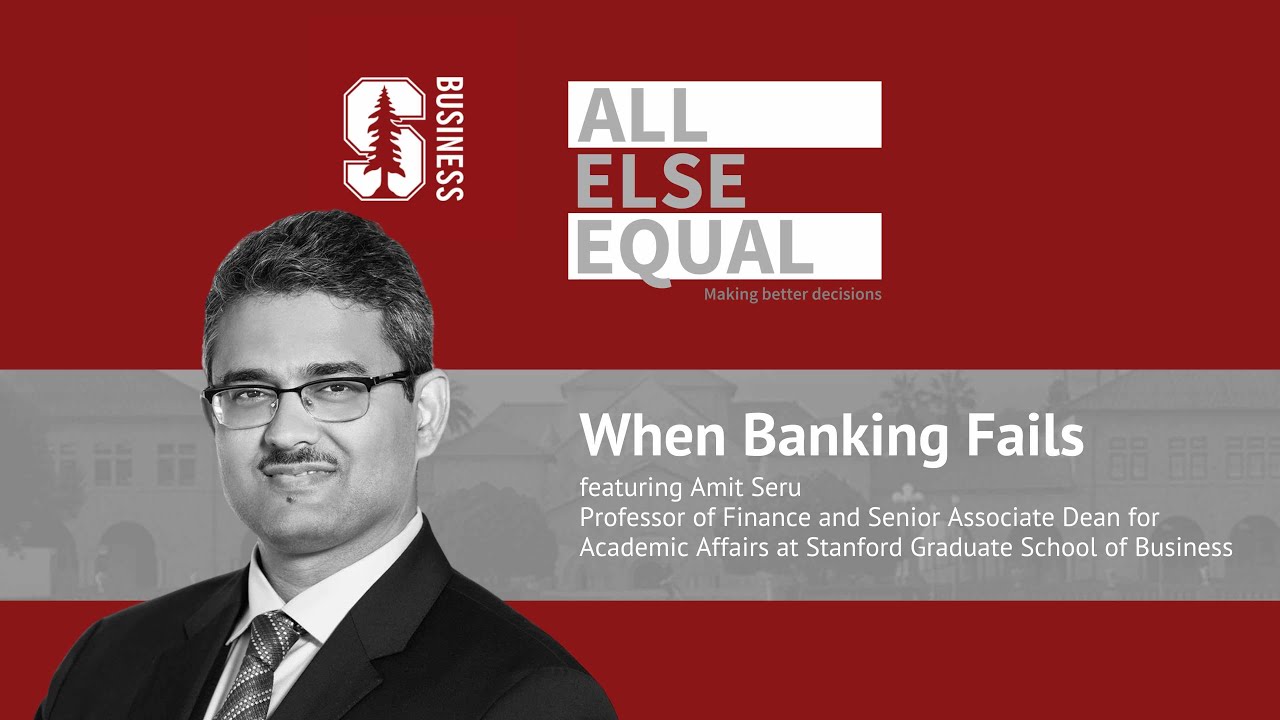
[Music] hi I'm Jonathan Burke professor of Finance at The Graduate School of Business at Stanford University and I'm Jules fan binsbergen a finance professor at the Wharton School of the University of Pennsylvania and this is the all else equal podcast welcome back everybody today what we're going to do is finish the episode on retirement in the retirement episode we just concentrated on the question of how much should you save for retirement and when and we did not address the question of what should you do with your retirement savings as far as Investments are concerned and
that will be the focus of today's lecture and so the first thing we need to get a handle on is what does this word risk what does it mean and I think one way to get a handle on it is is that generally people when they face a bet that can go well or again poorly they don't like the downside drops in wealth are painful so if you invest your retirement Savings in a risky investment account then if your retirement account takes a hit that drop in wealth is a painful event for most people and
in fact I think it would be fair to say that for most people the drop in wealth is more painful than the equivalent increase in wealth gives you a feeling of success that's what we call risk aversion right if you give me the choice of a certain payout or a payout that has an equal chance of going up and down I prefer the certain payout because I know the pain of going down is greater than the benefit of going up and so that's what we call risk aversion and so one thing we need to discuss
and come back to is this question of does one size fits all right in other words when we talk about risk taking what aspects of risk-taking is something that we can organize with a large group of people because the same things need to be achieved for everybody and what aspects of risk taking really have a highly personal Dimension and therefore we need to tailor it to the individual exactly and I think that's a very important concept so let's start with the part of risk-taking that is common to everybody and so let me reiterate what we
said before which is is we're going to assume that people do not like volatility and we think about any portfolio of stocks or bonds or housing or any asset for which there's uncertainty people would like to reduce that uncertainty and so one way of doing that is to follow a diversification strategy and so diversification strategy think of it this way right I give you two choices of bets suppose that you have $90,000 to invest and you can invest that money in one of two ways either you can invest it in one single coin flip that
pays out $200,000 if it lands on your choice which was heads or you lose everything if it lands on Tails now given the fact that it's a 50/50 bet between 0 and 200,000 the expected value is 100,000 you invested 90,000 so you are being rewarded for your risk there but it's still a pretty risky proposition right I mean it's either losing everything or more than doubling your money from 990,000 to 200,000 now compare that to the alternative investment strategy which ISS don't put all your money into one coin flip bet but instead pay 90 cents
for 100,000 flips so 90 cents for each of the flips which gives you either $2 or nothing now as you can imagine the first strategy is a highly non-diversified strategy because you only have one coin flip which either gives you everything or nothing whereas the second strategy you have 100,000 coin flips in a row and so because these coin flips are independent from each other that becomes a diversified investment strategy it's a no-brainer right if you follow the second strategy you essentially get $100,000 for sure it's essentially riskless so you pay 90,000 and you get
100,000 you get a 10% almost riskless return where's the first strategy you get a 10% very risky return and the observation is everybody would agree on this anybody's risk averse would say I prefer the second strategy and it's a good example of something which one size definitely does fit all given a choice if you can diversify you should diversify so now what does this have to do with real Investments well stocks are like coin flips okay they're uncertain Investments there is one crucial difference though qu flips are independent stocks are not stocks have correlation between
them but it's not perfectly correlated so any risk that's not correlated is like a coin flip and can be Diversified away so it's always better to hold a portfolio of stocks take your money and spread it across a portfolio of stocks across many different stocks then to put all of your money in a single stock so this is a very good example of a one-size fits-all strategy you should never invest in individual stocks you should always invest in a portfolio of stocks so the way we say this in plain terms is that you should not
put all of your ex in one basket putting all your acts in one basket is an undiversified strategy where is putting them in multiple baskets it's this we call a diversified strategy now the Assumption underneath this common expression is that when one basket Falls this does not affective probability than other baskets will fall but the reality for stock investment is somewhat more complicated and the reason is that baskets can fall for two reasons they can individually slip out of your hand which is like diversifiable Risk but they can also fall because you trip when you
trip you still drop all of the baskets on the floor and all your X break after all so for that event spreading your a over multiple baskets isn't actually particularly useful and so this last event is what we call systematic risk or Market risk because these movements make the whole stock market move up and down together I don't want to label this point too much but I do want to say a few more things about it when I teach the subject in our MBA program invariably I'll have a student look at me especially during the
boom time so anytime there's a huge run up in prices they would have invested a single stock often the company they work for and they would have made a fortune in that stock and they look at me and go if I'd followed your strategy I'd be nowhere near as rich as I am and I point out to them look you are extremely lucky if you wanted to take on the risk associated with that single stock investment you can still do it and get all the benefits of diversification you can Leverage The Diversified portfolio to have
equivalent risk to the risk of your stock without adding the idiosyncratic risk without adding the part of risk that you can diversify away so this is a very important concept I think and we so often see people make those mistakes you know in the bankruptcies of enrod many employees lost everything they had because they had all the investments in Enron stock the same was true in Leman and noia it's really a bad idea to put all of your money in a single stock especially if it's the company you work for and the thing Jonathan is
and and and we've talked over the years with many employees that worked at these companies when these companies are at their Peak it is almost inconceivable for people to even think about the scenario that Nokia wouldn't be the dominant player anymore at the time that noia was dominating the cell phone market could anybody have seen coming that within such a short period of time they would lose out to smartphones like the iPhone so quickly that essentially the company would lose such a large fraction of its market value and so convincing people at that moment that
they should diversify out of that individual stock and get a more Diversified portfolio is an incredibly hard thing to do okay so that is definitely a case of one siiz forit all and the general advice for retirement is if you invest in the stock market you should hold a diversified portfolio and more generally all of your Investments even the Investments outside the stock market should be Diversified you should not put too much money into real estate for example I mean often there's a problem especially when people are young and they're stretching to buy a house
and a huge fraction of the investment is their house but as they get older I think it's important not to put too much money in a particular sector like real estate but to keep the Investments Diversified across stocks bonds and other things so Jonathan now that we've talked about that everybody needs to try to diversify a way that what we call the diversifiable or a jargon term for it is idio syncratic risk what about the other part of the risk that you can to diversify away that has also many different names right it's called correlated
risk it is called Market risk it's called common risk all of that risk what about that if do we have a one siiz fits Soul there and I think the answer is well most people will want to have some exposure to this common risk but the amount that you can bear I think is a very personal decision I think it's very hard for somebody else to tell you how much risk you are supposed to be taking I think you need to find as an individual the Comfort level of the amount of risk that you find
bearable and which parts you don't yes so this is where we end the advis set one size F all very different people have very different risk characteristics and so the amount of risk you're taking on is a very individual decision and it's not just the amount of risk you're taking on but also your exposure to that risk so let's think about the over all risk of the economy so if the economy goes down all stocks are going to go down they may not all go down the same but everybody's going to be exposed to that
but now let's think if you work in Tech right and you have a diversified portfolio should the Diversified portfolio contain as much tech stocks as somebody who doesn't work in Tech and I would argue No it should contain less tech stocks because your human capital is already exposed to Tech and so in order to mitigate the risk of the tech sector failing you should have your Investments be underexposed to Tech often people do exactly the opposite often people in in a sector love the sector so much they overweight that sector in their savings decision which
I think is a mistake so your own personal exposure to this risk should govern what your portfolio's exposure is what your retirement portfolio's exposure is and to make things even more complicated most families operate as a unit not individuals and so what about the industry that your spouse Works in you already as a family have a lot of your wealth exposed to that too because that's your spouse's human capital that we're talking about and so let's give another example what about people that in their jobs have almost no risk like you and me Jonathan we
are working in jobs where due to the nature of the contract that we have essentially we own a very large Bond a bond where somebody as long as we keep working us a fixed stream of money that is highly predictable right because even our wage increases are very narrow and very regulated the university cannot fire us so essentially we have this stream of fixed cash flows that was going to be paid to us we don't have that Tech sector exposure we don't have any other specific exposure so it seems there that in our retirement portfolio
we are actually in a position to take quite a bit of risk and I do in my own personal portfolio I have almost no B I almost exclusively invested in stocks and it's precisely for this reason I have a very secure job I do not need to retire from that job if something bad would have happen in the stock market I can just keep working and so you know this is a very individual decision also we should emphasize Jules is what I call the idea of uncertainty versus risk in other words how correlated is your
human human capital how corate is your salary to whatever investment you're holding so let's say I have a investment that does well when I'm doing well and does badly when I'm doing badly that's going to be a much more risky investment than an investment that happens to do well when I do badly and badly when I do well it provides more insurance so a pretty important part of thinking about what risk is is to ask the question how does my Investment Portfolio perform based on my own States yes obviously we're all in the same state
so in the world where the economy is doing well most of us are doing well so stocks that do well in those states are going to be riskier than stocks that do well when the economy isn't doing well and that's what we call the beta of a stock and it's important to understand that as a result the risk premium on stocks that are high it correlated with the economy is going to be higher than the risk premium of stocks that are less correlated with the economy and it's precisely for this reason because I prefer a
stock that does well when I don't do well your portfolio is like a sports theme and what you care about is that the team as a whole does well now each of your potential players have the following two characteristics how well they play on average what we call the expected return and how volatile their play is I suppose that for all available players you would rank them by the ratio of these two characteristics that is the average performance per unit of volatility what in finance we call the sharp ratio and suppose I select the best
ones based on that ranking does that get me a good portfolio and the answer perhaps surprisingly is actually no and the reason is as follows imagine the following player this player is on average not very good quite volatile in their play but they do have one particular characteristic and that is when the whole team is doing terribly and bleeding on the floor this player tends to rise to the occasion and drags the entire team through the match now this is a player I would me like to have on my team despite their low average performance
and high volatility because they are the insurance that I need in my portfolio to drag me through bad times yeah and so these are all very individual characteristics that are specific to yourself and in putting your optimal portfolio together these are issues that you really do need to think about for sure now let's talk about a couple other things Jonathan because what is interesting to me is how we've made the choice to organize our retirement system and and you very clearly see a tradeoff there because I think that the way most Retirement Systems today are
organized they do pushed through this one- siiz fits all philosophy in many places really for example right now if you are in a defined benefit Pension Plan essentially the fund will invest the money for all participants in exactly the same way and whether you like that or not or whether your risk appetite is larger or smaller than whatever that Investment Portfolio is there's nothing you can do about it and in many countries like for example in the Netherlands where I am from you're legally not allowed to even get out of that pension plan and take
your money elsewhere to a fund that invests more in line with your risk preferences you're stuck with your money in a plan that makes these choices for you but JS that's really only relevant if the plan fails on its promises now you could say in our modern world with all these plans underfunded that's a real possibility but I think they would say so long as the plan doesn't fail and it's promises to make the pension payments it's not really the concern of the people investing in the plan how they choose to invest in particular assets
yes although let's be a little cynical here the reason why we had to luxury to keep saying that was because with 2 to 3% population growth it essentially becomes a Ponzi scheme where the future Generations there are always so many people in the future that can fill up any hole that the pension plan would have throughout its existence that Therefore your story May hold but as We Know at this point the population is aging very quickly in many countries particularly also in Europe the population is expected to shrink so it's the opposite of a Ponzi
scheme so there are fewer and fewer people that are there to fill the holes that might arise and then your logic is not going to hold anymore unfortunately now obviously most of us are exposed to the economy in the same way yeah I think the way to say what you're saying is Jonathan look the promises they make are actually not consistent that given the risk profile they take on and these pansion plans often do take quite a lot of risk there will come a time when things don't go well and then the question is how
do they make up their promises now often public plans have a claim on this on the treasury and so taxpayers bear it but if it's not a public plan then yes the pan will fail and then of course how they chose to invest their money affects the pensioners well to add one more thing to that right I mean if you look at the developments there's something that is really disturbing because early in the episode today we said there's certain things that we can do for everybody and this is one size fits all that we should
really do which is to make sure that we have a diversified portfolio but the recent trends for many pension plans is no longer that there is now this movement going on that says that a large number of Investments should be excluded from the portfolio because they don't fit what are called ESG characteristics and therefore these PL are in many cases focusing on a smaller and a smaller number of stocks a recent example that I encountered was a fund that wants to invest in only two or 300 perfect ESG stocks at that point you can no
longer get a very good Diversified portfolio particularly in internationally Diversified good portfolio and so the thing that pension plans were really good at which was at least get the thing that does hold for everybody right and therefore maybe if then one size doesn't fit all for the other characteristics it may still be okay to push it through even that argument is now Under Pressure I think yeah and more so outside of the United States because in the United States orisa has very strict rules you really have to maximize return for a given level of risk
and so it's much more difficult for Pension funds in the United States to have other criteria but I agree with you there are issues with Pension funds not exclusively making Investments That in the interest of the pension holders but you know Jules that's the situation for a defined benefit plan but for a defined contribution plan many people would say well Jonathan there you go so you should be in favor of Define contribution plans because in that case everybody can decide their Investments for themselves and you can completely tailor to the specifics of the person and
while that's true my major concern about defined contribution plans is that the average person doesn't really have the financial knowledge Acumen to make the Investments and to make those choices and they I worry about first of all they're making the wrong choices but even more worrying to me is that other people taking advantage of them so what happens there then I think is that a lot of people get their money automatically invested in what is called a qdia or a qualified default investment alternative and in many cases this qdia in these defined contribution plans is
going to be a toal Target date fund but those Target date funds particularly for young people very aggressively invest in stocks so in the past we had that your money was automatically invested in cash which meant no stock exposure now we're more in The Other Extreme where essentially most of your money is defaulted into a very risky stock portfolio but I do think it would be important indeed for participants to think through a little bit whether or not they want to be dis exposed and to not assume that whatever this default investment alternative is is
automatically the right thing for them it may be the right thing for the average person but that doesn't mean it's the right thing for you yeah Jules I mean you've heard me talk about Target a funds before I really don't like them it's true they do better than just a 50-50 strategy stocks and bonds and you could imagine that they are somewhat tailored to the individual because they change your investment as a function of your age and obviously age is an important individual c characteristic but I think age is one of many and not that
big a part of it and so there are many other characteristics for which they do not t to the individual and that I think should be t to the individual that said as I said before the problem is the average individual doesn't necessarily have the financial knowledge to make these choices but many of our listeners are not average individuals and for those people I would strongly suggest that they think about the concepts we spoke about their own exposure to risk and what the optimal exposure they want in their investment strategy is okay Jules well that's
I think a pretty good summary of the risk associated with saving for retirement I think we should finish though with two overall pieces of advice the one I would say is diversification is such an important tool and that really I think it's important that people recognize that and if you do have a portfolio that hasn't got many many stocks in it you should rethink your port portfolio and the last thing I would say is you never get something for nothing so if somebody comes to you promising a high return then I would say it's one
of two things either they're lying to you you're not getting a high return or they're taking on a lot of risk and so you should be very skeptical when people seem to give you deals that are too good to be true couldn't agree more thanks for listening to the all else equal podcast please leave us a review at Apple podcasts we love to hear from our listeners and be sure to catch our Next Episode by subscribing or following our show wherever you listen to your podcasts for more information and episodes visit allal equalp podcast.com or
follow us on LinkedIn the all elal equal podcast is a production of Stanford University's Graduate School of Business and is produced by University FM [Music]