Warning: Sodium hydroxide is corrosive, wear gloves when handling it. The reaction also emits fumes and dust. Work outside or in a fume hood.
Greetings fellow nerds. Enough really complicated chemistry. Today let's do something simple that doesn't require a Ph.
D. in the field. In this video, we're going to make sodium silicate.
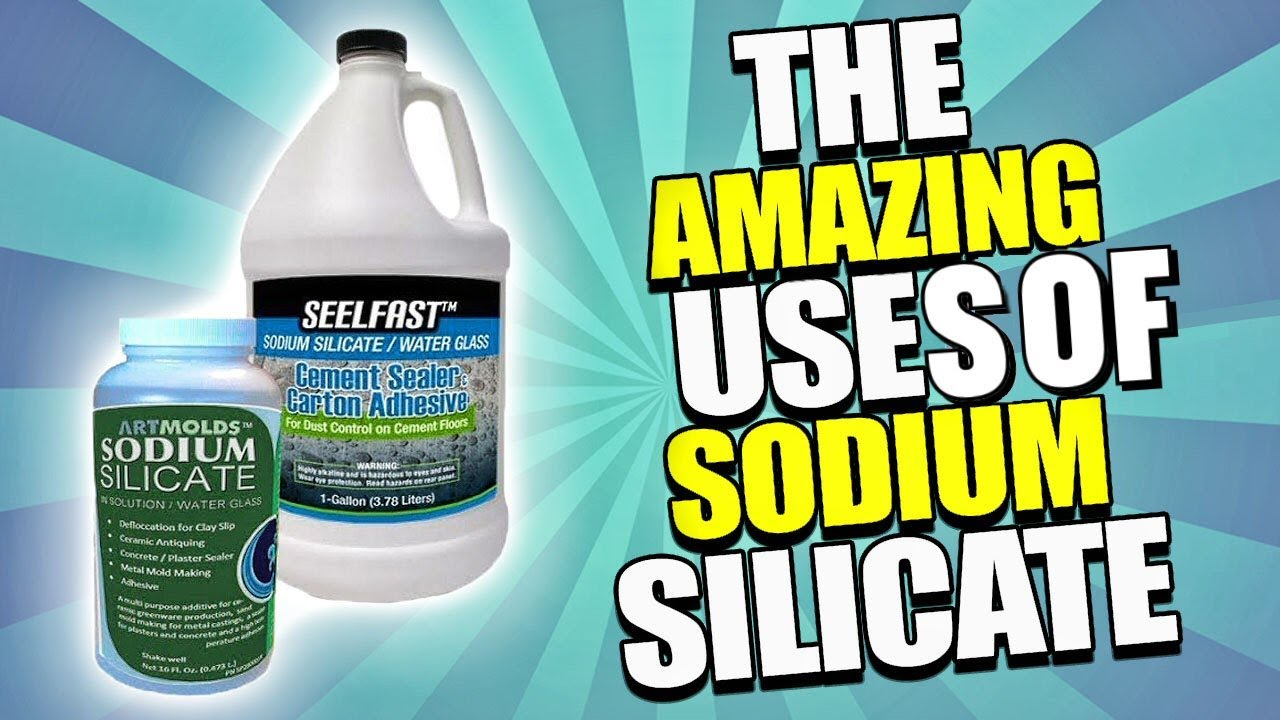
By itself, it's not all that interesting, but it's a useful precursor to many silicon based chemicals. Now i already did this many years ago using sodium hydroxide and silica gel from desiccant bags. But you needed rather high temperatures to dissolve the silica gel desiccant.
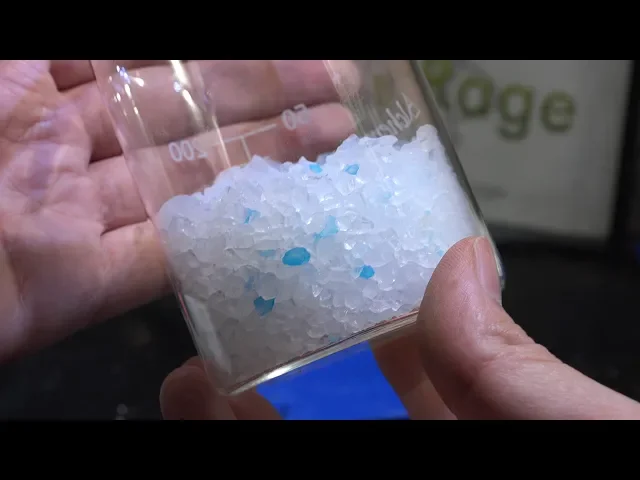
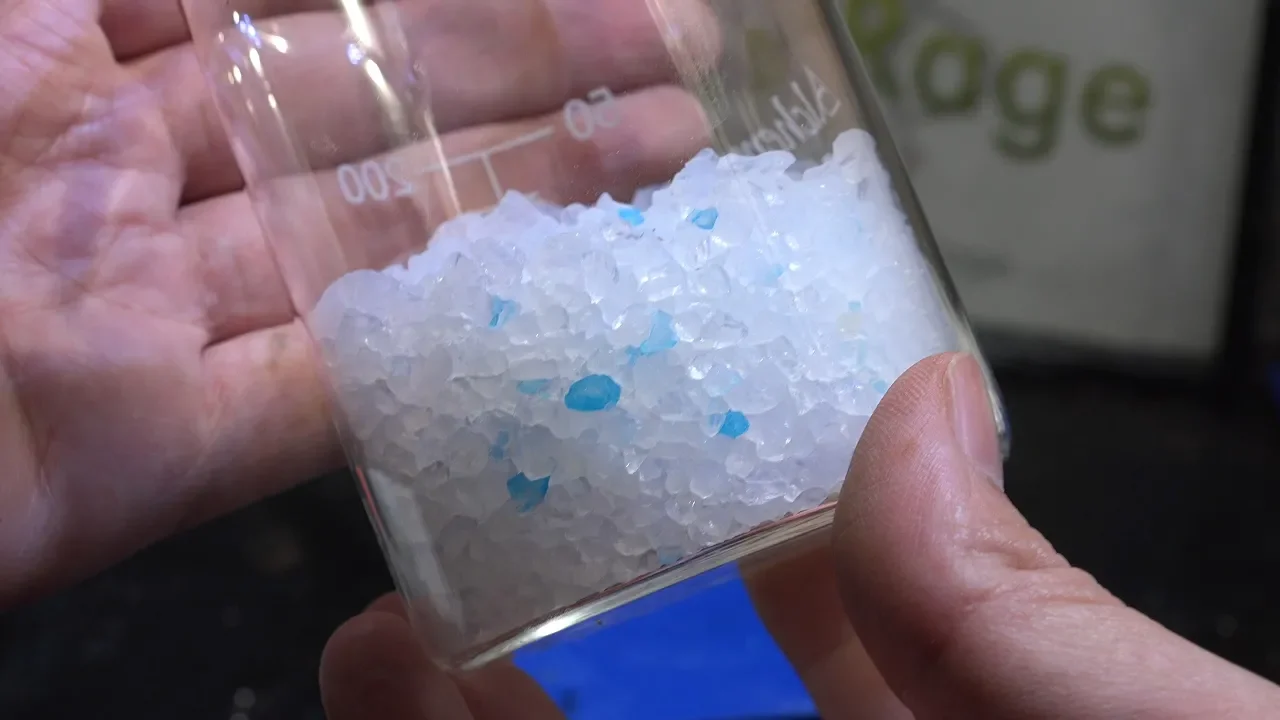
I've recently found something much better, silica gel based cat litter. Now i know most cat litter is based on clay but you can find some types of cat litter based on silica gel. It's usually called crystal cat litter or some variation thereof.
While expensive for cat litter this is much cheaper than silica gel desiccant packs. Now silica gel is clear or white, so you're probably wondering what these blue particles are. These blue particles are actually silica gel that's been prepared with an indicator to show if they're wet.
Very high quality gel used in desiccants is made with small amount of cobalt salts. They're blue when dry but change to light pink when wet. They'll change back to blue when heated dry so they're reusable.
Cheaper brands like the one i have here just use blue dye that's leached out with water so they can't be reused. Very cheap knock off brands just use permanent blue dye that doesn't change color at all. I guess they just put them in to make the gel look expensive.
For most of my work none of this will be an issue but if you're doing sensitive chemistry you might want to pick out the blue particles and just retain the white ones. Now to make sodium silicate we start with about 60 grams of the silica gel based cat litter. I strongly recommend using new cat litter.
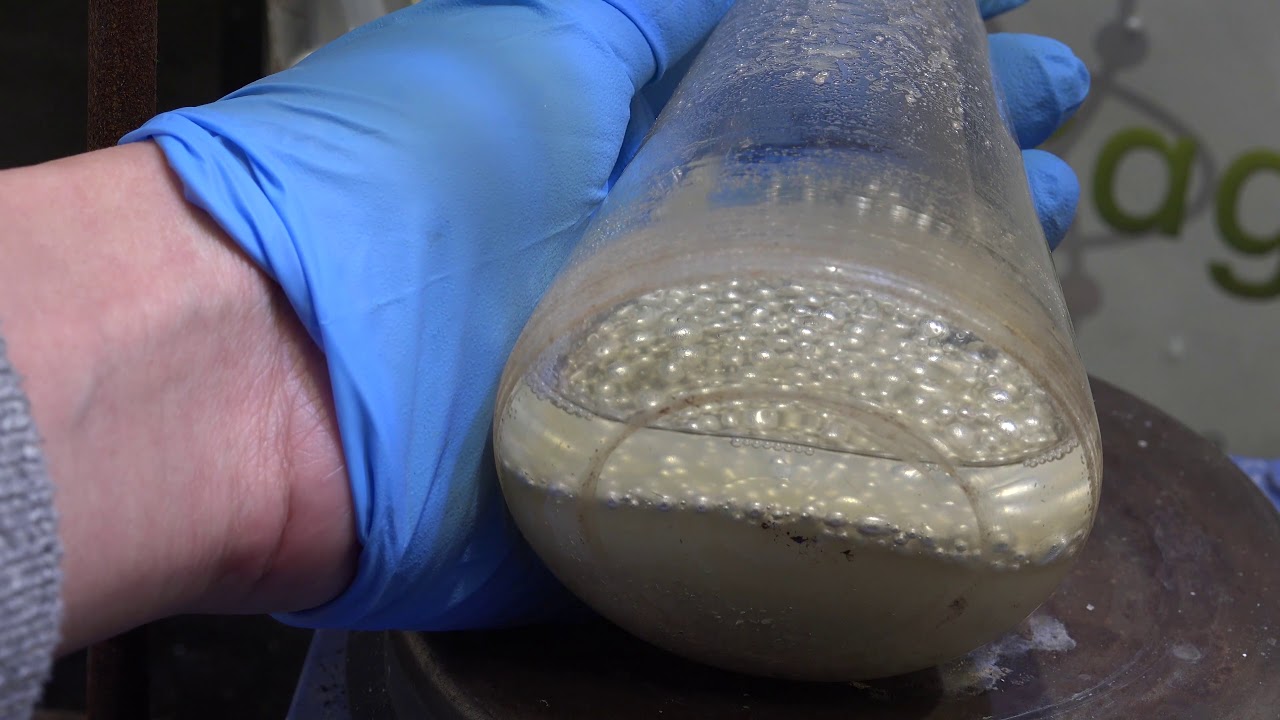
You can used previously used cat litter if you desire, but i feel that would be a bad idea. Anyway to this we add 100 mL of water. It may bubble but that's just air inside the silica gel being forced out by the water.
It's not actually boiling. You might be wondering why the blue indicator particles are still blue. The color change is actually quite slow since it takes time for the water to diffuse in.
I found i had to leave it overnight before any significant color change was visible. Now with stirring, add 80 grams of sodium hydroxide in small portions. Don't add it in all at once or it will boil out of control from the self-heating.
I got my sodium hydroxide from drain opener. So what's happening. Silica gel is essentially amorphous silicon dioxide that's been made by aqueous chemistry.
The sodium hydroxide dissolves the silica gel to form sodium silicate. Commercially, sand is used as the source of silica but that requires strong heating to dissolve. The self-heating from the sodium hydroxide dissolving alone is not enough.
This is because sand is a crystalline solid, and to break up the crystal structure requires energy. But silica gel is amorphous as well as being very porous. So the sodium hydroxide can easily penetrate into the particles and very little energy is needed to break up the amorphous structure.
I'm not sure why, but the silica gel in cat litter is particularly reactive and will dissolve in sodium hydroxide without additional heating. This is also a vast improvement over my previous source of silica gel from dessicant bags, which required strong heating to dissolve. Now the ratio i'm using of two moles of sodium hydroxide and one mole of silica produces the classic sodium silicate formula known as sodium metasilicate.
But sodium silicates are not strictly defined as this ratio. Sodium silicate actually covers a broad range of ratios and you can use four moles of sodium hydroxide to make sodium orthosilicate. Alternatively you can have silica rich formulations and even non-stoichiometric ones.
There isn't a hard defined limit as to the ratios you can have. Although as you approach higher amounts of silica, it tends to become harder and harder to dissolve. Nonetheless they're all given the generic name of sodium silicate.
Now It may be helpful to scrap the sides of the container for silica gel particles. They don't wash down and need to be mechanically removed. Now once all the sodium hydroxide is added, let the mixture stir for several minutes to ensure complete reaction.
The silica gel in cat litter might not be all that pure so i recommend filtering to remove any insoluble particles. This should be done while the solution is still hot. If it's cold it becomes a viscous syrupy mass that's extremely slow to filter.
Now whatever you do, do not use fritted glassware to filter the sodium silicate. Sodium silicate is essentially dissolved glass and can clog your frit. Use a disposable paper based filter.
And there we have it, a solution of sodium silicate. Now as said before, it will be a viscous syrupy mass. I recommend keeping it in liquid form and pouring off the quantity you need for your experiments.
To standardize the concentration, top up the solution to a known volume and then divide that from the molar quantity to get the molarity. In my case, i'm topping my solution to 200mL of volume. Since i have one mole of sodium silicate I divide that 0.
2 Liters to get the concentration of 5 Molar. Be sure to stir your solution to homogenize it. Now you might be wondering if you can dry it and get sodium silicate crystals.
You can, but i don't think it's worth it. This syrup doesn't seem to evaporate, and while you could try to boil it dry i found there was a terrible side effect. While most chemicals boil dry into a powder.
Sodium silicate dried into a very hard cement that cracked the glass. This isn't surprising actually, sodium silicate is well known for being part of many types of inorganic binders, cements and other adhesives. I'll probably explore that particular chemistry in the future.
Now a special note for those of you using sodium silicate for making insulating liners, forges, and other refractory uses. Those mixtures require a silica rich mixture rather than the sodium hydroxide rich mixture i'm showing here. So you'll want to modify the original procedure to use a 3:6 or 4:6 ratio of sodium hydroxide to silica gel, rather than the 8:6 ratio I presented here.
The 3:6 to 4:6 ratio is more silica rich and is more widely known as water glass or liquid glass. And this can directly be used as a drop-in replacement for the water glass or liquid glass version of sodium silicate often used for refractory compositions. While the 8:6 ratio I presented in this video is more intended for amateur chemistry uses.
You can still use the video version for refractory mixtures, it'll still work. But i imagine the properties would be somewhat different than what you're expecting. So make the adjustments to your procedures as necessary.
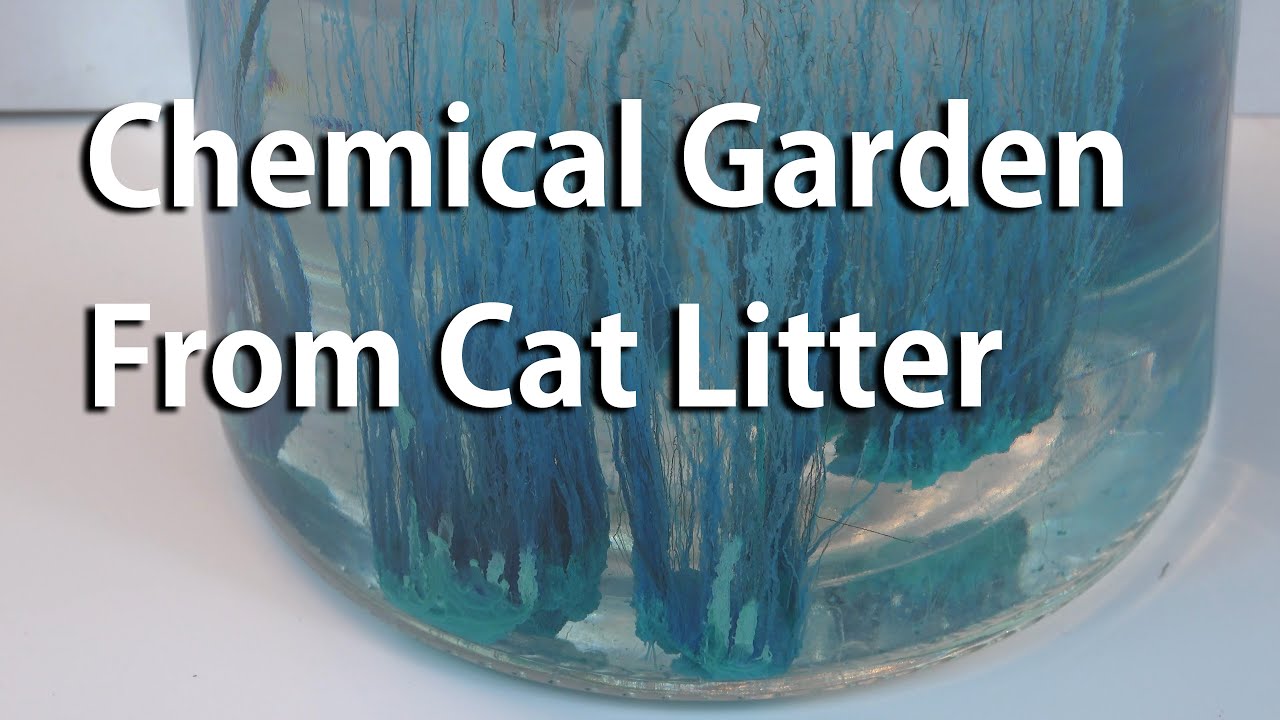
For now i just want to use the sodium silicate as part of a much larger project to make various catalyst supports. I also intend to revisit the classic chemical garden experiments. Thanks for watching.
Special thank you to all of my supporters on patreon for making these science videos possible with their donations and their direction. If you are not currently a patron, but like to support the continued production of science videos like this one, then check out my patreon page here or in the video description. I really appreciate any and all support.