Brett welcome to the show great to be here thank you for having me my pleasure do you have a favorite quote something that inspires or motivates you that you can share with us I I think that uh there's plenty of inspiration in Adrenaline and startup so one thing I try to remember is uh one of my favorite quotes is um we have to learn to want what we have not have what we want and so you know there's ups and there's downs and it's easy to take it personally and uh you know I think sometimes
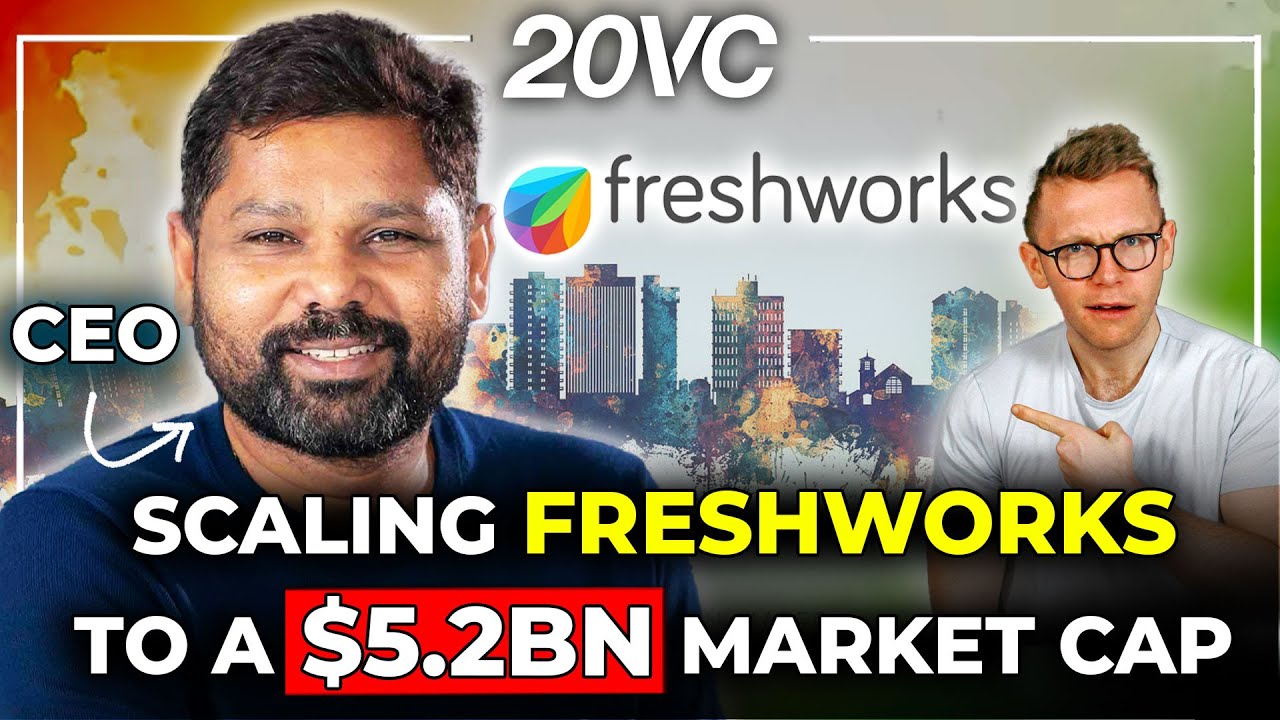
we just have to be grateful for uh what what we have so let's talk about Kumo space tell us what does the product do who's it for and what's the main problem you're helping to solve yes so uh Kumo space is a unified communications platform built for remote distributed teams so the idea is that you have all of their people and all of their conversations and they're all in one place and so um every day people get up they enter Kumo space and there they have essentially it's like allinone slack plus Zoom plus Loom plus
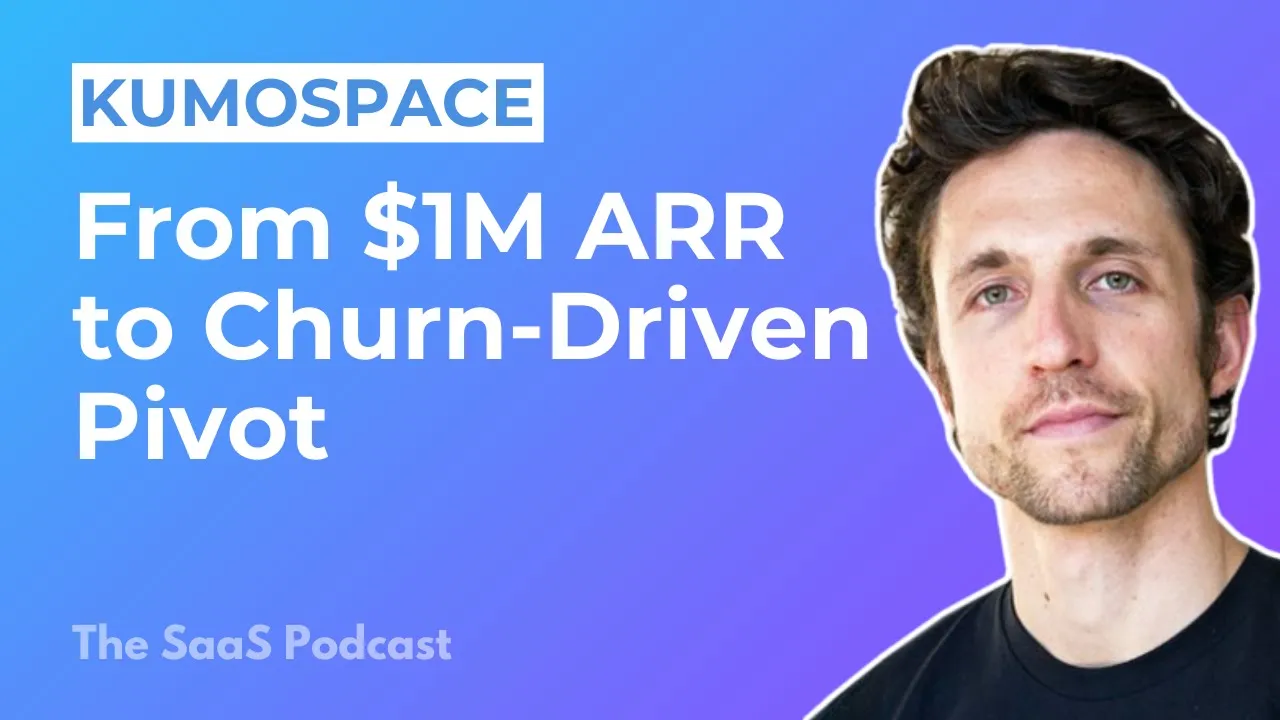
uh otter it's kind of like if you think about like what HubSpot is to your sales and marketing stack for smbs Kum space is that for your communication stack and focused on remote teams can can you give us a sense of the size of the business where are you in terms of Revenue number of customers size of team we've got a few million users uh we launched in in 2020 and um we are you know seven figure B business again which I guess we'll get to that we were uh we got to a million in
ARR in two and a half months the first time around and then immediately had to throw away that business start again have been talking about that we also we're we're only 16 people uh trying to keep it as lean as lean as possible and I think you've raised $25 million to date yeah we're we're really lucky we had a bold start uh Ventures from New York City um at Sim and Elliott as our seed investors that are all friends of ours and and then we um had light speed with Paul Murphy lead our series a
so the business was founded in 2020 I want to start with like where the idea came from but maybe can you just tell us like what were you doing at the time because you you you do a lot of stuff and you got a lot of plates spinning so uh what were you doing back then and then sort of where did this idea come from yes so um I you're alluding to I also run a New York based preed seed stage Venture Capital fund called charge Ventures we write sort of$ 250 750 million checks into
companies just getting off the ground really focused on New York City and um I had been running that with with my partner Chris iachi since 2015 and so uh that's still going we actually nothing think out of our third fund out but uh it was you know it was 2020 the pandemic had just hit I was doing a million Zoom calls a day and I was thinking to myself like there has got to be something better than Zoom if Zoom is the end of um Communications then this a very Bleak future indeed and and so
uh I used to run a um basically a monthly in-person networking event uh for charge and the idea was to get a bunch of uh you know middle-age farts together and you know share deal flow and you know Angel Investing opportunities and when the pandemic hit everyone said you know oh why don't you bring that line and I was like well I don't really want to give a zoom presentation to 50 of my friends every month that sounds pretty terrible and so kind of realized I that wait this is kind of weird it's and even
in 2020 there was no technology that enabled multiple people to congregate in real time online and have multiple different conversations in the same place and so my co-founder at Kumo space guy Yang ma we've been friends for over a decade he engineer went to Princeton we had built two companies SC so he built the Android app at my first company sonar and then we were Co Founders at uh second company switch and then um he was just quitting Oscar he'd run All Tech um basically consumer facing technology at Oscar Health which is a billion dollar
insurer tech-based insurer out of New York City and he was quitting in the middle of the pandemic and he was sick of it he was like gonna start a new company and I was like well here's this problem people can't meet online in real time and have multiple conversations the same place same time you know and then he said okay two weeks later he came back with the Prototype and um you know as a VC I see a lot of nent Technology you know and usually you have to kind of squint at it really hard
and say well maybe if it had this or maybe if it um you know had a million users on it there might be something more interesting here but in the Prototype that Yang built which was you know a very Bare Bones version of Kua space it was just pure audio it didn't even have video at the time we could tell that there was something about this idea of spatial audio which was this idea that you know if you're in proximity to each other in Virtual space you can hear each other and if you're not you
can't which is sort of how physical spaces work and so you know at the time Yang was just going to run in and I was happy he was gonna have the idea and then I was advising and then I was gonna Angel invest and then I was GNA invest from the fund and then the fund was gonna lead and then you know right before things already had traction it was moving Yang's like you know why don't you just get more really more involved and so I felt very honored and was excited to do it because
um it had been 10 years since I had built a company and this was the first opportunity that got me excited enough to get back off the bench uh for and get back into the arena as an entrepreneur so you mentioned earlier that you you guys got to the first million in AR in was like two two and a half months how much later did that happen from the time that Yang had built this initial demo or prototype and and secondly I want to dig into like how did you get that kind of growth in
in just a couple of months yeah we Yang buil the prototype in May uh we launched it started you know I think we first started discussing it in May and we you know launched to the market in August so pretty quickly afterward and it just started growing organically you know that's the nice part it was inherently viral product people would share it they were meeting it was also during pandemic no one had anything to do so they're all excited about new things to explore online and um we raised our seed round that fall basically kind
of um Thanksgiving uh time frame so pretty quick you know the bolsar guys I had known for 10 years I'd always wanted to work with them and they were really you know great guys very well respected SC investors and um you know frankly at the time Kum wasn't even a sass SP it was really a consumer application I mean you know we had weddings in Kumo space we had wakes in Kumo space we had graduations and college recruiting and people were using it as offices and lectures in I mean all over the place so they
we just picked them because they were very we know that they're the most founder friendly investors in New York and so then we built that next year and uh kind of we really figured out customer customer acquisition by the summer we we and happy to share about that but you know we had we noticed we had a huge uptick in traffic one day and we were like where is that coming from oh that came from Tik Tock wow that's kind of weird how do we replicate that and so anyway we F out cision we were
going growing and we were growing adding hundreds of thousands of Maus above and um at that point that was going into the fall and we kind of realized well let's throw in the After Burner and you know wow we're hyperscaling let's turn on revenue and so we turned on revenue and you know yeah in two and a half months we were over a million AR and that's you know when we fundraised you know everything was up to the right I think there's always a bit of a gabit when you're trying to fundraise right because we
sort of saw the way customer acquisition figured out and we stepped on the gas and we just started investing and you know we had only raised $3 million seed round but we start you know at one point we were spending $880,000 a month on customer acquisition to you know to scale which is kind of scary at at the time but you know that's how you do it and uh the problem was that we didn't even see it is that we turned on a subscription product and people were using us to host virtual events as particularly
at the end of that year in Q4 2021 and um they were hosting a lot of holiday parties in Kumo space and the problem was is that it was an episodic use game was not a it was not a daily use case and so as fast as the revenue came so so came the churn with with and crazy Fury I mean I think we turn there was like 40% turn or something in a b and so we thought about keep growing because we figured out the growth mechanism but we were like what is the point
you know so we actually ended up having to we shut down the events business you know a few months later and then sort of pivoted the business into the you know what we call Virtual Office uh business that that we have today which is basically you know a productivity suite for remote distributed teams but that that that definitely sucked one the first thing I want to understand is like you're you get to a point where you've hit seven figures and you can see that there is a potential problem which is getting bigger and bigger with
this you know like you said like this episodic use how easy or hard was it to make the decision to pull the plug and say we're going to do a reset I imagine that most Founders especially if this is their first time that's going to be an incredibly incredibly difficult decision to make so was it just as hard for you or do you guys feel like because this wasn't the first time you were building a company May maybe you kind of had a cooler heads and were more rational about the decision I don't know want
to just understand that bit more the the problem is that initially when you're growing that fast you don't actually um you can't actually tell like the turn is hidden at first is is part of the problem so we didn't even notice it immediately right because we're growing so fast that the fact that some people were churning was not it was not obvious right it was you know took a couple months to real I like oh okay and you know we're pretty nent we're just we just launched you know the the all the metrics weren't as
tidy as they should have been and um or as you know they eventually will get to but but I think once the CH came it was pretty obvious I mean I I don't even know how business like you know hop and how they keep pushing on growth I mean they must have had just such demand that they you know could ignore the turn and then keep growing but it's you know when when your bucket is it doesn't even have a floor in it you know if you're if you're trying to if you're trying to bring
water back home with with a cylinder um it's gonna be pretty tricky so I think for us we had the balance sheet and you know we we're also lucky to have VAR supportive investors I mean I think they realized these guys you know Paul Murphy is an entrepreneur himself he built and sold compan called dots and gaming which is like very focused on you know customer acquisition or retention and I think he you know he knows well enough that like there was no that was a game of finding someone to hold the bag right you
know the only way that would have worked as a quick flip and that was not what any of us were in it for so I think as soon as we realized the problem it became pretty obvious that we had to do something else so you you you go back to the drawing board and you said you you talked about this kind of this Virtual Office was this like mainly like a positioning thing or or did you have to like fun Ally changed the product well so what happened was we actually were going to have we
had been fully remote company and we were scheduled to have our first company offsite and you know we're all going to meet in person maybe there was 10 of us at the time and uh we're already very excited about it it had been you know a year almost two years into the company and um this is right after we raised the money and um we everyone got we got Omron and so we were like well that's a bummer but you know luckily we're very well positioned to throw a virtual offsite because you know we built
virtual vet software and uh so we threw a virtual offsite and we s out a survey to the team beforehand and we said you know what do you like about working in c space What hate about working in k space and so what they said they liked they were like we love working remotely we love the flexibility it adds for our lives we love our team you know we love shipping code you know shipping code building fast and you know moving fast bringing things and what do we hate well we uh find cross departmental collaboration
and communication really challenging and we don't know our co-workers as well as we wish we did and we don't know you know it's hard to know who's around and we kind of realized we had this sort of stupid epip moment where we said wow we have all the same problems as every other remote company out there in the world and we make virtual event software and so we said you know what we're just going to live in the product we're GNA literally live in Kumo space and so then we just started dog fooding it and
that worked out pretty well because we immediately realized okay well here are all the problems to using Kubo space as a Virtual Office and so that was the first six months of um 2022 was just kind of like building table Stakes which is like you know doors which enable uh privacy private conversations and you know statuses so you know you know someone's going to be there or at their desk or not or or available and you know kind of table St stuff and that's actually how we kind of transformed the product was by You Know
M forcing ourselves to use it in a certain way got it okay so you mentioned Tik Tok as as um an acquisition T Channel and it it kind of made sense when you were talking about the first version of the product and kind of being very consumer focused and you know people doing weddings and whatever but is Tik Tok still a a growth channel for for you today with the with the product as it is yeah so this is actually funny because we um have experimented with a bunch of different so what okay so what
happened initially was we um were monitoring our traffic and we had this crazy in traffic and we realized oh wow we went viral on Tik Tok we said oh what if we can manufacture that so you know influencer marketing we got some influencers and we realized well like this works but it's really labor intensive to just be finding reaching out to a bunch of influencers negotiating with them signing them up getting them papered getting them to create the content that we want inspecting that post getting them to post that content following up and then you
know paying people right and so we were like wow we don't we actually need some tooling to do this and so we um not one of our portfolio companies charge is called grin and they're a CRM for influencer marketing that basically helps that whole process that just so we started using them and we were able to scale up our influencer marketing from you know maybe five posts a month to I think at one point we're doing six or 70 with you know one person managing it and um what what we realized is we tried advertising
you know on LinkedIn and Linkedin ads and that's where you would think about doing marketing but we what we realize is that everyone's on Tik Tok like it's the same people the same people are using Tik Tok and Linkedin it's just the only difference is that buying that getting in front of that person on Tik Tok is a tenth of the cost as it is on LinkedIn right and so you know we had all these perspective customers CEOs of you know smbs and startups and BPS at big companies and they were you know say where
do you find us they say oh you know social media but they didn't want to they didn't want to say Tik Tock but they were on Tik Tok and so we realized it's like well if you can just create content for that AUD person on Tik Tok you know you it's I I think we think of it as like B to C to B to B to C to be marketing right like you get in front of that consumer and then they bring you into their business and so that's I think something that a lot
of we're coaching a lot of our uh portfolio companies in charge on how to use that technique I think it's pretty effective okay so two questions about that that's like super interesting number one is like what type of content were you creating that actually worked on Tik Tok it's going to be very different to the kind of thing that I imagine you would you would try on LinkedIn and secondly how do you target these people like on LinkedIn it's pretty easy right you can Target by company by jaw by whatever but how do you do
that on Tik Tok so it's funny it's kind of like the answer is the other question so I'll do the latter first so you don't need so you Target by based on the content that you create so you create work content you create interesting content about work or you know because if you're a professional you know you can laugh at a a joke about the office or about your Zoom culture uh you know anywhere right like it's just uh black humor for a lot of us uh death shakies and so we would create you know
content with people with with about you know working about the Ridiculousness of it just about the productivity of Kumo space or about it as an alternative to being in The Brady Bunch box of Zoom so we would just create that content and it's nice because Kumo space is a video chat product that's a big part of our our product and so the video nature of our product showed really well on Tik Tok right because it's it's a video medium and we have a video product if I told you what a virtual office is it's pretty
hard you're like what is the Virtual Office I don't know but I can show you on video very easily so there was a very nice product Channel fit right I don't think people think about that enough which is like okay what is the right channel that my product shows off its best attributes in so we're a video-based product that's an advantage over us k space is far more interesting and engaging product than most SAS products most SAS products probably wouldn't show well on video right but Kumo space does so there's a way for us to
actually Express the product way better than we could in a sales call or in an email so I think there's great PR product Channel fit there and then in terms of targeting that's the nice part about Tik Tok right because everyone's like oh you know do you have to have the right influencers or do you you know get right well that's not how Tik Tok Works actually Tik Tok works by having the for you page which is perfectly algorithmically generated and it's based on what that type of content that user likes right so if the
user is engaging with work or focused content right Tik Tok will get our work focused content if it's good in front of that we don't have to worry about that I didn't realize that so it's in in many ways it's like what you just said at the start of this it's like the targeting is really about creating the right type of content and just letting the algorithm take care of the rest it's it's very counterintuitive because I think a lot of people my age right you know Millennials they are so stuck in this like social
network kind of mindset and they're like oh it's about you know their followers and who their fan you know who their followers their fans like well T doesn't care yeah yeah super interesting okay so you mentioned Also earlier about the you know the Tailwinds with with the time around covid and and people going crazy and looking for all kinds of tools and then how that helped you grow the first version of of Kumo space when you kind of went out with this this Virtual Office product um I think it was probably like on the timeline
like probably late 2022 I'm guessing and probably things are changing right I mean things are sort of calming down people are doing maybe a little less online some people are starting to head back to the office how did that affect you guys obviously we launched and we had the full Tailwind of pandemic right every you know all the internet stocks were getting pulled forward and uh you know every we realized so much was possible Right think before the pandemic you realize wow I can run my own business off you know online that that's crazy I
would have never expected that to be possible and then sort people were surprised the upside and I think a couple years into it everything was working but there's kind of this nagging feeling from a lot of people you know that maybe something wasn't working or there was kind of a long-term cost of running your business you know fully remote right and so you have all these kind of managers that have nice houses by the office in the nice part of town that we're bringing everyone back to miss the office you know we miss missed the
the brainstorming or the you know conviviality of the office and you know I miss the visibility of seeing my team and the mentorship that young people have when they can see their boss and get connected with them and the quick collaboration that you can have when you can tap someone on the shoulder and get an answer to your question and you know the culture that you know you can create when you're having multiple interactions people over the course of the day right across your organization and so in 2023 I think it was like okay we're
going back it's return to the office and so 2023 was all about this narrative about return to the office which obviously was challenging for for kuo space right because you know if they're R the office why do I need this this tool and so I'm happy to report that at least for us that uh that didn't happen so you know 2023 was all about people trying to return the office turns out that didn't happen you know commercial real estate utilization is still 50% of what it was pre pandemic and it's stubbornly not not budging people
are working you know still working from home 30% 40% of the time you have the you know hybrid Arrangements which it turns out that people you know one of the reasons people are so productive during the pandemic is because it's IND the indisputable fact that people get more they work longer and they get more IC work done during when they're working from home right because they're not bothered by you know people all day every day and they don't have the commute so they end up you know working from their desk you know at different hours
different times and um so what I think everyone realizes like oh crap they're not going back to the office and so actually at the tail end of last year people started realizing oh or you know this isn't happening maybe I should just actually fix the problem instead of trying to just revert time back to what it was and so we actually had you know our best quarter forever in Q4 23 I think because people kind of realize okay we actually have to get some dedicated tooling and technology that solves the problems other than just forcing
everyone back into this suboptical solution and putting them back into a box but but to your question earlier you know I you actually were saying hey you know was it hard to make this decision to cut this business right when we had churn well that wasn't hard because it was very obvious what was far more challenging was you know the second half of this year where it was like crap like you know is this even a thing is you know is is remote work going to be a thing at all particularly when all the headlines
were saying everyone's going back to the office that was a much more difficult decision in having beliefs that like you know what I we know that this is better we know that this is a better solution even if people you know had been hesitant to try it beforehand because they thought everything was going to go back there it was we you know that that took actually discipline to to stay the course yeah so what what do you think I mean I mean obviously I know you may be a little biased about this but what do
you think the future of remote looks like in in the next few years is like are we still going to have companies and managers like trying to get people back into the offices or or are we kind of getting to a point now where people are just accepting that this is the new reality and and you know maybe some companies like such as yours you know you might be 100% remote and others are going to be more of a hybrid type you know situation and you need to you need to kind of plan and optimize
for both rather than you know expecting everybody to be in the office 100% of the time yeah I I I there's no there's no going back to 9 to5 I five days a week I it's just not happening like people appreciate and value the the flexibility far too much and so the problem is that you know your best employees are the ones that can and will work from anywhere when when they want to right so you know if you're a gigantic you know hyperscaler and maybe you have the leverage or if you're a finance firm
and you can literally pay people five facts student typical salary to to come to the office like sure those those companies might drag people on the office they tend to be small you know human capital you know small with very wellbe people but for the everyone else the truth is that the vast majority of our job can be done from our computer anywhere right like and I've been you know working on the internet for 20 years and um one rule is that anything that can be done or over the internet will be done over the
Internet over enough time uh you know we thought selling books sounded crazy 20 years ago and much less selling cars and hiring people and working you know not fully from you know anywhere in the world right but that's all come so I'm not betting against that I think you said it correctly like the world will be hybrid for some time to come but the truth is that there are already large departments in companies that were already already remote like we see this all time you I talked to all these Financial companies big Banks and their
it departments have been remote and distributed for 20 years right they've been taking advantage of this and so I just think that that will continue along accelerate an accelerated process and you know any function that can be spread all over the world for various cost and resiliency resents it will it will be how do you describe Kumo space to somebody like cuz it's not a zoom it's not a you know like some of these other productss and I think that's maybe the first thing that people maybe assume when you talk about you know Virtual Office
and and you know kind of a kind of a video product but what is it like is this uh is is this a new category is this like how easy or hard is it for people to understand I mean obviously if they're watching these Tik Tok videos probably they they get it quickly but um how how easy is it to to to to position and sort of articulate the message about Kumo space to somebody if you're talking to them or or maybe looking at another platform yeah I think you know that is one of the
challenges I think of a category creation right is that you are trying to describe something that someone has never seen or experience we therefore don't try to sell features so much as you know so benefits or a new way of working and um the nice part is that all those things I just described to you which I would say bu you know visibility accountability collaboration real-time collaboration and kind of culture so the reason you use a virtual office is actually the exact same reason that you might have returned to the physical office right is to
get those back those benefits and features the only difference is that we are you know a software solution that costs a tenent as much and has all sorts of benefits like software which is that you can remodel our office in a few minutes you can add an additional floor for for zero dollar you can get analytics about your team and who's arounded who's connecting and uh you know knowing who knows who uh and who to ask the right question to instantly and a bunch of benefits that you could never get in a in a physical
office so I think that the world has been given this false dichotomy of okay well you can either be really productive and you know in an office but miserable and have a commute and you know don't get to see your kids and see their soccer games or you know you can have good lifestyle and but you can't really get stuff done and you can't be productive and you can't be high performing and I think we just you know believe in a third way which is waking up and uh going surfing and then you know coming
back and uh being at your desk at 8:30 and uh you know closing closing that deal right I I just don't see that you it's not Rio has a nice thing he's like yeah anytime you know I was presented with two options I didn't like I just looked for a third yeah love that now aside from Tik Tok how else are you acquiring customers today what's what's working for you I think when we were talking a little bit earlier you mentioned conference like is that is that a way that you're use you're you're acquiring customers
today we tried to get PR we we had we had hired you know three different PR agencies trying to figure out okay how help us you know how how can we have someone help our get get our word out get pressed this a new Innovative solution you know how do we get this and and honestly it was a disappointment every time you know they just a lot of talk a lot of creating empty documents and not getting anything done and then you know to my marketing team's credit uh you know true M at heads are
marketing and um got some other great folks in there uh you know they just sort of took PR inhouse and you know PR is it's kind of a hustle game and so you know we got pretty good at stacking our PR so we would get one you know speaking gig and then we would basically send that to a bunch of other or anyone else that was having a conference we' get a list of conference people uh people hosting conference we built the conference we reach out to all of them then we'd reach out to everyone
else who uh was speaking at that conference and asked them if they had another you know if they needed someone else to the panel and then once we get one you know speaking event we would try to get another and we get on another panel and then once we were speaker then we could reach out to all the other speakers and particularly the ones that are potentially interesting customers and we would set up meetings with them and so whenever I go to conference I we basically my marketing PR department is essentially acted as pdrs and
I go there and have 30 minute meeting for eight hours so you know 16 meetings a day for the conference just lined up and um you know then making sure that those get passed back to our you know sales team and they can pick up the Baton and that is a you know it took us a while to get there but that is an effective of running a conference uh Playbook and then you know you kind of set up some dinners with prospective customers you know at at night or breakfast in the morning and and
for two days that that you get pretty good bang for your BT you know I think when most people think about events we going to like okay do we need a booth how are we going to promote our product and so on but actually just thinking about it as a way just to set up meetings back to back it sounds like so obvious when you think about it I feel like you know people talk a lot about hustling and start ofl I think hustling just means emailing people you don't know right yeah I want to
talk about uh product Le growth and your views on that and then we will wrap up and get on to the lightning round so yeah I mean I I know like you and I were having a little bit of a chat about plg before we started recording how do you think about that how is it working for you in terms of Kumo space I think a product like growth is obviously amazing it's been a bit idealized by The Venture capitalists you know talking about it and you know we all have Dropbox and slack examples but
I think there's this false dichotomy between okay I'm either product Le and the product is just selling itself or I'm sales Le and you know it's all outbound and and you're driving Pipeline and the reality is as as most things in business it's not it's not so clean and you know I think we realize is like you know we have a highly viable product we had people coming in you know from Tik Tok and marketing and people signing up and using the product and and so it's like you know very easy to say on The
Superficial level oh this is like a plg product right but I would say we learned pretty quickly that you know Kum space is not a perfect plg product for a number of reasons we you know with the end user might pick us up but honestly the sale goes through the team manager Elite or VP or C you know CIO or CEO or coo at a at a smaller company and so it's you know a bit of a top it's a top- down sale right so it's I think true plg product is like the end user
uses it and is willing to pay for it themselves and put it on their card you know their personal credit card and their corporate credit card and then you get a bunch of those and then you know you mest siid inside the business and then you know you try to roll up right like so I have pretty I think a lot of people try to fit themselves in the plg because that's what Venture capitals want but in reality that's actually not what they are and so in our case though it's a it's a hybrid right
in the sense that we are good at getting marketing distribution we're good at getting in front of users we're great at getting people to sign up for accounts right but the question is when does the sales motion begin right and so you know we had to move where we put our sales touch points in our funnel we had to we tried it all up and down our funnel before we settled in just the right place you know you know we started off just building the product and having sales bring in beta customers and dropped them
in and we didn't even want to think about distribution because you know we just want to build a core product then we said okay we want to be plg so we're going to put sales at the very bottom underneath product you know once they basically have already signed up you know sales people will help them it's like well that didn't work at all then we were like okay wait maybe we need to our sales assist customers are you know spending more money and are higher L than clothes so we said oh well let's just make
it so you have to talk to sales you can't even use the product before you come in well that was a disaster because because people didn't understand our product like for the reasons I said they needed to at least see it before they even knew if they wanted to Jun to sales and so we realized that the perfect place for us was right after people create a account in kubos space we realized that that was the best time to talk to them but talk to them in kubos space not with an email not with a
life cycle customer email but actually go and meet them in our product and so we call this drop-ins and that's when people you know site up for a space Kumo space and when they're in their Kumo space we get a little slack notification and then we drop and then we see that and then we send our bdr well actually our product specialist in and he just knocks in her space says hey you know this is Phil from kuo space just checking in seeing how you're you know enjoying your your kuo space can we help you
get set up is there any you having any challenges with that and that is you know a very native Channel again you know this is sort of product sales Channel fit right and so it's like what's the right Channel and touch point for your salespeople to connect about your product so it turns out for us it's in the product obviously and uh that took some time but you know it's been highly effective customers are very grateful when they're get to get this personalized service you know right uh even from a company that has millions of
visitors it feels like a bit of a strange experience I mean when you describe it it sounds so obvious and again so organic and and and natural but then I wonder like if I was signing up for similar let's go back to like Zoom like people understand Zoom right and so if I was like signing up for zoom and I get online and suddenly some dude at Zoom is trying to start a meeting with me I'd just be like what the H how how have people reacted to to that I mean look it definitely felt
uncomfortable to us too when we started but the truth is that meeting people in your product if you have their best intentions and you are try to deliver value to them and you're trying to help them get the most value you know we have a new product people never seen it before anything like it before so like of course they're going to need help of course it's there's so much imagine setting up an office a physical office there's so much goes into that it's not a oneman job right and so we got to provide the
people who cared enough about us to sign up create an account create a space we want to be there for them and give them as much support as possible and so I think it all depends on the relationship that you that you have you know with your with your customer and I think you know meeting them where they need the help it it's really the anecdote and meeting them in the most natural way that your that shine you know makes your product shine I think is what's important love it love it okay we should uh
wrap up let's get on to the uh lightning round got seven quick fire questions for you so just try to answer them as quickly as you can what's one of the best pieces of business advice you've received time kills deals what what book would you recommend to our audience and why endurance which is the story of shackleton's failed attempt across the Antarctic is H my recommended book if you are in a low time in your startup and you don't think you can go any further break the glass and read endurance great recommendation what's uh one
attribute or characteristic in your mind of a successful founder empathy for customers what's your favorite personal productivity tool or habit I think I have to say Kum SP here H well what's a new or crazy business idea you'd love to pursue if you had the time I think that generative AI for uh new social applications to mediate uh not mediate but enhance uh connections between real humans is a big opportunity I agree uh what's uh an interesting or fun fact about you that most people don't know I'm learning how to climb mountains but I'm afraid
of heights and finally what's one of your most important passions outside of your work uh well I'm calling you from Costa Rica where hopefully I will be surfing later today I'm jealous well thank you so much for joining me BR it's been awesome I know uh it took a little bit of time and effort for both of us to get this set up so uh I'm grateful that we were eventually able to do it and have this conversation if people want to learn more about Kumo space they can go to Kump space.com and uh if
you want to check out charge you can go to charge . VC and uh if folks want to get in touch with you what's the best way for them to do that yeah just hit me up on LinkedIn and uh they reference uh over's podcast cool well thank you so much it's been a pleasure H I wish you and the team the best of success and uh enjoy the surfing thank you sir uh wishing you the same and uh let's get after in 2024 cheers and