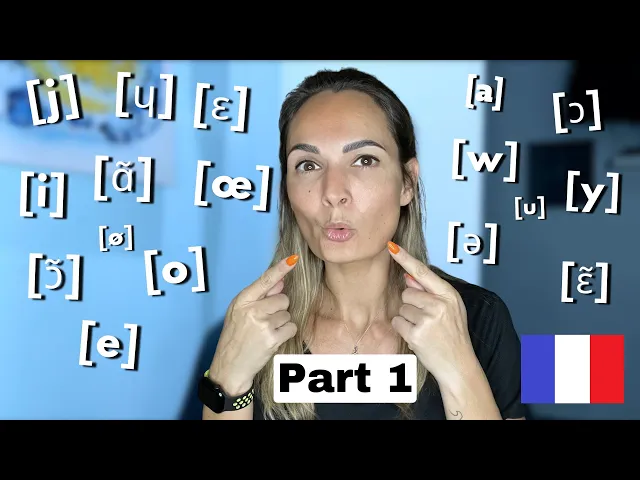
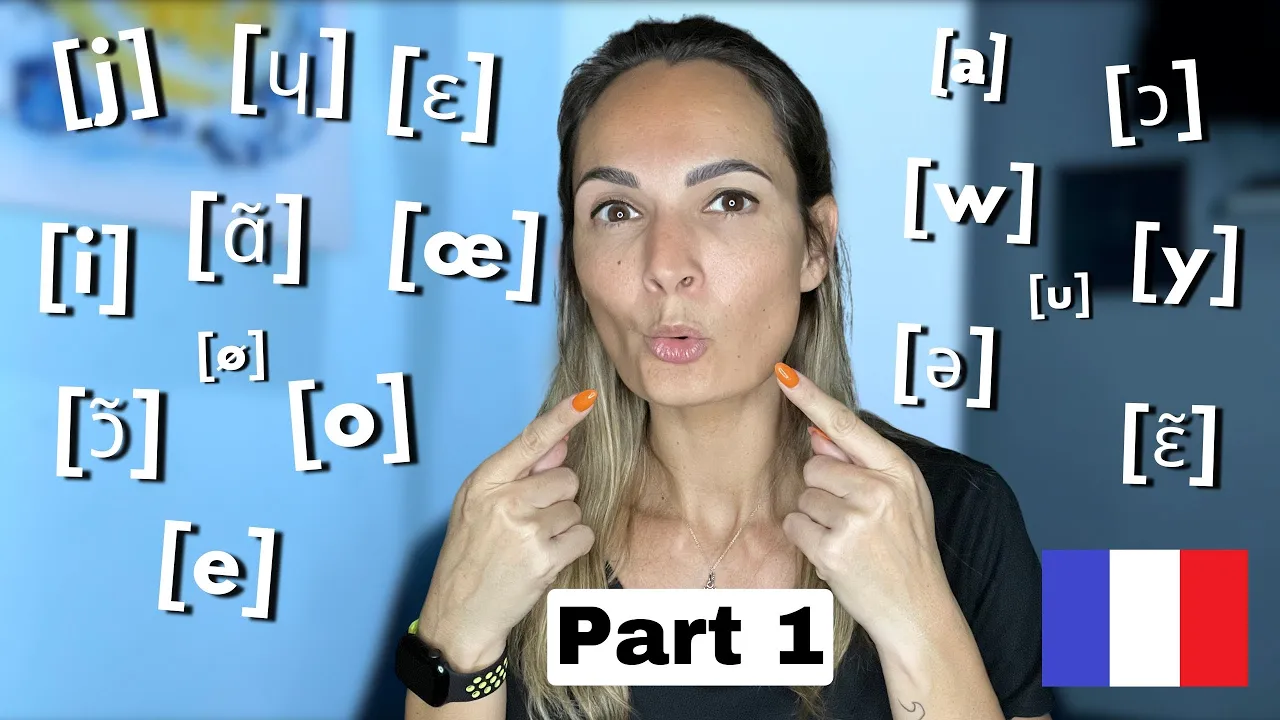
Would you like to sound more like a native speaker when speaking French? Well, in that case, this video is for you! I am about to introduce you to French phonetics and explain all the vowel sounds.
If you haven’t subscribed yet and you want to learn French hit the subscribe button and the bell to be notified every time I post a new video. Hey guys! Welcome, or welcome back to my channel!
For those who don’t know me, I’m Lexie. Let’s dive in! In order to improve your pronunciation and reduce your accent, you need to forget about the letters and care about the sounds!
Because, in French, we do not pronounce every letter. One or more letters can make a sound: “Œuf” (Egg) Four letters Two sounds [ɶ] [f] “Œuf” (Egg) “Quand” (When) Five letters Two sounds [k] [ɑ̃] “Quand” (When) In French, we have: ten oral vowel sounds, three nasal vowel sounds, three semi vowel sounds eighteen consonant sounds. This is the International Phonetic Alphabet or IPA for French.
We can pronounce any word in French by using these sounds. Now, I’ll explain all the vowel sounds, and I based this video on my French accent. I’m from Paris.
Oral Vowel [a] or [ɑ] Open wide your mouth! [a], [a], [a], [a] “Ami” (Friend) “Pâtes” (Pasta) Oral Vowel [i] [i] as in the English word “free” [i], [i], [i], [i] “Il” (He) “Dynamique” (energetic) Oral Vowel [y] The French U ([y]) is like pronouncing the sound [i] with your lips pursed and forward as you’re trying to blow a candle. [y], [y], [y], [y] “Perdu” (Lost) “Dû” (Owed) Oral Vowel [u] As in the English word “cool” [u], [u], [u], [u] “Cou” (Neck) “Où” (Where) There are two O sounds: a closed one - [o] and an open one - [ɔ] [o], [ɔ], [o], [ɔ] Oral Vowel [o] My lips are pursed and forward as I’m trying to blow a candle, and my tongue is backward in my mouth.
It doesn’t touch my lower teeth. [o], [o], [o], [o] “Tôt” (Early) “Eau” (Water) Oral Vowel [ɔ] As in the English word “all” [ɔ], [ɔ], [ɔ], [ɔ] “Homme” (Man) “Bol” (Bowl) There are two E sounds: a closed one - [ø] and an open one - [œ̃] [ø], [œ̃], [ø], [œ̃] Oral Vowel [ə] or [ø] Think about the English word “bed”, and pronounce the sound [e] with your lips pursed and forward as you’re trying to blow a candle. [ø], [ø], [ø], [ø] “Je” ( I ) “Européen” (European) Oral Vowel [œ] The open one [œ], [œ], [œ], [œ] “Seul” (Alone) "Cœur" (Heart) Guys, if you find this video helpful and you would like me to make one on the consonant sounds please tell me in the comments!
There are two é/è sounds: a closed one - [e] and an open one - [ɛ] [e], [ɛ], [e], [ɛ] Oral Vowel [e] As in “bed” [e], [e], [e], [e] “Parler” (To speak) “Clé” (Key) Oral Vowel [ɛ] It is very similar to the [e] sound but your mouth is a bit more open. [ɛ], [ɛ], [ɛ], [ɛ] “Elle” (She) “Seize” (Sixteen) Now let’s see the three nasal sounds. You can check out this video if you want to learn how to make them in detail.
[ɔ̃], [ɑ̃], [œ̃] / [ɛ̃], [ɔ̃], [ɑ̃], [œ̃] / [ɛ̃] Nasal Vowel [ɔ̃] [ɔ̃], [ɔ̃], [ɔ̃], [ɔ̃] “Profond” (Deep) “Prénom” (First name) Nasal Vowel [ɑ̃] [ɑ̃], [ɑ̃], [ɑ̃], [ɑ̃] “Enfant” (Child) “Temps” (Weather) Nasal Vowel [œ̃] or [ɛ̃] [ɛ̃], [ɛ̃], [ɛ̃], [ɛ̃] “Vin” (Wine) “Lundi” (Monday) And finally, let’s see the three semi vowels. Semi vowels can’t be used alone, they need a vowel sound. You will always have a semi vowel sound and a vowel sound together.
Semi Vowel [j] As in the English word “you”. [j], [j], [j], [j] “Ciel” (Sky) “Yeux” (Eyes) Semi Vowel [ɥ] It is like a short French U sound ([y]). [ɥ], [ɥ], [ɥ], [ɥ] “Lui” (Him) “Je suis” (I am) Semi Vowel [w] As in the English word “way” [w], [w], [w], [w] “Moi” (Me) “Moins” (Less) Guys, be sure to subscribe to my channel and you can check out this video next.
You can also find the link to the video in the description below!