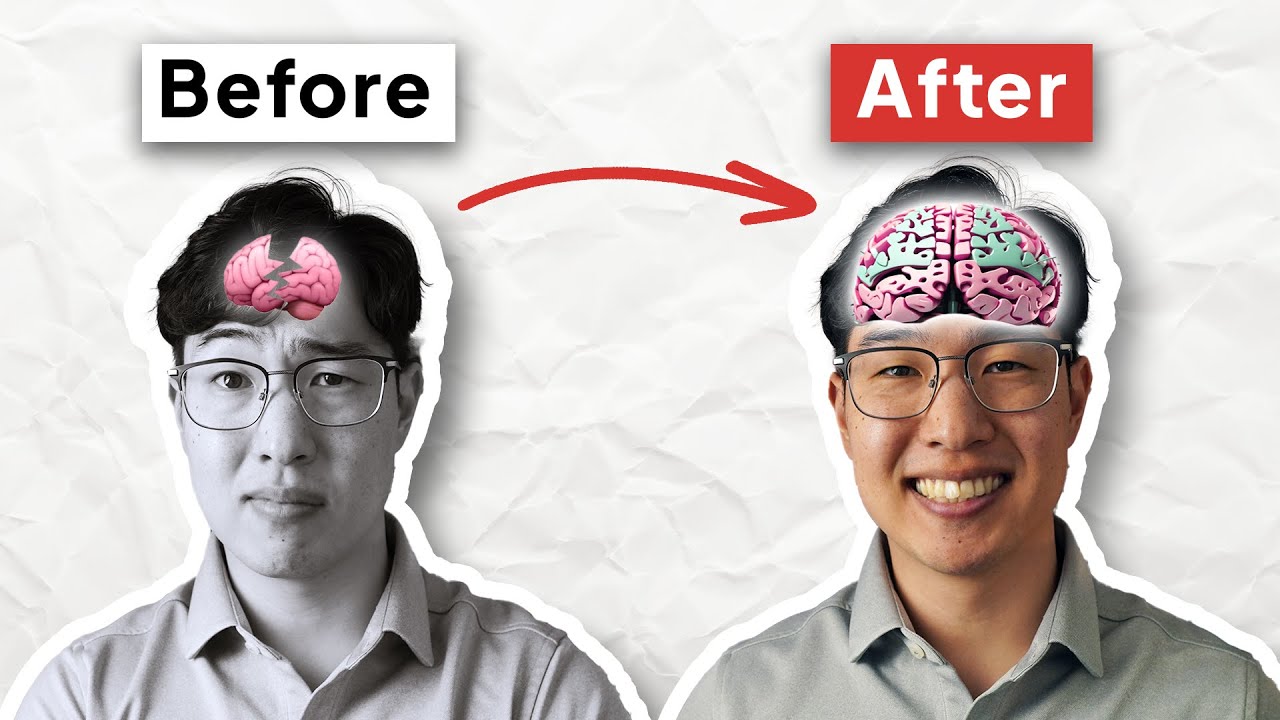
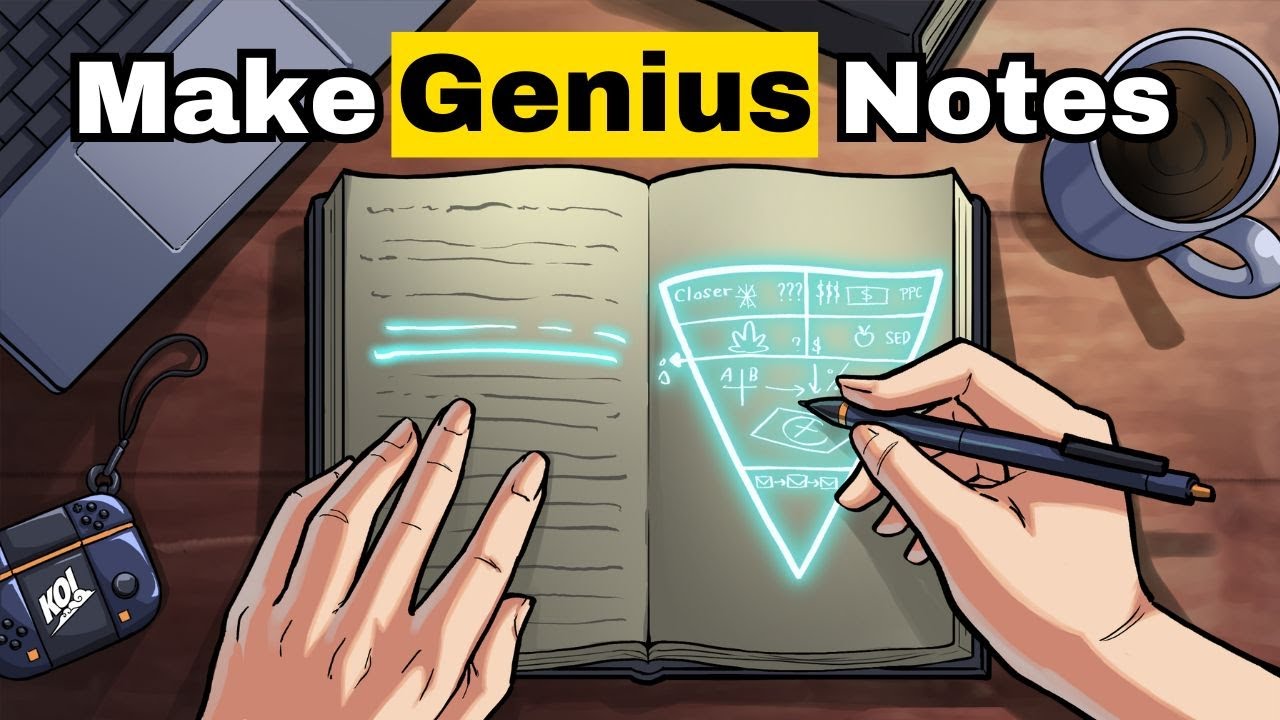
- In this video I'm gonna talk about four different ways that you can use active recall or quizzing to get better grades. Then at the end I'll talk about the most common mistake that students make when it comes to studying with active recall. (techno music) Hey, welcome back to the channel.
If you're new here, my name is Mike. I'm a doctor working in California and co-founder of RemNote. This is another video from our series on evidence based learning strategies where Matty and I take the research in cognitive and neuroscience and help you apply it to your studies to get better grades.
So if that's something you're into, definitely subscribe for weekly videos. So in this video, we're talking about how to use quizzing, AKA active recall. I'm assuming that you already know about this strategy, but in case you don't, check out this video right here where we dive into the science behind why this works so well.
I'd probably watch that video first for some context. Then come back here when you're ready to put the techniques to action. The easiest way to use active recall is to do practice questions over and over.
I remember in medical school, if you ask any student, they'll tell you the best way to study is to just do a ton of practice questions. What I would do is ask the professor or ask seniors who have already taken the class where to find the best practice questions and the best practice tests. If you're studying for a standardized test, then I highly recommend you spend some money to buy a question bank.
This is a totally worthwhile investment. A second way to use quizzing is by making flashcards. Quizzing requires you to not peak at your notes as you're trying to remember the information and making flashcards is the perfect way to do this and it's my personal favorite way.
But the best part about using flashcards is that you can also implement space repetition and interleaving at the same time as we'll discuss a little later. A third way to use quizzing is by using the toggles in a note taking app. I do it in RemNote, but you can do it in any app that has toggles.
Basically you write out the questions and then you nest the answer underneath the question where you can't see it. Test yourself and then check your answers after you've tried recalling it. The reason I don't like the toggle method as much as flashcards is that you can see all the topics coming up on the page.
If you use flashcards, you never know what the next card is going to be, so it always keeps you on your toes. But with toggles, if you remember the order of your lectures, then you might have a false sense of truly understanding the material. A fourth way to use quizzing is through elaboration.
Basically teaching or explaining the concepts. Teaching helps you learn the information. This is the teaching effect or the protege effect.
But the thing is, you don't actually have to teach someone else. You can teach yourself in the mirror or you can teach your stuffed animals. The important part is that you actually put your ideas into words.
You can't just teach it in your head, you have to say it out loud or write it down or type it out. But make sure that you're not peaking at your notes when you're teaching. This forces you to put the ideas into your own words, but if you wanted to take it a step further to really test yourself, then you can apply the Feynman Technique.
Pretend that you're teaching a five year old. You have to use simple words so that the five year old would understand and you have to constantly ask yourself why. So for example, let's say that you're learning about this drug.
Well, this drug treats asthma. Why? Because it helps you breathe easily.
Well, why? Because it relaxes your airways. Why?
Because it binds to this receptor in the body. Why? You keep asking yourself why because that's what a five year old would do.
This really helps you break down your concepts into its simplest parts and make sure you're not peaking at your notes. So now let's talk about a common mistake that students make when using active recall. A lot of students incorrectly assume that they shouldn't start quizzing themselves until after they've learned all of the information.
Well, in reality, you can start quizzing at any time. It could be after, it could be during, it could before even learning the material at all. If you start quizzing yourself before you learn the information, such as using a pre-test, this could be pretty helpful because you get the benefits of the hypercorrection effect.
This is when you thought you knew the answer to something, but then you end up getting it wrong which then leads to you being more likely to remember the right answer once you get it. So use pre-tests to prime your learning beforehand, then use the Feynman Technique during the process while reading through the material, and then after you finish reading, you can use flashcards, like RemNote, to quiz yourself. And that is how you can use quizzing in three ways at every step of the learning process to your advantage.
All right, if you enjoyed this video, we'd appreciate it if you could share it with your friends. Check out this video here if you wanna learn about different ways to implement space repetition into your studies and check out this video here if you wanna learn about different ways to implement interleaving into your studies. If you wanna chat, just follow us on Twitter or Instagram and send us a message.
As always, thanks for watching and I'll see you in the next video.