what the heck is a revenue operating system it's just sort of a term I made up to conceptualize this system a revenue operating system is the interface between me as the user the revenue leader or you as the founder and the resources and people around you to get those resources to do what you want that to do which is grow Revenue predictably in a cost- effective manner over time and so this is the system by which you can engage with your organization so you can think of it and an analogy I'll come back to this
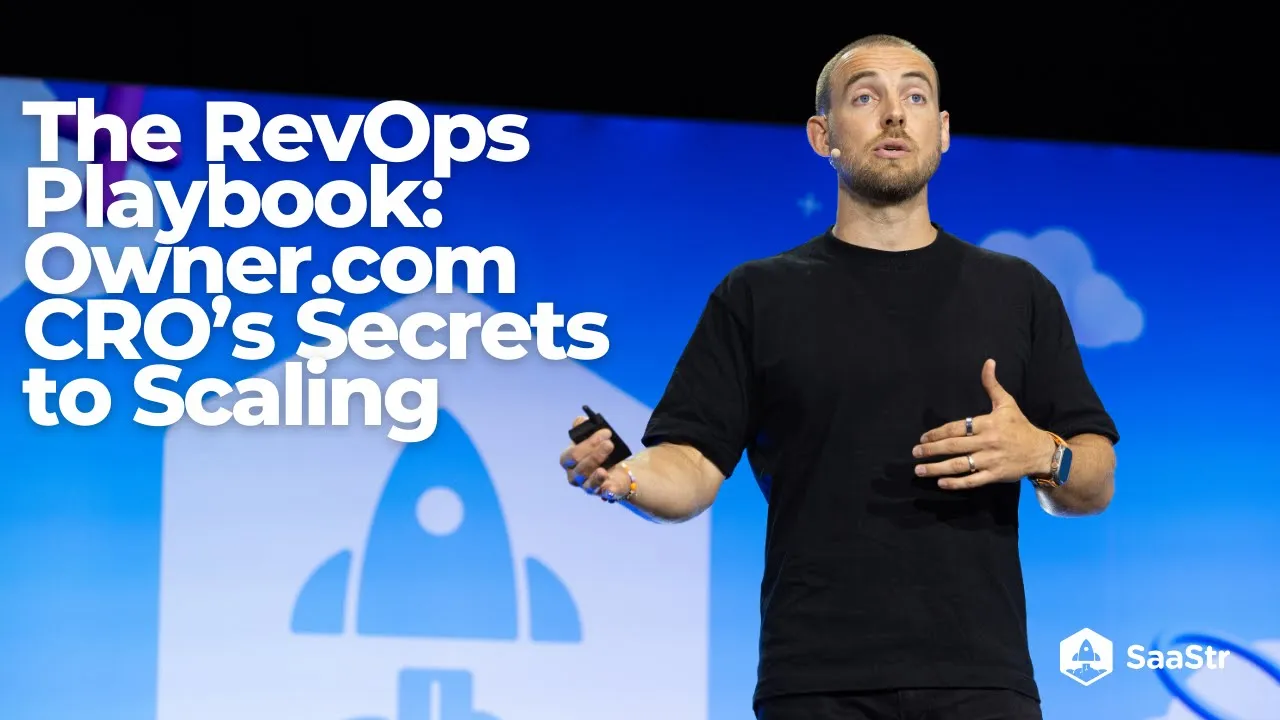
is like your Iron Man suit these are the tools that you put around you to give you superpowers to turn you from a normal mere human into a revenue generating machine and the components that I'm going to talk about today there's four big ones measuring managing planning and communicating please welcome Kyle Norton cro owner.com what's up everybody nice to meet you my name is Kyle Norton I'm the cro at owner.com and today we're going to talk about operating a revenue team with excellence and so just before I dive in uh I'd love it if we
could all give a big hand to the folks at saster organizers volunteers staff has been awesome couple days all right so we're going to talk about operating today uh a little bit about owner we are uh vertical SAS some software company we you can think of us like HubSpot plus Shopify for Mom and popop restaurants so the little pizza place that you order from on Friday nights and we do everything that they need to succeed online um I've been in sales leadership sales and revenue leadership for about 15 years uh the last 10 in software
uh this is my second head of sales head of Revenue gig uh at owner and previous to this I ran a quarter billion dollar business unit at shop of fire across sales post sales Partnerships a whole bunch of stuff so uh that's where I'm coming from over the next 40 minutes I'm going to give you my operating system this is how I operate my teams day-to-day week to week and the intention is that you can build more predictability in how you grow Revenue which we all want a lot so terms of an agenda we're going
to talk about what defining what an operating system is what is a revenue operating system we'll talk about why you need one in my opinions we'll get into some key principles of how you can build this for your organization and then I'm going to break it down the core components of this Revenue operating system some tools and things you can start to implement right away in your business and some keys to making it all work like where do I get started so the first big question like what the heck is a revenue operating system it's
just sort of a term I made up to conceptualize this system and this group knows well what a computer operating system is it's it's the interface between a user you and the software and hardware and your computer to make it do the stuff you want it to do and much like that a revenue operating system is the interface between me as the user the revenue leader or you as the founder and the resources and people around you to get those resources to do what you want that to do which is grow Revenue predictably in a
cost-effective manner over time and so this is the system by which you can engage with your organization so you can think of it and an analogy I'll come back to this is like your Iron Man suit these are the tools that you put around you to give you superpowers to turn you from a normal mere human into a revenue generating machine and the components that I'm going to talk about today there's four big ones measuring managing planning and communicating these are the four main pillars of your Revenue operating system and when this is done right
it is going to accelerate your ability to to grow very rapidly and we'll talk about how these things are structured and interrelated so keep these four pillars in mind as we go through it so just a quick bit of framing first like where does this fit into my company building stack so if you think about what are we trying to do as Leaders both Founders Executives and and revenue leaders uh you're trying to translate your company Mission into something tangible and so this is how I think about company building so you have your mission you
have your company values you translate those into uh a company vision and specific team visions that you can act upon that becomes more tactical with a specific strategy by Department the principles by which you operate uh and then your organizational Design This is who is in what seats what is the shape of your org what resources do you need and then finally this is where your operating system how do you get those resources to do the things that you want it to do in a in a predictable Manner and then finally under your operating system
you're going to build the tools and play and guides and training that your team needs and so this is the layer of the stack that I'm going to spend time on today this this operating system which is arguably one of the most critical things uh you need to be able to to win in your market so why do we need this thing because I know what a lot of you guys are thinking doesn't sound very exciting this sounds pretty bland Kyle you sound like the business school douchebag that Paul Graham told me to be wary
of and this doesn't sound like founder mode o cont this Revenue operating system is designed to help you turn the complete chaos which building a startup is into something that is much more orderly and so it's it's useful to frame like what does it feel like when we don't have a system to do these things when we've hired a bunch of reps and we're scaling and and there's some productive things happening but you don't have a a very good system in place I I call it being in the Vortex things are just happening around you
you're constantly getting surprised by things it feels like a new fire crops up every single day every single week because there's no control happening around you you you don't have a way to systematically move your organization forward and we we say that being in the vortex you're just being spun around in circles and I'm sure everybody in this room uh has been there at one point in their career and this Revenue operating system is meant to bring some order to that chaos we'll never get rid of that chaos that's I think why we do what
we do but this is about bringing some order and one of the key components here is about being able to see things before it's too late and to give you a couple tangible examples this is about seeing win rates slipping in a team or a segment or a channel and not seeing that fast enough and all a sudden six weeks has gone by and your inbound win rates have slipped 9% and you're about to miss your number well you didn't have a system or a rhythm in place to catch that times or you don't have
enough headcount in place to hit your next quarter and you go oh my growth model tells me I need 12 ramped reps I have six and I can't hire in ramp and get people to productivity in time to meet the model you're in the vortex that's that's you being in the vortex and so this this system is in is designed to help you control some of that so let's talk about some key principles the these are important framing Concepts as you build the components measuring managing planning communicating so it's about using the minimum effective dosage
about measuring the stuff you want to manage and matching the system to the state of your business the maturity the market all of that so let's get into uh the key principle number one so minimum effective dosage this is one of the most critical things because it's really really easy to over engineer this stuff you're going to hear my talk I'm going to give you all my templates and assets and it's going to be really exciting and you're going to cram a bunch of it into your org and it's not going to help and it's
going to make a bunch of work it's really easy to over engineer this stuff and then end up spending more time talking about the business than actually building the business this is what we want to avoid because every single Rhythm that you introduce every update every team meeting every Project Connect has a cost it has a Time cost and more importantly it is a cognitive load cost it's difficult to balance all of these things while we're also trying to build a business business so use the the least number of things I give you today to
move the business forward in a tangible manner minimum effective dosage and also build things that are legitimately helpful for your team because one of the things you're going to you're you're going to take away from this is these tools are really helpful for me as a leader that's exciting that's great I understand the business but we also need to make sure that the tools we're building are not an encumbrance on our teams our individual contributors our managers and so so we want to try to build and design these rhythms in a way that is also
helpful for the individual contributor and helpful for the people on the ground not just helpful for us so minimum effective dosage the next key principle here is we need to measure what we actually want managed we want to measure the things that we're trying to move and so we of course we want to know the output metrics what is the Topline Revenue growth what's the close one number that that's important but you can't manage that I can't manage day-to-day deals closing I can only manage the inputs of of my team and that's where I want
to spend time so what do I need to know today that is going to tell me I'm going to have a problem tomorrow and what are the specific behaviors that I need to shape in order to translate my strategy and plans into real outcomes so Focus your measurement on behaviors inputs as well as your your output metrics and then offer that visibility to your team and I'm going to talk about the difference between dashboards and scoreboards so we'll come back to that the last thing here is don't measure way too many things we want to
measure the stuff that's most critical to manage most critical to move so measure those things and just be diligent again every Rhythm has a cost so be be diligent about what we're trying to measure and manage to because again cognitive load people can only remember and and do so much with so many things all right our third key principle here match the state of your the the operating system to the state of your business we're SMB we have a a 4day sales cycle highly transactional we sell the Mom and Pops what I've designed for our
business may not ma may not match if you're trying to sell to the biggest companies in the world and you've got a 12 to 18 month sales cycle we are a series B business my team's about 100 people that may be way smaller than your team or way bigger than your team and so you're going to have to adapt what here today and I'm going to talk about the what we built first and and try to give you some starting points but take what I share and make it work for the maturity and and stage
of your business there's no there's no Silver Bullet here the other thing that's important to understand here is not only will your system evolve but how you were involved with that system will change over time as the founder as the revenue leader uh as the founder you're your sales rep number one your sales manager number one your VP sales number one and then eventually you hire somebody for that and then the vpa sales is now filling in as the manager and so the rhythms that they operate by will be very Frontline facing rhythms and then
eventually as you grow your team and and you have more more second line leadership in place um you can get involved in different levels of abstraction of those rhythms so the system will change and how you engage in that system will change over time so these are the three key build principles minimum effective dosage matching the state of your business and measuring what you want manag these are these are your important swing thoughts okay let's get into what the heck this thing actually is so the core components measuring managing planning communicating so the first pillar
here is your measurement R Rhythm and so we'll go back to our uh Iron Man analogy this is your heads up display this is how you understand what's happening in your business at any given time at the snap of your fingers this should be quite easy you shouldn't need bis obser data to requests to understand what's happening this is a set of rules and rhythms and tools that you put around you to understand what's happening and so it's it's the tools and it's the Cadence when am I when am I reviewing this information and what
am I doing with it and this is how I know what next I need to go manage what I need to shape in terms of of the business and so here are some critical tools these are the the basics that you can go get started with so number one is control Towers so there's a lading of control control Towers this is the top one is your executive control tower Revenue growth Runway all of your CS metrics the these are the highest level metrics that you need to understand as leaders in your business and then you've
got functional dashboards functional control towers for your sales function for your launch function for Cs and then management manager dashboards so each manager can understand their specific uh part of that puzzle the other side of that coin of dashboards is scoreboards so this is what faces the rep and what faces the rep is telling them are they doing well or are they not doing well why are why aren't they are they on track to get to the outcomes that they want and then the business needs and so just as much as we have control towers
for us as Leaders to understand the business we need to equip uh our individual contributors our Frontline teams with a similar level of understanding but framed a little bit differently stack ranks and and pacing all that stuff's in here the next important measurement tool is a rhythm to review these metrics and do something about it so we run a monthly business review you can run a quarterly version of it depends on the scale and and segmentation but your monthly business review is a place to stop and take stock where everybody stops what they're doing and
for one day you spend half a day or some set of hours in inspecting all these metrics soup to USS and and again I'll give you my templates that I use for our you can use that for something else you can start small but you need a rhythm so you've got the tools and now you need some sort of cadence to ensure that you're all sitting down and reviewing those things and adapting what's next which is your plans your planning color and the last really important measurement tool is Target setting like unless you have half
decent targets you don't really know where you're going you don't know uh if you're on track to meet your growth objectives unless you have a a relatively rigorous Target setting process doesn't have to be perfect at at at the beginning but you need a process by which you're scaling up your quotas you're rolling it up you understand if you got the pipeline to to HIIT so that it tells you if you are on or are off track so these are the four critical tools that you can go build um and again at the beginning keep
it simple all right the next pillar here now that we can measure and understand the business now we can manage it and I say this is like the Tony Stark's Arc Reactor this is his power Source your ability to manage is your ability to make things happen on the day-to-day basis so this this is the the heartbeat and the energy of of your uh entire team and so it's the rhythms and tools you use to manage dayto day and we'll talk about some specifics here it could be written updates it could be team meetings and
this is how you translate plans into action so I write a plan at the beginning of the month and then I check in on some sort of a Cadence to make sure that those things are happening and having tools there is really critical so some of the tools we're remote and so we're quite asynchronous uh in our communication style I believe even for an in-person experience people should be a lot more asynchronous in their communication than they are I believe heavily in being able to write and document to drive rigor in your organization and so
some of these are are written rhythms and some of these are uh actual meetings and so the the big one which I'll get into in the next slide is our weekly Maple this is the written update that everybody that manages people or or has some uh strategic scope writes on a weekly basis to explain to the person up and beside them what's happening in their business what were their key metrics what did they advance that week what are you planning to do next week your learnings and any emergencies that needed to be flagged and I'll
show you the template on the next slide then we need a coaching Rhythm separate from one-on-ones with some structure I could do a whole other 40-minute talk on that but there needs to be some sort of a coaching Rhythm that you establish so that your managers are are doing that with your team and then finally you need a meeting Rhythm so we can't be completely written so where do I use that very valuable synchronous time together this is your one-on-one and team meetings and and we air to the side of much fewer meetings than uh
most organizations uh and I'll and I'll talk about why um so this is our weekly Maple template and um I'm going to share all of these assets with you guys after um so you can use this and right away in your business but um this is a screenshot from our notion and you'll notice that I explain exactly what we do on a weekly basis and why we do it then I explain the structure that's that's the guide on the leth hand side of the screen and then on the right hand side of the screen that's
the actual doc the document template so every week every leader you click add new notes and then you're going to fill in your section so the metrics that you're accountable for could be the forecast it could be the Run rate whatever metrics that individual needs to own what did they work on that week and what did they move forward again because part of it is being me me being able to manage that and make sure it's happening part of it is for that information to flow broadly across the organization and that's why we do it
in writing it's why we do it in not we don't do it in one-on ones or in team meetings is that it's not captured it's it's hard to disseminate this will this will make information flow uh more smoothly in the organization and emergencies it's not really emergencies it's just like important stuff that you want to make sure it's flagged but Maple needed an e so emergencies it is that's that Maple structure so out of the maple structure we can now get into our one-on-one in team meeting structure so as a leader I review that Maple
Sunday nights at 8 that's what I expect it to be due for my teams and now based on what I see in Maple we can populate our we'll start with one-on-one we can populate our one-on-one agenda and so I the the my direct reports top three priorities at the top of this meeting docket so it's it's in front of us every single time we meet we're we're being we're looking at the top things we're working on we can discuss them if need be and then the next section there is the notes that we take on
a weekly basis so I start every one-on-one meeting asking people scale 1 to 10 how you doing why and it seems sort of superficial but it's it's a great way to start a meeting you learn a lot I borrowed this from an awesome operator who I worked with named lyette pastoris and I I experimented with it and I love it so that's how I kick off my one-on-one meetings then I populate and the rep populates or my direct their discussion topics like what did I see in their Maple that I want to talk about what
do they need to talk to me about and again we use this synchronous time for discussion problem solving brainstorming we don't use synchronous time for updates don't don't show up and like tell me what's happening I will already know what's happening because you will have written it and I will have read it but what do we need to problem solve together cuz that's expensive time especially in team meetings and then action items from the week before and moving forward so then in team meetings similar structure what are our top priorities so I like to have
we call them K's metrics like what are the five most important things that we're trying to move in our business today so it's sgr to opportunity conversion rates or it's the the lead quality score like what are the things that you're trying to actively move and I want to see those every single week and get an update I also want to understand what's happening with critical projects a lot of this can be copy paste from a maple update but that this is the things that we're pushing to the rslt that are most critical for people
to have Vis visual of people can put fyis that we don't talk about that again you want to make sure doesn't get missed uh in a maple update because not everybody's going to read every single line so you're pushing the most important things and then again discussion topics what do we need to spend our synchronous time problem solving uh and then action items so you can use these two templates and and and you drive now that predictability of of everybody knowing uh how the organization is going to run all right so that's my management Rhythm
how I manage my team and them getting their jobs done next is our planning Rhythm and so we can have concepts of a plan in our head and ideas of where things are going to go but until you write that down you're just juggling things and this is I I think where people often go wrong as just a lack of documentation and unless you can write well this is an Oscar wild quote unless you can write well you can't really think well and so this planning process is you getting ideas out of your head putting
in on page and so for that page to now serve as your co-pilot it serves as the co-pilot to guide others for you to have as a reminder that's why we call it Jarvis in Iron Man terms and so it's how I pause evaluate the business take stock and figure out what I need to do for the next period so for us it's monthly sometimes it can be quarterly with a monthly check-in depending on again business maturity but this is my planning Rhythm and so the critical tools here it has to start with a growth
plan this is your spreadsheet this is the spreadsheet of how you're going to go from X doll an AR to yll in AR in the next 6 12 months and how things ladder up and your key inputs like what are the things that need to be true month over month to get you to your number uh could be rep growth lead grow growth new channel activation the throughput of your uh onboarding team but you got to have a spreadsheet that tells you gives you a map from a to be so that you can start to
track to it and then that is connected to your target setting Rhythm that I talked about previously next we have to have a planning Cadence and I'll show you mine uh next again it's a tool and it's a rhythm and then a project Cadence how do we pick the right projects that we want to work on how do we check in on them how do they how do we make sure that those things are moving this can go into overload really easily so minimum effective dosage here is is my reminder but the lightest weight version
that you can make sure that things are moving in your organization and then finally you need a prioritization framework what projects are you working on how do we make these decisions any Duke has a great version of this you know what are your potentials what are the things you're choosing from what are the what are the payoffs from those particular potentials what's the effort the perspiration needed those and what's and what's the probability of those options working out that's that's the framework we use you can use your own but having some way for these decisions
to get made is is important and then writing it down and just living by it again it's it's all about speed this this whole Revenue operating system should make your organization move faster and more efficiently so one of the key tools under planning is this we do it monthly I write a monthly game plan which now the functional leaders largely write and so this is where I take stock of everything that happened in the previous month so what were the outcomes how did we do I'll give shout outs to the Reps because this is a
this is uh a document that everybody in the organization get gets access to what were the Strategic priorities that we said were critical for us to accomplish in this period did we accomplish that we'll grade ourselves abcdf how how did we do and why and then I talked about what's happening in the next month what are the key things that we need to do as a business in the next period to move forward s and then important FYI and if you can get into a solid Rhythm here your team will understand where you're going and
why and things will move faster this is a great Rhythm and it's it's most helpful for me or the person writing it the leader writing it to just get get things on a piece of paper and to go okay I could do that I have the resources it's manageable let's go attack that plan so that's my planning Rhythm so last is communicating so I call it the the your Iron Man thrusters CU unless you can communicate properly and drive Behavior change you're not going to go anywhere so this is what this is what gives you
velocity and there's two components there's communicating and educating on context and then there's deploying change how do we make change in our business and there's a few key components having a knowledge Hub is a great starf the knowledge Hub is your notion or your Wiki where like as much information as possible can live where somebody can find all of the things that they need to understand so my monthly reviews are there our Rules of Engagement are there but some central place where information can live and that seems obvious but what you see often times is
information is split across notion and Google Drive and slack and in emails and and that ends up being uh very very slow so a central knowledge of where you can put everything standards and templates for how you share information um and then some specific templates which I'll show you next so again there's educating on context and then there's deploying change so on educating on context there's three principles here Clarity context consistency so I default to transparency I want to tell my team my leaders my individual contributors as much as possible about the business so that
they can be high context uh individuals to make good decisions when things are ambiguous to uh feel like they are connected to the mission connected to the vision they know what's going on people hate feeling out of control it it it causes so much stress when people don't feel like they know where they're going and so communicating as much context as possible is really critical starting with why is really important there um and I try to treat my team like adults like I'm not going to sugarcoat things if things are not good I'm going to
tell them they're not good and why and so sharing that context consistently is really critical and and the why behind it so that they can move forward consistency is the next is the next thing there's a saying in rock climbing you always want three points of contact you want three things attached to the wall at any given time there's a good communication principle here I want to try to communicate things in three different ways and be consistent with it people aren't going to remember things the first time so if you want to educate people and
and make your team High context contributors consistency is important here and then the components a consistent template and a Cadence by which you're sharing this information you got to have like an all hands or some all team meeting where where you can talk amas are a great tool they're super easy again it's all about context and again this monthly I'm my monthly plan I write it in a format that I can just share with everybody so this serves as my planning Cadence and part of my communication and education Cadence again just default to open it's
it's a much easier way to operate okay let's talk about deploying change so your ability to win as a leader is your ability to change the behavior of your teams startups win win or lose on speed can you change and adapt and iterate faster than your competitors and keep ahead of the market and the key to being able to move fast to change behavior is being able to deploy change really really well and if you want to deploy change really well you have to have a some sort of a defined process and and some consistency
and predictability and this is something that we didn't really spend a ton of time on until the last few months we were not good at this as an as an organization in my team and so we've spent a bunch of Time refactoring how we do this and now things are are way less noisy moving way faster people are picking up new things at a much more rapid pace and so I I'll talk a little bit about our frameware so this is on the more robust side again my team's like a 100 the company is about
200 people and so this would be a more mature version so we have a St light framework for change a green change something simple it's a product update it's something that you want people to know about but doesn't need to be you know overly heavy-handed in terms of how you're rolling it out that could just be a slack update and and capture it somewhere in notion again easy peasy on the other side a red light change is something that's going to affect people pretty deeply they need to make a big Behavior change and it's significant
to the individual and that could be something like changing a comp plan you want to overhaul a comp plan red light change so you need uh more than three points of contact in in this uh St in this scenario and so that would be you know written like a thorough written update a video explanation it could be a training in your learning management system that people need to complete you want to be updating people in team meetings and in one-on-one scenarios we're really trying to to lean into this change and make it very very robust
and so you need to have a framework for for deploying these different magnitudes of change do not do do a red light change with a slack update chaos chaos will will emerge so this is an one of the assets that you can use for deploying change this is like a yellow and red type of change and so this it's a change log so we explain why we're making the change we're making again context why that's how you get people bought in what's changing what do they need to know the specific impact for the individual like
what do I need them to go do and then some operational considerations like what are the details that they need to be aware of and again for red light changes this will be a video then it'll be a training and work ramp that they have to deploy and get certified on uh but even just having this this change log that you fill out when you make like a yellow or red change that could be a good starting point for you okay so we talked about measuring managing planning communicating our four core components so like where
where do we go from now like how how do I get started so here's some keys to Victory so one Build It Up over time go slow start with the basics build standards document absolutely everything as much as you can even though it's boring and timec consuming and then and only then use technology to automate it so number one Tony Stark did not have this fancy suit on the right when he got started he had this crappy one on the left so you don't need to go uh with a massively robust program uh Revenue operating
system out of the gate you can start just with some Basics just let let the organization metabolize those changes um because people can only adapt to to so much change so we're going to want to go slowly with this and build it up over time it's not a Sprint you can get here over the course of of years arguably next is we're going to go slow but we want to start with the we want to start with the right things so what do we want to start with in my uh opinion you got to start
with your management Rhythm you you can't really plan you can't really manage unless you understand the metrics of the business so start with the basics there and it could be a really simple dashboard with six components whatever reports you find yourself opening the most or the thing that is open in a always open in a tab just put that as a component in your dashboard in your Salesforce dashboard or whatever tool you use and you can just throw a couple things in you got your six most popular reports and that's your dashboard to start great
good starting point and then as a new report you find yourself opening on a frequent basis is is a really valuable one pop it into that dashboard but start with your start with your measurement Rhythm and get your Basics there and establish the Rhythm by which you're checking in on these things next is your growth model you have to translate you know we want to double in Revenue this year okay well show me the math of how to get there unless you have that math uh it's going to be really hard to to Pilot your
organization there and it's not the key mistake people here people tend to make here is they assume that it's the number of reps times the quota I give them is the revenue that they produce that's not really how Revenue works it's the pipeline that you generate the ability for you to to to uh convert that pipeline into revenue and then the number of reps is a function of that equation but it's it's not it's not linear Revenue comes out of generating pipeline driving good conversion rates and then Revenue comes and part of the conversion rate
is the right number of reps the right people so just be careful of that when you're building your growth model and this is this is now my map this is my plan and then I think you should establish team rituals just cuz it's really easy and will it will get your organization moving faster so get people doing a written update every week you could use maple or something else you could strip it down but get information flowing more broadly across the organization have that delivered to you on a weekly basis and then bring some structure
to your one-on ones so many people run one-on-ones as like okay this is your time you know I'm here to be a resource to you I I think that's uh sort of a delinquent version of running one-on ones I prefer to give people a structure to use and if you can bring some structure those meetings will be more productive they're valuable 30 minutes two people it could be an hour with six people those are really important uses of time so we want to structure them and make sure that they're they're really productive so this these
are the basics that I would start with next is standardization my whole presentation is about standardizing things across the board so I won't belabor this but this is going to reduce the cognitive load and when I talk about standardization ation I want to use the same Concepts and Frameworks across as much of the organization as possible and so the maple update that my team writes to me could be the same update that they write on a key project so if there's a critical project and you need an update every week or every two weeks just
use maple again it reduces the cognitive load it's a familiar thing that they know how to how to use and I encourage people to to book dedicated time to build some of this stuff every week just put 60 Minutes in your calendar this is the time that you're going to use to work on your system and that you're going to spend 60 Minutes you're only going to save a bit of time the next week but now you're saving 30 minutes every week into perpetuity that that's a good investment and then finally try to get people
to all use the same tools and the common mistake here I see is your team your sales team works at a Salesforce that's where they're putting all their information their forecast is there and then an executive says uh okay can you take that forecast and like put it in an ocean update every week resist that urge where your team operates and where that information lives encourage those people to live in the same tools so that you're not fracturing the way information flows so so agree to a common set of tools if you're in notion ask
another team not to be using Trello for the same information or a Google Drive like try try to get people to agree on common sets of things across not just Revenue but the entire organization document it all just spend time every week writing things down give people what good looks like so that they can do this well it sounds really boring but it's really really powerful and it will it will accelerate the organization lastly so once you have established some of these rhythms they're in place you're feeling good about them people people understand how they're
working then you can talk then you can automate it don't don't jump to automation at the beginning because you'll automate a bunch of stuff that like doesn't work and and then you've wasted all that time on the automation get your rhythms in place in in a really good spot and then find Opportunities to automate and so uh there's a bunch of tools to to use here uh we use a tool called momentum the founders are here in the audience um to push information to me as a revenue leader that I want to see so when
something happens in Salesforce you know a case has been in back to sales for over a certain number of days I want the the leader to be alerted of that so that they can take some action that would be an example of a measurement Rhythm that then we automate and push to the leader in slack where they're going to be alerted so that they can go take some action and so you can automate a whole ton of stuff reports push to you on a certain certain timeline so that you have that information get your rhythms
in place uh but then definitely try to automate it and streamline then you'll really feel like Tony Stark okay our keys to Victory Build It Up over time start with the basics and don't over-engineer it standardize the formats and agree on common tools as much as you can get good at documentation spend the time dedicated to to writing and then and only then use technology to automate all right our key takeaways final reminder on on what we covered today your Revenue operating system is here to bring order to chaos to keep you out of the
vortex to to make things predictable and to push your organization faster we want to apply the minimum effective dosage just do the the smallest amount to get you the out outcome you want and there's four pieces to this flywheel we want to measure we want to manage we want to plan and we want to communicate start with the basics measurement Rhythm growth model and your team rhythms and finally just know like this is hard it's not easy these things take time to build up you're asking people to do new things it is real work go
into any deploying any of this stuff knowing that it there is going to be some challenge but it is critical especially as you grow especially if you want to get into that hyper growth 2x year-over year above 10 million when there's a lot of things happening uh at any given time uh having the system for this is difficult but Mission critical that's it for me thank you everybody appreciate the time